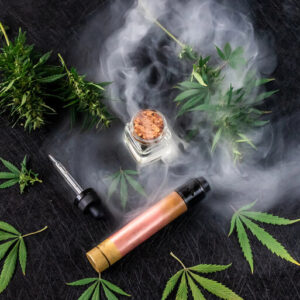
We’re highlighting our time with Atomic Blue Dream Feminized. This 50/50 hybrid possesses a distinctly sativa-like growth pattern with significant internodal spacing and a main cola occupying the upper half of the plant. While these can grow quite tall if left alone, we were able to keep ours at a manageable height and secured an impressive yield.
Self-guided shopping reduces intimidation by making cannabis retail feel like a familiar errand.
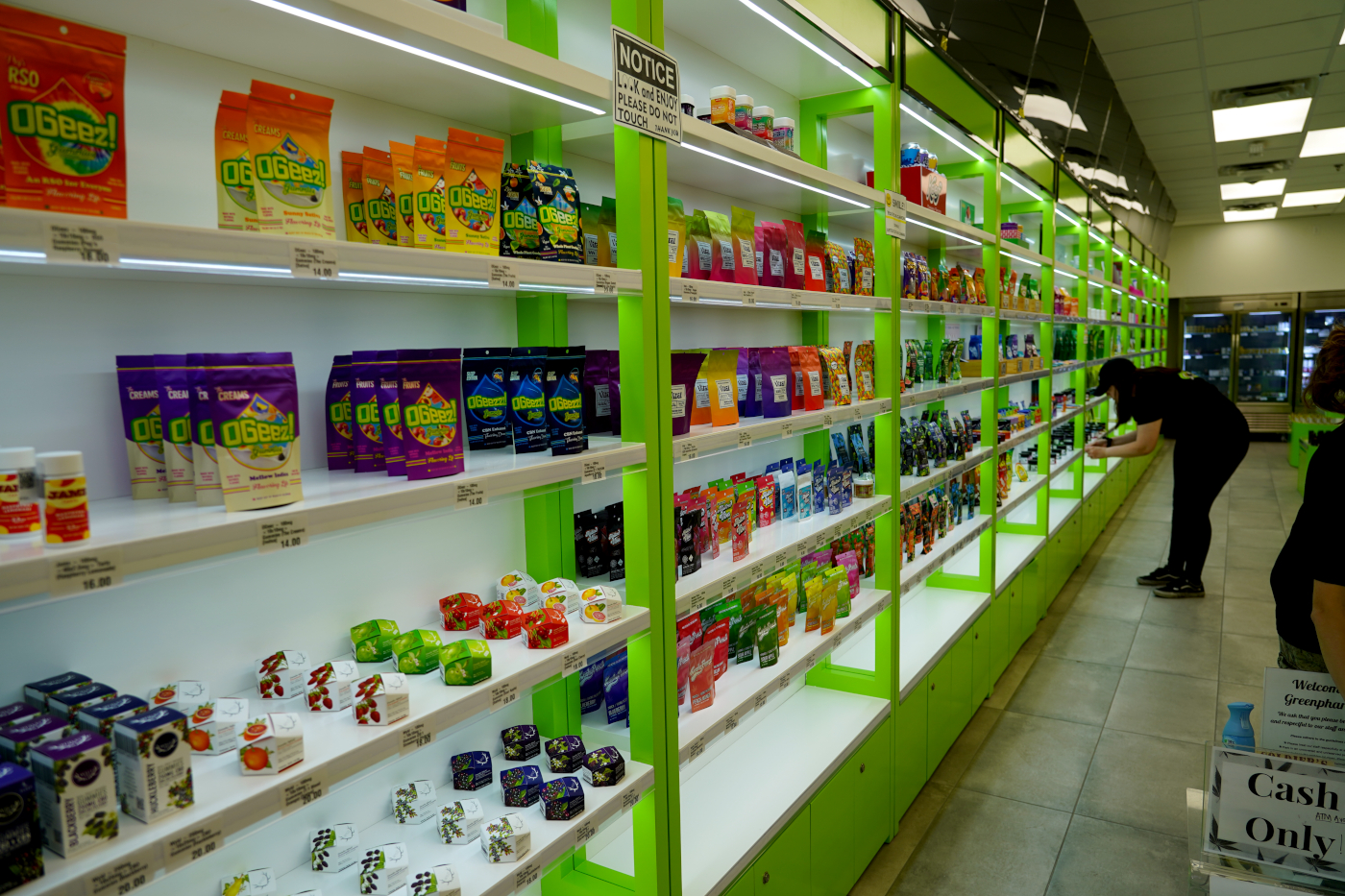
Merchandising drives discovery: open shelves and readable labels encourage trial and add-on purchases.
Staff support still matters: Budtenders anchor the flower counter and checkout without hovering.
Regulatory persistence is a competitive edge: Two years of approvals created a first-mover format in Arizona.
Routine builds loyalty: Mini-mart behaviors (carts, aisles, browsing) help normalize cannabis through habit.
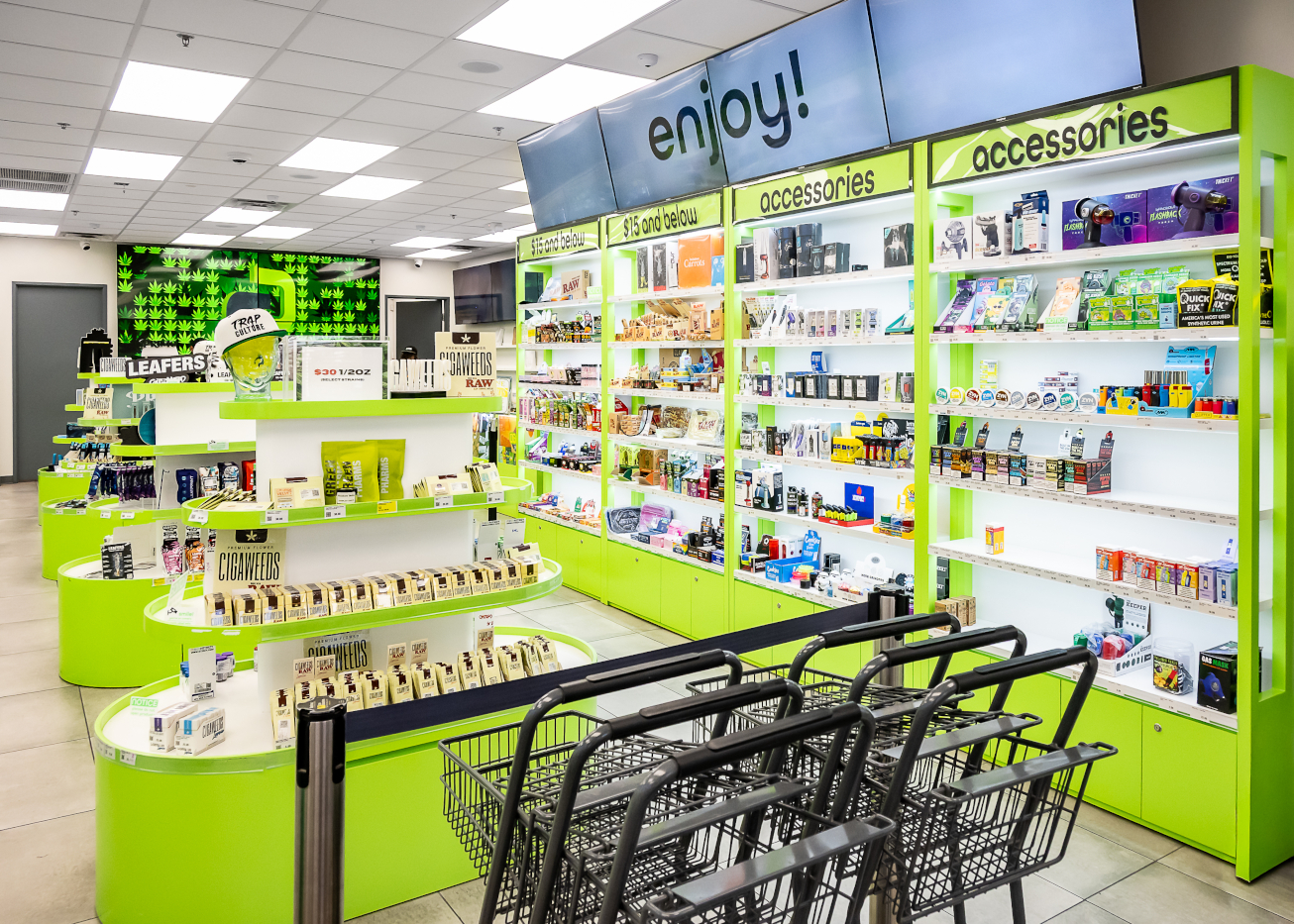
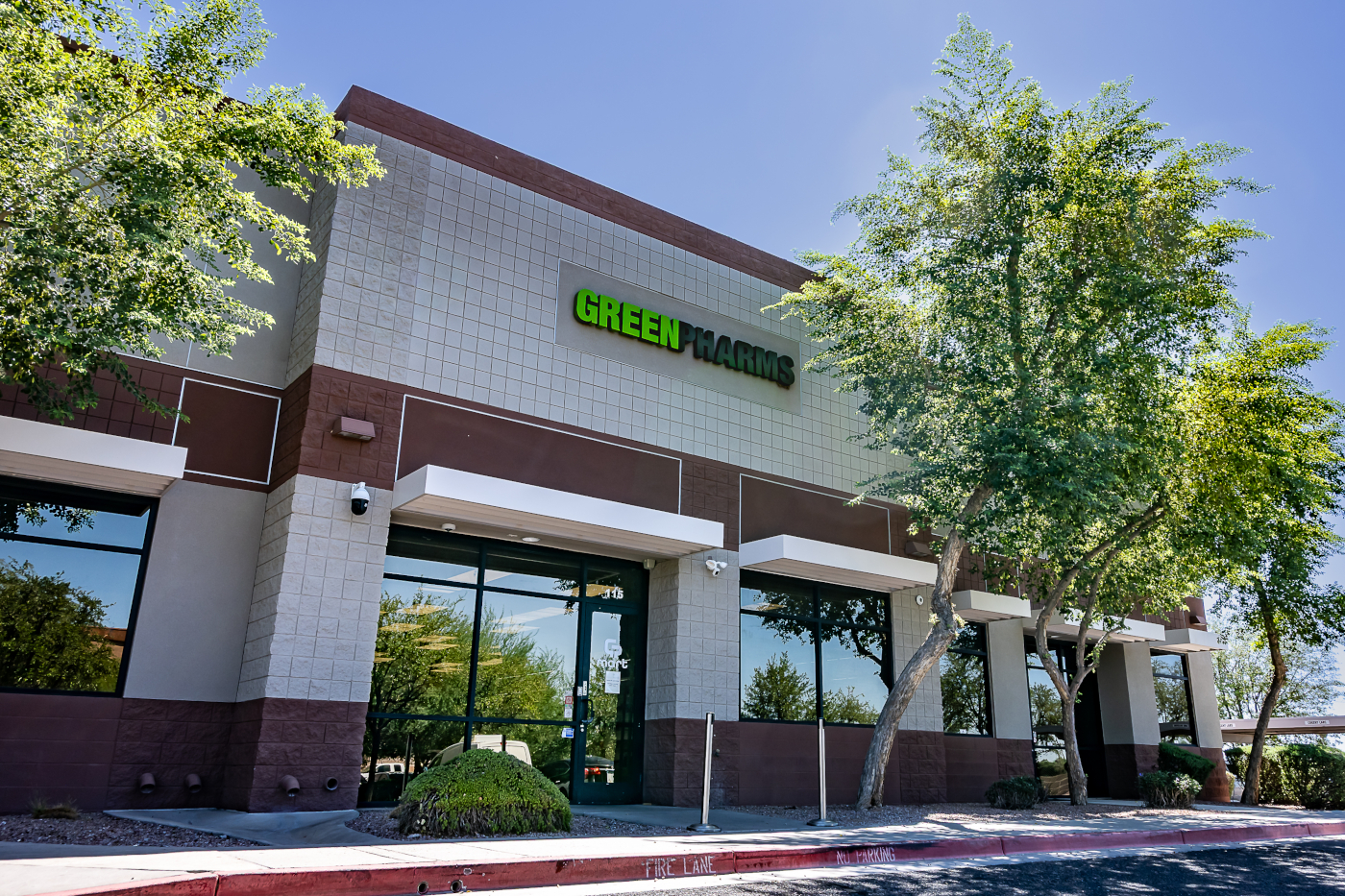
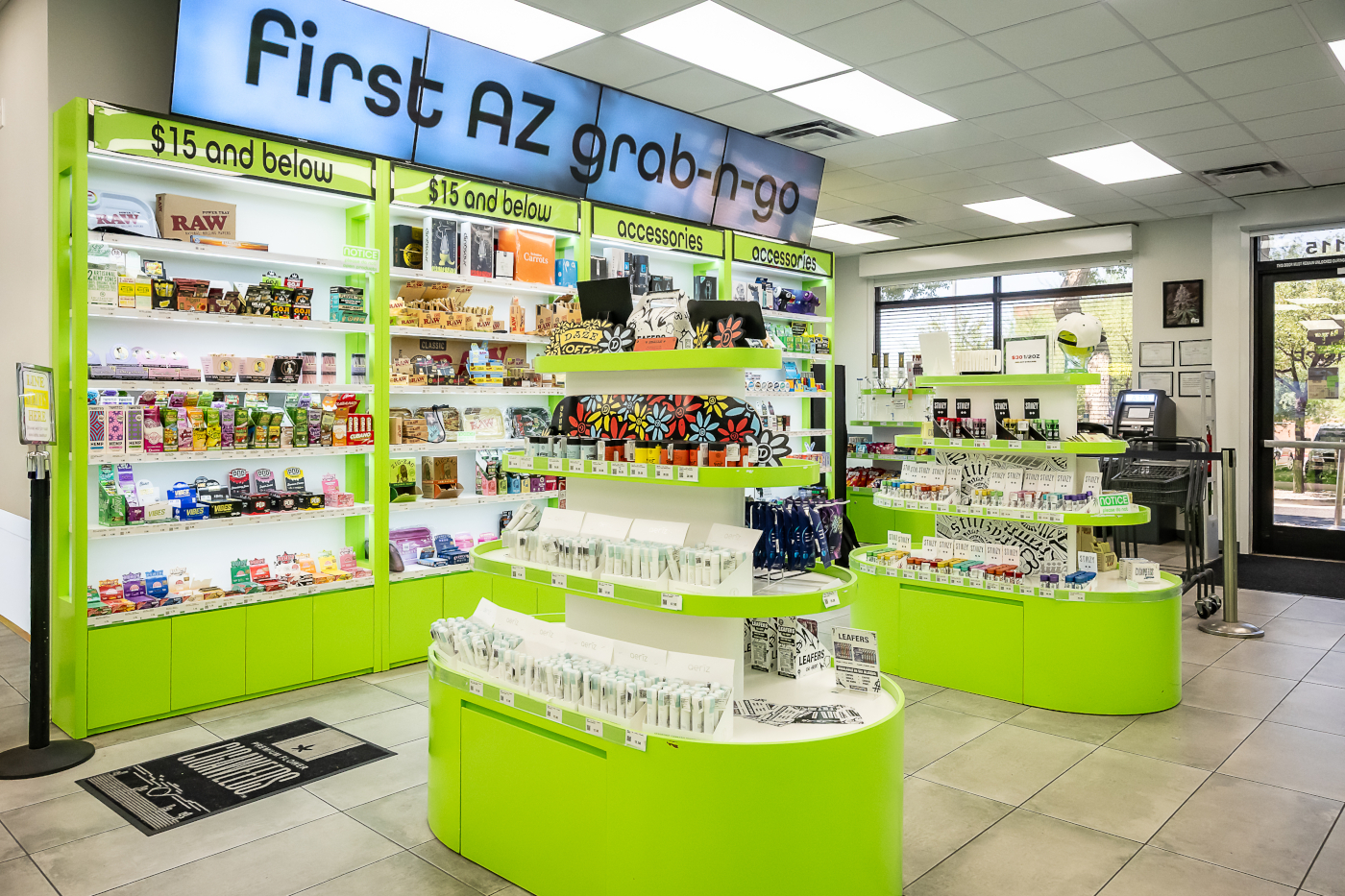
Shopping at GreenPharms feels familiar. Light pours into the airy space in Mesa, Arizona. Aisles are clean, stocked, and easy to navigate. Shelves are well-lit. Customers grab a basket or buggy and wander the floor, exploring products at their own pace. The scene is pleasant, relaxed … more like a neighborhood grocery or corner store than a traditional cannabis dispensary.
And that’s the point.
A corner-store feel, by design
Customers start like they would at a grocery store: grab a cart or basket, then browse. (Photo: Mike Rosati for GreenPharms)
Founder and chief executive officer Marie Saloum set out to create a cannabis shopping experience that felt approachable and intuitive. As a first-generation American, a Hispanic business leader, and one of the few women CEOs in Arizona’s industry, Saloum blends resilience with vision. Her industry background crosses sectors, encompassing product brands like Cigaweeds, the medical card provider Marijuana Doctor, and events producer and lifestyle brand Trap Culture. Family-owned and -operated, vertically integrated GreenPharms is her latest effort to destigmatize and celebrate the plant.
“Our biggest goal at GreenPharms is making friendly, easy access so people feel comfortable using cannabis,” she said. “Having to go to a budtender and have them grab everything for you doesn’t feel like a normal store. If you want cannabis to feel normal, you have to make the store feel that way.”
The Mesa dispensary is the first of its kind in Arizona: a supermarket-style model that allows consumers to peruse shelves, read labels, and shop with autonomy and agency. It’s a shopping experience born of persistence in the face of regulatory back-and-forth, and it might just set the stage for the future of cannabis retail in the state.
From lottery license to retail reinvention
GreenPharms’ Mesa location is Arizona’s first supermarket-style cannabis dispensary. (Photo: Mike Rosati for GreenPharms)
GreenPharms has been part of Arizona’s commercial scene since 2013, when the Saloum family opened Flagstaff’s first licensed medical dispensary. After voters approved adult use in 2020, the by-then three-store chain was picked third in the state’s license lottery for recreational sales.
To better serve Mesa’s considerable recreational market, the Saloums decided to renovate the dispensary in that market using mini-marts’ “grab-and-go” concept. At first, regulators balked at what they considered a radical idea.
“It took two years of going back and forth between the state, the health department, and the city” to get the remodeling plans approved, Saloum said. “They each had their own restrictions, so we had to go back to square one a few times and really figure out how to make it work. This was something they’d never heard of before, and we got so much pushback. It was such a risk. There were times I didn’t think it would ever get done.”
The result turned out to be worth the frustration. The Mesa store feels simultaneously groundbreaking and comfortable. For consumers, the shopping experience is as natural as stopping by the corner store to pick up a few groceries. For Saloum and her team, the new-to-Arizona concept is proof that persistence and creative problem-solving can reimagine the way dispensaries look and perform.
Designing for the errand, not the counter
Merchandising is built for discovery: browse, compare, and choose without pressure. (Photo: Mike Rosati for GreenPharms)
The Mesa renovation was a family affair. Saloum collaborated with her husband and brothers to create a space that not only adhered to regulations but also reflected their collective consumer instincts.
“We all brought our own ideas of what a good shopping experience should look like to the table,” she said. “For example, one of my brothers wanted open aisles, because he shops at hardware stores a lot and likes how open [that environment] feels,” Saloum said. “For me, I like everything close. I don’t like signs to be too high, because then I can’t read them. So certain areas are lower because products are easier to grab. It was really a collaboration of what everyone wanted to see.”
One thing the entire family agreed on: keeping consumers front and center in every remodeling decision. That focus resulted in shelves that are positioned for visibility and aisles that are navigable and inviting. As a whole, the finished space encourages exploration and discovery.
“When you walk in, you grab your shopping cart or your basket, check in, and then take all the time you need exploring,” Saloum said. “We tried to make it easy and normal like every other store.
“When designing, we really had to prioritize shopping convenience,” she added, “because we are all consumers at the end of the day. We go buy our groceries or our makeup, and we know what we like versus what we won’t go for.”
The approach has paid off. Customers not only appreciate the “everyday shopping experience” but also find themselves trying products they otherwise might not have noticed.
“I see customers trying items they haven’t tried in the past because they’re really able to explore and peruse on their own,” Saloum said. “They can walk around, find new items, discover new brands, and see what’s out there on the market.”
Self-guided shopping, staffed support
Amid the consumer freedom, budtenders still staff the deli-style flower counter and checkout stations, but their role feels more akin to employees at Best Buy or Sephora: available when needed, but never intrusive. Shoppers can flag down a budtender for help, but otherwise they enjoy the autonomy of browsing and learning at their own pace.
Customers call the experience ‘liberating’
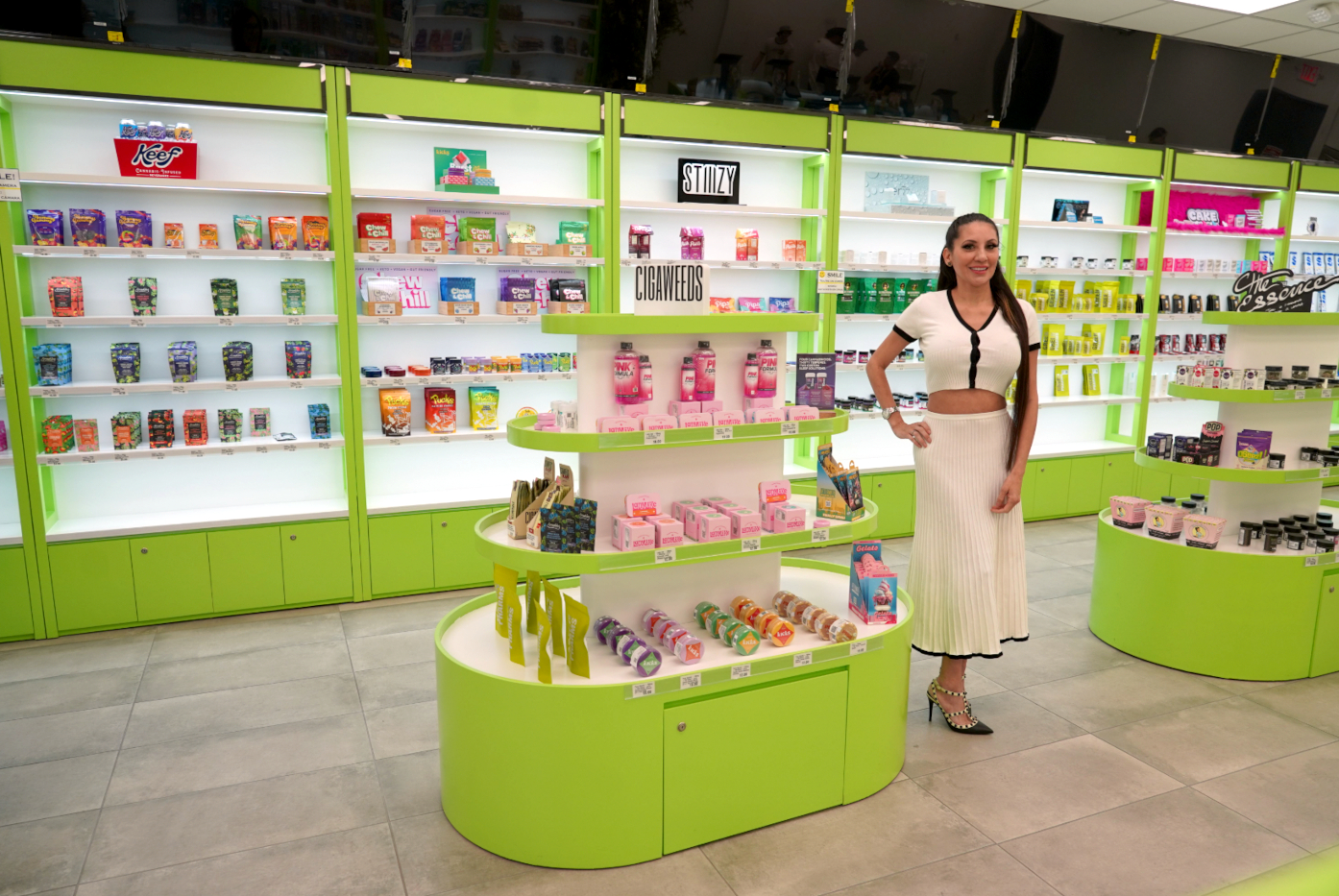
Open aisles and visible merchandising help shoppers explore at their own pace. (Photo: GreenPharms)
Along with regulators, the community has embraced the concept, Saloum said. “Feedback has been great,” she revealed. “People appreciate what we were going for. They see the vision, which is beautiful, and they understand that we’re trying to make cannabis feel like a regular shopping experience.”
Customers have called walking the aisles, comparing products, and making their own decisions without pressure “liberating.” For a plant that’s still overcoming stigma, the normalized environment matters.
“It’s all about making [the experience] comfortable and memorable,” Saloum said. “When you hear our name, I want people to have good memories and want to come back.”
Next stop: Phoenix — and a bigger bet on browsing
The Mesa dispensary is designed to feel like a familiar corner-store shopping trip. (Photo: Mike Rosati for GreenPharms)
GreenPharms isn’t slowing down. Saloum has her sights set on expanding the grab-and-go model into new markets, beginning with a flagship Phoenix location expected to open in early 2026.
The two-story, 5,000-square-foot Phoenix store will feature all the hallmarks of the Mesa shop: shopping carts, baskets, and self-guided browsing, but with additional features. A drive-thru window will allow for quick pickups, and an upstairs lounge will provide customers a new reason to visit.
“It’s the first two-story dispensary in Arizona where you can go upstairs and shop,” Saloum said. “We’re trying to think outside the box even more, to see what else we can bring to that location that we’re not already doing. Of course, the consumer is always in mind. It’s essential that they have a great experience and that they remember us.”
Why the mini-mart model works
Why does the Mesa GreenPharms resonate so strongly with consumers? The answer may lie in the cultural familiarity of the “mini-mart.”
Convenience stores, or mini-marts, emerged in the United States in the 1920s, most famously with the birth of 7-Eleven (then called Tote’m) in Dallas. By the mid-twentieth century, they had become fixtures of American life. Open late, easily accessible, and endlessly reliable, the corner store became a quiet backdrop to daily routines.
And that’s the key: routine. Mini-marts and supermarkets tap into the psychology of habit. They offer freedom to browse, compare, and make spontaneous choices, but they also provide comfort through repetition.
The bread is always on the same aisle. Drinks are easy to locate and grab. Customers can pop in to snag a quick snack or a carton of milk on their way home from work. These tiny, everyday behaviors build trust and loyalty in ways that don’t require marketing slogans or glossy campaigns. They simply become part of life.
Cannabis dispensaries, by contrast, trend closer to jewelers or pharmacies than grocery stores. Products usually are locked behind glass, transactions are managed by a professional, and autonomous browsing and discovery are often discouraged; sometimes even prohibited. For consumers who are new to regulated cannabis, that model can feel intimidating. Experienced shoppers can find the model frustrating.
GreenPharms bridges the gap by making cannabis shopping feel as casual as a stop at the corner store. Suddenly, cannabis is no longer mysterious or taboo. It’s just another errand on the way home from work.
That subtle reframing has big implications. By adopting the rituals of everyday shopping — grabbing a cart, strolling aisles, deciding between infused gummies the same way you’d choose between breakfast cereals — GreenPharms is helping normalize cannabis in a way no splashy campaign, bold declaration, or glitzy environment ever could. Habit is a subtle but powerful force.
We are all creatures of routine. And when picking up an eighth feels no different from picking up a loaf of bread, normalization becomes less of a lofty cultural goal and more of a lived reality.
Corner-store cannabis: your questions answered
What makes GreenPharms different from a traditional dispensary?
GreenPharms uses a supermarket-style floor where customers can browse aisles, compare products, and read labels at their own pace while shopping with baskets or carts.
Can customers shop without speaking with a budtender?
Yes. Shoppers can browse independently, but budtenders remain available at the flower counter and checkout for support when needed.
Why did regulators push back on the concept?
Because open browsing and self-guided shopping were unfamiliar in cannabis retail. The team worked through layered compliance requirements across state, health, and city regulators.
Does the store still have a traditional flower bar?
Yes. Flower is supported by a deli-style counter and staff, while the rest of the store is built for customer-led discovery.
Why does the mini-mart model help normalize cannabis?
It taps into everyday retail routines — grabbing a basket, walking aisles, making choices — so cannabis feels less intimidating and more ordinary.
Is GreenPharms expanding the grab-and-go model?
Yes. The company is planning a Phoenix flagship location expected to open in early 2026, adding features like quick pickup options and an upstairs lounge.
Chair Of Nebraska Medical Cannabis Commission Steps Down
“Nebraska needs to seize the opportunity to be slow and deliberate in the manner in which we determine how best to designate appropriate conditions for medical cannabis.”
By Zach Wendling, Nebraska Examiner
The chair of the Nebraska Medical Cannabis Commission resigned from her post Monday, about nine months after Gov. Jim Pillen (R) appointed her to the post.
Pillen appointed Dr. Monica Oldenburg of Lincoln, an anesthesiologist, to the commission April 24 as one of two at-large members. They serve with the three members of the Nebraska Liquor Control Commission. Beyond a brief statement announcing the resignation, commissioners did not address Oldenburg’s tenure.
Lawmakers confirmed Oldenburg to the post May 30 in a 34-11 vote. She had told lawmakers she was “not a prohibitionist” of cannabis but was “pro-research.” Oldenburg also said cannabis has “a place in pain management” for certain ailments that cause suffering.
“Nebraska needs to seize the opportunity to be slow and deliberate in the manner in which we determine how best to designate appropriate conditions for medical cannabis and regulate those entities that will dispense medical cannabis in our state,” Oldenburg said last May. “I look forward to working with various parties to ensure that we in the State of Nebraska get this right.”
At that same hearing last year, Oldenburg said she had been encouraged to apply by State Sen. Jared Storm of David City, a member of the Legislature’s General Affairs Committee, which considered her appointment.
Oldenburg was not present at her commission’s monthly meetings in December or January.
Pillen’s office had no immediate comment and didn’t immediately make a copy of Oldenburg’s resignation available.
Oldenburg’s leadership had guided commissioners through strict regulations seeking to prevent future licensed dispensaries from selling medical cannabis that could be smoked or vaped. The regulations would also require that patients only be able to access licensed dispensaries if they secure a recommendation from health care practitioners who sign up as part of the program.
Patients and advocates have detested the regulations and said the 2024 ballot measures expressly allow smoking and vaping cannabis and don’t give the commission power over patients.
With Oldenburg’s absence, the remaining four members voted unanimously to name Commissioner Lorelle Mueting of Gretna as the “interim” chair. Mueting, a prevention director at Heartland Family Service in Omaha, was confirmed alongside Oldenburg in a 27-16 vote.
Oldenburg and Mueting met stiff opposition to their appointments as both had opposed multiple advocate-backed medical cannabis bills between 2018 and 2025.
Pillen last year had described the women as “experienced, well-qualified individuals” who would ensure strong regulations “to the letter of the law the people of Nebraska enacted.”
Since July, Pillen has appointed all three Liquor Control Commission members. They will face legislative confirmation this spring, as could Oldenburg’s successor if Pillen appoints one.