New Hampshire Lawmakers Approve Bipartisan Bill To Legalize Psilocybin For Medical Use, While Rejecting Separate Psychedelics Measure

New Hampshire Lawmakers Approve Bipartisan Bill To Legalize Psilocybin For Medical Use, While Rejecting Separate Psychedelics Measure


New Hampshire Lawmakers Approve Bipartisan Bill To Legalize Psilocybin For Medical Use, While Rejecting Separate Psychedelics Measure

New Hampshire lawmakers advanced a bipartisan bill to legalize the regulated use of psilocybin for medical purposes, while rejecting a separate measure on therapeutic access to the psychedelic.

Weeks after holding an initial hearing on both proposals, the House Health, Human Services and Elderly Affairs Committee voted 18-0 on Wednesday to approve HB 1809 from Rep. Buzz Scherr (D) but 11-7 to reject HB 1796 from Rep. Michael Moffett (R).

The votes took place on the same day that members of a separate committee considered a proposal to let voters decide on legalizing marijuana on the ballot.

The psilocybin legislation that advanced, meanwhile, would create a regulatory pathway for patients with certain conditions to access the psychedelic for therapeutic use through a program overseen by the state Department of Health and Human Services (DHHS).

Moffett’s measure is more prescriptive about the proposed regulatory framework compared Scherr’s bill.

At Wednesday’s committee meeting, Rep. Yury Polozov (R) called psilocybin “an important medication, naturally occurring that can save lives.”

Rep. Lucy Weber (D) said she supported HB 1809 but not HB 1796 due to the budgetary implications of the latter proposal, calling it “fiscally imprudent.”

At the earlier committee hearing this month, Jenny O’Higgins of DHHS said officials have some concerns around the lack of appropriated funds in Moffett’s legislation, saying the department would “not be able to absorb” the program under its current budget.

Here are the key provisions of HB 1809, which advanced:

  • DHHS would be responsible for approving licensed medical professional to serve as providers of psilocybin for qualifying patients.
  • In order to qualify for the program, patients would need to be diagnosed with treatment-resistant depression, post-traumatic stress disorder (PTSD), substance use disorder or another condition authorized by an advisory board and DHHS.
  • The legislation specifically stipulates that only natural psilocybin could be administered, excluding synthetic versions of the psychedelic.
  • Providers would also need to be approved by the department to grow and harvest their own psilocybin products.
  • The process for treating qualifying patients with the psychedelic would need to involve a preparation session, administration session and integration session.
  • A Medical Psilocybin Advisory Board would be established, comprised of a representative of DHHS, a qualifying patient, a veterans advocate and eight medical professionals.
    • Those medical experts would need to include a psychedelics researcher, two regulators overseeing existing medical psilocybin programs and specialists in the treatment of addiction, palliative care, veterans’ affairs, naturopathy, nursing and mental health counseling.
  • The board would be tasked with analyzing data on patient outcomes from DHHS, consider adding qualifying conditions for participation in the program and determine whether the law should be expanded.
  • The program would only be implemented if the advisory board, within two years of the bill’s enactment, notifies lawmakers, regulators and the governor that it can be effectively administered.

“The medical community has always recognized that patients exist with serious conditions that are very resistant to effective treatment,” a statement of purpose for the measure says. “Recently, research has begun to show that certain of those patients have had positive results with the closely supervised use of psilocybin for treatment.”

“Patients with significant post-traumatic stress disorder, with treatment-resistant clinical depression, and with serious substance use disorder have been shown to benefit from the controlled, therapeutic use of psilocybin in a supervised setting,” it says. “The purpose of this act is to create a carefully monitored and closely supervised setting in which an approved medical provider can treat a carefully chosen patient with appropriate doses of psilocybin which that same provider has produced for a medical intervention.”

Here are the main details of HB 1796, which was rejected:

  • The bill would permit the regulated use of psilocybin in a medically supervised setting, with DHHS responsible for overseeing the program.
  • To qualify for psilocybin treatment, a patient 21 or older would need to be diagnosed with treatment-resistant depression, PTSD, substance misuse disorder, a terminal illness requiring end-of-life care or any other condition authorized by DHHS.
  • A Psilocybin Licensing Board under the department would be tasked with issuing licenses for independent medical psilocybin providers, therapy providers, cultivators and testing laboratories.
  • There would be specific guidelines for facilities where the psychedelic could be administered, including security requirements and other safety protocols such as ensuring there are rescue medications on site if a patient experiences an adverse event.
  • The legislation would also establish a Therapeutic Psilocybin Treatment Fund, which would be funded by revenue from licensing taxes and fees. The fund would go toward studies into the possibility of expanding the program to include additional psychedelics in the program.
  • The law if enacted would take effect beginning in January 1, 2027.

“The purpose of the Therapeutic Psilocybin Act is to allow the beneficial use of psilocybin in a regulated system for alleviating qualified medical conditions,” the bill’s statement of purpose says.

The prospects of either psilocybin bill advancing to enactment into law this session remain unclear, but lawmakers have been increasingly active in pursuing psychedelics reform in recent years.

Last June, the New Hampshire Senate voted to scrap compromise legislation that would have lowered the state’s criminal penalty for first-time psilocybin possession while also creating mandatory minimum sentences around fentanyl.

As originally introduced, the legislation would have completely removed penalties around obtaining, purchasing, transporting, possessing or using psilocybin, effectively legalizing it on a noncommercial basis. However a House committee amended the bill before unanimously advancing it last March.


Marijuana Moment is tracking hundreds of cannabis, psychedelics and drug policy bills in state legislatures and Congress this year. Patreon supporters pledging at least $25/month get access to our interactive maps, charts and hearing calendar so they don’t miss any developments.
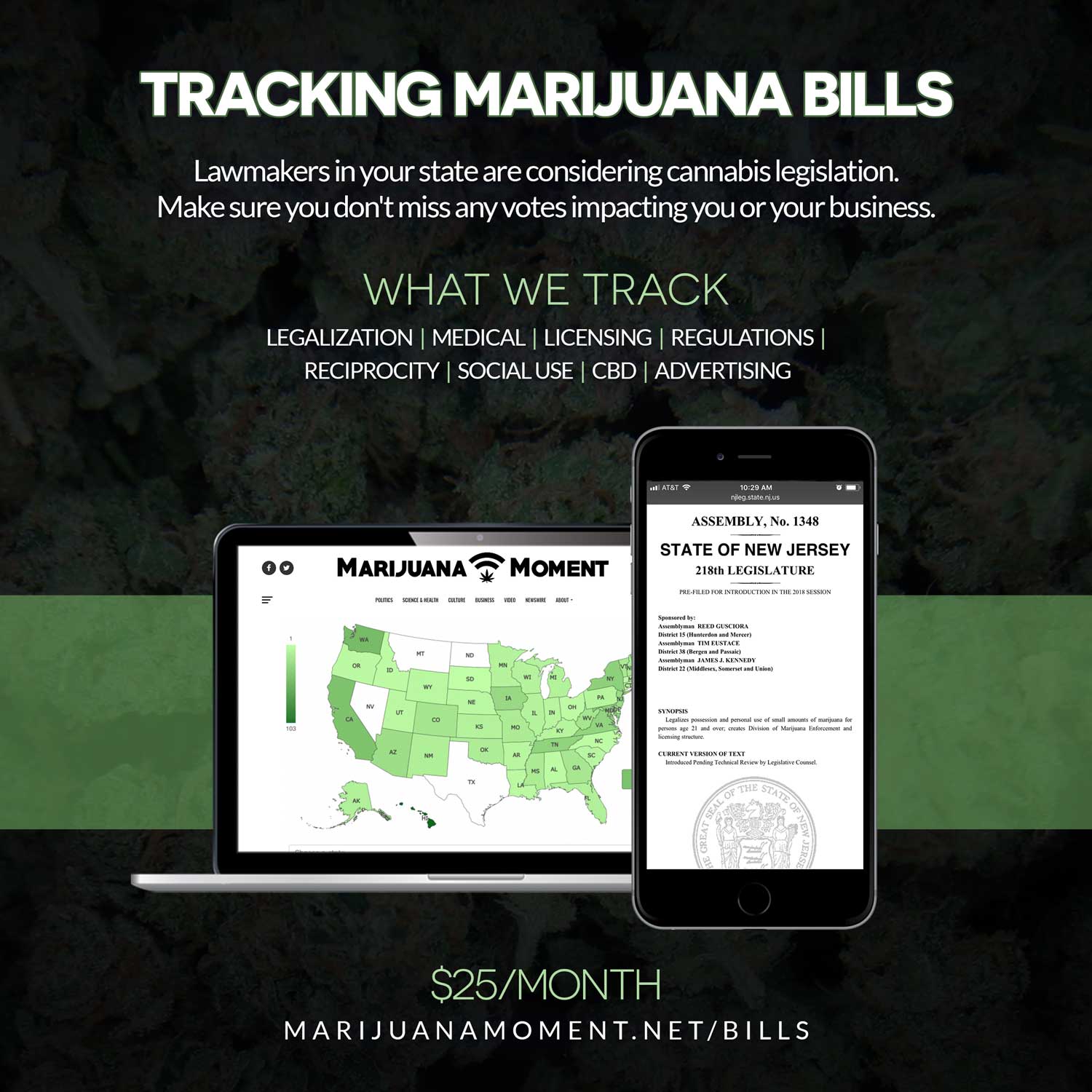

Learn more about our marijuana bill tracker and become a supporter on Patreon to get access.

Meanwhile in New Hampshire, the House Criminal Justice and Public Safety Committee on Wednesday took up legislation from Rep. Jonah Wheeler (D) that would put the issue of marijuana legalization before voters at the ballot this November.

The House earlier this month also approved a bill to legalize marijuana in the state—though its chances of passage in the Senate remain dubious, and the governor has expressed clear opposition to the reform.

In the Senate, meanwhile, the Judiciary Committee last week took up a bill from Sen. Donovan Fenton (D) that would allow adults over the age of 21 to legally possess up to four ounces of cannabis in plant form and 20 grams of concentrated cannabis products, as well as other products containing no more than 2,000 milligrams of THC.

Gov. Kelly Ayotte (R) has already threatened to veto any legalization bill that reaches her desk, though the constitutional amendment proposal would not require gubernatorial action.

The governor said in August that her position on the reform would not change even if the federal government moved forward with rescheduling the plant. Since then, President Donald Trump has directed the attorney general to finalize the process of moving cannabis from Schedule I to Schedule III of the Controlled Substances Act (CSA).

Meanwhile, the House also approved a bill this month from Rep. Wendy Thomas (D) that would allow medical marijuana dispensaries (known as “alternative treatment centers,” or ATCs, in the state) to convert their dispensary licenses to become for-profit entities. HB 54, which passed on the consent calendar with other legislation, previously advanced unanimously out of the House Finance Committee.

Part of the motivation behind the legislation is the fact that medical marijuana dispensaries don’t qualify for federal non-profit status. But in the state, they’re considered non-profit organizations, which has resulted in disproportionately increased operating costs.

Image courtesy of CostaPPR.

The post New Hampshire Lawmakers Approve Bipartisan Bill To Legalize Psilocybin For Medical Use, While Rejecting Separate Psychedelics Measure appeared first on Marijuana Moment.

Source link

cannabis-smoking-teenager

Cannabis is Dangerous for Youth, So Shouldn’t We Ban it?

Cannabis is Dangerous for Youth, So Shouldn’t We Ban it?

As cannabis becomes more widespread in society and in many ways culturally accepted, many people are keen to point out the impact on youth. While you may think that adults should be able to use cannabis if they want to or if they have a medical condition it can help with, some people forget the impact this could have on the most vulnerable people in our society.

In fact, the risks of cannabis to youth are one of the most common arguments for keeping the current approach in terms of legality.

As part of our series on the Best Arguments for and Against Cannabis, we’re taking a look at the argument that the risks of cannabis to youth are a good reason to maintain the current prohibition.


Summary: Should We Ban Cannabis Because It Is Dangerous for Youth?

Yes…

  • People who use cannabis in youth are more likely to develop depression and attempt suicide. It has a negative effect on brain development.
  • There is evidence that legalizing cannabis increases cannabis use disorder among youths.
  • Legalizing cannabis exposes more youth to the risks, so it is not a good policy proposal.

No…

  • The evidence on youth use before and after legalization is mixed – some studies also show no increase in usage rates.
  • Youth use cannabis even when it is banned. In fact, having no control of the market may make it worse, since street dealers don’t check ID.
  • Legalization that minimizes black market sales and ensures safe products is the best way to protect both youth and adults.  

The Risks of Cannabis to Young People

There are many potential areas of risk for young people who use cannabis. For example, there are risks associated with any smoking. However, we will focus on psychological and developmental effects on young people here. We have a post in this series addressing more general risks of cannabis if you want more information on that.

Mental health impacts of early cannabis use have been investigated by many studies. Although results can vary, when you look at all of the evidence together the picture is clear. One systematic review and meta-analysis looked at 11 studies in detail, with a total of 23,317 participants across all studies. After the authors combined the results, they found a few statistically significant differences between people who used cannabis in young adulthood vs. non-users.

People who used cannabis in young adulthood were:

  • 37% more likely to develop depression
  • 50% more likely to have suicidal ideation
  • Almost 3.5-fold more likely to attempt suicide

This analysis did use the results for the highest-frequency cannabis users in the group. For example, if the study included once a month users and daily users, the authors took the results for the daily users. However, other research has found similar results looking at people with “non-disordered” cannabis use. This means use in the past year but without meeting the definition of cannabis use disorder.

Some studies have also found a negative impact of THC on adolescent brain development. In particular, data shows that people who started smoking cannabis in adolescence have impaired neural connectivity in regions of the brain responsible for alertness, self-conscious awareness, learning, memory, executive control, and in the subcortical networks that process habits and routines. The authors of the review write:

The impairments in brain connectivity associated with exposure to marijuana in adolescence are consistent with preclinical findings indicating that the cannabinoid system plays a prominent role in synapse formation during brain development.

Finally, there is evidence that people who start using cannabis in adolescence have an increased risk of addiction compared to those who start using later.

Legalizing Cannabis Exposes Youth to These Risks

Legalizing cannabis will make this whole situation worse if it makes youth more likely to smoke weed. There is certainly evidence of this.

Smart Approaches to Marijuana pointed out that based on the 2021/2022 National Survey on Drug Use and Health, of the 10 states with the highest past-year cannabis use at ages 12 to 17, 9 had legalized cannabis. If you look at states with the highest past-month use, 8 out of 10 had legalized.

However, it must be said that this isn’t necessarily the best way to investigate this issue. These states could have had also high youth use even before legalization. It is not clear from this “top 10” approach whether this is true. Other research has investigated this in a more comprehensive way.

One study used evidence from the same survey from 2008 to 2016. They found that cannabis use disorder increased from 2.18% to 2.72% after the legalization of recreational cannabis, a 25% greater increase than in states that didn’t legalize. Of those who’d used cannabis in the past year (in the same age group), cannabis use disorder increased from 22.8% to 27.2%.

Other research looking at young adults using the same survey also found an increase, with past-month cannabis use going from 21% to 25% after recreational legalization. A proxy measure of cannabis use disorder also showed an increase after legalization. However, in this study the increases were only detected for young adults not in college and those aged 21 to 23.

Overall, if legalization increases the likelihood youth will use cannabis, then more youth will open themselves up to the risks in the previous section.

Counterpoint: The Evidence on Legalization Increasing Youth Use is Mixed

It’s important to note the limitations of the evidence cited above. The study on young adults only found an increase in use for specific subgroups (i.e. non-college adults) and on specific measures. Notably, frequent use did not change after recreational legalization.

In the other study, the increase in cannabis use disorder risk was relatively small, and again there was no corresponding increase in other measures. For instance, both past-month use overall and frequent use among 12 to 17 year olds did not change following legalization. Many of these arguments depend on cherry-picking one or two results from papers that do not show a uniform trend.

Moreover, other research shows different results. This study used data from the Monitoring the Future survey from 2010 to 2015 to investigate the same question, looking at Colorado and Washington in particular. The results are decidedly mixed. In Washington, there was an increase in use among 8th and 10th graders after legalization (2% and 4.1%, respectively). But there was no difference among Washington 12th graders and no differences at all in Colorado.

Even though it might seem obvious that legalization would increase use among youth, this is not clearly borne out by the data. The picture is actually more complicated than you might expect.

Counterpoint: Risks to Youth are a Reason to Legalize, Not Maintain Prohibition

Although the evidence on what happens to youth cannabis use after legalization is mixed, one point is unavoidable. There are no age restrictions for buying cannabis in a prohibition system, but there are in a legal system.

If we’re concerned about youth getting access to cannabis, the status quo is not something to shoot for. The dealer on the street corner is not checking IDs. Even worse, the cannabis itself has no guarantee of purity or safety. In contrast, a legal system allows age restrictions on purchases. It institutes rules to make sure that the cannabis is actually safe.

Taking steps to control the black market is crucial for this to actually work, though. States that legalize should make sure that prices are competitive (minimizing taxes at first can be very helpful) and that there are at least 10 dispensaries per 100k residents. If the black market persists, legalizing will not help keep cannabis out of the hands of youth.


Our Take: The Status Quo Already Increases Risks for Youth

While the dangers of cannabis use for youth are important and should be a factor in any discussions around legalization, most arguments on this topic ignore a key point: the current system does not protect youth.

When the black market is the only market, there are no guardrails to protect youth, there are no age restrictions, and there is no control in general. But youth still use cannabis, and so any concern about risks to youth doesn’t justify keeping the status quo.  


References

Barcott, B., & Whitney, B. (2022). ‘Opt-out’ towns are encouraging illegal marijuana sales. Leafly. https://leafly-cms-production.imgix.net/wp-content/uploads/2022/09/21143531/OptOutReport2022.pdf

About the source:

  • Peer reviewed? No, a report from Leafly.
  • Methodology: Used data from multiple sources to determine what percentage of cannabis sales took place in the black market vs. the state-legal market.
  • Main results: States with more dispensaries per 100k residents generally capture more of the cannabis market with legal sales. “Opt-out” towns tend to reduce this number.
  • Other notes: While this shows how to reduce the size of black markets, it’s important to note that there are still black markets even in “ideal” legal systems.  

Cerdá, M., Mauro, C., Hamilton, A., Levy, N. S., Santaella-Tenorio, J., Hasin, D., Wall, M. M., Keyes, K. M., & Martins, S. S. (2020). Association between recreational marijuana legalization in the United States and changes in marijuana use and cannabis use disorder from 2008 to 2016. JAMA Psychiatry, 77(2), 165. https://doi.org/10.1001/jamapsychiatry.2019.3254

About the source:

  • Peer reviewed? Yes, published in JAMA Psychiatry.
  • Methodology: Used data from the National Survey on Drug Use and Health from 2008 to 2016 to look at the link between recreational cannabis legalization and changes in cannabis use, frequent use and cannabis use disorder (CUD).  
  • Sample size: 505,796 (149,383 aged 12 to 17).
  • Main results: Past-year CUD increased from 2.18% to 2.72% among those aged 12 to 17 in states that had legalized cannabis, which was 25% higher than the increase in states that hadn’t legalized.
  • Other notes:  While CUD increased in adolescents, overall use or frequent use did not, and the authors urge caution in interpreting this result.

Cerdá, M., Wall, M., Feng, T., Keyes, K. M., Sarvet, A., Schulenberg, J., O’Malley, P. M., Pacula, R. L., Galea, S., & Hasin, D. S. (2017). Association of state recreational marijuana laws with adolescent marijuana use. JAMA Pediatrics, 171(2), 142. https://doi.org/10.1001/jamapediatrics.2016.3624

About the source:

  • Peer reviewed? Yes, published in JAMA Pediatrics.
  • Methodology: Used data from the Monitoring the Future survey to look at changes in past-month cannabis use before and after legalization in Washington and Colorado.
  • Sample size: 253,902 eighth, tenth and twelfth grade students
  • Main results: Cannabis use increased by 2% in eighth graders and 4.1% in tenth graders after legalization in Washington, with an overall decrease in states that did not legalize.
  • Other notes:  The study found no differences in Colorado. Additionally, Monitoring the Future selects specific schools and only surveys students who attend, which may impact how much the results can be generalized.

Chen, C.-Y., Storr, C. L., & Anthony, J. C. (2009). Early-onset drug use and risk for drug dependence problems. Addictive Behaviors, 34(3), 319–322. https://doi.org/10.1016/j.addbeh.2008.10.021

About the source:

  • Peer reviewed? Yes, published in Addictive Behaviors.
  • Methodology: Used evidence from the National Survey on Drug Use and Health from 2000 to 2002 to investigate the risk of developing drug key signs of drug dependence for “recent onset” users at the time of the survey.
  • Sample size: 5,547 recent-onset cannabis users, including 4,049 adolescents (aged under 17), as well as users of other drugs.
  • Main results: Adolescent-onset cannabis users were 3 times more likely than adult-onset users to develop clinical signs of dependence.
  • Other notes:  The study depends on self-reporting. However, there is no particular reason to expect it to be inaccurate.

Gobbi, G., Atkin, T., Zytynski, T., Wang, S., Askari, S., Boruff, J., Ware, M., Marmorstein, N., Cipriani, A., Dendukuri, N., & Mayo, N. (2019). Association of cannabis use in adolescence and risk of depression, anxiety, and suicidality in young adulthood. JAMA Psychiatry, 76(4), 426. https://doi.org/10.1001/jamapsychiatry.2018.4500

About the source:

  • Peer reviewed? Yes, published in JAMA Psychiatry.
  • Methodology: A systematic review of longitudinal and prospective studies looking at cannabis use before the age of 18 and the risk of developing depression as a young adult.
  • Sample size: 11 studies with 23,317 individuals.
  • Main results: People who used cannabis as minors were 37% more likely to develop depression, 50% more likely to have suicidal ideation and 3.46-times more likely to attempt suicide. There was no significant difference for anxiety.
  • Other notes:  It is difficult to establish causality from this analysis. Some studies didn’t control for other drug use, smoking and psychosocial factors that could be linked to both depression and early cannabis use. They also point out that they didn’t know the exact amount of cannabis used or how strong it was.  

Kerr, D. C. R., Levy, N. S., Bae, H., Boustead, A. E., & Martins, S. S. (2023). Cannabis and alcohol use by U.S. young adults, 2008-2019: Changes in prevalence after recreational cannabis legalization. American Journal of Preventive Medicine. https://doi.org/10.1016/j.amepre.2023.06.009

About the source:

  • Peer reviewed? Yes, published in the American Journal of Preventative Medicine.
  • Methodology: Used data from the National Survey on Drug Use and Health for participants aged between 18 and 23 from 2008 to 2019. Researchers looked at frequent use, past-month use and a proxy for cannabis use disorder (CUD) for states with recreational cannabis legalization vs. those without it.
  • Sample size: 123,162 college-age young adults.
  • Main results: Past-month cannabis use increased from 21% to 25% and past year (proxy) CUD increased from 11% to 13% after recreational cannabis legalization. The changes were primarily seen in young adults not in college and who were 21 to 23 years old.
  • Other notes:  This study only found differences after legalization for adults who would be able to legally buy cannabis. Its relevance to the overall topic here is debatable.

Sultan, R. S., Zhang, A. W., Olfson, M., Kwizera, M. H., & Levin, F. R. (2023). Nondisordered cannabis use among US adolescents. JAMA Network Open, 6(5), Article e2311294. https://doi.org/10.1001/jamanetworkopen.2023.11294

About the source:

  • Peer reviewed? Yes, published in JAMA Network Open.
  • Methodology: Used data from the National Survey on Drug Use and Health from youth aged 12 to 17, split into non-users of cannabis, people who used but don’t have cannabis use disorder (CUD) or people with CUD. They compared these groups for adverse psychosocial events (e.g. major depressive episodes or suicidal ideation).
  • Sample size: 68,263 adolescents.
  • Main results: People with non disordered cannabis use were 2 to 4 times more likely to have an adverse psychosocial event compared to non-users, and people with CUD were even more likely to have experienced one.
  • Other notes:  This study was cross-sectional (at a single point in time), so it can’t show a causal relationship. The authors point out that anxiety often pre-dates substance use and the survey data doesn’t have information to let them analyze this possibility.

Volkow, N. D., Baler, R. D., Compton, W. M., & Weiss, S. R. B. (2014). Adverse health effects of marijuana use. New England Journal of Medicine, 370(23), 2219–2227. https://doi.org/10.1056/nejmra1402309

About the source:

  • Peer reviewed? Yes, published in the New England Journal of Medicine.
  • Methodology: A non-systematic review of the evidence on the adverse health effects of cannabis use.
  • Main results: Long-term or heavy cannabis use has many negative effects, including addiction and increased risk of chronic psychosis disorders. Notably, it also reports a negative effect of THC on adolescent brain development.
  • Other notes: This paper is likely biased in intent (i.e. listing adverse events, not “health consequences” or something neutral) and some studies it cites have been called into question. For example, a link between adolescent cannabis use and IQ declines is mentioned but this is likely due to other factors not controlled for in the original study.

The post Cannabis is Dangerous for Youth, So Shouldn’t We Ban it? appeared first on CBD Oracle.

Source link

Majority Of Virginia Voters Back Legalizing Recreational Marijuana Sales As Lawmakers Advance Bills To Do It

Majority Of Virginia Voters Back Legalizing Recreational Marijuana Sales As Lawmakers Advance Bills To Do It

Majority Of Virginia Voters Back Legalizing Recreational Marijuana Sales As Lawmakers Advance Bills To Do It

As Virginia lawmakers advance legislation to expand the state’s current marijuana law by legalizing and regulating recreational sales, a new poll shows that they have the support of a majority of registered voters.

Sixty percent of respondents in the survey released on Wednesday by The Wason Center at Christopher Newport University support allowing retail adult-use cannabis sales.

That includes majorities of Democrats (74 percent) and independents (59 percent), though only 38 percent of Republicans are on board.

Voters between the ages of 18 and 44 are much more likely (74 percent) to back legalizing recreational cannabis sales than are those above 45 years old (48 percent), according to the poll.

The survey results come as committees in the Virginia House of Delegates and Senate have recently approved bills to legalize and regulate the adult-use cannabis market.

While there are some differences between the chambers’ bills, the overall proposals largely align with recommendations released last month by the legislature’s Joint Commission to Oversee the Transition of the Commonwealth into a Cannabis Retail Market.

Since legalizing cannabis possession and home cultivation in 2021, Virginia lawmakers have worked to establish a commercial marijuana market—only to have those efforts consistently stalled under former Gov. Glenn

The post Majority Of Virginia Voters Back Legalizing Recreational Marijuana Sales As Lawmakers Advance Bills To Do It appeared first on GrowCola.com.

Source link

Hemp Haze: New Bill Could Limit Cannabinoids to Pharmacies

Washington Lawmakers Take Up Bill To Legalize Marijuana Home Grow Amid Police Opposition

Washington Lawmakers Take Up Bill To Legalize Marijuana Home Grow Amid Police Opposition

“I’m a veteran and I cannot see any reason that I can’t grow a few plants in my own house for my personal use.”

By Aspen Ford, Washington State Standard

After more than a decade of failed attempts, supporters of amending Washington State law to allow for homegrown marijuana are growing frustrated, but not giving up.

They’re back at the Legislature this year, pushing lawmakers to make the change. They argue that homegrown cannabis would not put a significant dent in regulated retail marijuana sales and that state penalties for growing at home fall disproportionately on people of color.

Law enforcement groups and cities are among those opposed, citing concerns about kids getting exposed to the drug and added burdens for local police.

Senate Bill 6204 would allow adults 21 and over to grow up to six cannabis plants in their home. Two adults living together could grow up to 12 plants and households with three or more adults could grow up to 15. The Senate Labor and Commerce Committee held a hearing on the bill Monday.

The proposal marks the 11th year lawmakers have introduced legislation that would allow for home cultivation since Washington legalized recreational cannabis in 2012.

Washington

The post Washington Lawmakers Take Up Bill To Legalize Marijuana Home Grow Amid Police Opposition appeared first on GrowCola.com.

Source link

Why Training Plants Is a Waste of Time: Here’s What Actually Works

Why Training Plants Is a Waste of Time: Here’s What Actually Works

Why Training Plants Is a Waste of Time: Here’s What Actually Works

You may be reading this article and thinking, hang on a minute, what is this author talking about? Now, before you read any further, let me clarify that I am an advocate and practitioner of plant training and have nothing against it.

However, when it comes to efficiency and the number of harvests per year, lower energy bills and reducing expenditure, a fast-turnaround growing style is advantageous. In this article, I will present my reasons why the Sea of Green method is best suited for home growers who want to make the most of their time and lower their electricity bills.

Why Is Plant Training a Waste of Time?

As long as you have the time to spare, then plant training is well worth it. Growers who prefer to train large plants indoors typically keep them in a vegetative state for 6–9 weeks.

Whilst plant training and big plants have many benefits, you can still achieve a comparable amount of buds using much smaller, uniform-sized plants that require zero training with SOG. The most significant benefit to me with Sea of Green is that the vegetation times are so short; you are effectively saving time and money on your electric bill.

What Exactly Is a Sea of Green?

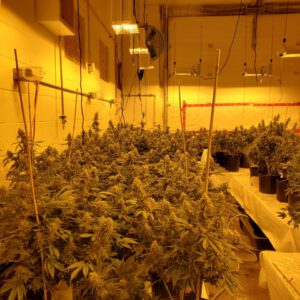
The SOG style of growing involves using a high volume of smaller-sized plants. The seedlings or clones will be allowed to vegetate for 7–14 days, keeping the plants short and ready to spread out without fighting for light. The goal is to produce a medium-sized plant, 75–100cm tall. When using a fast-flowering strain, you can expect to complete the whole grow cycle and be ready to harvest within 8–10 weeks.

  • Vegetate seedlings for 2 weeks before flowering
  • Vegetate clones for 7–10 days before flowering
  • 2 gallon pots in rows of 4 × 4 for a 1m × 1m × 2m grow tent
  • 2 gallon pots in rows of 5 × 5 for a 1.5m × 1.5m × 2m grow tent
  • 2 gallon pots in rows of 6 × 6 for a 2m × 2m × 2m grow tent

All the Reasons You Should Consider SOG Setups

Below is a list of reasons you may want to consider leaving plant training behind and adopting a Sea of Green growing style in 2026.

A Short Vegetative Time

The vegetative stage is the time when your grow lights are hammering electricity for at least 18 hours a day. The best thing about short vegetative times is that you do not need to worry about a sky-high electricity bill, and the plants have plenty of light around them.

Less Vegetative Nutrients Used

Shorter vegetation times also mean the amount of nutrients you need to give them reduces. In the long run, it will allow your nutrients to last much longer and help you save costs.

More Harvests Each Year

If you were growing Zkittles, many phenotypes can be flowered in around 40–49 days to achieve the ultimate Z profile. With the SOG method, considering the veg times are limited to around 7 days with clones, you could be pulling off a harvest every 8 weeks. This can equate to 6 grows per year under optimal conditions and a much faster turnaround time.

Perpetual Harvests Every 8–10 Weeks

A well-organised grower who has a small tent or space for their clones can pull off perpetual harvests within 8–10 weeks, depending on the strain being grown.

Far Lower Electricity Bills

In today’s economy, energy prices are unpredictable. For those who want to keep their electricity bills lower, SOG is ideal. You can say goodbye to those long vegetative periods.

Easier to Trim Colas

When harvesting plants grown using the Sea of Green method, they may be shorter; however, there is far less foliage than with large plants trained for weeks at a time. This means trimming is much easier and won’t take you as long per plant.

No Plant Training Required

As beneficial as training cannabis plants can be under the right circumstances, the SOG method does not require any training to be implemented. This can be advantageous when working on a large scale involving hundreds of plants and can also save time.

The Benefits of Sea of Green Grows

  • No more long vegetation periods
  • Fewer nutrients are used during vegetation
  • Six harvests in a year
  • Significantly lower electricity bills
  • Easier to trim colas and less foliage
  • No plant training required

The Rules of the SOG Method

  • Your plants should grow close to 100 cm tall
  • Never exceed the vegetation period of 2 weeks
  • Give yourself plenty of room to work and aisles to walk
  • Do not apply any plant training whatsoever
  • Seed to harvest time should be between 8 and 10 weeks
  • Do not use pots larger than 2 gallons

My Conclusion

I think training cannabis plants is an excellent way to produce robust plants with higher yields. I have spent a decade training my own plants. In recent years, I have switched to the Sea of Green style.

Not only is the SOG setup advantageous given the state of the economy and soaring electricity bills, it also allows you to keep the grow cycle much shorter, achieve perpetual harvests every 9 weeks using clones, and trim buds more easily. I am a big fan of plant training, but if you want to enjoy the benefits mentioned and save money on electricity bills, then think seriously about switching to SOG.

<p>The post Why Training Plants Is a Waste of Time: Here’s What Actually Works first appeared on High Times.</p>

Source link

Why Is Weed So Strong Now? A Look At The Pros And Cons of Potent Modern Weed

Why Is Weed So Strong Now? A Look At The Pros And Cons of Potent Modern Weed

Why Is Weed So Strong Now? A Look At The Pros And Cons of Potent Modern Weed

Does this sound familiar – you light up a joint, take a hit, and within minutes feel completely overwhelmed by its potent effects? You’re not imagining it – modern weed is super strong. At first, that might sound like a good thing, but it’s not so simple. Join us as we explore the pros and cons of today’s supercharged bud.

The post Why Is Weed So Strong Now? A Look At The Pros And Cons of Potent Modern Weed appeared first on Sensi Seeds.

Source link

THC: Older Than Civilization, Banned for a Blink—Why Prohibition Is the Failed Experiment

THC: Older Than Civilization, Banned for a Blink—Why Prohibition Is the Failed Experiment

THC: Older Than Civilization, Banned for a Blink—Why Prohibition Is the Failed Experiment

Today, we’re going to talk about the deep history of THC, how this molecule came to exist millions of years before humans, how it helped build civilization, and why the idea that we can or should ban it represents a fundamental misunderstanding of both biology and human history.

Source link