medical cannabis

Cannabis Has a Lot of Medical Benefits, So Shouldn’t it Be Legal?


Cannabis Has a Lot of Medical Benefits, So Shouldn’t it Be Legal?

If you look at the criteria for drug scheduling in the US, you’ll notice that the medical use of the substance is a crucial factor. Schedule I drugs, for example, have “no currently accepted medical use” as well as a high potential for abuse.

With the rescheduling process for cannabis still ongoing, lawmakers clearly see the issue with putting cannabis in this category. But with 38 states allowing cannabis for medical purposes and such a huge range of qualifying conditions, shouldn’t we just accept that it has more benefits than downsides and legalize it altogether?

Continuing our series of the Best Arguments For and Against Cannabis, we’re taking an in-depth look at the medical uses for cannabis and how they should (or shouldn’t) inform our discussion about legalization.


Yes…

  • Schedule I drugs supposedly have no currently accepted medical benefit. However, most states agree cannabis can help with many conditions including chronic pain, multiple sclerosis and chemotherapy side effects.
  • Lists of qualifying conditions for medical cannabis vary by state. A patient in one state may be eligible for legal medical cannabis while an identical patient in another state would not be.
  • Legalizing cannabis would acknowledge its obvious medical applications while equalizing access for medical patients across the country.

No…

  • Just because something has medical benefits doesn’t mean it should be sold freely. Doctors prescribe morphine medically but we shouldn’t make it completely legal.
  • Cannabis is addictive, and this is another key part of the definitions in the drug schedules. This justifies placing it somewhere like schedule III, but not legalizing.
  • The inequalities in the medical cannabis state laws could be rectified with a unified set of science-based qualifying conditions for the whole country.

The Medical Benefits of Cannabis (and the Minimal Risks)

There are many accepted medical uses for cannabis, ranging from CBD for rare childhood seizure disorders through to THC-containing products for chronic pain.

The National Academies of Science, Engineering and Medicine looked through all of the evidence back in 2017, and concluded that there was substantial evidence of a benefit for chemotherapy-induced nausea and vomiting, chronic pain, and multiple sclerosis (MS).  For other conditions, including anxiety, post traumatic stress disorder (PTSD), Tourette syndrome, and weight loss and appetite issues from HIV/AIDS, there is limited evidence. Finally, they found moderate evidence that cannabis can help reduce sleep disturbance associated with obstructive sleep apnea, fibromyalgia, chronic pain and MS.

This is a fairly conservative list, with some physicians arguing for benefits in many other conditions. For example, Harvard Medical School’s Dr. Peter Grinspoon suggests it can help reduce tremors in Parkinson’s disease, help with fibromyalgia more generally, interstitial cystitis, endometriosis and glaucoma. Importantly, when discussing the benefits for pain conditions, Dr. Grinspoon points out that part of the appeal is that it is much safer than the opioids commonly used for pain conditions.

There are many other academic reviews and discussions you can use to get more information about the potential medical benefits of cannabis. The key point is that physicians from the US and around the world acknowledge that there are legitimate uses. Multiple lines of evidence clearly show the medical benefits of cannabis.

If Cannabis is Medicine, Where Do We Draw the Line?

If we accept cannabis as medicine – as most states already have – then we have to ask “how do we decide who is allowed to use cannabis and who isn’t?”

This is not an easy question to answer. There is a substantial overlap between medical and recreational use. One study suggested that as many as 80% of medical users are also recreational users. The line between medical and recreational use is not as clear as lawmakers might naively hope.

Things get even more muddied when we consider that the scientifically-backed medical uses above don’t cover every medical use accepted by states. The lists of qualifying conditions for “medical marijuana” are way broader than that relatively limited selection. They often include conditions not mentioned above such as (depending on your state – these examples were taken from Connecticut, Delaware and New Jersey):

  • Agitation of Alzheimer’s disease
  • Amyotrophic lateral sclerosis
  • Autism with self-injurious or aggressive behavior
  • Cachexia 
  • Cancer
  • Cerebral Palsy
  • Decompensated cirrhosis
  • Dysmenorrhea
  • Inflammatory bowel disease, including Crohn’s disease
  • Intractable skeletal muscular spasticity
  • Migraine
  • Muscular dystrophy
  • Opioid Use Disorder
  • Post Laminectomy Syndrome with Chronic Radiculopathy 
  • Severe Psoriasis and Psoriatic Arthritis 
  • Severe Rheumatoid Arthritis
  • Seizure disorder, including epilepsy
  • Sickle Cell Disease
  • Terminal illness with prognosis of less than 12 months to live
  • Vulvodynia and Vulvar Burning

And this is before we consider situations like in California, where the list includes “any other chronic or persistent medical symptom that either substantially limits a person’s ability to conduct one or more of major life activities.” Likewise, in New York, it includes, “any condition deemed clinically appropriate by your health care provider.” In short, some states allow basically anything your doctor agrees with.

Even using the list above, we can see problems immediately. Why should a woman with dysmenorrhea (i.e. painful periods) in New Jersey be able to access cannabis medically to manage the pain but not a woman in Delaware? Are we supposed to tell her she can use cannabis one week a month but never outside of this time? Imagine she ends up with migraines too. Should she have to go to the doctor again even though the same treatment would likely help her?

Any attempt to draw a firm line runs into such issues immediately. The alternative, much simpler, is making cannabis available more freely, both for recreational and medical users.

If it were very dangerous or not otherwise available, then perhaps there would be an argument for keeping things restricted.  But as things stand, the risk is low and if people really want it, they can probably get it without a prescription with minimal difficulty. So why should we try to keep it “prescription only” when it might as well be “over-the-counter,” there for those who need it?

Counterpoint: Addictive Potential Matters Too

The two criteria for drug scheduling are accepted medical uses and potential for abuse and dependence. While cannabis has accepted medical uses, it also has potential for abuse and dependence. We don’t restrict opioid painkillers because we don’t think they have a medical use – they obviously do – but because despite this, they carry significant risk for abuse.

In the same way, even if cannabis is a medicine, allowing it to be sold freely opens people up to the risk of addiction. The overlap between medical and recreational use mentioned in the previous section makes this argument even stronger – clearly people are not just using medically, and free availability would just worsen this issue.

Counterpoint: Equalizing the System is Easy, But it Must Be Done Federally

Allowing states to set up their own qualifying criteria for “medical marijuana” has created an unequal situation, as mentioned above with the period pain example. But legalization or liberalization is not the only solution to this. The federal government could simply list acceptable medical uses of cannabis based on the actual evidence and not leave it to states to add any condition they think is valid at will.

If you believe that states should have the right to set their own laws to some extent, then this “inequality” is unavoidable – that’s what it means to have states decide. If you believe that rules should be fair across the board, this could just as easily be achieved with a scientifically-backed “master list” of qualifying conditions for medical cannabis as it could by a free-for-all legalization effort.


Our Take: Medical Use Doesn’t Justify Legalization, But It’s a Strong Point in Favor

It’s absolutely the case that the existence of medical uses for cannabis doesn’t mean it should be sold on every street corner. We restrict all types of medicines for very good reasons. But at the same time, even if it isn’t a standalone argument for legalization, it is one very important component of a larger case, taken alongside all the other arguments for cannabis.

Should the woman in New Jersey being able to smoke for period pain mean that every other state has to make this the law too? Of course not. But if it is safer than other pain medications and recreational drugs (such as alcohol) which society accepts, what exactly is the point in restricting it? Legalization would undoubtedly help many people who currently don’t have access to medical cannabis, not to mention all of the people who want to use it recreationally too.

The potential benefits are huge and the downsides such as addiction happen under a prohibitionist system anyway. 


References

Bostwick, J. M. (2012). Blurred boundaries: The therapeutics and politics of medical marijuana. Mayo Clinic Proceedings, 87(2), 172–186. https://doi.org/10.1016/j.mayocp.2011.10.003

About the source:

  • Peer reviewed? Yes, published in Mayo Clinic Proceedings.
  • Methodology: A narrative review of evidence on the therapeutic potential and controversies surrounding “medical marijuana.”
  • Main points: Discusses the history of the medical use of cannabis, relevant controversies (e.g. the relationship between psychosis and cannabis) and other points. Importantly for this article, it points out that there is substantial overlap between medical and recreational use.  
  • Other notes: Could be viewed as biased, owing to the author’s clear disagreement with the schedule I status for cannabis and the narrative nature of the review. However, both positive and negative points are discussed.  

Grinspoon, P. (2020, April 10). Medical marijuana. Harvard Health. https://www.health.harvard.edu/blog/medical-marijuana-2018011513085

About the source:

  • Peer reviewed? No, a blog post from Dr. Peter Grinspoon of Harvard Health.
  • Main points: Medical cannabis is effective for many conditions, ranging from chronic pain control to Parkinson’s disease, weight loss and glaucoma.
  • Other notes: This is perhaps a little more lax when it comes to quality of evidence than peer reviewed articles tend to be (for example, speaking positively about areas it acknowledges more evidence is needed). However, it is not an unfair assessment.

National Academies of Sciences, Engineering and Medicine. (2017). Therapeutic effects of cannabis and cannabinoids. In The health effects of cannabis and cannabinoids: The current state of evidence and recommendations for research. National Academies Press. https://www.ncbi.nlm.nih.gov/books/NBK425767/

About the source:

  • Peer reviewed? No, but an official publication of the highly-respected National Academies of Sciences, Engineering and Medicine, based on peer-reviewed research.
  • Methodology:  A committee of experts systematically reviewed evidence on cannabis use and various health end-points. You can find more information here.
  • Sample size: The committee reviewed 6,540 primary literature articles and 288 systematic reviews. The final sample included 207 primary literature articles and 44 systematic reviews. Note that these numbers are for the whole book (not just this chapter). 
  • Main results: Cannabinoids are effective antiemetics for chemotherapy-induced nausea and vomiting, can improve pain symptoms, improve patient-reported spasticity in MS patients and have many other potential effects with less convincing evidence.
  • Other notes:  It’s worth noting that the conclusions of this review are fairly conservative. They are not inaccurate, but many physicians and researchers would argue that cannabinoids help with more conditions.

Turna, J., Balodis, I., Munn, C., Van Ameringen, M., Busse, J., & MacKillop, J. (2020). Overlapping patterns of recreational and medical cannabis use in a large community sample of cannabis users. Comprehensive Psychiatry, 102, 152188. https://doi.org/10.1016/j.comppsych.2020.152188

About the source:

  • Peer reviewed? Yes, published in Comprehensive Psychiatry.
  • Methodology: Self-reported survey of cannabis users. Users completed many diagnostic tests (e.g. to assess cannabis use disorder, anxiety, PTSD and other conditions). Researchers compared their habits and conditions based on whether they used medically, recreationally or both.
  • Sample size: 709 cannabis users from Canada.
  • Main results: Around 61% only used recreationally. Medical users tended to use cannabis more and were more likely to have problematic use and psychiatric symptoms. 80.6% of medical users also used recreationally.
  • Other notes:  The study relied on self reports, and the authors used a non-representative database for their sample.

The post Cannabis Has a Lot of Medical Benefits, So Shouldn’t it Be Legal? appeared first on CBD Oracle.
Source link

Cookies Brentwood Dispensary Logo

Cookies

Cookies

Cookies Brentwood Dispensary

Cookies Brentwood Dispensary sits along San Vicente Boulevard in Los Angeles’ Brentwood neighborhood, bringing a curated cannabis experience rooted in the culture of the globally recognized Cookies brand.

Cookies Brentwood Dispensary Logo

Cookies Brentwood Dispensary interior or storefront

Sponsored

Cookies blends trend-setting product offerings with a vibe that mirrors its West Coast lifestyle setting. From exclusive genetics and fresh flower to flavorful pre-rolls, vapes, edibles, and wellness selections, Cookies Brentwood aims to meet a wide range of consumer preferences with knowledgeable staff support.

Customers appreciate the thoughtful presentation of products and daily deals that help make premium cannabis more accessible. With a loyalty program and ongoing specials, Cookies Brentwood positions itself not just as a retail destination but as a community hub for aficionados and newcomers alike seeking quality, authenticity, and consistent service in Southern California’s dynamic cannabis scene.

h1.entry-title, .byline, .td-post-author-name, .td-post-date, .td-post-meta,
.td-post-category, .td-category, .td-post-featured-image, .advertisement,
.td-a-rec, .td-a-rec-id-content_inline, .td-a-rec-id-content_bottom {
display: none !important;
height: 0 !important;
margin: 0 !important;
padding: 0 !important;
visibility: hidden !important;
}

.td-main-content-wrap + div:not([class]) {
display: none !important;
}

.td-footer-wrapper,
.td-sub-footer-container {
margin-top: 0 !important;
position: relative !important;
z-index: 999 !important;
display: block !important;
}

.td-container-wrap {
padding-bottom: 0 !important;
border-bottom: none !important;
}

/* 1. HIDE THEME ELEMENTS (Title, Meta, Ads) */
h1.entry-title,
.byline,
.entry-meta,
.td-post-date,
.td-post-author-name,
.td-post-meta,
.td-post-category,
.td-category,
.td-post-featured-image,
.wp-post-image,
.post-thumbnail,
.td-post-header .entry-thumb,
.featured-media,
.advertisement,
.td_block_ad_box,
.td-post-related,
.td-related-bottom {
display: none !important;
margin: 0 !important;
padding: 0 !important;
height: 0 !important;
overflow: hidden !important;
}

/* 2. FIX FOOTER (Removed the broken ‘+ div’ selector) */
.td-footer-wrapper,
.td-sub-footer-container {
display: block !important;
visibility: visible !important;
height: auto !important;
clear: both !important;
}

/* 3. PREVENT PAGE SHIFTING */
html, body {
overflow-x: hidden;
}

Source link

Giving Trump A Marijuana Business License Would Help Convince Him To Back Legalization, Democratic Senator Says

Giving Trump A Marijuana Business License Would Help Convince Him To Back Legalization, Democratic Senator Says

Giving Trump A Marijuana Business License Would Help Convince Him To Back Legalization, Democratic Senator Says

As she works to find Republican colleagues to join her in the push for federal marijuana legalization, a Democratic senator has a “theory” about how to get President Donald Trump on board: Give him a cannabis business license so he can “make a ton of money.”

Sen. Kirsten Gillibrand (D-NY) discussed her plans to advance marijuana reform—and the challenges of finding GOP leaders who are aligned with the majority of Americans on the issue—during an event organized and hosted by Cultivated on Thursday.

The senator stressed that she needs “a Republican leader to help me” move forward with descheduling, but stigma prevails among the GOP caucus on Capitol Hill, complicating the pathway to reform, which also includes more incremental proposals to ease marijuana industry banking and stock exchange access, for example.

Gillibrand also said she needs “President Trump to want to do cannabis,” and she said it isn’t outside the realm of possibilities given his record of shifting positions on various policy issues such as cryptocurrency.

“If I could get him convinced it was a great business,” that could move the needle, she said, joking that one way to get Trump on board with legalization would be to “offer him a cannabis license for New York so that he can make a ton of money, and then he will be for this industry.”


“I don’t know. That’s just one theory: Offer President Trump a cannabis license. It’ll work,” the senator said at the event. “Money talks. He’s a businessman first.”

In Congress, Gillibrand said she’s seeking a GOP leader to “help me do the deregulation legislation,” and her staff “has been reaching out to many of the senators who are from states that already have either recreational use or medical use, and we’re just not getting the leadership that we need. ”

“So I’m still working on that, but I think the biggest impediment is that we’ve not had presidential leadership in 20 years on this. It’s been very frustrating that, even under Democrat and Republican administrations, nobody wants to deschedule cannabis,” she said. “If any president decided to deschedule cannabis, it would get done. And so that’s been our biggest impediment, and I’ve been disappointed in both Democrats and Republicans consistently.”

Former President Joe Biden initiated a process to move marijuana from Schedule I to Schedule III of the Controlled Substances Act (CSA), she noted, and Trump has since signed an executive order directing Attorney General Pam Bondi to expeditiously complete that process. But that’s yet to come to fruition—and the Justice Department told Marijuana Moment on Wednesday that it had no “comment or updates” on the status of that rulemaking.

Gillibrand reiterated that, “again, it should be moving us to full descheduling,” not simply rescheduling. Moving cannabis to Schedule III would not end federal prohibition, though it would let state-legal marijuana businesses take federal tax deductions, loosen certain research restrictions and symbolically recognize the plant’s medical value.

“I’m going to work with whatever Republican leaders I could find to create a bipartisan and bicameral piece of legislation to fully deschedule it, and also to open up the markets so that people can have access to the stock exchanges, access to capital, access to the financial services industry—even as a half-measure,” the senator said. “If I could get that financial services bill done and then work on descheduling, I would do that as well. So I’m going to keep looking for partners, and I think that is the biggest holdup we’ve had so far.”

“If I could find some Republican leaders who want to do this, we could try to get a vote, try to create advocacy so that community that wants full descheduling of cannabis can be heard,” she said. “We could do press conferences. We could create a drumbeat. That’s how you typically get things done. You have to change the weather. You have to make sure that people begin to realize this is a piece of legislation that needs to move, and my biggest impediment is a Dem-only bill just doesn’t get us there because we don’t control the House and the Senate.”

Gillibrand added that she’s “fighting to flip the Senate” as chair of the Democratic Senatorial Campaign Committee “to win some more Republican states and flip them blue so I have better allies in doing the work to decriminalize and to make cannabis available in all 50 states.”

Whether its descheduling or industry access to financial services, “I need a strong leader,” she said. “We have pitched this to several senators who come from states that either have full have medical use, but also those who have recreational use, and so far we’ve not gotten a taker yet.”

“So we just need to keep raising this to the people, because the people can convince their representatives to support our bill and to support our ideas,” Gillibrand said. “It’s making it much more of a debated issue. I’d like it to be debated in these Senate races. I’d like it be debated in the next presidential campaign. I think it has to be on the forefront of stakeholders’ and elected leaders’ minds that they have to answer to their constituents on it.”

“The Republican Party has just not been pro-cannabis lately. We used to have some senators. We had a Republican senator out of Colorado who was very helpful on this. There were pockets of Republicans who were willing to help us that are not no longer in the Senate. So just don’t have a lead Republican who thinks this is important for his or her state, and that’s a huge problem. So we need to somehow create the drumbeat so that people understand that their senators have to be supportive of what their states want.”

“At its core, this conversation is about the future of our country’s economy, the health, the social equity and public safety. The American people have made themselves clear: Most of Americans support full legalization at the federal level,” she said. “Unfortunately, Washington is always behind the eight ball and continues to drag their feet—and getting anything done to do this one thing, unfortunately, Washington has been unwilling to do the work that’s necessary. It’s creating confusion and disparities across all levels of government, as well as for our small businesses and our entrepreneurs and Americans in general.”

“Too many members of Congress focus on cannabis as a gateway drug, as opposed to a cure, or as opposed to something that adults can enjoy across the country,” she continued. “And so it’s been very frustrating that we have not really gotten rid of the stigma still associated with cannabis.”

“The current administration’s executive order to move marijuana from Schedule I to III is obviously a positive step in the right direction. It’s not sufficient. However, it acknowledges what we know: That it is not the same category as of drugs like heroin and other Schedule I drugs,” Gillibrand said. “But obviously it’s not enough. So I’m going to do everything I can to continue this march towards full descheduling, full legalization, in all 50 states—to have a federal law and to have a federal standard.”

“I think it would make all the difference in the world for our stakeholders, for our consumers, for our patients and for the people who really need access to this industry and access to these products,” she said.


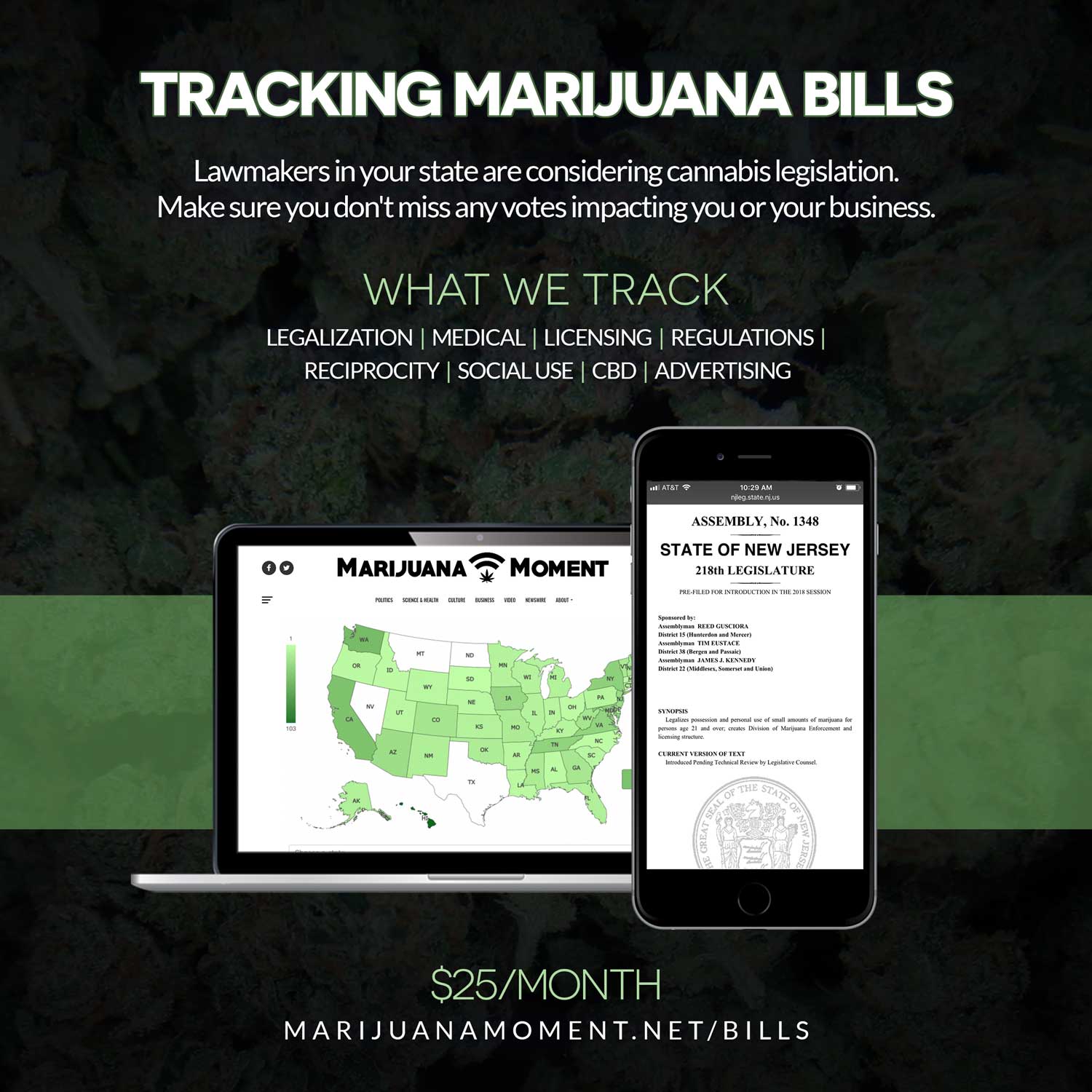
Marijuana Moment is tracking hundreds of cannabis, psychedelics and drug policy bills in state legislatures and Congress this year. Patreon supporters pledging at least $25/month get access to our interactive maps, charts and hearing calendar so they don’t miss any developments.


Learn more about our marijuana bill tracker and become a supporter on Patreon to get access.

Meanwhile, the White House recently touted the president’s executive order on rescheduling as an example of a policy achievement during the first year of his second term.

Former Rep. Matt Gaetz (R-FL), Trump’s first pick for attorney general this term who ultimately withdrew his nomination, raised eyebrows on Wednesday after posting on X that he’s been told the Drug Enforcement Administration (DEA) is actively drafting a rescheduling rule and intended to issue it “ASAP.”

There’s some confusion around that point, however, as a rule is already pending before the Justice Department—and a new rule would presumably be subject to additional administrative review and public comment.

A Democratic senator told Marijuana Moment earlier this month that it’s “too early to tell” what the implications of Trump’s cannabis order would be—saying that while there are “things that look promising” about it, he is “very concerned about where the DOJ will land.”

“The ability of the Trump administration to speak out of both sides of their mouth is staggering,” Sen. Cory Booker (D-NJ) said. “So I’m just going to wait and see right now. Obviously, there’s things that look promising—to end generations of injustice. I really want to wait and see.”

Also this month, two GOP senators filed an amendment to block the Trump administration from rescheduling cannabis, but it was not considered on the floor.

Meanwhile, earlier this month, DEA said the cannabis rescheduling appeal process “remains pending” despite Trump’s executive order.

A recent Congressional Research Service (CRS) report discussed how DOJ could, in theory, reject the president’s directive or delay the process by restarting the scientific review into marijuana.

Bondi, the attorney general, separately missed a congressionally mandated deadline this month to issue guidelines for easing barriers to research on Schedule I substances such as marijuana and psychedelics.

The post Giving Trump A Marijuana Business License Would Help Convince Him To Back Legalization, Democratic Senator Says appeared first on Marijuana Moment.

Source link

Cannabis Isn’t the Most Harmful Substance. Alcohol and Tobacco Are. Duh. Science Says So, Again.

Cannabis Isn’t the Most Harmful Substance. Alcohol and Tobacco Are. Duh. Science Says So, Again.

Cannabis Isn’t the Most Harmful Substance. Alcohol and Tobacco Are. Duh. Science Says So, Again.

For decades, cannabis has been treated as a public menace while alcohol and tobacco were folded into daily life, policy frameworks and corporate profit models. A newly published scientific analysis out of Canada once again flips that logic on its head.

A peer-reviewed study published January 27 in the Journal of Psychopharmacology finds that alcohol and tobacco cause far greater overall harm to both individuals and society than cannabis. The research evaluates not just health risks, but the broader social damage associated with drug use, including injury, economic cost and harm to others.

The paper, titled Drug harms in Canada: A multi-criteria decision analysis, was authored by an international group of researchers and can be accessed here.

The findings are striking but consistent with prior global research. When all factors are weighed together, alcohol ranks as the most harmful drug overall, followed by tobacco. Cannabis sits far lower on the scale.

How the study measured harm

The researchers used a method known as multi-criteria decision analysis, a framework previously applied in the United Kingdom, the European Union, Australia and New Zealand.

A panel of 20 experts from six Canadian provinces evaluated 16 psychoactive substances, including alcohol, tobacco, cannabis, cocaine, methamphetamine, opioids and benzodiazepines. Each substance was scored across 16 categories of harm.

Ten categories measured harm to the user, including mortality risk, physical health damage, mental health impact and dependence. Six additional categories measured harm to others, including motor vehicle injuries, violence, environmental damage and economic cost.

After scoring each substance and weighting the relative importance of each category, alcohol emerged as the most damaging overall, with a cumulative harm score of 79. Tobacco followed at 45. Cannabis scored 15.

In other words, cannabis ranked far below alcohol and tobacco in terms of total population-level harm.

This isn’t new. That’s the point.

The Canadian findings align closely with earlier studies led by British neuropsychopharmacologist David Nutt, including a landmark 2010 Lancet paper that first drew international attention to alcohol’s outsized harm.

More recently, a 2024 U.S. study published in the Journal of Studies on Alcohol and Drugs found that secondhand harms from alcohol use were substantially more prevalent than harms caused by other drugs.

The consistency across countries and methodologies matters. These findings are not an outlier, and they are not driven by cannabis advocacy. They are driven by data.

What the study does and doesn’t say

The authors are careful to clarify that these harm scores reflect population-level impact, not the inherent danger of a substance in isolation.

Alcohol’s high ranking is not only about toxicity. It reflects how widely alcohol is used, how socially normalized it is and how weakly it is regulated relative to its risks.

Cannabis, by contrast, scores lower in part because it causes fewer harms to others. It is far less associated with violence, fatal accidents and long-term disease burden at the population level.

At the same time, the study does not claim cannabis is harmless. It acknowledges health risks, particularly for certain populations and patterns of use. The takeaway is not that cannabis should be ignored by regulators, but that drug policy should be proportional to actual harm.

As the authors note, the findings also reflect the current policy environment. Alcohol’s high harm score underscores what they describe as a failure to adopt proven policies to reduce alcohol-related damage, despite decades of evidence.

Why this matters now

As cannabis legalization continues to evolve across North America, the disconnect between scientific evidence and public policy remains stark.

Cannabis businesses face advertising bans, banking restrictions and criminal penalties that alcohol and tobacco companies do not. Meanwhile, alcohol remains deeply embedded in social life despite its well-documented risks.

This study does not argue for replacing one substance with another. It argues for honesty.

If governments claim to base drug policy on public health, then the relative harms of substances must be acknowledged. Otherwise, enforcement becomes less about safety and more about tradition, stigma and political convenience.

For readers who have long questioned why cannabis is treated differently, this research provides something valuable: confirmation grounded in evidence, not rhetoric.

The data is not radical. The implications are.

Photo: Shutterstock

<p>The post Cannabis Isn’t the Most Harmful Substance. Alcohol and Tobacco Are. Duh. Science Says So, Again. first appeared on High Times.</p>

Source link

California Cops Have To Treat Marijuana In Cars Differently After New Supreme Court Ruling

California Cops Have To Treat Marijuana In Cars Differently After New Supreme Court Ruling

California Cops Have To Treat Marijuana In Cars Differently After New Supreme Court Ruling

“To constitute a violation…marijuana in a vehicle must be of a usable quantity, in imminently usable condition, and readily accessible to an occupant.”

By Nigel Duara, CalMatters

This story was originally published by CalMatters. Sign up for their newsletters.

When it comes to impaired driving and the state’s open container law, a rolled and ready joint is more like a can of beer in giving police cause to search a car than a few crumbs of marijuana, according to the California Supreme Court.

The court’s reasoning: You can smoke a joint and drink a beer, but loose marijuana isn’t readily consumable.

In a ruling handed down on Thursday, the high court ruled that police must find marijuana in a condition that’s ready to be smoked if they are going to charge a driver with an open container violation.

“We hold that at a minimum, to constitute a violation of [the open container law], marijuana in a vehicle must be of a usable quantity, in imminently usable condition, and readily accessible to an occupant,” wrote Associate Justice Goodwin Liu in a unanimous opinion.

Loose marijuana found on a car’s floorboards is like spilled beer, the court ruled.

“In assessing whether the marijuana is imminently usable or readily accessible, courts should consider whether the marijuana could be consumed with minimal effort by an occupant of the vehicle,” the court found.

The ruling reversed a magistrate judge, trial court and the California Court of Appeal, which had all agreed that the loose marijuana constituted an open container violation and gave police cause to search a vehicle.

Recreational marijuana has been legal in California since 2016 when voters passed an initiative allowing it. It remains illegal under federal law.

The case at issue was out of Sacramento, where police officers stopped a car and searched it, finding 0.36 grams of marijuana crumbs on the floorboards of the backseat, along with a tray on which to roll joints. The driver hadn’t been driving erratically, her registration and license were unblemished and she had no warrants out.

“No officer suggested he was concerned that [the driver and passenger] could have somehow, while riding in the front of the car, collected the scattered bits of marijuana from the rear floor behind [the passenger] for imminent consumption,” the court ruled. “Nor was there evidence of paraphernalia, such as matches, lighters, rolling papers, blunts, or vaporizers, that could facilitate the marijuana’s consumption.”

The Supreme Court also found that the officers did not have probable cause to search the car in the first place. The police had argued that the driver’s nervousness and possession of a rolling tray was sufficient to search the car, an argument the court rejected.

This article was originally published on CalMatters and was republished under the Creative Commons Attribution-NonCommercial-NoDerivatives license.

The post California Cops Have To Treat Marijuana In Cars Differently After New Supreme Court Ruling appeared first on Marijuana Moment.

Source link