
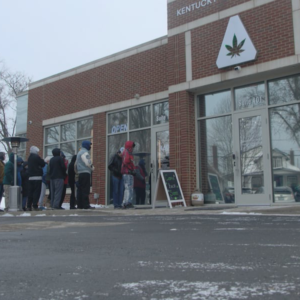
Louisville’s first medical cannabis dispensary opens
January 31, 2026
Published by toker

Dogs living with chronic health issues deserve comfort, relief, and a better quality of life. Medical marijuana, particularly hemp-derived options, has drawn attention as an alternative way to support their well-being. As research expands, veterinarians …
Continue reading “The Role of Medical Marijuana in Managing Chronic Conditions”

As incoming European markets look towards alternative delivery mechanisms like oils and vaporisers, more mature markets like the UK remain dominated by traditional dried cannabis flower, representing around 80% of all prescriptions.
Despite conistent double digit growth, rising 262% since 2022 and seeing 10 tonnes of flowers prescribed in 2024, the UK still lacks a centralised tracking system, mandatory product registry, or official source for patient feedback other than individual private clinics.
This not only means that analysts and industry stakeholders are left to trudge through messy Freedom of Information (FOI) data to gauge the size of the market and the shifting trends within it, but it also creates space for private companies in a position to amass this data to dominate.
Now, a new platform aiming to be the ‘Trustpilot of medical cannabis’ is hoping to help democratise this data and put it in the hands of patients.
Arron Dando, the creator of CannaBias, told Business of Cannabis: “I found that I seemingly go to multiple different sites to understand what it is that I’m purchasing. Sometimes I don’t know if it’s a sativa or an indica. It’s really quite tricky for me as a patient to actually understand what it is that I’m getting.”
CannaBias, now in early access, positions itself as a ‘moderated, safe and independent review platform’ for UK medical cannabis patients, providing verified, batch-by-batch feedback on their prescribed products.
Its creator, Dando, says that his background developing ‘safety-critical’ software for the UK’s national infrastructure has shaped his approach to medical cannabis and his new platform.
“If you drive a car, you’ve probably driven past an AI system that I put on the highways,” he explained. “It applies quite neatly to medicinal cannabis because, again, it’s a heavily regulated safety-critical industry.”

Its inception, he explains, stems from his own frustrations as a patient: “I may go online, I see something working well that could be worth trying, but then I get it, and it doesn’t match the review. That could be because that person’s biased, or it could be because the batch quality is not consistent.”
With this issue front of mind, CannaBias is engineered to track reviews at the batch level, rather than simply by the product name, and well beyond the point of delivery to a patient’s door.
“At the moment, the traceability stops at the door. The prescription is handed over, and that seems to be the end of it.
“We can tell on average, across the whole data landscape, whether the consistency is varying a lot, or maybe there’s quality control issues that we’re able to pick up quicker.”
While feedback is shared with individual clinics, it’s often sporadic and rarely neutral.
“If you have five or 10 people saying there’s an issue with this product, that’s much more reputable than one person contacting their clinic and then that clinic contacting the pharmacy or the cultivator.”
Many of the issues CannaBias is targeting mirror those highlighted in an October 2025 themed review of 25 pharmacies regularly supplying CBPM prescriptions.
In the review, conducted by the General Pharmaceutical Council 68 discrete concerns were identified across the various pharmacies. While 17 pharmacies met all standards, eight failed to comply fully. The GPhC report noted that CBPM dispensing has ‘devolved into putting it in a box and shipping it,’ with little or no pharmacist-patient contact.
“What industry do we have where a product is manufactured, and they don’t actually get user feedback? There’s all this data out there at the moment, but it’s just not meaningful. It can’t be used in a way that actually benefits anybody.
“Medbud Wiki has lots of information there, and that’s valuable, most definitely, but I find it quite hard to use, quite complicated and not really patient-friendly. I don’t trust that the information is accurate all the time. If you have one person’s review, it’s biased, but if you have 100 people’s reviews, suddenly you’re removing the bias.”
The post New Platform Aims to Become ‘Trustpilot for Medical Cannabis’ with Verified Patient Reviews appeared first on Business of Cannabis.

Struggling to fall asleep, many young adults are reaching for marijuana or alcohol at bedtime, a University of Michigan study found.
U-M’s annual Monitoring the Future Panel study found that 22% of adults between the ages of 19 and 30 used either cannabis, alcohol or both to sleep.
Of the two, marijuana was more common, with 18% using the drug to fall asleep, compared to 7% of participants who used alcohol.
While advocates say cannabis can be a low-risk alternative to sleep medications, using drugs or alcohol for sleep could “backfire because they can interfere with the ability to stay asleep and with the quality of sleep,” said Megan Patrick, research professor at the Institute for Social Research at U-M.
“They appear to actually disrupt sleep in the long term. The fact that so many young adults reported that they use cannabis to sleep is alarming.”
Sleep deprivation, or the lack of sleep, is a common condition that many Americans experience, according to a study published in the National Library of Medicine. It is generally recommended that adults get between 7-9 hours of sleep per night. If not, it can lead to excessive daytime sleepiness.
Factors like excessive screen time before bed can prevent the brain from releasing melatonin, the “sleep hormone.”
People who work early morning or late night shifts tend to have a harder time falling asleep and generally get fewer hours of sleep, according to the study.
“Unfortunately, there is a misconception that substance use can be helpful for sleep problems, but it can make things worse,” Patrick said. “High-quality sleep is critical for mental health and regulating mood. Young adults told us that they are using cannabis to try to get to sleep, but doing so may make their sleep problems even worse. They need to know the potential risks.”
While medical experts warn that relying on substances to sleep can increase the risk of dependency or substance abuse, cannabis advocates argue that, when used responsibly and in the right doses, the drug can offer real benefits for those struggling to fall asleep naturally.
Cannabis has become more widely accepted in recent years, particularly for its medicinal benefits. Michigan voters approved a measure to legalize medical marijuana use in 2008 and later approved recreational use in 2018.
A 2023 study published by the National Library of Medicine found that participants who used cannabis were able to reduce or completely stop prescription medication to help aid them with sleep.
“We sell thousands of packs of sleep gummies every week. I didn’t realize how many people had sleep problems,” said Jerry Millen, owner of Greenhouse dispensary in Walled Lake. “A lot of seniors can’t sleep, and a lot of young people now are stressed out and they can’t sleep either.”
The study found that cannabis that contains low levels of THC, a psychoactive cannabinoid that can produce relieving, sedative or euphoric effects, can help ease falling asleep and increase lower sleep time.
Cannabis that contains a high concentration of CBD, a nonpsychoactive cannabinoid, can have a sedating effect, while a lower dosage can actually have a stimulating effect.
“People are getting off opioids with cannabis. People are replacing alcohol with cannabis,” Millen said. “If you have a vice and you want to ‘abuse’ something, I suggest you use cannabis.”
The Centers for Disease Control and Prevention recommends that adults get at least seven hours of sleep each night.
Getting good quality sleep can decrease the number of times you get sick, maintain a healthy weight, reduce stress and improve your heart health and metabolism.
The CDC offers several recommendations for getting better, more restful sleep:
Article originally written by Janelle D. James with Bridge Michigan
This article first appeared on Bridge Michigan and is republished here under a Creative Commons Attribution-NoDerivatives 4.0 International License.
The post U-M Study: 1 in 5 Young Adults Using Marijuana, Alcohol to Fall Asleep appeared first on Weedmaps News.

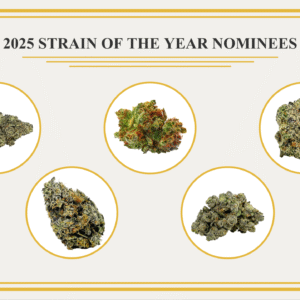
Five strains. Five breeders. Only one winner. Here are our nominees for Leafly Strain of the Year 2025.
The post Announcing the nominees for Leafly Strain of the Year 2025 appeared first on Leafly.
Searching for a “marijuana dispensary near me” may seem simple, but for many consumers, it raises an important question: who can actually be trusted? In an industry shaped by evolving regulations, payment limitations, and inconsistent …
Continue reading “Marijuana Dispensary Near Me: Choosing a Trusted Delivery Service”

I was told (correctly) that cannabis in the Dominican Republic is illegal. Minutes later, after a conversation that felt less like a transaction and more like a mutual acknowledgment, I was holding a joint that was not quite a joint like I’ve ever seen before, rolled not in thin white paper but in cigar leaf paper, brown, the kind used to roll habanos, as if the culture itself had decided that if this plant was to be smoked, it would be smoked on local terms.
That Dominican joint was offered to me almost immediately after leaving the airport in Punta Cana. It happened so fast that I declined the first offer, more out of surprise than caution.
I have no idea if this is how Dominicans always do it. So far, I’ve been unable and unwilling to ask anyone who might settle the question.
The paper burned slowly, as expected, and with every draw it reminded me that tobacco had been here long before cannabis learned how to ask for shelter. In the Caribbean, tobacco is an institution. Entire cities were shaped around drying leaves, around thousands, maybe millions, of hands trained to roll before they ever learned to read. Cannabis arrived later, without ceremony, and wisely chose not to challenge any of this. It slipped into the existing choreography of smoke, a quiet guest who knows better than to rearrange the furniture.
In places like this, where cigars are not symbols but facts of life, cannabis borrows the ritual. It folds itself into what already exists. That’s why there are no flashy rolling papers, no engineered cones, no talk of strains or percentages. Just leaves, paper, and the unspoken agreement that whatever you smoke will be good enough—or better.
A Dominican cigar leaf comes from different strains of Nicotiana tabacum. The cigar paper changes the experience in quiet but decisive ways. It slows combustion, flattens flavors, and introduces a welcome note of nicotine into the mix. All ways of smoking, after all, are shaped by history and by technology.
Tobacco was once the great extractive obsession of empires, carried from the Caribbean to Europe and back again as capital and addiction. Cannabis, now globalized and branded elsewhere, returns stripped of slogans, wrapped in the leaf of its predecessor, as if acknowledging a lineage of smoke that predates both prohibition and legalization.
Tobacco was here before European law arrived.
It did not come to La Española as a commodity; it is native to that region.
Long before Europeans named the island shared today by the Dominican Republic and Haiti, the Taíno people cultivated and smoked tobacco in ritual contexts, sometimes inhaled through nasal pipes, sometimes rolled into crude forms for ceremonial use. When Christopher Columbus reached these lands in 1492, he encountered tobacco not as a vice, but as a social, medicinal, and spiritual practice. The plant was already embedded in daily life.
What Europeans did was not introduce tobacco, but reorganize it.
By the early sixteenth century, Spanish colonization had turned La Española into a logistical hub of the Atlantic world. Tobacco became one of the few crops that could thrive outside rigid imperial control. Unlike sugar, it required less capital, less land, and less infrastructure. It could be grown by small producers, dried locally, and moved quietly.
Throughout much of the 1600s, tobacco from the northern coast of La Española circulated through contraband networks linking Spanish settlers, enslaved Africans, remaining Indigenous communities, and foreign merchants—especially Dutch and Portuguese. Tobacco taught the island early that smoke could move faster than law.
The Dominican Republic today is one of the world’s leading producers of premium cigars, exporting over a billion dollars’ worth annually to more than a hundred countries. Tobacco remains a national industry, rivaled only by gold and tourism. Factories, fields, and free-trade zones coexist with family operations and informal knowledge passed hand to hand.
If you pay attention, the way a society smokes often tells you more about its relationship to power than anything written in its laws.
It was only afterward, when the taste of cigar paper still lingered like a sentence that refused to end, that I understood the quiet irony of those Dominican guys—the Polanco Brothers—taking over the Nat Sherman cigar house in New York City, a shrine to old money and North Atlantic tobacco mythology, and why they called it destiny rather than a business move.
Only then did the cigar-paper joint make full sense as a small signal of a much larger continuity that lets cannabis borrow tobacco’s rituals in Santo Domingo or Port-au-Prince, and lets Dominican hands redefine luxury cigar culture in Manhattan.
The distance between periphery and center collapses.
Weed and tobacco blur.
All that vanished in smoke.
<p>The post You’re Not Supposed to Smoke Weed Here. So Why Did This Feel Normal? first appeared on High Times.</p>



Midnight Madness is coming to Mint Cannabis on Saturday, January 31st, and adults are invited to the ultimate late-night party!
Mint is turning up the vibes with a full-on disco madness theme, complete with a disco ball, strobe lights, and music to keep the energy high all night long. Whether you’re coming for the deals, the atmosphere, or the free giveaways, this is one event you won’t want to miss.
– Vendors on-site from top cannabis brands
– Exclusive Midnight Madness deals starting at 11:00pm
– Games, giveaways, and surprises throughout the night
– Free snacks and free hot chocolate
– Disco vibes with music, strobe lights & a glowing disco ball
– Starting right at midnight (12:00am), the first 50 customers to make a purchase will receive a FREE eighth — no better way to celebrate Midnight Madness!
– When: Saturday, Jan 31st – Time: 11:00pm – 2:00am
– Where: Mint’s Tempe & Buckeye locations
The post Midnight Madness at Mint Cannabis Dispensary on Jan 31 appeared first on AZ Marijuana.


