

Sunland Park approves permits for two cannabis dispensaries after previous rejection
May 13, 2026
Published by toker


Cannabis industry growth in 2026 is not a single story. It’s four or five stories happening simultaneously in different states, at different speeds, with different implications depending on where you sit in the supply chain.
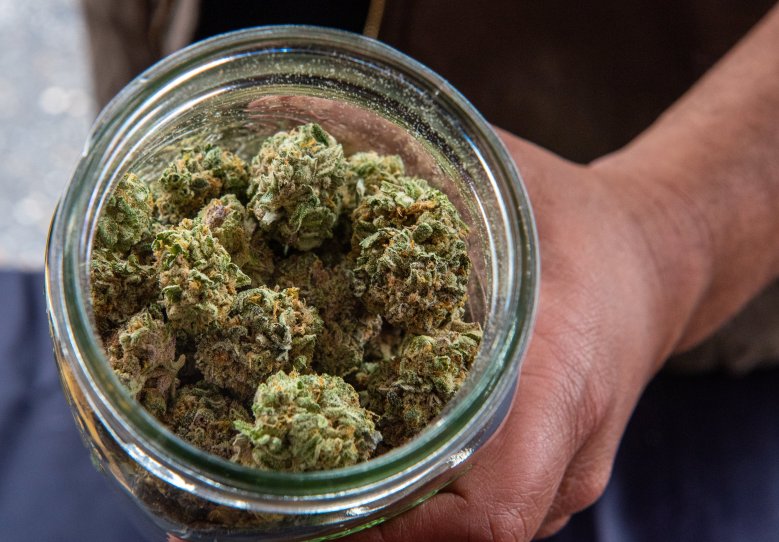

An eighth of weed is exactly 3.5 grams — one-eighth of an ounce. Here’s what it looks like, how long it lasts, what it costs, and how to store it.
The post How Much Is an Eighth of Weed? (3.5 Grams, Explained) appeared first on Greencamp.

Cordyceps is not the strongest compound in the functional mushroom category. It is not the most studied, and it is not the most clinically supported. Yet the cordyceps market continues to outperform expectations. Why is the “energy” keyword so powerful that it drives purchases even without strong clinical support?
This gap between scientific weight and commercial success is not accidental. It reflects a broader pattern in wellness where claims of potential benefits shape demand more than clinical certainty. Understanding this, and knowing how to reference potential health benefits without attracting regulatory attention, is key to competing in this market.
The global functional mushroom market is expanding quickly, with estimates placing it above $30 billion and projected annual growth of roughly 8 to 10 percent over the next decade. Within that, cordyceps is consistently positioned as a core ingredient due to its association with energy and performance.
As a result, cordyceps products are frequently bundled into energy blends, pre-workout alternatives, and daily vitality stacks.
Historically, cordyceps has been used in Traditional Chinese Medicine for fatigue, respiratory issues, and general vitality. Modern use has shifted toward performance, immunity, and metabolic health. Search data around cordyceps mushroom benefits supports this positioning. Queries around “cordyceps energy,” “cordyceps performance,” and “cordyceps benefits” consistently outperform more technical or medical queries.
Energy is one of the most reliable selling points in wellness. It is immediate, easy to understand, and universally relevant. Unlike immune support or metabolic health, energy does not require explanation. Consumers either feel it, or believe they do. A product that promises “more energy” is easy to market, and when positioned correctly, it tends to convert.
Cordyceps fits directly into this narrative. The message does not need to be precise. It needs to be believable. Even limited evidence around ATP production and oxygen utilization is enough to anchor a simple message…
As a result, the cordyceps market remains strong as its products provide a solution to a popular problem which consumers already prioritize. This is why many supplement brands include cordyceps in their formulations, or build products around it.
If you want to sell anything in this market, you must know how to communicate benefits without overstating the available research. The key is to have some research you can reference, even if only partly relevant. Once this is done, you should shift the attention to your products, without making any explicit claims (which you are not allowed to do). This method associates your product with nearby research without making direct claims, leading successfully to sales.
For example, Cordyceps has a useful level of scientific backing. Not enough to be definitive, but enough to support a credible narrative. References to ATP production, oxygen efficiency, and endurance create a sense of legitimacy without overwhelming the buyer. So using this method, we have placed Cordyceps in a position where brands can now reference mechanisms (ATP production for example) without needing to prove outcomes (energy).
While it sounds weak, this method can help drive attention and bring more potential customers to your products. There, as condyceps is now associated with Energy, you don’t have to say it, but only to hint toward that direction and you see more sales.
Naturally, if you don’t do it right, the damage is greater than the potential gains, so make sure to avoid taking risky shortcuts, leading to an FDA warning letter.
Looking at the cordyceps market, you can see that cordyceps is rarely sold alone. It is usually part of a formulation and labeled as daily energy support, coffee alternative, performance enhancement, etc. You may also find it in many blends that mix other mushrooms, such as lion’s mane, reishi, turkey tail, etc. or even mix it with adaptogens.
By adding cordyceps to other components, brands can avoid overpromising on a single ingredient while still capturing the energy narrative. It also increases average order value and repeat purchase behavior.
Cordyceps products tend to sit in the mid to premium range.
This is partly driven by production complexity, especially for high-quality extracts of Cordyceps militaris. It is also driven by perceived rarity and traditional use narratives. As consumers often associate cordyceps with ancient medicine, performance enhancement, and sometimes even longevity, brands use these associations to set up higher pricing compared to generic supplements.
As we have seen in other wellness products, the actual price has nothing to do with production costs, but follows the reputation of the ‘brand’ (in this case both cordyceps as a brand and energy or performance, as kw’s).
Even strange facts that have nothing to do with the product itself, like cordyceps as a zombie-ant fungus, adds to its reputation, as it reinforces the perception of uniqueness.
While human evidence for many cordyceps benefits remains limited, this has not slowed the category. The reason is simple. Consumers do not evaluate supplements the way clinicians do. They evaluate them based on emotional and psychological factors, such as clarity of benefit, brand trust, social proof, and ease of use. Cordyceps performs well across all four.
For many buyers, social proof is very important, so a ‘friend of a friend’ that was ‘cured’ after using this or that formula might encourage a purchase even if there is no real research justifying that.
Many brands invest heavily in product reviews and influencer marketing. While this is wise and important, you should remember that you are responsible for anything posted on your website, and even to things said by one of your ambassadors. So if your strategy is to let them sell the products for you, you should always monitor their ads, keep an eye on their messaging and restrict their use of medical claims.
Failure to do so might result in the unwanted attention of agencies such as the FDA.
As the category grows, differentiation becomes harder.
Many products use similar extracts, similar claims, and similar positioning. Without clear brand identity or formulation differences, products differ only by price, packaging, and marketing. As no product is unique, the smaller brands try to drive attention by reducing the price which creates downward pressure on margins over time.
Most brands entering this category focus on ingredients. The ones that scale focus on interpretation.
More on this subject in The Positioning Trap: Why Most Wellness Brands Get It Wrong
The cordyceps market offers brands, that are willing to take minor risks a way to drive attention to their products. While the opportunity is not in selling cordyceps itself, brands that promote energy or performance products use this mushroom to support their positioning indirectly.
For brands, the lesson is not about the ingredient itself. It is about understanding how to position products where demand already exists. If you know how to use smart market education and point to the right research, even indirectly relevant research, you might be able to push your products to the market and drive attention to your brand.
The post The Cordyceps Market: Why Energy Sells Better Than Science first appeared on Cannadelics.

https://www.pexels.com/photo/woman-holding-a-small-bowl-with-a-match-tea-5975979/ Most stoners already know that how you consume cannabis changes everything. A bong rip hits differently than a gummy. A live resin dab is its own universe compared to a pre-roll. The flower might be the same plant, but the delivery method shapes the entire ride. Kratom works the same way. And if you’re […]
The post Kratom for the Cannabis Crowd: Why How You Take It Matters More Than You Think appeared first on Stoner | Pictures | Stoners Clothing | Blog | StonerDays.

A High Times reader asked why his cones burn evenly and his straight joints canoe. Josh Kesselman has a theory involving the Venturi effect, a whiteboard and a lot of arrows. The real answer involves airflow, packing density and the fact that cones forgive what cylinders punish.
“Please tell me why cones usually burn pretty straight and good but standard cylindrical doobies often burn uneven?”
That came in over email this week from a reader, Joe Pipe. It’s a good question and a more interesting one than it looks. The short answer is that a cone’s shape does real work that a straight joint asks the roller to do manually. The long answer involves Josh Kesselman, a whiteboard full of arrows and the limits of what we can honestly call science.
The founder of RAW and Publisher of High Times recently posted a video walking through why cones outperform straight rolls. He drew two joints on a whiteboard. One tapered. One straight. Same weight on both.

His pitch: a straight tube lets air pass through too quickly, which dilutes the draw. A cone narrows the flow, slows it down and concentrates what reaches the smoker. He invoked the Venturi effect, drew arrows showing rotational airflow, and landed on a number: “Cones = 18% more yield.”
An asterisk on the slide reads, in his own words: “Guestimated according to ChatGPT and my own personal experience.”
Josh built the disclaimer in. We’re going to respect it.
“Cones = 18% more yield. *Guestimated according to ChatGPT and my own personal experience.”
Josh Kesselman, founder of RAW
A joint is a small piece of combustion engineering. Air gets pulled through a column of shredded plant material wrapped in permeable paper, while one end of that column is on fire. Every variable in that sentence matters.

Decades of cigarette engineering research have established the principles. Paper porosity affects how much air enters from the sides. Rod diameter affects ventilation rate and combustion efficiency. Packing density affects pressure drop and draw resistance. Airflow concentrates near the burning char-line, not just at the lit tip. Tiny differences in any of these variables can change how a joint burns.
Joe Pipe’s canoeing problem lives inside that list. When a straight joint burns down one side faster than the other, it’s because the cherry found an easier path. Loose packing on one side. A wet spot on the other. A grind that’s too coarse in one section. A paper seam that’s a little tight. The fire follows the airflow, and the airflow follows the path of least resistance.
A quick note before the mechanics. “Cone” here mostly means a pre-rolled cone, the factory-made kind you find behind the counter. A skilled hand-roller can shape a cone manually and get some of the same benefits, but most of what’s coming next leans on the consistency a pre-rolled cone delivers out of the pack.
Three mechanical things help a cone burn straighter, and only one of them is exotic.
The taper concentrates the burn. A cone’s cherry moves from a wide end toward a narrower body. The geometry pulls the ember toward the center as it travels. A straight joint has the same diameter the whole way down, so any unevenness in grind, moisture or packing keeps pulling the burn off to one side.

The packing gradient is built in. Most cones end up denser near the filter and looser toward the open end. That gradient gives the burn a forgiving path. A straight joint demands uniform packing from end to end, which is harder than it sounds. Pack the front too tight and the draw fights you. Pack the back too loose and the cherry runs.
Pre-rolled cones hide mistakes. A factory-made cone is identical to every other cone in the pack. Paper tension is consistent. The seam is sealed. The shape is pre-formed. The smoker only has to fill it. A hand-rolled cylinder asks the roller to control every variable in real time, with tobacco-style precision most people don’t have.

There’s one more variable riding along with the format. Most pre-rolled cones ship with a built-in crutch or filter tip. Many hand-rolled cylinders don’t. The filter controls airflow at the mouth end, keeps the cherry from running into your lip and catches loose particles. Some of what people experience as “cones burn better” is actually “joints with proper filters burn better.”
That last point is doing a lot of the work in Joe Pipe’s situation. Cones burn better in part because cones are easier.
The Venturi effect is real physics. When a fluid moves through a narrowing passage, velocity increases and static pressure drops. Plumbers use it. Carburetors use it. Atomizers use it.
A joint is not a clean pipe. It’s a porous, burning, deforming column of plant matter wrapped in permeable paper. Some air enters through the lit end. Some enters through the paper itself. The cross-section keeps shrinking as the cherry consumes material. Calling the whole system a Venturi tube is a useful metaphor, not a proof.

What’s true: a cone’s narrowing geometry does change airflow velocity and pressure as the smoke travels toward the filter. What’s not established: whether that change produces measurably more cannabinoids reaching the smoker per gram of flower burned. To prove the 18 percent number, somebody would need a controlled test with the same material, same grind, same moisture, same weight, same paper, same pack density and the same puff protocol on both formats, with cannabinoid delivery, sidestream loss and remaining waste all measured.
Nobody has published that test. The number is an estimate with an asterisk, and Josh said so.
 What we know
Airflow affects the burn front, and the burn follows the path of least resistance
Packing density affects pressure drop and draw resistance
Diameter and paper ventilation affect combustion behavior
Uneven packing creates channels, and channels cause canoeing
 What we don’t know
Whether cones universally deliver more cannabinoids than cylinders
Whether any yield difference can be measured under controlled conditions
Whether the Venturi effect alone explains the difference
Whether the advantage comes from cone geometry or just easier packing
Your cones burn straight because their shape stabilizes the airflow, their factory build hides packing variance and the built-in filter does some of the work too. Your cylinders canoe because they expose every flaw in your roll. The fix, if you want to stay with cylinders, is grind consistency, moisture control, even packing density, a paper tension that doesn’t pinch on one side and a proper crutch at the mouth end.

Or you can do what most of the cannabis market has been doing for a decade and reach for a cone.
Cones may burn better not because they violate physics, but because they’re kinder to bad rolling.
The taper does work. The narrowing geometry does change airflow. The packing gradient does stabilize the burn. Where the video gets ahead of the science is the specific number and the cleanness of the Venturi analogy. Where it nails the intuition is everything else.
Have a smoking science question you want us to chase down? Send it to 420@hightimes.com.
Josh is right that the shape does work. The science is just that some of the work cones do is covering for the roller.
<p>The post Why Do Cone Joints Burn Better Than Straight Joints? first appeared on High Times.</p>













We use cookies to improve your experience on our site. By using our site, you consent to cookies.
Manage your cookie preferences below:
Essential cookies enable basic functions and are necessary for the proper function of the website.
Drag & drop or click to select
JPEG, PNG, GIF, WebP, MP4, WebM · Images max 30 MB · Videos max 100 MB
