Chile: Someone Slipped a Joint Into a Ballot (For the Third Time)
Chile’s presidential election ended with José Antonio Kast, leader of the Republican Party, pulling in 58% of the vote against 41% for ruling-coalition candidate Jeanette Jara. But the ballot count delivered more than a political upset…
At Table 101 of the Presidente Pedro Aguirre Cerda School in San Antonio, poll workers opened an envelope and found something they definitely weren’t expecting: a joint, a handful of seeds, and notes demanding reform of Chile’s drug laws.
Officials were stunned when a small bag of seeds, a hand-rolled cannabis cigarette, and two written messages fell out of the ballot. They read: “no more prisoners for growing” and “cultivate your rights”, according toBioBioChile.
And here’s the kicker: this wasn’t even the first time. It was the third. Similar acts of protest were recorded at the very same polling station in December 2023 and October 2024, each involving cannabis slipped into a ballot as political commentary.
Activism, repetition, and a message that refuses to go away
Although anonymous, the gesture speaks directly to a longstanding national debate: the widening gap in Chile between the real-world use and home cultivation of cannabis and the punitive legal framework that continues to govern it.
The notes found in the envelope echo long-standing demands from the country’s cannabis movement:
Medical and personal use continue to result in discretionary arrests.
Home grow remains stuck in a legal gray zone.
Slogans like “no more prisoners for growing” reflect what advocates call unnecessary criminalization.
This isn’t just a quirky election-day anecdote. It’s a signal, a snapshot of public sentiment from people who, even under the anonymity of a secret ballot, still feel compelled to speak up about what they believe desperately needs reform.
And the fact that the same protest has surfaced three times in the same voting location is not a coincidence; it’s either quiet coordination or the kind of persistence policymakers love to pretend they don’t see.
In a country where drug policy conversations remain trapped between “security-first” rhetoric and years of grassroots demands for modernization, these small but repeated acts are cracks in the façade; they are reminders that a postponed debate doesn’t disappear. It just keeps finding its way back into the room… or, in this case, into the ballot box.
That single sentence has sparked confusion, hope, anger, excitement and a lot of very good questions.
So let’s slow it down.
Here’s what we actually know, what we don’t, and what this potential shift would and would not change for growers, businesses, patients and everyday consumers.
Answering High Times’ followers’ questions.
First, what is actually happening?
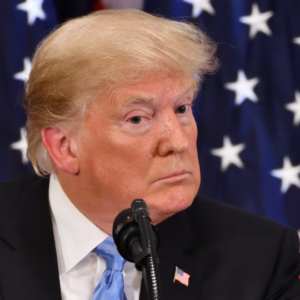
Multiple outlets have reported that Trump is weighing an executive move that would direct the Justice Department to advance cannabis rescheduling to Schedule III.
The White House has not confirmed a final decision.
This matters because we’ve heard versions of this before. The Biden administration launched a rescheduling review in 2022. Federal health officials later acknowledged cannabis has accepted medical use. And yet, the process stalled.
So for now, this is credible reporting, not enacted policy.
Can Trump do this without Congress?
Yes, but with limits.
Under the Controlled Substances Act, rescheduling does not require Congress. The authority sits with the attorney general, typically delegated to the DEA, with scientific input from Health and Human Services.
Trump cannot personally reschedule cannabis with a tweet or executive order alone. But he can direct the Justice Department to move the process forward and potentially bypass stalled administrative steps.
Congress would only be required for full legalization or descheduling, not rescheduling.
Didn’t Biden already try this?
Yes.
In 2022, President Biden ordered a formal review of cannabis’ classification. In 2023, Health and Human Services concluded that cannabis has accepted medical use and recommended Schedule III.
The DEA process dragged on. Hearings were delayed. Legal challenges loomed. Nothing was finalized.
That’s why skepticism is fair. This has been promised before.
What does Schedule III actually mean?
Schedule I drugs are defined as having no accepted medical use. That’s where cannabis still sits, alongside heroin.
Schedule III drugs are recognized as having medical value but remain controlled. Examples include ketamine, anabolic steroids and certain prescription painkillers.
Moving cannabis to Schedule III would be a formal federal acknowledgment of medical use. It would not legalize cannabis.
Does this legalize cannabis?
No.
Cannabis would still be federally illegal.
State-legal markets would continue to exist in a gray zone. Interstate commerce would remain prohibited. Federal criminal laws would still apply.
Rescheduling changes classification, not prohibition.
What happens to dispensaries and state markets?
Nothing changes overnight.
States like California and Oregon would continue running their own regulated systems. Dispensaries would not suddenly shut down. Licenses would not vanish.
The core contradiction remains: state-legal cannabis would still conflict with federal law.
Rescheduling does not resolve that tension. It only shifts it.
Will this help small, local businesses and growers?
It could. But it’s not guaranteed.
The biggest potential benefit is taxes.
As long as cannabis is Schedule I or II, businesses are subject to IRS rule 280E, which blocks normal deductions like rent, payroll and utilities. That has crushed many small operators.
If cannabis moves to Schedule III, 280E would no longer apply. That alone could be a lifeline for independent dispensaries and growers.
At the same time, rescheduling does not fix licensing costs, access to capital or consolidation. Bigger companies still have structural advantages.
Is this a Big Pharma or Big Cannabis takeover?
Not automatically.
Rescheduling could make it easier for pharmaceutical companies to develop FDA-approved cannabinoid medicines. That does not mean they suddenly control flower, dispensaries or state markets.
Still, critics are right to be cautious. In the U.S., open markets tend to reward scale, capital and lobbying power.
Legalization opens the door. Regulation decides who gets the keys.
Will cannabis be sold at Walmart?
No.
Rescheduling does not put dispensary weed on retail shelves.
Any FDA-approved cannabis-derived medicines would move through pharmacy channels, not big-box retail. State-legal cannabis would continue operating separately.
Will this change drug testing?
No.
Most drug tests look for THC metabolites, not drug schedules. Employers can still test. Federal and DOT-regulated jobs would still follow their own rules unless those policies change.
Does this affect home grow?
No.
Rescheduling does not create a federal right to grow cannabis at home. Home cultivation remains governed by state law.
Will seeds, clones or genetics become illegal?
There is no indication of that.
Rescheduling does not target seeds or genetics directly. Enforcement and interpretation matter more than theory.
Does this stop arrests or fix criminal justice?
No.
Rescheduling does not decriminalize cannabis, erase records or stop arrests. Those outcomes require legislation.
So is this progress or a problem?
It can be both.
Rescheduling would be a meaningful shift. Acknowledging medical use matters. Ending 280E would help real businesses survive.
But it leaves prohibition largely intact. That’s why some advocates see progress, while others worry it could harden the system under a different name.
Rescheduling is movement. It is not freedom.
The bottom line
This moment deserves attention, not celebration or panic.
If cannabis moves to Schedule III, it will ease some pressure and raise new questions. The future of cannabis will be decided by the rules that follow.
Trump Says He’s ‘Looking Very Strongly’ at Cannabis Reform. The Catch Is What Comes After.
President Donald Trump publicly acknowledged on Monday that his administration is actively considering reclassifying cannabis under federal law, saying the current Schedule I status blocks medical and scientific research.
“A lot of people want to see it, the reclassification, because it leads to tremendous amounts of research that can’t be done unless you reclassify,” Trump said when asked directly about cannabis policy. “So we are looking at that very strongly.”
The comments represent one of Trump’s clearest on-the-record confirmations to date that cannabis rescheduling remains under serious review, reinforcing recent reporting that the White House is weighing an executive directive to move marijuana from Schedule I to Schedule III under the Controlled Substances Act.
Trump’s framing also aligns with the administration’s stated emphasis on research rather than legalization. Moving cannabis to Schedule III could expand clinical trials and pharmaceutical development, while leaving existing state markets in a legal gray zone. That tension has been central to concerns raised by patients, small operators, and advocates who fear partial reform could benefit institutions without delivering broader freedom.
The White House has continued to say that no final decision has been made. Trump himself has previously said decisions on cannabis policy would come “within weeks,” timelines that have passed without formal action.
For now, Trump’s remarks add political weight to a long-running debate, but they stop short of an order, a rule, or a timeline. As with earlier signals under both Republican and Democratic administrations, the significance will depend on whether rhetoric turns into regulatory action.
Trump Just Turned Fentanyl Into a ‘Weapon of Mass Destruction’ With New Executive Order
President Donald Trump has signed an executive order classifying illicit fentanyl and its core precursor chemicals as “weapons of mass destruction,” a move that reframes the U.S. overdose crisis as a matter of national security rather than public health.
“With this historic executive order I will sign today, we’re formally classifying fentanyl as a weapon of mass destruction, which is what it is,” Trump said during an Oval Office ceremony honoring military personnel assigned to border operations.
The order directs Attorney General Pam Bondi to immediately pursue investigations and prosecutions related to fentanyl trafficking and instructs the Departments of Defense, Homeland Security, Treasury and State to treat illicit fentanyl networks through the same legal and intelligence frameworks used for chemical weapons and nonproliferation threats. According to CNN, the order also authorizes expanded coordination with financial institutions and foreign governments tied to the manufacture or distribution of illicit fentanyl.
Trump repeatedly compared fentanyl to military weapons. “No bomb does what this is doing,” he said, claiming the drug kills between 200,000 and 300,000 people each year.
Federal data paints a narrower picture. The U.S. Centers for Disease Control and Prevention reported an estimated 80,000 overdose deaths in 2024, with roughly 48,000 involving synthetic opioids, primarily fentanyl, figures cited by Agence France-Presse.
While fentanyl remains the leading driver of overdose deaths in the U.S., overall fatalities declined to their lowest level in five years.
The executive order relies on existing legal definitions that describe weapons of mass destruction as tools capable of causing death through toxic chemicals. By explicitly placing fentanyl in that category, the administration opens the door to extraordinary enforcement authorities, including the potential use of military resources to assist civilian law enforcement under rarely used provisions of U.S. law. As The Independent notes, it remains legally unclear whether those authorities can be applied to drug trafficking, though the classification itself may invite broader interpretation.
The move also sharpens the administration’s foreign policy posture. Trump has accused foreign governments and transnational criminal organizations of deliberately funneling fentanyl into the United States. Speaking Monday, he suggested that adversarial nations were sending the drug “to kill Americans,” framing trafficking as an act closer to warfare than commerce.
That framing is not new.
High Times previously examined how similar logic has shaped U.S. policy beyond its borders. In November, we reported on U.S. naval missile strikes against small boats off the coasts of Venezuela and Colombia, operations the administration justified as counter-narcotics actions but critics described as a dangerous expansion of executive military power. That reporting highlighted a key contradiction: fentanyl, the substance driving overdose deaths in the U.S., is not trafficked by sea from South America. It is largely synthesized abroad and moved overland through Mexico.
The same tension sits at the center of the fentanyl WMD designation. While the executive order emphasizes chemical precursors and illicit manufacturing networks, it also folds the overdose crisis into a broader geopolitical narrative that treats drug flows as acts of hostile intent rather than the predictable outcome of prohibition economics, global demand and regulatory failure.
The order does not alter the legal status of fentanyl in medical settings. Trump acknowledged the drug remains “very important for medicine, for anesthesia [and] various other things,” drawing a line between legitimate pharmaceutical use and illicit production.
What changes is the legal and rhetorical terrain.
By classifying fentanyl as a weapon of mass destruction, the administration grants itself wider latitude to seize assets, pressure financial systems and justify aggressive international actions under national security authorities. It also risks normalizing a wartime framework for drug policy, where extraordinary powers become easier to invoke and harder to unwind.
Whether this approach reduces harm remains uncertain. What is clear is that the administration is no longer talking about drugs as a public health challenge.



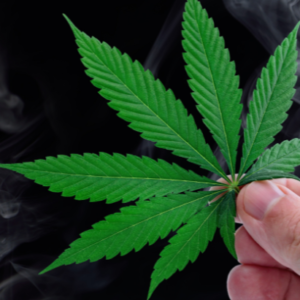

 The following primer seeks to provide clarity to frequently asked questions surrounding cannabis rescheduling and its policy implications.