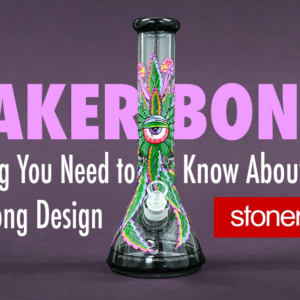
Beaker Bongs: Everything You Need to Know About the Classic Bong Design
Among the many bong styles available today, none is as iconic or widely loved as the beaker bong. Recognisable for its scientific-style base and sturdy shape, this design has become a staple for smokers who value stability, smooth hits, and easy maintenance. Whether you’re new to smoking or exploring different bong styles, this guide explains […]
Can I Even Grow? A Guide for the Aspiring Home Cultivator
There’s something primal about growing your own plant. It’s independence and freedom in a pot. A small act of rebellion in a red Solo cup. The quiet magic of planting a seed and watching life emerge from soil and light—and the satisfaction of knowing exactly what went into the flower you’ll one day hold between your fingers and share with your friends and family. Plant medicine grown at home is a small but mighty revolutionary act of independence and artistry.
But while legalization has swept much of the country, home cultivation still lives in a confusing patchwork of laws. Some states invite you to plant your seeds and grow freely; others threaten fines or felonies for doing the same thing. The rules are constantly shifting, and for a community that values freedom and autonomy, that uncertainty can be maddening.
This guide breaks it down into three key areas :
Where You Can Grow: A State-by-State Breakdown.
What kind of genetics fit your life: Autos vs Photos.
How to keep your setup simple and successful: 5 key non-negotiables for success.
Part I: Can I Even Grow?
Let’s start with the law—not the kind that harshes your mellow, but the kind that protects you from losing your crop, your cash, or worse.
Every state sits somewhere on the spectrum between fully free andcompletely forbidden. Some allow a handful of plants for personal use, others only permit licensed medical patients, and a few still consider home cultivation off-limits altogether.
Below is a simple, visual snapshot — our best understanding of home-grow legality across the U.S. as of November 2025. Laws change frequently, so treat this as a starting point, not a gospel truth. Before you pop that first seed, do your own due diligence: check your state’s current cultivation guidelines to make sure you’ve got a legal path forward.
And for reference, here in Oregon, adults 21+ can legally grow up to four plants per household for personal use—a model that strikes a balance between freedom and responsibility.
Home-Grow Laws by State (as of November 2025)
Part II: Autos vs. Photos — Know Your Plant Personality
Once you’ve confirmed you can legally grow, the next question is what you should grow. Here we really have two categories: autos and photos.
Auto-flowering strains (autos) are the set-it-and-forget-it option for beginners and busy growers. They flower automatically after a few weeks, don’t depend on light cycles, and finish fast. You sacrifice some control—and often a bit of yield—but you gain predictability. We have experimented with auto-flowering genetics in our cultivation setup on our farm, and we have found a few genetics that we find very compelling.
One breeder in particular has made auto-flower breeding his calling card is James Loud Genetics (JLG). The variety and quality of cultivars James has folded into his breeding techniques have raised the bar on auto-flowers. The other huge advantage to autos is that they are almost always feminized seeds. This means the risk of males—to be avoided unless you are interested in breeding—is eliminated, so you can feel confident you will end up with a female flower.
Photoperiod genetics (photos), on the other hand, is where artistry comes in. They respond to light and timing, letting you decide when to flip them into flower. They’re slower, bigger, and reward patience with higher yields and broader expression of terpenes. Until you change your light cycle from an 18/6 to a 12/12, photos will continue to grow in a vegetative state. Once you change the light cycle to 12 hours of light and 12 hours of dark, the hormonal shift begins, and the plants begin their 9-12 week flower cycle.
Depending on how large a space you have, you will only want to manage your veg time so that by the time you flip your plants into flower they are not too large. And unless you get a cutting from a female plant, starting with photos mostly means regular non-feminized seeds.
The risk here is that you don’t know if it will be a male or female. Yes, of course, there are feminized photos you can find from seed banks and this helps reduce the possibility of male expression. However, it is not a guarantee that you won’t end up with a male expression. So be mindful of the fact that male and female expressions are possible.
Cultivation tip: match your genetics to your lifestyle, not your ego. If you travel a lot or can’t check your tent daily, autos will treat you better than finicky photos that demand routine and patience.
Part III: Keep It Simple SOPs
Forget the grow bibles and online debates—the best cultivators master the basics and repeat them consistently. We manage thousands of square feet of canopy—veg and flower—and produce thousands of pounds of cannabis annually on our farm. Running large rooms, greenhouses and full-term outdoor gardens for the past decade has shown us the complete range of issues and challenges that inevitably emerge.
In preparation for the launch of our online course, we decided to invest in a 4 x 8 Gorilla grow tent in order to understand the challenges of cultivation on that scale. If nothing else, it has demonstrated the challenges of growing in a tent set up. But what it has also demonstrated is that you can absolutely grow fire in a tent if you are focused and present with the process.
Here are the (5) non-negotiables for any successful grow, whether you’re running a small tent or a backyard greenhouse:
Light: The single biggest driver of plant health and yield. Invest here first. We only use LED lights at our facility. Fluence, Scynce, and FOHSE are a few top brands. There are many choices, but LED is where you want to be.
Air flow: Keep air moving. Stagnant air is a pest and pathogen paradise. Air flow in the tent, closet, or garage is essential.
Substrate: Quality soil beats nutrient hype. We have been loyal to the soil since day one, and we will preach soil cultivation forever. It is the easiest, most forgiving medium to grow in by far. A nutrient-dense soil is literally the foundation of our cultivation.
Water: Overwatering kills more plants than neglect ever did. Don’t overwater your plants. Hand watering is still the gold standard, but blue mat systems are emerging as a viable option when you’re away for the weekend and can’t have someone water your plants. But a deployment cadence that allows even dry back on your pots is critical. On average, we have two days in between waterings.
Cleanliness: Your space should smell like fresh soil, not mildew. Basic housekeeping and cleanliness are essential to running a good grow. Clean floors, scissors, etc. It all stacks, and remember, bleach wins over rubbing alcohol.
If you lock down these five, you’re most of the way to a great foundation for your home grow setup. The rest is just refinement—dialing in feed, pruning technique, and the rhythm that suits your space. There is artistry in the details here, and it can be overwhelming if you’re doing it for the first time.
When I looked around a few years ago to determine what resources were available to provide clarity on some of the basic blocking and tacking of cultivation, I was surprised to find very little in the way of clear online education. With nearly a decade of experience cultivating at scale, I hope to share some of my earned wisdom and insights to help newcomers get their start in craft cannabis. It’s truly a rewarding process, whether you’re growing for fun or making your own medicine.
Closing: The Spirit of the Grow
Home cultivation isn’t just about saving money or flexing genetics—it’s about the relationship between you and the plant; between the light and soil.
Even in a world of corporate cannabis and dispensary convenience, the passionate home grow remains the heartbeat of the culture. It’s where knowledge is passed hand-to-hand, where independence still sprouts under lights and in basements, where the love of the plant stays personal.
So check your laws, respect your limits, and grow something worth tending to. Because when it’s your hands in the soil, that flower hits different.
This article is from an external, unpaid contributor. It does not represent High Times’ reporting and has not been edited for content or accuracy.
John Waters’ Holiday Drug Confessions: ‘I’ve Taken Every One’
Who better to spend the holidays with than John Waters? Few artists are as festive as Mr. Waters, who releases holiday covers and tours with A John Waters Christmas— evenings of storytelling and indispensable life advice from the filmmaker behind Female Trouble, Hairspray, Polyester, Multiple Maniacs, and Pink Flamingos, to name a few of his indisputable classics.
Waters is nothing if not a Renaissance man. He’s the bestselling author of Carsick: John Waters Hitchhikes Across America, Role Models, and his most recent published work, Liarmouth: A Feel-Bad Romance, long overdue for its planned film adaptation. On top of his wordsmith title, he’s also a singer.
Last year, Sub Pop Records released his cover of “The Singing Dogs.” This year, Waters returns to serenade all — in good and bad cheer — with a cover of Little Cindy’s “Happy Birthday Jesus.” As a holiday treat, there’s a “Pig Latin Visit From St. Nicholas” as the B-side. In short, it’s the perfect holiday gift from the Santa Claus of Baltimore.
It’s nothing short of a pleasure for High Times to present an interview with John Waters. The magazine interviewed him back in 1982. He is indeed one of the High Times greats, an artist who has always seen the beauty, fun, and truth in absurdity.
Thanks for speaking with High Times, Mr. Waters.
Glad you’re still coming out. That’s kind of amazing.
We went away for a bit, but then we got resurrected.
Oh, you did? Good, good, good, good, good. Well, good to hear, even though I don’t think I take drugs anymore. But anyway, we can talk about any drug you like. I’ve taken everyone.
What are some of your earliest memories of High Times Magazine?
I just remember always liking it, because when it first came out, it was really radical that there was such a thing, when marijuana was legal nowhere, ever. Your parents used to get scratch and sniff, where they smell like pot, and they could tell you that’s what your kids have, which is part of the reason I did Odorama [for Polyester]. But I always just thought it was a great magazine that most people who are all celebrities were afraid to be on the cover, even though they wanted to be.
I’ve experienced [that] fear, I will tell you.
Really?
It’s not always easy getting a yes.
You can never tell. Johnny Knoxville, who is a total straight boy who isn’t a closet queen, and very gay friendly, when we made A Dirty Shame, he said, “All I want to be on the cover is American Grizzly, the bear magazine.” And they said no, because he wasn’t gay. I said, “Are you crazy? You should put him on it.”
They wouldn’t budge?
They wouldn’t do it because he wasn’t gay, which is so ridiculous. That’s reverse discrimination. So you’re interviewing me and I don’t take drugs anymore. But as I said, I was taking everyone. What made me stop taking drugs was Ecstasy, the drug that made you love everybody. That’s the worst high I could ever imagine.
Your experience wasn’t enjoyable?
No, to love everyone, it’s too frightening a concept to ever take the drug, because that sounds like the worst high. That’s the baddest trip you could ever have, if you loved everybody.
It’s funny you say that, because your work is very loving of people.
It is, it is. I’m accepting of everybody, but that doesn’t mean I want to be in a cuddle pile and suck my thumb with a cuddle pile. I’d rather die than be in a cuddle pile.
How did pot make you feel the first few times you tried it?
I wrote all those movies on pot. Now it just makes me worry about things.
When did that change?
When I had success. I wrote all the movies on pot till I had success. And then, unlike most other people who become drug addicts, I stopped taking drugs, which was a wise decision.
You’ve always seemed like someone who’s very comfortable with success, with their place in pop culture.
Well, I’m very lucky. I say this in my Christmas show, “I could take drugs. I did shoot heroin once, and didn’t become a junkie. I could drink and not become an alcoholic. I did everything. But other people I know who did it with me became drug addicts, and had horrible lives and everything.”
I loved LSD. I took it again when I was 70, and wrote a whole chapter in my book about it. I hadn’t taken it for 50 years, but I took it again with Mink Stole at 70. And it was great. I don’t tell young people to take drugs. I mean, the ‘60s are over – stupid. But old people should take them. And then when they go home for Christmas, they can’t say you have dementia. You just say you’re tripping.
[Laughs] Cannabis helps a lot of our readers and friends during the holidays, especially at family get-togethers.
Me, if I have one toke, I start worrying about things. But I have other friends who are my age who still smoke it every day. It does not relax me at all anymore.
You stopped before more mass legalization, huh?
I did. Well, what fun are legal drugs? [Laughs] And now, poppers, RFK has made – R-F-U-C-K Kennedy Jr. – has made poppers illegal. Online, all the CEOs, they took everything down.
[Editor’s note: Poppers have long been restricted for human consumption; recent reports in 2025 describe stepped-up FDA enforcement actions against certain sellers.]
That’s unfortunate.
Well, poppers, I didn’t know we used poppers for sex. We used to take them… I don’t know, it’s very politically incorrect, but there’s this movie by Lars von Trier called The Idiots, where people purposely act mentally [redacted], and you could say that then.
But we did the same thing with poppers. We would just go out and do poppers in public and scare people. At the department store where five of us all do poppers and start laughing at people for no reason. [It was about shocking people]. It was fun.
[Laughs] Sounds like a good time.
And there is a movie called Assholes about popper addicts that’s pretty good. It’s actually pretty good. It’s the only movie about being a popper ever out. I know you might want to do a feature on it.
Any enjoyable drug-fueled holiday memories?
Oh, my God. I mean, I have always had great acid trips. I even did eat morning glory seeds, and then you’d puke for two hours, and then you get high. But I would think I was a parakeet. I’m eating all those seeds. But that worked. I did glue. I did every possible thing you could do.
But I liked best, if I had to pick best, it was liquor and Quaaludes. Coke, I liked, but I would be high for 10 minutes and then it’d take two weeks to recover. So, that never seemed worth it to me. And heroin, I’m not a jazz musician. I don’t have to take heroin.
Speed – it was fun. I love diet pills. But now with Ozempic, it gives you a big dick. So, why? That’s 10 pounds you don’t want to lose.
[Laughs] Throughout your drug years, you were incredibly disciplined. You still are, but unlike some artists, it didn’t negatively impact your work.
No, they didn’t, really. They might have impacted how I thought, but I would say drugs never got in the way of my career, no. We never took drugs while we were making the films. I certainly smoked pot when I was thinking it up, and people smoked pot when it was over, but no one was high when we made that movie that I knew of.
I can’t imagine making movies while high, with all the work you have to do.
No. I can’t, either. I don’t even like to watch movies high, really. I don’t like to watch movies while people are eating, either. It’s disgusting.
[Laughs] Valid. As a very well-traveled man, do you still enjoy life on the road?
I don’t mind it. I still don’t have to hitchhike. I mean, I’m certainly never going to hitchhike across the country again. But I did it, and I hitchhiked recently once when I couldn’t get anywhere in Provincetown. People picked me up in one second. So, I’m not afraid of being stuck anywhere, ever, because I know I can always hitchhike.
What keeps you entertained these days when going from city to city?
I’ve always got good books. Yep. That’s always the most important thing, to have a good book. And my favorite book of the year is about the girl who said the Virgin Mother appeared to the shepherd girls in the Fatima Letters. The Obsessive History of That is my favorite book of the year. So, look up a new book about the Fatima Letters. It’ll come up.
In Mr. Know-It-All, you wrote about the importance of having more than one profession. Today, it seems like you need to have five jobs or more.
That’s true. I just had a record come out, where I sing “Happy Birthday, Jesus.” I have a clothing line, where we sell celebrity cumrags and barf bags. I just did the audiobooks for all six of my screenplay books that were just re-released, and I play every character.
What books are you hoping to get from the holidays this year as presents?
Oh, I have a whole list.
[Note: Here’s the list, courtesy of his office]
Adèle Hugo by Laura El Makki (English translation only, please)
Two Of Me by Eleanor Coppola
David Lynch: His Work, His World by Tom Huddleston
Living In the Present with John Prine by Tom Piazza
Book of Lives: A Memoir of Sorts by Margaret Atwood
Fish Tales by Nettie Jones
The Pelican Child by Joy Williams
When you go out on stage, what are you hoping to accomplish with every show?
Well, every year, I hope the jokes work. I hope people laugh. I just want to make people feel great about themselves when they leave, in a way that genuinely might shame them.
I don’t believe in guilty pleasures, do you?
No. Why would you be guilty about pleasure? One time, they asked me to do a guilty pleasure album for Film Comment. I did all severe art films, because most people put exploitation or horror films, or something. I did the opposite. I did the most obscure French art films.
I think the best thing I ever did journalistically for Film Comment, I reviewed, and it’s in one of my books, the Godard film Hail Mary that caused all the trouble. I talked him into having a little sidebar that said, “One stupid question for a genius,” and they put Godard on the phone with me, not knowing that. I said, “What’s your favorite color?” And he started stuttering and was so mad. He finally said, “Blue,” and hung up. That was my best journalism I’ve ever done.
You should be proud.
This is my top moment of the Nobel Piece of Ass Award, I should say.
[Laughs] People often review your shows as “cozy.” Does that also make you proud?
I guess they’re cozy, because my audience, I mean, I say this in the show, they could drop a net on us and get all of us in one shot. There they all are. And people say, “Did your audience dress for Halloween?” How would I know? They look like they’re dressed for Halloween every day.
Do you enjoy Halloween?
No, I hate it, because my father used to always say, “Not Halloween, you know,” every time I went out. But Christmas, they do wear Christmas. I do hate blinking corsages, because I think it’s somebody videotaping, and it makes me crazy.
You recently covered Little Cindy’ “Happy Birthday Jesus.” The original recording is chilling. What made you want to cover it?
Well, it’s done without any irony. She stumbles over one word and I purposely stumble over the exact same word, and I did it for authenticity. That record was not meant to in any way be ironic, funny, or a novelty song. I’ve made it into a novelty song, definitely, but I’m a huge fan of novelty records.
Why was there no COVID novelty song? They don’t have novelty songs anymore. The last blatant one was “Valley Girl.” Gag me with a spoon. It’s like grody. It’s, like, totally! She’s a valley girl, but Moon Unit Zappa spoke all in that language.
[Laughs] The holidays can be tough. Do you have any words of wisdom for our readers during the holiday season?
Yeah. I tell them the ultimate high that we’re all going to do it. I talk about that in the show, and I’m not going to give you that for free. You’ve got to come see the show to do it. We’ll all do that together, later in life.
Mr. Waters, thank you for your time, and thank you so much for your work.
Thank you. I’m going to go sniff some glue [laughs].
Editor’s note: Statements about substance use reflect the subject’s personal anecdotes and humor. High Times does not encourage illegal or unsafe behavior.
Jamaican Attorney Demands Police Retun Ganja To Rastafarian Client
Header Image: Attorney-at-law Marcus Goffe, The Jamaica Observer One week before the devastating Category 5 Hurricane Melissa hit Jamaica on October 28, Westmoreland resident Troy Harrison had charges of possession of ganja and dealing in ganja against him dropped. Harrison was charged after roughly 45 pounds of marijuana were found in his possession; however, the […]
Chile at a Crossroads: What Does a Hard-Right Presidency Mean for the Future of Cannabis?
A new chapter begins for Chilean politics. After winning the runoff election against candidate Jeannette Jara by 58% to 41%, President-elect José Antonio Kast represents another milestone in the country’s political back-and-forth: a society seemingly unafraid to swing from right to left, and back again. But what about the future of progressive policy agendas under the new government? What is its historical stance on cannabis and the struggles surrounding it? Are heated debates, such as those that cannabis regulation could generate, indefinitely on hold, or are new opportunities on the horizon?
Over time, José Antonio Kast’s statements have revealed a profoundly ambiguous position regarding cannabis. In 2016, Kast stated that “legalizing marijuana would be a social catastrophe.” A year later, in 2017, he stated that he had no problem with medicinal cannabis, as long as it was strictly controlled by the Public Health Institute. During that same period, he even went so far as to say that anyone over 23 could “do whatever they wanted.”
However, in 2019, he maintained that “marijuana is a drug that destroys lives, families, and our society.” “This lack of consistency is not a minor detail: when someone governs, ambiguity translates into legal uncertainty and decisions that directly affect the lives of patients and users. Beyond the statements, what is concerning is the lack of a clear vision for regulation based on scientific evidence and human rights,” argues Congresswoman Ana María Gazmuri, an activist for legal therapeutic cannabis, regarding Kast’s rise to power.
During the presidential campaign, the discourse focused primarily on security. Rights were left out of the debate during this period. “We weren’t a priority for a government that promised to end the criminalization and persecution of cannabis users, and we’ll be even less of a priority for the next government,” reveals Muy Paola, director of Santiago Verde and cannabis activist.
So far, there are no clear signs of what the Kast administration plans to do regarding weed: neither positive nor negative. Only speculation so far. “Cannabis is an issue that doesn’t exist in his proposals. He’s not even interested in discussing it. He’s very focused on large-scale drug trafficking. Everything is very ‘macro,’ in terms of the economy and security. Therefore, cannabis use, possession, or anything related to everyday users, I don’t think it’s even on his radar,” confesses Bernardita Ruffinelli, Chilean journalist and comedian.
For his part, José Antonio Kast is a man of deep religious convictions and belongs to the Schoenstatt congregation, a conservative Catholic movement founded by Father Joseph Kentenich in Germany, centered on devotion to the Virgin Mary. So, what will he do about an issue that still sparks public debate? It’s hard to say, but we can assume that the topic will not be among his priorities.
“He’s not going to touch anything that has to do with traditional values. These days, an iron-fist approach to cannabis might be the only thing that interests his administration. It’s the only thing he’s said,” continues Ruffinelli. And popular journalist Nicolás Copano adds: “Kast is a religious fundamentalist who has voted against progressivism and represents our local version of Jair Bolsonaro (Brasil), Javier Milei (Argentina), and Donald Trump.”
Currently, there are legislative proposals (such as Bill 17.568-11) that seek to decriminalize personal possession and cultivation. However, it seems unlikely that the new Congress and the Executive branch will move these bills forward. “We will have to exert pressure from the community more strongly than ever. Today, we are not a priority for anyone: the far-right wave has surged, but, like any cyclical and pendulum-like process, at some point we should regain ground in the public discourse,” says Muy Paola.
Today, the lack of legal clarity translates into greater criminalization: the same behavior can be considered legal in Las Condes and a crime in Temuco. The mentioned bill aims to end this arbitrariness, reduce the illegal market, and prevent public resources from continuing to be wasted on persecuting patients.
“Unfortunately, the outgoing government did not show the necessary political will, and the bill remains stalled in the Constitutional Committee. With a more conservative Congress and Executive branch, the scenario is complex, but we will continue fighting. It is not just about individual rights, but also about public safety, reducing drug trafficking, and the efficient use of public funds,” criticizes Gazmuri.
Meanwhile, there is a legal ambiguity in Law 20,000 that defines “small quantities” of cannabis, leaving discretion to judges and prosecutors, leading to regional disparities. “The law already exists. What’s needed is to provide clear protocols to the police to avoid unnecessary and stigmatizing procedures, in addition to the high fiscal expenditure these entail,” Muy Paola argues.
Meanwhile, pro-cannabis parliamentarians in Chile have maintained a strategic silence during the elections. “I think that if things don’t regress, the little progress that could be made is in the medicinal area,” says Simón Espinosa, director of En Volá and a cannabis activist.
In the democratic era, Chilean center and center-left governments were among the most prohibitive regarding weed. Here are some facts: it was the National Council for Drug Control (CONACE) under Michelle Bachelet that placed cannabis on Schedule I of controlled substances, and it was the National Service for the Prevention and Rehabilitation of Drug Use (SENDA) under Sebastián Piñera that reclassified it, reducing police persecution. “This doesn’t mean Kast will or won’t do anything about it. It doesn’t necessarily mean he’ll increase police persecution of users, although that’s perfectly possible. Nor does it mean he’ll make statements like Donald Trump about his intentions to open a federal market,” Espinosa elaborates.
In Chile, most of the advances on progressive agendas has come from the constant pressure of organized civil society. And, specifically regarding weed, that progress has come through the struggle of patients, families, and cannabis organizations. “Institutional politics tend to react late, and only when there is clear social support. Today, more organization, more coordination, and more citizen pressure are needed for this issue to become a priority again,” Gazmuri confirms. “The Chilean political class is not up to the task,” Espinosa remarks bluntly.
Within the cannabis movement, some activists lament the lack of coordination and divisions. “That’s a sad reality,” Espinosa clarifies. Still, they hope that a shared challenge will “unite” them and allow them to “move forward toward a common goal.” Espinosa, one of the most critical voices of the present, says: “As a community, we somewhat confused political tolerance with rights that we never formally ratified, and now we are paying the price for our lack of coordination and blindness. Learning often comes at a painful price.”
Looking ahead, they hope to provide formal infrastructure for medicinal users, civil associations, foundations, and NGOs. They also aspire to create clear protocols for police officers to prevent more people from going to jail for cannabis use. And, at a higher level, they will seek the effective decriminalization of weed use, with modifications to the list of narcotics to reduce persecution and, ideally, a modification of the mention of cannabis in the Drug Law.
“Strengthening Law 20,000 would only encourage drug trafficking and deepen the collapse of the penal system. It would be a contradiction for a government that comes in promising to improve security and combat organized crime. Persecuting users and patients doesn’t reduce violence or problematic drug use. On the contrary, it diverts resources that should be used to pursue large criminal networks. It would be shooting themselves in the foot,” warns Gazmuri.
With the approaching change of government, these professionals offer some practical advice on personal safety and legal defense for growers and users. “Something I can recommend is that those of us who use weed recreationally start coming out of the closet. It’s important that using isn’t only associated with people who lead ‘loose lives’ or have ‘unorthodox’ schedules. I think it’s important to associate recreational pot use with ordinary people who have jobs, families, and who contribute to the country, paying taxes and having responsibilities,” says Ruffinelli. “The more we normalize who the consumers are, the easier it is to have conversations with any government,” she continues.
At the same time, Espinosa calls for “caution and thoroughness” because “it’s the only thing that can be used today to respond to an audit and potential trial.” In that sense, Gazmuri asks users and growers to “take care of themselves and stay informed.” She warns: “Although home growing is legal, criminalization still exists in practice, and that situation could worsen. It’s important to have medical support, organize collectively, and seek legal advice when necessary. Complying with the law doesn’t always guarantee fair treatment.”
In this new political cycle, Chile faces a mirror of contrasts: a government that embraces conservatism, versus a cannabis community that has learned to push for dialogue to achieve new rights. And while the Kast administration epitomizes some stigmas, the challenge for Chileans is not just a legal one, but a cultural one: strengthening collective organization and demonstrating that marijuana embodies freedoms and rights. Thus, amidst regulatory uncertainties, moral imperatives, and the emergence of a pragmatism leaning toward a heavy-handed approach, the plant will continue to grow.
Cover photo: Equipo Kast, CC BY 4.0, via Wikimedia Commons (Edited)
How The415Fortune Became a Top Independent Music Creator on YouTube
In today’s crowded digital music landscape, standing out as an independent artist requires more than talent, it demands consistency, strategy, and authenticity. Few creators embody that formula better than The415Fortune, the multi-genre artist who has built one of YouTube’s fastest-growing independent music hubs. With over 100K subscribers and millions of impressions across his catalog, The415Fortune’s