

How to make your own LST Clips Tutorial #420 #lowstress #crazybud
December 18, 2025
(updated December 18, 2025)
Published by toker

In a crowded cannabis landscape, few brands manage to balance quality, culture, and consistency as seamlessly as Singing Kush. Rooted in craftsmanship and elevated by intentional branding, Singing Kush isn’t just about consumption—it’s about experience. Every detail, from flower selection to presentation, reflects a deep respect for cannabis as both an art form and a



Chile’s presidential election ended with José Antonio Kast, leader of the Republican Party, pulling in 58% of the vote against 41% for ruling-coalition candidate Jeanette Jara. But the ballot count delivered more than a political upset…
At Table 101 of the Presidente Pedro Aguirre Cerda School in San Antonio, poll workers opened an envelope and found something they definitely weren’t expecting: a joint, a handful of seeds, and notes demanding reform of Chile’s drug laws.
Officials were stunned when a small bag of seeds, a hand-rolled cannabis cigarette, and two written messages fell out of the ballot. They read: “no more prisoners for growing” and “cultivate your rights”, according to BioBioChile.
And here’s the kicker: this wasn’t even the first time. It was the third. Similar acts of protest were recorded at the very same polling station in December 2023 and October 2024, each involving cannabis slipped into a ballot as political commentary.
Although anonymous, the gesture speaks directly to a longstanding national debate: the widening gap in Chile between the real-world use and home cultivation of cannabis and the punitive legal framework that continues to govern it.
The notes found in the envelope echo long-standing demands from the country’s cannabis movement:
This isn’t just a quirky election-day anecdote. It’s a signal, a snapshot of public sentiment from people who, even under the anonymity of a secret ballot, still feel compelled to speak up about what they believe desperately needs reform.
And the fact that the same protest has surfaced three times in the same voting location is not a coincidence; it’s either quiet coordination or the kind of persistence policymakers love to pretend they don’t see.
In a country where drug policy conversations remain trapped between “security-first” rhetoric and years of grassroots demands for modernization, these small but repeated acts are cracks in the façade; they are reminders that a postponed debate doesn’t disappear. It just keeps finding its way back into the room… or, in this case, into the ballot box.
Cover photo created with Gemini AI.
This article was first published on El Planteo.
<p>The post Chile: Someone Slipped a Joint Into a Ballot (For the Third Time) first appeared on High Times.</p>
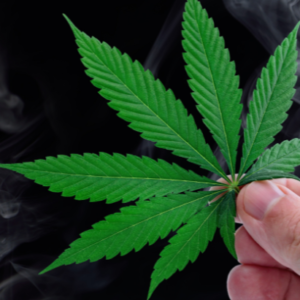

 The following primer seeks to provide clarity to frequently asked questions surrounding cannabis rescheduling and its policy implications.
The post Cannabis Rescheduling: Separating Fact From Fiction appeared first on NORML.

If you’ve been following the news, you’ve probably seen the headlines: President Donald Trump is reportedly considering moving cannabis out of Schedule I and into Schedule III under federal law.
That single sentence has sparked confusion, hope, anger, excitement and a lot of very good questions.
So let’s slow it down.
Here’s what we actually know, what we don’t, and what this potential shift would and would not change for growers, businesses, patients and everyday consumers.
Answering High Times’ followers’ questions.
Multiple outlets have reported that Trump is weighing an executive move that would direct the Justice Department to advance cannabis rescheduling to Schedule III.
The White House has not confirmed a final decision.
This matters because we’ve heard versions of this before. The Biden administration launched a rescheduling review in 2022. Federal health officials later acknowledged cannabis has accepted medical use. And yet, the process stalled.
So for now, this is credible reporting, not enacted policy.
Yes, but with limits.
Under the Controlled Substances Act, rescheduling does not require Congress. The authority sits with the attorney general, typically delegated to the DEA, with scientific input from Health and Human Services.
Trump cannot personally reschedule cannabis with a tweet or executive order alone. But he can direct the Justice Department to move the process forward and potentially bypass stalled administrative steps.
Congress would only be required for full legalization or descheduling, not rescheduling.
Yes.
In 2022, President Biden ordered a formal review of cannabis’ classification. In 2023, Health and Human Services concluded that cannabis has accepted medical use and recommended Schedule III.
The DEA process dragged on. Hearings were delayed. Legal challenges loomed. Nothing was finalized.
That’s why skepticism is fair. This has been promised before.
Schedule I drugs are defined as having no accepted medical use. That’s where cannabis still sits, alongside heroin.
Schedule III drugs are recognized as having medical value but remain controlled. Examples include ketamine, anabolic steroids and certain prescription painkillers.
Moving cannabis to Schedule III would be a formal federal acknowledgment of medical use. It would not legalize cannabis.
No.
Cannabis would still be federally illegal.
State-legal markets would continue to exist in a gray zone. Interstate commerce would remain prohibited. Federal criminal laws would still apply.
Rescheduling changes classification, not prohibition.
Nothing changes overnight.
States like California and Oregon would continue running their own regulated systems. Dispensaries would not suddenly shut down. Licenses would not vanish.
The core contradiction remains: state-legal cannabis would still conflict with federal law.
Rescheduling does not resolve that tension. It only shifts it.
It could. But it’s not guaranteed.
The biggest potential benefit is taxes.
As long as cannabis is Schedule I or II, businesses are subject to IRS rule 280E, which blocks normal deductions like rent, payroll and utilities. That has crushed many small operators.
If cannabis moves to Schedule III, 280E would no longer apply. That alone could be a lifeline for independent dispensaries and growers.
At the same time, rescheduling does not fix licensing costs, access to capital or consolidation. Bigger companies still have structural advantages.
Not automatically.
Rescheduling could make it easier for pharmaceutical companies to develop FDA-approved cannabinoid medicines. That does not mean they suddenly control flower, dispensaries or state markets.
Still, critics are right to be cautious. In the U.S., open markets tend to reward scale, capital and lobbying power.
Legalization opens the door. Regulation decides who gets the keys.
No.
Rescheduling does not put dispensary weed on retail shelves.
Any FDA-approved cannabis-derived medicines would move through pharmacy channels, not big-box retail. State-legal cannabis would continue operating separately.
No.
Most drug tests look for THC metabolites, not drug schedules. Employers can still test. Federal and DOT-regulated jobs would still follow their own rules unless those policies change.
No.
Rescheduling does not create a federal right to grow cannabis at home. Home cultivation remains governed by state law.
There is no indication of that.
Rescheduling does not target seeds or genetics directly. Enforcement and interpretation matter more than theory.
No.
Rescheduling does not decriminalize cannabis, erase records or stop arrests. Those outcomes require legislation.
It can be both.
Rescheduling would be a meaningful shift. Acknowledging medical use matters. Ending 280E would help real businesses survive.
But it leaves prohibition largely intact. That’s why some advocates see progress, while others worry it could harden the system under a different name.
Rescheduling is movement. It is not freedom.
This moment deserves attention, not celebration or panic.
If cannabis moves to Schedule III, it will ease some pressure and raise new questions. The future of cannabis will be decided by the rules that follow.
And those rules are still unwritten.
Photo: Shutterstock
<p>The post Cannabis Rescheduling May Sound Like a Win. Here’s Why It’s Complicated first appeared on High Times.</p>
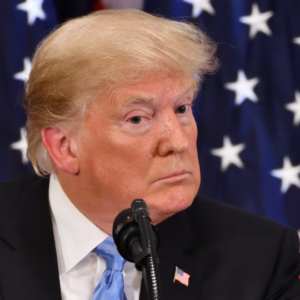

President Donald Trump publicly acknowledged on Monday that his administration is actively considering reclassifying cannabis under federal law, saying the current Schedule I status blocks medical and scientific research.
“A lot of people want to see it, the reclassification, because it leads to tremendous amounts of research that can’t be done unless you reclassify,” Trump said when asked directly about cannabis policy. “So we are looking at that very strongly.”
The comments represent one of Trump’s clearest on-the-record confirmations to date that cannabis rescheduling remains under serious review, reinforcing recent reporting that the White House is weighing an executive directive to move marijuana from Schedule I to Schedule III under the Controlled Substances Act.
As High Times has previously reported, rescheduling would acknowledge cannabis’ medical value and ease barriers to federally approved research, but it would not legalize cannabis or resolve the conflict between federal law and state-regulated markets. Cannabis would remain federally illegal, tightly controlled, and subject to oversight by agencies such as the DEA and FDA.
Trump’s framing also aligns with the administration’s stated emphasis on research rather than legalization. Moving cannabis to Schedule III could expand clinical trials and pharmaceutical development, while leaving existing state markets in a legal gray zone. That tension has been central to concerns raised by patients, small operators, and advocates who fear partial reform could benefit institutions without delivering broader freedom.
The White House has continued to say that no final decision has been made. Trump himself has previously said decisions on cannabis policy would come “within weeks,” timelines that have passed without formal action.
For now, Trump’s remarks add political weight to a long-running debate, but they stop short of an order, a rule, or a timeline. As with earlier signals under both Republican and Democratic administrations, the significance will depend on whether rhetoric turns into regulatory action.
For deeper context, read High Times’ full analysis of what rescheduling would and would not change, our explainer on cannabis rescheduling questions, and our recent reporting on how this administration has used executive power in other drug policy areas.
Photo: Shutterstock
<p>The post Trump Says He’s ‘Looking Very Strongly’ at Cannabis Reform. The Catch Is What Comes After. first appeared on High Times.</p>













We use cookies to improve your experience on our site. By using our site, you consent to cookies.
Manage your cookie preferences below:
Essential cookies enable basic functions and are necessary for the proper function of the website.
Drag & drop or click to select
JPEG, PNG, GIF, WebP, MP4, WebM · Images max 30 MB · Videos max 100 MB