
High Times Recruiting

Hiring in Cannabis Is Broken. High Times Has a Better Way.


Hiring in Cannabis Is Broken. High Times Has a Better Way.

Cannabis companies are drowning in applicants and starving for clarity. High Times Recruiting adds a simple layer that makes the first round faster, more human and easier to get right.

Cannabis companies do not struggle to find applicants. They struggle to quickly spot who is actually a fit. The industry moves fast, runs on thin teams and still has to operate inside a regulatory box that does not care how understaffed you are. When a role opens up, hiring becomes a second job, and it usually lands on the same people who are already running ops, sales, compliance, cultivation schedules and inventory headaches.

That is why the first interview has become the bottleneck. Not because interviews are bad, but because the first round is often just sorting. You are trying to confirm basics: can this person communicate clearly, do they understand the pace, are they professional, do they stay steady when things get hectic? A resume rarely answers those questions. It can suggest experience, but it cannot show you how someone shows up.

High Times Recruiting is built around a simple premise: let hiring managers see candidates as people before they spend time scheduling calls. The service sends applicants with both a resume and a short, one way video introduction, usually two to four minutes. The goal is a faster read on communication, presence and role fit, so your live interviews are reserved for the candidates you actually want to meet.

More details are available at hightimesrecruiting.com.

The frustrating part is that most hiring managers already know quickly whether a conversation is going anywhere. The issue is that you still spend the time anyway. You stay on the call, you ask the polite questions, you take the notes, you try to be fair, and then you hang up and move to the next one. That is not a hiring strategy. That is a time tax.

The model is designed for cannabis roles across the supply chain, including retail, cultivation, manufacturing, distribution and brands. It also leans into something traditional recruiting often misses. Cannabis is not just another industry category. Compliance, workflow pressure and culture are real filters here. You can have someone who looks perfect on paper but has never operated inside a regulated store, never worked a harvest schedule, never handled the pace of a scaling brand team, or simply cannot communicate in a way that keeps things steady when the day gets chaotic. The earlier you identify that, the less time you waste.

Operationally, the system plugs into major job marketplaces, including Indeed and LinkedIn, and turns inbound interest into a curated batch you can review quickly. Each candidate includes a resume and a brief video intro. You review, pick your favorites, then move them into live interviews. High Times Recruiting says it delivers the first batch of qualified candidates within 72 hours and that the average time to hire can be about two weeks once the pipeline is moving.

The pricing is also structured differently from traditional recruiting. Instead of taking a percentage of salary, the model is a flat fee per successful placement, with payment only when a hire is made. The current fee is $2,500 per placement, plus job post boosts that typically run $500 to $1,000, depending on the role and visibility needs. In a market where traditional recruiters often take 20% to 25% of annual salary, a flat fee approach aims to make recruiting feel more like a predictable operating cost and less like a gamble.

At its core, this is a bet on time. If you can sort faster, you can hire faster. If you hire faster, you do not drag a team through months of being short-staffed. And in cannabis, that gap is where compliance slips, customers notice, production schedules drift and good people burn out.

Learn more at hightimesrecruiting.com.

<p>The post Hiring in Cannabis Is Broken. High Times Has a Better Way. first appeared on High Times.</p>
Source link

DOJ Suggests ‘Frail And Elderly Grandmother’ Who Uses Medical Marijuana Could Own Gun—While Defending Overall Federal Ban

DOJ Suggests ‘Frail And Elderly Grandmother’ Who Uses Medical Marijuana Could Own Gun—While Defending Overall Federal Ban

DOJ Suggests ‘Frail And Elderly Grandmother’ Who Uses Medical Marijuana Could Own Gun—While Defending Overall Federal Ban

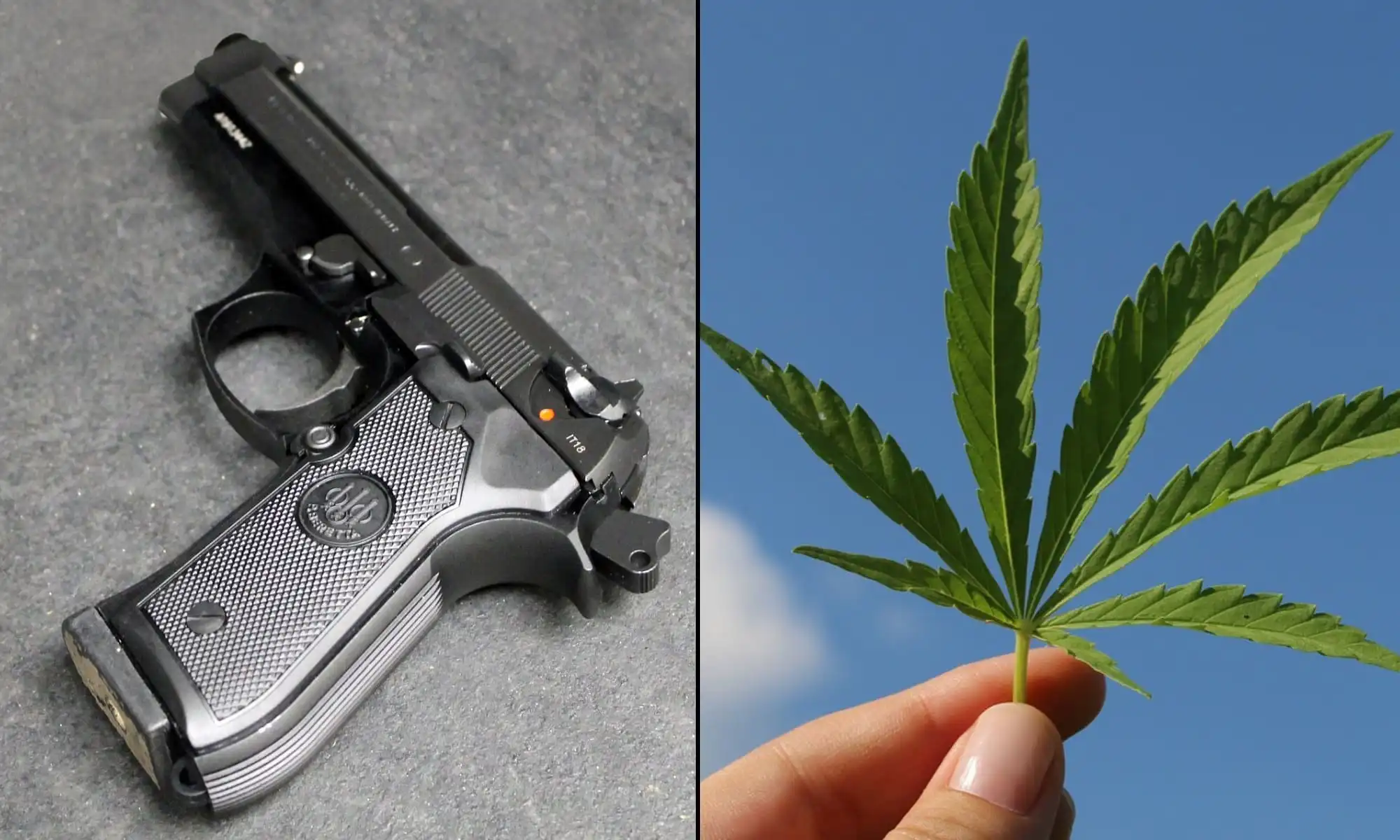
The U.S. Justice Department is again defending the federal law prohibiting people who use marijuana from owning or possessing firearms—in part by drawing a contrast between those affiliated with gangs and a hypothetical “frail and elderly grandmother” who uses medical cannabis.

In a brief filed with the U.S. Court of Appeals for the Eighth Circuit last week, attorneys for DOJ said judges should uphold the earlier denial of a motion to dismiss the case, U.S. vs. Baxter, where the defendant was convicted of violating a statute known as Section 922(g)(3).

As in multiple related cannabis and gun cases, the Justice Department argued that disarming people who use marijuana does not constitute a violation of the Second Amendment because the law is grounded in historical precedent with the country’s founding. Specifically, the federal government claimed there are relevant historical analogues prohibiting gun ownership by the mentally ill, those who induce terror and “habitual drunkards.”

“Because Baxter’s marijuana use makes him a particularly dangerous gun possessor, this Court should affirm the denial of his motion to dismiss,” DOJ said.

In defending its position, the department made repeated references to an earlier case that went before the Eighth Circuit, U.S. vs. Veasley, in which the court indicated that historical precedent might not justify disarming a “frail and elderly grandmother” who uses medical cannabis and keeps a gun for protection.

“Notably, however, disarmament of drug users is comparable to founding-era laws only if it is ‘limited to those who pose a danger to others,’” DOJ said in the latest filing. “The Second Amendment, for example, may tolerate disarmament of a PCP user but not a ‘frail and elderly grandmother’ who ‘uses marijuana for a chronic medical condition.’”

It later added that “this Court suggested an as-applied Second Amendment challenge might succeed for an ’80-year-old grandmother who uses marijuana for a chronic medical condition and keeps a pistol tucked away for her own safety,’” but DOJ argued that the standard does not apply in Baxter because the defendant was affiliated with a gang, was found to have THC metabolites in his system at the time of his arrest and posted on social media videos of him brandishing firearms, sometimes while allegedly consuming cannabis.

An “as-applied challenge focuses on Baxter’s conduct, and the record makes plain that Baxter is nothing like…the hypothetical grandmother discussed in Veasley,” it said.

“All told, the district court correctly concluded that Baxter ‘bears no resemblance to the ‘frail and elderly grandmother’ this Court envisioned in Veasley. Veasley makes clear that ‘at least some drug users and addicts fall within a class of people who historically have had limits placed on their right to bear arms.’ The district court correctly held that Baxter was among those drug users who may be disarmed based on their use of firearms to induce terror.”

“In Baxter’s case, the record amply shows that his marijuana use and resulting behavior are consistent with that of someone who is mentally ill and dangerous,” the brief said, adding that expert testimony from a former National Institute on Drug Abuse (NIDA) section chief suggested that “modern marijuana is ‘tremendously more potent’ due to genetic engineering.”

The filing in Baxter comes as the U.S. Supreme Court weighs the facts in a separate case challenging the constitutionality of the federal gun ban for cannabis consumers.

Last month, the National Rifle Association (NRA)–arguably the most influential gun rights lobbying group in the U.S.—joined top drug policy reform organizations and other interests in urging justices to declare the federal ban unconstitutional.

ACLU attorneys representing the defendant in Hemani have made the case that the federal ban on gun ownership by marijuana consumers is nonsensical and unconstitutional—and that it’s made all the more confounding by the fact that President Donald Trump directed the expeditious finalization of a rule to move cannabis from Schedule I to Schedule III of the Controlled Substances Act (CSA).

The Supreme Court is scheduled to hear oral arguments in the Hemani proceedings on March 2.

In the background, the Bureau of Alcohol, Tobacco, Firearms, and Explosives (ATF) recently moved to loosen rules that bar people who consume marijuana and other illegal drugs from being able to lawfully purchase and possess guns by making it so fewer people would be affected.

The interim final rule from ATF seeks to update the definition of “unlawful user of or addicted to any controlled substance” under an existing policy that has been interpreted to deny Second Amendment rights to people who have used illegal substances a single time within the past year.

In December, meanwhile, attorneys general for 19 states and Washington, D.C. filed their own brief siding with the federal government in the Hemani case, insisting that justices should maintain the current § 922(g)(3) statute.

Also that month, Smart Approaches to Marijuana (SAM) and 21 other prohibitionist groups filed a brief, urging justices to uphold the constitutionality of the federal gun ban for people who use cannabis—which they claim is associated with violence and psychosis.

U.S. Solicitor General D. John Sauer, for his part, told the Supreme Court that people who use illegal drugs “pose a greater danger” than those who drink alcohol.

Meanwhile, the Biden administration was evidently concerned about potential legal liability in federal cases for people convicted of violating gun laws simply by being a cannabis consumer who possessed a firearm, documents recently obtained by Marijuana Moment show.

The previously unpublished 2024 guidance from former President Joe Biden’s Justice Department generally cautioned U.S. attorneys to use discretion in prosecuting federal cannabis cases, particularly for offenses that qualified people for pardons during his term. But one section seems especially relevant as the Supreme Court takes on a case challenging the constitutionality of the current federal gun statute.

With respect to Hemani, in a separate August filing for the case, the Justice Department also emphasized that “the question presented is the subject of a multi-sided and growing circuit conflict.” In seeking the court’s grant of cert, the solicitor general also noted that the defendant is a joint American and Pakistani citizen with alleged ties to Iranian entities hostile to the U.S., putting him the FBI’s radar.

If justices declare 922(g)(3) constitutional, such a ruling could could mean government wins in the remaining cases. The high court recently denied a petition for cert in U.S. v. Cooper, while leaving pending decisions on U.S. v. Daniels and U.S. v. Sam.

The court denied a petition for cert in Baxter, but that wasn’t especially surprising as both DOJ and the defendants advised against further pursing the matter after a lower court reinstated his conviction for being an unlawful user of a controlled substance in possession of a firearm.

Meanwhile, in recent interviews with Marijuana Moment, several Republican senators shared their views on the federal ban on gun possession by people who use marijuana—with one saying that if alcohol drinkers can lawfully buy and use firearms, the same standard should apply to cannabis consumers.

Separately, the U.S. Court of Appeals for the Tenth Circuit last year sided with a federal district court that dismissed an indictment against Jared Michael Harrison, who was charged in Oklahoma in 2022 after police discovered cannabis and a handgun in his vehicle during a traffic stop.

The case has now been remanded to that lower court, which determined that the current statute banning “unlawful” users of marijuana from possessing firearms violates the Second Amendment of the Constitution.

The lower court largely based his initial decision on an interpretation of a Supreme Court ruling in which the justices generally created a higher standard for policies that seek to impose restrictions on gun rights.

In the U.S. Court of Appeals for the Eleventh District, judges recently ruled in favor of medical cannabis patients who want to exercise their Second Amendment rights to possess firearms.

As a recent report from the Congressional Research Service (CRS) explained the current legal landscape, a growing number of federal courts are now “finding constitutional problems in the application of at least some parts” of the firearms prohibition.

In another ruling, a three-judge panel for the U.S. Court of Appeals for the Eighth Circuit vacated a defendant’s conviction and remanded the case back to a district court, noting that a retrial before a jury may be necessary to determine whether cannabis in fact caused the defendant to be dangerous or pose a credible threat to others.

The Third Circuit separately said in a published opinion that district courts must make “individualized judgments” to determine whether 922(g)(3) is constitutional as applied to particular defendants.

A federal court in October agreed to delay proceedings in a years-long Florida-based case challenging the constitutionality of the ban on gun ownership by people who use medical marijuana, with the Justice Department arguing that the Supreme Court’s recent decision to take up Hemani warrants a stay in the lower court.


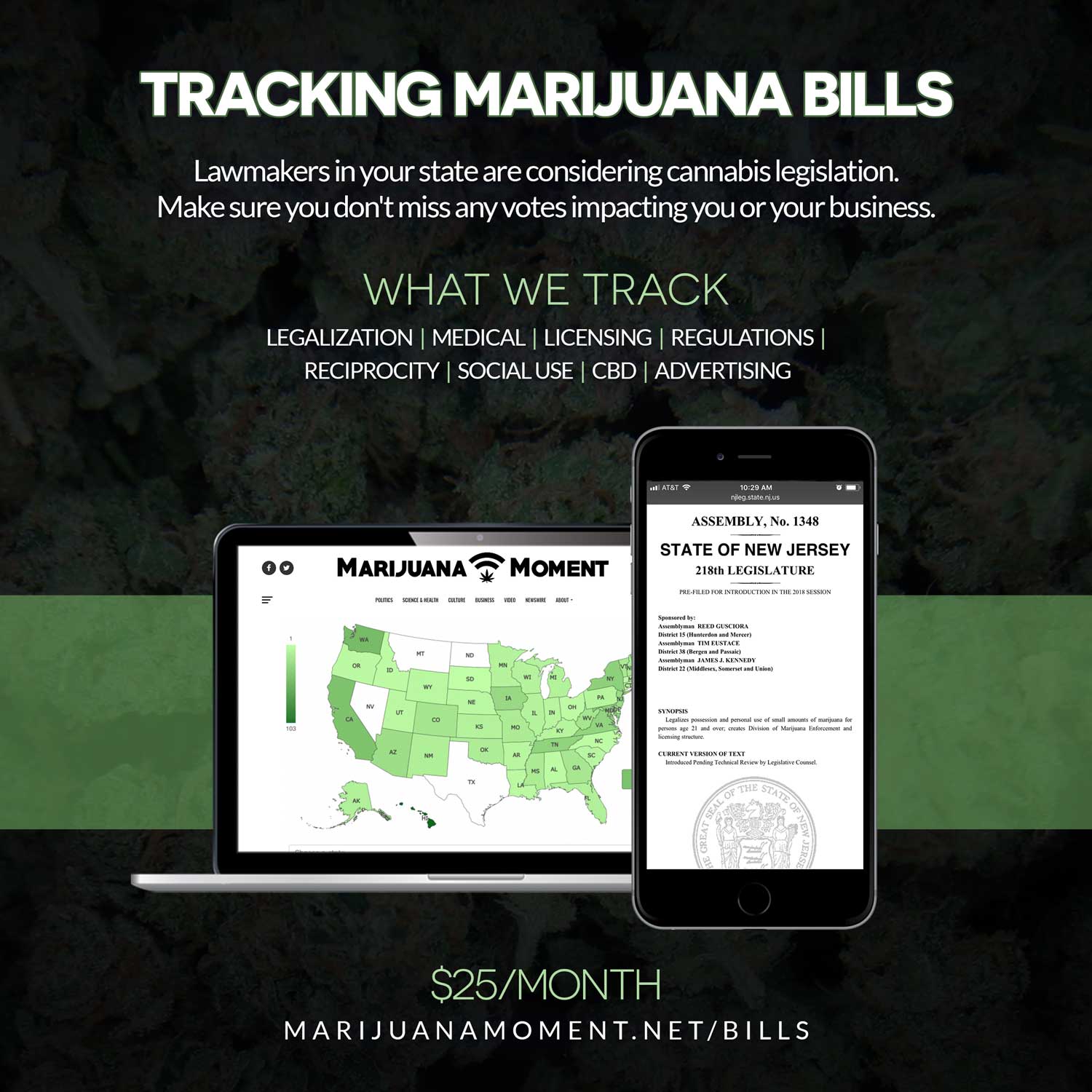
Marijuana Moment is tracking hundreds of cannabis, psychedelics and drug policy bills in state legislatures and Congress this year. Patreon supporters pledging at least $25/month get access to our interactive maps, charts and hearing calendar so they don’t miss any developments.


Learn more about our marijuana bill tracker and become a supporter on Patreon to get access.

Last year, a federal judge in Rhode Island ruled that the ban was unconstitutional as applied to two defendants, writing that the government failed to establish that the “sweeping” prohibition against gun ownership by marijuana users was grounded in historical precedent.

A federal judge in El Paso separately ruled in 2024 that the government’s ongoing ban on gun ownership by habitual marijuana users is unconstitutional in the case of a defendant who earlier pleaded guilty to the criminal charge. The court allowed the man to withdraw the plea and ordered that the indictment against him be dismissed.

DOJ has claimed in multiple federal cases over the past several years that the statute banning cannabis consumers from owning or possessing guns is constitutional because it’s consistent with the nation’s history of disarming “dangerous” individuals.

In 2023, for example, the Justice Department told the U.S. Court of Appeals for the Third Circuit that historical precedent “comfortably” supports the restriction. Cannabis consumers with guns pose a unique danger to society, the Biden administration claimed, in part because they’re “unlikely” to store their weapon properly.

Read the latest DOJ filing defending the federal gun ban for marijuana users below:

The post DOJ Suggests ‘Frail And Elderly Grandmother’ Who Uses Medical Marijuana Could Own Gun—While Defending Overall Federal Ban appeared first on Marijuana Moment.

Source link

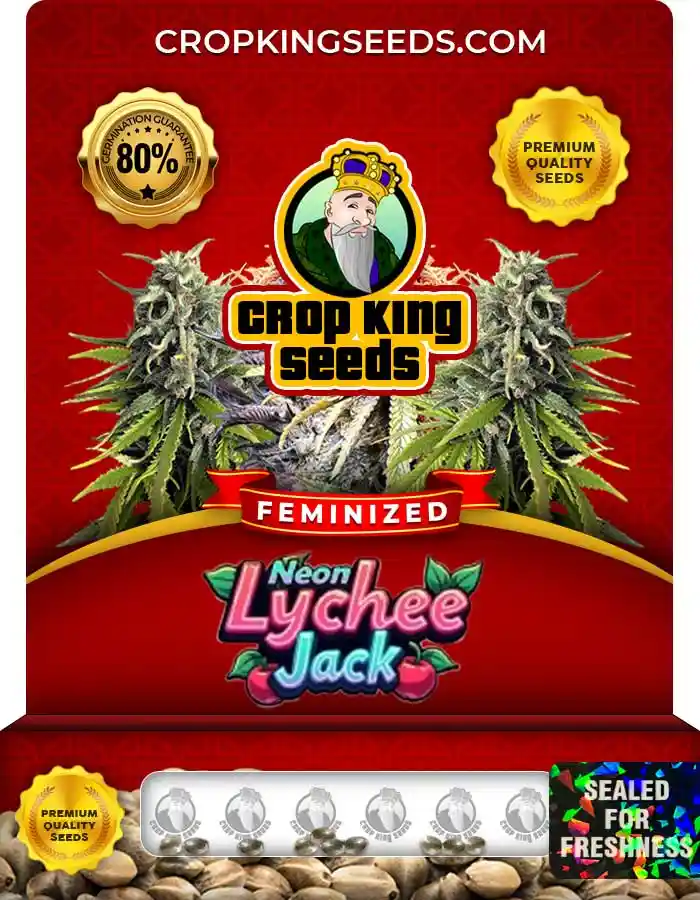
Neon Lychee Jack Strain Feminized Seeds

Neon Lychee Jack Strain Feminized Seeds

Neon Lychee Jack Strain Feminized Seeds

Description

Neon Lychee Jack produces beautiful, large spears that are dense and caked in a thick, sticky layer of white trichomes. Thanks to its Gorilla Glue parentage, the flowers are incredibly resinous and often feature bright orange hairs against a backdrop of forest green. The aroma is a complex mix that fills the room with a sweet, potpourri scent. You will notice dominant notes of sugary berries and tropical fruit, followed by a rich, creamy finish and a hint of earthy pine. It is a smooth and inviting fragrance that perfectly matches its high-energy name.

The experience starts with a quick burst of cerebral euphoria and mental clarity. You will likely feel more talkative and motivated, making it an excellent companion for artistic projects or outdoor activities. While your mind stays bright and focused, the GG4 side provides a gentle physical soothing that prevents any jitters. It creates a balanced high where you feel physically light but mentally sharp. It is an ideal all-day smoke for enthusiasts who want to stay happy and productive from morning until evening.

The post Neon Lychee Jack Strain Feminized Seeds appeared first on Crop King Seeds.

Source link

Cannabis Is Coming for Golf

Cannabis Is Coming for Golf

Cannabis Is Coming for Golf

And 8th Iron is already teed up.

Golf has always been a slow-burn sport. Long walks. Long pauses. Long conversations stretching from the first tee to the final putt. It’s a game built on rhythm and temperament, where one bad swing can hijack the next five holes if you let your head spiral.

That’s exactly why cannabis has been quietly riding shotgun in carts for years, even when plenty of clubs still treat it like a dirty secret. Not everyone is chasing a party round. A lot of golfers are chasing calm: looser shoulders, fewer swing thoughts, more patience when the game punches back.

Dominic DeNucci is building a brand around that overlap. Through 8th Iron Golf Club, he’s betting that cannabis doesn’t disrupt golf culture — it sharpens it.

Dominic DeNucci Didn’t Grow Up In Golf

DeNucci didn’t come up through country club junior programs. He grew up playing baseball and football. Golf came later.

Cannabis didn’t.

By his late teens, DeNucci was already deep into cultivation, scaling grow setups, and learning the plant beyond just smoking it. He moved into solventless work, including rosin production, where patience and precision matter as much as starting material. That discipline—steady hands, emotional control, attention to detail—would later translate to the course.

Golf hit him in 2020 and stuck. Within a year, he was competing in money games. In less than two years of playing, DeNucci had become a golf professional—a rare timeline in a sport where most players grind for a decade just to feel competent.

That matters. 8th Iron doesn’t read like a novelty because DeNucci didn’t borrow golf aesthetics. He earned his place inside the culture. He understands etiquette, the ego, and the unwritten rules. including where cannabis still makes people uncomfortable.

When he decided to build a club around that overlap, the name came naturally. The 8-iron is one of the most dependable clubs in the bag. It’s versatile, steady, and reliable. Pair that with the familiar “eighth,” and the wink is obvious.

But the deeper meaning isn’t just wordplay. It’s normalization. Cannabis and golf don’t have to be enemies. The crossover doesn’t have to feel rebellious or disruptive. It can be functional, rooted in respect for the game rather than shock value.

The goal isn’t to get obliterated mid-round. It’s to get out of your own head.

Why Golf And Cannabis Actually Work Together

If you had to design a sport that naturally pairs with cannabis, you’d end up with something that looks a lot like golf.

It’s outdoors. You’re moving, but you’re not sprinting. There’s space between shots offering time to breathe, reset, and let the last mistake go. Even on a packed Saturday, golf gives you pockets of quiet that most sports don’t.

Then there’s the mental battle.

Golf is a slow-motion argument with yourself. The swing is technical, sure. But the bigger fight is emotional—not spiraling after a chunked wedge, not carrying frustration to the next tee box, not letting ego pick the wrong club.

For many players, cannabis can help smooth those edges. Used responsibly and where permitted, it’s less about “getting lit” and more about lowering the internal volume. Fewer intrusive swing thoughts. Less tension in the shoulders. More presence over the ball.

Golf punishes extremes. Consistency wins. That overlap of composure over chaos is the thesis behind 8th Iron.

Legalization doesn’t automatically equal acceptance. DeNucci learned that while planning his first major on-course event in October 2024. Momentum built quickly. Social media lit up. Sponsors showed interest.

Three weeks before the event, the host course pulled out.

The concerns were predictable: neighbors, members, optics. The assumption that a cannabis-friendly tournament meant chaos. DeNucci argues the opposite. In his experience, alcohol-based tournaments are more likely to bring reckless behavior. Cannabis crowds tend to show up calmer and more focused on the round itself.

He scrambled for a replacement venue. Most courses said no. One didn’t: Cross Creek in Temecula.

The last-minute pivot improved the day. The more secluded setting meant fewer outside complaints and a better atmosphere for what the event was actually meant to be—community-driven, controlled, and centered on golf.

The proof-of-concept landed.

Events That Feel Like Community, Not a Gimmick

8th Iron events aren’t stiff brand activations with step-and-repeat banners and forced sponsor mentions.

They feel like a round with friends — just scaled up.

Cannabis brands and golf brands share the same space. Players show up solo and leave with new connections by the 18th green. That dynamic is already built into golf culture. DeNucci is simply removing the tension around something many players were quietly doing anyway.

Etiquette still matters. Respect still matters. The score still matters.

The cannabis isn’t there to hijack the day. It’s there to smooth it.

Las Vegas, Live Music, and “Get High Shoot Low”

The next expansion takes 8th Iron out of state and into Las Vegas, partnering with Fortunate Youth for a two-day crossover experience: golf first, live music second.

On April 3, the 8th Iron experience hits the Las Vegas Country Club. On April 4, Fortunate Youth performs at Area 15.

The brand tagline says it plainly: “Get High, Shoot Low.”

The meaning isn’t complicated. Even if you’re consuming, you’re still there to compete with yourself. You still want to post a number you’re proud of.

The high isn’t the destination. The low score is.

Building Products For The Rhythm Of A Round

DeNucci isn’t interested in slapping a golf label on generic flower.

He’s building toward cannabis products designed around how golfers actually experience a round. One concept he’s floated is the “Player Per-Fore-Mance” pack—four joints mapped to four familiar emotional checkpoints: first-tee nerves, a blowup hole, fading focus, mental fatigue.

The intention isn’t excess. It’s pacing. Golf rewards steadiness. The idea is to match product to moment so the round doesn’t unravel. It’s cannabis framed as performance temperament, not rebellion.

The Bigger Picture

Golf and cannabis make sense for the same reason golf works at all: time.

The sport gives you room to reset. Room to socialize. Room to be present. Add cannabis—responsibly and legally—and you reduce the emotional volatility that ruins rounds.

That’s the lane DeNucci is carving out with 8th Iron Golf Club.

Not shock value. Not stoner cosplay. Not anti-golf posturing.

Just a simple thesis: if the game is about rhythm, patience, and composure, why wouldn’t you use tools that help you access those states?

Cannabis isn’t crashing the clubhouse.

It’s already on the course.

Photos courtesy of Dominic De Nucci

<p>The post Cannabis Is Coming for Golf first appeared on High Times.</p>


Source link

Legal Weed, Fewer School Weed-Related Punishments? New  Johns Hopkins-UMass Study Finds Surprising Link

Legal Weed, Fewer School Weed-Related Punishments? New Johns Hopkins-UMass Study Finds Surprising Link

Legal Weed, Fewer School Weed-Related Punishments? New Johns Hopkins-UMass Study Finds Surprising Link

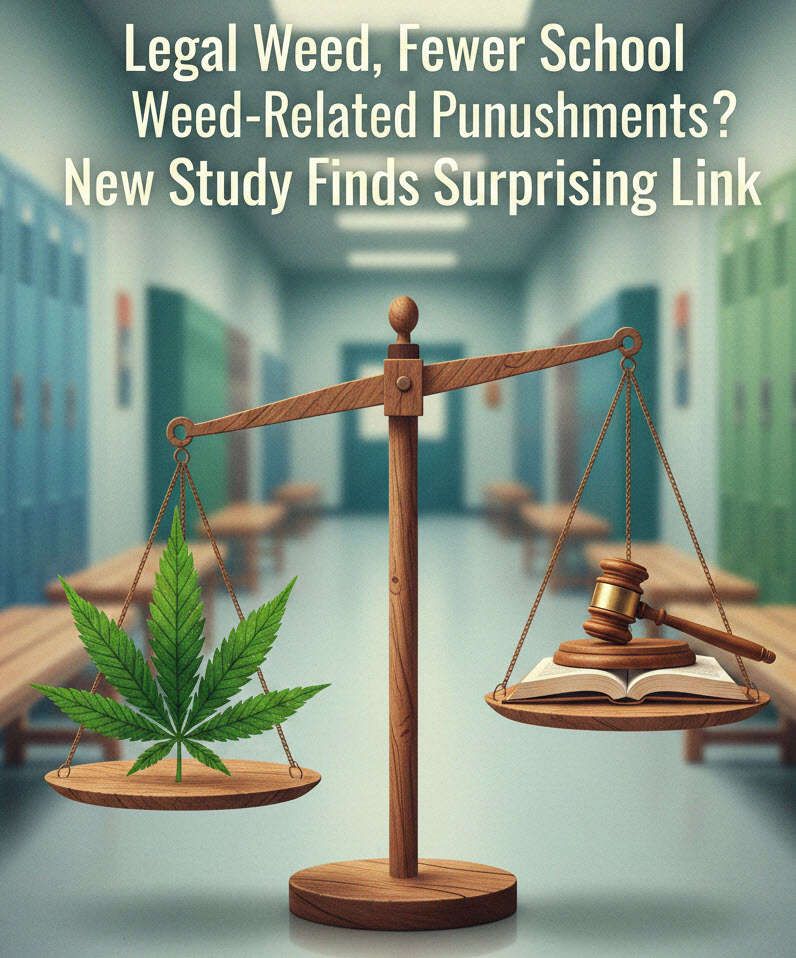
According to a study conducted by researchers at the University of Massachusetts at Amherst, together with Johns Hopkins University’s Bloomberg School of Public Health, public schools in Massachusetts saw a downward trend in marijuana-related disciplinary issues. After Massachusetts legalized recreational cannabis, consumption of the drug among teens dropped 25%, based on data from the Massachusetts Youth Risk Behavior Survey.

Source link