

Gansevoort man had more than 5 pounds of cannabis in car, sheriff’s office reports
February 18, 2026
Published by toker


There are moments in media that cut through the bullshit so cleanly, you can actually hear the narrative collapse in real-time. Combat veteran Staff Sergeant (Ret.) Johnny “Joey” Jones just delivered one of those moments on Fox News—and the network’s desperate attempt to spin it back into prohibitionist talking points was almost as revealing as Jones’ truth bombs.

According to Google Trends, searches for “therian” have increased by 5,000%. Why? Mainly, the viral spread of their gatherings and the news coverage in mainstream media. Their bodies are human, but their identity is animalistic. Wait a minute: as wild as it may sound, completely insane, even, we’re witnessing a true teensploitation phenomenon. Wherever they go, therians become a sensation: they run, jump, sniff, and sometimes even bite (please don’t, therians). But what are therians, why are they making headlines, and why might they become a symbol of cannabis liberation?
According to the International Anthropomorphic Research Project (IARP), a group of scientists who study the furry fandom, “therianthropy is the phenomenon of individuals who identify as a non-human animal species and often manifests through shifts, which are changes in mental state or perceived physical sensations.”
Here’s the thing: therians went viral because they evoke something in others that’s difficult to decode. It sparks laughter, anger, curiosity, disdain, discomfort, love, and even ignorance. Perfect fuel for the TikTok algorithm.
As such, these days therians are receiving unprecedented attention. And while they are a young community, born in the early days of the internet, on Usenet forums in the early ’90s, they’ve even surpassed the more established furry community in terms of popularity, a subculture centered on anthropomorphic animals, commonly seen at otaku and other fandom events. Technology has changed, but the need for a pack remains.
And, if you’ll allow me (please do, we’re inviting you to think), the connection between therians and cannabis liberation is not arbitrary: both share roots in bodily sovereignty and perception. Cannabis culture fought for decades for the right to alter perception and mental states without being criminalized. Through their “shifts” (the aforementioned changes in mental state in which they connect with their animal identity), therians do something similar, but endogenously. Their experience is both mental and sensory.
So, if cannabis users seek expanded consciousness to see the world “differently” (yes, I know, they’re also seeking many other things), therians claim the right to inhabit a non-human consciousness. And, in that sense, both groups are labeled by a predominantly “normative” society as “crazy,” “immature,” or people who are “escaping reality.” They share, let’s say, a stigma: “This is right, this is wrong.” And for them, in this clash of prejudices, the ball lands squarely in the “wrong” category.
And as happened with one of the main slogans of the feminist revolution, the one that popularized the idea of “My body, my choice,” the cannabis movement also embraced that notion. But, but, but, therians take that postulate to the extreme: they channel a rebellion against their own biological species and engage in a form of aesthetic disobedience. In short: they crawl around on all fours in public places and wear dog masks that look like your French bulldog Charlie.
So, like all these ruptures born from youth culture, which is the main driving force behind irreverence throughout history, just as smoking weed in a public square was a political act 20 or 30 years ago, today “behaving like an animal” challenges public decency and the behavioral norms imposed by the production system. The system that wants us quiet, consuming industrial waste, ultra-processed food, and AI-powered doomscrolling material. Their mere presence disrupts the system’s productivity contract.
So, at the risk of exaggerating (I encourage exaggeration), therians can become a symbol of rebellion for this liquid 21st century (the term is Zygmunt Bauman’s, not mine), which needs new ways of channeling collective outcries and creating cultural ruptures. And just as there was a fight to prevent cannabis use from being seen as a mental illness, at this very moment, therians are in the “shock” phase against the psychiatric manual. They are navigating a kind of chosen or embraced difference. We’ll see what happens to them. In the end, what happens isn’t so much what matters. What matters is the gesture. What remains of all this when all this is over.
And just as they go against the grain of society (a therian recently told me: “I don’t want to fit into this society that imposes all these rules on me”), they invoke a return to nature: “We are not machines,” they seem to shout, voicing a fierce critique of hyper-technological capitalism from a profoundly primitive place. And if cannabis proposes a return to the earth, here lies another point of connection: woof, woof, meow, meow, with their feet in the grass.
All of that anger, all that discomfort, everything you’re probably feeling while reading this (it’s okay, I understand, really), is the same as what hippies provoked during the ’60s, or punks in the ’70s, or those who danced to Tecktonik in the ’00s (probably you). And while the cannabis movement navigates a sea of legality, shops, and ultra-premium celebrity brands flaunting their privileges, therians represent a new strain of marginality. One that doesn’t ask for permission. Sorry if it bothers you. The truth isn’t meant to offend.
Therefore, if “coexisting means accepting others,” perhaps the comparison with therians may feel over the top (it probably is; again: exaggeration is fine, even awesome), but within their existence lies a new form of rebellion, one that doesn’t ask permission to feel, to perceive, or to act outside the norms.
That’s why they stand tall, as if their essence were a kind of spiritual version of that old autonomy the cannabis movement has always tried to defend. Here’s a gentle (dog’s) ear tug to keep us from becoming complacent and to remind us that the fight continues. And that it needs us to be rebellious, resourceful, and disruptive, like a wet cat, like a bat at midday, or like a therian in the Senate.
Cover photo created with Gemini AI.
<p>The post Annoyed by Therians? That’s the Point, and Weed History Proves It first appeared on High Times.</p>

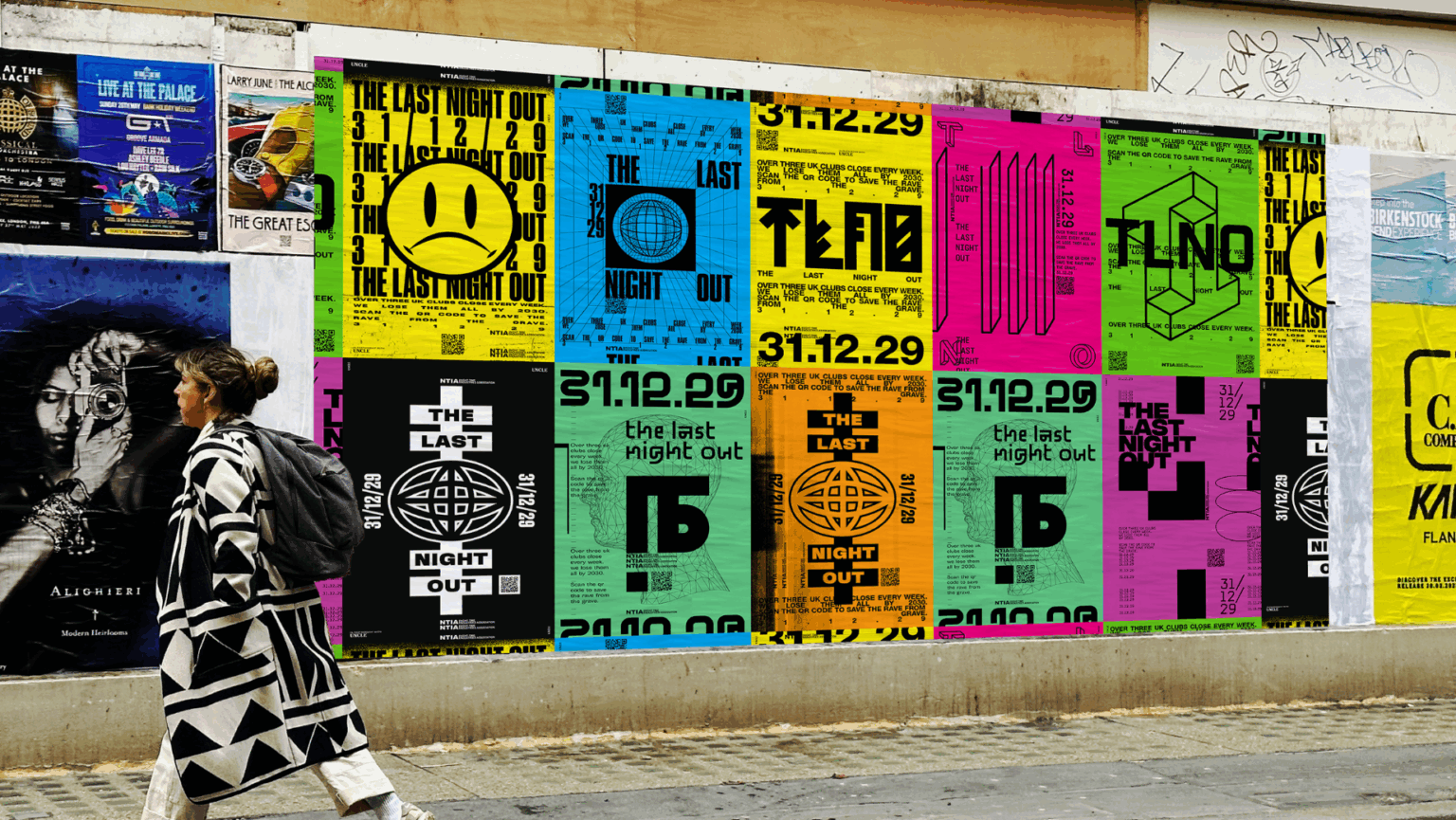

There’s a trend increasingly debated in electronic music publications, cultural calendars, and the endless rabbit hole on Instagram and TikTok: UK clubs, the birthplace of some of the most significant countercultural movements of recent decades, are closing one after another.
According to statistics compiled by the Night Time Industries Association (NTIA), between the start of the pandemic and early 2025, 405 nightlife venues closed across the UK. And the number just keeps rising. The organization speculates that, if this trend continues, no British clubs will remain by December 2029, an idea they symbolically call “The Last Night Out.”
Here we have a snapshot not only of a global cultural, social, and economic shift that extends beyond the British Isles, but also of political decisions and economic models that are savagely devouring themselves in this particular region. This phenomenon is on everyone’s lips because, as is well known, the British love their music and fiercely defend it as a cultural capital, and the mythology surrounding clubs in cities like London or Manchester can perhaps only be compared to that of Berlin. But said phenomenon seems to be unfolding before everyone’s eyes in slow motion, with no one able to do anything to stop it.
The UK’s nightlife, and especially its club culture, is undoubtedly going through a profound crisis with multiple causes, which makes it difficult to find a scapegoat (let alone a solution, or at least a modus operandi, to address the situation). And while the pandemic dramatically accelerated it and brought new complications, it is a process that had already begun in the previous decade.
According to a report published by the BBC in March 2025, Sheffield is the hardest-hit city: since 2020, 40% of its nightclubs have closed their doors. The report, published as a YouTube video, cites the lockdown measures and the millions in losses they caused for the entertainment sector as the primary reason for the closures. However, it also attributes the closures to the exorbitant cost of living (which continues to rise) in the UK.
Nevertheless, it fails to mention two far more pervasive and equally relevant factors: gentrification and the shift in consumers’ patterns and habits. These factors, in a chicken-and-the-egg style, are intertwined with the consequences of the pandemic, a weakened economy, higher levels of job insecurity, and a world increasingly leaning toward far-right politics and moral frameworks, which undervalue (and even demonize) leisure and more rebellious cultural expressions.
This is a point worth paying attention to, because in today’s world, where human labor itself is in crisis, it’s very easy to believe arguments claiming leisure isn’t important. But it is.
Philip Kolvin, a British barrister specializing in licensing law, regulation, and public policy, particularly in areas such as licensing adult entertainment venues and other regulated sectors in the UK, says: “No venue has the right to exist. Before we had cock fights, and they no longer exist because of the law stopping them or because of the lack of demand. We could say same thing about the clubs. One argument is that if clubs can’t make a profit, something else can come instead: streamings, coffee shops, gyms. But there is something about clubs which is special. It’s a place that represents and generates culture, new music styles, new fashion styles, new ways of people to get together, new ways of expression. And it is not necessarily that they are getting squeezed out because people don’t want to do that anymore, they are being squeezed that often because of the way we go for urban areas, the way we tax clubs, the expensive energy and commodities. They are draining away at a very fast rate now, and that makes this conversation really urgent”.
Kolvin is regarded as one of the leading voices on the subject at both the political and economic levels. His report, Darkest Before the Dawn, presented by the NTIA and considered its manifesto, is a defense of and a call to action regarding the Night-Time Economy, highlighting its value and relevance by providing data and suggesting strategies for its development. The lawyer sees the situation of nightclubs as a serious and much deeper problem, encompassing this entire vital sector of the economy itself—the leisure sector: not necessarily the entertainment sector, but rather those spaces where people go to spend time, interact with each other, have a drink, eat, or dance.
“The Night-Time Economy is different from other forms of entertainment because it is where we go to express our joy, and our joy is not curated. When we go to the theatre we are going as consumers, but in the Night-Time Economy includes everything that happens, including the way we build our own joy,” Kolvin explains.
The case of Corsica Studios is one of the most lamented by the community: the iconic club in Elephant and Castle, South London, will close its doors in March 2026. According to industry sources, this is due to the growth of real estate development in the area, with its respective consequences, such as increased rents, goods and services, and fines for noise pollution.
According to an article in Mixmag, back in 2018 “it was given £125k by Delancey, the real estate asset management and advisory company behind Elephant and Castle town centre development, in order to soundproof the club.” This corresponds to the Agent of Change Principle, which the NTIA is trying to promote and which is supposedly in effect—but not with the seriousness it should be. The idea is that, if housing is built near an existing club, the developer, not the club, is responsible for soundproofing.
Clubbers, DJs, producers: everyone deems Corsica as an irreparable loss. One of the capital’s darlings, the mid-sized venue, opened in 2002, boasts an extensive history of legendary nights, hosting both local and international artists of the caliber of Bicep, Nina Kravitz, Fred Again, Jamie XX, and Björk, among many others.
However, it seems the club’s future isn’t entirely bleak: official sources assure that the plan for the near future is to relocate, reopen and update the space to comply with all current regulations. But there’s still no solid information, and the community is pessimistic.
“I will be devastated when Corsica Studios in London goes. Some of my fave nights out as a clubber and artist were there and I care about the space so much. There are always the most varied sounds and events happening and the atmosphere is great and staff are wonderful too. We will really lose an absolute treasure with that place and I am genuinely angry about it,” says DJ and producer Shirley Temper.
The gentrification process and its impact on club culture is more or less the same in all major cities. Historically isolated neighborhoods and areas with an industrial character are now being overtaken by real estate development and transformed into “trendy” zones, where rent and utility prices skyrocket and the rules of coexistence (both noise and traffic regulations) change. This threatens the natural ecosystem of many clubs, deliberately located away from residential areas, putting their survival at risk.
Faced with a weakened Night-Time Economy, real estate development sharpens its teeth and advances with state complicity, which is conspicuously absent from public policies to protect these spaces; on the contrary, it burdens them with ever-increasing financial weight.
Kolvin points out: “We’ve got some sign that local authorities are understanding the need for a strategic outlook… Where I think we’re fundamentally lacking is at national level, where there’s been a lack of good work from government. Is the Night-Time Economy less important than other elements of industry? (…) I’d argue not: it’s £140 billion worth of economy. It’s one of the biggest employers of young people and it’s one of the biggest reasons why people choose to live, work and invest in the UK and its regions. So the fact that we don’t really have a minister devoted to the promotion of the Night-Time Economy, that we don’t really have a national strategy, I find very disappointing.”
He continues: “We need to side as a nation to care about this and to be supportive, and then we need to put in place measures which operate in the level of planning, licensing, fiscal policies, urban regeneration, and all the governance tools that we use for all the other sectors of our economy. It is not a crime to say ‘What is our vision for the Night-Time Economy?’”
In this scenario of structural neglect, another uncomfortable point of debate emerges: how to manage the risk of substance use within the Night-Time Economy in the absence of public policies.
The Drumsheds case (which, paradoxically, remains open) has been highly controversial: the mega-club, located in Tottenham, London, and currently considered the largest and highest-capacity club in the world, saw two suspicious drug-related deaths and a stabbing incident between October and December 2024.
Housed in a former Ikea building and with a capacity of up to 15,000 attendees, the club belongs to Broadwick Live, a company that also owns some of the other most important venues in the UK, such as PrinTworks and Manchester’s Depot Mayfield.
The case highlights a stark asymmetry that is difficult to ignore between the large corporate giants and the smaller venues that house the underground scene—historically the breeding ground of British electronic music culture. These mega-clubs have financial resources, institutional backing, and a trusting relationship with the police, local authorities, artists, and the public. And yet, they fail to prevent tragedy.
“Resolving that fundamental disagreement, at the same time as reassuring sceptical sections of the clubbing public, is a substantial challenge before Broadwick Live’s next season of events begins in March. If the UK’s leading club operator can’t make their flagship venue work, then the omens for other venues feel worrying, even if they aren’t operating at the same scale,” Ed Gillet reflects in his article for The Guardian.
At least four drug-related deaths were recorded in nightclubs in the UK during 2025. While information on all cases wasn’t made public, drugs adulterated with nitazenes have been a recurring factor. And, as in the real estate sector, the lack of effective government policies is glaring.
Among the raver community and nightlife workers, there’s a palpable sense of worry, resignation, and cynicism.
N-Type is one of the legendary DJs and producers of London’s dubstep scene. He sees a negative shift in every aspect: “Any nightclub closing is sad. We have such an amazing nightlife in the UK and it feels it is at risk. Even the way people rave feels different now. Take me back to the sweaty warehouses and euphoric moments”.
Shirley Temper adds: “UK clubs and electronic music venues are so much more than just spaces. They offer community, escapism, enrichment and enjoyment in a world where people work life balances are consistently encroached upon and there is so much financial pressure on people who are just trying to survive. Music is well known to have positive impacts on the body in mind and having spaces for people to come together and enjoy these things is genuinely a very beautiful and human thing. The fact we are losing more and more of these spaces almost makes it feel like the powers and money in charge don’t want us enjoying our lives anymore.”
Tessa Regueiro, a London-based DJ, promoter, and booker who is part of Antisocial Records UK and Caza Beats, lived in Buenos Aires for the last 12 years and returned to London this year. Her opinions are shaped by the contrast between what London was and what it is now: she also mentions the impact of COVID and how exorbitantly expensive the city has become.
“We saw the same in Argentina with the economic crisis. As promoters, we basically had to put on free events to ensure people would come, because asking people to pay ticket prices in a niche scene was almost impossible. Stopping wasn’t an option, because we felt these spaces are really important for people to come together through music, more so in hard times. I don’t know the stats or anything, but they say Gen Z are also way less likely to go out than we were when we started raving. So maybe it’s also impacted by a societal shift in younger people’s priorities,” she reflects.
Another reason that emerges is not only a local phenomenon, but a global one.
Beyond the economic and political dimension of, in this case, the United Kingdom—a situation radically worsened post-pandemic, but which began almost a decade ago—this phenomenon also reflects the current state of consumer habits and social life patterns. This transcends regionalism and refers to changes in human behavior at a transcultural level.
It’s true that Gen Z (the current twenty-somethings, the longtime target of club culture) is going out less and less, and even those who do are drinking significantly less alcohol. This, coupled with the rise of wellness culture and a focus on mental health, which have strongly influenced consumer habits in the post-pandemic era, has shed light on an issue that, being so obvious, seemed invisible: clubs and parties in general depend on attendees drinking alcohol to survive. This is clearly problematic from a common sense and public health perspective, and, in this context of declining intake, also unprofitable. Therefore, the only thing these venues can do to accumulate more money is to raise entrance and bar prices.
As a response and as a symptom, sober raves are slowly but surely emerging: parties in which drug use isn’t encouraged, and alcohol isn’t sold. Not to mention BYOB (Bring Your Own Bottle) parties… Very inclusive initiatives, perfectly suited to new consumers, but still figuring out how to become profitable.
Regarding youth behavior trends, Argentine trends expert Gaba Najmanovich predicts a swift “return of nightlife,” even though it never really went away. First, because DJs and electronic music culture are still on the rise, and second, because social spaces more associated with a healthy lifestyle and wellness culture, such as “social running” (going for a run in groups as a way to meet people), are declining.
“It’s a trend that will soon expire, and people are still looking for spaces to connect. So, I think it’s very important not to confuse ‘clubs’ with ‘nightlife,’ and the important thing is to think about what this new nightlife is like,” she says.
The question is what or who should take action to ensure there’s a place to return to when this is over.
Najmanovich isn’t a scholar of the UK specifically and its political dimensions, but she’s been following the rise and fall of electronic music culture and the party scene for some time now, in terms of global consumer habits. Observing the rise of music festivals in contrast to the decline of clubs, she believes there are key elements the club experience could incorporate to become more appealing: “Festivals offer open air, variety, and the possibility of a break. There might be something about the intensity of the club scene that isn’t working for this generation of young people who grew up accustomed to something else, which I find curious considering the stimulation they receive from screens,” she explains. “But there’s something about the club scene and the social anxiety of this generation, who aren’t so used to socializing in person.”
The economic situation, the cost of living, and job insecurity are undoubtedly another factor driving this shift in consumer habits. Kolvin points out that many consumers simply can’t afford a night out at a club, leading them to bring their own drinks or throw parties at home. In Najmanovich’s words, “Clubs aren’t going to disappear entirely because there will always be a niche market. But consumers are going to change, and we have to change with them or let them go.”
However, regarding habits, Najmanovich anticipates a return to nightlife and “the death of the wellness imperative.” Because she emphasizes that, while this generation is the most impoverished of the millennium so far, spending hasn’t stopped, it’s just changed: “I believe that in the next 5 years nightlife will make a strong comeback, but it will be necessary to create the conditions for these people to want to keep attending. The budget issue will still be complicated. So we have to look at the business model and make sure it’s not so financially overwhelming for these new consumers, although when priorities change and people spend less on sneakers and skincare, perhaps there will be more money to spend going out at night. It depends on the target audience’s priorities.”
The first thing to understand is that this problem speaks to fundamental issues that affect not only ravers but the entire cultural fabric; it has to do with preserving the few spaces (not only physical, but also temporal and conceptual) where productivity isn’t everything; giving leisure, human connection, and enjoyment an important place in social life. This goes without even considering the sustained loss of jobs, and on a deeper level, the irreparable damage that the extinction of nightclubs inflicts on artistic production.
That’s why it’s important to call things by their name, something Philip Kolvin and the entire NTIA emphasize when using the term “Night-Time Economy”: “It’s really important to name it because it’ss under threat, in a form of other ways of entertainment are not under threat. By naming and dissecting it we can use all the tools we have, social, political, economical, urban, to protect this Night-Time Economy.”
Failing to support these spaces with government policies during a context of such radical economic and social change—and, on a larger scale, neglecting the country’s nightlife, and more specifically electronic music—is to abandon an invaluable cultural asset. Looking to the future, it’s killing the breeding ground where artists and movements emerge, which then keep cities culturally relevant, attract tourism, and create legends. No one would let museums, film archives, or theaters die. This shouldn’t be so different.
“Be it jungle music in Bristol, dubstep and grime in London, bassline in Sheffield or donk from Wigan Pier, the UK has it all. These sounds and cultures stem largely from the vibrant black, working class and queer communities that we are lucky to have, and they have pioneered so many of these genres. These sounds people enjoy all over the world once started out completely underground and through sound systems,” Shirley Temper reflects. “Smaller venues in the underground scene now allow for a space for these sounds to continue to develop with a community around it. They’re also the way newer artists and promoters can make their impact on their local scenes and become part of something. If we lose these spaces, how are we ever going to discover someone or something new?”
The UK case is paradigmatic and especially alarming because of the speed and depth with which it is developing, given that it is a first-world country with a globally recognized rave culture. But it is merely the tip of the iceberg of a global phenomenon, and it should serve as a cautionary tale for the rest of the world. The future of club culture looks bleak, and while interest in electronic music is growing exponentially, tons of new DJs are appearing every day, and mega-festivals are increasingly prevalent, clubs—the seed and foundation of all electronic culture—, left without state support or a shift in the general awareness of their cultural relevance, will have to reinvent themselves or disappear.
“In times when everything is thriving, the Night-Time Economy will look after itself; in times when it is not, we need to take a concerted approach as a nation for the kind of Night-Time Economy we want to leave to our children,” Kolvin concludes.
Cover photo: McCann London for The Night Time Industries Association (NTIA)
<p>The post UK Clubs Are Shutting Down: Is Nightlife No Longer Profitable? first appeared on High Times.</p>



Abstrakt Hardware Update. Arizona state license # 00000109ESVM44878444
The post Abstrakt Hardware Update! appeared first on AZ Marijuana.


From dialed-in flower to standout vapes, edibles, and drinks, this year’s Cannabis Cup results highlight the operators setting the pace for New York quality.
Doobie Labs brought their flower to market in 2024 after a relentless pursuit to perfect their product. And clearly, it’s paying off. For a newcomer to take home Best Sativa Flower is a serious statement.
White Widow is a legendary ’90s strain. This high-potency, sativa-dominant hybrid delivers peppery pine and citrus notes with a balanced, flavorful smoke and the kind of uplifting effects that made it a classic in the first place.


Check out the winners:
Golden Garden grows flower that gets your attention the second you crack the bag. They work with killer genetics, and only the best buds make their way to the shop.
Blue Zushi is an incredible example of true indica energy. The depth of flavor matches the deep buzz, making it an easy pick for the top spot.


Check out the winners:
Permanent Marker is small-batch craft done the right way. It’s rich and earthy, the kind of terpene experience that sticks with you long after the bowl burns out.
This hybrid hits a clean balance between head and body, so it plays just as well for a social session as it does for a quiet night in.


Check out the winners:
RYTHM knows how to take a classic pre-roll and turn the volume up. Built on iconic strains and reliable effects, the brand has earned consumer trust through precision rolling and big flavors.
Strawberry Shortcake Remix is a perfect example of that approach. Expect creamy strawberry on the inhale, rich and sweet, followed by an infused kick that pushes it well beyond the average pre-roll.


Check out the winners:
Of course Runtz is putting out the most fire Runtz. The brand built its name on this strain, and Obama Runtz proves they know exactly what they’re doing.
It’s sweet, gassy, and loud on the palate, with a strong indica lean that hits deep and lasts. The experience evolves as you smoke it, staying euphoric, engaging, and well-balanced from start to finish. Perfectly rolled and packed in a glass tube, this is craft done right.


Check out the winners:
MFNY does everything single-source at its Hudson Valley farm. Seed-to-shelf means they control every step from growing to harvesting to processing. The attention to detail shines through in every hit.
Hash Burger throws a loud cloud of sweet spicy, lemony terps up front, with woody pine and florals on the exhale. Made from fresh-frozen flower using hydrocarbon extraction, this is live resin with full-spectrum cannabinoids and natural terpenes.


Check out the winners:
Heady Tree is dedicated to delivering top-quality cannabis products to the New York community. They embrace organic farming principles, avoiding synthetic fertilizers and pesticides in their climate-controlled greenhouses.
Gas Leak is a perfect showcase of that commitment. Bold diesel flavor meets earthy pine-box-style undertones that hit smooth and stay true to the classic gas terp profile.


Check out the winners:
Incredibles has been in the game since 2010. They first launched homemade cookies to help Grandma Noni, and it grew into a brand that helped define what reliable, well-crafted edibles should be.
The Empire State Bar is a perfect expression of that legacy. Dreamy milk chocolate, rich buttery toffee, and the sweetest buzz. Chef’s kiss. This is the kind of chocolate that reminds you why the name Incredibles fits.


Check out the winners:
Layup is perfect when you want something refreshing and easy to drink, with a slow and steady high.
Fruit Punch is sweet and tart, but stays clean and refreshing without trying too hard. Keep your eyes on this brand. Layup feels modern, intentional, and incredibly drinkable.


Check out the winners:
<p>The post New York Cannabis Cup Winners: The Brands and Products That Took Top Honors first appeared on High Times.</p>

Press Release Compass Pathways today announced statistically significant positive results in two pivotal Phase 3 trials evaluating COMP360 – a synthetic, proprietary formulation of psilocybin – in treatment-resistant depression (TRD). Notably, COMP360 is the first classic psychedelic to consistently achieve a highly-significant result and clinically meaningful effect, with a well-tolerated safety profile in this historically difficult to treat patient population. Details can […]
Source link