Hawaii Senators Take Up Marijuana Legalization Bills After Key House Lawmakers Signal Reform Is Dead For 2026 Session

Hawaii Senators Take Up Marijuana Legalization Bills After Key House Lawmakers Signal Reform Is Dead For 2026 Session


Hawaii Senators Take Up Marijuana Legalization Bills After Key House Lawmakers Signal Reform Is Dead For 2026 Session

Hawaii senators have taken up a pair of bills to legalize marijuana—with one proposal contingent on federal reform or changes to the state Constitution and the other omitting provisions allowing for commercial sales.

Members of the Senate Health and Human Services Committee and Commerce and Consumer Protections Committee took up the measures—SB 2421 and SB 3275 from Sen. Joy San Buenaventura (D)—at a joint hearing on Tuesday.

The panels also discussed separate legislation allowing for the sale of certain hemp-derived cannabinoid products and permitting one-time medical cannabis sales for patients with pending registration applications.

The hearing comes after key House lawmakers signaled that legalization proposals that originated in that chamber would not be advancing in the 2026 session, citing a lack of sufficient support to get them crossed over and potentially enacted.

In the Senate, SB 2421 would create a Hawaii Cannabis and Hemp Office within the state Department of Commerce and Consumer Affairs to oversee the regulation of a adult-use cannabis market if there’s a constitutional change at the state level or change in federal marijuana laws permitting such a reform.

“In addition to legalizing medical use cannabis, numerous states and jurisdictions, including Hawaii, have opted to decriminalize the possession of small amounts of non-medical use cannabis,” the bill text states. “These decisions are motivated by a variety of compelling reasons, including the prioritization of more serious crimes, advancements in criminal justice reform, evolving public opinion, and long-standing social equity concerns within the context of cannabis regulation.”

The legislation also notes that states with legal cannabis markets “have witnessed substantial benefits from the revenue generated through taxes, including use and licensing fees, as well as general excise and sales taxes on the non-medical adult-use cannabis industry.”

“In light of the task force report, the legislature finds that the legalization of cannabis for personal use is a natural, logical, and reasonable outgrowth of the current science of and attitude toward cannabis. The legislature further finds that cannabis cultivation and sales hold the potential for economic development, increased tax revenues, and reduction in crime. Accordingly, the legislature is prepared to move forward with the legalization of non-medical adult-use cannabis if specific changes are made at the federal level or if the electorate approves a state constitutional amendment to legalize cannabis.”

The state attorney general’s office submitted testimony ahead of Tuesday’s hearing, recommending a series of changes related to hemp provisions, packaging requirements and penalties for the unlawful sale of cannabis to minors, for example.

It also noted that the legislation as drafted lacks specific language on appropriating funds for the regulation of a marijuana market, stating that it’s “essential that funds be appropriated for the timely implementation of a substantial regulatory program and for law enforcement, nuisance abatement, and a public education campaign prior to legalization, among other things.”

The Department of Commerce and Consumer Affairs, which would be tasked with regulating the adult-use cannabis market, testified that it “acknowledges the complex nature of the cannabis issue, involving considerations related to public health, safety, and economic opportunities. The commitment to public health protections, including an extensive public health and education campaign, reflects a responsible approach to mitigate potential risks associated with cannabis use.”

“The Department would like to underscore the significance of the clear separation of operations between the DCCA and the Hawaiʻi Cannabis and Hemp Office, as delineated in the proposed legislation,” it said. “This clear separation ensures that the Hawaiʻi Cannabis and Hemp office operates independently, fostering effective governance and decisionmaking in the field of cannabis regulation.”

For its part, the state Department of Health (DOH) said that while it “appreciates that this measure acknowledges and prioritizes the implementation of public health protections in connection with adult-use cannabis policy”—and regulating marijuana is “preferable to an unregulated illicit market”—legalization “should be expected to result in a net negative impact on the health of the public.”

“As such, the Department remains highly concerned about the public health and environmental impacts that the increased accessibility of cannabis and opening of an adult-use marketplace will bring,” it said.

Karen O’Keefe, state policies director of the Marijuana Policy Project (MPP), commented to the committees that it “makes sense to create an independent Hawaii Cannabis and Hemp Office,” and that advocates “also strongly support adult-use legalization, but urge the committee to amend the bill so legalization takes effect without waiting on a trigger.”

“While cannabis is not risk-free, it is far less dangerous than alcohol, tobacco and some medications. Hawai’i should treat adults like grown ups who are allowed to make their own decisions about the plant,” O’Keefe said. “While states have revised some laws to try to keep up with best practices, no cannabis legalization law has been repealed. That’s because they enjoy strong popular support, which increases post-legalization.”

In its written testimony, the Hawai’i Alliance for Cannabis Reform (HACR) said the bill from San Buenaventura represents “a thoughtful and comprehensive bill to legalize cannabis for adults 21 and older, contingent on a trigger, such as federal legalization or a constitutional amendment legalizing adult-use of cannabis in Hawai‘i.”

“Its regulatory framework puts public health, public and consumer education, and equity at the forefront,” the group said. “We are grateful that the bill would preserve access to medical cannabis, while creating new opportunities for small, Hawai‘i-based businesses, legacy growers, and social equity applicants.”

“Hawaii’s cannabis laws needlessly ensnare hundreds of people—disproportionately Native Hawaiian people—in its criminal justice system every year. Long after jail sentences are complete and fines are paid, cannabis arrest records derail lives, making it hard to get a job, education, and housing,” it continued. “SB 2421 would also include state-initiated expungement to stop derailing lives for many prior cannabis records.”

“Like alcohol prohibition a century ago, cannabis prohibition has failed. It wastes taxpayer dollars, perpetuates racial disparities, puts consumers at risk, and locks people up for minor offenses in overcrowded jails and prisons. SB 2421 would grow the economy, increase freedom, and promote health and safety. It would also move sales above ground so consumers can buy a lab-tested, regulated product and workers don’t face felonies.”

“We would prefer cannabis legalization without waiting for a trigger,” HACR said. “Voters support legalization, and the longer the delay, the more harm is done.”

Under the other proposal, SB 3275, adults 21 and older would be able to buy, possess and cultivate certain amounts of low-dose and low-THC cannabis for personal use.

The legislation further provides protections for parents and employees who use marijuana in compliance with the law, and it describes public safety safeguards such as packaging restrictions and cultivation standards.

The state attorney general’s office voiced opposition to the proposal, stating that, as currently drafted, the bill “effectively legalizes a level of non-medical adult-use cannabis without the necessary resources and regulatory scheme required to safely and effectively administer a non-medical adult-use cannabis program.”

MPP, meanwhile, said that “Hawai’i should treat adults like grown ups who are allowed to make their own decisions about the plant.”

“SB 3206 would take a significant step in that direction, but only if it also legalizes adult-use possession,” it said. “SB 3206 should also be revised to avoid pushing.”

HACR, for its part, said “Hawaii’s existing cannabis laws “needlessly ensnare hundreds of people—disproportionately Native Hawaiian people—in its criminal justice system.”

“Long after jail sentences are complete and fines are paid, cannabis arrest records derail lives, making it hard to get a job, education, and housing,” it said.

“Like alcohol prohibition a century ago, cannabis prohibition has failed. It wastes taxpayer dollars, perpetuates racial disparities, puts consumers at risk, and locks people up for minor offenses in overcrowded jails and prisons,” it said. “Legalizing and responsibly regulating cannabis and THC-infused products would grow the economy, increase freedom, and promote health and safety. It would also move sales above ground so workers don’t face felonies.”

“SB 3275 is a significant step in the right direction. However, it needs amendments to regulate and license cannabis sales, so that consumers can purchase a lab-tested, safe product, and to ensure responsible packaging and labeling,” it continued. “It’s time to move cannabis to the legal, regulated market and to stop derailing lives and pouring tax dollars down the drain.”

Historically, it’s been the Hawaii Senate that’s proved more amenable to cannabis reform in the legislature—and the 2026 session hasn’t been any different so far.

That was evidenced, in part, after key House lawmakers announced earlier this month that a pair of legalization bills that originated in the chamber were effectively dead for the year.

Despite renewed hopes that the proposals—including one from House Judiciary and Hawaiian Affairs Committee Chairman David Tarnas (D) that would have put the issue of legalization before voters at the ballot—would advance this year, the sponsor and House Speaker Nadine Nakamura (D) said there wasn’t enough support within the legislature to pass them this round.

At Tuesday’s joint Senate committee hearing, members also took up a bill, SB 3206 from San Buenaventura, that would allow licensed hemp processors to sell hemp-derived cannabinoid products containing up to 5 milligrams of THC per serving to adults 21 and older.

Flower hemp products could also be sold under the legislation. And the measure would further increase the THC limit for tinctures to 5 milligrams per serving.

The panels additionally discussed a proposal, SB 3315 sponsored by Sen. Angus McKelvey (D), that would let patients and caregivers make a one-time medical marijuana purchases while their applications to become registered participants in the program are processed.

State officials last month released a report on the potential economic impact of recreational marijuana legalization in the state, including revenue implications related to domestic and international tourism.

All told, researchers said survey data and comparative analyses indicate that Hawaii could see anywhere from $46-$90 million in monthly marijuana sales by year five of implementation, after accounting for a maximum 15 percent tax rate on cannabis products.

Hawaii’s Senate last year narrowly defeated a proposal that would have increased fivefold the amount of cannabis that a person could possess without risk of criminal charges.

Had the measure become law, it would have increased the amount of cannabis decriminalized in Hawaii from the current 3 grams up to 15 grams. Possession of any amount of marijuana up to that 15-gram limit would have been classified as a civil violation, punishable by a fine of $130.

A Senate bill that would have legalized marijuana for adults, meanwhile, ultimately stalled for the session. That measure, SB 1613, failed to make it out of committee by a legislative deadline.

While advocates felt there was sufficient support for the legalization proposal in the Senate, it’s widely believed that House lawmakers would have ultimately scuttled the measure, as they did last February with a legalization companion bill, HB 1246.

In 2024, a Senate-passed legalization bill also fizzled out in the House.

Last year’s House vote to stall the bill came just days after approval from a pair of committees at a joint hearing. Ahead of that hearing, the panels received nearly 300 pages of testimony, including from state agencies, advocacy organizations and members of the public.

Gov. Josh Green (D) signed separate legislation last year to allow medical marijuana caregivers to grow marijuana on behalf of up to five patients rather than the current one.

And in July, the governor signed another bill that establishes a number of new rules around hemp products in Hawaii, including a requirement that distributors and retailers obtain a registration from the Department of Health.

Lawmakers also sent a bill to the governor that would help speed the expungement process for people hoping to clear their records of past marijuana-related offenses—a proposal Green signed into law last April.

That measure, HB 132, from Tarnas, is intended to expedite expungements happening through a pilot program signed into law in 2024 by Green. Specifically, it will remove a distinction between marijuana and other Schedule V drugs for the purposes of the expungement program.

The bill’s proponents said the current wording of the law forces state officials to comb through thousands of criminal records manually in order to identify which are eligible for expungement under the pilot program.

Meanwhile, in November, Hawaii officials finalized rules that will allow medical marijuana dispensaries to sell an expanded assortment of products for patients—including dry herb vaporizers, rolling papers and grinders—while revising the state code to clarify that cannabis oils and concentrates can be marketed for inhalation.

The department also affirmed its support for federal marijuana rescheduling—a policy change that President Donald Trump ordered to be completed expeditiously but has yet to come to fruition.

Hawaii lawmakers recently advanced a bill to allow qualifying patients to access medical marijuana at health facilities.


Marijuana Moment is tracking hundreds of cannabis, psychedelics and drug policy bills in state legislatures and Congress this year. Patreon supporters pledging at least $25/month get access to our interactive maps, charts and hearing calendar so they don’t miss any developments.
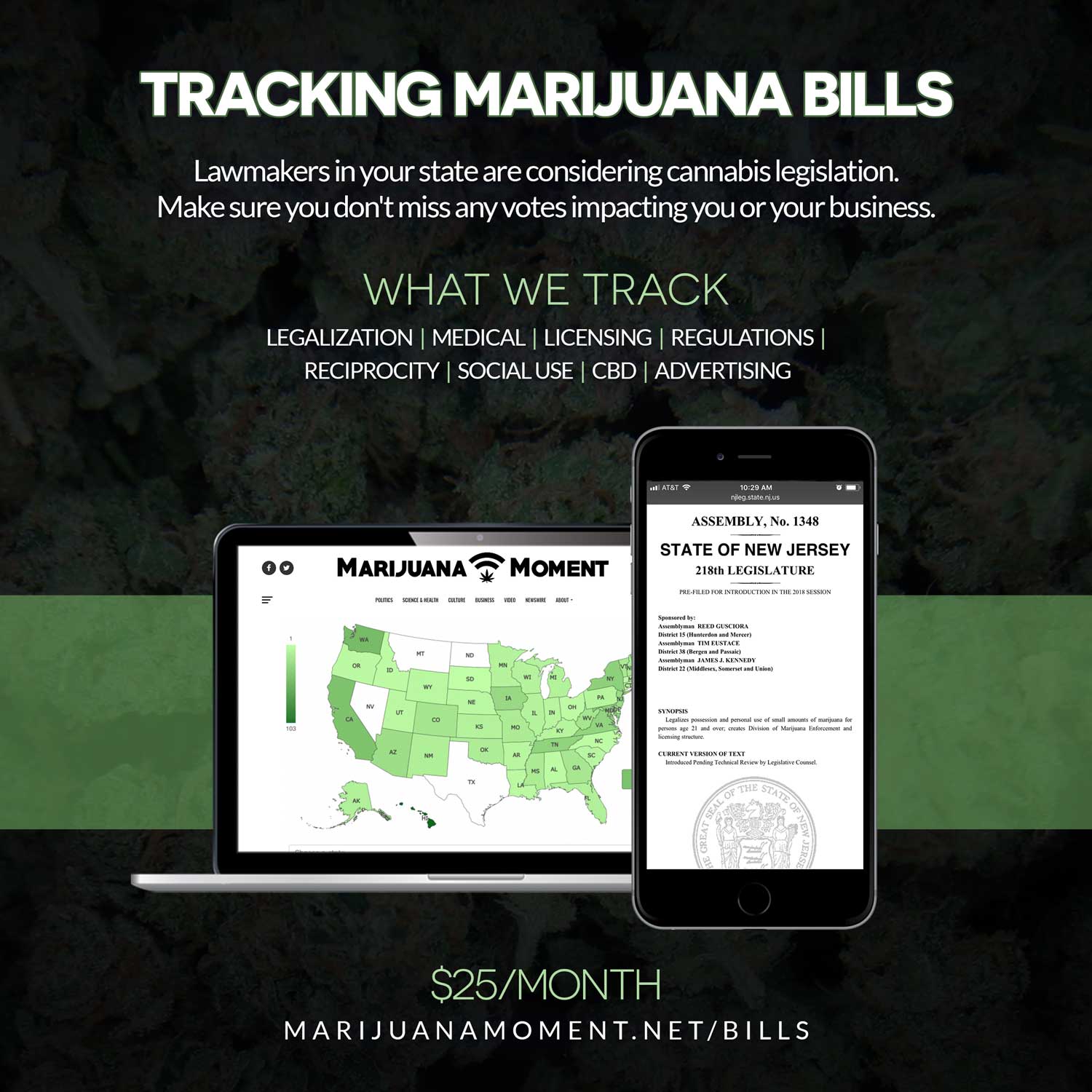

Learn more about our marijuana bill tracker and become a supporter on Patreon to get access.

Regulators are also launching a series of courses designed to educate physicians and other healthcare professionals about medical marijuana as the state’s cannabis program expands.

The underlying medical marijuana expansion bill signed by the governor in late June, in addition to allowing more patients to more easily access cannabis, also contains a provision that advocates find problematic.

Before lawmakers sent the legislation to Green, a conference committee revised the plan, inserting a provision to allow DOH to access medical marijuana patient records held by doctors for any reason whatsoever.

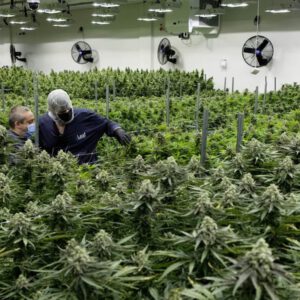
Photo courtesy of Philip Steffan.

The post Hawaii Senators Take Up Marijuana Legalization Bills After Key House Lawmakers Signal Reform Is Dead For 2026 Session appeared first on Marijuana Moment.

Source link

Cannabis in the Old Farmer’s Almanac? It’s Old News … Kind of

Cannabis in the Old Farmer’s Almanac? It’s Old News … Kind of

Cannabis in the Old Farmer’s Almanac? It’s Old News … Kind of

This article originally appeared on the High Adam newsletter. Subscribe here.

After the plant’s inclusion in the 234-year-old publication’s planting and gardening guide caused a bit of a buzz last month, editor-in-chief Carol Connare helped put it in perspective.

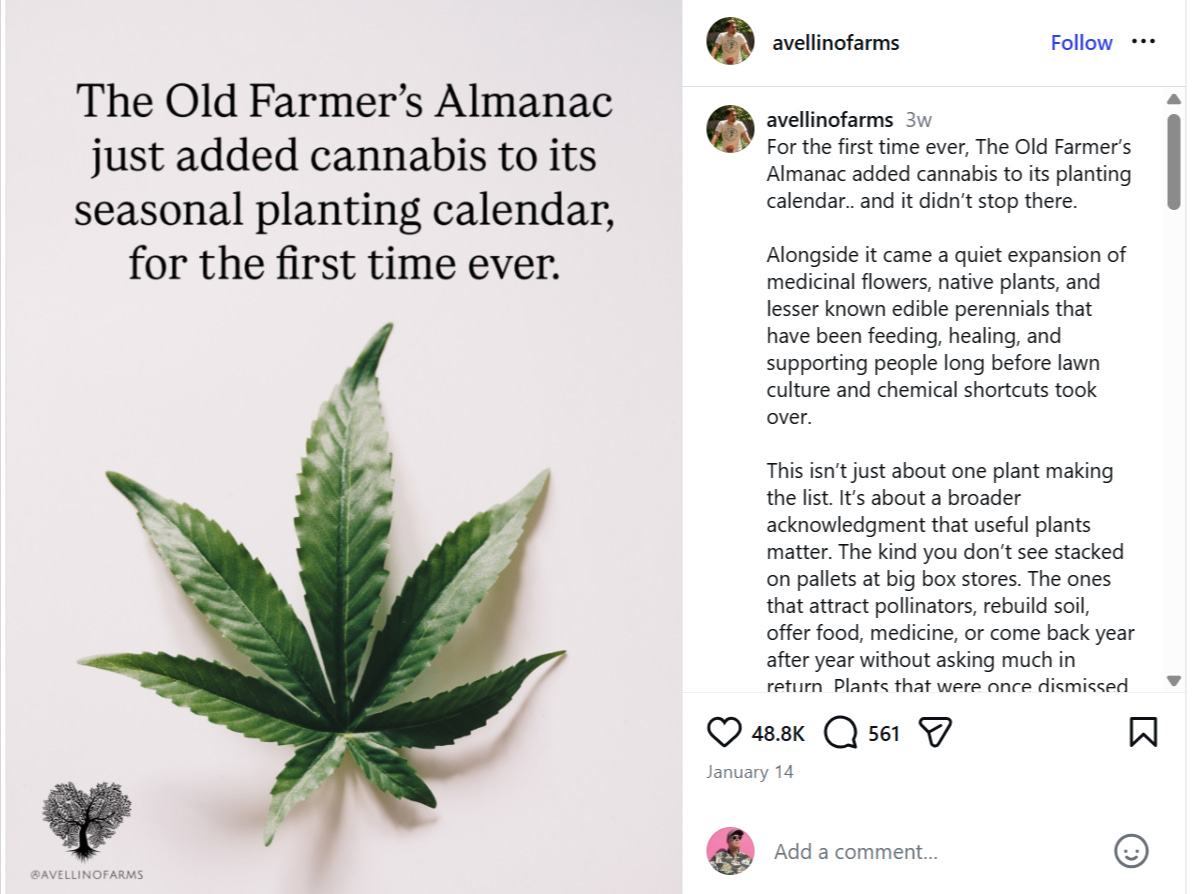
The Old Farmer’s Almanac garnered some serious attention on canna-centric social media last month when it was noticed that the devil’s lettuce had been added to the OFA’s online Planting and Gardening Guide for the first time — listed right there between candytuft and cantaloupes.

“That quiet inclusion,” wrote Beard Bros Media, “marks a cultural milestone — and one that reflects how deeply cannabis has become normalized over the past several decades.”

One of the January social media mentions of cannabis’ recent inclusion in the OFA planting guide.

When I headed over to the almanac’s website to check it out for myself (the below spring planting advice is based on my SoCal ZIP Code), I was surprised to find that the cannabis entry actually hyperlinks to a landing page titled “How to Grow Cannabis Indoors and Outdoors: The Complete Plant Guide” featuring a robust bumper crop of gardening advice.

The lead article is “How to Start Growing a Weed Plant From Seed,” written by Melissa Moore, a cannabis professor and horticulture coordinator at SUNY Niagara, and two of the articles linked at the bottom of the page (one on picking the best feminized seeds and another on autoflower seeds) were penned by Parker Curtis, a cultivation expert and educator with Florida-based Homegrown Cannabis Co. (remember that company’s name, I’ll be coming back to it).

Editor’s note: Mention of advertisers/authors below is for context; no paid relationship is alleged.

Since I’m not used to turning to the Old Farmer’s Almanac for my herb-growing advice (ever since writing about the USDA-grant-funded Grow It From Home gardening workshop program a few years back, I’ve been been lucky enough to get my weed wisdom firsthand from Oregon-based commercial hemp farmer Emily Gogol), I didn’t know how exactly how long the 234-year-old publication had been catering to the ganja greenthumb crowd. Was this as brand new as the gushing on the socials made it seem? Or has it been part of the esteemed publication’s crop rotation in the past and we somehow missed it?

To get the straight dope, I hopped on a Zoom call to ask the almanac’s editor-in-chief Carol Connare who told me it’s actually a little bit of both. It turns out that hemp (which we all know is the exact same plant) has been part of the Old Farmer’s Almanac coverage since founding editor Robert B. Thomas published the first issue back in 1792. Connare pointed me to a handful of mentions in that issue, including this planting guidance for February 1793:

Look to your bees.

See to your doves.

Begin to get out your hemp and flax , as the days begin to moderate.

“I can find regular mentions of hemp in editions throughout the 1800s,” Connare added, “and only one after 1920 , in 1967, which was a reference again to flax/hemp as feed crops.”

After that, she said, cannabis went MIA from the pages of the Old Farmer’s Almanac until just a few years back.

“When I became editor here in 2023, we were just working on the 2024 Garden Guide and there was this story [in play],” Connare said as she held a print copy of Melissa Moore’s “how to grow” story from the 2024 guide up to her webcam. “My predecessor really didn’t want to put it in there,” she continued, “but I had come from Massachusetts, where everybody grew — and I grew — and people were asking for information, so we responded to that [ask]. … Our readers are interested in herbal remedies of all kinds, and growing their own food and so [we decided] let’s give them the information.”

“Our readers are interested in herbal remedies of all kinds, and growing their own food, and so [we decided] let’s give them the information.” — The Old Farmer’s Almanac Editor-in-Chief Carol Connare

“We added cannabis to the planting calendar last November,” she explained, “at the same time we launched the cannabis grower’s guide, which was based on the 2024 story in the annual Garden Guide print edition.”

So the Old Farmer’s Almanac’s relationship with the cannabis plant isn’t exactly new. What is new and noteworthy, though, is that the most recent print edition of the annual OFA proper — the one with the distinctive old-timey yellow cover that was published in September 2025, contains a full-page cannabis ad for the Homegrown Cannabis Co. (I told you I’d be coming back to it). There’s also a smaller ad for the same company later in the almanac (on page 73 if you have a copy of it kicking around), along with a few gardening tips. (Example: “Surround your cannabis with fragrant thyme to attract pollinators and vibrant marigolds to naturally repel pests.”)

In the battle to normalize and destigmatize the magical plant, I agree that cannabis’ inclusion in the print version (in September 2025) and online seasonal planting and gardening guide (beginning in November 2025) are both very symbolic and very visible wins. But the quality of the information? Unfortunately, it isn’t where it should be for such a trusted gardener’s go-to. Some of it is head-scratchingly confusing and some of it feels like it’s repeating claims that experienced growers dispute.

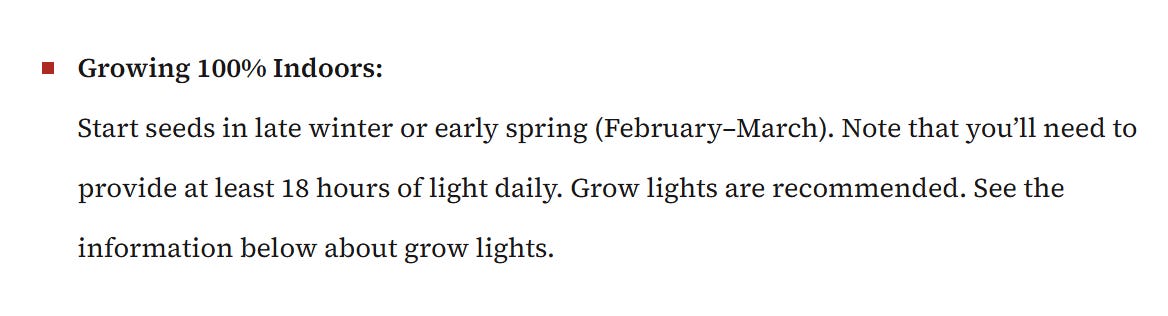
Case in point, this curious advice for when to start your indoor plants: “Start seeds in late winter or early spring (February-March).”

A screenshot of the OFA’s cannabis gardening advice.

“No,” said hemp farmer Emily Gogol who I’d asked to eyeball the OFA’s advice, “the whole point with indoor is that you can grow anytime you want! I can’t believe I just read that.”

Gogol pointed out a couple other places — some big and some small — where the guidance was sub-par. Among them: germinating a cannabis seed by dropping it in a glass of warm water (one of the article’s three suggested methods), which she called “insane” (I was embarrassed to admit to Gogol that I’d been doing this — wrong — for years in my own home-grow efforts) and the advice to wait to transfer plants from inside to outside until three to four weeks before summer solstice. (“I think they’re confused about light cycles,” she said.)

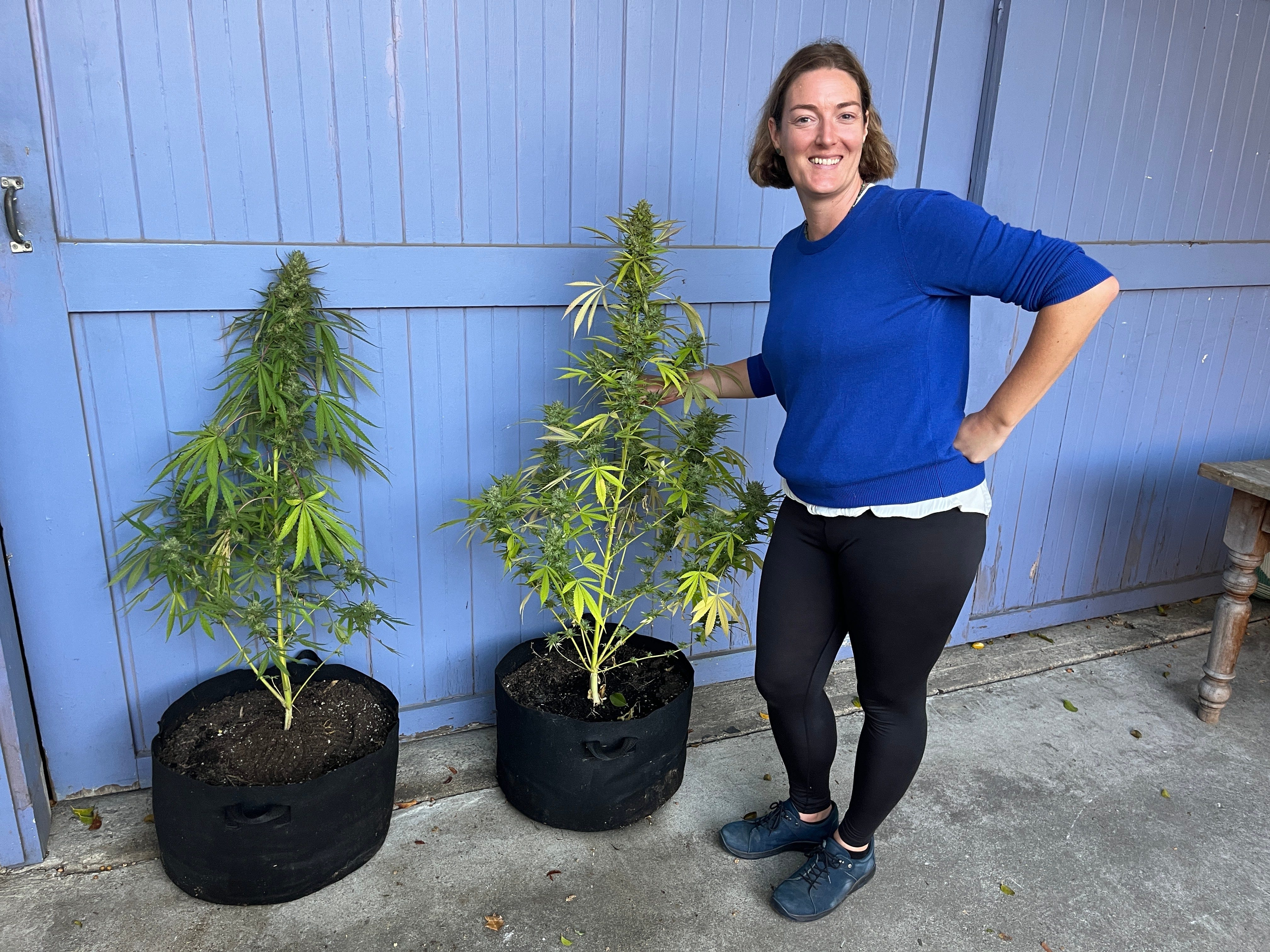
Grow It From Home’s head gardener Emily Gogol making a house call in September 2024.

“I love that they tried, I love that they’re speaking to backyard gardeners,” Gogol said. “There’s a lot of great information — maybe 90% of it is great but it’s very conflicting. But I think any kind of traditional gardening acknowledgement on cannabis for the home grower feels nice and I appreciate that times a million. It makes me so incredibly happy.”

I agree with Gogol that we should celebrate this as a symbolic win it is and not let the perfect be the enemy of the good, advice-wise. And, if The Old Farmer’s Almanac wants to up its herb gardening game for next year’s edition?

“I’d be happy to write it for them,” Gogol said.

This is a contributed opinion/news analysis piece. Views are the author’s own.

<p>The post Cannabis in the Old Farmer’s Almanac? It’s Old News … Kind of first appeared on High Times.</p>

Source link

Hawaii Senators Take Up Marijuana Legalization Bills After Key House Lawmakers Signal Reform Is Dead For 2026 Session

Hawaii Senators Take Up Marijuana Legalization Bills After Key House Lawmakers Signal Reform Is Dead For 2026 Session

Hawaii Senators Take Up Marijuana Legalization Bills After Key House Lawmakers Signal Reform Is Dead For 2026 Session

Hawaii senators have taken up a pair of bills to legalize marijuana—with one proposal contingent on federal reform or changes to the state Constitution and the other omitting provisions allowing for commercial sales.

Members of the Senate Health and Human Services Committee and Commerce and Consumer Protections Committee took up the measures—SB 2421 and SB 3275 from Sen. Joy San Buenaventura (D)—at a joint hearing on Tuesday.

The panels also discussed separate legislation allowing for the sale of certain hemp-derived cannabinoid products and permitting one-time medical cannabis sales for patients with pending registration applications.

The hearing comes after key House lawmakers signaled that legalization proposals that originated in that chamber would not be advancing in the 2026 session, citing a lack of sufficient support to get them crossed over and potentially enacted.

In the Senate, SB 2421 would create a Hawaii Cannabis and Hemp Office within the state Department of Commerce and Consumer Affairs to oversee the regulation of a adult-use cannabis market if there’s a constitutional change at the state level or change in federal marijuana laws permitting such a reform.

“In addition to legalizing medical use cannabis, numerous states and jurisdictions, including Hawaii, have opted to decriminalize the

The post Hawaii Senators Take Up Marijuana Legalization Bills After Key House Lawmakers Signal Reform Is Dead For 2026 Session appeared first on GrowCola.com.

Source link

Emerald Lychee Walker Strain Feminized Seeds

Emerald Lychee Walker Strain Feminized Seeds

Emerald Lychee Walker Strain Feminized Seeds

Description

The visual profile of Emerald Lychee Walker is truly breathtaking, showing off the best traits of its parentage. The buds are typically dense and chunky, often displaying a stunning array of deep violet and emerald green shades beneath a thick forest of crystal trichomes. While its parents are often known for grape and fuel scents, this specific cross takes on a much more exotic character. It hits the nose with a sharp, floral sweetness that resembles lychee fruit, followed by a grounding mix of fresh pine and sandalwood. It is a refined aroma that stands out in any collection.

The experience of using Emerald Lychee Walker is bright and uplifting right from the start. You will likely feel a swift wave of cerebral energy that makes colors seem brighter and thoughts more fluid. It is an excellent companion for artistic projects, nature walks, or long conversations. As the high settles, a gentle physical comfort from the OG Kush side keeps your muscles relaxed without ever feeling heavy or sluggish. This balance allows you to enjoy a deep sense of euphoria while remaining completely functional and clear-headed throughout your day.

The post Emerald Lychee Walker Strain Feminized Seeds appeared first on Crop King Seeds.

Source link

Bro you got that raw paper for my fire?

Bro you got that raw paper for my fire?


source

The Demonization of THC

The Demonization of THC

The Demonization of THC

The cannabis wellness conversation is hyper-focused on cannabinoids, when it should focus on how weed is grown.

As science further enters the world of weed politics, THC, the cannabinoid that contains the psychoactive properties in cannabis, has become the villain. At the beginning of the War on Drugs, cannabis as a whole was the menace, a scourge that could divide America, a racist tool used to target immigrants and Black and brown communities. But in today’s charged political climate, it’s not cannabis as a whole that’s the perceived danger; it’s THC. And, when it comes to the wellness conversation around weed, the benefits of the plant are far more nuanced than singling out certain cannabinoids. The re-emerging political conversation attempting to define which cannabinoids are “good” and “beneficial” misses a critical component: the way that cannabis is grown is essential to boosting its medicinal properties. In a number of ways, including an aversion to THC, cannabis grown under the sun is better for individual wellness and the world.

Demon Weed

The federal government has taken action to revisit the definition of legal hemp, which, when it was interpreted as plants or products with less than .3% THC by dry weight, opened the door for the wide rainbow of cannabinoids present in the cannabis plant. Once the powers that be caught on to the fact that cannabinoids other than THC could have intoxicating effects, efforts to limit their legality were passed. And, last month, direction to examine rescheduling the classification of cannabis under the Controlled Substances Act, which began during the Biden Administration, made headlines. President Donald Trump’s executive order to complete the rescheduling review process for cannabis was coded in a certain language: parts of cannabis, namely CBD, could have some medicinal value.

Flavor & Therapeutic Effects

Beyond cannabinoids, the chemical makeup present in cannabis flowers contains a number of different compounds that contribute to the plant’s therapeutic effect. Cannabis grown outdoors can offer a more balanced high. Compared to indoor cannabis, outdoor flowers have less potency in terms of THC, but offer more diversity in terms of their chemical composition. 

“It’s the complete spectrum of what’s in the plant that’s actually going to steer it to a much more pleasant effect,” said Eli Melrod, co-founder and CEO of Solful, a chain of Northern California-based retail shops that sell exclusively outdoor cannabis.

A 2023 research paper indexed by the National Institutes of Health (NIH) compared “genetically identical plants grown indoors using artificial light and artificially grown media or outdoors grown in living soil and natural sunlight,” and determined that the outdoor-grown samples had significantly more unusual cannabinoids and higher levels of terpenes. Cannabis grown indoors, the study showed, has a greater volume of oxidized and degraded cannabinoids, while the outdoor-grown flowers (which included samples from California cannabis darlings Moonmade Farms and Huckleberry Hill Farms) “are able to express more cannabinoids with potentially desirable bioactivity.”

Following this reasoning, Melrod believes the wellness benefits of cannabis are predominantly found in flowers that are grown outdoors.

“Whole plant medicine derived from plants that are grown the natural way—in soil, regeneratively without adding nutrients, without using lighting techniques and things like that—produces the most diverse and fullest spectrum of compounds in a plant,” he said.

To further explain the benefits of sungrown flowers, Melrod compared cannabis to organic produce.

“You can almost think of it as nutritional density,” Melrod said. “Like if you eat a strawberry that was grown organically and you bought it at the farmer’s market from a farmer that tended to the soil and picked those strawberries when it was peak ripeness, and you eat that, we know for a fact that it has a way higher nutritional content than something that was mass produced and is flavorless.”

Nate Hayward of Higher Heights, based in Comptche, California, said the superior taste profile of outdoor-grown flowers is “not even comparable” to flowers grown indoors.

“Plants are speaking to each other, chemical signals are getting passed around everywhere,” Hayward said. “So when you’re outdoors, there’s no avoiding that… when the plants are interacting with the environment, they pick up another level of terpenes and another level of general flavor like flavonoids and all of the more complex elements that we haven’t researched enough yet.”

A 2021 study indexed by the National Institutes of Health (NIH) shows that terpenes act as plant-to-plant signaling cues in order to activate a plant’s natural defense system.

“The whole level of oil begets oil,” Hayward said. “When you’re around a resinous plant, the other resinous plants near it up their game.”

Growing Weed Where It’s Environmentally Sound

Hayward pointed out that across Europe, much of the regulated medical cannabis market restricts outdoor cultivation.

“There’s very little outdoor cultivation in Europe, and they’re basically trying to push a lot of the medical to, ‘Oh, it has to be indoor,’” Hayward said. “You’re not even allowed to produce this medical-grade product outdoors, and I just find that ridiculous. Let’s look at the pharmacopeia of GMP [Good Manufacturing Practice] and GACP [Good Agricultural and Collection Practices] producers. I mean, these are plants we’re talking about. Are you going to tell me they’re growing ashwagandha indoors?”

In terms of greenhouse gas emissions, cannabis grown indoors also places obvious tolls on the environment. These tolls can increase further when indoor cannabis grows incorporate artificial intelligence, which often requires additional electricity and water. Part of the environmental problem in growing cannabis indoors comes from the fact that there is no interstate commerce, and therefore, it must be grown in places that require more electricity to optimize the temperature and humidity of the indoor environment.

“Obviously, the fact that we can’t sell out of state, I think, is a huge barrier, right?” Melrod said. “I mean, imagine if people could come and they could taste California cannabis in California. Have this amazing experience. And then, like the wine model, then they go back to where they live in Ohio or Florida or New York or wherever it is, and they can get California cannabis delivered in the mail. I mean, that’s what built the wine business.”

Market Limitations Promote More Potent Pot

Hayward argued that limitations in California’s recreational market, such as requirements for products to be pre-packaged in sealed containers, have completely changed the type of weed that people buy.

“Prop. 215 was a radically better structure for the consumer in terms of how they could see and smell and in some cases handle the flower before they’re even going to buy it,” Hayward said. “In that way, the packaging that we’re facing is kind of destroying that cultural element of the flower. I feel like people end up buying stuff that sort of fulfills some of the experience, but it rarely fulfills, you know, the full experience that we all enjoy with the plant.”

And having a negative experience with hyper-potent weed grown indoors fuels a political push to limit THC.

​ “I have a theory which is that some of the reason why cannabis demand has sort of flatlined or even softened in some of the mature markets is that it’s because what’s actually available is so one-dimensional that it really isn’t a pleasant effect,” Melrod said. “I mean, to be honest with you, if all I had available was ultra-high THC, chemically-grown cannabis, I’m not sure I’d smoke pot either.”

In a world looking towards the medical benefits of cannabis that remains fearful of the potency of THC, the answer is not in other cannabinoids; it’s in flowers grown under the sun.

Photos by Matca Films. Follow them on Instagram.

<p>The post The Demonization of THC first appeared on High Times.</p>


Source link

Thailand: Russians caught selling magic mushrooms for ‘stress relief’

Latest State Updates

Latest State Updates

Federal New Farm Bill Draft Aims to Reduce Regulatory Burdens House Agriculture Committee Chair Glenn Thompson (R-PA) has released the draft text of the 2026 Farm Bill, which includes provisions intended to ease federal oversight of the industrial hemp sector. The proposal would maintain the core federal hemp program while giving the USDA, states, and tribes more flexibility to […]

Source link