
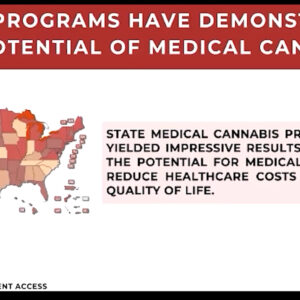
Policy Leaders Discuss Nebraska’s Exclusion from Federal Medical Cannabis Protections
February 17, 2026
Published by toker
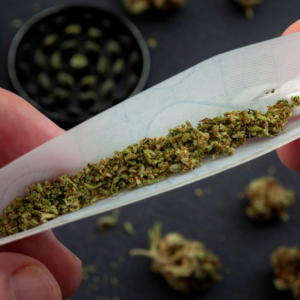
Oklahoma Republican leadership in both chambers are voicing skepticism over the governor’s suggestion that the state should put a measure on the ballot to roll back its medical marijuana program.
After Gov. Kevin Stitt (R) used part of his State of the State address this month to pitch the idea of shutting down the state’s medical cannabis law, both Senate President Pro Tem Lonnie Paxton (R) and House Speaker Kyle Hilbert (R) have largely dismissed the proposal.
Asked about the prospect of advancing a joint resolution in the legislature to put the issue back before voters, Hilbert said Oklahomans have already drawn a clear distinction: They support medical marijuana and “resoundingly” oppose adult-use legalization, based on past election results.
“I think that’s the distinction for us as the legislature to follow, as well—making sure that marijuana is truly for medicinal purposes,” the speaker said. “I think something that the House of Representatives has stood strongly on over the past eight years and will continue to stand strong for this year is differentiating truly medical marijuana versus recreational.”
Paxton, the Senate president, told Tulsa World that he’s spoken with the governor about the issue and “said the fortunate thing about the
The post Oklahoma House And Senate GOP Leaders Dismiss Governor’s Push To Repeal Medical Marijuana At The Ballot appeared first on GrowCola.com.


Late last month, NASDAQ-listed cannabis operator Flora Growth, which once operated one of Colombia’s largest outdoor cultivation facilities, became the latest to exit the cannabis industry, rebranding as an AI-focused digital asset firm ZeroStack Corp.
As the global market continues to mature, consolidation and collapse are nothing new. The last few years of global political turmoil, risk-averse investment across financial markets and the continued decline of cannabis stock prices have made it a brutal sector to be in.
For some, that means consolidation, merging, acquiring, or being acquired in pursuit of the scale needed to survive in an increasingly competitive landscape. For others, they are left with the choice of quietly selling off their assets or pivoting their entire business into a new, more forgiving sector.
Flora’s pivot out of the cannabis industry to the booming AI sector marks the latest, and by far the largest, to utilise this exit ramp. Whether any of the struggling cannabis companies now taking refuge in the AI sector can build a successful business remains to be seen, but the parallels between the emerging sector and the early cannabis investment rush are undeniable.
By the time Flora announced its rebrand, its financial struggles were already embedded. In its latest published financial results, covering the nine months to September 30, 2025, Flora reported a net loss of $9.8m, alongside an accumulated deficit of $167.9m.
Earlier in the year, multiple subsidiaries tied to a prior acquisition had entered insolvency proceedings in Canada and Germany, forcing deconsolidation and balance sheet adjustments.
Then, in late September, the break became formal. Flora transferred 100% of its legacy hemp and cannabis subsidiaries, including JustCBD, Vessel, United Beverage Distribution, TruHC Pharma and Rangers Pharmaceuticals, to a group of investors in exchange for the cancellation of approximately $2.2 million in promissory note obligations.
The cannabis division was classified as discontinued operations, having generated a $4.3 million loss over the reporting period.
This sale, the company said explicitly in its financial reporting, formed part of ‘several strategic changes to become a digital assets treasury company.’
Effectively, this meant that the entirety of the company’s legacy hemp and cannabis operations, including brands, inventory and infrastructure, was exchanged for the write-off of around $2.2m in debt.
Its dramatic offloading of cannabis assets was mirrored by an even bolder move, announcing that it planned a $401m private investment in public equity transaction, comprising $366m in digital assets and $35 million in cash, with common shares priced at $25.19 and 0G tokens valued at $3.00 each
The 0G cryptocurrency, native to the ‘Zero Gravity’ decentralised AI infrastructure project was Flora’s primary reserve asset, with participation led by crypto-focused investors including DeFi Development Corp.
As of September 30, 2025, Flora reported ownership of 21.8m 0G tokens with a cost basis of approximately $54.7m and a fair value of approximately $55.3m. Total digital asset exposure stood at roughly $55.4m.
While well below the headline $401m target, the transaction incorporated cash placements, pre-funded warrants issued in exchange for tokens, and convertible notes denominated in both Solana and 0G tokens, transforming Flora’s struggling balance sheet into a token-backed treasury vehicle.
This strategic about-turn also saw a changing of the guard. CEO Clifford Starke resigned as CEO in October 2025, with a formal separation agreement sealing his divorce soon after.
Michael Heinrich, co-founder of 0G, was appointed Executive Chairman, and Daniel Reis-Faria became CEO. On December 19, shareholders approved the name change to ZeroStack Corp, a new class of preferred shares, an expansion of the incentive compensation plan, and the issuance of shares underlying warrants and convertible notes tied to the September placement.
“The Company, which will be rebranded as ZeroStack, is a decentralised AI treasury company that is investing in the future of AI infrastructure through strategic ownership in 0G Tokens,” its announcement at the time read.
Then, on January 28, 2026, Flora announced the withdrawal of a proposed public offering of common shares. No size was disclosed, and no reason was given. The announcement came just weeks after shareholder approval of substantial capital flexibility and the formal repositioning as ZeroStack, suggesting an attempt to access broader public capital markets that, for whatever reason, did not proceed.
Flora’s rapid pivot undoubtedly represents the largest former cannabis company to pursue the greener pastures of the AI sector, but it is far from the first.
In January 2024, Business of Cannabis reported that London-listed CBD skincare company Cellular Goods had rebranded itself as ‘Cel AI’, declaring its intention to become the ‘premier AI recommendation agent for personalised skincare and beauty routines.’
The pivot came days after its CEO resigned, and followed annual results showing losses of £3.3m on revenue of just £67,236, around 40 times less than the company’s operating costs.
Its cash had halved year-on-year to £1.7m. The incoming executive director had no cannabis experience but 20 years in tech.
The very same week, we reported that cannabis investment company Pharma C, which had net assets of just £201,000 and had recently returned from an Aquis Exchange suspension for breaching market abuse regulations, had amended its investment policy to target ‘technology, fintech and AI sectors.’
Then in August 2025, AIM-listed SEED Innovations, which had largely focused its investment strategy on cannabis and biotech ventures, announced plans for a major strategic pivot toward AI. The shift followed what outgoing CEO Ed McDermott had described as a ‘difficult’ 2024, and came alongside growing involvement from former chairman Jim Mellon, who had built his stake to over 20%.
In the early days of the global cannabis industry, the so-called ‘green rush’ that took place around 2018, it was the destination, rather than the off-ramp, for companies and entrepreneurs seeking to capitalise on the latest high-risk, high-reward industry.
Mining companies, biotech shells, and blockchain firms rushed to rebrand around cannabis as legalisation momentum built and speculative capital flooded in.
The parallels with today’s AI pivots are difficult to ignore. The same structural incentives are present, a sector drowning in hype and investment, but little in the way of watertight business plans or monetisation strategies.
In a sector increasingly defined by operational performance, profitability, and hard-won licensing, the widespread migration is no surprise.
But for those following hype, there are lessons to be learned from the long-collapsed cannabis boom.
While the investment in AI from retail investors, institutional financial stallwarts and even national governments is eyewatering, the fact remains that even the largest AI operators are struggling to turn a profit, and seemingly have no fleshed out strategy to do so.
The post AI: The Last Refuge of the Failed Cannabis Company appeared first on Business of Cannabis.

This article by Hirsh Jain originally appeared in the Cannabis Confidential newsletter. You can subscribe here.
Last week, the New York Times Editorial Board published an Op Ed titled “It’s Time for America to Admit That It Has a Marijuana Problem,” urging a regulatory crackdown on legal cannabis.
The piece claims to be motivated by the belief that “a society should be willing to examine the real-world impact of any major policy change” and to “respond to new facts.”
But the Op-Ed does precisely the opposite.
It is built on factual errors, selective omissions, and unsupported assertions that misrepresent the evidence on cannabis in order to justify an anti-cannabis posture.
If anything, the Editorial Board failed to respond to the facts about legalization.
Consider the claim that cannabis is undertaxed compared to alcohol and tobacco.
The Op-Ed states that “state taxes are as low as a few additional cents on a joint.” This appears inaccurate. In most legal states, cannabis is taxed at far higher effective rates than either alcohol or tobacco.
In California, legal cannabis is subject to a 15% state excise tax, a local excise tax that often approaches 10%, and standard sales taxes that frequently exceed 10%, pushing the total consumer-facing tax burden above 35%.
These, however, are only the taxes visible to the consumer. They do not include the substantial “hidden taxes” imposed earlier in the supply chain on cannabis cultivators, manufacturers, and distributors, costs that are ultimately passed along to customers at retail.
Nor do they include the exorbitant state and local licensing fees that legal cannabis businesses must pay, which function as a de facto tax on participation in the legal cannabis market.
And they do not include the federal tax burden imposed by IRS Code Section 280E, which forces cannabis companies to pay effective federal tax rates approaching 70%, more than double those paid by other legal American businesses.
By contrast, alcohol in California faces a beer excise tax of roughly 2 cents per drink. Tobacco taxes, while higher than alcohol, still impose a far lower effective burden relative to retail price than cannabis.
This disparity exists despite a glaring difference in risk profile.
Alcohol and tobacco kill hundreds of thousands of Americans every year.
Fatal overdose from cannabis alone is extremely rare.
Regardless of one’s personal views on cannabis, the claim that it is undertaxed relative to alcohol or tobacco is not a matter of opinion. It is empirically wrong, and it ignores the far lower risk profile of cannabis compared to the substances our society has normalized and commercialized for decades.
In fact, the persistence of massive illicit cannabis markets in many states where cannabis is legal is itself clear evidence that cannabis is overtaxed relative to alcohol and tobacco.
Alcohol and tobacco do not sustain large illegal markets in the United States because their tax rates are calibrated to keep legal products competitive.
Legal cannabis, by contrast, continues to face substantial illicit competition precisely because taxes and regulatory costs are so high that legal businesses struggle to compete.
The existence of these illicit markets is proof that cannabis is not undertaxed, but just the opposite.
Despite this reality, the Editorial Board proposes raising cannabis taxes further, writing that “if a joint cost $10 instead of $5, it would mean a lot of extra money for someone now smoking multiple joints a day and may change that person’s behavior.”
This claim reflects a startling misunderstanding of basic economics.
Higher taxes do not make cannabis use disappear. They push consumers into illegal markets. This is not theoretical. It is exactly what has occurred in high-tax states like California, where illicit cannabis continues to thrive despite legalization.
The irony is difficult to miss. The Op-Ed laments illegal products like “Trips Ahoy” and “Double Stuf Stoneo” that appeal to children, yet those products typically originate in illicit markets rather than licensed channels.
By advocating policies that weaken legal operators and strengthen illicit sellers, the Editorial Board’s recommendations would directly empower the very actors most likely to sell such products to minors.
This same failure to grapple with incentives and real-world behavior appears again in the Op-Ed’s proposal “to make illegal any marijuana product that exceeds a THC level of 60 percent.”
This suggestion is, once more, dangerously naive. History has already shown what happens when policymakers force consumers out of regulated markets for products they demand.
In 2019, an illicit cannabis vape crisis, driven by unregulated THC cartridges adulterated with vitamin E acetate, hospitalized thousands of Americans and killed dozens of unsuspecting people.
That public health disaster was not caused by legal cannabis. It was caused by prohibition-driven illicit cannabis supply.
Forcing high-potency cannabis products back into the illegal market would repeat that mistake at scale. It would not eliminate demand. It would simply ensure that consumers obtain these products from unregulated sources with no testing, no labeling, and no accountability.
One is left to ask why the Editorial Board does not also propose making hard liquor illegal. Treating potency as the governing principle would mean forcing high-proof alcohol out of licensed stores and back into unregulated production, recreating the era of bathtub gin. We tried that experiment once. It did not end well.
The Op-Ed also indulges in the rhetorical fiction of “Big Weed,” an intentionally loaded phrase meant to evoke “Big Tobacco.”
This comparison collapses under even minimal scrutiny.
Even the largest cannabis companies are tiny compared to major American corporations, and the vast majority of cannabis businesses are small and medium-sized businesses.
More importantly, tobacco kills hundreds of thousands of people annually. Cannabis does not cause the hundreds of thousands of deaths seen each year from alcohol and tobacco. Conflating these industries is disingenuous.
The same pattern continues in the Op-Ed’s claim that cannabis is less regulated than alcohol. The Editorial Board writes that legalization has produced “a lightly regulated industry” and warns of “a powerful commercial sector” operating with insufficient oversight.
This bears little resemblance to reality.
Cannabis is among the most heavily regulated consumer goods in the United States.
In New York, cannabis advertising is prohibited on billboards and tightly restricted across digital and physical media, while alcohol advertising is ubiquitous.
Alcohol brands saturate professional sports, name stadiums, and dominate Super Bowl commercials watched by millions of children.
Cannabis retailers face extreme zoning restrictions and are often confined to limited corridors, while liquor stores line commercial streets in virtually every town in America.
We live in a society that deliberately structures its “choice architecture” to encourage alcohol consumption, despite alcohol being one of the most destructive substances in our culture.
Alcohol is sold nearly everywhere and marketed as glamorous, social, and essential to celebration. Cannabis, by contrast, is treated as a pariah product, subjected to exhaustive regulation at every step from seed to sale.
The outrage over even minimal cannabis commercialization is not grounded in public health. It reflects a deep hypocrisy in a culture that aggressively commercializes far more harmful substances while treating any visible cannabis market as uniquely dangerous, despite its far lower risk profile.
And if the Editorial Board were genuinely interested in examining real-world evidence, it would not need to speculate.
Canada has had fully legal, federally regulated cannabis sales for nearly eight years. The dystopian outcomes implied by the Op Ed never materialized.
There was no collapse in social order, no explosion in youth use, and no public health catastrophe.
Anyone sincerely curious about the consequences of legalization could look just across the northern border from New York and see that these claims are not borne out in practice.
The Op-Ed’s treatment of medical cannabis is even more indefensible. It claims that “decades of studies on the drug have proved disappointing to its boosters, finding little medical benefit.” This assertion is profoundly disconnected from the evidence.
In 2023, the US Department of Health and Human Services (HHS) released a 252-page scientific review documenting substantial evidence of cannabis’s medical efficacy across a wide range of conditions, including chronic pain, nausea, multiple sclerosis-related spasticity, and appetite loss associated with cancer and HIV.
This report should be accorded extraordinary weight. It comes from the most respected public health authority in the country, if not the world, and reflects a comprehensive review of the global scientific literature.
The New York Times Op-Ed does not mention it at all. That omission is difficult to explain as anything other than a refusal to grapple with the most consequential evidence available because it contradicts the Editorial Board’s narrative.
The Op-Ed cites no credible research to support its claim that cannabis lacks medical value.
It may be implicitly referencing a recent JAMA review titled “Therapeutic Use of Cannabis and Cannabinoids: A Review,” which has been criticized for serious methodological flaws, including overly restrictive inclusion criteria, failure to account for real-world clinical outcomes, and conflation of recreational and medical use.
Even if one accepted that contested analysis, it would still be dwarfed by the far more comprehensive and authoritative HHS review. Ignoring the latter while asserting that cannabis has “limited medical benefit” is a serious analytical failure.
At one point, the Editorial Board concedes that cannabis is safer than alcohol and tobacco “in some ways,” but conspicuously refuses to say what those ways are.
That omission is telling.
Cannabis is safer in this respect because a fatal overdose from cannabis alone is extremely rare.
It is safer because it does not cause the hundreds of thousands of deaths seen each year from alcohol and tobacco.
It is safer because it does not produce the long-term organ damage associated with alcohol and tobacco, an immense burden on the health care system that all Americans bear through ever-rising insurance premiums.
The unwillingness of the Op-Ed to state these facts plainly reflects a discomfort with acknowledging just how stark the safety differential actually is.
In addition, the Op-Ed’s concern for children rings particularly hollow in light of real-world evidence.
The December 2025 Monitoring the Future study, conducted by the National Institute on Drug Abuse (NIDA), found that past twelve-month cannabis use among youth is at its lowest level in three decades.
This is precisely because regulated markets reduce youth access by replacing street dealers with licensed businesses that check IDs and face severe penalties for violations. Regulation works.
The Op-Ed further claims that “people who are frequently stoned can struggle to hold a job or take care of their families.” This is an embarrassing ad hominem assertion unsupported by any evidence whatsoever.
Alcohol, not cannabis, is the dominant contributor to domestic violence in the United States. Research has shown that cannabis legalization is associated with reduced alcohol consumption, which in practice helps reduce violence against women and children.
To suggest that cannabis is uniquely harmful to families while ignoring alcohol’s well documented role in family destruction and cannabis’ role as a substitute is reckless and irresponsible.
The claim that frequent cannabis users cannot hold jobs is equally unserious.
Many of the most economically productive members of society consume cannabis. Cannabis use is even associated with greater physical activity, directly contradicting the caricature of cannabis users as “lazy.”
A peer-reviewed study published in Preventive Medicine Reports found that adults who use cannabis are significantly more likely to meet recommended physical activity guidelines than non-users.
Additionally, research from the National Bureau of Economic Research (NBER) found that medical cannabis legalization is associated with statistically significant reductions in workers’ compensation claims, particularly in physically demanding occupations.
One reason why is that some workers substitute cannabis for opioids or other pain medications, improving their capacity to work safely and reducing injury risk.
In short, the naked assertion that “people who are frequently stoned can struggle to hold a job or take care of their families” is beneath the dignity of the New York Times Editorial Board.
But above all the substantive reasons this Op-Ed is wrong, it is worth asking what this debate is really about?
It is about democracy and personal liberty. The New York Times Editorial Board does not represent the American people on this issue. Even in very conservative states, overwhelming majorities believe cannabis has legitimate medical value.
This Op-Ed reflects a familiar pattern in American public life, where cultural elites substitute their own preferences for those of their fellow citizens and cloak those preferences in the language of science and public health in order to justify restricting how others live their lives.
That is not evidence-based policymaking. It is a refusal to accept the judgment of a democratic public that has weighed the facts and reached a different conclusion.
The American people are not fooled here. They can distinguish real evidence from motivated reasoning.
Efforts to limit the freedom of others by mischaracterizing data and ignoring lived experience do not elevate public discourse.
If anything, they simply erode trust in institutions like the New York Times that once claimed to stand for truth.
also see: CB1’s cannabinoid research repository.
Hirsh Jain is the CEO of Ananda Strategy, a cannabis-focused business advisory firm that works with cannabis brands, retailers, distributors, technology platforms and other businesses on matters ranging from competitive licensing, legislative strategy, regulatory intelligence, market expansion, business litigation, internal & external communication and other varied corporate initiatives.
This article is commentary from an external, unpaid contributor. Views are the author’s. Edited for clarity and style.
<p>The post The New York Times Isn’t Examining the Real-World Evidence on Cannabis. It’s Ignoring It. first appeared on High Times.</p>

French biotech company PGP Farmer unveils the closing of a €3 million funding round with private investors. Driven by the upcoming nationwide rollout of medical cannabis in France, this funding marks a key milestone in the company’s ambition to become a strategic pillar in the production and supply of medical cannabis in Europe.
Led by Brahim Sebart, Co-founder and CEO, this round enables PGP Farmer to reach a new milestone in the implementation of its large-scale pharmaceutical project. The project aims to position the company as a strategic producer of raw materials and medical cannabis extracts in Europe.
While European demand is growing by more than 20% per year, the supply remains largely dependent on imports: approximately 75% of flowers in the European Union currently come from sources outside Europe, particularly Canada.
To address this strategic imbalance, PGP Farmer’s production site is designed to meet the massive growth in demand across Europe. It specifically aims to meet the needs of Germany, the leading European market, which imported nearly 200 tons in 2025. Thanks to its immediate proximity, the French company benefits from a strategic geographical position for export.
“This funding is the driving force behind our ambition: to make France a leading player in medical cannabis in Europe. While the European market remains largely dependent on imports today, we have decided to build a model of excellence focused on export,” emphasises Brahim Sebart.
PGP Farmer’s goal is to deploy a cutting-edge integrated model on a 9-hectare site, combining high-tech greenhouse cultivation and a pharmaceutical processing laboratory.

With a building permit already granted, this model guarantees a 100% controlled value chain and a production capacity of up to 30 tons in the long term, once the facility is fully operational. This funding aims to enable PGP Farmer to pursue three strategic ambitions:
The funding comes ahead of France’s nationwide rollout of medical cannabis. This follows a pilot programme that enabled more than 3,000 French patients to benefit from medical cannabis for serious conditions, including:
As an active member of UIVEC (the industry’s professional trade association), PGP Farmer worked alongside leading international players on the joint assessment dossier submitted to the French National Authority for Health (HAS).
“The French market is entering a new era. By combining our institutional approach with a state-of-the-art EU-GMP site, we are giving ourselves the means to become a leading EU-GMP medical cannabis producer and to make France the focal point for European medical cannabis,” says Brahim Sebart.
The company will be participating in the Cannabis Europa Paris event on February 19, 2026, where Brahim Sebart will be a panelist showcasing an innovative and outstanding French industry.

The post French Excellence at the Heart of a High-Capacity EU-GMP Site appeared first on Business of Cannabis.




The post The Mint’s Valentine’s Day Deals Drop NOW — Get Here Before They’re Gone! appeared first on AZ Marijuana.