Emotional Zombies: How Weed Can Teach Us to Feel (Again)

Emotional Zombies: How Weed Can Teach Us to Feel (Again)


Emotional Zombies: How Weed Can Teach Us to Feel (Again)

Never before in human history have we been exposed to so many sensory stimuli at once, and never, ever, have we felt so little. We live perpetually overloaded with screens, multitasking, demands for constant performance, and hyperproductivity. Thus, the mind remains permanently switched on, without the possibility of taking restorative breaks. And from so much noise and so little substance, a kind of permanent mental chatter arises that pushes us toward a progressive disconnection from our most basic emotions.

Current culture encourages and demands speed, performance, a violent “gimme now, gimme more.” But feeling, on the other hand, implies time, pause, and introspection. Emotional anesthesia, then, functions as an adaptation: to maintain performance, we turn off what we feel. Screens activate the brain’s reward system, generating rapid spikes of dopamine, which shift attention outward and prevent us from feeling discomfort, emptiness, or sadness. Over time, the brain loses its ability to self-regulate and becomes dependent on external stimuli.

“Emotional avoidance is silent and cumulative. It doesn’t appear suddenly: it builds up like a layer that affects the body, relationships, mental health, and identity,” explains Dr. Ángeles García Vara, a specialist in psychiatry with postgraduate training in medicinal cannabis. The main costs? Emotional numbness, lack of vitality, desire, and joy, intolerance of discomfort, somatization, impoverished relationships, and psychological dulling. Just to name a few.

The less we feel, the less we tolerate feeling. Avoided emotions return with greater intensity. That’s why the body becomes the spokesperson, because the body speaks when the voice is silent. And that’s when insomnia, bruxism, irritable bowel syndrome, hypervigilance, headaches, fatigue, chronic tension, and pain appear,” she says.

To avoid our own emotions, we also avoid those of others: less intimacy, less listening, more inner loneliness, fear of showing vulnerability. And these avoidances halt emotional development, generating repetition of patterns, rigidity, and disconnection from desire. We try to avoid feeling so as not to suffer… and we end up suffering because we stop feeling.

In this sense, many patients describe that antidepressants cause them “some kind of relief” but that they also feel a “decrease in emotional intensity.” This is not true anesthesia: it is less exposure to anxiety and reactivity.

So: can weed do anything to contribute to this well-being? “Well, it can facilitate pausing, which is essential for registering what is happening inside us. Pausing is not about stopping life altogether: it is about slowing down the automatic reaction in order to perceive, name, and understand what we feel,” explains García Vara.

This is because phytocannabinoids, by modulating the endocannabinoid system, reduce the state of hypervigilance, muscle tension, and mental chatter. As a result, it opens an internal space for introspection where bodily presence emerges without the need for screens or instant gratification.

Thus, introspection depends not only on dosage and routes of administration, but also on intentions and frameworks. Furthermore, there are intentions that enable therapeutic processes. Some are valid: To be able to pause and validate the emotion that arises, to put words to what I feel, to open up internal space. But some intentions reinforce avoidance: I use it to avoid thinking, to calm down quickly, to suppress emotions, to sleep without registering my day.

“In clinical practice, I prefer to prescribe low doses or microdosing, keeping in mind that cannabis is a ‘tailor-made suit for each person.’ Then, I gradually modify the dose, establishing with each person which route of administration would be most appropriate. For example, the inhalation route is faster and more intense,” explains the psychiatrist.

As such, cannabis can facilitate introspection and the ability to sense what is happening inside the body. When we live in a state of constant alertness, introspection becomes distorted, causing either too much noise (tachycardia, irritability, tension, rumination) or too much blockage (the ineffable and infamous “I feel nothing”). The endocannabinoid system regulates the relationship between the sympathetic and parasympathetic nervous systems and modulates regions such as the amygdala, insula, and prefrontal cortex. This allows us to “feel” our bodies and register our emotions before acting.

However, it doesn’t work the same way for everyone and could even be harmful. “I wouldn’t recommend it for people already numbed by screens, with rapid dopamine release, who multitask, or have compulsive productivity. In these cases, there is often a loss of the capacity for wonder, intolerable boredom, emotional emptiness, low self-esteem, poor introspection, and a sense of ‘feeling nothing.’ In these cases, any substance that further lowers the dopamine levels would be detrimental.”

“Increased sensitivity can reinforce disconnection,” warns García Vara. From there, she poses some key therapeutic questions: “After using cannabis, do I feel more present… or more detached from myself?”, “Does it increase my sensitivity or diminish it?”, “Is there more bodily awareness… or more fog?”, “Do I use it to avoid feeling… or to feel better?” Consequently, if fog, escape, or disconnection predominate, there is harm, and its use should be avoided.

Ultimately, weed should be understood as a tool, not a solution, and it is essential to prevent it from becoming the only way to regulate difficult emotions. “Cannabis should accompany emotional regulation, not replace it,” she cautions. “The strongest predictor of psychological dependence is using it every time a difficult emotion arises. Cannabis regulates emotions so they can be processed, not to replace emotional work,” she continues.

To avoid dependence, health professionals recommend: avoiding methods of immediate gratification (vaping, very high THC levels), opting for mild and sustained effects, and not using it every time an uncomfortable emotion arises.

“Feeling is a voluntary and courageous act,” the psychiatrist adds. “Emotions arise on their own, but opening ourselves to feeling them is a decision that allows us to name them, reframe them, choose consciously, decide clearly, get out of autopilot, improve relationships and boundaries, strengthen introspection, and reduce dopaminergic impulsivity. Feeling sometimes hurts, but it also reorganizes, orients, and humanizes.

And cannabis can be used as a vehicle toward that feeling, and from a scientific perspective, “healing the capacity to feel” can even be defined as a therapeutic goal. “In microdoses or low doses, and with balanced strains, cannabis use can decrease alertness and rumination, slow down internal time, relieve physical tension, open up the space for awareness and presence, and facilitate introspection without escape,” she explains. Often, professionals add other tools to this approach, such as psychological support (if needed, of course) and parallel introspective habits (breathing exercises, journaling, therapy).

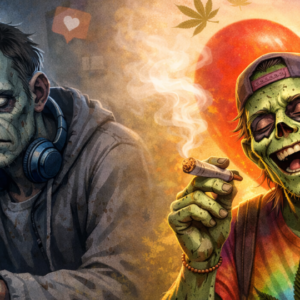
We have to climb out of the inner hole, redirect our energy, refine the addictive loop, honestly reject FOMO (there’s nothing that important there, really, come on!), and avoid cognitive overload. If the digital whirlwind has turned us into emotional zombies with existential lag and dependent on likes, little hearts or reels, weed ends up offering us a portal, a chemical reset: it’s time to scroll down and turn up the volume on our feelings.

<p>The post Emotional Zombies: How Weed Can Teach Us to Feel (Again) first appeared on High Times.</p>

Source link

Colorado Officials Weigh Changes To How Marijuana Is Sampled For Testing To Help Avoid Fraud

Colorado Officials Weigh Changes To How Marijuana Is Sampled For Testing To Help Avoid Fraud

Colorado Officials Weigh Changes To How Marijuana Is Sampled For Testing To Help Avoid Fraud

“I think that sample fraud should be a death sentence for a licensee. Right now, it’s a $15,000 slap on the wrist.”

By Christopher Osher, ProPublica and Evan Wyloge, The Denver Gazette

This story was originally published by ProPublica.

Colorado marijuana manufacturers would no longer be allowed to choose which product samples they send for mandatory lab testing under a new regulatory proposal discussed at a policy forum on Friday.

Instead, the state’s Marijuana Enforcement Division may require independent labs or outside vendors to collect product samples for the testing that’s required before companies can sell their products to ensure they’re free of contaminants.

The change would address a long-standing complaint from some marijuana manufacturers that bad actors are cheating the system. They say some companies are selecting samples that can pass tests while sending products to dispensaries that might be contaminated with chemical solvents, fungus or pesticides.

A Denver Gazette and ProPublica investigation last month showed that the system for testing marijuana products relies on an honor code that’s open to manipulation.

In 2024 alone, Colorado officials found two dozen cases in which companies had violated testing rules, often by submitting samples that were different from what the companies

The post Colorado Officials Weigh Changes To How Marijuana Is Sampled For Testing To Help Avoid Fraud appeared first on GrowCola.com.

Source link

Rescheduling Optimism Fades, Cannabis Stocks Follow

Rescheduling Optimism Fades, Cannabis Stocks Follow

Rescheduling Optimism Fades, Cannabis Stocks Follow

It is now nearly two months since President Donald Trump surprised the global cannabis industry by signing an executive order to drag the highly-anticipated cannabis rescheduling process out of the bureaucratic  swamp.  

With no mention of the project from the administration ever since, the void is once again being filled with prohibitionist pushback, market scepticism, and relentless distractions.  

As the initial euphoria of the Executive Order to expedite cannabis rescheduling now all but evaporated, cannabis stocks have predictably surrendered their rapid gains.  

The AdvisorShares Pure US Cannabis ETF (MSOS), which surged 24% following the December announcement, is now down 15% year-to-date as the broader S&P 500 climbs into positive territory. 

While the project is by no means written off, the cannabis industry at large historically has poor form on succumbing to hype, and an increasing number of leading voices are now suggesting it could have fallen into this trap once again.  

“Rescheduling is just going to be a big tax break largely the MSOs, and it’s going to help their bottom line, which might help their stock price,” Arthur Cordova, CEO of cannabis company Ziel and former Wall Street institutional trader. “But outside of that, it will do nothing to inject any additional capital in the traditional sense.” 

With the Justice Department offering no updates on implementation progress and the administrative pathway remaining unclear, Cordova says he’s still waiting for credible analysis of how the process moves forward: “I have yet to read an incisive article that explains how rescheduling gets done now.” 

That uncertainty compounds mounting political resistance from within Trump’s own party. The path to Schedule III faces significant legal and administrative hurdles, and even if successful, may not deliver the transformational change legacy operators anticipated.  

The implementation problem 

Trump’s executive order directed Attorney General Pam Bondi to ‘take all necessary steps to complete the rulemaking process related to rescheduling marijuana to Schedule III of the Controlled Substances Act in the most expeditious manner.’  

But two months later, the Justice Department has provided virtually no clarity on how, when, or whether that will occur. 

When pressed by Marijuana Moment last month, a DOJ spokesperson said the department had no ‘comment or updates’ to share. More recently, an agency official told Salon that the ‘DOJ is working to identify the most expeditious means of executing the EO’, suggesting that the path forward has not yet been established.  

“You sign one of these executive orders,” Cordova continued, asking if Trump can simply ‘call his DEA person and just do it…don’t give me any guff about it…I want it done by Monday?’ 

“All the people who are against rescheduling will then take them to court, and they’ll have a field day because it was rushed. So will it stand? Did they have public hearings for the other side?” 

The administrative requirements are substantial. The Drug Enforcement Administration must still review 43,000 public comments submitted during the Biden administration’s Notice of Proposed Rulemaking process. The agency has had no administrative law judges on staff since August 2025, the very officials responsible for overseeing drug reclassifications. DEA Administrator Terry Cole, who was confirmed in July, has yet to commit publicly to rescheduling and controls the appointment of new judges who could restart the process. 

A recent Congressional Research Service report outlined how the DOJ could, in theory, reject the president’s directive entirely or delay the process by restarting the scientific review.  

Attorney General Bondi has so far remained silent on the issue. While it had been speculated the issue would be brought up in this week’s explosive hearing, the session was inevitably derailed by the Epstein Files scandal. .  

Legal challenges are also virtually guaranteed. Nebraska Attorney General Mike Hilgers led a multistate opposition letter during the Biden process and has continued litigation against medical cannabis programs and hemp-derived intoxicants.  

Anti-cannabis groups have already prepared challenges to the rescheduling science. Even pro-reform advocates may sue, arguing that rescheduling doesn’t go far enough and that cannabis should be de-scheduled and entirely removed from the Controlled Substances Act.  

What will really change? 

The central focus for US-based cannabis operators regarding rescheduling has been the removal of the 280e tax rule, the IRS code section that bars ordinary business deductions for Schedule I/II drug operations.  

But suggestions it could open the door to institutional capital, Cordova suggests, are overcooked.  

“Could it make those stocks more attractive who are publicly traded on, say, a Canadian exchange, and thereby elevating the stock price and the market capitalisation of which they could then maybe get loans from non-conventional means, raise more equity in that way? Yeah, but that’s an around the bend way.” 

“Banking reform,” Cordova says, would require the “one two punch” of rescheduling combined with legislative action. “Even Chuck Schumer…when they had control of the Senate, would not bring it to a floor vote.”  

Furthermore, most of the MSOs are already operating as if 280e has already been abolished, meaning immediately gains will likely be modest.  

The one area where Cordova sees genuine progress is research access, but the real-world benefits for patients and businesses will likely not be felt for years.  

“It should allow people to work in the clear rather than just the three or four government research centres,” he explained.  

Big Pharma companies that have been ‘quietly working behind the scenes’ will finally be able to discuss cannabis in their pipeline publicly. Multinationals like Bayer and Novartis, previously cautious about jeopardising US operations, can now engage openly.  

Clinical trials, FDA approvals, and pharmaceutical development timelines don’t move quickly, and legacy cannabis operators lack the regulatory infrastructure that Big Pharma has spent decades building. 

Business of Cannabis will be publishing a series of articles diving into the detail of the realities of rescheduling in the coming weeks.

The post Rescheduling Optimism Fades, Cannabis Stocks Follow appeared first on Business of Cannabis.

Source link

Can Dreams Predict Illness: When the Brain Speaks Before the Body

New Farm Bill Released By GOP Committee Chair Aims To Reduce Hemp Industry ‘Regulatory Burdens’

New Farm Bill Released By GOP Committee Chair Aims To Reduce Hemp Industry ‘Regulatory Burdens’

A key House committee chairman has unveiled the latest version of a large-scale agriculture bill—with provisions his office says will reduce “regulatory burdens for producers of industrial hemp.”

The proposed 2026 Farm Bill released on Friday by House Agriculture Committee Chairman Glenn Thompson (R-PA) would maintain the industrial hemp program at a time when the cannabinoid industry finds itself threatened by a pending recriminalization of most consumable cannabinoid products under separate legislation President Donald Trump signed into law last year.

But for farmers growing hemp for industrial purposes such as fiber and grain, the latest iteration of the Farm Bill is being pitched as a source of industry relief, with policies allowing the U.S. Department of Agriculture (USDA), as well as states and tribes, to “reduce or eliminate testing requirements and background checks for producers,” for example.

Those provisions are modeled after the standalone Industrial Hemp Act, bipartisan legislation introduced in the 118th Congress aimed at bolstering the hemp market that evolved after the crop and its derivatives were federally legalized in 2018 during Trump’s first term in office.

Under the new 2026 Farm Bill, USDA would also face a mandate to “establish a process by which laboratories can be

The post New Farm Bill Released By GOP Committee Chair Aims To Reduce Hemp Industry ‘Regulatory Burdens’ appeared first on GrowCola.com.

Source link

Trump Pardons Former NFL Star Convicted Of Trafficking 175 Pounds Of Marijuana

Trump Pardons Former NFL Star Convicted Of Trafficking 175 Pounds Of Marijuana

Trump Pardons Former NFL Star Convicted Of Trafficking 175 Pounds Of Marijuana

President Donald Trump has pardoned a former NFL star who was convicted of trafficking 175 pounds of marijuana.

As advocates await action on federal marijuana rescheduling—and many people continue to endure the consequences of ongoing cannabis criminalization—Trump granted clemency to five ex-NFL players, including Nate Newton, who helped lead the Dallas Cowboys to three Super Bowl victories in the 1990s.

In 2002, however, Newton was arrested in Texas and convicted on federal drug trafficking charges after police discovered $10,000 in his truck and 175 pounds of marijuana in an accompanying vehicle. The president hasn’t publicly discussed the pardon or nature of the offense.

“I would like to thank President Trump and all of those that work under him who put this Pardon into effect,” an X account labeled as belonging to Newton posted on Friday. “Thank you Sir for taking time out of your busy day in running this country. Thank you Sincerely and may God bless You.”

Alice Marie Johnson, who herself received a pardon for a drug offense from Trump during his first term and now serves as the White House pardon czar, also didn’t speak directly to the cannabis conviction that was formally forgiven, but she said on Thursday that “excellence is built on grit, grace, and the courage to rise again,” and “so is our nation.”

“Special thanks to [Cowboys owner] Jerry Jones for personally sharing the news with Nate Newton,” she said. “I’m holding Nate’s pardon in my hands today—what a blessed day.”

Advocates have generally applauded any examples of clemency for people who’ve faced marijuana-related convictions, but such pardons have been relatively rare so far during Trump’s second term—even as he’s pushed the attorney general to move cannabis from Schedule I to Schedule III of the Controlled Substances Act (CSA).

“I’m encouraged to see President Trump recognize that past cannabis convictions deserve clemency. But there are still people serving lengthy prison terms for less cannabis than Nate Newton had,” Weldon Angelos, founder of the criminal justice non-profit The Weldon Project who received a cannabis-related presidential pardon during Trump’s first term, told Marijuana Moment. “I’m hopeful this momentum continues so that those still incarcerated for cannabis offenses will also receive clemency in the near future.”

At the start of his second term, the president fulfilled a campaign promise by commuting the life sentence of Ross Ulbricht, a man who was convicted of running a dark web illicit drug market.

The pardons and rescheduling push stand in stark contrast to other administrative drug policy actions, which has also involved military strikes resulting in the deaths of more than 100 people accused of participating in illegal drug trafficking.

Newton’s pardon for trafficking 175 pounds of cannabis also comes as people continue to face incarceration or collateral consequences related to federal marijuana convictions for offenses involving lesser amounts of the controlled substance.


Marijuana Moment is tracking hundreds of cannabis, psychedelics and drug policy bills in state legislatures and Congress this year. Patreon supporters pledging at least $25/month get access to our interactive maps, charts and hearing calendar so they don’t miss any developments.


Learn more about our marijuana bill tracker and become a supporter on Patreon to get access.

Last year, Angelos, the pardon recipient and reform advocate, paid a visit to the White House, discussing future clemency options with Johnson, the pardon czar.

Former marijuana prisoners who received clemency from the president during his first term also staged an event outside the White House last April, expressing gratitude for the relief they were given and calling on the new administration to grant the same kind of help to others who are still behind bars for cannabis.

In the background of the latest pardons, industry stakeholders and reform advocates are closely monitoring the Justice Department to see what comes of Trump’s December executive order directing Attorney General Pam Bondi to expeditiously complete the cannabis rescheduling process.

Separately, Trump recently signed large-scale spending legislation that continues a longstanding policy blocking Washington, D.C. from legalizing recreational cannabis sales.

The post Trump Pardons Former NFL Star Convicted Of Trafficking 175 Pounds Of Marijuana appeared first on Marijuana Moment.


Source link