

Police Arrest 74-Year-Old Allegedly Running Illegal Cannabis Grow in Wildomar
February 11, 2026
Published by toker


A few years ago, Lukas, a 20-year-old who lives outside Berlin, would have had to wander through a park at night or arrange an illicit street pickup if he wanted to buy marijuana. Now, all he needs is five minutes and an internet connection. Since Germany liberalized its cannabis laws two years ago, online telemedicine platforms with suggestive names like Cannadoc24 and Weed.de have become the preferred way for buyers—technically, patients—to access both pharmacist-vetted weed and doctors’ notes to order it legally.
Cannabis is Germany’s new multi-billion-euro industry. Imports of medical cannabis skyrocketed to an estimated 192 tons in 2025—up from 32 tons in 2023, the last full year before the reform. Sales within the country jumped from nearly €1 billion in 2024 to roughly €2 billion in 2025, according to BPC, a business association of pharmaceutical cannabinoid companies. Online pharmacies are at the heart of this fast-growing business, presenting customers with marijuana menus worthy of Amsterdam.
But the ease with which pot smokers can now acquire their supplies has prompted concern about possible abuse. That, in turn, has set the stage for a showdown between officials like Health Minister Nina Warken, who view the system as urgently in need of tighter restrictions, and the cannabis industry, which has no interest in seeing runaway revenue suddenly vanish.
To Read The Rest Of This Article On Bloomberg, Click Here
The post Online Cannabis Sales Are Booming In Germany—And The Government Is Racing To Catch Up appeared first on Marijuana Retail Report – News and Information for Cannabis Retailers.


Hope usually is considered an asset. But for the cannabis industry, hope quietly has become one of its most dangerous liabilities.
Every operator needs to confront one hard question in 2026: Is hope harming my ability to raise capital? Across the sector, founders are holding onto a familiar set of expectations that may no longer hold true:
This kind of optimism isn’t helping anyone. It isn’t motivating strategic thinking or unlocking new financing avenues. It’s simply delaying shifts the industry desperately needs to make.
The problem isn’t that cannabis is unloved. The problem is that cannabis operators are playing a financing game that no longer exists.
For years, many plant-touching operators have believed the capital freeze was cyclical. It isn’t. Today’s drought persists because the underlying logic of equity investing collapses under the weight of cannabis-specific constraints.
Start with Internal Revenue Code Section 280E. It doesn’t “compress” earnings; it eliminates them. Investors don’t buy equity for the privilege of funding a tax obligation that consumes 60 to 70 percent of what should be net income. No sophisticated investor can price future earnings when future earnings don’t exist.
Add to that a regulatory environment where pricing, margins, and even basic operating rules shift unpredictably. Equity investment depends on predictable risk and definable upside. Cannabis offers neither. Even in a stronger macro environment, the capital that once poured into the industry was subsidized by somewhat cheap money, novelty, and optimism. Those conditions are gone, and super-high interest rates have only magnified the mismatch between investor expectations and cannabis realities.
The hope capital will come back is built on a misunderstanding. Investors didn’t retreat because of sentiment. They retreated because the math stopped working.
This is where “toxic hope” comes in. It looks like confidence, but it functions like denial.
Operators tell themselves everything will change once the Secure and Fair Enforcement Regulation (SAFER) Banking Act passes, or once the next election cycle kicks in, or once the market “stabilizes.” But this waiting game is costing founders runway, bargaining power and, in many cases, the opportunity to control their own exit.
I’ve spoken with operators who delayed restructuring for two full years because they expected equity markets to thaw. Others kept refinancing expensive debt under the assumption that a fresh round of investors would bail them out. Others are waiting for some random buyer to come in and pay them all cash (as if). Some are still building pitch decks for investors who simply cannot invest under present conditions — not because they lack interest, but because the risk profile is structurally incompatible with equity economics.
Hope becomes toxic the moment it replaces strategy. In cannabis, that moment arrived years ago. Too many operators just didn’t notice.
Even now, many founders approach capital strategy as if cannabis behaves like any other emerging consumer industry. However, cannabis remains fundamentally defined by a tax code that penalizes normal business operations, regulatory fragmentation, and restricted capital channels. The industry simply does not fit into the equity investing frameworks into which founders keep trying to insert themselves.
Institutional investors want predictable earnings, a reliable cost structure, and an obvious exit. Cannabis provides none of those. That will remain true until the structural conditions change, and betting a company’s future on political timelines is not strategy.
This is why operators who continue to wait for equity markets to return are not making a rational long-term bet. They’re holding onto a financing model that isn’t coming back in any recognizable form.
If the traditional model is broken, the question becomes “what actually works?”
This is where alternative structures, especially employee stock-ownership plans (ESOPs), shift the financial landscape. An ESOP is not a tax trick or a feel-good employee incentive program. Done correctly, it’s a structural business re-engineering that removes the single biggest financial drag on cannabis operators: income tax under 280E.
When a cannabis company becomes 100-percent ESOP-owned, its federal income tax obligation and state income tax obligation both drop to zero. That transformation alone changes the trajectory of the company. A business that was barely cash-flow-positive becomes meaningfully profitable. A founder who was boxed out of traditional exits suddenly has a pathway to liquidity without selling to a consolidator or diluting their share of the business into irrelevance. Employees become shareholders, boosting retention and alignment. And, critically, an ESOP does not rely on speculative federal reform or the return of outside equity.
This isn’t optimism. This is architecture. It’s a solution grounded in the tax code.
Resistance to ESOPs usually is rooted in misconceptions like they’re too complicated, employees will run the company, they depress valuation, or they work only for large companies. None of these presumptions are true. Many founders are uncomfortable moving away from the financing frameworks they’ve always known. They don’t want to consider an alternative because they’re still holding onto hope that the old world will return. But that hope is costing them money, often millions, while the ESOP path creates liquidity, eliminates the tax burden, and preserves long-term upside.
The industry doesn’t need more optimism. It needs more operators willing to confront financial reality and adjust accordingly.
Toxic hope has been allowed to shape cannabis capital strategy for too long. It’s time for founders to stop waiting for rescue and start engineering outcomes.
Federal reform may come someday. Investor appetite may improve. But none of that helps operators solve the problems they face today. What helps is embracing structures that work under current law, current markets, and current constraints.
If there’s one message the industry needs to hear in 2026, it’s this:Stop hoping. Start acting. The path forward belongs to those willing to rethink the game, not wait for it to change.
The phrase implies a habit of waiting for reform, investor return, or market stabilization instead of restructuring and pursuing viable capital architecture now.
Because the underlying equity math is impaired by structural constraints — especially 280E and unpredictable regulatory conditions.
Operators lose runway and bargaining power—and risk losing control of the timing and terms of any exit.
Investors want predictable earnings and a clear exit path; fragmentation and tax/regulatory constraints distort both.
Alternative ownership/capital structures — particularly ESOPs — may provide an “architecture” that can change the business trajectory without relying on speculative reform.

As managing partner at MBO Ventures, serial entrepreneur and prolific angel investor Darren Gleeman assists clients with employee stock ownership plans (ESOPs) and capital management. Previously, he served as managing partner at hedge fund GB Trading. Gleeman holds a patent on ESOP methodology for the cannabis industry and received Green Market Report’s 2024 Top Financial Advisor award.



As the cannabis industry goes global, a critical challenge is emerging: how to keep cannabis flower fresh and potent from harvest to point of sale – whether that’s across state or province lines or shipped overseas.
With European markets already importing cannabis from Canada and President Donald Trump’s marijuana rescheduling executive order prompting some U.S. operators to look forward to interstate commerce, the need for smarter packing and curing solutions is more important than ever, operators told MJBizDaily.
“As we have federal legalization or state borders come down, we need a way to get it from California to Italy and extend the shelf life,” said Peter Andersson, director of product development for Utah-based packaging company Calyx Containers.
To Read The Rest Of This Article On MJ Biz Daily, Click Here
The post The Science Behind Curing And Packaging Cannabis For A Global Market appeared first on Marijuana Retail Report – News and Information for Cannabis Retailers.
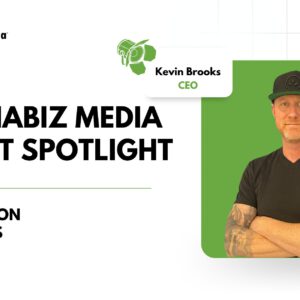
Cannabiz Media spoke with Conception Nurseries CEO Kevin Brooks to learn how they ‘read the tea leaves’ of the cannabis industry by using the Cannabis Market Intelligence Platform.
© CNB Media LLC dba Cannabiz Media
Source link



Paper – Report: STREET DRUG ANALYSIS Factors Affecting the Detection and Identification of Emerging Substances
Source link