
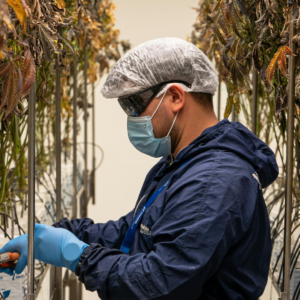
MWG Holdings, Award-Winning Cannabis Company, Announces Back-to-Back Record-Breaking Revenue Months
February 9, 2026
Published by toker

Collapsed international cannabis operator Cannim has officially been placed into liquidation following a failed sales process, seeing its myriad of creditors vie for their share of the tens of millions of dollars now reportedly outstanding.
While creditors in Australia are now facing an uphill battle to recover their lost investments, with liquidators warning them not to expect any returns unless recovery actions are successful, the company’s UK operations have been all but abandoned.
Creditors in the UK now face the added challenge of navigating multiple jurisdictions and local laws, making the pursuit of asset recovery even more problematic, given that its UK entities are outside of the scope of the Australian entities’ liquidation process.
Meanwhile, legal challenges continue to stack up. Liquidators have indicated they will seek court-ordered public examinations of ‘directors, advisors, subsidiary officers, professional advisers’ within 1-3 months, while UK-based creditors have been forced to explore their own enforcement routes.
Jade Proudman, the former owner of Savage Cabbage who holds a £137,115 employment tribunal judgment against Savage Cabbage Limited, has filed a formal complaint with the UK Insolvency Service alleging director misconduct. The complaint, submitted on January 7, targets the UK entities that remain ‘Active’ on Companies House but outside the Australian liquidation.
Proudman also faces potential home repossession within weeks, having relied on written assurances from Cannim’s Chief Commercial Officer in October 2023 that her role was ‘permanent’ and that she would receive ‘lump sum payments over the next 18 months’, representations made to her mortgage lender.
She was dismissed with immediate effect 11 months later, and following a court ruling of unfair dismissal, the UK Department for Business and Trade has separately initiated enforcement action for non-payment of the tribunal award.
According to a circular published by the appointed administrators Olvera Advisors on February 05, seen by Business of Cannabis, Rajiv Goyal and Neil Robert Cussen of Olvera Advisors were appointed liquidators of Cannim Group Pty and Cannim Australia Pty on January 30 following a creditors vote to wind up the companies.
After entering into administration in October 2025, the vote to put the company into liquidation marks the final stage of its insolvency, meaning that a sale or rescue is now no-longer possible, and it’s assets will be sold off to recover funds owed to creditors.
It follows a failed sales process, with Cannabiz.au reporting that despite initial interest, once prospective buyers looked more closely at the financials and saw that it was a fundamentally unprofitable business, any interest quickly faded.
The circular also states that receivers appointed by secured creditor Finstro Securities ‘do not expect a surplus to be returned to the liquidation after realisation of the Companies’ assets,’ meaning ‘a dividend to unsecured creditors is therefore dependent upon the success of recovery actions undertaken by the Liquidators.’
According to the liquidators’ January 21 report, secured creditor Finstro is owed approximately A$4m, unsecured creditors total approximately A$28m, and employee entitlements exceed $400,000.
The liquidators have identified more than A$32m in potentially recoverable transactions across six categories of statutory claims.
Critically, the largest of these categories involves more than A$9m in ‘advances made to related entities for no commercial benefit,’ which the liquidators classify as uncommercial transactions under section 588FB of the Corporations Act.
Two major property transactions are also being investigated as potential creditor-defeating dispositions, transactions potentially designed to move assets out of creditors’ reach.
A Jamaican property held by subsidiary Jamaica Red Moon Ltd was sold for US$1.5m against a listing price of US$6.3m, with the liquidators’ January 21 report estimating a potential $10m recovery.
Separately, two Queensland properties at Wills Road and Rocky Gully Road, Coominya, were sold for A$1.75m, with the liquidators noting that ‘further investigation is required into the market value at the time of disposal and remittance of sale proceeds to a family trust.’
The circular also identifies A$456,220 in ‘unreasonable director-related transactions’ involving ‘personal credit card payments’ and benefits arising from undervalued property disposals, alongside A$465,644 in potential unfair preference payments to the Australian Tax Office within the statutory relation-back period.
The liquidators state that ‘indicators of insolvency from at least August 2024’ support potential insolvent trading claims against directors, though these claims remain ‘to be quantified.’
The scale and nature of these claims suggest a serious mismanagement of company funds. Directors advanced more than A$9m to related entities without commercial justification during a period when liquidators say the companies were likely already insolvent.
The appointed liquidators will issue formal demand letters within 2-6 months and commence legal proceedings within 4-8 months, while public examinations of ‘directors, advisors, subsidiary officers, professional advisers’ are planned within 1-3 months, according to the February circular.
These court-ordered examinations will compel individuals to answer questions under oath about the companies’ affairs and the transactions under investigation.
Cross-border legal recovery actions targeting the Jamaican property sale are expected to take 6-12 months. The January report notes that Jamaica’s adoption of the UNCITRAL Model Law means ‘recognition of an Australian Liquidator is achievable and provides a direct pathway to recover value for creditors.’
Olvera has preserved approximately 1.3 terabytes of evidence through forensic imaging and is engaging local counsel in Jamaica for recognition proceedings.
It has now also filed reports with the Australian Securities and Investments Commission under section 438D of the Corporations Act, alleging breaches of director duties, including an ‘off-market transfer of a convertible note without the authorisation of the Administrators or the Courts.’
The liquidators are required to provide creditors with an updated report within three months of their January 30 appointment. They are in discussions with the Fair Entitlements Guarantee scheme and commercial litigation funders to finance investigations and proceedings, with employee entitlements being processed through FEG to ‘support the prompt payment of outstanding employee entitlements.’
While Australian regulators and liquidators pursue these claims, three UK subsidiaries remain outside the formal insolvency proceedings.
Cannim Limited, Savage Cabbage Limited, and Setala Limited all maintain ‘Active’ status on the Companies House register. According to the liquidators, they have ‘no oversight’ of these UK entities, despite their parent companies being in liquidation.
This jurisdictional void has left UK creditors pursuing separate enforcement routes through British authorities, with limited success.
Among them is Jade Proudman, the former owner of Savage Cabbage. Since winning her £137,115 unfair dismissal award in November, Proudman has pursued multiple enforcement routes as the judgment remains unpaid.
On January 7, she filed a formal complaint with the UK Insolvency Service alleging director misconduct. The Service, which can investigate and potentially disqualify directors of ‘active’ companies, acknowledged the complaint but warned its investigations are confidential with no guaranteed updates or outcomes.
Separately, on January 14, the UK Department for Business and Trade’s Employment Tribunal Financial Penalty Team issued a warning notice to Savage Cabbage Limited for non-payment of the tribunal award.
According to correspondence seen by Business of Cannabis, the department will automatically issue a penalty notice if the award remains unpaid after 28 days and may publicly name the company for non-compliance. That deadline falls on February 11.
The enforcement challenge is compounded by revelations in documents seen by Business of Cannabis that Cannim made specific written representations about Proudman’s employment to facilitate her mortgage application, representations that now appear questionable given her swift dismissal.
In an October 2023 letter to Proudman’s mortgage advisor, Cannim’s Chief Commercial Officer, Stuart Marsh, confirmed her role was ‘crucial’ and ‘permanent,’ stating she would ‘receive lump sum payments over the next 18 months’ under the share purchase agreement. The letter included ‘regular performance reviews conducted every 12 months’ as evidence of job security.
Proudman was dismissed with immediate effect eleven months later. She now faces potential home repossession within eight weeks, having relied on Cannim’s written assurances to secure the mortgage.
Proudman has also lodged a £7.9m claim with the Australian liquidators relating to the allegedly unpaid share purchase agreement, though, as a creditor of UK entities outside the liquidation scope, her ability to access any Australian recoveries remains unclear.
John Worton, Cannim’s founder, remains listed as a director of both Savage Cabbage Limited and Cannim Limited on the Companies House register. He was appointed director of Savage Cabbage on September 3, 2024, one day before Proudman’s dismissal, and continues to hold the position despite the Australian parent’s liquidation.
Under UK company law, directors retain legal obligations, including filing requirements, regardless of a parent company’s foreign insolvency. Cannim Limited’s confirmation statement has been overdue since November 11, 2025.
The pending official investigations, including public examinations of directors and ASIC inquiries into alleged breaches, should reveal further details about how company finances were managed during the period liquidators believe the companies were insolvent. Business of Cannabis will continue reporting as new information emerges from these proceedings.
The post Collapsed Cannim Sees Liquidators Target $32m in Voidable Transactions as UK Creditors Face Enforcement Gap appeared first on Business of Cannabis.


Hawaii lawmakers have advanced a bill to allow qualifying patients to access medical marijuana at health facilities.
In one of the latest examples of states pursuing what’s known as “Ryan’s law”—a reference to a young medical cannabis patient in California who passed away—the Hawaii House Health Committee and Human Services & Homelessness Committee held a joint hearing on Wednesday at which members unanimously approved the legislation, with amendments.
The bill from Rep. Gregg Takayama (D) states that it’s the “intent of the legislature in enacting this chapter to support the ability of terminally ill patients and qualifying patients over sixty-five years of age with chronic diseases to safely use medical cannabis within specified health care facilities.”
While Takayama said his initial instinct was to defer the bill for action, he decided upon review of testimony that “it bears further consideration.” That includes incorporating agency recommendations to permit, rather than require, health facilities to allow medical cannabis use and exempt residential treatment centers from the proposed law.
In written testimony submitted ahead of the committee hearing, the state Office of Medical Cannabis Control and Regulation (OMCCR) said that it “supports the intent of this measure to improve access for terminally ill medical cannabis patients,” but that the strict mandate on health facilities to permit medical marijuana use in the bill as filed is problematically inflexible.
Rather than “shall permit,” the office recommended revising to “may permit” with respect to facilities’ legal obligation under the proposed law.
The state attorney general’s office, meanwhile, said, “While the bill attempts to address potential federal conflicts, mandatory accommodation could expose health care facilities to legal uncertainties, including the potential risk to federal funding or other federal enforcement consequences.”
For its part, the Marijuana Policy Project (MPP) said it “strongly support[s] allowing terminally ill patients and kupuna to use medical cannabis preparations in health care facilities.” However, the organization is “alarmed that [the bill] would restrict [medical cannabis use] in other cases.”
“As it is currently drafted, HB 1542 would force nursing homes and other health care facilities to ban conduct they may be allowing now, or may wish to allow in the future,” MPP’s Karen O’Keefe said. “No health care facility should be prohibited from allowing patients relief.”
“We strongly support allowing terminally ill patients and kupuna to use medical cannabis to be used in health care facilities and commend the Chair for addressing that need. However, we strongly urge amendments to ensure the Legislature does not prohibit facilities from: 1) allowing medical cannabis by other patients should they wish to do so; and 2) allowing vaping or smoking in a private room, where tobacco would be allowed.”
There are certain exceptions detailed in the bill. For example, medical marijuana couldn’t be used in substance misuse recovery hospitals, state hospitals or emergency departments of general acute hospitals “while the patient is receiving emergency services and care.”
Smoking and vaping cannabis would remain prohibited in health facilities under the proposal, “provided that a home health agency shall only prohibit smoking or vaping immediately before or while home health agency staff are present in the residence.”
General acute care hospitals couldn’t allow patients with a chronic disease to use medical cannabis unless they were terminally ill.
In the event that a federal regulatory agency, Justice Department or Centers for Medicare and Medicaid Services (CMS) takes enforcement action against a health facility related to the medical cannabis policy, or if they explicitly notify the facility that they’re violating federal law, the health care institution could suspend the policy.
Meanwhile in Hawaii, officials recently released a report on the potential economic impact of recreational marijuana legalization in the state, including revenue implications related to domestic and international tourism.
The report from Cannabis Public Policy Consulting—which was commissioned by the Hawaii Department of Health’s (DOH) Office of Medical Cannabis Control and Regulation—looked at a wide range of policy considerations associated with potentially legalizing adult-use marijuana in the state.
All told, researchers said survey data and comparative analyses indicate that Hawaii could see anywhere from $46-$90 million in monthly marijuana sales by year five of implementation, after accounting for a maximum 15 percent tax rate on cannabis products.
In the lead-up to the release of the report, key Hawaii lawmakers last month filed legislation that would put the issue of marijuana legalization on the ballot for voters to decide.
The move comes after repeated efforts to legalize cannabis legislatively in recent sessions have demonstrated momentum but failed before reaching the finish line to be enacted into law.
If the legislature agrees to the new plan, voters would see this on their November ballots:
“Shall the Constitution of the State of Hawaii be amended to:
(1) Authorize individuals aged twenty-one and older to use and possess personal-use amounts of cannabis; and
(2) Require the legislature to enact laws governing the use, manufacture, distribution, sale, possession, regulation, and taxation of cannabis within the State?”
If a majority of voters approved the ballot measure, cannabis legalization would take effect on July 1, 2027.
House Judiciary and Hawaiian Affairs Committee Chairman David Tarnas (D) and Senate Health and Human Services Committee Chair Joy San Buenaventura (D) are the lead sponsors of the new measures. Tarnas’s House proposal has 13 additional cosponsors.
“This is kicking this particular policy decision—very selectively—to the public for a decision,” Tarnas, who has previously sponsored legalization and other marijuana reform bills, said in an interview last month.
While Gov. Josh Green (D) supports legalizing cannabis, and polling has indicated that Hawaiians are ready for the policy change, the new measures signal that the sponsors don’t anticipate that fellow lawmakers will be ready to move forward with a legislative reform this year but may instead be inclined to defer to voters.
Putting the measure on the ballot as a constitutional amendment would require a two-thirds vote in each chamber of the legislature.
That said, Tarnas and San Buenaventura have also filed separate, more traditional statutory cannabis legalization measures for the 2026 session.
House Speaker Nadine Nakamura (D) has acknowledged broad public support for marijuana legalization, but said that some of her chamber’s members from the island of Oahu are not on board with the reform.
Hawaii’s Senate last February narrowly defeated a proposal that would have increased fivefold the amount of cannabis that a person could possess without risk of criminal charges.
Had the measure become law, it would have increased the amount of cannabis decriminalized in Hawaii from the current 3 grams up to 15 grams. Possession of any amount of marijuana up to that 15-gram limit would have been classified as a civil violation, punishable by a fine of $130.
A Senate bill that would have legalized marijuana for adults, meanwhile, ultimately stalled for the session. That measure, SB 1613, failed to make it out of committee by a legislative deadline.
While advocates felt there was sufficient support for the legalization proposal in the Senate, it’s widely believed that House lawmakers would have ultimately scuttled the measure, as they did last February with a legalization companion bill, HB 1246.
In 2024, a Senate-passed legalization bill also fizzled out in the House.
Last year’s House vote to stall the bill came just days after approval from a pair of committees at a joint hearing. Ahead of that hearing, the panels received nearly 300 pages of testimony, including from state agencies, advocacy organizations and members of the public.
Green signed separate legislation last year to allow medical marijuana caregivers to grow marijuana on behalf of up to five patients rather than the current one.
And in July, the governor signed another bill that establishes a number of new rules around hemp products in Hawaii, including a requirement that distributors and retailers obtain a registration from the Department of Health.
Lawmakers also sent a bill to the governor that would help speed the expungement process for people hoping to clear their records of past marijuana-related offenses—a proposal Green signed into law in April.
That measure, HB 132, from Tarnas, is intended to expedite expungements happening through a pilot program signed into law in 2024 by Green. Specifically, it will remove a distinction between marijuana and other Schedule V drugs for the purposes of the expungement program.
The bill’s proponents said the current wording of the law forces state officials to comb through thousands of criminal records manually in order to identify which are eligible for expungement under the pilot program.
Meanwhile, in November, Hawaii officials finalized rules that will allow medical marijuana dispensaries to sell an expanded assortment of products for patients—including dry herb vaporizers, rolling papers and grinders—while revising the state code to clarify that cannabis oils and concentrates can be marketed for inhalation.
The department also affirmed its support for federal marijuana rescheduling—a policy change that President Donald Trump ordered to be completed last month but has yet to come to fruition.
—
Marijuana Moment is tracking hundreds of cannabis, psychedelics and drug policy bills in state legislatures and Congress this year. Patreon supporters pledging at least $25/month get access to our interactive maps, charts and hearing calendar so they don’t miss any developments.
Learn more about our marijuana bill tracker and become a supporter on Patreon to get access.
—
Regulators are also launching a series of courses designed to educate physicians and other healthcare professionals about medical marijuana as the state’s cannabis program expands.
The underlying medical marijuana expansion bill signed by the governor in late June, in addition to allowing more patients to more easily access cannabis, also contains a provision that advocates find problematic.
Before lawmakers sent the legislation to Green, a conference committee revised the plan, inserting a provision to allow DOH to access medical marijuana patient records held by doctors for any reason whatsoever.
Photo courtesy of Mike Latimer.
The post Hawaii Lawmakers Approve Bill To Let Patients Use Medical Marijuana At Health Facilities appeared first on Marijuana Moment.


January has always been a month for resets. After weeks of holiday gatherings, late nights, and celebratory drinks, many people turn to Dry January as a way to slow down and start the year feeling better. But, nowadays, people are extending the alcohol-free tradition further.
Across Arizona, more adults, particularly Gen X and Millennials, are exploring alternatives to alcohol that allow them to stay social without the physical and mental aftereffects that often come with drinking.
The goal is not to opt out of plans or stay home — it’s to enjoy the same dinners, concerts, and get-togethers while waking up rested, clear-headed, and ready for the day ahead.
A Shift in How People Socialize
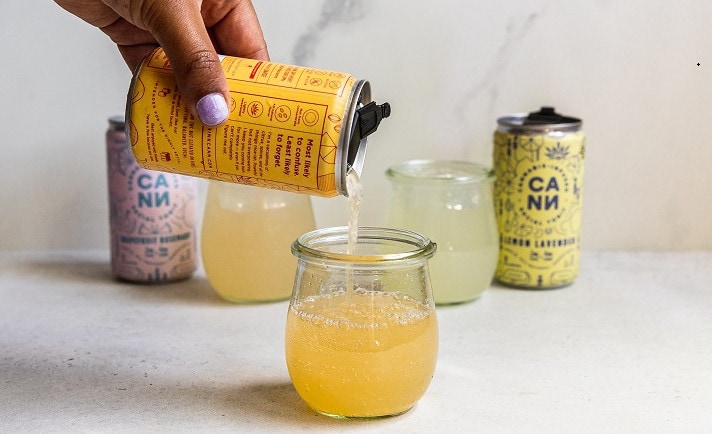
Rather than skipping social experiences, many people are choosing to change what they consume. Cannabis and non-alcoholic beverages are increasingly part of social routines, offering different ways to relax or connect.
For some, cannabis provides a sense of calm or presence that fits a more intentional experience. For others, non-alcoholic options preserve the familiar ritual of having a drink in hand, without the lingering effects.
What ties these choices together is balance. People want to enjoy the moment without sacrificing sleep, energy, or clarity. Socializing no longer has to come with a tradeoff.
Meeting the Moment
As this shift takes hold, Arizona-based operators are beginning to reflect it in how they show up for their communities. At Copperstate, the approach mirrors a broader cultural move toward mindful consumption rather than restriction.
The company’s “Same Night, Different Morning” campaign reflects a reality many consumers already recognize: people still want the social experience, they are simply more thoughtful about how they get there.
By highlighting locally made cannabis products alongside locally owned non-alcoholic options, the campaign aligns with how many Arizonans are approaching January, curious, intentional, and focused on how they want to feel the next day.
More Than Giving Something Up
What defines today’s Dry January is not abstinence, but choice. People still want to gather, celebrate, and relax. They are simply redefining how they do it.
Instead of focusing on what is being avoided, more Arizonans are paying attention to what helps them feel better overall. Whether that means cannabis, non-alcoholic beverages, or a combination of both, the emphasis is on social connection without unnecessary downsides.
Same Night, Different Morning.
At its core, this movement reflects a simple idea: enjoying life does not have to come at the expense of how you feel the next day. Dry January has evolved into an opportunity to explore alternatives that better align with personal wellness goals and everyday life.
For many Arizonans, it is still the same night out — just a very different morning.
Where to Learn More
For consumers curious about exploring these shifts firsthand, Sol Flower Dispensaries offers a year-round, education-first retail experience designed to help people find options that fit their lifestyle, pace, and comfort level. Whether someone is new to cannabis or refining their preferences, Sol Flower’s team is focused on providing the best experiences in the state.
To learn more or find a location, visit www.livewithsol.com
The post Same Night, Different Morning: More Arizonans Are Rethinking Alcohol appeared first on AZ Marijuana.


Perimenopause isn’t just a chapter; it’s a plot twist with attitude. One minute you’re serene and hydrated, the next you’re channeling Kathy Bates in Fried Green Tomatoes, screaming “Towanda!” as your hormones emotionally T-bone a parked car. Hot flashes, mood swings, sleep battles, libido dips, anxiety spikes—it’s a full-body revolution every woman faces, yet almost none of us are prepared for.
For me, perimenopause didn’t arrive politely. There was no missed period, no heads-up, no gentle transition. It showed up as brain fog thick enough to lose words mid-sentence, anxiety that felt distinctly biochemical, and random Towanda rage. The kind that appears without context and leaves you standing in the kitchen, wondering who that was and whether bail money might be necessary.
As more women look beyond the usual pharmaceutical script and toward plant-based wellness, cannabis is emerging as one of the most talked-about allies in this transition. Research is beginning to validate what women have quietly shared for years in dispensaries, DMs, and late-night group chats: the plant is helping.
A 2023 cross-sectional survey of cannabis users aged 35 and over found commonly reported relief for sleep disturbances, anxiety, mood changes, and other menopause-related symptoms.
So let’s talk about it like grown women with receipts. Not in vague wellness whispers, not in “ask your doctor” boilerplate, and definitely not in stoner folklore. Just a symptom-by-symptom breakdown of what cannabis may help with in perimenopause, what to try (and what to avoid), and how to start without accidentally launching yourself into orbit.
Perimenopause isn’t a single hormonal cliff. It’s a long, uneven descent. Estrogen doesn’t simply decline; it fluctuates. Some days it spikes, other days it crashes, and the body is left adapting in real time. That volatility drives many of the symptoms women report: heightened anxiety, disrupted sleep, sudden mood shifts, temperature dysregulation, changes in libido, and the sense that the body no longer responds the way it used to.
This is also why symptoms often appear years before anyone says the word “menopause.” Many women are told they’re stressed, anxious, depressed, or simply aging when in reality, hormonal signaling has already begun to shift. The body feels off long before the label arrives.
What’s often missing from this conversation is the role of the endocannabinoid system (ECS), the body’s internal regulator. The ECS helps maintain balance across mood, sleep, pain, inflammation, stress response, and temperature control. Estrogen plays a regulatory role here. When estrogen fluctuates, ECS signaling can become dysregulated, amplifying stress responses, interrupting sleep, and sharpening emotional reactivity.
This isn’t a personal failure or a lack of resilience. It’s biology. Your internal communication systems are changing, and your symptoms are signals, not shortcomings.
Across menopause and cannabis communities, a consistent sentiment comes up again and again: women aren’t chasing a high. They’re chasing a sense of normal—relief that allows their nervous systems to settle and their evenings to feel manageable again.
Before diving into symptoms or strain names, it helps to understand how cannabis actually works and what matters most when choosing a product to support your hormonal shifts. You don’t need to become fluent overnight. You just need a framework.
Cannabinoids like THC, CBD, CBG, and THCV interact directly with the ECS, influencing mood, sleep, pain perception, appetite, temperature regulation, and stress response. Think of cannabinoids as the engine driving the primary effects.
Terpenes shape how cannabinoids feel in the body and mind, whether calming, uplifting, grounding, or sedating. They steer the experience rather than power it.
Flower, edibles, tinctures, topicals, and suppositories all enter the body differently. In perimenopause, when sleep is fragile, temperature fluctuates, and stress tolerance is low, onset time and duration can matter as much as potency. Fast-acting options may help acute anxiety or hot flashes, while longer-lasting formats often better support sleep and overnight stability.
Cannabis compounds also rarely work in isolation. Full-spectrum and blended formulations tend to outperform single-compound chasing. What matters most is how combinations support your symptoms.
Many women report being offered antidepressants, sleep aids, or being told to “wait it out.” For some, those tools help. For others, they mute symptoms without restoring a sense of balance. Cannabis often enters the picture not as a replacement for care, but as a missing layer, something that works with the nervous system rather than against it.
Mood changes in perimenopause often feel less like emotions and more like chemistry. Reactions arrive before thoughts, leaving many women wondering when their internal buffer disappeared.
As estrogen fluctuates, ECS tone drops, and stress buffering weakens. Cortisol spikes more easily, sleep suffers, and emotional regulation becomes fragile.
Cannabis may help by interacting with stress-response pathways, softening reactivity, and restoring emotional flexibility. Rather than numbing emotions, it can help transform volatility into clarity and groundedness.
Cannabinoids to look for here include: CBD for calming reactivity, CBG for clear-headed balance, and THCV, in microdoses, for focus and mood lift.
As for terpenes, linalool, beta-caryophyllene, and limonene are great options. For example, linalool (you know it as the strong scent in lavender) also appears in many cannabis cultivars, which may explain why many women report a similar sense of nervous-system softening.
How to try it: Daytime tinctures, low-dose edibles, or gentle flower. Start low. Blended formulations often outperform isolates.
Optional strain examples: Super Lemon Haze.
Sleep is often the first thing to go and the hardest thing to get back. Women talk about lying awake at 3 a.m., overheated and wired, wondering how their body forgot something it used to do effortlessly.
Hormonal shifts disrupt circadian rhythm, temperature regulation, and stress hormones, turning bedtime into a battleground.
Cannabis may help shorten sleep-onset time, quiet mental noise, and support nervous-system downshifting. THC often aids sleep initiation, while CBD and CBG help calm racing thoughts. CBN may add an extra layer of sedation for late-night restlessness.
Terpenes like myrcene, linalool, terpinolene, and beta-caryophyllene are commonly associated with relaxation and sleep support.
How to try it: Edibles or tinctures taken one to two hours before bed; some women prefer infused pre-rolls. Microdose first and adjust slowly.
Optional strain examples: Northern Lights; Purple Punch.
Libido doesn’t clock out politely during perimenopause; it fades while you’re busy managing sleep loss, mood swings, and a body that feels increasingly unpredictable. Pleasure becomes collateral damage, not a conscious choice.
Stress, tension, dryness, and hormonal shifts can disrupt desire and embodiment, making intimacy feel distant or effortful.
Cannabis may help by reducing mental friction and enhancing sensory awareness. THC can amplify sensation, while CBD supports relaxation without overwhelm. Balanced formulations, such as 1:1 THC:CBD, are often helpful for women navigating sensitivity and stress.
Terpenes like limonene, linalool, and myrcene frequently appear in women’s stories of rediscovering desire. Limonene, the terpene responsible for citrus’s bright, uplifting aroma, is often associated with mood elevation and mental openness, two things libido depends on during perimenopause.
How to try it: Low-dose edibles, flower, topicals, lubricants, or suppositories. Timing matters; many prefer 30 to 90 minutes before intimacy. Start low and prioritize comfort.
Optional strain examples: Wedding Cake; Do-Si-Dos; Granddaddy Purple.
RSO deserves a brief mention here. As a full-spectrum extract, it can deliver deep body relaxation and sensory presence, but it’s potent. A rice-grain dose is plenty.
Hot flashes aren’t just inconvenient; they’re disruptive in a way that’s hard to explain unless you’ve lived it. If you’ve ever seen the now-viral image of a woman at a winter football game with steam visibly rising from her head during a hot flash, you already understand the absurdity of it all. They interrupt conversations, sleep, focus, and patience, often without warning and always at the worst possible moment.
As estrogen declines, ECS signaling involved in thermoregulation can destabilize, contributing to sudden heat surges.
Cannabinoids such as THC and CBD have been shown to influence vascular tone and relaxation, offering a possible mechanism for easing vasomotor symptoms. Many women report that balanced 1:1 THC:CBD products provide steady support without excessive intoxication.
Some also combine cannabis with botanicals like black cohosh, which has demonstrated clinical relevance for vasomotor symptom relief.
How to try it: Low-dose tinctures or edibles used consistently rather than reactively. Balance tends to matter more than potency.
Optional strain examples: ACDC; GMO Cookies.
There’s no single right way through perimenopause, and no obligation to use the plant at all. But there is permission to explore, slowly and intentionally, what helps you feel more like yourself.
Since only female cannabis plants carry the power-packed cannabinoids THC and CBD, it feels fitting that she shows up for us during these Towanda-level moments. Perimenopause isn’t a downfall; it’s a rite of passage. And cannabis, in all its terpene-rich complexity, has become one of the allies women reach for when the ride turns volatile.
This isn’t about numbing symptoms or chasing perfection. It’s about restoring choice in a body that feels unpredictable and reclaiming balance, curiosity, and trust along the way.
When the world says, “just deal with it,” the plant offers another option: you don’t have to.
Cannabis is powerful, but it isn’t a replacement for medical care. If symptoms feel overwhelming, hormone testing and professional support can be invaluable companions on this journey. This is about adding tools, not abandoning care, and trusting yourself to decide what belongs in your mix.
This article is from an external, unpaid contributor. It does not represent High Times’ reporting and has not been edited for content or accuracy.
<p>The post Perimenopause, Meet Weed: A Symptom-by-Symptom Guide first appeared on High Times.</p>



50% off pre-rolls & pre-roll packs at Curaleaf. *Restrictions apply. Lic # 00000107DCFT00824215; 00000026ESRZ88769978
The post 50% Off Infused Pre-Rolls & Pre-Roll Packs @ Curaleaf appeared first on AZ Marijuana.


