
VA Documents Show How Veterans’ Cannabis Access Could Expand—And What Will Stay The Same—Under Rescheduling (Op-Ed)
May 25, 2026
Published by toker
Our product research team independently tests and reviews everything we recommend. When you make a purchase using our links, we may earn a commission. Learn more
Related Picks: Best CBD Vape Pens
Studies show that just over half of CBD users vape it, but in recent years, the number of high-quality vape pens, cartridges and liquids has shrunk rapidly. Now more than ever, you need to be careful when choosing new cartridges and vape juices, because so many high quality brands have dropped out of the market.
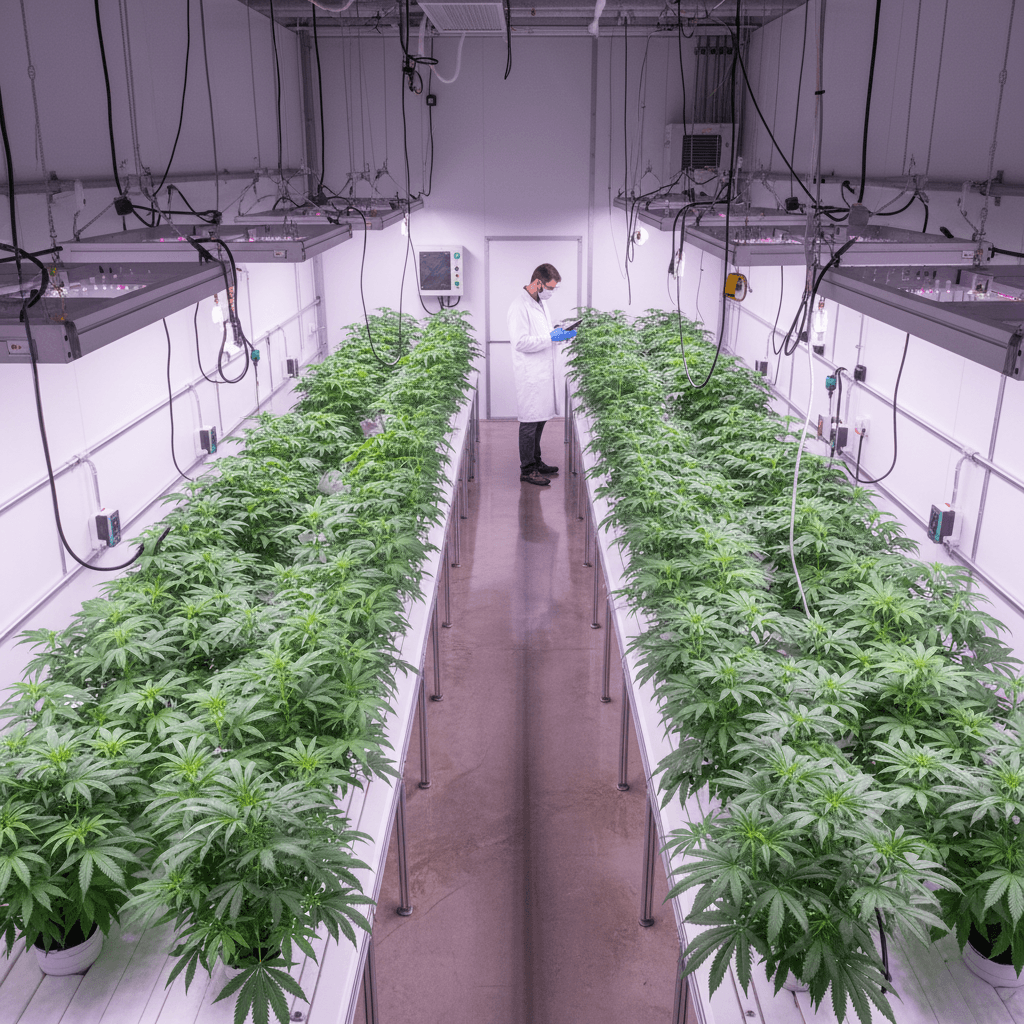
Our Cannabinoid Product Quality Evaluation Framework was created to solve exactly this problem. We worked with experts to develop a set of objective criteria to help you find the safest, most effective products out there. For vape cartridges, there is only one product that earned our full recommendation.
CBD isolate vape cartridges can be good, but it’s better with other cannabinoids to boost the effects. This doesn’t have to be THC – but that can help for most purposes – but the addition of CBG, CBN or CBC helps to boost the “entourage effect.”
Vegetable glycerin (VG), propylene glycol (PG) and pure cannabis oil are the best bases for CBD vape cartridges. MCT oil or other “true” lipid oils are dangerous to vape, and should always be avoided.
While some brands use proprietary pod-style systems, 510 connections are the most versatile and widely supported type.
A range of doses is ideal, but stronger cartridges help you get your dose with less puffs.
From 44 CBD vape cartridges, we used some crucial criteria to choose qualifiers and ranked them on our expert-backed quality evaluation framework. Only one product earned a full recommendation.
Key Attributes
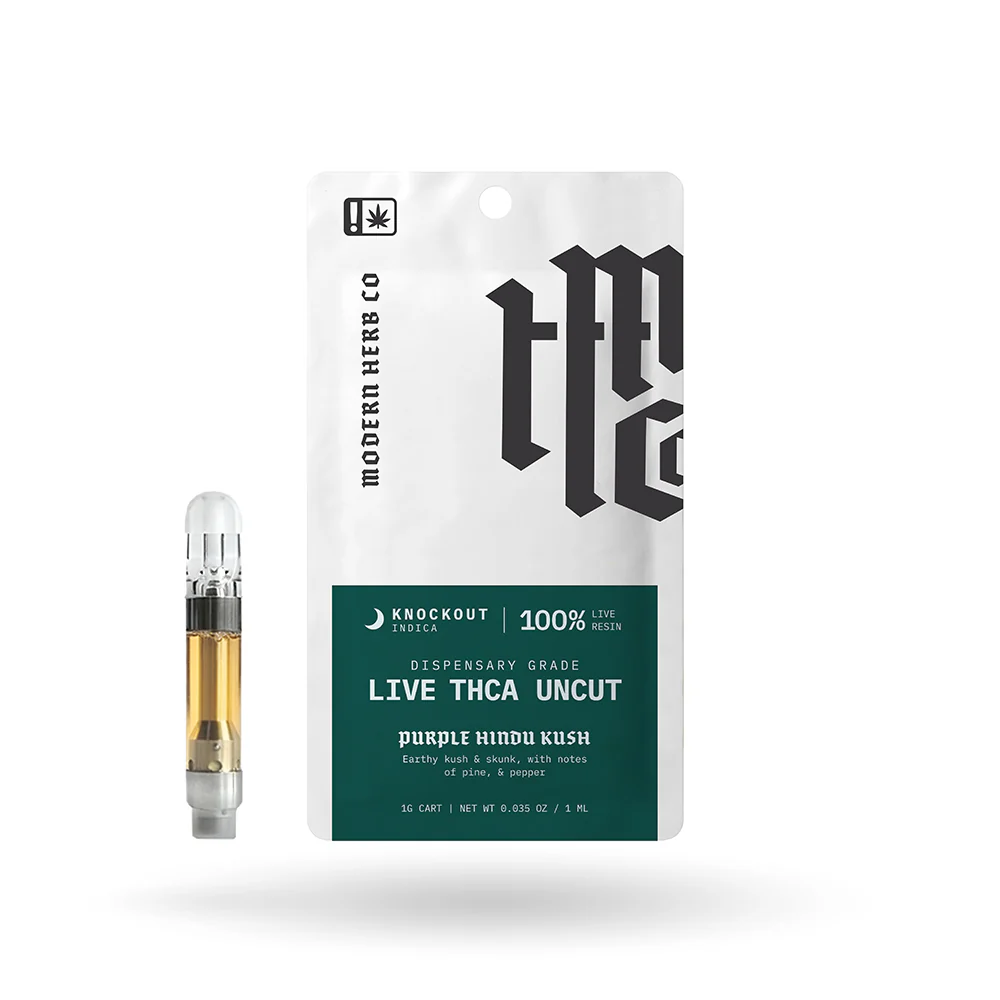
Modern Herb Co.’s vape offerings are made using live resin, offering a single-strain, whole plant experience with a wide range of cannabinoids and terpenes. Their Purple Hindu Kush Live Resin carts offer a substantial dose of CBD alongside an impressive amount of THC to take the edge off.
The majority of the CBD and THC in the cart comes in “acid” form (CBDa and THCa), just like in the cannabis plant, and these get converted to the more well-known forms during vaping. This is great if you’re looking for a full spectrum vaping experience, and the carts also contain CBG, CBC, CBN and CBT to balance out the effects.
The price is also pretty good for a THC-rich cart.

Key Attributes
Even though Primary Jane’s Pure Gold Live Resin carts didn’t quite meet the 80% threshold for a full recommendation, we’re including it as an honorable mention because it’s one of the best alternatives we found in our research.
Primary Jane’s cart offers a solid 800 mg of CBD per cart, alongside a substantial 660 mg CBG to boost the effects and 120 mg of THCa (about 105 mg THC equivalent). The entourage of cannabinoids is rounded out with smaller amounts of CBT, CBC and CBNa. It’s also flower-derived, and even though the most recent batch wasn’t tested for terpenes, older tests confirm myrcene, caryophyllene and others in the mix.
Topping it off, the price per mg is pretty good too.
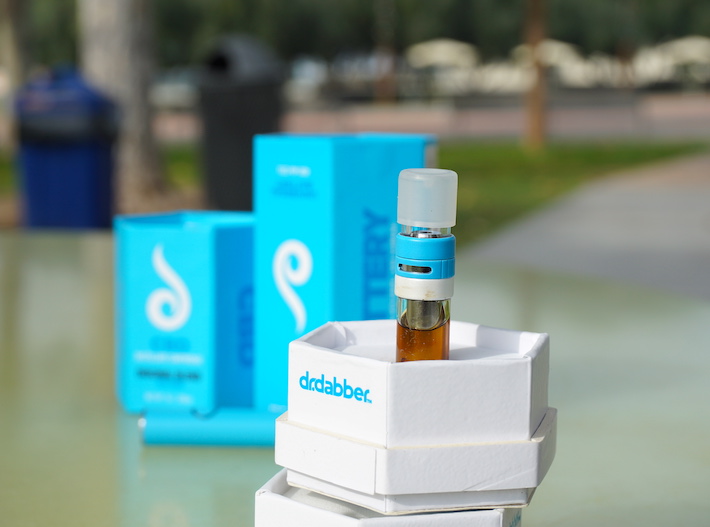
We initially identified 44 CBD vape cartridges that could have made it onto this list. However, most of them didn’t meet some basic requirements we have for any hemp product. The most common problems we encountered were:
After these initial checks, five products made it through to the final scoring stage, including the two CBD vape carts featured above. Aside from these, we scored carts from 3Chi, Secret Nature and Mellow Fellow in full, and all were relatively close to getting a recommendation.
The choice of Primary Jane for the honorable mention mainly came down to CBD:THC ratios. Mellow Fellow was much more HHC-focused than CBD-focused. 3Chi’s cartridge was low in CBD but high in delta-8 THC. Lastly, Secret Nature’s offering was good but scored the lowest on our criteria.
Learn more about how we test every product we recommend.
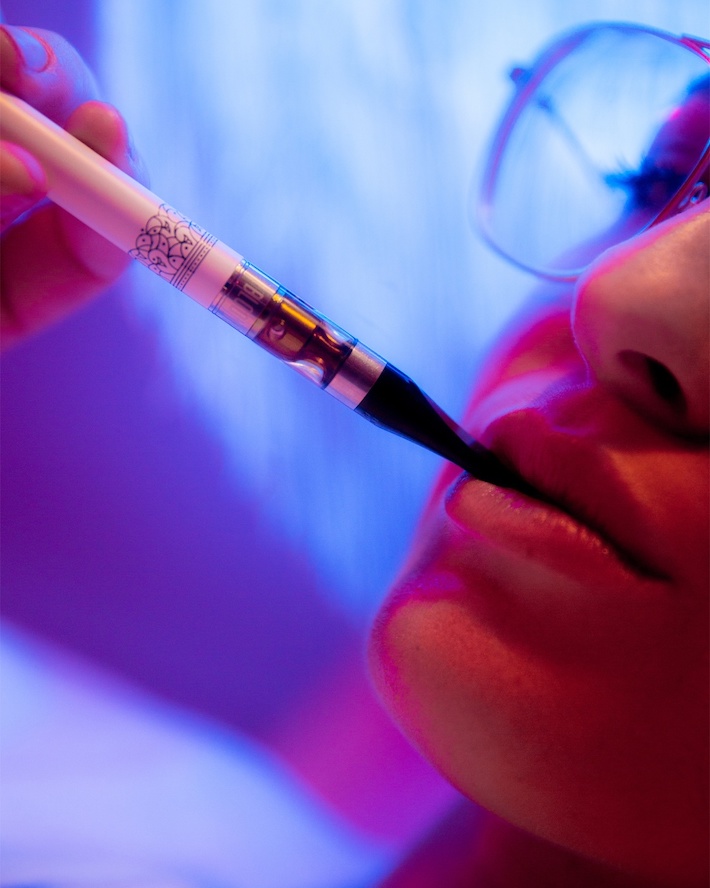
The list above gives you some carefully pre-chosen cartridges that perform well and are loaded with great CBD vape liquid, but what are the things you should keep an eye out for if you’re choosing a cartridge yourself? Is there anything you should avoid? And how long does a cartridge last? Do they have enough THC to get you high? Here’s a run-down of the basics of CBD carts.
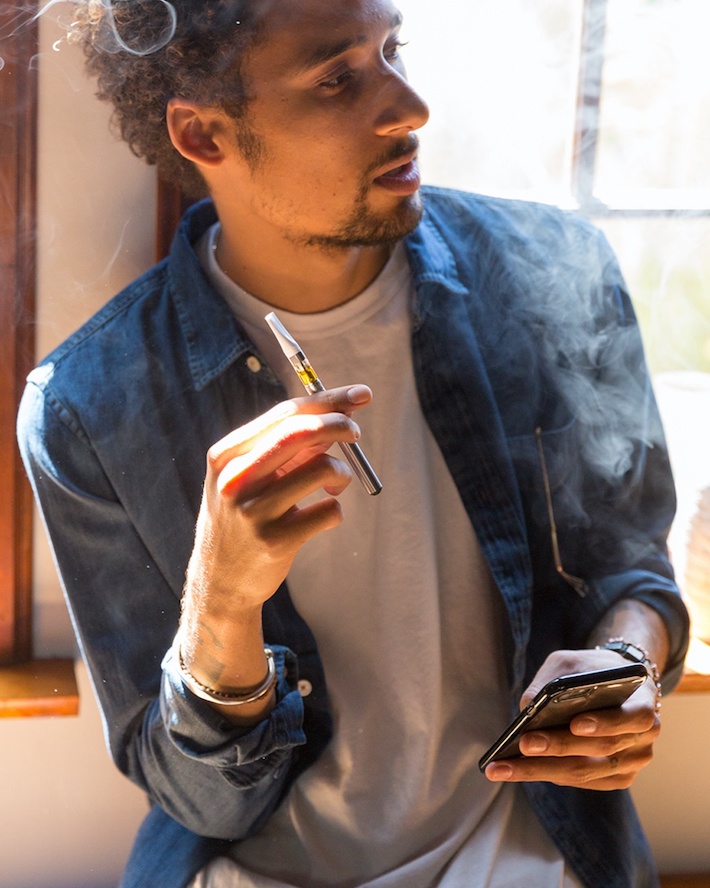
CBD is the main non-psychoactive cannabinoid in the plant, and so CBD cartridges will not get you high. The exception to this is full spectrum cartridges with substantially more than 0.3% THC (in legal states). CBD itself won’t get you high, but delta-9 or delta-8 THC can, as can alternatives like THC-O.
The effects of CBD cartridges are very pleasant, though. Generally, this is described as relaxation or a “blessed out” feeling – it brings about a general calm. This isn’t a CBD cartridge “high,” but if you imagine the sensation but without the euphoria, giggling and kind of out-there creative thinking, you get the idea. Depending on your dose, the precise combination of cannabinoids and your personal reaction, it might also make you feel refreshed, and in larger amounts (and with CBN particularly) it can help you sleep.
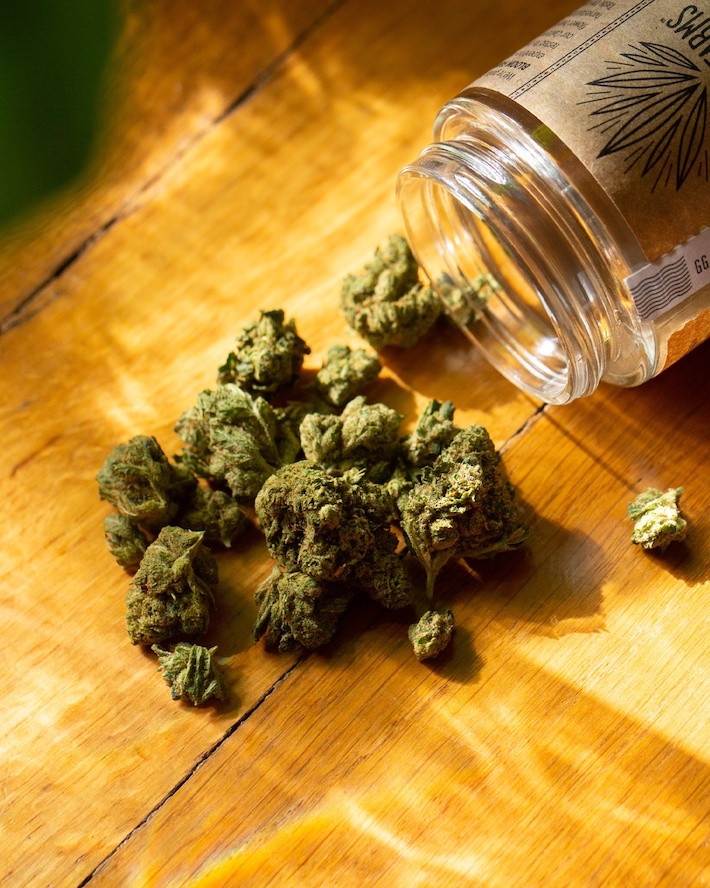
There isn’t much THC in a CBD cartridge. The 2018 Farm Bill limits “hemp” products (like CBD) to 0.3% delta-9 THC. This means in a 1 gram cartridge there will be 3 mg of THC. In contrast, many have 500 mg of CBD, and 10 mg of THC is a standard dose for edibles.
While you could produce a bigger CBD cartridge and have more THC – approaching recreational doses – the concentration is always limited. For edibles this isn’t such a problem because you can easily eat more, but for vaping there is a limit to how quickly you can get through the liquid.
Without going into too much detail, it’s essentially not possible to get high from vaping CBD cartridges because of this. Maybe in some extreme situation and with a lot of willpower it would be possible, but it wouldn’t exactly be easy.
A CBD vape cartridge can cost from $20 or so up to $60, with most falling in the $30 to $40 range. However, cartridges don’t all contain the same amount of CBD, so it’s often better to consider the price per mg of CBD. With this metric, most cartridges fall in the range of $0.05 to $0.20 per mg.
If you’re looking for a cheap CBD cartridge, the cheapest in this list (Plain Jane and JustCBD) cost just $0.04 per mg. This is the equivalent of getting 500 mg of CBD for $20. The most expensive in this list (Cookies CBD) costs approximately $0.18 per mg, which would put 500 mg at $90.
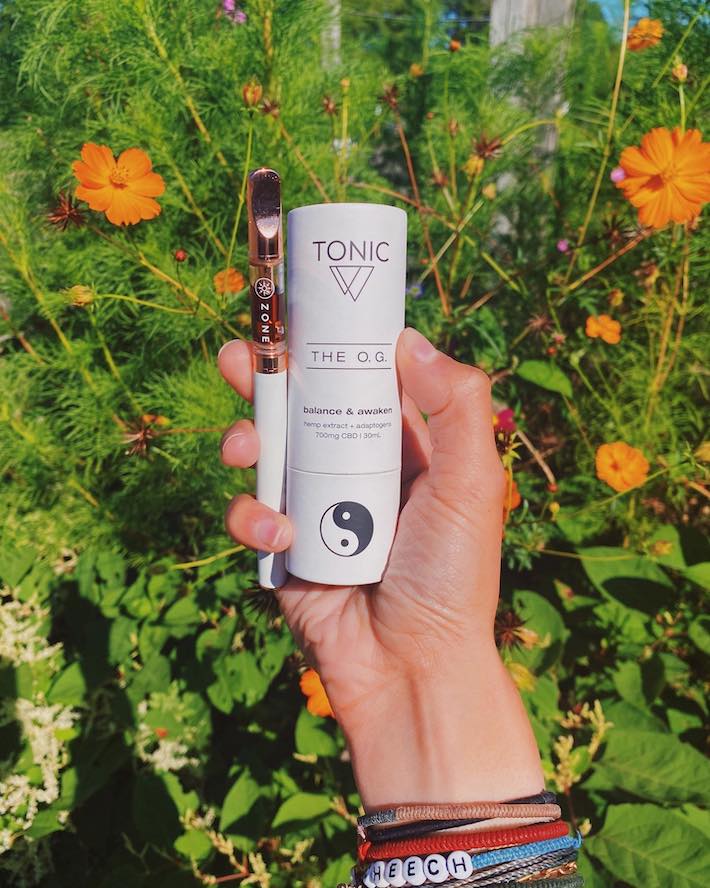
You can buy CBD cartridges online. This is because the 2018 Farm Bill legalized low-THC hemp at the federal level, and CBD is a hemp product. All of the options on this list can be bought online, although you can find them in brick and mortar stores if you prefer.
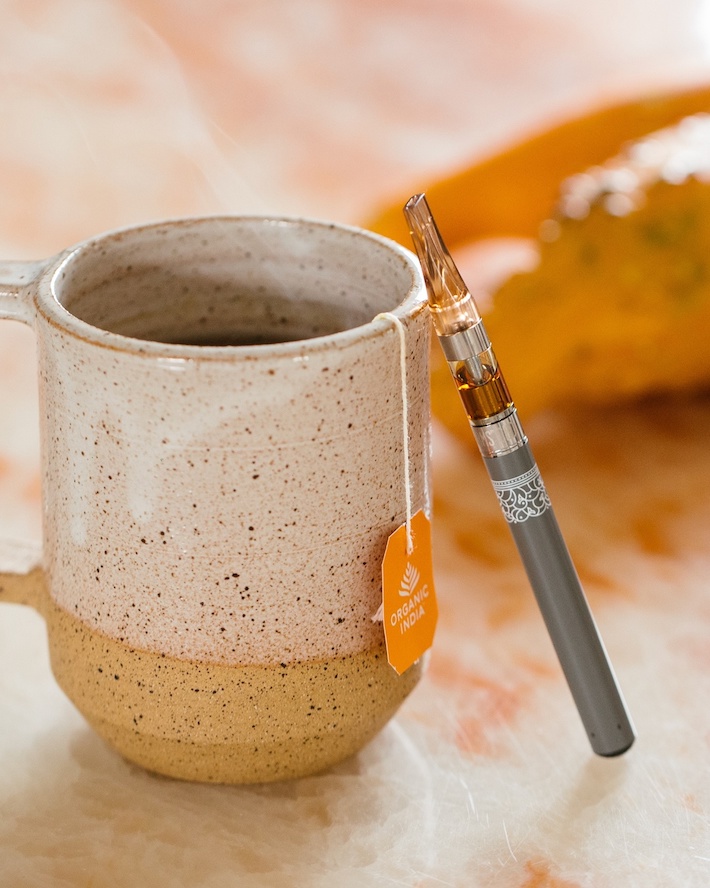
The amount of time a CBD cartridge will last you depends on how much CBD you use per day. The most common daily dose is between 20 and 40 mg. This means that a 500 mg cartridge will last most people somewhere between 12 and 25 days. However, some people (especially with issues such as anxiety) can take much bigger doses, easily one-fifth to half a 500 mg cartridge per day.
If you want to really estimate how long it will last, you’ll need to know roughly how much you use per day. Divide the total amount in a cartridge by this and you can find a result specific to your situation.
Just CBD has the strongest CBD cartridge, with 800 mg of CBD per 1000 mg cartridge, as well as 200 mg of other cannabinoids.
Tonic’s CBD cartridge is the best for anxiety. It contains 600 mg of CBD and is a full-spectrum extraction, bringing on full-body relaxation and effectively easing anxiety.
Whether you’re looking for something earthy and weedy, made with full-spectrum hemp extract and enough terpenes to make someone think you’re smoking a joint, or just something with pure CBD with a simple flavor, there are more than enough good options out there. You might have to experiment a little to find the right cartridge for your preferences. But the industry has grown enough to have something for everyone.
If you aren’t sure or you’re new to CBD, stick to one of the choices above, but if you’ve learned enough already, treat them as suggestions and head off to find your perfect CBD cartridge.
Editor’s note: We updated this list on May 22, 2026, to include all-new product recommendations in line with our Cannabinoid Product Quality Evaluation Framework.
The post The Best CBD Cartridges on the Market Right Now, Based on First-Hand Testing appeared first on CBD Oracle.
Three countries in collapse. Three cannabis economies that survived. What Lebanon, Myanmar and Afghanistan reveal about the plant when the state disappears.
State failure triggers a currency collapse, which destroys the economics of legal agriculture and drives farmers toward the one crop that still generates reliable income. Across Lebanon, Myanmar, and Afghanistan — three nations in varying stages of collapse — cannabis cultivation has emerged as the primary economic lifeline for millions of farming families who have no other viable path to survival.
As such, the cannabis market is still acting as a shelter for millions of people. The Transnational Institute, a drug policy research organization, has documented this dynamic across the Global South, finding that the illegal cannabis market has become a survival economy for millions of people. Researchers at the 2024 Journal of Peasant Studies forum on illicit drug crop economies frame these as livelihoods that offer the possibility of life in capitalist ruins — much like the mushroom economies described in Anna Tsing’s inspiring book. Survival economies, self-organized and community-governed, operating in the vacuum left by invasion and civil war.
The aim of this article is to explore what cannabis looks like when stripped of every regulatory abstraction and reduced to its most fundamental expressions. We are taking three examples from real life: Lebanon, Afghanistan, and Myanmar.
98%
Value lost by the Lebanese pound since the 2019 economic collapse.
40×
Cannabis returns vs. betel nut for farmers in Myanmar’s Sagaing Region.
95%
Drop in Afghan poppy cultivation after the Taliban ban — confirmed by UNODC.
$1.3B
Estimated cost to the Afghan economy from the opium ban, per researcher David Mansfield.
The Bekaa Valley stretches between two mountain ranges in eastern Lebanon, and for roughly a century, it has produced some of the world’s finest hashish. The legendary “Lebanese Red” became a global commodity under the French Mandate in the 1920s, when Greece’s prohibition cut Egypt off from its cannabis supply and production shifted to Lebanon. By the 1930s, French intelligence listed the country’s hashish producers: members of parliament, a finance minister, a former agriculture minister, local notables, and priests. One colonial-era official estimated that 50% of the Lebanese economy depended on hashish.
The Lebanese Civil War (1975–1990) turned the Bekaa into one of the world’s most productive cannabis regions. With state enforcement organs effectively dissolved, cultivation exploded to more than 20,000 hectares by 1983, with hashish occupying 80% of arable land in parts of the valley. Drug revenue reached an estimated $500 million to $1 billion annually, between 20% and 50% of GDP.
After the war ended, U.S.-backed eradication programs briefly cleared the fields, but the promised $300 million in alternative-development funding materialized as a paltry $17 million. The program fizzled by 2002, and cannabis made its comeback. Then, not totally unrelated to the war on drugs, Lebanon’s economy collapsed. Beginning in October 2019, the country experienced what the World Bank called a “deliberate depression” of “unprecedented magnitude.” GDP plummeted from $55 billion in 2018 to roughly $22 billion by 2021. The Lebanese pound lost more than 98% of its value. Poverty surged from 25% to estimates ranging from 44% (World Bank) to 80–90% by broader measures. GDP per capita fell from $8,000 to under $3,000, and Lebanon went from middle-income to lower-income status in eighteen months.
For Bekaa Valley farmers, cannabis resurged as the only rational economic choice. Abu Ali, a 57-year-old who spent three decades growing potatoes near Baalbek, switched to cannabis after the crisis made production costs for legal crops unbearable.
“It’s just less expensive than other crops… and allows you to live with dignity.”
Abu Ali, Bekaa Valley farmer, to AFP, 2021
Deputy Mayor Hussein Shreif of Yammouneh confirmed the trend to the same AFP report: “Many farmers have given up on growing their usual produce because of losses.”
Other human stories are what make Lebanon’s cannabis economy real.
Ali, a 23-year-old mechanical engineering graduate from Yammouneh, completed his degree at the Lebanese University but couldn’t afford a master’s program and couldn’t find work abroad due to the crisis. He returned to his family’s hashish business. “Of course I don’t want to work in it all my life,” he told L’Orient Today.
Mohamed, farming five hectares near Yammouneh, described the situation to the same outlet: “Before, you would sell a kilo of hashish for $1,000 or $1,200. Now a kilo only comes out to $100 or $150.” But even at collapsed prices: “You don’t lose money — it’s the best option available.” That price collapse reveals a painful irony of an economic crisis that drove more farmers into cannabis while simultaneously destroying the crop’s value.
Some farmers, desperate for higher margins, pivoted to manufacturing Captagon, the amphetamine pill flooding the Middle East, as the survival economy cannibalized itself. L’Orient Today documented this shift in detail in 2022.
30,000
Families in the Bekaa Valley directly dependent on cannabis for their income.
40,000+
Arrest warrants hanging over local residents, many drug-related.
An estimated 30,000 families in the Bekaa depend directly on cannabis. More than 40,000 arrest warrants hang over local residents, many drug-related. Hezbollah, the Shia militant and political organization whose recruitment base is centered in the valley, maintains a deliberately ambiguous relationship with the trade. Ghaleb Abu Zeinab, a Hezbollah politburo member, told The Globe and Mail in 2007: “We know about it, but we don’t support or stop it, as it is the responsibility of the government to help these farmers.”
Lebanon became the first Arab country to legalize medical cannabis when parliament passed Law No. 178 in April 2020, projecting $1 billion in annual revenue based on a McKinsey study. But no legal cannabis has been produced in the six years since.
The regulatory authority wasn’t formed until mid-2025, and its first significant act was ordering the confiscation and destruction of the 2025 harvest — because it was grown without licenses that didn’t yet exist. The state legalized cannabis, then spent half a decade failing to implement the law, and then punished farmers for growing what it had promised to permit.
Meanwhile, the Israel-Hezbollah war in 2024 brought airstrikes to the Bekaa Valley itself, emptying villages and disrupting what remained of the agricultural cycle.
1920s
Under the French Mandate, Lebanon becomes a major hashish producer after Greece’s prohibition cuts Egypt off from its cannabis supply. Members of parliament, a finance minister, and priests are listed among producers.
1975–1990
The Lebanese Civil War turns the Bekaa Valley into one of the world’s most productive cannabis regions. Cultivation explodes to 20,000 hectares by 1983, with drug revenue reaching an estimated $500 million to $1 billion annually.
1990s–2002
U.S.-backed eradication programs briefly clear the fields. Of $300 million in promised alternative development funding, only $17 million materializes. The program collapses and cannabis makes its comeback.
October 2019
Lebanon’s economy collapses. The World Bank calls it a “deliberate depression” of unprecedented magnitude. GDP falls from $55 billion to $22 billion by 2021. The Lebanese pound loses more than 98% of its value.
April 2020
Lebanon becomes the first Arab country to legalize medical cannabis, projecting $1 billion in annual revenue. No legal cannabis is produced.
2024
The Israel-Hezbollah war brings airstrikes to the Bekaa Valley, emptying villages and disrupting what remains of the agricultural cycle.
Mid-2025
The regulatory authority finally forms — then orders the confiscation and destruction of the 2025 harvest, because it was grown without licenses that didn’t yet exist.
Myanmar’s drug story has always been mainly about opium. The Golden Triangle — the mountainous border region where Myanmar, Laos, and Thailand converge — has produced narcotics since British colonial administrators ran a government opium monopoly. After independence, the Kuomintang Chinese Nationalist troops who retreated into Shan State in the 1950s became the forebears of the private narcotic armies.
Drug lord Khun Sa commanded 15,000 men and supplied an estimated 70% of heroin consumed in America before surrendering in 1996 to live out his days under military protection in Yangon.
But cannabis is writing a new chapter.
Since the February 2021 military coup — which collapsed the economy by 18% in a single year, sent the kyat plummeting from 1,330 to over 4,500 per dollar, and pushed 77% of households into poverty or near-poverty — cannabis has begun spreading through regions that never previously grew it. The Irrawaddy documented in 2025 how villages in Sagaing Region’s Ayadaw and Myinmu Townships, once known for rice, beans, and betel nut, have converted to cannabis since 2022–23.
A farmer in Myinmu explained the math: “Planting 1,000 betel trees costs around 3 million kyats but the market price is only 20,000 kyats per viss. By contrast, cannabis costs just 3,000–3,500 kyats per plant and a viss of dried leaves and buds can fetch up to 800,000 kyats.”
800,000 vs. 20,000 kyats
The price per viss of cannabis versus betel nut in Myanmar’s Sagaing Region — a 40× difference that has driven farmers away from a crop they’ve grown for generations.
This is the critical distinction between Myanmar and the other two countries. In Lebanon and Afghanistan, cannabis cultivation is centuries old, woven into regional identity. In Myanmar, cannabis is emerging in real time as a survival response to state collapse — spreading through lowland Bamar-majority areas that have no historical connection to drug cultivation.
Sagaing is the heartland of the anti-junta resistance, an area of active civil war where multiple armed groups compete for authority. An Ayadaw Township administration official admitted helplessness: “In 2023, we tried awareness programs and warned of legal action if the farmers continued to grow weed. We also burned fields. But we have not been able to take decisive action because it could cause friction with the groups involved.” The governance vacuum is the key variable.
In Kayah (Karenni) State, the Karenni Nationalities Defence Force has permitted what appears to be Myanmar’s first cannabis dispensary — “De Culture Cannabis” — in territory it controls. Meanwhile, the National Unity Government, the democratic opposition government operating in exile and through resistance networks, has threatened legal consequences for unauthorized cultivation but lacks enforcement capacity. Township People’s Defense Forces and local administrative bodies have taken little to no action against growers. The result is a patchwork of competing authorities, none capable of or interested in enforcement, creating seams that cannabis fills.
Myanmar’s broader drug landscape dwarfs the cannabis story. Opium cultivation hit a 10-year high of 53,100 hectares in 2025, producing roughly 1,010 metric tons — more than double Afghanistan’s output since the Taliban ban. Myanmar is now the world’s primary source of illicit opium. Methamphetamine seizures across Southeast Asia exceeded 236 tons in 2024, most originating from Shan State factories.
The United Wa State Army, a 30,000-strong force that author Patrick Winn called in an interview for The Diplomat “a narco-state” — “I mean that to sound no more pejorative than calling Saudi Arabia a petro-state” — hosts Chinese syndicate-run meth labs in exchange for rent. “Some of its leaders are wanted by the DEA, sure, but they’re running a full-on government with departments of health, agriculture, and finance,” added Winn.
But it is the opium farmer’s experience that most powerfully illustrates the survival-economy dynamic.
Khun Aung Win, a Pa-O ethnic farmer in Shan State, captured it in a single devastating metaphor documented by researcher Patrick Meehan in the Journal of Agrarian Change: “There is now a saying in the villages of Pinlaung. The farmer must plough his land five times: once for the Myanmar Army, once for the armed groups, once for the militias, once for the wealthy in the village, and once, finally, for his family.” That fifth ploughing — the one that feeds their children — is the survival economy in its essence.
Afghanistan is where cannabis originated. Cannabis indica is native to the country’s mountains. Russian botanist Nikolai Vavilov traveled the Kunar River valley in 1924 and identified wild hemp he classified as Cannabis indica f. afghanica — the genetic ancestor of what the world knows as “Afghan Black.” Hashish production using traditional sieving techniques dates to at least the 19th century, and Balkh province’s “Mazari” resin has been considered among the finest in the world for generations.
The Afghanistan Analysts Network has traced this cultural history in detail. UNODC’s sole comprehensive survey, conducted in 2009, found 10,000–24,000 hectares under cultivation across 17 of 34 provinces, producing an estimated 1,500–3,500 tonnes of hashish annually — making Afghanistan the world’s largest hashish producer with yields three times higher per hectare than Morocco.
3×
Afghanistan’s cannabis yields per hectare compared to Morocco — making it the world’s largest hashish producer, per UNODC’s 2009 survey of 17 of 34 provinces.
The Taliban’s relationship with cannabis is a masterclass in pragmatic contradiction. When they first took power in the 1990s, they banned cannabis alongside opium under Sharia law. Yet as the Afghanistan Analysts Network documented, they did not enforce the cannabis ban in major cultivation provinces like Kandahar, Nangarhar, and Balkh. After retaking power in August 2021, they initially left cannabis farmers alone entirely.
Ghulam Ali, growing head-height plants across three hectares outside Kandahar, told AFP: “They are just here across the road. But they don’t want anything from us.”
The 2021 harvest was a bumper crop, but after it came real bans. In April 2022, Supreme Leader Mullah Haibatullah Akhundzada decreed a comprehensive prohibition on all narcotics. In March 2023, a separate fatwa specifically targeted cannabis, timed precisely before planting season. The opium ban proved dramatically effective — a 95% reduction in poppy cultivation, one of the most stunning drug enforcement achievements in history. But the cannabis ban has been far less successful.
Afghanistan Analysts Network sources report cultivation persists in northern provinces, particularly Balkh, Badakhshan, and Takhar, where cannabis’s lower visibility and ease of concealment among other crops make enforcement vastly more difficult than for opium’s conspicuous poppy fields.
$30 a day
What Jan Mohammad, a tenant farmer outside Kandahar, earns filtering cannabis leaves and kneading hashish — five times his income from harvesting wheat.
For Afghan farmers, cannabis is existential. Jan Mohammad, a tenant farmer outside Kandahar profiled by NPR, spends nine hours daily filtering cannabis leaves and kneading residue into hashish, earning $30 per day — five times his wheat-harvesting income. UNODC data show that cannabis generates $3,341–$8,100 net income per hectare, compared to $500–$770 for wheat. Cultivating cannabis costs three times less than opium per hectare while yielding comparable or superior returns.
Azizullah, a farmer in Balkh, told the Institute for War and Peace Reporting:
“The government and NGOs have repeatedly promised assistance to farmers, but this help has never come. Instead, the price of food and other important items has gone up, and this has compelled farmers to go for hashish cultivation.”
The opium ban’s humanitarian consequences frame the cannabis question starkly. David Mansfield, a leading independent researcher on Afghan drug economies who has conducted 17 consecutive growing seasons of fieldwork, estimates the ban cost the Afghan economy $1.3 billion and 450,000 jobs at the farm level alone. With 90% of the population below the poverty line, GDP has contracted by 26% since the takeover, and employment is 58% below pre-2021 levels. The ban on the country’s most lucrative agricultural sector amounts to an economic death sentence for millions. A historical pattern appears to be repeating: in the economies of the region, when opium is suppressed, cannabis surges as a replacement.
After opium eradication in Balkh between 2005 and 2007, cannabis cultivation surged as a substitute.
The comparative view across all three countries reveals patterns that Western legalization debates almost entirely ignore. First, the economic threshold for cannabis becoming a survival crop is remarkably consistent: when legal agriculture yields drop below roughly one-fifth to one-tenth the value of cannabis, farmers switch regardless of legal consequences, moral concerns, or physical danger. In Lebanon, cultivating a tenth of a hectare of cannabis costs $150 versus $3,000 for wheat. In Afghanistan, hashish returns 5 to 10 times the wheat income. In Myanmar, cannabis returns 40 times the price of betel nut. At these ratios, prohibition is economically meaningless.
| Country | Crop abandoned | Cannabis advantage |
|---|---|---|
| Lebanon | Wheat | 10× cheaper to cultivate per 0.1 hectare ($150 vs. $3,000) |
| Afghanistan | Wheat | 5–10× higher net income per hectare ($3,341–$8,100 vs. $500–$770) |
| Myanmar | Betel nut | 40× higher price per viss (800,000 kyats vs. 20,000 kyats) |
Second, all three countries demonstrate that cannabis economies develop their own governance structures. In the Bekaa Valley, powerful family networks and community systems have governed hashish production for generations, setting informal quality standards, mediating disputes, and managing supply chains that move product across borders.
In Myanmar’s Shan State, ethnic armed organizations function as parallel regulatory authorities, taxing and organizing production. In Afghanistan, the opium and cannabis economy is “capitalized into land prices, rental rates, and sharecropping arrangements,” as Mansfield and co-researcher William Byrd have documented — creating a complete informal economic architecture.
Third, alternative development has comprehensively failed. The Transnational Institute has concluded, after reviewing decades of crop-substitution programs, that they cannot succeed in a broader context of ongoing criminalization of cultivators and are chronically underfunded and poorly integrated into poverty reduction. In every case, the programs displace production geographically; they don’t eliminate it.
The Transnational Institute warns that Western legalization, paradoxically, may devastate the very communities that survive on cannabis. Pierre-Arnaud Chouvy, a French geographer studying global cannabis cultivation, warns that when European legalization arrives, traditional producers in Morocco, Lebanon, and elsewhere will see their survival economy seriously contract, if not collapse.
The emerging pattern across legal markets confirms what TNI calls “corporate capture” — large Northern Hemisphere agribusinesses moving aggressively to dominate legal cannabis while regulatory barriers exclude traditional smallholders who lack clean criminal records, capital, or access to licensing systems designed by and for wealthy countries.
The Nigerian cannabis farmers TNI interviewed articulated the fear with blunt clarity: “The big players will make sure that they drive all of the small players out of the market.” As the 2024 Journal of Peasant Studies forum on illicit drug crop economies found, legalization creates new state-sanctioned spaces of opportunity and profit for powerful actors while further marginalizing subsistence growers.
What we know
What we don’t know
The farmers of the Bekaa Valley, Shan State, and Kandahar have turned to what they know. They built in response to collapsing societies, which probably represents the most extensive body of evidence we have about how cannabis economies actually operate when stripped of state infrastructure.
The 228 million cannabis users UNODC counted globally consume a product whose supply chain begins, in significant part, with people like Abu Ali and Ghulam Ali. Those farmers didn’t need licensing commissions to teach them how to grow cannabis. They need the rest of the world to recognize that legalization designed without them will simply replace one form of exclusion with another.
The question for everyone debating regulation in comfortable capitals is whether the legal markets being designed thousands of miles away will have any place for the people who kept the plant alive when no one else would.
This article is reported analysis based on publicly available academic research, institutional reports and on-the-record journalism. High Times does not endorse or encourage illegal activity of any kind.
<p>The post Survival Crop: When Countries Collapse, Cannabis Becomes a Lifeline first appeared on High Times.</p>
A recent update to the Transportation Security Administration’s travel guidance has triggered a fresh round of confusion across the cannabis world. TSA’s “What Can I Bring?” page now lists medical marijuana as permitted in both carry-on and checked bags, subject to “special instructions.” At first glance, that sounds like a major shift. For cannabis patients…
The post Can You Fly From Jamaica to Miami With Medical Ganja? TSA’s New Guidance Raises Bigger Questions. first appeared on .
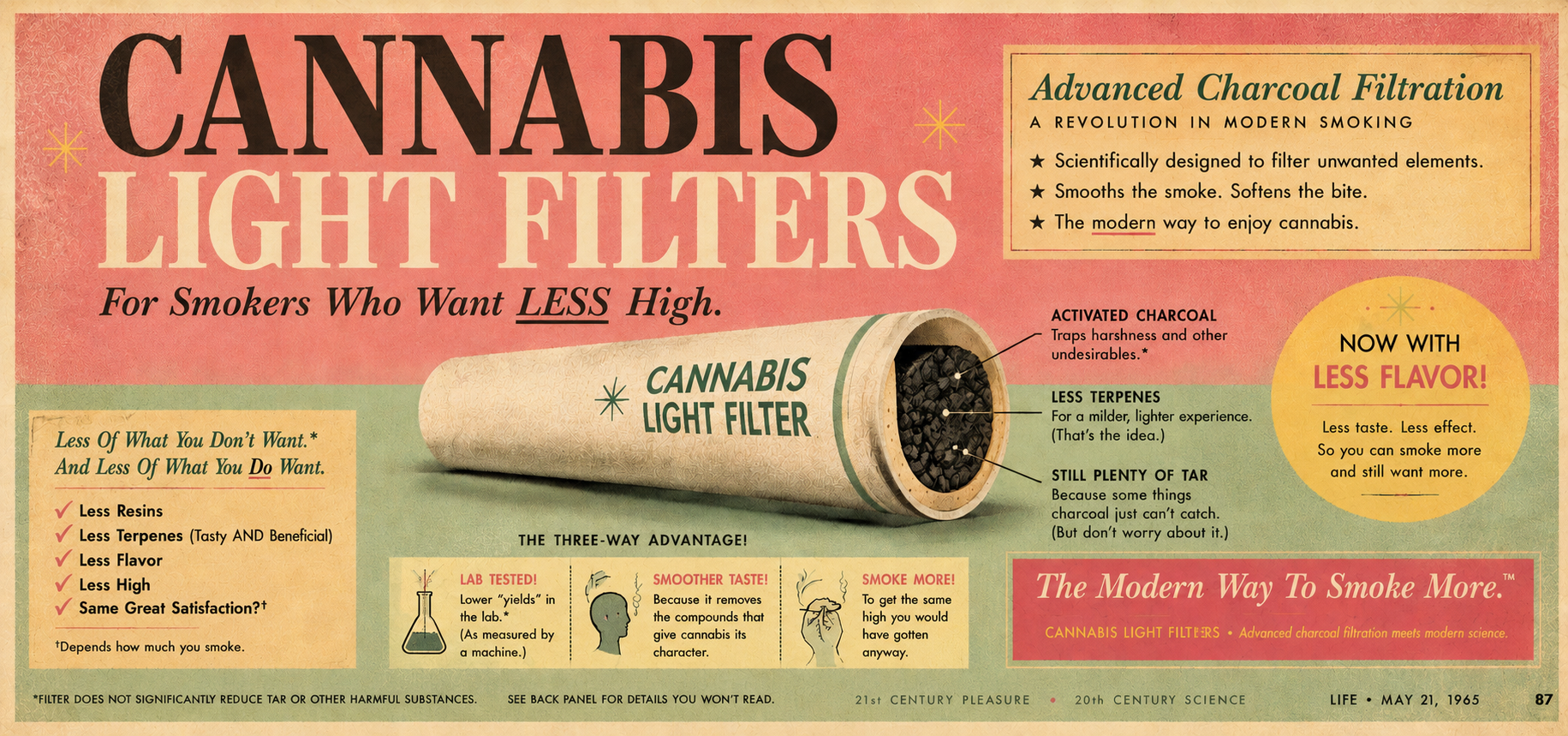

Charcoal joint filters filter out terpenes, which are both tasty and beneficial. They barely reduce the tar. Here’s what nobody’s telling you: take the terpenes out, you get less high. So you smoke more to chase what you lost, and you end up with more tar, not less. Big Tobacco got caught running this same scheme. Watch out for “Light Joints.”
The Short Version
Here’s how charcoal filters actually work. The charcoal grabs the tasty and beneficial compounds coming off your weed: the terpenes that shape the high, the flavor, the smell, everything that makes one strain hit different from another. And here’s the part most people don’t know: terpenes aren’t just flavor. They shape how high you get. The difference between an indica that puts you on the couch and a sativa that fires you up isn’t really about THC content. It’s about terpenes. Take them out and you get less high off the same joint, full stop. You can still get high. Just not as high. The filter doesn’t block the drug. It lowers the ceiling.
Charcoal filters don’t remove every last terpene, of course. But they grab a huge portion of them. Big enough that indoor grow operations commonly run charcoal filters on their exhaust for exactly this reason: to strip the terpenes out of the air and hide the smell, either from the cops or from the neighbors. The same material that scrubs the skunk out of a grow room is the material sitting at the end of your filtered joint.
Quick primer for the people who haven’t been down this rabbit hole. Terpenes are the aromatic oils the cannabis plant produces in the same trichomes that make THC. They’re what gives Sour Diesel its diesel and Blueberry its blueberry. But they do more than smell good. Peer-reviewed research has documented anti-inflammatory effects from myrcene, analgesic effects from beta-caryophyllene and other cannabis terpenes, mood lift from limonene, calming effects from linalool. They also work alongside THC and CBD in what researchers call the entourage effect: the components of the plant amplifying each other. The flavor and the function travel together. Strip one out and you lose the other.
Meanwhile, the filter barely touches the tar, which is the stuff it’s supposedly there to remove in the first place. So you end up with weaker smoke, more tar in your lungs than the marketing implies, and a craving to smoke more weed to chase the high you would have gotten from a plain joint. That’s the whole scam.
Three losses on one purchase. You burn through more weed. You get more tar in your lungs, not less. And you paid for the filter that made you do it.
Big Tobacco ran this exact play for fifty years. They put filters on cigarettes and called them “light” and “low-tar.” In a lab, the cigarettes did test cleaner. In the real world, smokers wanted the same amount of nicotine they were used to, so they smoked harder, longer and more often to get it. By the time the research caught up, the “light” cigarette had been linked to a whole new category of lung cancer, and the marketing language was banned in the United States and forty other countries. Cannabis filters are running the same scheme.
Filtered cigarettes entered the U.S. market on a large scale in the 1950s, after a series of medical studies began linking smoking to lung cancer. Manufacturers responded with cellulose acetate filters and, eventually, with “light” and “low-tar” variants designed to lower the machine-measured yields of tar and nicotine. The first major federal review of these products, the U.S. National Cancer Institute’s Monograph 13, published in 2001, looked at four decades of data and came back with a verdict: lower machine yields did not translate into lower exposure for actual human smokers. The “light” cigarette wasn’t lighter on the lungs. It was lighter on paper.
The reason was a phenomenon researchers had begun documenting in the 1970s, in studies by Michael Russell, Ronald Sutton, and others, called compensatory smoking: when the dose of nicotine per cigarette dropped, smokers (without consciously choosing to) adjusted their behavior to restore it. They took larger puffs, more frequent puffs, longer inhalations. They smoked more cigarettes per day. The behavior was universal among addicted smokers. The 2004 Surgeon General’s report, The Health Consequences of Smoking, reviewed the same literature and arrived at the same conclusion.

Internal tobacco-industry documents, released after the 1998 Master Settlement Agreement, proved that Big Tobacco had known about compensation since the 1970s and kept marketing “light” cigarettes as a reduced-harm product anyway. They knew. They lied. They kept selling. In December 2008, the U.S. Federal Trade Commission formally rescinded its decades-old machine-yield tar measurement (the standardized lab test that produced the “low-tar” numbers on the box), citing the gap between bench-test numbers and real-world exposure. On June 22, 2010, Section 911 of the Family Smoking Prevention and Tobacco Control Act made it federally illegal to use the descriptors “light,” “mild,” “low,” or any similar variant on cigarette labels or advertising in the United States. The European Union had done the same in 2003. Thirty-plus other countries followed.
The harder finding came later. Work by Michael Thun and colleagues at the American Cancer Society, along with subsequent epidemiological studies, has linked the rise of filtered and ventilated cigarettes to the increase of lung adenocarcinoma, a cancer that grows deep in the peripheral lung where unfiltered smoke didn’t normally reach. The mechanism is simple. Smokers pulling harder and deeper to compensate were driving the smoke into parts of the lung that unfiltered smoke never touched. The filter didn’t just fail to reduce harm. It helped redistribute it.
How The Filter Story Played Out
1950s
Filtered cigarettes go mass market after early lung-cancer studies. “Light” and “low-tar” follow.
1970s
Russell, Sutton and others document compensatory smoking. Industry knows. Marketing continues.
2001
NCI Monograph 13 reviews 40 years of data. Lower machine yields didn’t lower human exposure.
2008
FTC rescinds its machine-yield tar measurement. The bench number stops counting.
2010
Section 911 of the Tobacco Control Act bans “light,” “mild,” “low” on U.S. cigarette packaging. EU had banned it in 2003. 30-plus countries followed.
From “healthier alternative” to federally illegal claim in roughly fifty years.
That’s the historical baseline. Filters were marketed as protection, the protection was illusory, the marketing eventually got banned. Now let’s look at what’s happening in cannabis.
Activated carbon is an excellent material for the specific job of removing volatile compounds (gases) from air or water streams by adsorption: the molecules stick to the carbon surface and get pulled out of the airstream. The carbon traps them in a microscopic pore structure with an enormous internal surface area. It’s the same chemistry used everywhere from municipal water treatment to industrial air handling to gas masks. It’s also, as noted, the same chemistry growers rely on to scrub a room of its smell.

A 2018 paper in Chemical Research in Toxicology by Hoffmann and colleagues showed that adding activated charcoal to a cigarette filter removed between 70 and 88 percent of gas-phase free radicals from the smoke. The chemistry is unambiguous when it comes to assessing charcoal as exceptionally efficient at capturing volatile compounds.
In cannabis, the compounds responsible for a strain’s character (the terpenes) are also volatile. Myrcene, limonene, alpha-pinene, linalool, and the dozens of minor terpenes that distinguish one strain from another are exactly the molecular profile activated carbon is designed to capture. Industrial air-handling systems use activated carbon to strip limonene and pinene from exhaust because the material does it efficiently. The chemistry does not change when the carbon is repackaged into a small cylinder at the end of a joint. There’s no way the filter isn’t grabbing most of the terpenes. Period.
Cannabinoids behave differently. Most THC in smoke travels attached to tar droplets, the solid particles in the smoke, rather than as a free gas. Activated carbon is comparatively poor at adsorbing particulate-bound compounds. The result is a lousy kind of filtration: terpenes are stripped heavily, THC moderately, and tar (the substance the filter is being marketed to remove) only modestly.
What The Charcoal Filter Actually Does
Terpenes
Stripped heavily
Volatile compounds. Exactly what activated carbon is designed to capture. The character of the strain leaves through the filter before the smoke reaches your lungs.
THC
Moderately reduced
Mostly travels attached to tar droplets in the particulate phase. Carbon catches some, but not as much as the marketing suggests.
Tar
Barely touched
Particulate. Activated carbon is poor at trapping it. The substance the filter is sold to remove is the one it does least to remove.
Direction of effect based on activated-carbon adsorption chemistry and Hoffmann et al., 2018.
A Note On Mechanism
Not all filters work this way. Cotton, paper and other mechanical filter materials trap particulate matter physically without selectively adsorbing volatile compounds. They are less efficient at removing tar in absolute terms, but they don’t strip terpenes either. The chemistry critique in this piece is specifically about activated carbon’s adsorption mechanism. Different products do different things.
Stripping the terpenes doesn’t just change the smell and taste of the smoke. It changes the high. Smokers consistently report that charcoal-filtered joints feel flatter, less strain-specific, less full-spectrum, even when the THC content is identical. That tracks with the underlying chemistry. You took the active passenger compounds out of the smoke.
Here’s where the math kicks in.
Run the math. Peer-reviewed studies of activated charcoal in cigarette filters (Hoffmann 2018, the 2017 CDC analysis in Regulatory Toxicology and Pharmacology) put the actual tar reduction in the single digits for standard charcoal loadings. Let’s be generous and say the filter cuts tar by 7 percent. Now, say the smoker doesn’t feel as high, so they smoke twice as much to get back to where they were. Multiply it out: 0.93 × 2.0 = 1.86. They just inhaled 86 percent more tar than if they’d smoked a plain joint, burned through twice the weed, and paid for the filter that made all of it happen. The filter made things worse on every single thing it was sold to fix.
Three losses on a single transaction. More tar in your lungs. More weed out of your jar. And you paid for the filter that did it.
The Three-Way Loser
One transaction. Three losses.
Loss 1
More tar inhaled
Compensation drives total exposure up, not down. The bench-test reduction reverses in the real world.
Loss 2
More weed burned
To chase the same high, you smoke more flower. Faster jar, higher monthly spend.
Loss 3
You paid for the filter
Filters carry a price. You bought the device that produced the first two losses.
The exact percentages will vary with the specific filter and the specific user. What doesn’t vary is the direction: compensation eroding or reversing the bench-test reduction. That’s what the tobacco literature established beyond reasonable scientific dispute. And it’s what the chemistry of activated carbon on volatile compounds predicts will happen with cannabis.

So, the chemistry and the consumer experience point in a familiar direction. We covered this from the consumer side earlier this year. This piece is the science underneath it.
Here’s the part nobody selling you a filter wants to say out loud. The real fix is to smoke less to begin with. Take smaller hits. Use less flower. You get to the same place without the filter, without the extra tar, and without the extra spend. The filter solves a problem you can solve for free.
Nobody’s run the cannabis-specific study yet. There’s no large peer-reviewed paper measuring how stoners adjust their habits with charcoal filters versus plain joints. That study should happen. Until it does, the case rests on three things: the established adsorption chemistry of activated carbon on volatile compounds, four decades of tobacco compensation literature, and the basic arithmetic of dose titration. The data is already in. Big Tobacco collected it. The cost was measured in lungs.
The Bottom Line
Tobacco already ran the experiment.
We don’t need to run it again.
Fifty years. Forty countries. One verdict.
PS: Big Tobacco used to market charcoal filters, too. Lark, Tareyton, and a string of “high-filtration” cigarettes through the ’60s and ’70s leaned on charcoal as the proof of concept that the new filters were safer. The marketing got banned along with the rest of it.
Disclaimer: This article is based on publicly available scientific literature and does not reference, identify, or make claims about any specific manufacturer or product brand. The views, interpretations, and all conclusions are presented as research-based analysis of available data and the author’s opinion. This information should not be interpreted as definitive conclusions or a rejection of established scientific consensus, particularly as science is an evolving process. Nothing in this article should be taken as professional, medical, legal or policy advice. Readers should consult the original sources and, where appropriate, qualified professionals before making decisions based on the information presented.
If you present us with bona fide test results or peer-reviewed information that disputes what we have found, we will gladly publish the corrections or adjust the article accordingly. Our goal is to teach the truth to our community, and based on the published science, it does appear factually correct that activated charcoal filters do not significantly reduce tar in smoke, though we see instances of sellers claiming otherwise. Reach us at 420@hightimes.com with any corrections, additions, or anything you believe we got wrong, and thank you for being part of our community.
<p>The post Are Joint Filters Making You Inhale 86% More Tar? Science Says You’re Being Scammed 3 Different Ways By An Old Big Tobacco Trick. first appeared on High Times.</p>
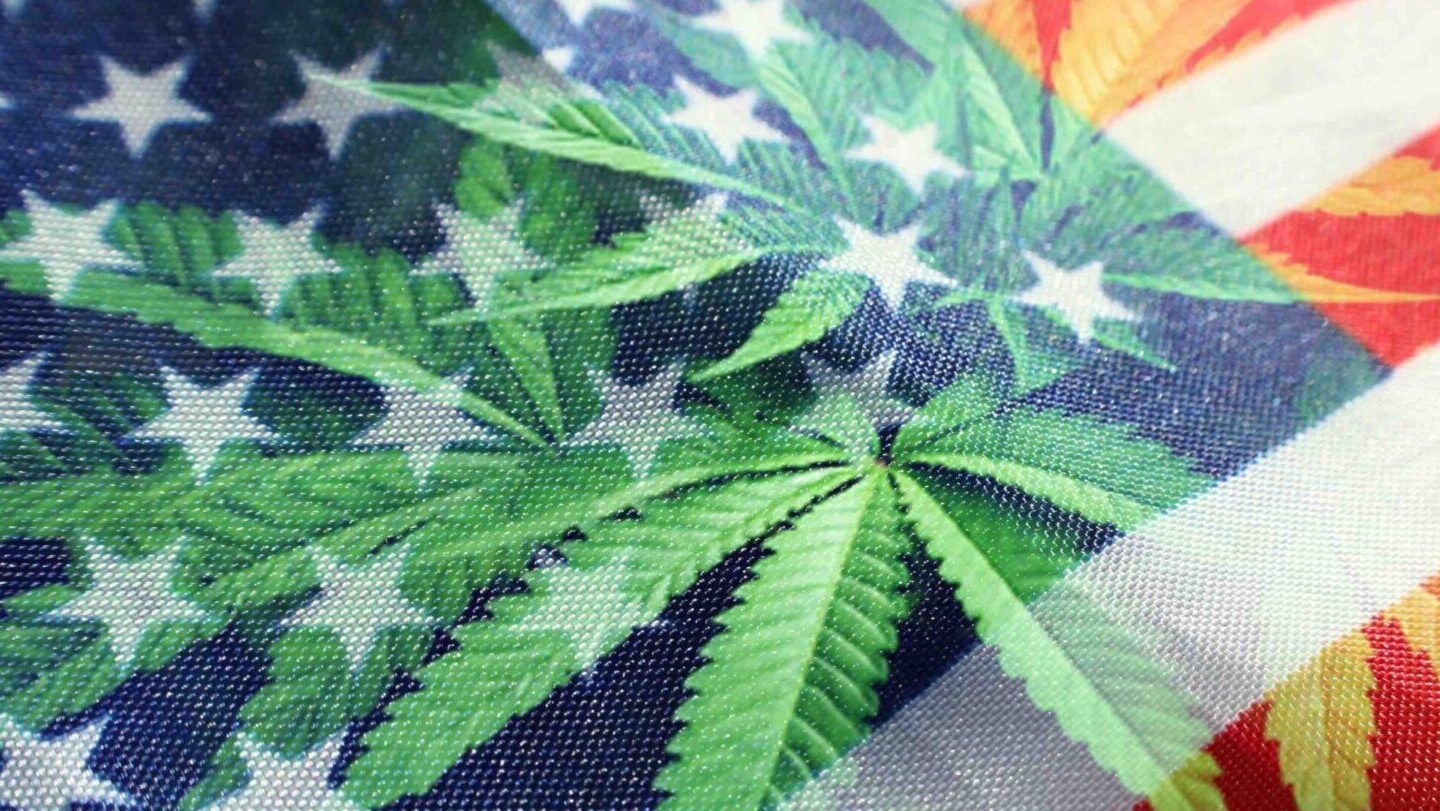
The Acting Attorney General is getting the ball rolling on the rescheduling of cannabis from Schedule 1 to Schedule 3, earning praise from the cannabis industry.
The post Department of Justice makes good on Trump’s rescheduling order appeared first on Leafly.
Jamaica has always had ganja. Now it has the mushrooms too — and a growing number of retreats are finally putting them together.
I’m taking a massive bong rip in the middle of a group sesh when a cop suddenly shows up unannounced right behind me. Alarm bells go off – the last time something like this happened, I ended up in the back of a police cruiser staring down any number of potential unsavory outcomes.
Except that we’re in Jamaica, and the cop is coming to drop in on his friend Wabba, owner of the joint and master traditional steam chalice packer.
This time it’s different. Instead of bringing the weight of the drug war down upon me, the cop is offering a fist bump while making the rounds to converse with the various locals sitting in on our sesh. I exhale a plume of vapor and relax my shoulders before passing the chalice to the left – never, ever pass it to the right in accordance with local custom.
Welcome to Wabba’s Weed Adventure, a generations-old cannabis farm and tourist experience just outside of Negril, Jamaica. In late October 2025, Jamaica was struck by Hurricane Melissa — a Category 5 storm and the strongest hurricane ever to make landfall in the country’s recorded history — causing extensive damage to island infrastructure and crops. Coconut trees were ripped from their foundations, and whole ganja farms were uprooted and blown into oblivion. But like the resilient character of the Jamaican people, the cannabis operation at Wabba’s has rebounded and is thriving again.
Today, we’re touring a field of ‘Wabba’s Purple’ plants in full bloom. Our group has traveled from different corners of the United States to experience this farm tour as an added feature of a psilocybin mushroom retreat, and for several present, it’s the first time they’ve ever seen a cannabis grow operation. Cannabis tourism is a major draw in Jamaica, as it is increasingly so elsewhere around the world. Globally, the cannabis tourism market was estimated to generate more than $17 billion annually in 2022 and could surpass $23 billion by 2030 as legalization expands.
Jamaica is particularly well-positioned to fuse this growing market niche with a related but typically entirely separate space that’s also on the rise: psychedelic tourism.
Over the last decade, Jamaica has established itself as a frontrunner in the psilocybin mushroom tourism industry, thanks to a favorable regulatory environment in which mushrooms were never added to the list of controlled substances. While the active compounds of psilocybin and psilocin were added to the island’s list of banned substances on the heels of the United States’ War on Drugs, there was no inclusion of psilocybin-containing mushrooms themselves. As such, this loophole has given rise to a robust psychedelic retreat industry in recent years to accommodate the growing interest among people willing to travel internationally to access them in a favorable jurisdiction.
For a growing number of people, the question becomes why no one has thought to combine cannabis and psychedelic tourism on the island into one offering. Andy Sudbrock of Sacred Path retreats offers an insight into how unique the experience can be.
“The beauty of holding a mushroom retreat in Jamaica is that on the integration days we have the option to experience something as unique as a guided cannabis farm tour. Diving into the local culture and forming unique and fun memories while in the neuroplastic state can help rewire the brain for adventure, fun, and all the beautiful things in life that this country has to offer.”
Ironically, the cultural stigmas afforded to both cannabis and mushrooms in different cultures both play into the limitations surrounding a combined cannabis and psychedelic tourism sector in Jamaica. Though cannabis is largely viewed as a medicine by locals within Jamaica, it has largely been excluded from emergent psychedelic therapy protocols, champions of which are still aiming to overcome the cultural stigmas associated with the hippy era of the 1960s to be embraced by mainstream medicine as a legitimate practice.
As someone who has been part of the psychedelic industry rollout for some years now, there is a growing sense among practitioners and advocates that the psychedelic industry should not repeat the mistakes made in the rollout of the cannabis industry. From this vantage point, cannabis tourism in Jamaica is still largely viewed as a party favor disconnected from the more serious emergence of a regulated psychedelic medicine framework.
Conversely, while psilocybin mushrooms have long been available in the country, there is very little homegrown psychedelic culture or tradition as it relates to their use by locals. Some locals speculate that one of the reasons for this may be the colonization and Christianization of the Jamaican people, such that mushrooms are viewed with suspicion as being demonic or associated with ghosts. An example of this is in the use of the phrase ‘Duppy Umbrella‘ to describe mushrooms, or ‘ghost umbrellas’. Yet despite locals’ aversion to mushrooms, the growth of the psilocybin mushroom tourism industry continues to attract economic opportunity to the island and, in so doing, create a level of social acceptance of the custom among a growing number of Jamaicans.

For years, the landmark institution of Tedd’s in the resort town of Negril stood as the singular public-facing beacon to Jamaican mushroom tourism. Tedd was the local ‘mushroom man’ who served psilocybin mushroom tea out of a wooden shack near the center of town. Today, there are several well-known psilocybin mushroom retreat operations on the island, including Mycomeditations, which has facilitated retreats for over 2,000 guests, and Marley One Wellness Retreats, run by the Marley family.
While the mushroom tourism industry in Jamaica has so far been geared towards psychedelic therapy protocols that largely exclude cannabis, a fresh outlook on possibilities is growing alongside the wellness tourism space at large on the island. The Laughter Is Medicine retreat that launched at Coral Cove Wellness Resort signaled a departure from having to choose between cannabis and psychedelic tourism by combining both into one offering.
Weed hasn’t always been legal in Jamaica. It was first brought over from India in the 1850s by indentured servants during British colonial rule, and the ideal cultivation climate and adoption of ganja use by locals lent to a homegrown Jamaican cannabis trade in the ensuing years. Though widely used across the island, cannabis use was criminalized for much of the country’s history. In 2015, possession of small amounts was decriminalized — up to two ounces is now a ticketable offense rather than a criminal one — and though the regulated industry remains technically limited to a medical framework, tourist offerings like Wabba’s allow for personal use by people coming on tours of the farm. As both the cannabis and psychedelic tourism industries continue to grow in Jamaica, there is ample room for each of these economic pillars to reinforce each other.
Back on Wabba’s farm, spirits are high – pun intended. The damage from the hurricane is still evident in the region, yet the prize ganja crops on site are growing stronger and more abundantly than ever before. Groups of tourists are back, and the smell of sticky-sweet cannabis vapor covers the scene. The other tourists and I are still smiling from our two mushroom experiences during the retreat earlier in the week, and the steam chalice ceremony is helping us end our time together on a truly high note. Wabba packs another oversized load of purple flower into the calabash steam chalice chamber and begins to sing the chorus of Bob Marley’s iconic song “‘Don’t worry about a thing…’cuz every little thing…is gonna be alright!”
Photos courtesy of Dennis Walker.
<p>The post The Holy Trinity: Ganja, Mushrooms, and a Steam Chalice in Jamaica first appeared on High Times.</p>







We use cookies to improve your experience on our site. By using our site, you consent to cookies.
Manage your cookie preferences below:
Essential cookies enable basic functions and are necessary for the proper function of the website.
Drag & drop or click to select
JPEG, PNG, GIF, WebP, MP4, WebM · Images max 30 MB · Videos max 100 MB