Missouri Marijuana Microbusinesses Begin First Crop Harvests Amid Struggle To Succeed

Here’s Why Many Cops Support Trump’s Marijuana Rescheduling Move (Op-Ed)


Here’s Why Many Cops Support Trump’s Marijuana Rescheduling Move (Op-Ed)

“Every hour an officer spends on a simple marijuana case is an hour not spent investigating violent crime, stopping human trafficking, or getting fentanyl off the streets.”

By Gary Wiegert, former St. Louis police sergeant via Missouri Independent

I dedicated decades of my life to helping keep St. Louis safe.

As a former cop, I know how hard it is to do that with limited resources—we can’t be everywhere at once or prevent every crime. How we prioritize our time and resources matters. That’s why many police chiefs, sheriffs and prosecutors across the country support President Donald Trump’s decision to change how cannabis is classified.

For over 50 years, marijuana has been listed as a Schedule I drug, the same category as heroin. That classification means the federal government considers it to have no medical value and a high potential for abuse.

But everyone knows that’s simply not true anymore, including cops who have been forced to navigate conflicting federal, state and local laws. Millions of Americans use it legally under state law every single day because 38 states have legalized cannabis in some form.

This disconnect between federal and state law isn’t just a technicality. It creates real problems for law enforcement.

Every hour an officer spends on a simple marijuana case is an hour not spent investigating violent crime, stopping human trafficking, or getting fentanyl off the streets.

Consider these stats from the Law Enforcement Action Partnership: “Of the 11.8 million arrests in the United States for drug-related offenses since 2011, over 80 percent involved simple possession. Arrests for simple possession of cannabis comprise approximately 35 percent of all drug arrests and 44 percent of drug possession arrests. An astounding 16.5 percent of all arrests in the United States since 2011 were for simple possession of cannabis.”

Does that really seem like the best use of cops’ time? Wouldn’t you rather have law enforcement focusing on real threats from violent crime and drugs like fentanyl? Rescheduling would help both federal and state law enforcement work together on priority threats that genuinely harm our communities, including illegal grow operations run by criminal enterprises.

Here’s what we’re seeing on the ground: when you have conflicting federal and state laws, you create space for criminals to operate. Unlicensed cannabis operations—some tied to organized crime—are popping up in states like California and Oklahoma. These outfits don’t follow any safety standards, don’t pay taxes and don’t care about keeping products away from kids.

Legal, regulated cannabis businesses struggle to compete when they’re hit with crushing federal tax burdens while illegal operators face no oversight at all. Under current law, state-legal cannabis companies can’t deduct normal business expenses on their federal taxes, something every other legitimate business can do. This puts them at a massive disadvantage and pushes consumers toward the unregulated market we’re trying to shut down.

Moving cannabis to Schedule III—the category for substances with accepted medical use and lower abuse potential—would let legal businesses operate fairly, which means more resources for regulation and enforcement where it actually matters.

We’re not talking about legalizing marijuana at the federal level. Schedule III substances are still controlled. But the change would acknowledge what doctors, researchers and patients already know: cannabis has legitimate medical uses and shouldn’t be treated like heroin or other dangerous Schedule I drugs.

For many people in law enforcement, this isn’t just about public safety. This issue hits close to home for many cops, particularly those who have served our country in the military. Research shows that rates of PTSD among police officers and other first responders can be as much as five times greater than the general population.

Cannabis-based treatments could help, but current federal restrictions make access difficult—especially for active-duty military and federal employees. Rescheduling wouldn’t solve all these problems overnight, but it’s a necessary step toward sensible policy that serves both public safety and the people who dedicate their lives to protecting others.

Supporting cannabis rescheduling isn’t about being pro-marijuana or anti-marijuana. It’s about recognizing that our current approach isn’t working. The federal-state conflict undermines law enforcement effectiveness, props up criminal markets and prevents us from focusing resources where they’re needed most. That’s why Law Enforcement Action Partnership and Law Enforcement Leaders both officially support rescheduling.

We can regulate cannabis responsibly, just like we regulate alcohol and prescription medications. We can research its effects and uses scientifically. We can create clear standards and oversight. And we can do all of this while keeping communities safe—probably safer than they are now.

After years of enforcing marijuana prohibition, many of us in law enforcement have reached the same conclusion: it’s time for federal policy to catch up with reality. Rescheduling to Schedule III is a practical, evidence-based step that will make our jobs easier and our communities safer.

That’s not politics. That’s just good policing.

Gary Wiegert was a sergeant with the St. Louis Metropolitan Police Department from 1980 to 2015.

This piece was first published by Missouri Independent.

The post Here’s Why Many Cops Support Trump’s Marijuana Rescheduling Move (Op-Ed) appeared first on Marijuana Moment.

Source link

Canopy Growth Logo

Canopy Growth

Canopy Growth

Canopy Growth Corporation

Canopy Groth Corp. is a Canadian cannabis company operating medical and adult-use businesses across Canada, Europe, and Australia, with strategic, non-controlling interests positioning the company for future participation in the U.S. market.

Canopy Growth Logo

Canopy Growth Hero Image

Partner Content

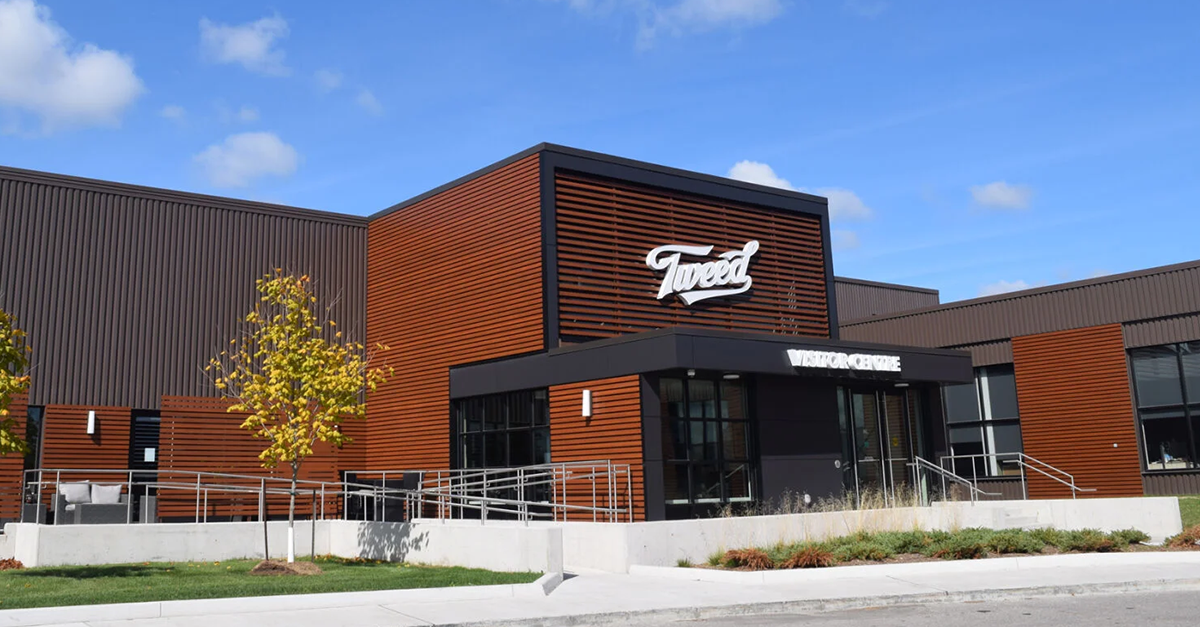
Canopy Growth Corporation is a publicly traded cannabis company headquartered in Smiths Falls, Ontario, with shares listed on the Toronto Stock Exchange and Nasdaq. Founded in 2013 as Tweed Marijuana Inc., the company rebranded to Canopy Growth in 2015 following a merger with Bedrocan Canada. Canopy Growth became the first federally regulated cannabis producer to trade on the New York Stock Exchange in 2018.

The company operates through multiple segments including Canadian cannabis, international medical cannabis, and Storz & Bickel vaporizers. Canopy Growth’s brand portfolio includes Tweed, one of the most recognized cannabis brands globally; 7ACRES, offering premium cannabis products; DOJA, a British Columbia-based craft flower brand; Deep Space, known for high-potency products and beverages; Claybourne, featuring infused pre-rolls and vapes; Spectrum Therapeutics, serving medical patients; and Storz & Bickel, a category-defining vaporizer brand.

Canopy Growth serves medical cannabis patients globally with operations in Canada, Germany, Poland, and Australia. The company maintains a non-controlling interest in Canopy USA, which includes ownership of Acreage Holdings, Wana edibles brand, and Jetty Extracts. Through strategic restructuring and focused product innovation, Canopy Growth continues to position itself in key cannabis markets worldwide.

/* Hide default post title */
h1.entry-title {
display: none !important;
}

/* Full-bleed hero image section */
.cover-feature .hero-image-container {
width: 100vw;
position: relative;
left: 50%;
transform: translateX(-50%);
margin: 0;
overflow: hidden;
}

.td-post-content .cover-feature .hero-image-container,
.container .cover-feature .hero-image-container {
max-width: 100vw !important;
width: 100vw !important;
margin: 0 auto !important;
}

/* Hide author, date, and meta */
.byline,
.byline-block,
.byline-author,
.byline-detail,
.td-post-author-name,
.td-post-date,
.td-post-meta,
.entry-meta {
display: none !important;
margin: 0 !important;
padding: 0 !important;
height: 0 !important;
overflow: hidden !important;
}

/* Hide category label */
.td-post-category,
.td-category,
.td-post-header .td-post-category,
.td-post-header .td-category {
display: none !important;
margin: 0 !important;
padding: 0 !important;
height: 0 !important;
overflow: hidden !important;
}

/* Hide theme featured image */
.td-post-featured-image,
.wp-post-image,
.post-thumbnail,
.td-post-header .entry-thumb,
.td-post-header img.wp-post-image,
.td-post-header .td-post-featured-image img,
.entry-featured-image,
.featured-media {
display: none !important;
height: 0 !important;
margin: 0 !important;
padding: 0 !important;
overflow: hidden !important;
}

/* Hide inline ads and related content */
.td-a-rec,
.td-post-content .td-a-rec,
.td-a-rec-id-content_inline,
.td-a-rec-id-content_bottom,
.td-a-rec-id-content_after,
.td_block_related_posts,
.td-post-content .td-a-rec-container,
.td-a-rec-container,
.advertisement,
.td_block_ad_box,
.td-related-title,
.td-post-related,
.td-post-next-prev,
.td-related-bottom {
display: none !important;
height: 0 !important;
margin: 0 !important;
padding: 0 !important;
overflow: hidden !important;
}

/* ✅ FIX: Remove rogue white spacer ABOVE footer only */
.td-main-content-wrap + div:not([class]) {
display: none !important;
height: 0 !important;
margin: 0 !important;
padding: 0 !important;
overflow: hidden !important;
}

/* Prevent horizontal scroll */
html,
body {
overflow-x: hidden;
}
.tdc-row[style*=”height:50px”],
.tdc-row > .vc_column[style*=”height:50px”] {
height: 0 !important;
margin: 0 !important;
padding: 0 !important;
overflow: hidden !important;
display: none !important;
}
.vc_column.tdi_27.wpb_column.vc_column_container.tdc-column.td-pb-span12 {
display: none !important;
height: 0 !important;
margin: 0 !important;
padding: 0 !important;
overflow: hidden !important;
}


Source link

CBD in Japan? Can You Have It? Use It? - 0% Tolerance Means What?

CBD in Japan? Can You Have It? Use It? – 0% Tolerance Means What?

CBD in Japan? Can You Have It? Use It? – 0% Tolerance Means What?

However, while marijuana and psychedelics are absolutely illegal in Japan, the non-psychoactive compound cannabidiol (CBD) is legal. That said, regulations of CBD are stricter compared to western nations where the legal marijuana market is already mature, or Japan’s Asian neighbor, Thailand. In the United States and in other western nations, CBD with trace amounts of THC, such as 0.3% is allowed, only CBD with 0% THC is legal in Japan.

Source link

Cannacurio #98: 2024 Q2 Licensing Round-Up

Cannacurio #98: 2024 Q2 Licensing Round-Up | Cannabiz Media

Cannacurio #98: 2024 Q2 Licensing Round-Up | Cannabiz Media

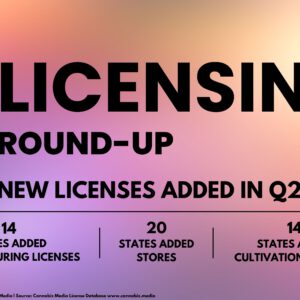
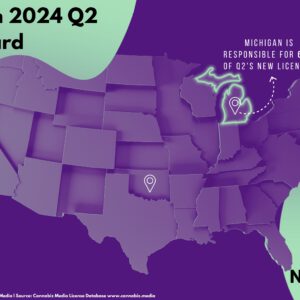
We are past the midpoint of 2024 and it is time to review which states have added and dropped licenses in the second quarter. In our Q1 review, we highlighted the states that were accelerating their rollouts or trying to add an adult use program to a medical one. However, in Q2 we were inundated with programs in turmoil… © CNB Media LLC dba Cannabiz Media

Source link

Cannacurio Podcast Episode 65 with Guillermo Rodriguez

Cannacurio Podcast Episode 65 with Guillermo Rodriguez | Cannabiz Media

Cannacurio Podcast Episode 65 with Guillermo Rodriguez | Cannabiz Media

On this episode of the Cannacurio podcast, host Ed Keating interviews Guillermo Rodriguez, a Virtual CFO specializing in the cannabis industry. They discuss various topics including the roles and benefits of a Virtual CFO, the challenges of managing cash flow, the impact of 280E, and so much more! © CNB Media LLC dba Cannabiz Media

Source link

CBD Amplifies the Effects of THC Claims New Medical Study

CBD Amplifies the Effects of THC Claims New Medical Study

CBD Amplifies the Effects of THC Claims New Medical Study

A recent study published in the journal Clinical Pharmacology and Therapeutics is challenging this long-held belief. Contrary to popular opinion, the research suggests that CBD may actually intensify the effects of THC, not dampen them. This revelation is sending ripples through the cannabis community and forcing us to reconsider our understanding of how these cannabinoids interact.

Source link

Turning Point Brands Logo

Turning Point Brands

Turning Point Brands

Turning Point Brands

Turning Point Brands is a U.S.-based consumer products company focused on branded tobacco, nicotine, and smoking-accessory categories, with diversified distribution across mass retail, specialty, and alternative channels.

Turning Point Brands Logo

Turning Point Brands Hero Image

Partner Content

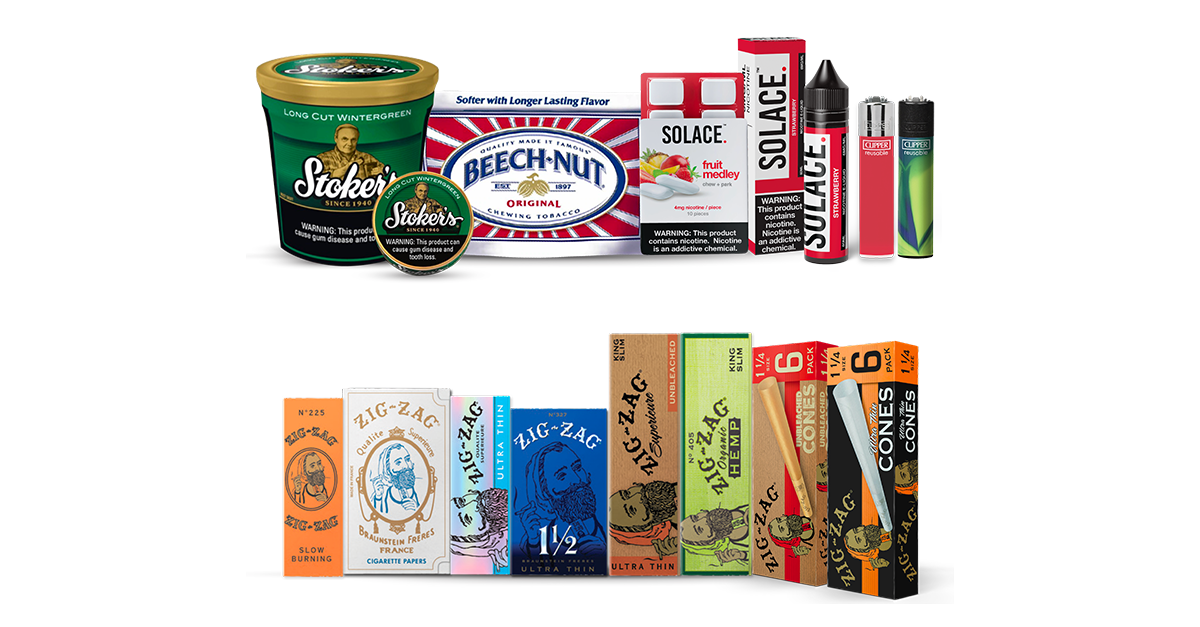
Turning Point Brands, Inc. is a publicly traded consumer products company headquartered in Louisville, Kentucky, and listed on the New York Stock Exchange. Founded in 2004, the company manufactures, markets, and distributes branded consumer products with active ingredients through two primary segments: Zig-Zag Products and Stoker’s Products.

The Zig-Zag Products segment features the world-famous Zig-Zag brand, established in 1879 and recognized as the leading premium rolling paper in the United States and Canada. The brand’s portfolio includes rolling papers, cigar wraps, pre-rolled cones, tubes, finished cigars, and cannabis accessories such as grinders and rolling tips. In 2022, the company secured exclusive U.S. and Canadian distribution rights for CLIPPER lighters, the world’s leading reusable lighter brand.

The Stoker’s Products segment encompasses moist snuff and loose-leaf chewing tobacco products under brands including Stoker’s, Beech-Nut, Durango, Trophy, and Wind River. Stoker’s, with heritage dating to 1940, competes strongly in the chewing tobacco segment.

Turning Point Brands distributes its products through over 215,000 retail outlets across North America, including convenience stores, tobacco outlets, and mass merchandisers. The company has also made strategic investments in cannabis-adjacent businesses, including dosist, Old Pal, and Docklight Brands (Bob Marley cannabis products), positioning itself for growth in the evolving cannabis market.

Affiliated Products

/* Hide default post title */
h1.entry-title {
display: none !important;
}

/* Full-bleed hero image section */
.cover-feature .hero-image-container {
width: 100vw;
position: relative;
left: 50%;
transform: translateX(-50%);
margin: 0;
overflow: hidden;
}

.td-post-content .cover-feature .hero-image-container,
.container .cover-feature .hero-image-container {
max-width: 100vw !important;
width: 100vw !important;
margin: 0 auto !important;
}

/* Hide author, date, and meta */
.byline,
.byline-block,
.byline-author,
.byline-detail,
.td-post-author-name,
.td-post-date,
.td-post-meta,
.entry-meta {
display: none !important;
margin: 0 !important;
padding: 0 !important;
height: 0 !important;
overflow: hidden !important;
}

/* Hide category label */
.td-post-category,
.td-category,
.td-post-header .td-post-category,
.td-post-header .td-category {
display: none !important;
margin: 0 !important;
padding: 0 !important;
height: 0 !important;
overflow: hidden !important;
}

/* Hide theme featured image */
.td-post-featured-image,
.wp-post-image,
.post-thumbnail,
.td-post-header .entry-thumb,
.td-post-header img.wp-post-image,
.td-post-header .td-post-featured-image img,
.entry-featured-image,
.featured-media {
display: none !important;
height: 0 !important;
margin: 0 !important;
padding: 0 !important;
overflow: hidden !important;
}

/* Hide inline ads and related content */
.td-a-rec,
.td-post-content .td-a-rec,
.td-a-rec-id-content_inline,
.td-a-rec-id-content_bottom,
.td-a-rec-id-content_after,
.td_block_related_posts,
.td-post-content .td-a-rec-container,
.td-a-rec-container,
.advertisement,
.td_block_ad_box,
.td-related-title,
.td-post-related,
.td-post-next-prev,
.td-related-bottom {
display: none !important;
height: 0 !important;
margin: 0 !important;
padding: 0 !important;
overflow: hidden !important;
}

/* ✅ FIX: Remove rogue white spacer ABOVE footer only */
.td-main-content-wrap + div:not([class]) {
display: none !important;
height: 0 !important;
margin: 0 !important;
padding: 0 !important;
overflow: hidden !important;
}

/* Prevent horizontal scroll */
html,
body {
overflow-x: hidden;
}
.tdc-row[style*=”height:50px”],
.tdc-row > .vc_column[style*=”height:50px”] {
height: 0 !important;
margin: 0 !important;
padding: 0 !important;
overflow: hidden !important;
display: none !important;
}
.vc_column.tdi_27.wpb_column.vc_column_container.tdc-column.td-pb-span12 {
display: none !important;
height: 0 !important;
margin: 0 !important;
padding: 0 !important;
overflow: hidden !important;
}


Source link