
Wisconsin Democrats renew push to fully legalize cannabis
February 5, 2026
Published by toker
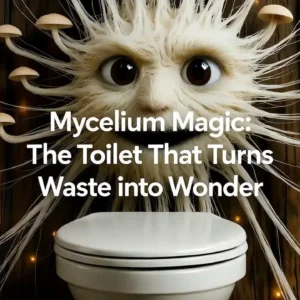
What if the solution to sanitation came not from chemicals or plumbing—but from fungi? Researchers at the University of British Columbia (UBC) have unveiled the MycoToilet, the first waterless, mushroom powered toilet that uses mycelium – the underground network of fungi – to break down human waste, neutralize odors, and produce compost.
In a world where more than half the population lacks safe sanitation, the MycoToilet offers a radical alternative. It’s simple, elegant, and alive. Unlike conventional systems that consume water and energy, this one transforms waste into usable soil nutrients—while leaving behind almost no smell.
Now being piloted at the UBC Botanical Garden, this experimental toilet could signal a new era for eco-sanitation and circular design.
At first glance, the MycoToilet looks like a minimalist wooden outhouse. But beneath its cedar walls lies a living machine.
The system separates liquids and solids. The solids enter a compartment lined with mycelium, a dense web of fungal roots. Mycelium is nature’s decomposer—it digests organic material while filtering harmful microbes and neutralizing odors.
As waste enters the chamber, the fungi’s enzymes begin breaking down cellulose, fats, and proteins. The structure allows airflow, enabling aerobic decomposition (which avoids methane buildup). Sensors track moisture and temperature to maintain the right conditions.
Unlike typical composting toilets, this design is odor-free. Mycelium binds odor compounds like ammonia and hydrogen sulfide, eliminating more than 90% of the smell.
It’s a closed-loop system: solids become compost, liquids are filtered into nutrient-rich water suitable for irrigation or fertilizer.
Each unit can produce roughly 159 gallons of compost and 528 gallons of liquid fertilizer a year.

Mycelium isn’t just a decomposer—it’s a biological engineer. It forms vast underground networks that recycle organic matter and even communicate chemical signals between plants.
Scientists have already used fungi to make building materials, leather substitutes, and biodegradable packaging. The MycoToilet applies that same circular principle to human waste.
“Fungi are masters of transformation,” said Dr. Claire Hughes, a sustainability engineer at UBC. “We realized they could handle the dirtiest job on Earth—with elegance.”
Mycelium’s ability to capture and digest waste without producing toxic residues could make it a cornerstone of next-generation sanitation. It’s alive, regenerative, and endlessly renewable.
Environmental and Social Benefits
Traditional toilets rely on vast infrastructure: pipes, water, treatment plants. In developing regions—or remote areas—that infrastructure simply doesn’t exist.
The MycoToilet needs none of it. It can operate off-grid, with only a small solar-powered fan and periodic maintenance. That makes it ideal for rural communities, parks, refugee camps, and festivals.
It also dramatically reduces water consumption. A typical flush uses six liters of drinking water; the MycoToilet uses zero.
In global terms, if even 1% of the world’s population switched to waterless toilets, billions of liters of clean water could be saved daily.
It’s not just environmental—it’s philosophical. It reframes waste as a resource, not a problem.
Challenges Ahead
While the technology works, the biggest barrier may be psychological. Most people aren’t ready to trust fungi with their bathroom duties. Cultural norms, sanitation laws, and public health codes will need to evolve.
Regulators must ensure that composted waste is pathogen-free and safe for use in agriculture. There’s also the challenge of cost: early prototypes are expensive, though prices should drop with scaling.
But every major innovation in sanitation—from indoor plumbing to dry toilets—started as a radical idea. The MycoToilet may be next in line.
The MycoToilet represents more than a clever invention—it’s a quiet revolution in how we see biology. Instead of fighting nature, it partners with it. Instead of using chemicals to mask waste, it invites fungi to transform it.
At a time when the planet struggles with pollution and resource scarcity, a living, breathing mushroom powered toilet might be one of the most hopeful ideas yet. Because in nature, there is no “waste.” Only transformation.
Source: UBC news
The post The World’s First Mushroom Powered Toilet Turns Waste into Renewal first appeared on Cannadelics.


The post Mint’s Big Game Weekend – 300+ Deals Starting Tomorrow! appeared first on AZ Marijuana.

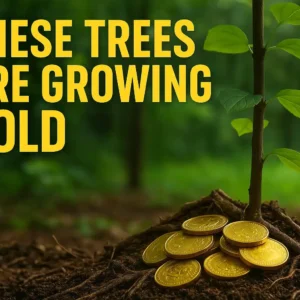
Is there gold in trees in Finland?
The proverb “money doesn’t grow on trees” might need an asterisk. Scientists in northern Finland have found tiny gold nanoparticles inside the needles of Norway spruce trees. But this isn’t fairy gold—it’s a fascinating intersection of plant physiology, microbiology, and geochemistry. The latest study suggests that microbes living within the needles may help precipitate gold, turning soluble ions from the soil into solid particles.
This finding doesn’t mean forests are gold mines you can harvest with pruning shears. But it could revolutionize how we explore for minerals, make mining more sustainable, and deepen our understanding of how life shapes Earth’s chemistry.
Scientists from University of Oulu and the Geological Survey of Finland focused on trees growing above a known gold deposit near the Kittilä mine. They took 138 needle samples from 23 Norway spruce trees. Using field-emission scanning electron microscopy plus energy-dispersive X-ray spectroscopy, they identified solid gold nanoparticles in needles of 4 trees.
Parallel to that, they sequenced the bacterial communities inside those needles (16S rRNA). They found that certain bacterial taxa—like Cutibacterium and Corynebacterium—were more common in gold-positive samples. The gold particles often appeared adjacent to microbial biofilms, hinting that the microbes might foster the precipitation reaction.
While not every tree showed gold, the patterns suggest a microbe-assisted mechanism where internal microbes influence microchemical conditions (pH, redox) to turn dissolved gold ions into nano-sized solid particles.
Gold in crustal rocks weathers and releases ions into groundwater. Plants intercept water and dissolved elements via roots. Typically, trace metals travel through xylem to leaves. But what causes solid nanoparticles inside leaf tissue?
The hypothesis: within leaf tissue, microbial biofilms create localized microenvironments that shift chemistry (lowering solubility) and trigger precipitation of gold. The microbes may reduce or oxidize compounds, change pH, or bind ions via ligands, creating nucleation sites for solid gold formation.
If true, trees become not just passive accumulators of metals but living bioreactors in which microorganisms mediate mineral synthesis.
Mineral exploration already uses biogeochemical sampling—measuring metal concentrations from plants, soils, or water to infer subsurface deposits. What this study adds is that biomicrobial signatures inside plant tissue might refine sensitivity and specificity.
If specific microbes reliably co-occur with gold precipitation, then screening leaf microbiomes could provide a novel, minimally invasive exploration tool—reducing the number of blind drillings, cutting cost, and lowering environmental disturbance.
Extending further, this concept could apply to other metals (copper, platinum, rare earths) or even to phyto-remediation efforts that capture and precipitate toxins in plant tissues.
The study on gold in trees is compelling—but preliminary. Key limitations include:
Future experiments should isolate microbes, grow them in controlled settings with gold ions, and observe whether they precipitate gold nanoparticles in vitro.
Conclusion
While we know now that gold in trees is a real thing, we may not be able to shake gold bars from pine needles anytime soon. But this research opens a new lens on how life and mineral cycles interconnect. Trees and their microbial partners may shape not just ecosystems—but even subterranean chemistry.
If the process is validated, microbial-plant geochemistry could become a new frontier in sustainable exploration. We might trace veins of gold by leaf and genome instead of drilling holes in untouched land.
At its heart, this study reminds us how much we still don’t understand: that even within a simple spruce needle, hidden microbial alchemy may be turning invisible gold into something we can detect, study, and maybe one day harness.
Source: Earth.com
The post Gold In Trees: Finland’s Trees Are Making Real Gold first appeared on Cannadelics.


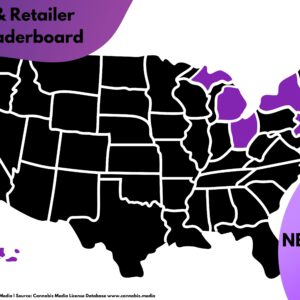
Q3 2024 saw significant growth in cannabis dispensary and retailer licensing, with 535 new licenses issued—a jump from Q2’s 456. Key players like New York, Ohio, Michigan, New Jersey, and Puerto Rico accounted for 73% of these new licenses. © CNB Media LLC dba Cannabiz Media
Source link