
Business of Cannabis research roundup

Latest Studies Map Cannabis Efficacy Across Pain, Migraine, and Autism Applications


Latest Studies Map Cannabis Efficacy Across Pain, Migraine, and Autism Applications

Welcome to Business of Cannabis’ new research digest, unpacking the latest clinical evidence shaping cannabis therapeutics.

While headlines often focus on regulatory shifts and market access, the scientific foundation underpinning medical cannabis continues to evolve at a pace, yet rigorous clinical trial data rarely receive the attention it deserves outside academic circles.

With optimism that the US could reschedule cannabis in the coming months, cannabis research could see a wave of investment flood through the research sector, having major implications for its integration into mainstream healthcare. 

Beyond the Abstract aims to cut through PR-hype and methodological complexity to deliver a clear-eyed analysis of emerging research, from pain management and neurological conditions to rare disease applications. We’ll examine what the data actually shows, where evidence gaps remain, and how new findings might influence clinical practice and regulatory frameworks across Europe and beyond.

This edition launches with three landmark studies published in recent months: a major systematic review on cannabis for chronic pain, the first randomised controlled trial of vaporised cannabis for acute migraine, and new data on CBD-rich formulations for ADHD symptoms in children with autism spectrum disorder.

For comprehensive access to the latest cannabis clinical trials across chronic pain, epilepsy, oncology, and other therapeutic areas, explore Business of Cannabis’ Cannabis Research Repository, a continuously updated database of human studies, systematic reviews, and real-world evidence.

Cannabis for chronic pain comparable to opioids

A comprehensive systematic review from Oregon Health & Science University has quantified cannabis efficacy for chronic pain, revealing stark differences between THC and CBD-dominant products.

The study, ‘Living Systematic Review on Cannabis and Other Plant-Based Treatments for Chronic Pain: 2025 Update’, marked the fourth and final annual update of the ‘living review’, which continually adapted to ‘identify and synthesise’ new literature as it was published. 

It analysed 25 randomised controlled trials (RCTs) involving 2,303 patients, predominantly those with neuropathic pain, finding that high-THC products reduced pain severity by 0.78 points on a 10-point scale compared to placebo. Products with comparable THC-to-CBD ratios performed slightly worse, showing reductions of 0.54 points.

Despite both being THC-based pharmaceuticals, Nabilone demonstrated moderate pain reduction of 1.59 points on a 0-10 scale, while Dronabinol showed minimal effect at just 0.23 points, a statistically significant difference. 

Across four RCTs involving 334 patients, synthetic or purified CBD alone was ‘not associated with decreased pain intensity’ versus placebo, with the pooled mean difference actually favouring placebo by 0.40 points (95% CI −0.14 to 1.00). CBD also showed no benefit in terms of function or pain response rates.

Nabiximols (Sativex), and oromucosal spray containing 2.7mg THC and 2.5mg CBD per spray, showed pain reduction of 0.54 points and functional improvement of 0.42 points, both ‘just below the threshold for a small effect’ according to the review’s criteria.

High-THC products carried substantial risks, as evidenced by dizziness in 33% of cases versus 15% with the placebo (relative risk [RR] 2.20), sedation in 24% vs. 16% (RR 1.50), and withdrawal due to adverse events in 14% vs. 7% (RR 1.92).

All 25 trials were short-term only (1-6 months), predominantly enrolled neuropathic pain patients (64%), with mean age 53 years. The review found ‘insufficient evidence’ on cannabis use disorder development, long-term outcomes, or effects beyond neuropathic pain.

The review notes that cannabis products’ pain reduction appears ‘comparable to those observed with prescription opioids, several nonopioid medications, and nonpharmacological interventions,’ though the authors emphasise this cross-trial comparison ‘must be done with extreme caution’ and head-to-head trials are needed.


First RCT shows CBD & THC combination beats placebo for acute migraine

The first randomised, double-blind, placebo-controlled trial of cannabis for acute migraine has demonstrated that vaporised THC combined with CBD outperforms placebo, but in similar findings to the systematic review above, CBD alone shows little benefit.

University of California San Diego researchers enrolled 92 participants who treated 247 migraine attacks with four different vaporised cannabis treatments in randomised order: 6% THC, 11% CBD, 6% THC plus 11% CBD, or placebo.

The THC+CBD combination achieved the primary outcome of 2-hour pain relief in 67% versus 47% with placebo (OR 2.85, p=0.016). Critically, it also met secondary endpoints of pain freedom (35% vs 16%, p=0.017) and most bothersome symptom freedom (60% vs 35%, p=0.005), benefits that persisted at 24 and 48 hours.

THC alone achieved pain relief (69% vs 47%, p=0.008) but failed to reach statistical significance for pain freedom or symptom relief at two hours and showed no sustained benefits. CBD alone demonstrated no superiority to placebo on any measure.

The combination reduced photophobia and phonophobia but not nausea, confirming ‘antimigraine effects rather than THC’s established antiemetic effects.’ Mean subjective highness was lower with THC+CBD (2.4/10) than THC alone (3.5/10), consistent with CBD’s role as a negative allosteric modulator of CB1 receptors.

Researchers noted critical limitations, including single-dose testing (no data on medication overuse headache or cannabis use disorder with repeated use), NIDA cannabis devoid of terpenes and minor cannabinoids, and pain relief rather than pain freedom as the primary endpoint, contrary to current International Headache Society guidelines

CBD-rich cannabis shows behavioural improvement in children with ADHD and ASD


An open-label study from Tel Aviv University has reported behavioural improvements in children with autism and ADHD following CBD-rich cannabis treatment, though the lack of placebo control limits conclusions about causation.

Researchers evaluated 53 children and young adults using the Conners’ Teacher Rating Scale before and after 3-6 months of CBD-rich cannabis oil. Teachers reported statistically significant improvements in anxious-shyness, perfectionism, ADHD index scores, emotional lability, and hyperactive-impulsivity.

Blood analysis revealed no consistent relationship between CBD concentrations and most behavioural changes, except for emotional regulation. Higher CBD levels correlated with greater improvements in emotional lability, suggesting a possible dose-response effect.

The study represents ‘the first prospective study to evaluate the effects of CBD-rich cannabis on ADHD symptoms in children with ASD using standardised teacher-based assessments,’ addressing concerns that parent-reported outcomes may be influenced by expectation bias.

However, the open-label design, where all participants knew they were receiving active treatment, substantially limits interpretation. Authors acknowledge this ‘limits the ability to draw firm conclusions about causation’ and emphasise ‘the need for randomised, controlled trials to confirm efficacy.’

A separate 2025 UC San Diego placebo-controlled trial testing purified CBD (Epidiolex) up to 20mg/kg/day in autistic boys found no significant difference between CBD and placebo groups on behavioural measures, with both groups improving equally, suggesting open-label improvements may reflect placebo effects, natural symptom variation, or regression to the mean rather than pharmacological action

The post Latest Studies Map Cannabis Efficacy Across Pain, Migraine, and Autism Applications appeared first on Business of Cannabis.


Source link

Hyper Cherry Haze Feminized Seeds

Hyper Cherry Haze Feminized Seeds

Hyper Cherry Haze Feminized Seeds

Description

When you first see Hyper Cherry Haze, the Gelato influence is hard to miss. These buds are thick and often show off their deep purple colors hidden under a heavy layer of frosty trichomes. The smell is just as impressive as the look. It hits you with a sharp mix of zesty citrus and earthy tones, followed by a sweet, creamy finish that lingers on your tongue. Some smokers also pick up a bit of diesel and chemical notes, which adds a nice edge to the fruity profile.

The experience starts almost instantly with a bright, cerebral buzz. You will likely feel a surge of creative energy and focus, making it a great companion for artistic projects or morning routines. While your mind is racing with happy thoughts, a soothing physical wave from the Gelato side keeps you grounded. It never feels too heavy or sleepy, so you can stay productive while enjoying a deep sense of euphoria. It is truly an all-day smoke for those who want to stay active and stress-free.

The post Hyper Cherry Haze Feminized Seeds appeared first on Crop King Seeds.

Source link

Insurance Has Become a Critical Benchmark for Cannabis Industry Maturity

Insurance Has Become a Critical Benchmark for Cannabis Industry Maturity

Insurance Has Become a Critical Benchmark for Cannabis Industry Maturity

Since the emergence of the legal cannabis industry across the Western world, operators have persistently been forced to deal with an issue faced by few counterparts in established sectors: they can’t get insured. 

In the UK, we’ve reported on firms seeing their bank accounts closed overnight with no explanation, facing rejections for even basic employer liability coverage, and facing fines of up to £2500 a day for operating without protection. 

Similar stories extend throughout Europe, while US operators facing ongoing federal prohibition remain exposed to risks every other sector can easily insure against, such as product liability, theft, crop failure, and workplace injuries.

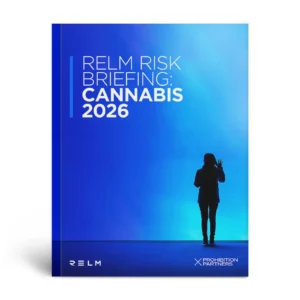
According to Claire Davey, Senior Vice President of Product Innovation and Emerging Risk at Relm, whose team co-authored a new Risk Briefing on the cannabis sector with Prohibition Partners, this dynamic is now beginning to change. 

“Compared to Europe, the US and Canadian insurance market has facilitated greater access to insurance for operators, during the last 2-3 years, particularly for relatively commonplace (yet necessary) coverages, such as Directors and Officers Liability, due to relative market maturity,” she told Business of Cannabis. 

Despite improvements, cannabis remains a notable outlier in terms of access to insurance coverage. According to the recently published report, however, insurance challenges are now less about whether insurance capital is available but more about whether operators are professionalised enough to secure it. 

Join Relm and Prohibition Partners on Wednesday, February 04, at 3pm, for a live webinar unpacking the key findings from the Risk Briefing: Cannabis 2026 report.

The session will explore where risk concentrations are highest across the cannabis supply chain, why contamination continues to drive recalls, and what leading operators are doing to strengthen governance and reduce exposure.

What underwriters actually demand

According to Davey, the barriers to comprehensive coverage are twofold. “With respect to the US, it is regulatory uncertainty and the lack of governance around particular risk exposures. 

“Insurers are highly regulated businesses, and they often need greater certainty regarding legality. They also want to be clear on how insureds are managing their risk.”

For European and international markets, ‘the regulatory concern is paired with the lack of size and maturity of the cannabis industry, which has not yet reached enough of  a critical mass to convince insurers of committing to the opportunity.’

The Relm Risk Briefing, which draws on interviews with leading operators like Glass Pharms, Linnea, SOMAÍ Pharmaceuticals, and PHCANN International, explores the dramatic variations in what underwriters look for depending on coverage type. 

Product Liability insurers are ‘keen to see internationally recognised quality assurance certifications that are achieved and maintained’. In practice, this means EU-GMP certification is critical, given that few jurisdictions offer full alignment with Good Manufacturing Practice standards, and contamination risks persist throughout the supply chain.

For Crime insurance covering theft of crops and assets, ‘insurers are looking to see that a range of physical, logical and technical controls are implemented.’ Between 2018 and 2022, Canadian licensed producers reported over 2200 kg of cannabis as missing or stolen, with most incidents during transportation.

Meanwhile, for D&O (Directors and Officers) coverage, the focus shifts to governance fundamentals. “What do their financials show? How is the business managing regulatory risk? What are they communicating to investors and how are they delivering on this?” 

This scrutiny reflects genuine exposure. Canopy Growth Corp., one of the largest publicly traded cannabis companies, currently faces a class action lawsuit alleging misleading statements about production costs.

Insurance as driver, not just an indicator

Davey argues that the relationship between insurance and operational excellence extends beyond simple risk transfer, with the process of applying for insurance ‘encouraging a business to reflect on, and provide evidence of, its governance practices and risk reduction strategies’. 

“If the application for insurance suggests that risk posture is weak, or it is lacking data transparency, the operator needs to improve this in order to avoid the withdrawal of insurance coverage or the increased premiums and retentions that may result from poor risk management. Thus, insurers are often pushing for best practices, and encouraging and rewarding such improved postures.”

The report’s risk mitigation strategies span the entire supply chain. In cultivation, controlled environments, tissue culture, genetics for consistency, and integrated pest management demonstrate operational maturity that insurers reward. 

Glass Pharms CEO James Duckenfield notes: “Seeds proved too variable, so we use only tissue culture genetics for consistency.”

In manufacturing, where, for example, a January 2025 explosion at PharmaCann’s Maryland extraction facility caused over $250,000 in damages, insurers demand strict safety protocols and facility controls. 

For distribution, where temperature excursions threaten product integrity, operators need GDP-aligned transport with data loggers and comprehensive cargo insurance. Linnea CEO Susanne Caspar said: “We always advise clients to have door-to-door coverage, regardless of Incoterms, to avoid disputes between buyers and sellers.”

Inadequate coverage and its costs

The report also explores incidents illustrating the financial consequences of inadequate risk management and insurance.

River Valley Growers in Massachusetts lost its entire 2022 harvest, valued at $7 million, when pesticide drift from a neighbouring farm contaminated their crop. The cultivator went out of business, unable to meet production contracts. 

C&C Manufacturing LLC in Missouri had its license revoked after creating a distillate with unregulated THC levels, triggering a statewide recall of 135,000 products in 2024. 

Elsewhere, NNK Equity LLC in New Mexico faced seizure and destruction of tens of thousands of plants worth hundreds of thousands of dollars after failing multiple compliance requirements, including inadequate security and track-and-trace violations.

These incidents illustrate that operators who treat insurance as an administrative burden rather than good risk management discipline leave themselves exposed not just to claim denials but to the underlying operational failures that trigger claims.

The European opportunity

While North American markets face saturation and regulatory uncertainty, Europe presents a different trajectory. “We would expect that there will be an expansion of insurance capacity for the European cannabis markets over the coming years,” Davey suggests. 

“The US and Canada are already relatively saturated, although the US’s move towards rescheduling may make this even more prominent. The respective European approaches to deregulation—which are quite steady and measured—offer a greater degree of certainty and confidence that enable insurers to plan for, and mobilise over the medium to longer term.”

Europe’s total cannabis sales are forecast to grow from $1.5 billion in 2025 to $3.3 billion by 2030, driven by permanent frameworks in Denmark and France, market expansion in the UK and Germany, and broader adoption. The pharmaceutical focus, emphasising GMP facilities, pharmacy distribution, and prescription-based access, provides the regulatory clarity insurers need.

Germany offers public health insurance reimbursement, a stability factor appealing to underwriters. France’s transition from pilot program to generalised medical access in April 2026 represents the measured regulatory evolution. Spain, Slovenia, Ukraine, and Bosnia and Herzegovina are developing frameworks prioritising pharmaceutical standards over rapid commercialisation, a pace that may frustrate operators but reassures insurers.

“The next phase of cannabis growth will belong to operators that act first to manage risk. Those who build insured, transparent operations now will define standards, secure capital, and outpace slower competitors,” the report notes. 

The capital markets dimension amplifies this dynamic. Investors and lenders increasingly require comprehensive insurance as a financing condition. A cannabis operator seeking growth capital must demonstrate not just that it has insurance, but that its risk posture is strong enough to maintain coverage through scaling and market expansion.

“The Risk Briefing provides great insights into the different risk mitigation best practices that operators can implement in order to shift the needle in the underwriting process,” Davey continued. 

The operators featured in the report demonstrate these principles. PHCANN International’s Macedonian facility employs 5-meter walls, licensed armed guards, over 200 cameras, and annual attack-response drills, with special forces response available within one minute. Linnea holds an EcoVadis silver medal, placing it among the top 15% of assessed companies worldwide on ESG criteria, monitoring emissions and recycling extraction waste into renewable energy.

SOMAÍ Pharmaceuticals emphasises supplier financial viability: “Companies in financial trouble often cut corners, even unintentionally. We’re always transparent about our own financials with partners,” says CEO Michael Sassano.


As insurance capacity expands in select markets, underwriters now have enough data to differentiate between well-managed and poorly-managed operators. Premium spreads will widen. Coverage restrictions will become more tailored. Operators with robust risk management will access broader coverage at lower cost, while those with weak governance will find themselves increasingly uninsurable.

The word ‘cannabis’ once all but guaranteed rejection. Today, proving professionalism has become the requirement for protection.

The Risk Briefing: Cannabis 2026 is available from Relm Insurance and Prohibition Partners.

The post Insurance Has Become a Critical Benchmark for Cannabis Industry Maturity appeared first on Business of Cannabis.

Source link

A budtender and customer smiling during a transaction using Cova’s dispensary POS system

Why Most Cannabis Tech Sucks (and What Retailers Should Demand Instead)

Why Most Cannabis Tech Sucks (and What Retailers Should Demand Instead)

/* Hide the theme’s automatic footer and author boxes */
.td-post-author-name,
.td-post-next-prev-wrap,
.author-box-wrap,
.td-post-sharing-bottom,
.td-related-title,
.td_block_related_posts {
display: none !important;
}

/* 1. HIDE DEFAULT THEME ELEMENTS */
/* Targets the default Newspaper theme header, byline, and featured image */
.td-post-header .entry-title,
.td-post-header .td-module-meta-info,
.td-post-featured-image,
.td-category {
display: none !important;
}

/* 2. CUSTOM TITLE STYLING */
.custom-post-title-container {
max-width: 1068px;
margin: 2em auto 1.5em;
padding: 0 15px;
}

/* 6. PROMOTED CONTENT BADGE (Dark Gray Version) */
.promoted-badge {
display: inline-block;
background-color: #333333; /* Deep charcoal gray */
color: #ffffff;
text-transform: uppercase;
font-size: 11px;
letter-spacing: 1.2px;
padding: 5px 12px;
margin-bottom: 18px;
font-family: ‘Open Sans’, Arial, sans-serif;
font-weight: 700;
line-height: 1;
border-radius: 2px; /* Optional: adds a very slight roundness for a modern look */
}
.custom-post-title {
font-family: ‘Playfair Display’, Georgia, serif;
font-size: 42px;
line-height: 1.2;
font-weight: 700;
color: #000;
margin: 0;
}

/* 3. REVISED FOOTER & IMAGE STYLING */
.footer-section {
display: flex;
align-items: center; /* Vertically centers logo and text */
gap: 30px; /* Proper spacing between logo and info */
max-width: 900px;
margin: 4em auto;
padding: 2em 15px;
border-top: 1px solid #eee;
}

/* Controls the logo size to prevent awkward floating */
.footer-logo-column {
flex: 0 0 150px; /* Keeps the logo column a fixed width */
}

.footer-logo-column img {
width: 150px !important;
height: auto !important;
display: block;
}

.footer-info-column h3 {
font-family: ‘Playfair Display’, Georgia, serif;
margin: 0 0 5px 0;
font-size: 1.4em;
}

.footer-info-column a {
font-size: 1em;
color: #5b75c0;
text-decoration: none;
}

/* 4. MOBILE RESPONSIVENESS */
@media (max-width: 768px) {
.custom-post-title-container {
margin-top: 1.2em !important;
padding: 0 20px !important;
}

.custom-post-title {
font-size: 28px !important;
}

.footer-section {
flex-direction: column; /* Stacks logo on top of text */
text-align: center;
gap: 15px;
}

.footer-logo-column {
flex: 0 0 auto;
margin: 0 auto;
}

/* 5. FIX FOOTER POSITIONING */
/* This container wraps everything between the title and the footer */
.article-body-wrapper {
min-height: 300px; /* Ensures there is space for content */
margin-bottom: 50px;
}

.footer-section {
clear: both; /* Prevents any floating images from pulling the footer up */
display: flex;
align-items: center;
gap: 30px;
max-width: 1068px; /* Matches the article width */
margin: 4em auto 2em; /* Added margin-top to create separation */
padding: 3em 15px 0;
border-top: 1px solid #eee;
}
}

A budtender and customer smiling during a transaction using Cova’s dispensary POS system

Why Most Cannabis Tech Sucks (and What Retailers Should Demand Instead)

Let’s be honest: Most cannabis technology promises the world only to fall apart when you need it most. Point-of-sale (POS) outages on peak days, support tickets that disappear into chatbots, surprise fees . . . and systems that buckle the moment regulations change or a second location opens. That’s why industry recognition matters — not as a trophy, but as a signal of trust and reliability.

In 2025, the Emjays Awards named Cova Cannabis Retail Software of the Year for the second year in a row. This isn’t a popularity contest or a vendor-sponsored badge. Winners are selected by customer voting and a panel of industry judges, making the Emjays one of the most meaningful recognitions in cannabis retail technology. In a market with more than forty cannabis POS providers, that distinction sends a clear message to retailers evaluating risk.

The standard for cannabis POS reliability

  • 100% uptime on 4/20 for eight consecutive years.
  • Real human support in under thirty seconds — no chatbots.
  • Built to scale across regulated, multi-store operations.

For retailers, this recognition represents risk reduction: technology that’s been pressure-tested in real stores, real markets, and real regulatory environments.

Is Cova Software really the best cannabis tech?

The Cova Software team accepting the 2025 Emjays Software/Tech Company of the Year award.
Photo: Cova Software

Cova has earned multiple industry awards over the years, but recognition from the Emjays stands out because of how winners are chosen — and why that matters to operators.

Being voted Cannabis Retail Software of the Year by the Emjays reflects innovation, consistency, reliability, and — most importantly — customer trust earned over time.

For cannabis retailers evaluating their technology needs, that kind of recognition lowers the odds of costly mistakes. It means the Cova platform is trusted by peers, validated by experts, and proven in the field. It signals a platform that works not just in demos, but also on the floor through busy weekends, the biggest holidays, regulatory changes, and at scale.

Reliability when it matters most

POS reliability isn’t a “nice to have” in cannabis. It’s mission critical.

🟢 100% uptime on 4/20 for eight years running — that’s a benchmark no other POS platform can claim.

While outages on the industry’s biggest sales day have become almost expected, Cova has delivered uninterrupted performance year after year. It’s built for high-volume environments, multi-location operators, and heavily regulated markets where failure isn’t an option.

Built to handle regulatory chaos with zero disruptions

Cannabis retailers don’t control when regulations change, but they live with the consequences.

When New York unexpectedly transitioned its track-and-trace system from BioTrack to Metrc, many retailers faced uncertainty, downtime risk, and compliance anxiety — all in the middle of the holiday season.

Cova didn’t wait. The team worked tirelessly through that period to ensure customers migrated smoothly, remained compliant, and kept stores running without interruption.

The bottom line is that Cova doesn’t avoid complexity. Rather, the company leans into it to solve the problems directly affecting retailers’ livelihoods. That’s just one of the reasons Cova continues to be trusted as a top dispensary software for New York and Minnesota, two of the most tightly regulated cannabis markets in the U.S.

Learn how Cova supports fast regulatory changes and keeps retailers compliant.

Real human support in under 30 seconds

A close-up of a retail transaction being processed quickly on a Cova POS tablet in a dispensary.
Photo: Cova Software

Technology is only as good as the support behind it. Cova’s support team is fully in-house, not outsourced, and composed of product experts who work closely with the development team. When retailers call for help, they’re speaking with someone who understands both the software and the realities of cannabis retail.

🟢 Average phone support wait time: under 30 seconds. 

In an era where some POS providers are charging for phone support and forcing customers to interact with chatbots, Cova continues to invest in real human help.
Want human support that actually picks up? Let’s talk.

Technology retailers actually enjoy using

Reliability is indispensable, but usability is what staff members experience every day. Cova designs products that remove friction from cannabis retail workflows. That means minimizing manual work, automating where possible, and simplifying complex processes without sacrificing compliance. 

Recent customer favorites include: 

  • The new reporting and backend hub, which centralizes key commands into a fast, intuitive interface.
  • Thoughtful, role-based workflows that help staff move quickly without errors.
  • Cova Pay, which delivers a payments experience that goes beyond industry standards and reduces friction at checkout.

The result is a system teams actually enjoy using — one that helps stores move faster, train more easily, and focus on customers instead of troubleshooting software.

See how real retailers use Cova to streamline operations and scale confidently.

Promotional banner for Cova Software featuring the 'Least Sucky POS' headline and retail tablets.

Cost-effective without cutting corners

Cova offers a top-tier cannabis retail system that doesn’t break the bank. Transparent pricing and flexible plans deliver industry-leading value compared to other POS platforms. As you scale to additional locations, the cost efficiency pays off even more. There are no surprise fees, no unnecessary add-ons, and no pressure to sacrifice functionality to keep costs under control.

Cova doesn’t hide costs. View pricing here

Recognition that reflects real-world performance

Being voted Cannabis Retail Software of the Year two years in a row signals that Cova is delivering where it counts the most: uptime, compliance, usability, support, and long-term partnership. For cannabis retailers operating in an increasingly complex market, it means even more: trust and reliability.

If you’re finished dealing with system outages, slow and robotic support, and surprise fees, connect with Cova and see why cannabis retailers trust the platform with their business year after year.

Source link

Indiana Lawmakers Say Marijuana Legalization Won’t Happen This Year Despite Trump’s Federal Rescheduling Move

Indiana Lawmakers Say Marijuana Legalization Won’t Happen This Year Despite Trump’s Federal Rescheduling Move

Indiana Lawmakers Say Marijuana Legalization Won’t Happen This Year Despite Trump’s Federal Rescheduling Move

“It’s not going to happen this year. I wasn’t going to waste a bill slot for a bill that I knew wasn’t going to move.”

By Tom Davies, Indiana Capital Chronicle

Advocates for marijuana legalization in Indiana already know 2026 won’t be the year they see it happen.

Despite President Donald Trump signing an executive order in December for reclassifying marijuana as a less-dangerous drug, the Republican-dominated state Legislature isn’t acting on any bills that would allow medical or recreational use.

Instead, legislators are advancing proposals that would tighten state laws on delta-8 products with THC—the active ingredient in marijuana—and crack down on advertisements for marijuana dispensaries in neighboring states.

The stance has one marijuana legalization advocate arguing that Indiana officials are “sticking their head in the sand.”

Trump stance hasn’t shifted Indiana status

Indiana is among only 10 states that don’t allow either medicinal and recreational marijuana sales.

Legalization supporters made a prominent push going into the 2025 legislative session but were unable to persuade lawmakers to take any action on the issue.

Trump’s executive order in December to shift cannabis from its current Schedule I status, alongside drugs such as heroin and LSD, to the less-regulated Schedule III level would seem to weaken a long-standing argument from top state Republicans against legalization.

But that did not result in removing any Statehouse hurdles to marijuana bills or a renewed visible campaign from advocates.

Joe Elsener, a former Marion County Republican chair and an organizer of the lobbying group Safe and Regulated Indiana, said part of that was strategic rather than trying to push major changes during the Legislature’s two-month short session this year.

“I think President Trump’s announcement before the holidays is just another big sign that the way people are thinking about this,” Elsener said. “Just in general, the country is moving in a different direction.”

The expected federal change hasn’t altered the anti-legalization stance of top Republican legislative leaders, who’ve long cited the Schedule I classification and concerns about societal impacts in states that allow marijuana sales.

Senate President Pro Tem Rodric Bray told reporters this past week that Trump’s reclassification order was “to try to move that along.”

“It didn’t actually affect the change or make the change. We’re continuing those conversations,” Bray said of possible legalization. “I don’t have much new.”

That continued opposition led legalization advocate Heath VanNatter, R-Kokomo, to decide against filing marijuana legislation this year since House rules allowed him to submit only five bills for the short session.

“It’s not going to happen this year,” VanNatter told the Indiana Capital Chronicle. “I wasn’t going to waste a bill slot for a bill that I knew wasn’t going to move.”

VanNatter said he believed the federal reclassification could lead to Indiana removing criminal penalties over marijuana possession even if resistance remains to legalization.

“If that ends up going through, then it will certainly make it better, easier for us to do it here,” he said.

Since a February 2023 hearing on a VanNatter-sponsored decriminalization bill, no state legislative committees have taken up proposals pulling back on Indiana’s marijuana laws.

House Courts and Criminal Code Committee Chair Rep. Wendy McNamara, R-Evansville, didn’t take a vote on that 2023 bill and hasn’t considered the issue since then.

“As long as it’s illegal on the federal level, there’s really no reason for us to act on the state level,” McNamara said in an interview last week.

Advocates looking for Braun action

Some legalization supporters are still trying to encourage some steps, looking to seize upon Gov. Mike Braun’s (R) statements that he’s willing to consider allowing medical-use sales.

Jeff Staker, the leader of Hoosier Veterans for Medical Cannabis, met in January with state Business Affairs Secretary Mike Speedy to encourage the establishment of a state cannabis commission.

“If we can get that, I think we’ll have a groundwork for developing policies on medical cannabis here in Indiana,” Staker said in an interview.

Staker, 60, is a former Marine Corps drill instructor and a retired Grissom Air Reserve Base firefighter. He said he organized the cannabis group in 2016 after exploring medical options other than taking the painkiller oxycontin for a back injury.

He said many military veterans want to have the legal option of using marijuana to relieve injuries or the impact of post-traumatic stress disorder, and expressed frustration with the lack of Statehouse action.

“They’re sticking their head in the sand, again,” he said. “But, obviously, with Trump’s executive order for the rescheduling, the state’s going to have to do something.”

Braun has not taken any such action and the governor’s office did not make any administration officials available to the Capital Chronicle for an interview about marijuana policy.

The federal reclassification would further isolate Indiana’s anti-marijuana laws, especially with Illinois, Michigan and Ohio allowing sales to all adults and Kentucky having a medical-use program, Staker said.

“There’s a lot of our state legislators that are very supportive of this,” he said. “They’ve been waiting for the feds to do exactly what they did. It’s just that the governor has to take a stronger approach.”

Legislators pushing tighter laws

The action during this year’s legislative session, however, has been for clamping down on marijuana-related matters.

The Senate last week endorsed a ban on intoxicating and synthetic hemp-derived products—echoing a recent federal law designed to close a “loophole” that has allowed potent products with delta-8, THC and other cannabinoids to proliferate.

Senate Bill 250 now moves on to the House for further action.

The bill sponsored by Sen. Aaron Freeman, R-Indianapolis would ban THC-product sales along with banning sales or advertising within 1,000 feet of schools or playgrounds.

Another provision would prevent state law from immediately reflecting federal reclassification of marijuana, if that goes through.

“This bill simply says that we would not automatically follow what the federal government does, that we would decide, 150 of us—that we would make that decision, not the federal government for us,” Freeman said of Indiana Senate and House members.

Yet another bill aims to remove billboards promoting marijuana shops that line many roadways near Indiana’s borders.

Legislation advanced last year by Rep. Jim Pressel, R-Rolling Prairie, banned the advertising of illegal products, including billboards and mailed fliers for Michigan marijuana dispensaries that he said were inundating his northern Indiana district.

Pressel said some marijuana businesses took advantage of that law’s July 1, 2025, effective date to sign long-term contracts on billboards to avoid the ban.

Language in House Bill 1200 that he’s sponsoring this year would force removal of all such marijuana advertising by July 1, 2026. The House is expected this week to advance the bill to the Senate for consideration.

Pressel said allowing marijuana advertising sends a mixed message to the public.

“If you see the billboard out there and they’re advertising for marijuana, they are under the impression that maybe the General Assembly passed this, maybe it’s legal now, and it’s not,” Pressel said. “This is not a conversation, again, about whether marijuana should be legal or not. This is a conversation about, ‘Should we allow a company to advertise a criminal activity in the state of Indiana?’”

This story was first published by Indiana Capital Chronicle.

Photo courtesy of Chris Wallis // Side Pocket Images.

The post Indiana Lawmakers Say Marijuana Legalization Won’t Happen This Year Despite Trump’s Federal Rescheduling Move appeared first on Marijuana Moment.

Source link