Reading Chronicle

Neighbourhood team ‘dismantle cannabis factory’ in Reading


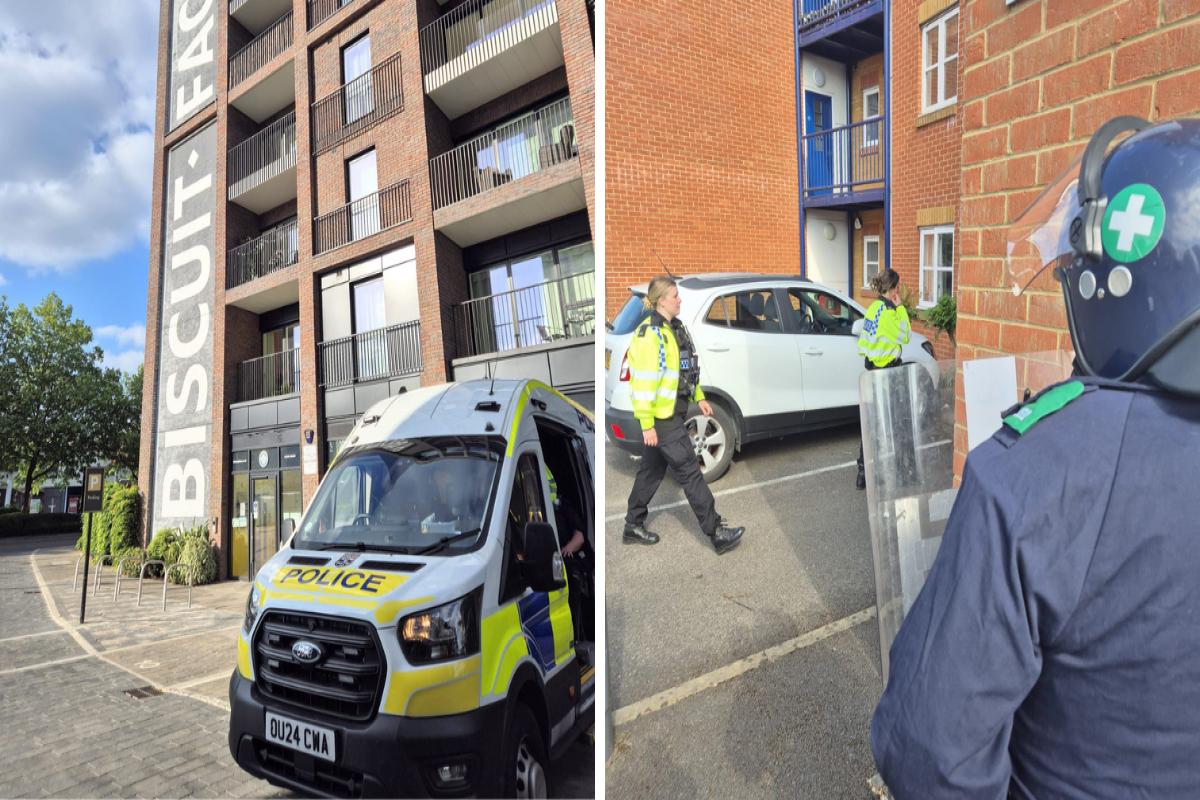
Reading Town Centre Neighbourhood Team has had a busy week, including helping dismantle a cannabis factory


Over the past week, the team has been working hard across the local area to keep our community safe, support vulnerable individuals, and engage with residents of all ages.


They helped safely dismantle a cannabis factory in Reading, arrested a male for assault and charged with public order offences, arrested and remanded two prolific shoplifters, and administered naloxone, saving the life of a vulnerable woman.


They also assisted with multiple warrants and safeguarding-related house searches, took part in Project Vigilant, tackling predatory behaviour in the night-time economy and worked in partnership with the council to support the Ask for Angela initiative.


They carried out numerous Servator deployments to disrupt criminal gangs targeting retailers, supported our response teams with emergency 999 calls, and engaged with young children during a foundation stage talk and gave them a tour of our police vans.


They delivered hotspot patrols to deter crime and anti-social behaviour, responded to welfare concerns, including referring vulnerable individuals to the right services, and attended Civitas Academy to introduce the role of PC/PCSO during their assembly.


They investigated reports of shoplifting and anti-social behaviour in the town centre and also partnered with local building management to address insecure car parks linked to criminal damage.


CCTV enquiries were conducted for ongoing investigations, they responded to intelligence on encampments and disrupted youth-related ASB, and played football and basketball with local children.


Source link

Cannabis seedlings

Illegal immigrant jailed for cannabis farm


An illegal immigrant has been jailed for three years after an “industrial” cannabis growing operation was found in an extension attached to a Brighouse hotel and wedding venue.

The sophisticated set-up, uncovered in 2024, could have produced cannabis worth almost £500,000 on the wholesale market and up to £1.4m at street value, Bradford Crown Court heard.

Le Thanh Long, 23, worked in other parts of the Casa Hotel and Restaurant on Elland Road while hotel guests enjoyed fine dining, prosecutor Nadim Bashir said.

Long, of Withington Road in Manchester, was found guilty of being concerned in the production of cannabis, and was jailed on Monday for three years.

Long and four other Vietnamese men were cleared of their involvement in another large cannabis grow uncovered during a police raid on the former Ritz Ballroom on Bradford Road in Brighouse, when 1,800 plants were found inside the former dance venue.

The defendants said they were victims of modern slavery and had been forced to work there in January 2024.

Electricity workers at the Casa Hotel eventually discovered in August that the supply to the premises had been bypassed, Mr Bashir said.

Police set up a “scene guard” overnight following the discovery of the cannabis operation, and more than 1,700 cannabis plants were found in 13 “grow rooms”, Mr Bashir said.

Long was found to be hiding in the premises before making a bid to escape in the early hours, but was spotted running from the scene by an officer and detained at a nearby bus stop.

Barrister Jeremy Barton, defending Long, said his client had worked as a “gardener” for about four months.

During sentencing, Judge Kirstie Watson said the cannabis found at the Casa Hotel was being produced on an “industrial basis” and that Long must have been aware of the scale of the operation if he had been involved for four months.

“I accept that having entered this country illegally, looking for work, that vulnerability was no doubt exploited by others,” she told Long via an interpreter.

Listen to highlights from West Yorkshire on BBC Sounds, catch up with the latest episode of Look North

Related internet links


Source link

FDA head says psychedelics are a "top priority" for Trump administration (Newsletter: May 20, 2025)

FDA head says psychedelics are a “top priority” for Trump administration (Newsletter: May 20, 2025)


TX medical marijuana expansion; NH psilocybin amendment; CA cannabis-funded grants; US’s legalization lessons for Europe; Veterans & marijuana poll

Subscribe to receive Marijuana Moment’s newsletter in your inbox every weekday morning. It’s the best way to make sure you know which cannabis stories are shaping the day.

Your support makes Marijuana Moment possible…

Before you dig into today’s cannabis news, I wanted you to know you can keep this resource free and published daily by subscribing to Marijuana Moment on Patreon. We’re a small independent publication diving deep into the cannabis world and rely on readers like you to keep going.

Join us at https://www.patreon.com/marijuanamoment

/ TOP THINGS TO KNOW

Food and Drug Administration Commissioner Marty Makary said exploring the therapeutic potential of psychedelics—especially for military veterans—is “a top priority” for the Trump administration.

The Texas Senate State Affairs Committee held a hearing on a House-passed bill to significantly expand medical cannabis access, though a key senator indicated the legislation is still a “work in process” and will be amended.

A New Hampshire Republican representative who is sponsoring a psilocybin decriminalization bill told Marijuana Moment that a Senate committee’s amendment to add mandatory minimum sentences for fentanyl is a “fair trade” to get the psychedelics reform enacted.

The California Governor’s Office of Business and Economic Development awarded $52.4 million in marijuana revenue-funded grants to organizations serving communities disproportionately affected by “drug policies [that] led to the mass incarceration of people of color.”

A new poll of military veterans and their family members shows that 57 percent would support medical cannabis treatment being provided by the Department of Veterans Affairs, with a smaller proportion also saying VA should provide psychedelic treatment as well.

Johnny Green of the International Cannabis Business Conference authored a new Marijuana Moment op-ed about the legalization lessons Europe can learn from the U.S. as more countries there consider enacting the reform.

Montana Gov. Greg Gianforte (R) signed a bill to allocate marijuana tax revenue toward wildlife habitat improvement and restoration projects, including on private land.

The Nebraska Medical Cannabis Commission will lack necessary funds to develop rules and issue licenses under a plan from Gov. Jim Pillen (R), unless lawmakers take additional action.

Washington State lawmakers deleted budget funding for organizations that are working to help vacate drug convictions on people’s records after the Supreme Court ruled the state’s prior possession law was unconstitutional.

/ FEDERAL

Rep. Andy Harris (R-MD) refused to answer a reporter’s question about budget legislation, instead repeatedly saying, “Just say no to drugs.”

/ STATES

The New Jersey Assembly Agriculture Committee held a hearing on hemp regulation legislation.

The Oregon Senate Early Childhood and Behavioral Health Committee held a hearing on youth cannabis use prevention strategies.

A Washington State senator spoke about the challenges of passing psychedelics legislation.

New York regulators posted guidance about digital cannabis inventory tags.

Maryland regulators published guidance on hemp product rules.

Minnesota regulators published guidance about hemp-derived cannabinoid products.

Ohio regulators published guidance on hemp products.

Massachusetts regulators posted a video about the next steps for the state’s cannabis industry.

The Colorado Department of Transportation posted an article about how “movies and TV shows may reinforce misconceptions about driving high.”


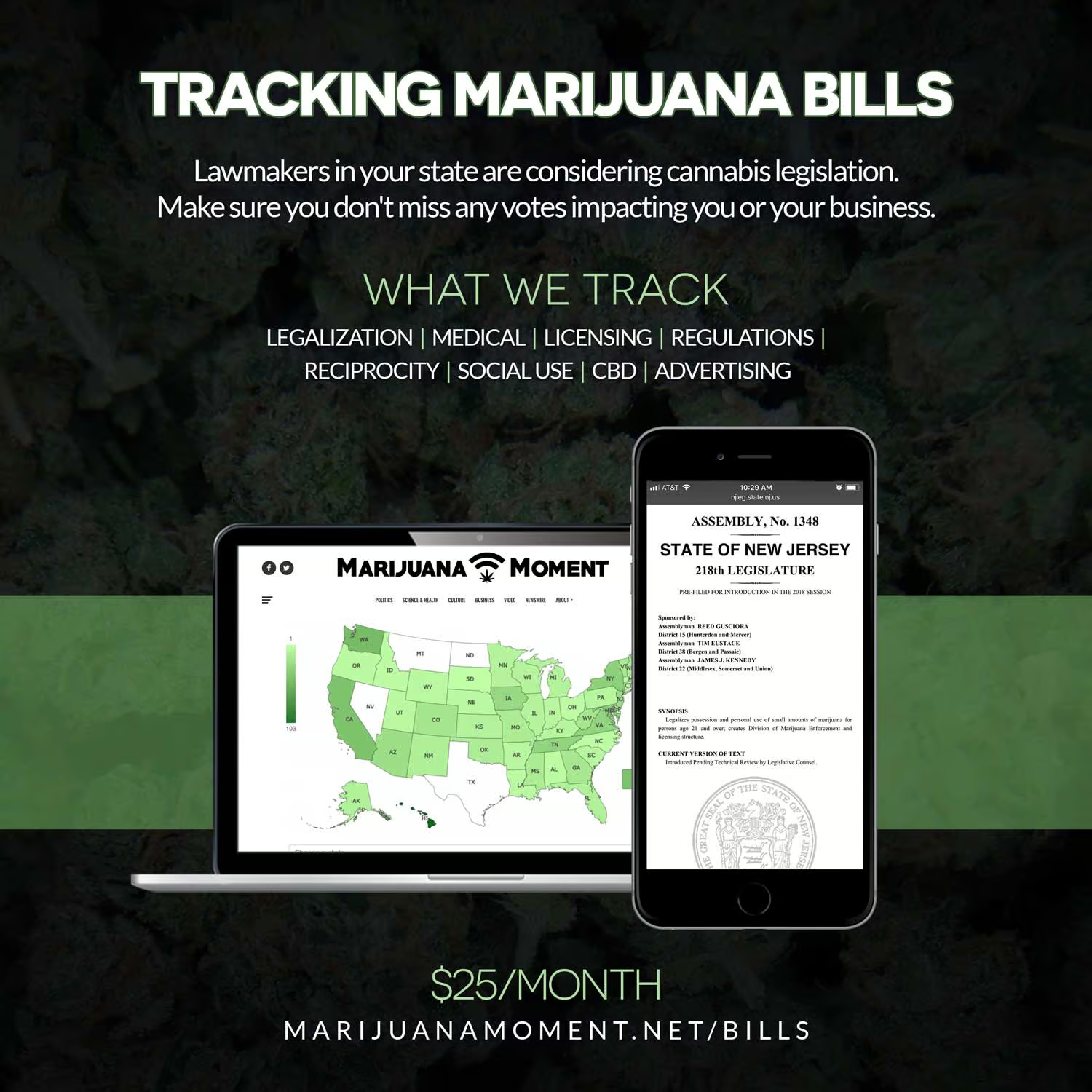
Marijuana Moment is tracking hundreds of cannabis, psychedelics and drug policy bills in state legislatures and Congress this year. Patreon supporters pledging at least $25/month get access to our interactive maps, charts and hearing calendar so they don’t miss any developments.


Learn more about our marijuana bill tracker and become a supporter on Patreon to get access.

/ LOCAL

New York City’s mayor invited people to visit a pizza shop “when you get the munchies from that good cannabis that you smoked.”

/ INTERNATIONAL

Rwandan officials said construction of the country’s first medical cannabis production facility is nearly complete.

/ SCIENCE & HEALTH

A study found that “current cannabis use was not appreciably associated with semen quality.”

A review concluded that “although some evidence suggests potential benefits of cannabinoids, particularly CBD, in oral health contexts, findings are derived from heterogeneous studies—many with high risk of bias.”

/ ADVOCACY, OPINION & ANALYSIS

The board chair of Save Our Society from Drugs resigned, saying he and other members were not notified that the group accepted and spent funds to oppose a Florida marijuana legalization ballot initiative.

/ BUSINESS

Fresh workers in New Jersey voted to unionize.

Make sure to subscribe to get Marijuana Moment’s daily dispatch in your inbox.

Photo courtesy of Chris Wallis // Side Pocket Images.

Marijuana Moment is made possible with support from readers. If you rely on our cannabis advocacy journalism to stay informed, please consider a monthly Patreon pledge.

Become a patron at Patreon!


Source link

Denton’s never-enforced marijuana decriminalization ordinance is likely on its way out

Denton’s never-enforced marijuana decriminalization ordinance is likely on its way out


The City Council is likely to repeal Denton’s low-level marijuana decriminalization ordinance on Tuesday, which has never been enforced since more than 32,000 voters passed it in 2022, in the city’s largest-ever turnout for a municipal election.

The ordinance, known as Proposition B, sought to prevent the use of city funds for cannabis testing, end citations for misdemeanor amounts of cannabis under 4 ounces and only permitted citations or arrests for Class A and B misdemeanor possession of marijuana when they are part of a felony narcotics case or a violent felony. The ordinance also prevented citations for drug paraphernalia in lieu of cannabis possession charges and prohibited police from using cannabis odor as a probable cause for search and seizure.

“The City Manager has consistently and publicly stated that the City has not and would not enforce Chapter 21, Article V (the marijuana ordinance),” City Manager Sara Hensley wrote in an agenda information sheet that was posted Friday. “Furthermore, the City Council, City Manager, and Denton Police Department have never adopted a policy or practice to not fully enforce marijuana laws.”

In the memo, Hensley cited recent movements in Attorney General Ken Paxton’s lawsuits over marijuana ordinances in Dallas, Denton and four other Texas cities as the reason for recommending that a council majority repeal the voter-approved ordinance.

District 2 council member Brian Beck called staff’s recommendation to repeal a Denton voter-approved ordinance “wrongheaded” and a “troubling act of submission in the face of political pressure” in a post on his council member Facebook page Saturday.

“Nearly 73% of Denton voters approved this policy at the ballot box,” Beck wrote. “It passed in every district but two. That wasn’t symbolic: it was self-governance in action. Denton is a home-rule city, and when our residents speak that clearly, our duty is to represent them, not retreat from them.”

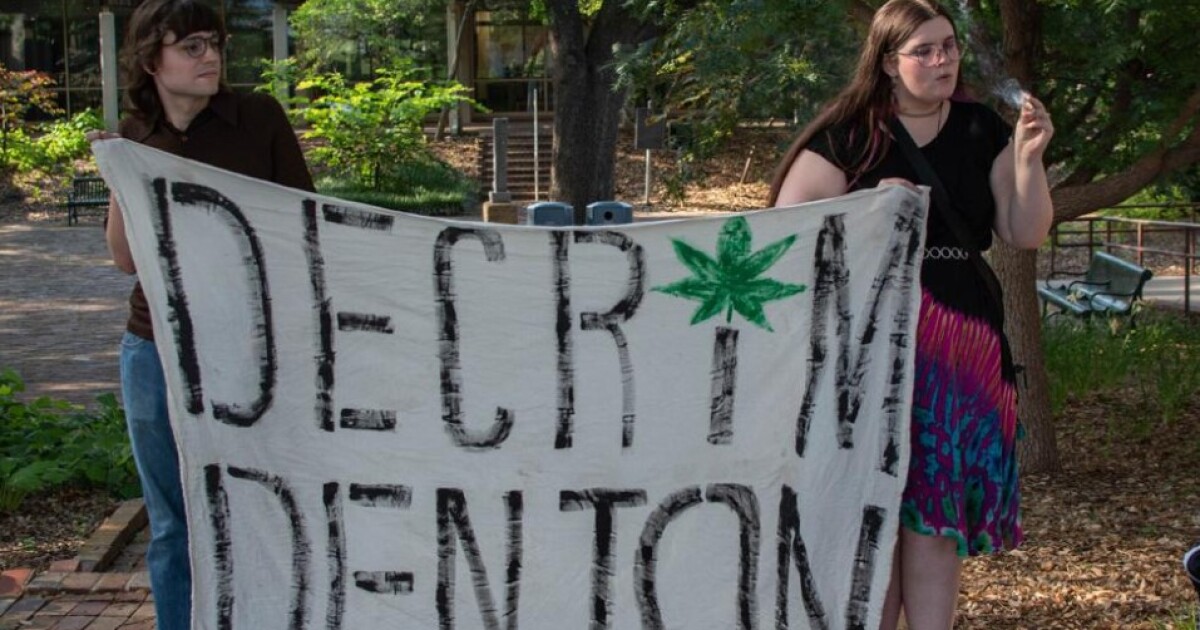
Over the weekend, Decriminalize Denton, the local grassroots organization behind Prop B, issued a call to action on social media for people to meet in front of City Hall at 6 p.m. Tuesday shortly before the council meeting and share their support of an ordinance that they argue saves lives.

Decriminalize Denton submitted the petition in May 2022 that led to Proposition B’s appearance on the November 2022 ballot. It was part of a statewide movement by Ground Game Texas, an Austin-based policy advocacy group, that saw similar ordinances passed in Austin, Dallas, San Marcos and other cities.

In a news release Sunday, Decriminalize Denton spokesperson Deb Armintor said that neither Hensley nor three police chiefs who have served under her have ever enforced the voter-approved ordinance, nor has the council held them accountable for not doing so. Armintor, who is a former council member, also decried the lack of warning or community engagement.

“Now, in May 2025, that same unelected city administrator is citing the groundless lawsuit by Texas Attorney General Ken Paxton as reason to repeal the ordinance altogether,” Armintor wrote in the release. “The city of Dallas, whose own successful cannabis decriminalization initiative ordinance was modeled after Denton’s, hasn’t caved to Paxton’s bullying, and neither should Denton. Dallas is actually implementing their ordinance instead. So should Denton. Just because other cities like San Marcos are repealing their decriminalization ordinances doesn’t mean Denton should too.

“Decrim Denton urges Council to fulfill their duty to their constituents and vote NO to repeal.”

Last year, Paxton sued Denton and five other Texas cities — Austin, Elgin, Killeen, San Marcos and Dallas — over their cannabis ordinances, claiming that Texas Local Government Code forbade any political subdivision from adopting policies that would not fully enforce the state’s drug laws.

It was a lawsuit that Denton Mayor Gerard Hudspeth warned would happen.

“This unconstitutional action by municipalities demonstrates why Texas must have a law to ‘follow the law,’” Paxton said in news release on Jan. 31, 2024. “It’s quite simple: the legislature passes every law after a full debate on the issues, and we don’t allow cities the ability to create anarchy by picking and choosing the laws they enforce.”

According to state law, possession of between 2 and 4 ounces of marijuana is a Class A misdemeanor, while possession of less than 2 ounces is a Class B misdemeanor. Possession of drug paraphernalia is a Class C misdemeanor — but there is no provision prohibiting possession of drug residue.

Although Paxton recently received a temporary injunction by the courts, the merits of the cases haven’t been argued at trials in Austin or San Marcos. According to April court documents, the 15th Court of Appeals wrote, “We remand the case to the trial court for proceedings consistent with this opinion and to enter a temporary injunction prohibiting the enforcement of the Ordinance pending a final trial on the merits.”

In her memo to the council, Hensley said the 15th Court of Appeals had held in April that the ordinances in San Marcos and Austin were “preempted” — or prevented — by Section 370.003 of the Texas Local Government Code, that council members in those cities acted ultra vires — or exceeded the limits of their authorities by adopting the ordinances — and that the state was entitled to a temporary injunction prohibiting enforcement of the ordinances.

Denton attorney Richard Gladden, who represents Decriminalize Denton, said Hensley was misleading the public and the council by presenting information that was factually incorrect since the courts haven’t ruled on whether the ordinances were preempted by the Texas Local Government Code or if council members had exceeded their authority by adopting the ordinances.

“Unfortunately, it appears to me that the Denton City Council and city manager don’t understand the difference between something probable and having occurred already because the read of the ordinance that they posted online is making the mistake that the court of appeals ruled that the decriminalization ordinances were preempted,” Gladden said Monday. “If you carefully read those decisions, it’s abundantly clear to lawyers that no such ruling was made in San Marcos or the city of Austin cases.”

Gladden stressed that the appellate court’s rulings related to the temporary injunction sought by the state.

“Obviously, if they sent it back for trial, they haven’t decided on the merits,” Gladden added. “Otherwise, there would be no reason to have a trial.”

In a late Monday afternoon email, Dustin Sternbeck, the city’s chief communication officer, wrote that the court in San Marcos held in plain terms that “’the Ordinance is preempted because it erects multiple barriers that prevent the City of San Marcos and its police officers from fully enforcing the State’s drug laws.’

“That means that the 15th Court of Appeals, the same court that already has evaluated Denton’s objections to discovery,” Sternbeck wrote, “and that will consider Denton’s similar legal defenses if and when Denton’s case is appealed, has already found that functionally the same ordinance is preempted by state law.”

CHRISTIAN McPHATE can be reached at 940-220-4299 and cmcphate@dentonrc.com.

For more than 120 years, the Denton Record-Chronicle has been Denton County’s source for locally produced, fact-based journalism. Your support through a tax-deductible donation or low-cost subscription is vital to our ability to deliver credible, relevant, unique coverage of our community.




Source link

Marijuana Moment - All your cannabis news, in one place

Marijuana Moment – All your cannabis news, in one place


Politics18 hours ago

Montana Governor Signs Bill Directing Marijuana Tax Revenue Toward Environmental Conservation And Wildlife

“Montana’s growing and changing, and now’s the time to invest in our outdoor way of life.” By Amanda Eggert, Montana…


Source link

Renville County adopts cannabis ordinance allowing only two retail outlets - West Central Tribune

Renville County adopts cannabis ordinance allowing only two retail outlets – West Central Tribune


OLIVIA

— The

Renville County Board of Commissioners

unanimously approved an ordinance to regulate cannabis sales in the county, despite concerns raised by the city of Olivia that it is too restrictive.

Stating that they wanted to move forward on cannabis sales with caution, the commissioners approved an ordinance that restricts the number of allowed retail establishments in the county to two. The ordinance does not allow temporary cannabis events.

The vote on May 13 followed a public hearing on the ordinance, which was originally drafted by the county’s Public Health Department.

Minnesota law requires counties to authorize at least one permanent retail outlet per 12,500 population. By allowing two, the county ordinance is aimed at meeting the minimum requirement.

The restriction to two retail outlets applies only to high-potency cannabis. The ordinance does not regulate the sale of low-potency THC beverages or edibles at convenience and other stores in the county.

Instead of doing the minimum as required by the law, Olivia Mayor Jon Hawkinson urged the commissioners “to deploy an opportunity mindset to embrace a new industry and perhaps fill some of these vacant store fronts we can see all across our county.”

Olivia Mayor Jon Hawkinson

Jon Hawkinson

Contributed / City of Olivia

“Why are we landing on two,” Hawkinson asked. “Does two makes economic sense for the business opportunities in the county?”

Hawkinson questioned whether having only two outlets offers fair access to the market for entrepreneurs in a county as geographically large as

Renville County

. He asked if the choice was simply based on the stigma and the minimum as required by law, rather than looking at the economic potential.

The city of Olivia has delegated its authority to regulate cannabis sales to Renville County, although it has the option under state law to take on that responsibility. If the city adopted its own ordinance, it could set its own number of cannabis retailers,

per state statute.

The mayor and City Administrator Elizabeth Torkelson said the city has chosen to delegate its authority to the county, rather than adopt its own ordinance. They said the city felt that the county had the better resources for the responsibility.

The city administrator pointed out that the county now regulates tobacco sales at 20 or more allowed retail outlets in the county. No different than cannabis, tobacco sales are restricted to those 21 years and older, and the county has effectively enforced this and other requirements for its sale.

The city and county differ on the authority over allowing temporary cannabis events. The county believes the authority belongs as part of its ordinance governing retail sales. Torkelson said the city’s attorney believes the authority over temporary events is a separate law. She said the city did not delegate its responsibility over temporary events to the county.

County Administrator Lisa Herges and Public Health Director Sara Benson said there is a lot of information still to be made known by the state Office of Cannabis Management.

Herges noted that the governor is holding private meetings with the state’s tribes about allowing them to open retail outlets at sites off of their land.

Benson said she has sent multiple inquiries to the state asking about the delegation of authority over temporary events as sought by Olivia, but has not received an answer.

The commissioners emphasized that the draft ordinance is designed to meet the requirements and the county’s obligation to allow cannabis sales. Board Chair David Hamre said this ordinance was proposed to “get the ball rolling,” while emphasizing the commissioners are open to modifying it as needs are raised.

David Hamre

“We’ve said that we are open to change if the request is there,” Hamre said during discussions. “We are trying to be cautious and that is our job.”

Commissioner Greg Snow, who represents Olivia, advocated for the city’s call for fewer restrictions, but acknowledged his concerns.

“It’s a tough, moral one for some of us,” he said of the legalization of cannabis sales. There are adverse consequences associated with substance use, he said.

Commissioner Craig Carlson said the people of Renville County are conservative and want the commissioners “to enter with caution.”


Source link

Alabama Court of Civil Appeals blocks new order holding up medical cannabis program

Alabama Court of Civil Appeals blocks new order holding up medical cannabis program


On Monday, the Alabama Court of Civil Appeals stayed an order by Montgomery County Circuit Judge James Anderson on April 21 that continued to block the Alabama Medical Cannabis Commission from issuing cannabis business licenses.

Anderson’s order was stayed pending further order of the Alabama Court of Civil Appeals.

In a unanimous decision in March, the Alabama Court of Civil Appeals said the temporary restraining order in Montgomery County Circuit Court that’s stalled the implementation of the state’s medical cannabis law for 14 months should be vacated “because the circuit court lacked subject-matter jurisdiction.” 

Alabama legalized cannabis for medical purposes in 2021, but the program has not gotten fully off the ground yet.

Despite the appeals court ruling, Anderson said in an order on April 21 that he was permanently prohibiting the Alabama Medical Cannabis Commission from taking any action in furtherance of the Dec. 12, 2023, awards and denials of medical cannabis licenses in the integrated facility category. Anderson wrote in his order that an emergency rule passed by the commission in October 2023 was void.

By law, the commission is allowed to award five integrated facility licenses, which will enable a business to cultivate, process, dispense, transport, and sell medical cannabis. This is the most competitive license category.

civil court ruling by Caleb Taylor on Scribd

To connect with the author of this story or to comment, email [email protected].

Don’t miss out! Subscribe to our newsletter and get our top stories every weekday morning.


Source link

Uncertainty over law hampering legal use of medicinal cannabis

Uncertainty over law hampering legal use of medicinal cannabis


A growing number of UK employees are now legally using medical cannabis to manage conditions such as chronic pain, anxiety and symptoms connected to the menopause, a study has suggested.

Yet, stigma and uncertainty about the law continue to leave employees anxious about disclosing and medicating at work, the research by medical cannabis clinic Alternaleaf has concluded.

It argued more than 350,000 prescriptions have been issued since medical cannabis was legalised in 2018, citing data from the NHS Business Services Authority showing year-on-year growth in private prescriptions for licensed cannabis medicines.

The clinic is urging HR professionals to align their workplace policy with the Equality Act, which protects employees from discrimination because of medical conditions.

Employers also need to foster a culture where workers feel safe to disclose their treatment without fear of judgment or penalty.

The clinic’s survey of 416 medical cannabis patients found more than half (57%) said it enabled them to work. Medical cannabis in this context refers to people who are being prescribed legal cannabis by a doctor rather than simply using legal cannabis or cannabis-based products for medical purposes, or ‘medicinal cannabis’.

Nine out of 10 (87%) said using medical cannabis made them feel more motivated. The vast majority (95%) said it had improved their overall wellbeing and happiness.

Nabila Chaudhri, medical director at Alternaleaf, said: “With economic inactivity at record highs, we urgently need solutions that help people manage chronic illness and stay in work.

“Medical cannabis is already getting people back into work, but a lack of awareness and understanding by workplaces and employers of the legality of medically prescribed cannabis is leading patients to feel too scared to take their medication at work for fear of their boss’s reaction,” she added.


Sign up to our weekly round-up of HR news and guidance

Receive the Personnel Today Direct e-newsletter every Wednesday


Latest HR job opportunities on Personnel Today


Browse more human resources jobs


Source link

Cannabis operators upset about 5% tax increase in budget agreement | The Mighty 790 KFGO

Cannabis operators upset about 5% tax increase in budget agreement | The Mighty 790 KFGO


MORGAN, Minn. – A lot of folks are upset that the budget deal at the State Capitol would raise the tax on cannabis products from 10% to 15%. 

Shawn Weber of the Minnesota Cannabis Growers Cooperative & Industry Council disagrees with House Speaker Lisa Demuth’s statement that our cannabis tax was “very” low. 

“Minnesota’s ten percent excise tax is lower than some states, but it was done intentionally to accomplish the legislative mandate. And that was to support small businesses, dismantle the illicit market, and ensure price parity with street prices,” Weber says. 

Weber notes the additional 5% tax on cannabis is on top of the state’s standard sales tax of 6.875%.


Source link

Young Czechs Continue To Turn Away From Cigarettes, Alcohol, Cannabis – Brno Daily

Young Czechs Continue To Turn Away From Cigarettes, Alcohol, Cannabis – Brno Daily


The number of young people in the Czech Republic who smoke cigarettes, drink alcohol or use cannabis products is continuing to decline, according to the results of the Czech part of the 8th European School Survey Project on Alcohol and Other Drugs (ESPAD).

Last year, nearly 3,000 16-year-old students in the Czech Republic took part in the survey, which indicated that consumption of these substances among young people was lower than 30 years ago when their use began to rise, at a level similar to the mid-1990s.

However, there is a growing proportion of adolescents who are using alternative nicotine products, drinking at risky levels, and taking psychoactive drugs. Czech teenagers also feel worse off than their European peers.

The first ESPAD survey was carried out in 1995. The Czech Republic has participated in all eight surveys. In 2024, the survey investigated 37 countries.

The latest survey showed that about one-fifth of 16-year-olds in the Czech Republic had smoked a cigarette in the previous month, while in 1995, it was one-third, with the figure subsequently rising to 45% and remaining above 40% until 2011. Last year, 6% of students said they smoked a cigarette every day, and 1.4% smoked more than 11 cigarettes per day.

56% of Czech teenagers said they had drunk alcohol in the past month; six years ago, this figure was 63%, and in 2015, 69%. Between 1999 and 2011, more than three-quarters of young people drank alcohol in the previous month. Last year, 17% of 16-year-olds admitted drinking too much alcohol and 15% said they had got drunk in the past month. After a decline in 2011, these figures have been slowly increasing since 2015.

See also

One-quarter of teenagers have tried cannabis. Between 2003 and 2011, this figure was almost half of the teenagers surveyed.

Czech young people feel worse off than before. Before the coronavirus pandemic, 18% reported poor mental health, compared to 23% last year.

5% of adolescents take sedatives, hypnotics or anxiolytics on prescription from a doctor on a long-term basis, and another 5% take antidepressants. 23% of 16-year-olds have tried to combine psychoactive drugs with alcohol at least once, and 12% have tried it repeatedly.


Source link