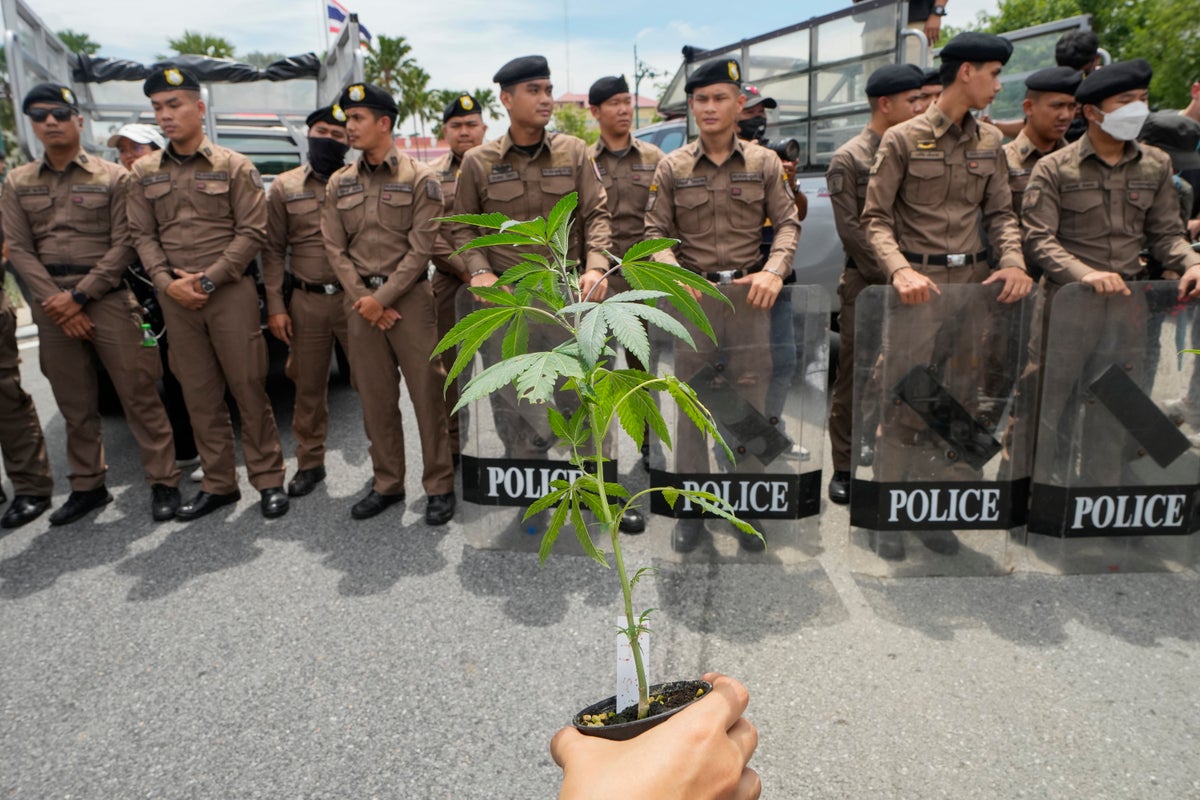
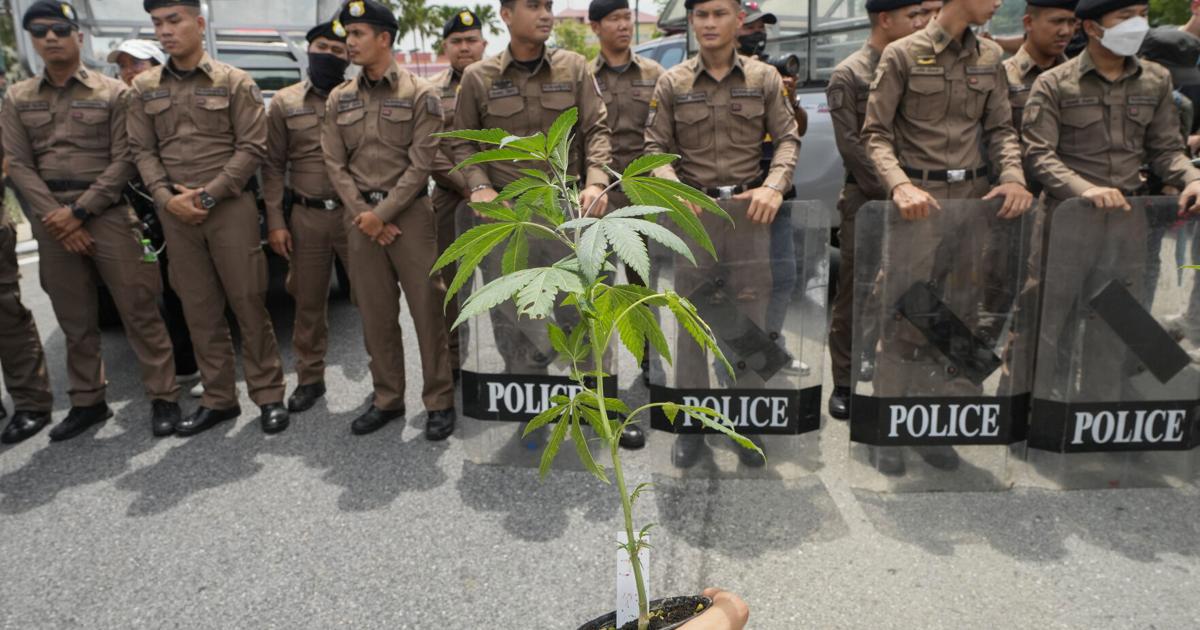
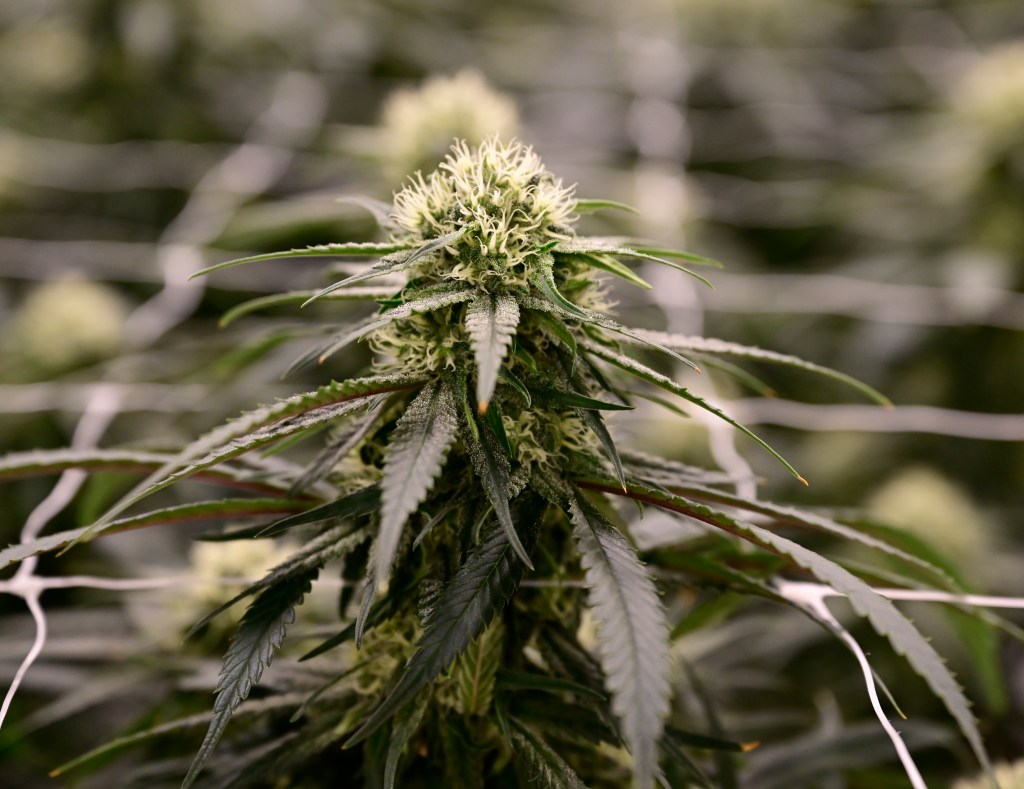
Thai officials on Wednesday said they planned to tighten regulations on cannabis sales after cases of tourists attempting to smuggle the drug out of the country soared in recent months.
Thailand became the first country in Asia to decriminalize cannabis in 2022, which has boosted Thailand’s tourism and farming and spawned thousands of shops. But it’s facing public backlash over allegations that under-regulation has made the drug available to children and caused addiction.
The ruling Pheu Thai Party has promised to criminalize the drugs again, but faced strong resistance from its partner in the coalition government which supported the decriminalization.
Thailand’s Health Minister Somsak Thepsutin said at a press conference that officials are aiming to roll out new regulations in coming weeks that will tighten control on the sale of cannabis, including requiring shops to sell cannabis only to customers who have a prescription.
He emphasized that it is against Thai law to bring cannabis out of the country without permission from the authorities.
Airport officials said they have tightened inspections to detect smuggling attempts, adding that most people found with cannabis in their luggage are foreigners, especially Indian and British nationals.
Last week two young British women were arrested in Georgia and Sri Lanka for alleged attempts to smuggle cannabis after they flew there from Thailand, according to the British media.
Britain’s government said a joint operation with Thailand in February resulted in over 2 tons of cannabis seized from air passengers. It said that since July last year, over 50 British nationals had been arrested in Thailand for attempting to smuggle cannabis.
It also said there was a dramatic increase in the amount of cannabis sent to the U.K. from Thailand by post since the decriminalization in 2022.
In March immigration authorities and police said 22 suitcases filled with a total of 375 kilograms of cannabis were seized, and 13 foreigners, most of them British, were arrested at the international airport on the Samui Island.
Thai officials said the suspects were hired to travel to Thailand as tourists then traveled to Samui, a popular tourist destination, where they would wait at the arranged accommodation to receive the suitcases with cannabis. They would then be instructed to travel from Samui to Singapore, and then from Singapore back to the U.K., where they would be paid 2,000 pounds ($2,682) upon completing the job.
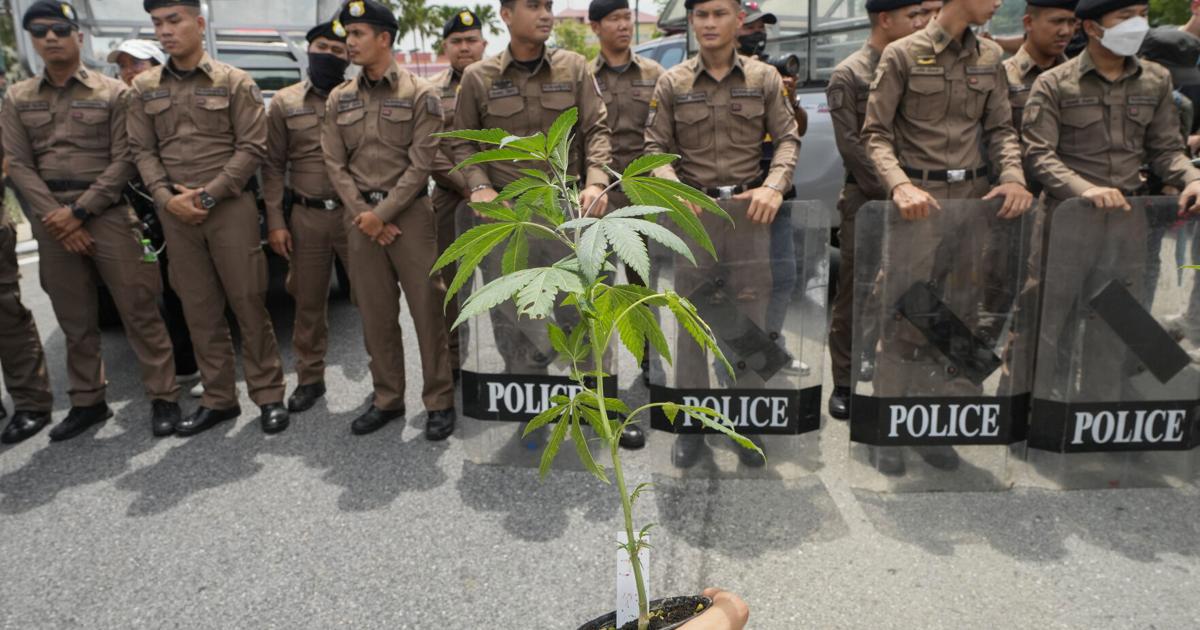
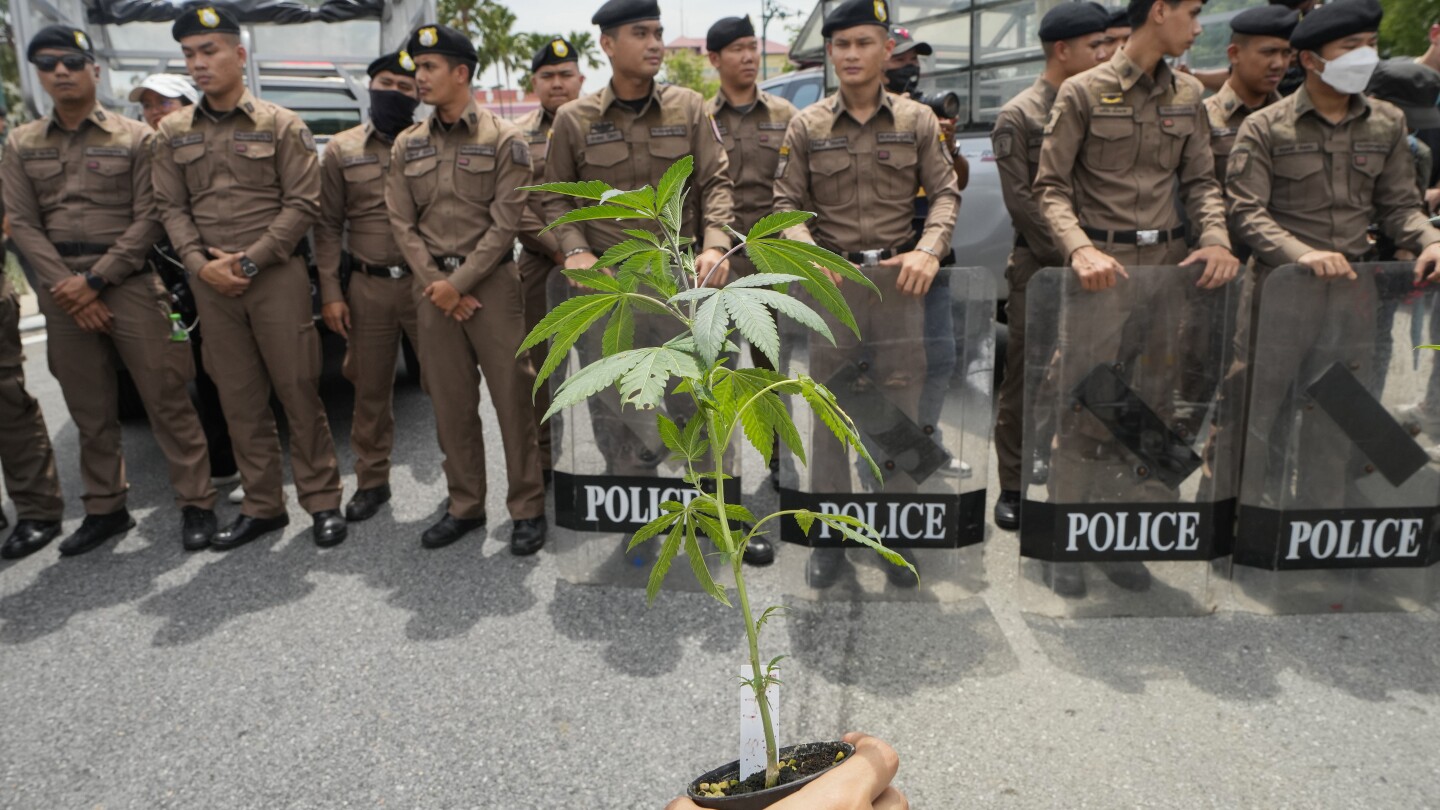
BANGKOK (AP) — Thai officials on Wednesday said they planned to tighten regulations on cannabis sales after cases of tourists attempting to smuggle the drug out of the country soared in recent months.
Thailand became the first country in Asia to decriminalize cannabis in 2022, which has boosted Thailand’s tourism and farming and spawned thousands of shops. But it’s facing public backlash over allegations that under-regulation has made the drug available to children and caused addiction.
The ruling Pheu Thai Party has promised to criminalize the drugs again, but faced strong resistance from its partner in the coalition government which supported the decriminalization.
Thailand’s Health Minister Somsak Thepsutin said at a press conference that officials are aiming to roll out new regulations in coming weeks that will tighten control on the sale of cannabis, including requiring shops to sell cannabis only to customers who have a prescription.
He emphasized that it is against Thai law to bring cannabis out of the country without permission from the authorities.
Airport officials said they have tightened inspections to detect smuggling attempts, adding that most people found with cannabis in their luggage are foreigners, especially Indian and British nationals.
Last week two young British women were arrested in Georgia and Sri Lanka for alleged attempts to smuggle cannabis after they flew there from Thailand, according to the British media.
Britain’s government said a joint operation with Thailand in February resulted in over 2 tons of cannabis seized from air passengers. It said that since July last year, over 50 British nationals had been arrested in Thailand for attempting to smuggle cannabis.
It also said there was a dramatic increase in the amount of cannabis sent to the U.K. from Thailand by post since the decriminalization in 2022.
In March immigration authorities and police said 22 suitcases filled with a total of 375 kilograms of cannabis were seized, and 13 foreigners, most of them British, were arrested at the international airport on the Samui Island.
Thai officials said the suspects were hired to travel to Thailand as tourists then traveled to Samui, a popular tourist destination, where they would wait at the arranged accommodation to receive the suitcases with cannabis. They would then be instructed to travel from Samui to Singapore, and then from Singapore back to the U.K., where they would be paid 2,000 pounds ($2,682) upon completing the job.
Copyright 2025 The Associated Press. All rights reserved. This material may not be published, broadcast, rewritten or redistributed without permission.
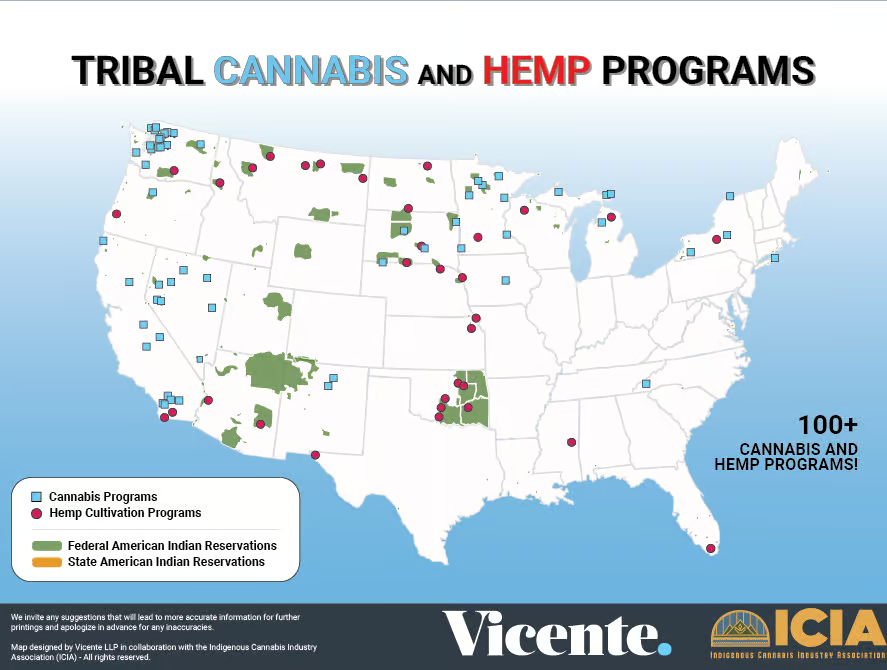
A new infographic from an advocacy group representing Native American tribes in the legal cannabis industry shows that more than a fourth of Indigenous communities in the continental United States are now involved with marijuana or hemp programs.
The map, created by the Indigenous Cannabis Industry Association (ICIA) in collaboration with the law firm Vicente, shows the locations of more than 100 tribal marijuana and hemp programs across the country.
Overall, approximately 26 percent of the 358 federally recognized Indigenous communities in the continental U.S. are now involved in some sort of cannabis program, the groups said.
The data, they said in a press release, “shows that the Indigenous cannabis industry is trending upward in terms of jobs, community development, and overall industry growth, with many Tribes currently scaling to meet demands for global cannabis distribution.”
“Since the first regulated Indigenous cannabis storefront opened almost 10 years ago in Washington State,” the groups said, “dozens of sovereign Indigenous communities have created their own unique regulatory systems to govern cannabis cultivation, production and sales.”
Indigenous Cannabis Industry Association
The map shows both individual programs as well as clusters that “denote tribal and Indigenous-led enterprises that are already working together to create successful supply chains and distribution networks.”
“Indigenous cannabis programs are a vital piece of America’s cannabis movement,” Andrew Livingston, Vicente’s director of economics and market analysis, said in a statement. “And these businesses deserve recognition. The goal of our study is to provide information on how different Indigenous communities have established their regulated cannabis programs, the size of the economic opportunity, and the ways that regulating cannabis can be structured in the future to further the goals of each community.”
In other states, meanwhile, including Minnesota, Oklahoma and much of the American West, the map is peppered with multiple tribal programs. Many of those states, notably Minnesota, have worked with Indigenous communities to incorporate tribal-run businesses into state-legal marijuana markets.
Rob Pero, ICIA’s founder, said the joint research project between his organization and Vicente “will highlight the thoughtful work that has gone into these sovereign regulatory programs as well as how these businesses affect local employment and revenue for community services.”
“Together, we hope to inform, inspire and empower other Indigenous communities considering cannabis as well as policy makers around the world,” he said.
Marijuana Moment is made possible with support from readers. If you rely on our cannabis advocacy journalism to stay informed, please consider a monthly Patreon pledge.
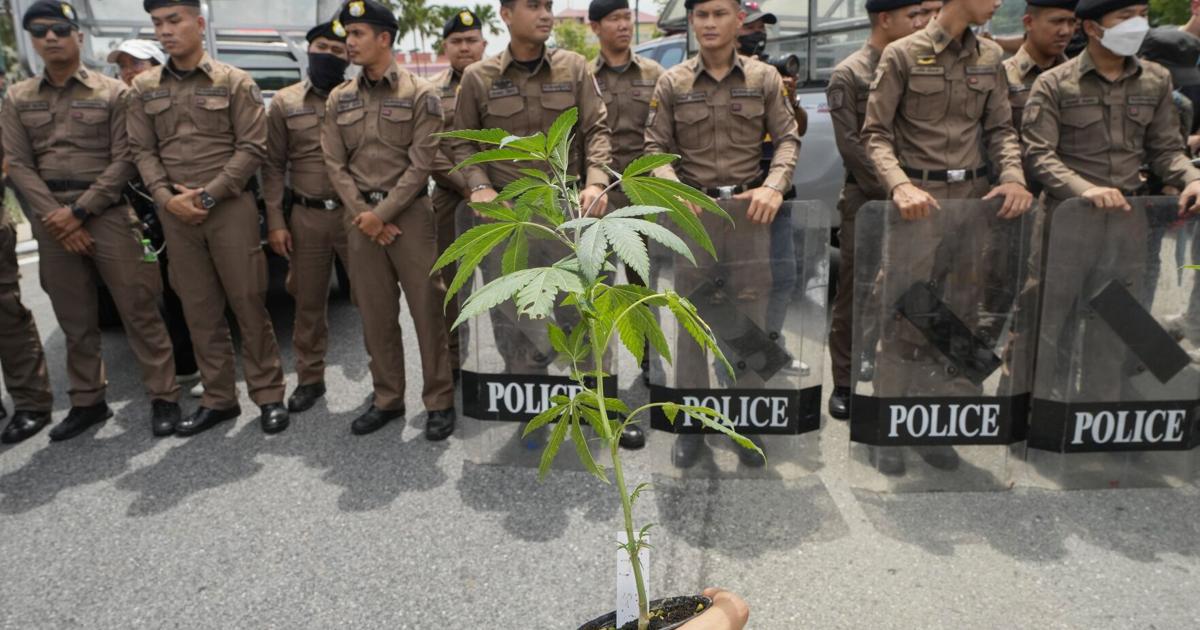
BANGKOK (AP) — Thai officials on Wednesday said they planned to tighten regulations on cannabis sales after cases of tourists attempting to smuggle the drug out of the country soared in recent months.
Thailand became the first country in Asia to decriminalize cannabis in 2022, which has boosted Thailand’s tourism and farming and spawned thousands of shops. But it’s facing public backlash over allegations that under-regulation has made the drug available to children and caused addiction.
Thailand’s Health Minister Somsak Thepsutin said at a press conference that officials are aiming to roll out new regulations in coming weeks that will tighten control on the sale of cannabis, including requiring shops to sell cannabis only to customers who have a prescription.
He emphasized that it is against Thai law to bring cannabis out of the country without permission from the authorities.
Airport officials said they have tightened inspections to detect smuggling attempts, adding that most people found with cannabis in their luggage are foreigners, especially Indian and British nationals.
Last week two young British women were arrested in Georgia and Sri Lanka for alleged attempts to smuggle cannabis after they flew there from Thailand, according to the British media.
Britain’s government said a joint operation with Thailand in February resulted in over 2 tons of cannabis seized from air passengers. It said that since July last year, over 50 British nationals had been arrested in Thailand for attempting to smuggle cannabis.
It also said there was a dramatic increase in the amount of cannabis sent to the U.K. from Thailand by post since the decriminalization in 2022.
In March immigration authorities and police said 22 suitcases filled with a total of 375 kilograms of cannabis were seized, and 13 foreigners, most of them British, were arrested at the international airport on the Samui Island.
Thai officials said the suspects were hired to travel to Thailand as tourists then traveled to Samui, a popular tourist destination, where they would wait at the arranged accommodation to receive the suitcases with cannabis. They would then be instructed to travel from Samui to Singapore, and then from Singapore back to the U.K., where they would be paid 2,000 pounds ($2,682) upon completing the job.
Copyright 2025 The Associated Press. All rights reserved. This material may not be published, broadcast, rewritten or redistributed without permission.
BANGKOK (AP) — Thai officials on Wednesday said they planned to tighten regulations on cannabis sales after cases of tourists attempting to smuggle the drug out of the country soared in recent months.
Thailand became the first country in Asia to decriminalize cannabis in 2022, which has boosted Thailand’s tourism and farming and spawned thousands of shops. But it’s facing public backlash over allegations that under-regulation has made the drug available to children and caused addiction.
The ruling Pheu Thai Party has promised to criminalize the drugs again, but faced strong resistance from its partner in the coalition government which supported the decriminalization.
Thailand’s Health Minister Somsak Thepsutin said at a press conference that officials are aiming to roll out new regulations in coming weeks that will tighten control on the sale of cannabis, including requiring shops to sell cannabis only to customers who have a prescription.
He emphasized that it is against Thai law to bring cannabis out of the country without permission from the authorities.
Airport officials said they have tightened inspections to detect smuggling attempts, adding that most people found with cannabis in their luggage are foreigners, especially Indian and British nationals.
Last week two young British women were arrested in Georgia and Sri Lanka for alleged attempts to smuggle cannabis after they flew there from Thailand, according to the British media.
Britain’s government said a joint operation with Thailand in February resulted in over 2 tons of cannabis seized from air passengers. It said that since July last year, over 50 British nationals had been arrested in Thailand for attempting to smuggle cannabis.
It also said there was a dramatic increase in the amount of cannabis sent to the U.K. from Thailand by post since the decriminalization in 2022.
In March immigration authorities and police said 22 suitcases filled with a total of 375 kilograms of cannabis were seized, and 13 foreigners, most of them British, were arrested at the international airport on the Samui Island.
Thai officials said the suspects were hired to travel to Thailand as tourists then traveled to Samui, a popular tourist destination, where they would wait at the arranged accommodation to receive the suitcases with cannabis. They would then be instructed to travel from Samui to Singapore, and then from Singapore back to the U.K., where they would be paid 2,000 pounds ($2,682) upon completing the job.
A Denver District Court this month dismissed a lawsuit against Colorado’s Marijuana Enforcement Division that alleged the agency failed to protect consumers from contaminated products and ineffectively handled bad actors in the marketplace.
The ruling stated that San Luis Valley-based cannabis company Mammoth Farms attempted to circumvent the normal process for handling disputes involving regulation and enforcement by taking its issues to the court.
Mammoth Farms CEO Justin Trouard told The Denver Post he plans to appeal the decision.
Specifically, Mammoth Farms alleged that regulators ignored companies that are diverting legal weed to illicit markets in other states. It also alleged the agency’s marijuana tracking and testing protocols are insufficient to identify bad actors and allow potentially dangerous products to reach cannabis consumers.
In an industry bulletin, the Marijuana Enforcement Division said it remains dedicated to prioritizing consumer protections and preventing youth access, adding the agency will not tolerate businesses that deliberately disregard regulations to put youth and consumers at risk.
“When there are concerns about bad actors and safety risks in the regulated market, a licensee’s willingness to provide information is not something we take lightly,” said Dominique Mendiola, senior director of the enforcement division, in the statement. “There are legal requirements we must follow to maintain the integrity and legality of our agency actions, so it’s important to let investigations and due process take their course.”
BANGKOK — Thai officials on Wednesday said they planned to tighten regulations on cannabis sales after cases of tourists attempting to smuggle the drug out of the country soared in recent months.
Thailand became the first country in Asia to decriminalize cannabis in 2022, which has boosted Thailand’s tourism and farming and spawned thousands of shops. But it’s facing public backlash over allegations that under-regulation has made the drug available to children and caused addiction.
The ruling Pheu Thai Party has promised to criminalize the drugs again, but faced strong resistance from its partner in the coalition government which supported the decriminalization.
Thailand’s Health Minister Somsak Thepsutin said at a press conference that officials are aiming to roll out new regulations in coming weeks that will tighten control on the sale of cannabis, including requiring shops to sell cannabis only to customers who have a prescription.
He emphasized that it is against Thai law to bring cannabis out of the country without permission from the authorities.
Airport officials said they have tightened inspections to detect smuggling attempts, adding that most people found with cannabis in their luggage are foreigners, especially Indian and British nationals.
Last week two young British women were arrested in Georgia and Sri Lanka for alleged attempts to smuggle cannabis after they flew there from Thailand, according to the British media.
Britain’s government said a joint operation with Thailand in February resulted in over 2 tons of cannabis seized from air passengers. It said that since July last year, over 50 British nationals had been arrested in Thailand for attempting to smuggle cannabis.
It also said there was a dramatic increase in the amount of cannabis sent to the U.K. from Thailand by post since the decriminalization in 2022.
In March immigration authorities and police said 22 suitcases filled with a total of 375 kilograms of cannabis were seized, and 13 foreigners, most of them British, were arrested at the international airport on the Samui Island.
Thai officials said the suspects were hired to travel to Thailand as tourists then traveled to Samui, a popular tourist destination, where they would wait at the arranged accommodation to receive the suitcases with cannabis. They would then be instructed to travel from Samui to Singapore, and then from Singapore back to the U.K., where they would be paid 2,000 pounds ($2,682) upon completing the job.
OMAHA, Neb. (KMTV) — Good Wednesday morning, neighbors! The sunshine is back at times today, but it stays cool and breezy with a high near 66 in Omaha. Rain is still likely for part of your holiday weekend. Let’s check out the latest news from your neighborhood.
NEIGHBORHOOD CHECK-IN Will county-wide funding help Mills County neighbors get better ambulance services? Plus, debate over cannabis regulation in Nebraska hits the floor as lawmakers race to get bills passed before session ends. These stories and more in today’s Neighborhood Check-In.
Neighborhood Check-In May 21, 2025
IN CASE YOU MISSED IT
Replanting in Ramblewood: While houses continue to get rebuilt post Arbor Day tornado in the Ramblewood neighborhood, some neighbors’ focus has shifted to the next thing needed to bring this place back to life: trees. Watch the story below.
‘Part of what makes a house a home’: Rebuilding the tree canopy in tornado-struck Elkhorn neighborhood
Memorial Day Flag Project:Thousands of flags will be planted at Westlawn-Hillcrest Cemetery honoring each veteran buried there.