Redwood City lowers fees for cannabis businesses | Local News

Redwood City lowers fees for cannabis businesses | Local News


Cannabis businesses operating in Redwood City are getting a bit of a financial break. 

Changes in the management of the city’s cannabis program is cutting down annual fees for the six business operators by 34%, an adjustment approved by the Redwood City Council at its board meeting May 19. 


Source link

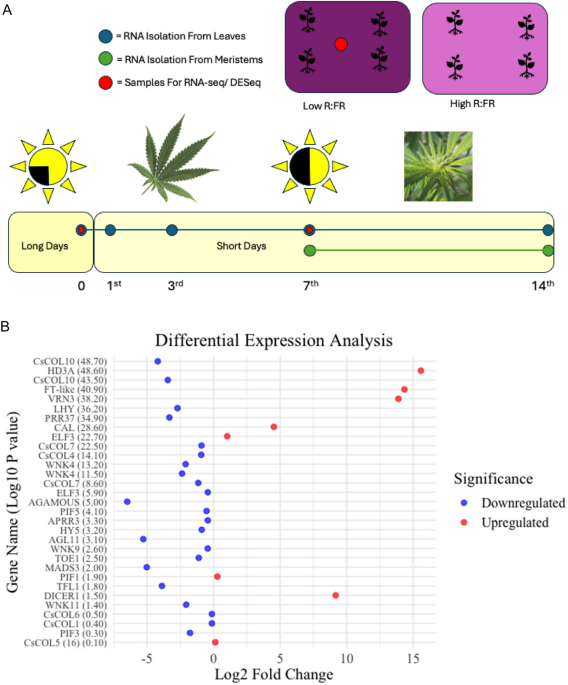
Transcriptomic analysis of CDL-gated photoperiodic flowering mechanisms in cannabis and their responsiveness to R: FR ratios in controlled environment agriculture

Transcriptomic analysis of CDL-gated photoperiodic flowering mechanisms in cannabis and their responsiveness to R: FR ratios in controlled environment agriculture


  • Cheng, M.-C., Kathare, P. K., Paik, I. & Huq, E. Phytochrome Signaling Networks. Annu. Rev. Plant Biol. 72, 217–244 (2021).

    Article 
    CAS 
    PubMed 
    PubMed Central 

    Google Scholar
     

  • Igamberdiev, A. U., Eprintsev, A. T., Fedorin, D. N. & Popov, V. N. Phytochrome-mediated regulation of plant respiration and photorespiration. Plant, Cell Environ. 37, 290–299 (2014).

    Article 
    CAS 
    PubMed 

    Google Scholar
     

  • Li, J., Li, G., Wang, H. & Wang Deng, X. Phytochrome Signaling Mechanisms. The Arabidopsis. Book 9, e0148 (2011).


    Google Scholar
     

  • Seaton, D. D. et al. Dawn and photoperiod sensing by phytochrome A. Proc Natl Acad Sci USA 115, 10523–10528 (2018).

    Article 
    ADS 
    CAS 
    PubMed 
    PubMed Central 

    Google Scholar
     

  • Franklin, K. A. & Whitelam, G. C. Phytochromes and shade-avoidance responses in plants. Ann. Bot. 96, 169–175 (2005).

    Article 
    CAS 
    PubMed 
    PubMed Central 

    Google Scholar
     

  • Ashdown, I. Phytochrome and PSS: ‘Think Beyond Pink’. (2016).

  • Sager, J. C., W. O. Smith, J. L. Edwards, and K. L. Photosynthetic Efficiency and Phytochrome Equilibria Determination Using Spectral Data. Transactions of the ASAE 31, (1988).

  • Jaeger, K. E. & Wigge, P. A. FT protein acts as a long-range signal in arabidopsis. Curr. Biol. 17, 1050–1054 (2007).

    Article 
    CAS 
    PubMed 

    Google Scholar
     

  • Hall, J., Bhattarai, S. P. & Midmore, D. J. Review of flowering control in industrial hemp. J. Nat. Fibers 9, 23–36 (2012).

    Article 
    CAS 

    Google Scholar
     

  • Lisson, S. N., Mendham, N. J. & Carberry, P. S. Development of a hemp (Cannabis sativa L.) simulation model 2The flowering response of two hemp cultivars to photoperiod. Aust. J. Exp. Agric. 40, 413 (2000).

    Article 

    Google Scholar
     

  • Ishikawa, R., Shinomura, T., Takano, M. & Shimamoto, K. Phytochrome dependent quantitative control of Hd3a transcription is the basis of the night break effect in rice flowering. Genes Genet. Syst. 84, 179–184 (2009).

    Article 
    CAS 
    PubMed 

    Google Scholar
     

  • Kurtz, L. E., Brand, M. H. & Lubell-Brand, J. D. Gene dosage at the autoflowering locus effects flowering timing and plant height in triploid cannabis. J. Amer. Soc. Hort. Sci. 148, 83–88 (2023).

    Article 

    Google Scholar
     

  • Teotia, S. & Tang, G. To Bloom or not to bloom: Role of MICRORNAS in plant flowering. Mol. Plant 8, 359–377 (2015).

    Article 
    CAS 
    PubMed 

    Google Scholar
     

  • Shim, J. S., Kubota, A. & Imaizumi, T. Circadian clock and photoperiodic flowering in arabidopsis: CONSTANS is a hub for signal integration. Plant Physiol. 173, 5–15 (2017).

    Article 
    CAS 
    PubMed 

    Google Scholar
     

  • Mizoguchi, T. et al. Distinct roles of GIGANTEA in promoting flowering and regulating circadian rhythms in arabidopsis. Plant Cell 17, 2255–2270 (2005).

    Article 
    CAS 
    PubMed 
    PubMed Central 

    Google Scholar
     

  • Duek, P. D. & Fankhauser, C. HFR1, a putative bHLH transcription factor, mediates both phytochrome A and cryptochrome signalling. Plant J. 34, 827–836 (2003).

    Article 
    CAS 
    PubMed 

    Google Scholar
     

  • King, R. W., Hisamatsu, T., Goldschmidt, E. E. & Blundell, C. The nature of floral signals in Arabidopsis I Photosynthesis and a far-red photoresponse independently regulate flowering by increasing expression of FLOWERING LOCUS T (FT). J. Exper. Botany 59, 3811–3820 (2008).

    Article 
    CAS 

    Google Scholar
     

  • Wenkel, S. et al. CONSTANS and the CCAAT box binding complex share a functionally important domain and interact to regulate flowering of Arabidopsis. Plant Cell 18, 2971–2984 (2006).

    Article 
    CAS 
    PubMed 
    PubMed Central 

    Google Scholar
     

  • Leckie, K. M. et al. Loss of Daylength Sensitivity by Splice Site Mutation in Cannabis. https://biorxiv.org/lookup/doi/https://doi.org/10.1101/2023.03.10.532103 (2023) https://doi.org/10.1101/2023.03.10.532103.

  • Murakami-Kojima, M., Nakamichi, N., Yamashino, T. & Mizuno, T. The APRR3 component of the clock-associated APRR1/TOC1 quintet is phosphorylated by a novel protein kinase belonging to the WNK family, the gene for which is also transcribed rhythmically in Arabidopsis thaliana. Plant Cell Physiol. 43, 675–683 (2002).

    Article 
    CAS 
    PubMed 

    Google Scholar
     

  • Sun, C. et al. Bifunctional regulators of photoperiodic flowering in short day plant rice. Front. Plant Sci. 13, 1044790 (2022).

    Article 
    PubMed 
    PubMed Central 

    Google Scholar
     

  • Yano, M. et al. Hd1, a major photoperiod sensitivity quantitative trait locus in rice, is closely related to the arabidopsis flowering time gene CONSTANS. Plant Cell 12, 2473–2483 (2000).

    Article 
    CAS 
    PubMed 
    PubMed Central 

    Google Scholar
     

  • Copley, T. R., Duceppe, M.-O. & O’Donoughue, L. S. Identification of novel loci associated with maturity and yield traits in early maturity soybean plant introduction lines. BMC Genomics 19, 167 (2018).

    Article 
    PubMed 
    PubMed Central 

    Google Scholar
     

  • Watanabe, S. et al. A map-based cloning strategy employing a residual heterozygous line reveals that the GIGANTEA gene is involved in soybean maturity and flowering. Genetics 188, 395–407 (2011).

    Article 
    CAS 
    PubMed 
    PubMed Central 

    Google Scholar
     

  • Pan, G. et al. Genome-wide identification, expression, and sequence analysis of CONSTANS-like gene family in cannabis reveals a potential role in plant flowering time regulation. BMC Plant Biol 21, 142 (2021).

    Article 
    CAS 
    PubMed 
    PubMed Central 

    Google Scholar
     

  • Dowling, C. A. et al. A FLOWERING LOCUS T Ortholog Is Associated with Photoperiod-Insensitive Flowering in Hemp ( Cannabis Sativa L.). https://biorxiv.org/lookup/doi/https://doi.org/10.1101/2023.04.21.537862 (2023) https://doi.org/10.1101/2023.04.21.537862.

  • Steel, L., Welling, M., Ristevski, N., Johnson, K. & Gendall, A. Comparative genomics of flowering behavior in Cannabis sativa. Front. Plant Sci. 14, 1227898 (2023).

    Article 
    PubMed 
    PubMed Central 

    Google Scholar
     

  • Spitzer-Rimon, B. et al. Non-photoperiodic transition of female cannabis seedlings from juvenile to adult reproductive stage. Plant Reprod 35, 265–277 (2022).

    Article 
    CAS 
    PubMed 

    Google Scholar
     

  • Chen, X. et al. Whole-genome resequencing of wild and cultivated cannabis reveals the genetic structure and adaptive selection of important traits. BMC Plant Biol 22, 371 (2022).

    Article 
    CAS 
    PubMed 
    PubMed Central 

    Google Scholar
     

  • Spitzer-Rimon, B., Duchin, S., Bernstein, N. & Kamenetsky, R. Architecture and florogenesis in female cannabis sativa plants. Front. Plant Sci. 10, 350 (2019).

    Article 
    PubMed 
    PubMed Central 

    Google Scholar
     

  • Das, A., Chaudhury, S., Kalita, M. C. & Mondal, T. K. In silico identification, characterization and expression analysis of miRNAs in Cannabis sativa L. Plant Gene 2, 17–24 (2015).

    Article 
    CAS 

    Google Scholar
     

  • Wu, G. et al. The sequential action of miR156 and miR172 regulates developmental timing in arabidopsis. Cell 138, 750–759 (2009).

    Article 
    CAS 
    PubMed 
    PubMed Central 

    Google Scholar
     

  • Aukerman, M. J. & Sakai, H. Regulation of flowering time and floral organ identity by a MicroRNA and Its APETALA2 -like target genes. Plant Cell 15, 2730–2741 (2003).

    Article 
    CAS 
    PubMed 
    PubMed Central 

    Google Scholar
     

  • Xie, K., Wu, C. & Xiong, L. Genomic organization, differential expression, and interaction of SQUAMOSA promoter-binding-like transcription factors and microRNA156 in rice. Plant Physiol. 142, 280–293 (2006).

    Article 
    CAS 
    PubMed 
    PubMed Central 

    Google Scholar
     

  • Chen, X. A MicroRNA as a translational repressor of APETALA2 in Arabidopsis flower development. Science 303, 2022–2025 (2004).

    Article 
    ADS 
    CAS 
    PubMed 

    Google Scholar
     

  • Park, W., Li, J., Song, R., Messing, J. & Chen, X. CARPEL FACTORY, a Dicer Homolog, and HEN1, a novel protein, act in microRNA metabolism in arabidopsis thaliana. Curr. Biol. 12, 1484–1495 (2002).

    Article 
    CAS 
    PubMed 
    PubMed Central 

    Google Scholar
     

  • Hu, J. et al. Unravelling miRNA regulation in yield of rice (Oryza sativa) based on differential network model. Sci. Rep. 8, 8498 (2018).

    Article 
    ADS 
    PubMed 
    PubMed Central 

    Google Scholar
     

  • McKernan, K. et al. Cryptocurrencies and Zero Mode Wave guides: An unclouded path to a more contiguous Cannabis sativa L. genome assembly. Preprint at https://doi.org/10.31219/osf.io/7d968 (2018).

  • Zhang, B., Wang, L., Zeng, L., Zhang, C. & Ma, H. Arabidopsis TOE proteins convey a photoperiodic signal to antagonize CONSTANS and regulate flowering time. Genes Dev. 29, 975–987 (2015).

    Article 
    CAS 
    PubMed 
    PubMed Central 

    Google Scholar
     

  • Du, A. et al. The DTH8-Hd1 module mediates day-length-dependent regulation of rice flowering. Mol. Plant 10, 948–961 (2017).

    Article 
    CAS 
    PubMed 

    Google Scholar
     

  • Toth, J. A., Stack, G. M., Carlson, C. H. & Smart, L. B. Identification and mapping of major-effect flowering time loci Autoflower1 and Early1 in Cannabis sativa L. Front. Plant Sci. 13, 991680 (2022).

    Article 
    PubMed 
    PubMed Central 

    Google Scholar
     

  • Xia, Z. et al. Positional cloning and characterization reveal the molecular basis for soybean maturity locus E1 that regulates photoperiodic flowering. Proc. Natl. Acad. Sci. U.S.A. https://doi.org/10.1073/pnas.1117982109 (2012).

    Article 
    PubMed 
    PubMed Central 

    Google Scholar
     

  • Pumplin, N. et al. DNA methylation influences the expression of DICER-LIKE4 Isoforms, which encode proteins of alternative localization and function. Plant Cell 28, 2786–2804 (2016).

    Article 
    CAS 
    PubMed 
    PubMed Central 

    Google Scholar
     

  • Williams, C. R., Baccarella, A., Parrish, J. Z. & Kim, C. C. Trimming of sequence reads alters RNA-Seq gene expression estimates. BMC Bioinformatics 17, 103 (2016).

    Article 
    PubMed 
    PubMed Central 

    Google Scholar
     

  • Patro, R., Duggal, G., Love, M. I., Irizarry, R. A. & Kingsford, C. Salmon provides fast and bias-aware quantification of transcript expression. Nat Methods 14, 417–419 (2017).

    Article 
    CAS 
    PubMed 
    PubMed Central 

    Google Scholar
     

  • Love, M. I., Huber, W. & Anders, S. Moderated estimation of fold change and dispersion for RNA-seq data with DESeq2. Genome Biol 15, 550 (2014).

    Article 
    PubMed 
    PubMed Central 

    Google Scholar
     

  • Zhu, A., Ibrahim, J. G. & Love, M. I. Heavy-tailed prior distributions for sequence count data: removing the noise and preserving large differences. Bioinformatics 35, 2084–2092 (2019).

    Article 
    CAS 
    PubMed 

    Google Scholar
     

  • Shimadzu Corporation. The Potency Determination of 15 Cannabinoids using the Cannabis Analyzer for Potency. (2020).

  • Deguchi, M. et al. Selection and validation of reference genes for normalization of qRT-PCR data to study the cannabinoid pathway genes in industrial hemp. PLoS ONE 16, e0260660 (2021).

    Article 
    CAS 
    PubMed 
    PubMed Central 

    Google Scholar


  • Source link

    Marijuana Moment - All your cannabis news, in one place

    Marijuana Moment – All your cannabis news, in one place


    Politics1 hour ago

    Nebraska Senators Reject Bill To Implement Voter-Approved Medical Marijuana Program

    “I would expect intelligent people with good hearts, which I believe this body is, can find a way to provide…


    Source link

    Precision Over Potency: Personalised Cannabis Medicine is Coming of Age

    Precision Over Potency: Personalised Cannabis Medicine is Coming of Age


    One of the key differences between medical cannabis and other more traditional treatments is the highly personalised nature of how each patient is affected.

    In a 2023 review published in Current Issues in Molecular Biology, researchers showed how genetic variability can significantly influence how individuals respond to cannabis and its swathe of different cannabinoids and terpenes.

    “Pharmacogenomics can help predict both positive and negative effects of cannabinoids and precisely identify the best treatment and dose for each individual,*” write the researchers, who emphasise just how important and effective personalised medicine can be.

    For Somai Pharmaceuticals, one of Europe’s largest multi-country operators, the principle of personalised medicine, both for specific conditions and individual patients, is a core foundation of their approach.

    Earlier this year, it launched new Origins and Senses product lines for Oral Solutions and Inhalation Oils, seeking to offer a ‘full spectrum of options tailored to diverse patient needs and preferences’.

    By profiling and integrating naturally derived terpenes into its pharmaceutical formulations, Somai aims to ‘unlock a spectrum of therapeutic benefits’ for its patients.

    What are terpenes?

    Terpenes are a diverse range of organic compounds found in virtually all plants, and are responsible for specific aromas, flavour and colours.

    In cannabis, however, terpenes play a crucial role in the therapeutic profile of the strain. Somai’s CEO, Michael Sassano, explained to Business of Cannabis: “Terpenes don’t just shape the smell and taste, they interact synergistically with cannabinoids like THC and CBD to modulate and enhance therapeutic effects.”

    This is called the ‘entourage effect’, which Sassano states is ‘one of the most important concepts in understanding how cannabis truly works’.

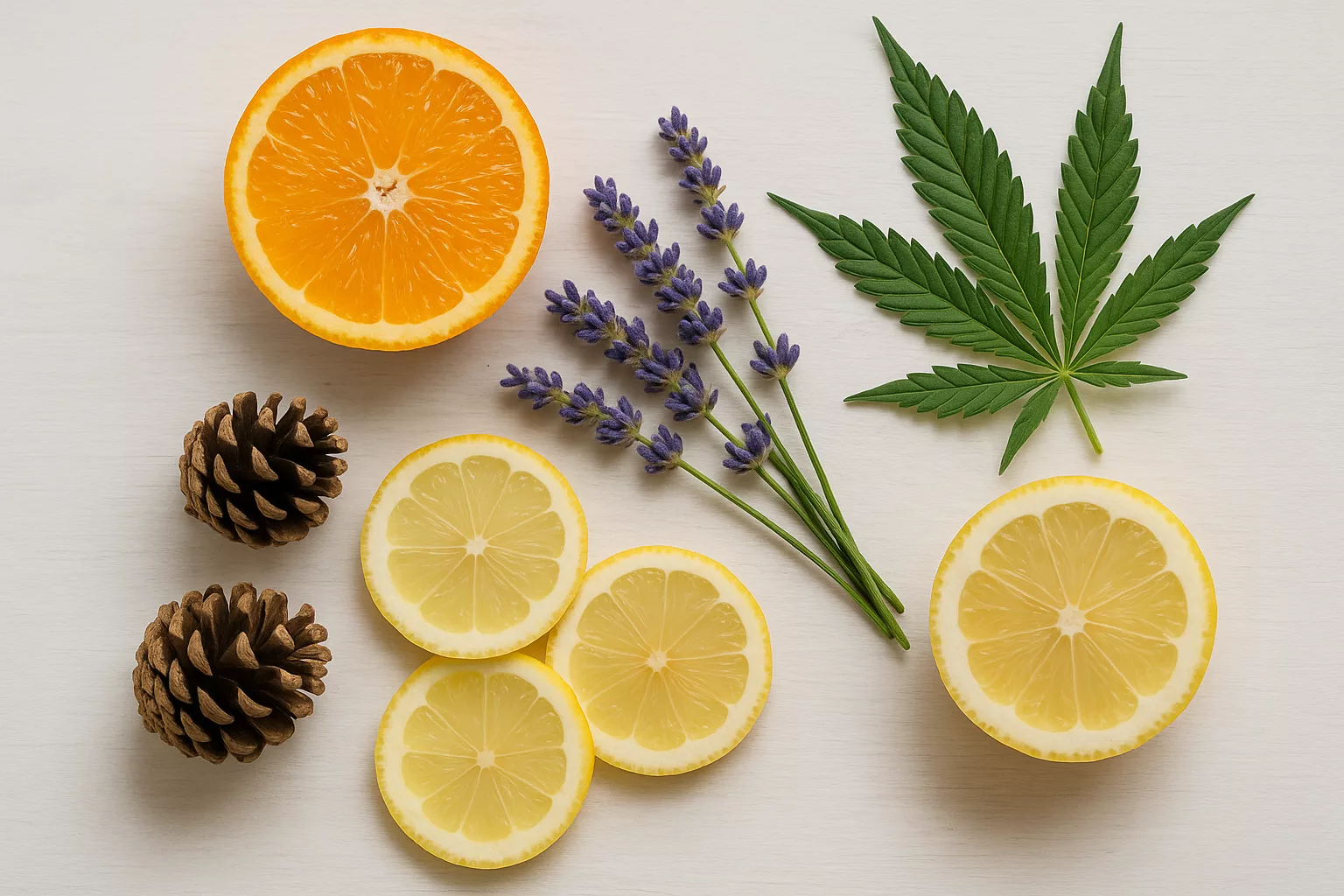
    Myrcene, for example, is understood to enable cannabinoids to act more effectively by increasing blood-brain barrier permeability, while Limonene and Pinene can enhance mood and act as anti-inflammatories.

    “At Somai, we look at terpenes as a critical component of our formulations, not an afterthought, because optimising therapeutic outcomes is about precision, not just potency.”

    Terpenes are also used to alter the smell and flavour of products. While this may sound trivial in comparison to enhancing cannabis’ therapeutic effects, Sassano says it is crucial to ensuring compliance with treatment plans.

    “When you’re dealing with medical patients, compliance is everything. If a product smells or tastes unpleasant, people are less likely to use it consistently, and consistency is key in any medical treatment. By enhancing the flavour profile with specific terpenes that are both therapeutic and pleasant, we’re seeing increased adherence to treatment regimens.”

    Somai’s goal, he continued, is to bridge the gap between pharmaceutical-grade medicine, and the familiar and natural feel of a product.

    The specific terpene profiles are not just tailored to individual patients, but also to how they are choose to consume their medication.

    With Somai offering an extensive range of delivery methods, from raw flower to oral sprays, soft-gel caps and vaporised oils, each of these presents it own formulation challenge.

    Terpenes are sensitive to heat, light and oxygen, and can degrade with exposure to each.

    In order to preserve the terpene profiles for inhalables, Somai focuses ‘on the natural terpene spectrum present in the plant to maintain it through gentle post-harvest processes’.

    “For oils and other extracts, we may reintroduce terpenes in precise ratios to ensure stability and consistency. The idea is not just to recreate a strain’s profile, but to deliver a consistent therapeutic experience across batches.”

    According to the company, patient feedback on these products has been ‘overwhelmingly positive’, and has helped patients integrate treatment into their daily routines.

    “And yes, it influences behaviour. When patients have a sensory connection to their medicine, when they enjoy the smell, taste, and feel, they’re more likely to use it correctly and consistently. It reinforces our belief that medical cannabis should be both effective and intuitive.”

    The need for education 

    While personalised medical cannabis treatment promises to enhance the patient experience, its complex nature can often act as a barrier for prescribing medical professionals.

    Research remains in its infancy, and clinical explorations of the myriad of compounds and their interactions are incredibly difficult to achieve in todays economic and regulatory climate.

    To help clear this hurdle, Somai is ‘investing heavily in education’, and now offers training programs, scientific webinars and accessible literature for healthcare professionals.

    “Education is foundational. We provide healthcare professionals with detailed product information, including terpene and cannabinoid profiles, onset times, and duration of effects. Our medical team works closely with doctors and pharmacists to guide them in matching formulations to symptom profiles,” Sassano explained.

    Somai Group’s CEO, Michael Sassano


    This involves directing prescribers towards, for example, a high-myrcene THC-dominant formulation delivered via inhalation for someone suffering from chronic pain, or a more CBD-rich oil with calming terpenes like linalool and beta-caryophyllene for someone with anxiety.

    Its education efforts also extend to patients, with Somai offering ‘patient friendly’ materials to help them make informed decisions.

    They are also set to launch a new research report, which will explain and quantify exactly how terpenes are extracted and reintroduced into their products.

    Ultimately, Somai concludes, both the personalised products and the education that is provided alongside them, are about ‘empowering decisions based on science and patient feedback’.

    “The cannabis world is moving quickly, and our job is to translate complex science into real-world solutions. Education drives confidence, and confident patients are more engaged with their treatment.”

    1. *Babayeva, M., & Loewy, Z. G. (2023). Cannabis Pharmacogenomics: A Path to Personalized Medicine. Current Issues in Molecular Biology, 45(4), 3479–3514. https://doi.org/10.3390/cimb45040228


    The European cannabis industry is preparing to descend on Berlin and London for European Cannabis Week where the latest insights from the world’s leading voices will take centre stage across four separate events taking place from June 19-25. 

    For further real-time updates on market dynamics, market sizing and evolving regulations, pre-orders for the soon-to-be-launched digital report from Prohibition Partners are now available here. 


    Source link

    Fed investigation on cannabis purchases with government credit cards (Newsletter: May 21, 2025)

    Fed investigation on cannabis purchases with government credit cards (Newsletter: May 21, 2025)


    NY marijuana farmers markets; GOP congressman details psychedelics experience; CT psilocybin decrim; UT has 100k medical cannabis patients

    Subscribe to receive Marijuana Moment’s newsletter in your inbox every weekday morning. It’s the best way to make sure you know which cannabis stories are shaping the day.

    Your support makes Marijuana Moment possible…

    Free to read (but not free to produce)! We’re proud of our newsletter and the reporting we publish at Marijuana Moment, and we’re happy to provide it for free. But it takes a lot of work and resources to make this happen.

    If you value Marijuana Moment, invest in our success on Patreon so we can expand our coverage and more readers can benefit: https://www.patreon.com/marijuanamoment

    / TOP THINGS TO KNOW

    Senate DOGE Caucus Chair Joni Ernst (R-IA) and House Oversight Committee Chairman James Comer (R-KY) are pushing for an investigation into whether government workers are using federal credit cards at marijuana businesses and other “high-risk merchants.”

    Rep. Morgan Luttrell (R-TX) spoke about his “life-saving” experience with psychedelic therapy—including how he “saw time travel” and “raining different colors.”

    The Connecticut House of Representatives passed a bill to decriminalize psilocybin by making possession of up to half an ounce of the psychedelic punishable by a $150 fine, without the threat of jail time.

    The New York Cannabis Control Board voted to approve proposed rules for the state’s Cannabis Showcase program, which allows licensed marijuana businesses to sell to consumers at pop-up, farmers market-like events.

    The Utah Department of Health and Human Services’s Center for Medical Cannabis reports that the state now has more than 100,000 registered medical marijuana patients.

    A marijuana dispensary owned by Woody Harrelson and Bill Maher was burglarized over the weekend.

    The Minnesota Court of Appeals is taking up a case on whether state officials can prosecute tribal members for cannabis crimes on most Native reservations located within the state.

    / FEDERAL

    The Department of Justice plans to move ahead with a proposal to merge the Drug Enforcement Administration and the Bureau of Alcohol, Tobacco, Firearms and Explosives as soon as October.

    / STATES

    California Gov. Gavin Newsom (D) touted a state task force’s largest-ever seizure of illicit cannabis.

    Missouri’s attorney general sent a letter claiming that THCA violates the state Merchandising Practices Act.

    Minnesota’s Senate minority leader said his caucus opposes an increase in marijuana taxes that Democratic leaders have agreed to.

    Pennsylvania Republican senators said in a memo about a forthcoming bill to combat drug-impaired driving that “with the opioid crisis and trend toward legalizing and decriminalizing marijuana, many experts and researchers only expect this trend to continue.”

    A Delaware representative spoke about her bill to restrict hemp beverages.

    The Washington State Joint Legislative Audit and Review Committee published a report on the state’s cannabis market.

    A Colorado judge dismissed a lawsuit seeking to force regulators to overhaul cannabis testing rules.

    The Alabama Court of Civil Appeals stayed a lower court’s order that continued to block regulators from issuing medical cannabis business licenses.

    Maryland regulators adopted changes to cannabis rules.

    Oregon regulators published a bulletin about hemp and marijuana products containing artificially derived cannabinol.

    Vermont regulators sent an alert about scams targeting marijuana businesses.

    The Illinois Medical Cannabis Advisory Board met.


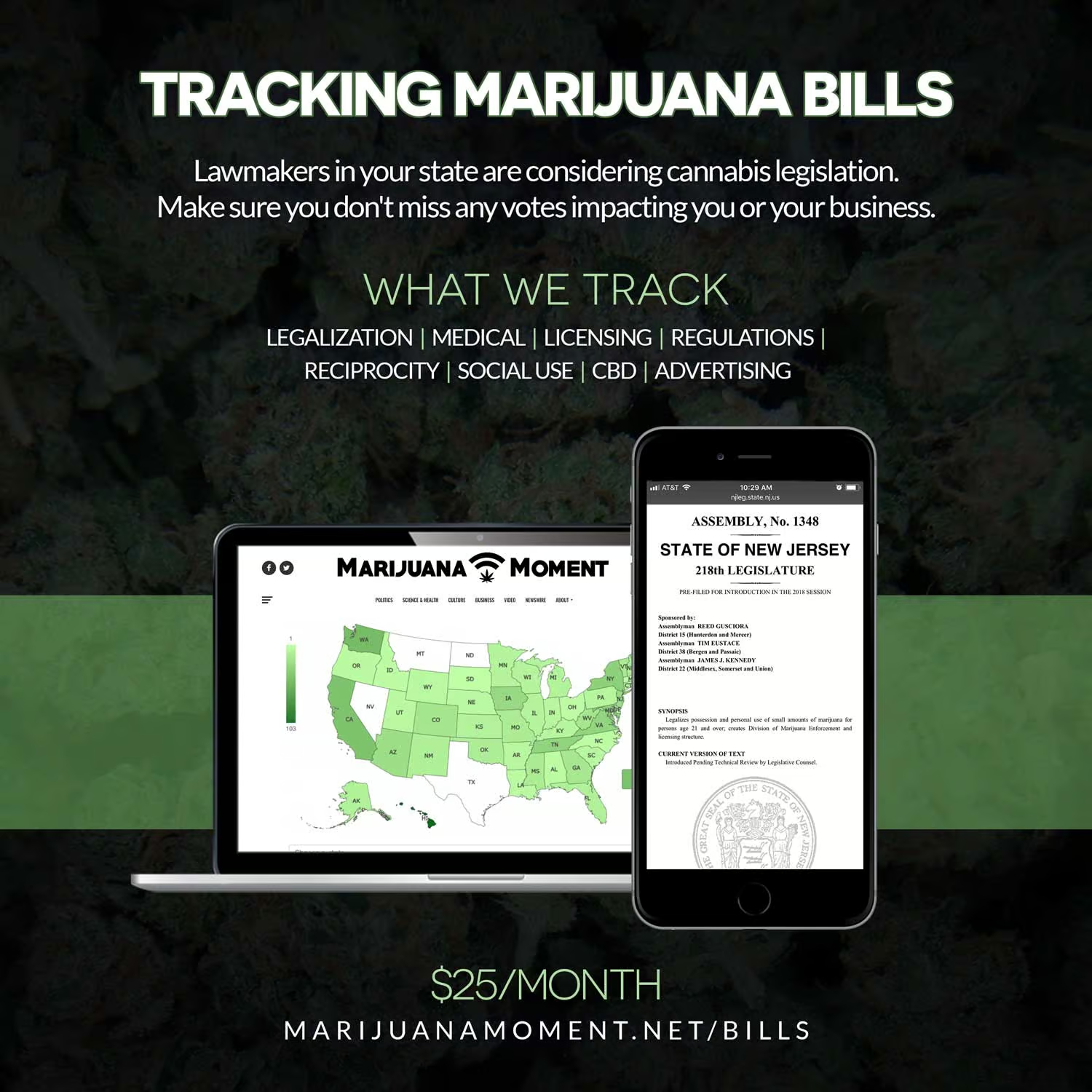
    Marijuana Moment is tracking hundreds of cannabis, psychedelics and drug policy bills in state legislatures and Congress this year. Patreon supporters pledging at least $25/month get access to our interactive maps, charts and hearing calendar so they don’t miss any developments.


    Learn more about our marijuana bill tracker and become a supporter on Patreon to get access.

    / LOCAL

    The Leon County, Florida state attorney opened a criminal investigation into the potentially unlawful diversion of state Medicaid funds to oppose a marijuana legalization ballot initiative.

    The Denton, Texas City Council is considering repealing the city’s voter-approved marijuana decriminalization law.

    / INTERNATIONAL

    The German CSU party tweeted that the “legalization of #Cannabis remains wrong” and that “the current cannabis regulations must be repealed!”


    Ghana’s Food and Drugs Authority said that two alcohol products tested positive for cannabis extracts and are not safe.

    / SCIENCE & HEALTH

    A study concluded that “CBG has significant potential as an intervention in” non-alcoholic fatty liver disease.

    A study found that “classical psychedelic practitioners in research settings believed that physical touch is an important part of psychedelic therapy” but that “they also emphasized the importance of professional boundaries.

    / ADVOCACY, OPINION & ANALYSIS

    The president of the American Osteopathic Academy of Addiction Medicine authored a journal article about what he called “the dangerous mirage of medical marijuana.”

    / BUSINESS

    Conifer Insurance Services and Skyward Specialty Insurance Group are launching an insurance solution for cannabis businesses.

    / CULTURE

    Comedian Tom Segura joked about giving his mother marijuana edibles and microdoses of psilocybin.

    Make sure to subscribe to get Marijuana Moment’s daily dispatch in your inbox.

    Photo courtesy of Chris Wallis // Side Pocket Images.

    Marijuana Moment is made possible with support from readers. If you rely on our cannabis advocacy journalism to stay informed, please consider a monthly Patreon pledge.

    Become a patron at Patreon!


    Source link

    With New York Cannabis Stores, Does Calling It ‘Luxury’ Help in Leasing? – Commercial Observer

    With New York Cannabis Stores, Does Calling It ‘Luxury’ Help in Leasing? – Commercial Observer


    We’ve heard of high-end retail, but this is ridiculous.

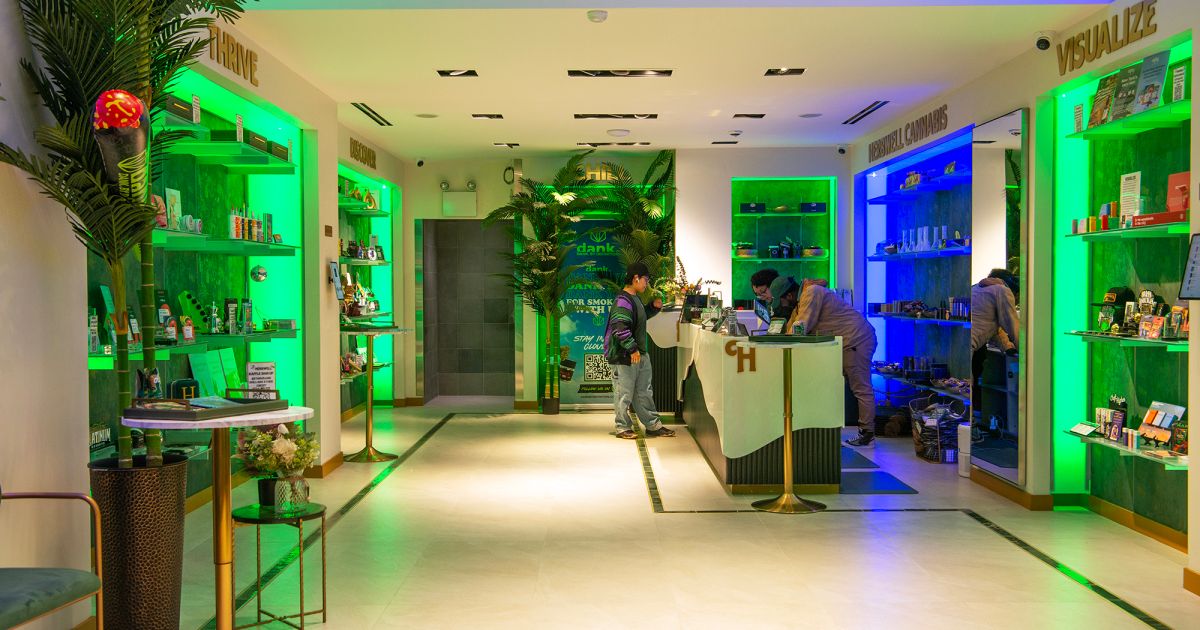
    A number of New York City cannabis dispensaries have set up shop in wealthier retail corridors and have dressed the part accordingly, branding their stores as luxury with more comfortably fashionable interiors, and carrying premium products for well-heeled patrons.

    SEE ALSO: Steven E. Baker and Lee Block On Taking a Repositioned RTL New Directions

    In fact, dispensaries everywhere seem to be making every effort to rise above the low-water mark established by the everyday corner store selling flower on doobie-ous legal standing.

    But does elevating a cannabis shop — with high-end products and services as well as an equally luxurious atmosphere — really alleviate New York’s often hellish opening process for all parties involved?

    Arish Halani, CEO of Herbwell Cannabis, recently opened a store at 519 Madison Avenue. The East Midtown location is only a couple of blocks from Saks Fifth Avenue along a stretch that includes boutique clothing and shoe stores, never mind law and finance offices as well as the apse of St. Patrick’s Cathedral. Halani said he has found that the biggest challenge facing cannabis purveyors is convincing landlords to open their hearts to the industry even if the financing on the building does allow for payments to be made with money raised from cannabis sales.

    “Even if their bank says yes — which is rare — the general concept of ‘Well, we don’t want a smoke shop [prevails],’” Halani told Commercial Observer. “They don’t understand that this is a highly corporate environment with a litany of regulatory requirements to make sure the business is operating nowhere near what a smoke shop would look like.”

    Herbwell dispensary.
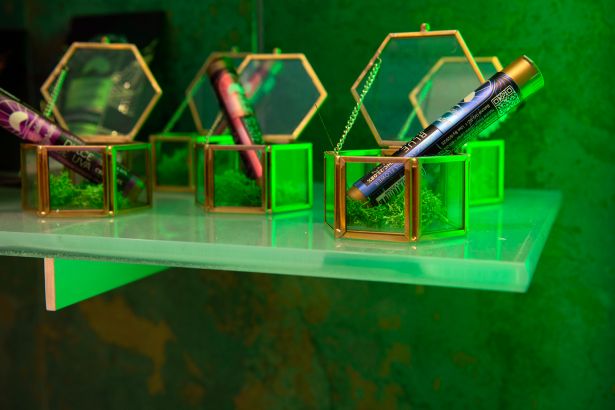
    Merchandise at the Herbwell dispensary. Photo: Jim Sewastynowicz/for Commercial Observer

    Dispensaries have to overcome many hurdles to lease and operate a legal storefront. The luxury aspect buys proprietors the leverage they need to convince all the other stakeholders that they plan to operate a strong business that can pay its rent and maybe even sign a lease renewal.

    Halani said the Madison Avenue location — much like with his store at 372 East Fordham Road in the Bronx — started off with a “no” from the landlord. The would-be tenant had to then “play the game of convincing.”

    “If I could find an address that was seemingly eligible or [the broker] found an address that was seemingly eligible, it got put in a pot, went through all the due diligence, and then we can start the journey of putting in a letter of intent that got rejected nine out of 10 times,” Halani said.

    Herbwell is in a league of its own alongside posh cannabis shops Travel Agency at 587 Fifth Avenue, The Flowery at 481 Broadway, Dagmar at 412 West Broadway or Bliss+Lex at 128 East 86th Street. All have sprouted up over the last year.

    Landlords eventually relent to a cannabis tenant completely on their own favorable terms, according to Ben Davis, a director at brokerage Ripco Real Estate. Often that means landlords will take a premium on rents, collect a piece of the revenue from the business, or get paid for the space while the permitting process is still moving along and no shop has actually opened.

    When it comes down to luxury cannabis tenants, there isn’t much of a difference in the process or the availability of space, Davis said.

    “I think that, ultimately, [cannabis retailers] are still trying to find their place, and it’s an infant industry. … Some shoppers may not appreciate seeing a luxury dispensary on their block,” Davis said. “Overall, I think that whether it’s luxury-focused or a neighborhood-focused dispensary … most of your challenges are pretty much the same. The hardest part is finding a location because of how tight the market is these days.”

    Products on the shelves at Herbwell.
    Products on the shelves at Herbwell. Jim Sewastynowicz

    Long-standing obstacles include the sluggish nature of bureaucracy at the New York State Office of Cannabis Management (OCM), landlords who won’t do legal weed deals based on personal objections or financial reasons, and opponents in the surrounding communities.

    The community engagement aspect seems to be the least chaotic part of establishing a licensed dispensary in New York City, where the search for available space has been characterized as a painful process of interacting with landlords individually until finally a welcoming environment is found.

    The trick for aspiring retailers is less about getting a license from the OCM than it is locking down a storefront once that license is granted. Currently, the OCM is issuing licenses at a rate best described by Platform Cannabis Advisors (PCA) CEO Ben Sheridan as a “trickle.”

    Sheridan’s firm offers a solution to the tightrope of securing both a license and storefront in a timely manner.

    “We help our clients who hold cannabis licenses secure compliant retail locations, and then give them the wraparound services and resources to get their doors open for effectively zero capital down,” Sheridan told CO. “That’s what we’ve done on five stores that are now open as of this week.”

    Essentially, PCA finds and secures locations for their clients and subleases the space to the licensee, even offering interest-free loans for the buildout of the store and eventually taking 10 percent of the company’s gross revenue as a cost of doing business.

    Finding a good property involves answering a number of questions.

    “Is there a mortgage on the property? Is that mortgage held by a bank that’s going to say no to this, or someone else who’s going to say no to this?” Sheridan said. “That’s almost right off the cuff — you’re going to lose many properties that might be available right there. And then there’s the stigma, which is certain landlords simply don’t want to be involved with it. So, once you’re past those two factors, the landlords who want it are probably going to charge the green tax, which is, ‘Hey, I smell blood in the water. I smell desperation. Let me try and jack up the price here.’ Usually it doesn’t work out for anybody.”

    Basically, the landlord holds all the cards, which often means asking for guarantees from tenants who could be paying $20,000 to $30,000 a month in rent, sometimes without having any sort of track record in retail. With PCA, landlords are vetted and clients get to hold onto all the equity in the business.

    “Landlords love track records, [but] they love knowing that there’s people who are guiding these business owners who might be new to this,” Sheridan said. “Landlords aren’t blind to the business opportunity.”

    Sheridan founded the firm with Matthew Greenberg after working at the OCM as deputy director of strategy and policy implementation. Greenberg handled economic policy at the OCM, and later was a co-CIO of East Hill Capital, a cannabis investment firm.

    Some brokers aren’t even interested in devoting the time it takes to make a cannabis deal work, considering that the lease signing, community board approval and the issuance of the permit have to be timed close together in order to be practical. Meanwhile, most landlords who have a loan on their property from a federally insured bank usually won’t — or can’t — rent to cannabis purveyors at all.

    “One of my agents here did a lease for a cannabis space, and I will tell you this lease was signed, I want to say almost nine months ago — they still haven’t opened,” Adelaide Posinelli of Compass said in an interview. “So, for a broker, it’s 10 times more work, there’s no guarantee or surety of it happening. … At the end of it, someone could change their mind, and you’re done.”

    Whether a broker does take on a cannabis client also has a lot to do with the money they make from the tenant, or it often boils down to whether they have a relationship with them, according to Davis.

    When brokers and landlords do actually work out a lease arrangement, it is usually because the tenant is paying a much higher asking rent. One tenant was paying as much as $350 per square foot in a building where asking rent was $150 per square foot, according to Polsinelli.

    “They overpay for space, which then begs the question: How long can they sustain that?” Polsinelli said. 

    Polsinelli is skeptical that branding a shop as luxury and setting it alongside the likes of Gucci and Hermés would actually make a difference to any other players involved, especially with doubts that the kind of high-profile clientele hitting those corridors would want to be seen in a dispensary.

    But, whatever works, she said.

    “While some shops feel like you’ve wandered into a college dorm with better lighting, these high-end dispensaries in a Madison Avenue boutique, with budtenders instead of bartenders, should appeal to the locals in the area,” Polsinelli added. “Add a collab with Gwyneth Paltrow and a $300 infused candle, and who knows how high this trend will go? But, hey, if you can sell $90 eighths next to Dior and still pay top rents, I doubt too many people will complain.”

    It’s unclear if having a luxury dispensary as a tenant is a red flag for future tenants, according to sources CO consulted.

    One place where a dispensary has had little luck on a high-end corridor has been the West Village’s West Eighth Street. Polsinelli said the same proprietors have tried multiple times at different properties on West Eighth and been rejected by Manhattan Community Board 2 for various reasons.

    More traditional retail brokerages are equally game to keep leaping hurdles until they get a deal signed. Brandon Singer’s Retail by MONA secured deals for dispensaries such as FlynnStoned Cannabis Company, which signed a 2,600-square-foot lease at 388 West Street in the West Village in March in a space along the West Side Highway that sat vacant for 20 years.

    Singer believes that the luxury dispensary is just a branded opportunity for the retailer to fit into whatever neighborhood it chooses to serve, and he was skeptical that would earn cannabis retailers any appeal from the surrounding community.

    “I wouldn’t call [dispensaries] a ‘luxury’ tenancy per se, but I do think that the buildouts and look and feel of some of these stores are super comfortable and upscale-looking,” Singer said. “Not sure if they’d necessarily fit on a luxury corridor a la Madison Avenue, but I do think the experience is upscale and high end.”

    Surprisingly, regardless of how long a space sat idle, landlords are charging up to 50 percent above market rate for dispensary tenants. (But every space is different. The one leased by FlynnStoned, for example, came with an asking rent of $200 per square foot. The average retail rent across major Manhattan retail corridors was $697 per square foot in the fourth quarter of 2024, according to a report from CBRE.)

    Landlords also recognize the benefit of state regulations prohibiting competitors from setting up shop within 1,000 feet of a school or 500 feet of a religious institution. Because of those distance restrictions, the city’s cannabis sector can only grow so big. 

    New York’s legal cannabis sales rollout in late 2022 was a bit like the Wild West in its infancy, with any old corner smokeshop selling grass with THC — often without approval from OCM, and often just eating the cost of fines if the authorities became privy to their dealings. Illegal weed sales became a simple civil violation.

    The rapid growth of unlicensed marijuana sellers in New York has also been partly attributed to how slow the OCM was to issue licenses.

    No matter what the excuse, the state eventually had enough. Gov. Kathy Hochul announced in April 2024 that the OCM would have the authority to padlock storefronts in violation.

    Landlords wouldn’t be getting away scot-free either.

    If they were warned about a tenant acting as an unlicensed dispensary, yet failed to begin eviction proceedings, property owners would be made liable for a fine of up to $50,000.

    With the New York Police Department playing a major role in shutting down bad actors, Retail by Mona’s Singer said the runway is clear for law-abiding proprietors to make a better name for their trade.

    “I think what we’ve seen is the original guys that kind of had all their issues got shut down or out of the way,” Singer said. “A lot of these operators have very, very well-designed, beautiful, comfortable buildouts that look really good. They’re obviously selling a product that is controversial, and in our lifetimes was illegal. But I think a lot of the operators that have licenses now are doing a great job conveying the product in a luxurious type of way.”

    Since the crackdown, the state has seemed slow and deliberate in its issuance of new permits. Military veteran William Norgard, who challenged the state in court for favoring those with criminal records in licensing decisions, was awarded a license in July 2024. He signed a 10,040-square-foot lease across four floors at Boich Investment Group’s 30 Times Square. 

    A first, let alone a last, dance with Mary Jane will forever be out of the question for the most stubborn landlords who Singer said comprise that majority.

    “Some landlords, you’ll never change their mind,” Singer said.

    Why would the landlords without obligations be opposed to a profitable venture?

    Well, leasing to cannabis tenants has come back to bite some property owners in unexpected ways in the past.

    In 2022, Joseph Sitt’s Thor Equities was embroiled in a lawsuit with California-based dispensary chain MedMen after the latter failed to pay almost $1 million in back rent for a Chicago storefront in Fulton Market. 

    The two parties went to court in the Southern District of New York, which eventually led to MedMen’s attorney arguing that the federal government cannot enforce any rent obligations on a venture involving weed, which is still illegal on a national level.

    With the federal judge questioning whether the lawsuit even belonged in the Southern District’s jurisdiction, Thor dismissed its own case and planned to file the lawsuit in California.

    Culver City, Calif.-based MedMen attempted to block that action, and it seems Thor was out $1 million. (Thor did not respond to a request for comment.)

    Either way, MedMen as a business was not long for this world, and by April 2024 all its locations had shuttered.

    Mark Hallum can be reached at mhallum@commercialobserver.com.


    Source link

    Cannabinoid CB1 receptor-sensitive neurodevelopmental processes and trajectories

    Cannabinoid CB1 receptor-sensitive neurodevelopmental processes and trajectories


  • Gaoni YMR. Isolation, structure, and partial synthesis of an active constituent of hashish. J Am Chem Soc. 1964;86:1646.

    Article 
    CAS 

    Google Scholar
     

  • ElSohly, MA, Gul, W, Chapter 1: constituents of Cannabis sativa, in, R Pertwee, Editor. Handbook of Cannabis. Oxford University Press; 2014. pp. 3-22.

  • Rock EM, Parker LA. Constituents of Cannabis sativa. Adv Exp Med Biol. 2021;1264:1–13.

    Article 
    CAS 
    PubMed 

    Google Scholar
     

  • Andersen SL. Trajectories of brain development: point of vulnerability or window of opportunity? Neurosci Biobehav Rev. 2003;27:3–18.

    Article 
    PubMed 

    Google Scholar
     

  • Casey BJ, Giedd JN, Thomas KM. Structural and functional brain development and its relation to cognitive development. Biol Psychol. 2000;54:241–57.

    Article 
    CAS 
    PubMed 

    Google Scholar
     

  • Chambers RA, Taylor JR, Potenza MN. Developmental neurocircuitry of motivation in adolescence: a critical period of addiction vulnerability. Am J Psychiatry. 2003;160:1041–52.

    Article 
    PubMed 
    PubMed Central 

    Google Scholar
     

  • Spear LP. The adolescent brain and age-related behavioral manifestations. Neurosci Biobehav Rev. 2000;24:417–63.

    Article 
    CAS 
    PubMed 

    Google Scholar
     

  • Crews F, He J, Hodge C. Adolescent cortical development: a critical period of vulnerability for addiction. Pharmacol Biochem Behav. 2007;86:189–99.

    Article 
    CAS 
    PubMed 
    PubMed Central 

    Google Scholar
     

  • Arseneault L, Cannon M, Poulton R, Murray R, Caspi A, Moffitt TE. Cannabis use in adolescence and risk for adult psychosis: longitudinal prospective study. Bmj. 2002;325:1212–3.

    Article 
    PubMed 
    PubMed Central 

    Google Scholar
     

  • Caspi A, Moffitt TE, Cannon M, McClay J, Murray R, Harrington H, et al. Moderation of the effect of adolescent-onset Cannabis use on adult psychosis by a functional polymorphism in the catechol-O-methyltransferase gene: longitudinal evidence of a gene X environment interaction. Biol Psychiatry. 2005;57:1117–27.

    Article 
    CAS 
    PubMed 

    Google Scholar
     

  • Ferland JN, Ellis RJ, Betts G, Silveira MM, de Firmino JB, Winstanley CA, et al. Long-Term Outcomes of adolescent THC exposure on translational cognitive measures in adulthood in an animal model and computational assessment of human data. JAMA Psychiatry. 2023;80:66–76.

    Article 
    PubMed 

    Google Scholar
     

  • Harvey MA, Sellman JD, Porter RJ, Frampton CM. The relationship between non-acute adolescent Cannabis use and cognition. Drug Alcohol Rev. 2007;26:309–19.

    Article 
    PubMed 

    Google Scholar
     

  • Sewell RA, Ranganathan M, D’Souza DC. Cannabinoids and psychosis. Int Rev Psychiatry. 2009;21:152–62.

    Article 
    PubMed 

    Google Scholar
     

  • Zammit S, Allebeck P, Andreasson S, Lundberg I, Lewis G. Self reported Cannabis use as a risk factor for schizophrenia in Swedish conscripts of 1969: historical cohort study. Bmj. 2002;325:1199.

    Article 
    PubMed 
    PubMed Central 

    Google Scholar
     

  • Di Forti M, Quattrone D, Freeman TP, Tripoli G, Gayer-Anderson C, Quigley H, et al. The contribution of Cannabis use to variation in the incidence of psychotic disorder across Europe (EU-GEI): a multicentre case-control study. Lancet Psychiatry. 2019;6:427–36.

    Article 
    PubMed 
    PubMed Central 

    Google Scholar
     

  • Murray RM, Englund A, Abi-Dargham A, Lewis DA, Di Forti M, Davies C, et al. Cannabis-associated psychosis: neural substrate and clinical impact. Neuropharmacology. 2017;124:89–104.

    Article 
    CAS 
    PubMed 

    Google Scholar
     

  • Moore TH, Zammit S, Lingford-Hughes A, Barnes TR, Jones PB, Burke M, et al. Cannabis use and risk of psychotic or affective mental health outcomes: a systematic review. Lancet. 2007;370:319–28.

    Article 
    PubMed 

    Google Scholar
     

  • Murray RM, Di Forti M. Cannabis and psychosis: what degree of proof do we require? Biol Psychiatry. 2016;79:514–5.

    Article 
    PubMed 

    Google Scholar
     

  • Caballero A, Tseng KY. Association of Cannabis use during adolescence, prefrontal CB1 receptor signaling, and schizophrenia. Front Pharmacol. 2012;3:101.

    Article 
    PubMed 
    PubMed Central 

    Google Scholar
     

  • Hurd YL, Manzoni OJ, Pletnikov MV, Lee FS, Bhattacharyya S, Melis M. Cannabis and the developing brain: insights into its long-lasting effects. J Neurosci. 2019;39:8250–8.

    Article 
    PubMed 
    PubMed Central 

    Google Scholar
     

  • Scheyer AF, Melis M, Trezza V, Manzoni OJJ. Consequences of perinatal Cannabis exposure. Trends Neurosci. 2019;42:871–84.

    Article 
    CAS 
    PubMed 
    PubMed Central 

    Google Scholar
     

  • Molla HM, Tseng KY. Neural substrates underlying the negative impact of cannabinoid exposure during adolescence. Pharmacol Biochem Behav. 2020;195:172965.

    Article 
    CAS 
    PubMed 
    PubMed Central 

    Google Scholar
     

  • Bara A, Ferland JN, Rompala G, Szutorisz H, Hurd YL. Cannabis and synaptic reprogramming of the developing brain. Nat Rev Neurosci. 2021;22:423–38.

    Article 
    CAS 
    PubMed 
    PubMed Central 

    Google Scholar
     

  • Stringfield SJ, Torregrossa MM. Intravenous self-administration of delta-9-THC in adolescent rats produces long-lasting alterations in behavior and receptor protein expression. Psychopharmacology. 2021;238:305–19.

    Article 
    CAS 
    PubMed 

    Google Scholar
     

  • Peters KZ, Zlebnik NE, Cheer JF. Cannabis exposure during adolescence: a uniquely sensitive period for neurobiological effects. Int Rev Neurobiol. 2022;161:95–120.

    Article 
    CAS 
    PubMed 

    Google Scholar
     

  • Li Z, Mukherjee D, Duric B, Austin-Zimmerman I, Trotta G, Spinazzola E, et al. Systematic review and meta-analysis on the effects of chronic peri-adolescent cannabinoid exposure on schizophrenia-like behaviour in rodents. Mol Psychiatry. 2024;30:285–95.

    Article 
    PubMed 
    PubMed Central 

    Google Scholar
     

  • Rubino T, Parolaro D. The impact of exposure to cannabinoids in adolescence: insights from animal models. Biol Psychiatry. 2016;79:578–85.

    Article 
    CAS 
    PubMed 

    Google Scholar
     

  • Bossong MG, Niesink RJ. Adolescent brain maturation, the endogenous cannabinoid system and the neurobiology of Cannabis-induced schizophrenia. Prog Neurobiol. 2010;92:370–85.

    Article 
    CAS 
    PubMed 

    Google Scholar
     

  • Ferland JN, Hurd YL. Deconstructing the neurobiology of Cannabis use disorder. Nat Neurosci. 2020;23:600–10.

    Article 
    CAS 
    PubMed 
    PubMed Central 

    Google Scholar
     

  • Renard J, Rushlow WJ, Laviolette SR. Effects of adolescent THC exposure on the prefrontal GABAergic system: implications for schizophrenia-related psychopathology. Front Psychiatry. 2018;9:281.

    Article 
    PubMed 
    PubMed Central 

    Google Scholar
     

  • Caballero A, Tseng KY. GABAergic function as a limiting factor for prefrontal maturation during adolescence. Trends Neurosci. 2016;39:441–8.

    Article 
    CAS 
    PubMed 
    PubMed Central 

    Google Scholar
     

  • Colizzi M, McGuire P, Pertwee RG, Bhattacharyya S. Effect of Cannabis on glutamate signalling in the brain: a systematic review of human and animal evidence. Neurosci Biobehav Rev. 2016;64:359–81.

    Article 
    CAS 
    PubMed 

    Google Scholar
     

  • Devane WA, Dysarz FA 3rd, Johnson MR, Melvin LS, Howlett AC. Determination and characterization of a cannabinoid receptor in rat brain. Mol Pharmacol. 1988;34:605–13.

    Article 
    CAS 
    PubMed 

    Google Scholar
     

  • Mallet PE, Beninger RJ. The cannabinoid CB1 receptor antagonist SR141716A attenuates the memory impairment produced by delta9-tetrahydrocannabinol or anandamide. Psychopharmacology. 1998;140:11–19.

    Article 
    CAS 
    PubMed 

    Google Scholar
     

  • Raver SM, Keller A. Permanent suppression of cortical oscillations in mice after adolescent exposure to cannabinoids: receptor mechanisms. Neuropharmacology. 2014;86:161–73.

    Article 
    CAS 
    PubMed 
    PubMed Central 

    Google Scholar
     

  • D’Souza DC, Perry E, MacDougall L, Ammerman Y, Cooper T, Wu YT, et al. The psychotomimetic effects of intravenous delta-9-tetrahydrocannabinol in healthy individuals: implications for psychosis. Neuropsychopharmacology. 2004;29:1558–72.

    Article 
    PubMed 

    Google Scholar
     

  • Englund A, Atakan Z, Kralj A, Tunstall N, Murray R, Morrison P. The effect of five day dosing with THCV on THC-induced cognitive, psychological and physiological effects in healthy male human volunteers: a placebo-controlled, double-blind, crossover pilot trial. J Psychopharmacol. 2016;30:140–51.

    Article 
    CAS 
    PubMed 

    Google Scholar
     

  • Horder J, Browning M, Di Simplicio M, Cowen PJ, Harmer CJ. Effects of 7 days of treatment with the cannabinoid type 1 receptor antagonist, rimonabant, on emotional processing. J Psychopharmacol. 2012;26:125–32.

    Article 
    CAS 
    PubMed 

    Google Scholar
     

  • Zuurman L, Roy C, Schoemaker RC, Amatsaleh A, Guimaeres L, Pinquier JL, et al. Inhibition of THC-induced effects on the central nervous system and heart rate by a novel CB1 receptor antagonist AVE1625. J Psychopharmacol. 2010;24:363–71.

    Article 
    CAS 
    PubMed 

    Google Scholar
     

  • Herkenham M, Lynn AB, Johnson MR, Melvin LS, de Costa BR, Rice KC. Characterization and localization of cannabinoid receptors in rat brain: a quantitative in vitro autoradiographic study. J Neurosci. 1991;11:563–83.

    Article 
    CAS 
    PubMed 
    PubMed Central 

    Google Scholar
     

  • Herkenham M, Lynn AB, Little MD, Johnson MR, Melvin LS, de Costa BR, et al. Cannabinoid receptor localization in brain. Proc Natl Acad Sci USA. 1990;87:1932–6.

    Article 
    CAS 
    PubMed 
    PubMed Central 

    Google Scholar
     

  • Lovinger DM. Presynaptic modulation by endocannabinoids. Handb Exp Pharmacol. 2008;184:435–77.

    Article 
    CAS 

    Google Scholar
     

  • Freund TF, Katona I, Piomelli D. Role of endogenous cannabinoids in synaptic signaling. Physiol Rev. 2003;83:1017–66.

    Article 
    CAS 
    PubMed 

    Google Scholar
     

  • Regehr WG, Carey MR, Best AR. Activity-dependent regulation of synapses by retrograde messengers. Neuron. 2009;63:154–70.

    Article 
    CAS 
    PubMed 
    PubMed Central 

    Google Scholar
     

  • Cass DK, Flores-Barrera E, Thomases DR, Vital WF, Caballero A, Tseng KY. CB1 cannabinoid receptor stimulation during adolescence impairs the maturation of GABA function in the adult rat prefrontal cortex. Mol Psychiatry. 2014;19:536–43.

    Article 
    CAS 
    PubMed 
    PubMed Central 

    Google Scholar
     

  • Molla HM, Miguelez Fernandez AMM, Tseng KY. Late-adolescent onset of prefrontal endocannabinoid control of hippocampal and amygdalar inputs and its impact on trace-fear conditioning behavior. Neuropsychopharmacology. 2024;49:1417–24.

    Article 
    CAS 
    PubMed 

    Google Scholar
     

  • Choi K, Le T, McGuire J, Xing G, Zhang L, Li H, et al. Expression pattern of the cannabinoid receptor genes in the frontal cortex of mood disorder patients and mice selectively bred for high and low fear. J Psychiatr Res. 2012;46:882–9.

    Article 
    PubMed 

    Google Scholar
     

  • Long LE, Lind J, Webster M, Weickert CS. Developmental trajectory of the endocannabinoid system in human dorsolateral prefrontal cortex. BMC Neurosci. 2012;13:87.

    Article 
    CAS 
    PubMed 
    PubMed Central 

    Google Scholar
     

  • Heng L, Beverley JA, Steiner H, Tseng KY. Differential developmental trajectories for CB1 cannabinoid receptor expression in limbic/associative and sensorimotor cortical areas. Synapse. 2011;65:278–86.

    Article 
    CAS 
    PubMed 
    PubMed Central 

    Google Scholar
     

  • Chesworth R, Long LE, Weickert CS, Karl T. The endocannabinoid system across postnatal development in transmembrane domain neuregulin 1 mutant mice. Front Psychiatry. 2018;9:11.

    Article 
    PubMed 
    PubMed Central 

    Google Scholar
     

  • Ellgren M, Artmann A, Tkalych O, Gupta A, Hansen HS, Hansen SH, et al. Dynamic changes of the endogenous cannabinoid and opioid mesocorticolimbic systems during adolescence: THC effects. Eur Neuropsychopharmacol. 2008;18:826–34.

    Article 
    CAS 
    PubMed 
    PubMed Central 

    Google Scholar
     

  • Yang S, Tseng KY. Maturation of corticolimbic functional connectivity during sensitive periods of brain development. Curr Top Behav Neurosci. 2022;53:37–53.

    Article 
    PubMed 

    Google Scholar
     

  • Castillo PE, Younts TJ, Chavez AE, Hashimotodani Y. Endocannabinoid signaling and synaptic function. Neuron. 2012;76:70–81.

    Article 
    CAS 
    PubMed 
    PubMed Central 

    Google Scholar
     

  • Kano M, Hashimoto K, Tabata T. Type-1 metabotropic glutamate receptor in cerebellar Purkinje cells: a key molecule responsible for long-term depression, endocannabinoid signalling and synapse elimination. Philos Trans R Soc Lond B Biol Sci. 2008;363:2173–86.

    Article 
    CAS 
    PubMed 
    PubMed Central 

    Google Scholar
     

  • Van Waes V, Beverley JA, Siman H, Tseng KY, Steiner H. CB1 cannabinoid receptor expression in the striatum: association with corticostriatal circuits and developmental regulation. Front Pharmacol. 2012;3:21.

    PubMed 
    PubMed Central 

    Google Scholar
     

  • Andersen, SL, Sensitive periods of brain development and preventive interventions. 2021/08/14 ed. Current Topics in Behavioral Neurosciences. Vol. 53. 2022.

  • Berghuis P, Dobszay MB, Wang X, Spano S, Ledda F, Sousa KM, et al. Endocannabinoids regulate interneuron migration and morphogenesis by transactivating the TrkB receptor. Proc Natl Acad Sci USA. 2005;102:19115–20.

    Article 
    CAS 
    PubMed 
    PubMed Central 

    Google Scholar
     

  • Berghuis P, Rajnicek AM, Morozov YM, Ross RA, Mulder J, Urban GM, et al. Hardwiring the brain: endocannabinoids shape neuronal connectivity. Science. 2007;316:1212–6.

    Article 
    CAS 
    PubMed 

    Google Scholar
     

  • Mulder J, Aguado T, Keimpema E, Barabas K, Ballester Rosado CJ, Nguyen L, et al. Endocannabinoid signaling controls pyramidal cell specification and long-range axon patterning. Proc Natl Acad Sci USA. 2008;105:8760–5.

    Article 
    CAS 
    PubMed 
    PubMed Central 

    Google Scholar
     

  • Watson S, Chambers D, Hobbs C, Doherty P, Graham A. The endocannabinoid receptor, CB1, is required for normal axonal growth and fasciculation. Mol Cell Neurosci. 2008;38:89–97.

    Article 
    CAS 
    PubMed 

    Google Scholar
     

  • Frau R, Miczan V, Traccis F, Aroni S, Pongor CI, Saba P, et al. Prenatal THC exposure produces a hyperdopaminergic phenotype rescued by pregnenolone. Nat Neurosci. 2019;22:1975–85.

    Article 
    CAS 
    PubMed 
    PubMed Central 

    Google Scholar
     

  • Rodriguez de Fonseca F, Hernandez ML, de Miguel R, Fernandez-Ruiz JJ, Ramos JA. Early changes in the development of dopaminergic neurotransmission after maternal exposure to cannabinoids. Pharmacol Biochem Behav. 1992;41:469–74.

    Article 
    CAS 
    PubMed 

    Google Scholar
     

  • Scheyer AF, Borsoi M, Wager-Miller J, Pelissier-Alicot AL, Murphy MN, Mackie K, et al. Cannabinoid exposure via lactation in rats disrupts perinatal programming of the gamma-aminobutyric acid trajectory and select early-life behaviors. Biol Psychiatry. 2020;87:666–77.

    Article 
    CAS 
    PubMed 

    Google Scholar
     

  • de Salas-Quiroga A, Diaz-Alonso J, Garcia-Rincon D, Remmers F, Vega D, Gomez-Canas M, et al. Prenatal exposure to cannabinoids evokes long-lasting functional alterations by targeting CB1 receptors on developing cortical neurons. Proc Natl Acad Sci USA. 2015;112:13693–8.

    Article 
    PubMed 
    PubMed Central 

    Google Scholar
     

  • de Salas-Quiroga A, Garcia-Rincon D, Gomez-Dominguez D, Valero M, Simon-Sanchez S, Paraiso-Luna J, et al. Long-term hippocampal interneuronopathy drives sex-dimorphic spatial memory impairment induced by prenatal THC exposure. Neuropsychopharmacology. 2020;45:877–86.

    Article 
    PubMed 
    PubMed Central 

    Google Scholar
     

  • Spano MS, Ellgren M, Wang X, Hurd YL. Prenatal Cannabis exposure increases heroin seeking with allostatic changes in limbic enkephalin systems in adulthood. Biol Psychiatry. 2007;61:554–63.

    Article 
    CAS 
    PubMed 

    Google Scholar
     

  • Tortoriello G, Morris CV, Alpar A, Fuzik J, Shirran SL, Calvigioni D, et al. Miswiring the brain: Delta9-tetrahydrocannabinol disrupts cortical development by inducing an SCG10/stathmin-2 degradation pathway. EMBO J. 2014;33:668–85.

    Article 
    CAS 
    PubMed 
    PubMed Central 

    Google Scholar
     

  • Ryan KS, Karpf JA, Chan CN, Hagen OL, McFarland TJ, Urian JW, et al. Prenatal delta-9-tetrahydrocannabinol exposure alters fetal neurodevelopment in rhesus macaques. Sci Rep. 2024;14:5808.

    Article 
    CAS 
    PubMed 
    PubMed Central 

    Google Scholar
     

  • Chen CY, O’Brien MS, Anthony JC. Who becomes Cannabis dependent soon after onset of use? Epidemiological evidence from the United States: 2000–2001. Drug Alcohol Depend. 2005;79:11–22.

    Article 
    PubMed 

    Google Scholar
     

  • Martin GI. Marijuana: the effects on pregnancy, the fetus, and the newborn. J Perinatol. 2020;40:1470–6.

    Article 
    PubMed 

    Google Scholar
     

  • Baranger DAA. Evaluating evidence supporting an effect of prenatal Cannabis exposure on white matter integrity. Biol Psychiatry Glob Open Sci. 2024;4:101–2.

    Article 
    PubMed 
    PubMed Central 

    Google Scholar
     

  • Best JR, Miller PH. A developmental perspective on executive function. Child Dev. 2010;81:1641–60.

    Article 
    PubMed 
    PubMed Central 

    Google Scholar
     

  • Tseng KY, Chambers RA, Lipska BK. The neonatal ventral hippocampal lesion as a heuristic neurodevelopmental model of schizophrenia. Behav Brain Res. 2009;204:295–305.

    Article 
    PubMed 

    Google Scholar
     

  • Scheyer AF, Borsoi M, Pelissier-Alicot AL, Manzoni OJJ. Maternal exposure to the cannabinoid agonist WIN 55,12,2 during lactation induces lasting behavioral and synaptic alterations in the rat adult offspring of both sexes. eNeuro. 2020;7:ENEURO.0144-20.2020.

  • Scheyer AF, Borsoi M, Pelissier-Alicot AL, Manzoni OJJ. Perinatal THC exposure via lactation induces lasting alterations to social behavior and prefrontal cortex function in rats at adulthood. Neuropsychopharmacology. 2020;45:1826–33.

    Article 
    CAS 
    PubMed 
    PubMed Central 

    Google Scholar
     

  • Lujan MA, Young-Morrison R, Aroni S, Katona I, Melis M, Cheer JF. Dynamic overrepresentation of accumbal cues in food- and opioid-seeking rats after prenatal THC exposure. Sci Adv. 2024;10:eadq5652.

    Article 
    CAS 
    PubMed 
    PubMed Central 

    Google Scholar
     

  • Peterson CS, Baglot SL, Sallam NA, Mina S, Hill MN, Borgland SL. Oral pre- and early postnatal Cannabis exposure disinhibits ventral tegmental area dopamine neuron activity but does not influence cocaine preference in offspring in mice. J Neurosci Res. 2024;102:e25369.

    Article 
    CAS 
    PubMed 

    Google Scholar
     

  • Frau R, Melis M. Sex-specific susceptibility to psychotic-like states provoked by prenatal THC exposure: reversal by pregnenolone. J Neuroendocrinol. 2023;35:e13240.

    Article 
    CAS 
    PubMed 

    Google Scholar
     

  • DiNieri JA, Wang X, Szutorisz H, Spano SM, Kaur J, Casaccia P, et al. Maternal Cannabis use alters ventral striatal dopamine D2 gene regulation in the offspring. Biol Psychiatry. 2011;70:763–9.

    Article 
    CAS 
    PubMed 
    PubMed Central 

    Google Scholar
     

  • Lew SE, Tseng KY. Dopamine modulation of GABAergic function enables network stability and input selectivity for sustaining working memory in a computational model of the prefrontal cortex. Neuropsychopharmacology. 2014;39:3067–76.

    Article 
    CAS 
    PubMed 
    PubMed Central 

    Google Scholar
     

  • Flores-Barrera E, Thomases DR, Heng LJ, Cass DK, Caballero A, Tseng KY. Late adolescent expression of GluN2B transmission in the prefrontal cortex is input-specific and requires postsynaptic protein kinase A and D1 dopamine receptor signaling. Biol Psychiatry. 2014;75:508–16.

    Article 
    CAS 
    PubMed 

    Google Scholar
     

  • Satterthwaite TD, Wolf DH, Erus G, Ruparel K, Elliott MA, Gennatas ED, et al. Functional maturation of the executive system during adolescence. J Neurosci. 2013;33:16249–61.

    Article 
    CAS 
    PubMed 
    PubMed Central 

    Google Scholar
     

  • Gee DG, Humphreys KL, Flannery J, Goff B, Telzer EH, Shapiro M, et al. A developmental shift from positive to negative connectivity in human amygdala-prefrontal circuitry. J Neurosci. 2013;33:4584–93.

    Article 
    CAS 
    PubMed 
    PubMed Central 

    Google Scholar
     

  • Swartz JR, Phan KL, Angstadt M, Klumpp H, Fitzgerald KD, Monk CS. Altered activation of the rostral anterior cingulate cortex in the context of emotional face distractors in children and adolescents with anxiety disorders. Depress Anxiety. 2014;31:870–9.

    Article 
    PubMed 

    Google Scholar
     

  • Paus T, Zijdenbos A, Worsley K, Collins DL, Blumenthal J, Giedd JN, et al. Structural maturation of neural pathways in children and adolescents: in vivo study. Science. 1999;283:1908–11.

    Article 
    CAS 
    PubMed 

    Google Scholar
     

  • Sowell ER, Thompson PM, Holmes CJ, Batth R, Jernigan TL, Toga AW. Localizing age-related changes in brain structure between childhood and adolescence using statistical parametric mapping. Neuroimage. 1999;9:587–97.

    Article 
    CAS 
    PubMed 

    Google Scholar
     

  • Floresco SB, Seamans JK, Phillips AG. Selective roles for hippocampal, prefrontal cortical, and ventral striatal circuits in radial-arm maze tasks with or without a delay. J Neurosci. 1997;17:1880–90.

    Article 
    CAS 
    PubMed 
    PubMed Central 

    Google Scholar
     

  • Ishikawa A, Nakamura S. Convergence and interaction of hippocampal and amygdalar projections within the prefrontal cortex in the rat. J Neurosci. 2003;23:9987–95.

    Article 
    CAS 
    PubMed 
    PubMed Central 

    Google Scholar
     

  • Tse MT, Piantadosi PT, Floresco SB. Prefrontal cortical gamma-aminobutyric acid transmission and cognitive function: drawing links to schizophrenia from preclinical research. Biol Psychiatry. 2015;77:929–39.

    Article 
    CAS 
    PubMed 

    Google Scholar
     

  • Calabro FJ, Murty VP, Jalbrzikowski M, Tervo-Clemmens B, Luna B. Development of hippocampal-prefrontal cortex interactions through adolescence. Cereb Cortex. 2020;30:1548–58.

    Article 
    PubMed 

    Google Scholar
     

  • Murty VP, Calabro F, Luna B. The role of experience in adolescent cognitive development: integration of executive, memory, and mesolimbic systems. Neurosci Biobehav Rev. 2016;70:46–58.

    Article 
    PubMed 
    PubMed Central 

    Google Scholar
     

  • Larsen B, Cui Z, Adebimpe A, Pines A, Alexander-Bloch A, Bertolero M, et al. A developmental reduction of the excitation:inhibition ratio in association cortex during adolescence. Sci Adv. 2022;8:eabj8750.

    Article 
    CAS 
    PubMed 
    PubMed Central 

    Google Scholar
     

  • Caballero A, Orozco A, Tseng KY. Developmental regulation of excitatory-inhibitory synaptic balance in the prefrontal cortex during adolescence. Semin Cell Dev Biol. 2021;118:60–63.

    Article 
    CAS 
    PubMed 
    PubMed Central 

    Google Scholar
     

  • Caballero A, Flores-Barrera E, Thomases DR, Tseng KY. Downregulation of parvalbumin expression in the prefrontal cortex during adolescence causes enduring prefrontal disinhibition in adulthood. Neuropsychopharmacology. 2020;45:1527–35.

    Article 
    CAS 
    PubMed 
    PubMed Central 

    Google Scholar
     

  • Cass DK, Thomases DR, Caballero A, Tseng KY. Developmental disruption of gamma-aminobutyric acid function in the medial prefrontal cortex by noncontingent cocaine exposure during early adolescence. Biol Psychiatry. 2013;74:490–501.

    Article 
    CAS 
    PubMed 
    PubMed Central 

    Google Scholar
     

  • Flores-Barrera E, Thomases DR, Tseng KY. MK-801 exposure during adolescence elicits enduring disruption of prefrontal E-I balance and its control of fear extinction behavior. J Neurosci. 2020;40:4881–7.

    Article 
    CAS 
    PubMed 
    PubMed Central 

    Google Scholar
     

  • Thomases DR, Cass DK, Meyer JD, Caballero A, Tseng KY. Early adolescent MK-801 exposure impairs the maturation of ventral hippocampal control of basolateral amygdala drive in the adult prefrontal cortex. J Neurosci. 2014;34:9059–66.

    Article 
    CAS 
    PubMed 
    PubMed Central 

    Google Scholar
     

  • Thomases DR, Cass DK, Tseng KY. Periadolescent exposure to the NMDA receptor antagonist MK-801 impairs the functional maturation of local GABAergic circuits in the adult prefrontal cortex. J Neurosci. 2013;33:26–34.

    Article 
    CAS 
    PubMed 
    PubMed Central 

    Google Scholar
     

  • Cuccurazzu B, Zamberletti E, Nazzaro C, Prini P, Trusel M, Grilli M, et al. Adult cellular neuroadaptations induced by adolescent THC exposure in female rats are rescued by enhancing anandamide signaling. Int J Neuropsychopharmacol. 2018;21:1014–24.

    Article 
    CAS 
    PubMed 
    PubMed Central 

    Google Scholar
     

  • Rubino T, Prini P, Piscitelli F, Zamberletti E, Trusel M, Melis M, et al. Adolescent exposure to THC in female rats disrupts developmental changes in the prefrontal cortex. Neurobiol Dis. 2015;73:60–69.

    Article 
    CAS 
    PubMed 

    Google Scholar
     

  • Pickel VM, Bourie F, Chan J, Mackie K, Lane DA, Wang G. Chronic adolescent exposure to ∆9-tetrahydrocannabinol decreases NMDA current and extrasynaptic plasmalemmal density of NMDA GluN1 subunits in the prelimbic cortex of adult male mice. Neuropsychopharmacology. 2020;45:374–83.

    Article 
    PubMed 

    Google Scholar
     

  • Miguelez Fernandez AMM, Molla HM, Thomases DR, Tseng KY. Prefrontal alpha7nAChR signaling differentially modulates afferent drive and trace fear conditioning behavior in adolescent and adult rats. J Neurosci. 2021;41:1908–16.

    Article 
    PubMed 
    PubMed Central 

    Google Scholar
     

  • Heng LJ, Markham JA, Hu XT, Tseng KY. Concurrent upregulation of postsynaptic L-type Ca(2+) channel function and protein kinase A signaling is required for the periadolescent facilitation of Ca(2+) plateau potentials and dopamine D1 receptor modulation in the prefrontal cortex. Neuropharmacology. 2011;60:953–62.

    Article 
    CAS 
    PubMed 
    PubMed Central 

    Google Scholar
     

  • Tseng KY, O’Donnell P. Post-pubertal emergence of prefrontal cortical up states induced by D1-NMDA co-activation. Cereb Cortex. 2005;15:49–57.

    Article 
    PubMed 

    Google Scholar
     

  • De Felice M, Chen C, Rodriguez-Ruiz M, Szkudlarek HJ, Lam M, Sert S, et al. Adolescent delta-9-tetrahydrocannabinol exposure induces differential acute and long-term neuronal and molecular disturbances in dorsal vs. ventral hippocampal subregions. Neuropsychopharmacology. 2023;48:540–51.

    Article 
    PubMed 

    Google Scholar
     

  • De Gregorio D, Dean Conway J, Canul ML, Posa L, Bambico FR, Gobbi G. Effects of chronic exposure to low doses of delta9- tetrahydrocannabinol in adolescence and adulthood on serotonin/norepinephrine neurotransmission and emotional behaviors. Int J Neuropsychopharmacol. 2020;23:751–61.

    Article 
    PubMed 
    PubMed Central 

    Google Scholar
     

  • Kruse LC, Cao JK, Viray K, Stella N, Clark JJ. Voluntary oral consumption of delta(9)-tetrahydrocannabinol by adolescent rats impairs reward-predictive cue behaviors in adulthood. Neuropsychopharmacology. 2019;44:1406–14.

    Article 
    CAS 
    PubMed 
    PubMed Central 

    Google Scholar
     

  • Pistis M, Perra S, Pillolla G, Melis M, Muntoni AL, Gessa GL. Adolescent exposure to cannabinoids induces long-lasting changes in the response to drugs of abuse of rat midbrain dopamine neurons. Biol Psychiatry. 2004;56:86–94.

    Article 
    CAS 
    PubMed 

    Google Scholar
     

  • Scherma M, Dessi C, Muntoni AL, Lecca S, Satta V, Luchicchi A, et al. Adolescent delta(9)-tetrahydrocannabinol exposure alters WIN55,212-2 self-administration in adult rats. Neuropsychopharmacology. 2016;41:1416–26.

    Article 
    CAS 
    PubMed 

    Google Scholar
     

  • Cajiao-Manrique MDM, Casado-Anguera V, Garcia-Blanco A, Maldonado R, Martin-Garcia E. THC exposure during adolescence increases impulsivity-like behavior in adulthood in a WIN 55,212-2 self-administration mouse model. Front Psychiatry. 2023;14:1148993.

    Article 
    PubMed 
    PubMed Central 

    Google Scholar
     

  • Zamberletti E, Beggiato S, Steardo L Jr., Prini P, Antonelli T, Ferraro L, et al. Alterations of prefrontal cortex GABAergic transmission in the complex psychotic-like phenotype induced by adolescent delta-9-tetrahydrocannabinol exposure in rats. Neurobiol Dis. 2014;63:35–47.

    Article 
    CAS 
    PubMed 

    Google Scholar
     

  • Izquierdo-Luengo C, Ten-Blanco M, Ponce-Renilla M, Perezzan R, Pereda-Perez I, Berrendero F. Adolescent exposure to the Spice/K2 cannabinoid JWH-018 impairs sensorimotor gating and alters cortical perineuronal nets in a sex-dependent manner. Transl Psychiatry. 2023;13:176.

    Article 
    CAS 
    PubMed 
    PubMed Central 

    Google Scholar
     

  • Kirschmann EK, Pollock MW, Nagarajan V, Torregrossa MM. Effects of adolescent cannabinoid self-administration in rats on addiction-related behaviors and working memory. Neuropsychopharmacology. 2017;42:989–1000.

    Article 
    CAS 
    PubMed 

    Google Scholar
     

  • Quinn HR, Matsumoto I, Callaghan PD, Long LE, Arnold JC, Gunasekaran N, et al. Adolescent rats find repeated delta(9)-THC less aversive than adult rats but display greater residual cognitive deficits and changes in hippocampal protein expression following exposure. Neuropsychopharmacology. 2008;33:1113–26.

    Article 
    PubMed 

    Google Scholar
     

  • Renard J, Rosen LG, Loureiro M, De Oliveira C, Schmid S, Rushlow WJ, et al. Adolescent cannabinoid exposure induces a persistent sub-cortical hyper-dopaminergic state and associated molecular adaptations in the prefrontal cortex. Cereb Cortex. 2017;27:1297–310.

    PubMed 

    Google Scholar
     

  • Miller ML, Chadwick B, Dickstein DL, Purushothaman I, Egervari G, Rahman T, et al. Adolescent exposure to delta(9)-tetrahydrocannabinol alters the transcriptional trajectory and dendritic architecture of prefrontal pyramidal neurons. Mol Psychiatry. 2019;24:588–600.

    Article 
    CAS 
    PubMed 

    Google Scholar
     

  • Prini P, Penna F, Sciuccati E, Alberio T, Rubino T. Chronic delta(8)-THC exposure differently affects histone modifications in the adolescent and adult rat brain. Int J Mol Sci. 2017;18:2094.

    Article 
    PubMed 
    PubMed Central 

    Google Scholar
     

  • Orihuel J, Capellan R, Roura-Martinez D, Ucha M, Ambrosio E, Higuera-Matas A. Delta 9-tetrahydrocannabinol during adolescence reprograms the nucleus accumbens transcriptome, affecting reward processing, impulsivity, and specific aspects of cocaine addiction-like behavior in a sex-dependent manner. Int J Neuropsychopharmacol. 2021;24:920–33.

    Article 
    CAS 
    PubMed 
    PubMed Central 

    Google Scholar
     

  • Weed PF, Filipeanu CM, Ketchum MJ, Winsauer PJ. Chronic delta9-tetrahydrocannabinol during adolescence differentially modulates striatal CB1 receptor expression and the acute and chronic effects on learning in adult rats. J Pharmacol Exp Ther. 2016;356:20–31.

    Article 
    CAS 
    PubMed 
    PubMed Central 

    Google Scholar
     

  • Ballinger MD, Saito A, Abazyan B, Taniguchi Y, Huang CH, Ito K, et al. Adolescent Cannabis exposure interacts with mutant DISC1 to produce impaired adult emotional memory. Neurobiol Dis. 2015;82:176–84.

    Article 
    CAS 
    PubMed 
    PubMed Central 

    Google Scholar
     

  • Rubino T, Vigano D, Realini N, Guidali C, Braida D, Capurro V, et al. Chronic delta 9-tetrahydrocannabinol during adolescence provokes sex-dependent changes in the emotional profile in adult rats: behavioral and biochemical correlates. Neuropsychopharmacology. 2008;33:2760–71.

    Article 
    CAS 
    PubMed 

    Google Scholar
     

  • Zamberletti E, Gabaglio M, Prini P, Rubino T, Parolaro D. Cortical neuroinflammation contributes to long-term cognitive dysfunctions following adolescent delta-9-tetrahydrocannabinol treatment in female rats. Eur Neuropsychopharmacol. 2015;25:2404–15.

    Article 
    CAS 
    PubMed 

    Google Scholar
     

  • Beggiato S, Ieraci A, Zuccarini M, Di Iorio P, Schwarcz R, Ferraro L. Alterations in rat prefrontal cortex kynurenic acid levels are involved in the enduring cognitive dysfunctions induced by tetrahydrocannabinol exposure during the adolescence. Front Psychiatry. 2022;13:996406.

    Article 
    PubMed 
    PubMed Central 

    Google Scholar
     

  • Patrick ME, Fleming CB, Fairlie AM, Lee CM. Cross-fading motives for simultaneous alcohol and marijuana use: associations with young adults’ use and consequences across days. Drug Alcohol Depend. 2020;213:108077.

    Article 
    PubMed 
    PubMed Central 

    Google Scholar
     

  • Wade NE, Wallace AL, Huestis MA, Lisdahl KM, Sullivan RM, Tapert SF. Cannabis use and neurocognitive performance at 13-14 years-old: optimizing assessment with hair toxicology in the adolescent brain cognitive development (ABCD) study. Addict Behav. 2024;150:107930.

    Article 
    PubMed 

    Google Scholar
     

  • Ehrenreich H, Rinn T, Kunert HJ, Moeller MR, Poser W, Schilling L, et al. Specific attentional dysfunction in adults following early start of Cannabis use. Psychopharmacology. 1999;142:295–301.

    Article 
    CAS 
    PubMed 

    Google Scholar
     

  • Duperrouzel JC, Hawes SW, Lopez-Quintero C, Pacheco-Colon I, Coxe S, Hayes T, et al. Adolescent Cannabis use and its associations with decision-making and episodic memory: preliminary results from a longitudinal study. Neuropsychology. 2019;33:701–10.

    Article 
    PubMed 

    Google Scholar
     

  • Lawn W, Trinci K, Mokrysz C, Borissova A, Ofori S, Petrilli K, et al. The acute effects of Cannabis with and without cannabidiol in adults and adolescents: a randomised, double-blind, placebo-controlled, crossover experiment. Addiction. 2023;118:1282–94.

    Article 
    PubMed 
    PubMed Central 

    Google Scholar
     

  • Hanson KL, Winward JL, Schweinsburg AD, Medina KL, Brown SA, Tapert SF. Longitudinal study of cognition among adolescent marijuana users over three weeks of abstinence. Addict Behav. 2010;35:970–6.

    Article 
    PubMed 
    PubMed Central 

    Google Scholar
     

  • Ertl N, Freeman TP, Mokrysz C, Ofori S, Borissova A, Petrilli K, et al. Acute effects of different types of Cannabis on young adult and adolescent resting-state brain networks. Neuropsychopharmacology. 2024;49:1640–51.

    Article 
    CAS 
    PubMed 
    PubMed Central 

    Google Scholar
     

  • Mizrahi R, Watts JJ, Tseng KY. Mechanisms contributing to cognitive deficits in Cannabis users. Neuropharmacology. 2017;124:84–8.

    Article 
    CAS 
    PubMed 
    PubMed Central 

    Google Scholar
     

  • Murray CH, Huang Z, Lee R, de Wit H. Adolescents are more sensitive than adults to acute behavioral and cognitive effects of THC. Neuropsychopharmacology. 2022;47:1331–8.

    Article 
    CAS 
    PubMed 
    PubMed Central 

    Google Scholar
     

  • Mokrysz C, Freeman TP, Korkki S, Griffiths K, Curran HV. Are adolescents more vulnerable to the harmful effects of Cannabis than adults? a placebo-controlled study in human males. Transl Psychiatry. 2016;6:e961.

    Article 
    CAS 
    PubMed 
    PubMed Central 

    Google Scholar
     

  • Kanayama G, Rogowska J, Pope HG, Gruber SA, Yurgelun-Todd DA. Spatial working memory in heavy Cannabis users: a functional magnetic resonance imaging study. Psychopharmacology. 2004;176:239–47.

    Article 
    CAS 
    PubMed 

    Google Scholar
     

  • Meier MH, Caspi A, Ambler A, Harrington H, Houts R, Keefe RS, et al. Persistent Cannabis users show neuropsychological decline from childhood to midlife. Proc Natl Acad Sci USA. 2012;109:E2657–64.

    Article 
    CAS 
    PubMed 
    PubMed Central 

    Google Scholar
     

  • Schweinsburg AD, Schweinsburg BC, Medina KL, McQueeny T, Brown SA, Tapert SF. The influence of recency of use on fMRI response during spatial working memory in adolescent marijuana users. J Psychoact Drugs. 2010;42:401–12.

    Article 

    Google Scholar
     

  • Solowij N, Stephens RS, Roffman RA, Babor T, Kadden R, Miller M, et al. Cognitive functioning of long-term heavy Cannabis users seeking treatment. Jama. 2002;287:1123–31.

    Article 
    PubMed 

    Google Scholar
     

  • Ceccarini J, Kuepper R, Kemels D, van Os J, Henquet C, Van Laere K. [18F]MK-9470 PET measurement of cannabinoid CB1 receptor availability in chronic Cannabis users. Addict Biol. 2015;20:357–67.

    Article 
    CAS 
    PubMed 

    Google Scholar
     

  • Hirvonen J, Goodwin RS, Li CT, Terry GE, Zoghbi SS, Morse C, et al. Reversible and regionally selective downregulation of brain cannabinoid CB1 receptors in chronic daily Cannabis smokers. Mol Psychiatry. 2012;17:642–9.

    Article 
    CAS 
    PubMed 

    Google Scholar
     

  • D’Souza DC, Cortes-Briones JA, Ranganathan M, Thurnauer H, Creatura G, Surti T, et al. Rapid changes in CB1 receptor availability in Cannabis dependent males after abstinence from Cannabis. Biol Psychiatry Cogn Neurosci Neuroimaging. 2016;1:60–7.

    PubMed 
    PubMed Central 

    Google Scholar
     

  • Pope HG Jr., Gruber AJ, Hudson JI, Huestis MA, Yurgelun-Todd D. Neuropsychological performance in long-term Cannabis users. Arch Gen Psychiatry. 2001;58:909–15.

    Article 
    PubMed 

    Google Scholar
     

  • Schreiner AM, Dunn ME. Residual effects of Cannabis use on neurocognitive performance after prolonged abstinence: a meta-analysis. Exp Clin Psychopharmacol. 2012;20:420–9.

    Article 
    PubMed 

    Google Scholar
     

  • Fontes MA, Bolla KI, Cunha PJ, Almeida PP, Jungerman F, Laranjeira RR, et al. Cannabis use before age 15 and subsequent executive functioning. Br J Psychiatry. 2011;198:442–7.

    Article 
    PubMed 

    Google Scholar
     

  • O’Shea M, Singh ME, McGregor IS, Mallet PE. Chronic cannabinoid exposure produces lasting memory impairment and increased anxiety in adolescent but not adult rats. J Psychopharmacol. 2004;18:502–8.

    Article 
    PubMed 

    Google Scholar
     

  • Schneider M, Koch M. Chronic pubertal, but not adult chronic cannabinoid treatment impairs sensorimotor gating, recognition memory, and the performance in a progressive ratio task in adult rats. Neuropsychopharmacology. 2003;28:1760–9.

    Article 
    CAS 
    PubMed 

    Google Scholar
     

  • Wiley JL, Evans RL, Grainger DB, Nicholson KL. Age-dependent differences in sensitivity and sensitization to cannabinoids and ‘club drugs’ in male adolescent and adult rats. Addict Biol. 2008;13:277–86.

    Article 
    CAS 
    PubMed 

    Google Scholar
     

  • Wiley JL, M O’Connell M, Tokarz ME, Wright MJ Jr. Pharmacological effects of acute and repeated administration of delta(9)-tetrahydrocannabinol in adolescent and adult rats. J Pharmacol Exp Ther. 2007;320:1097–105.

    Article 
    CAS 
    PubMed 

    Google Scholar
     

  • Gomes FV, Issy AC, Ferreira FR, Viveros MP, Del Bel EA, Guimaraes FS. Cannabidiol attenuates sensorimotor gating disruption and molecular changes induced by chronic antagonism of NMDA receptors in mice. Int J Neuropsychopharmacol. 2014;18:pyu041.

    PubMed 

    Google Scholar
     

  • Jacobs-Brichford E, Manson KF, Roitman JD. Effects of chronic cannabinoid exposure during adolescence on reward preference and mPFC activation in adulthood. Physiol Behav. 2019;199:395–404.

    Article 
    CAS 
    PubMed 

    Google Scholar
     

  • Cha YM, White AM, Kuhn CM, Wilson WA, Swartzwelder HS. Differential effects of delta9-THC on learning in adolescent and adult rats. Pharmacol Biochem Behav. 2006;83:448–55.

    Article 
    CAS 
    PubMed 

    Google Scholar
     

  • Hashimotodani Y, Ohno-Shosaku T, Kano M. Presynaptic monoacylglycerol lipase activity determines basal endocannabinoid tone and terminates retrograde endocannabinoid signaling in the hippocampus. J Neurosci. 2007;27:1211–9.

    Article 
    CAS 
    PubMed 
    PubMed Central 

    Google Scholar
     

  • Kim J, Alger BE. Reduction in endocannabinoid tone is a homeostatic mechanism for specific inhibitory synapses. Nat Neurosci. 2010;13:592–600.

    Article 
    CAS 
    PubMed 
    PubMed Central 

    Google Scholar
     

  • Marcus DJ, Bedse G, Gaulden AD, Ryan JD, Kondev V, Winters ND, et al. Endocannabinoid signaling collapse mediates stress-induced amygdalo-cortical strengthening. Neuron. 2020;105:1062–76.e1066.

    Article 
    CAS 
    PubMed 
    PubMed Central 

    Google Scholar
     

  • Neu A, Foldy C, Soltesz I. Postsynaptic origin of CB1-dependent tonic inhibition of GABA release at cholecystokinin-positive basket cell to pyramidal cell synapses in the CA1 region of the rat hippocampus. J Physiol. 2007;578:233–47.

    Article 
    CAS 
    PubMed 

    Google Scholar
     

  • Petrie GN, Balsevich G, Fuzesi T, Aukema RJ, Driever WPF, van der Stelt M, et al. Disruption of tonic endocannabinoid signalling triggers cellular, behavioural and neuroendocrine responses consistent with a stress response. Br J Pharmacol. 2023;180:3146–59.

    Article 
    CAS 
    PubMed 

    Google Scholar
     

  • Tanimura A, Yamazaki M, Hashimotodani Y, Uchigashima M, Kawata S, Abe M, et al. The endocannabinoid 2-arachidonoylglycerol produced by diacylglycerol lipase alpha mediates retrograde suppression of synaptic transmission. Neuron. 2010;65:320–7.

    Article 
    CAS 
    PubMed 

    Google Scholar
     

  • Barti B, Dudok B, Kenesei K, Zoldi M, Miczan V, Balla GY, et al. Presynaptic nanoscale components of retrograde synaptic signaling. Sci Adv. 2024;10:eado0077.

    Article 
    CAS 
    PubMed 
    PubMed Central 

    Google Scholar
     

  • Bohme MA, McCarthy AW, Grasskamp AT, Beuschel CB, Goel P, Jusyte M, et al. Rapid active zone remodeling consolidates presynaptic potentiation. Nat Commun. 2019;10:1085.

    Article 
    PubMed 
    PubMed Central 

    Google Scholar
     

  • Church E, Hamid E, Zurawski Z, Potcoava M, Flores-Barrera E, Caballero A, et al. Synaptic integration of subquantal neurotransmission by colocalized G protein-coupled receptors in presynaptic terminals. J Neurosci. 2022;42:980–1000.

    Article 
    CAS 
    PubMed 
    PubMed Central 

    Google Scholar
     

  • Hruska M, Henderson N, Le Marchand SJ, Jafri H, Dalva MB. Synaptic nanomodules underlie the organization and plasticity of spine synapses. Nat Neurosci. 2018;21:671–82.

    Article 
    CAS 
    PubMed 
    PubMed Central 

    Google Scholar
     

  • Newman ZL, Bakshinskaya D, Schultz R, Kenny SJ, Moon S, Aghi K, et al. Determinants of synapse diversity revealed by super-resolution quantal transmission and active zone imaging. Nat Commun. 2022;13:229.

    Article 
    CAS 
    PubMed 
    PubMed Central 

    Google Scholar
     

  • Caballero A, Flores-Barrera E, Cass DK, Tseng KY. Differential regulation of parvalbumin and calretinin interneurons in the prefrontal cortex during adolescence. Brain Struct Funct. 2014;219:395–406.

    Article 
    CAS 
    PubMed 

    Google Scholar
     

  • Tseng KY, O’Donnell P. Dopamine modulation of prefrontal cortical interneurons changes during adolescence. Cereb Cortex. 2007;17:1235–40.

    Article 
    PubMed 

    Google Scholar
     

  • Tseng KY, O’Donnell P. D2 dopamine receptors recruit a GABA component for their attenuation of excitatory synaptic transmission in the adult rat prefrontal cortex. Synapse. 2007;61:843–50.

    Article 
    CAS 
    PubMed 
    PubMed Central 

    Google Scholar
     

  • Urs NM, Gee SM, Pack TF, McCorvy JD, Evron T, Snyder JC, et al. Distinct cortical and striatal actions of a beta-arrestin-biased dopamine D2 receptor ligand reveal unique antipsychotic-like properties. Proc Natl Acad Sci USA. 2016;113:E8178–E8186.

    Article 
    CAS 
    PubMed 
    PubMed Central 

    Google Scholar



  • Source link

    Texas Senate Panel Considers Medical Cannabis Expansion Bill

    Texas Senate Panel Considers Medical Cannabis Expansion Bill


    A Texas Senate committee on Monday considered legislation that would expand the state’s current limited medical cannabis program. The Senate Committee on State Affairs discussed the bill without acting on it, according to a report from online cannabis news outlet Marijuana Moment.

    The legislation, HB 46, was passed by the Texas House of Representatives last week. If signed into law, the bill would make significant changes to the state’s medical cannabis Compassionate Use Program, which was approved by lawmakers in 2015.

    Amendments To Medical Cannabis Expansion Bill Expected

    At Monday’s Senate committee meeting, Republican Sen. Charles Perry, the sponsor of a HB 46 companion bill in the Senate, SB 1505, said that the legislation is a “work in progress” that would likely be amended before final passage.

    “It’s currently in the works, and we’re still having conversations on what the final product is,” Perry said about the bill. “There will be a committee substitute, but it is not back from [Legislative]

    Council yet.”

    “Some of the things in it are a good step in the right direction, some of the things that are in it are kind of a backwards look, and some of the things in it could open up the door for unintended consequences,” Perry added, KXAN television news reported.

    He added that some of the provisions still being debated include the number of additional medical cannabis dispensaries that will be added, THC limits on products and the specific medical conditions that will qualify a patient to use cannabis under the program.

    “As I say, this is a work in process,” Perry told his colleagues at Monday’s hearing, “and [I] just wanted to have it heard so that when that [substitute version] comes out, we can address it in proper time.”

    Sen. Brian Birdwell, also a Republican, said that with the substitution bill expected soon, he plans to work with Perry and “see what he’s going to change.”

    Birdwell told Perry he had “serious concerns” with the version of HB 46 passed by the House compared to the Senate companion, but he added that “instead of wasting the committee’s time asking questions, now I think I’d rather just consult separately with Sen. Perry.”

    The committee then opened the hearing to testimony on the bill before holding for further action.

    “We got a week or so to hammer this down,” Perry said, adding that separate legislation to regulate intoxicating hemp products, SB 3, is scheduled to be taken up in the House of Representatives this week. “So we’ll see where that lands and see where this all fits together. It’s kind of a package deal.”

    Texas House Passed Medical Cannabis Bill Last Week

    The Texas House of Representatives passed HB 46 and referred the legislation to the state Senate on May 13. Rep. Ken King, the Republican sponsor of the bipartisan bill, said the measure will help people whose lives can be improved by medical cannabis.

    “Back in 2015, Texas passed the Compassionate Use Act that allowed patients with epilepsy to access low-THC cannabis. Since then, the program has been expanded to include additional medical conditions, but Texans still struggle to get access to the medicine they’re legally allowed to receive,” King said on the floor. “There are not enough dispensing organizations licensed in the state, and current law limits how and where the products can be stored and distributed.”

    Texas Cannabis Bill Adds New Qualifying Conditions

    Under the amended version of the legislation passed by the House, HB 46 would add new qualifying conditions to the CUP, including chronic pain, glaucoma, traumatic brain injury, spinal neuropathy, Crohn’s disease or other inflammatory bowel disease, degenerative disc disease and any terminal illness for patients receiving hospice or palliative care. Military veterans would be eligible to use cannabis for any medical condition.

    The legislation would also increase the number of medical cannabis dispensaries by directing the Texas Department of Public Safety (DPS) to issue 11 new dispensary licenses within an equal number of designated public health regions throughout the state. Licensed dispensaries would also be permitted to open satellite locations with state approval.

    HB 46 as passed by the House also adds new forms of medical cannabis available to patients, including vaporizers, nebulizers, topicals and patches. More potent cannabis products would also be allowed, and doctors would be able to prescribe dosages as they see fit. The current program only permits patients with one of eight qualifying medical conditions to use non-smokable cannabis products with a limit of 0.5% THC by dry weight.


    Source link

    1 dead, 2 injured in remote Mendocino County shooting tied to cannabis site

    1 dead, 2 injured in remote Mendocino County shooting tied to cannabis site


    A man was killed and two others wounded in a shooting last week north of Covelo, in an area known for illegal cannabis cultivation, Mendocino County authorities said.

    One man is dead and two others are recovering after a shooting last week in a remote area north of Covelo known for illegal cannabis grows, authorities said Monday.

    The Mendocino County Sheriff’s Office said the investigation centers on Mina and Hulls Valley roads, where the victims were found at different times and locations beginning Wednesday night.

    The man who died has not been identified. The two men who survived were taken to hospitals outside the county and were in stable condition as of Monday, officials said. Both have been interviewed, though their names have not been released.

    The case began around 9 p.m. Wednesday, when a 911 caller said a friend needed help, then hung up. Deputies traced the call to a rural stretch of Mina Road, about 6 to 7 miles north of downtown Covelo. There, people flagged them down and led them to a man lying in the road on nearby Hulls Valley Road, about a mile away. He was pronounced dead at 12:42 a.m. Thursday.

    Deputies found several firearms, spent bullet casings, and a blood trail leading to a cannabis grow site with trailers and other structures, the Sheriff’s Office said.

    Around 11 p.m., as deputies headed to the area, they were notified that another man with gunshot wounds had arrived at Adventist Health Ukiah Valley. After interviewing him and the person who drove him there, investigators determined he had been shot in the same incident.

    The third victim was found around 8:15 a.m. Thursday, about four miles from the intersection of Mina and Hulls Valley roads. He was airlifted from the area.

    The Sheriff’s Office asks anyone with information to call its tip line at 707-463-4086.

    You can reach Staff Writer Colin Atagi at colin.atagi@pressdemocrat.com. On Twitter @colin_atagi


    Source link

    Study: Cannabis Use Among Older Adults. Image Credit: BenLJohnson / Shutterstock

    Study reveals high rates of cannabis use disorder in older US veterans


    New research reveals that more than one in ten older US veterans use cannabis, and over a third of these users meet the threshold for cannabis use disorder, highlighting urgent needs for screening and prevention in an aging population.

    Study: Cannabis Use Among Older Adults. Image Credit: BenLJohnson / ShutterstockStudy: Cannabis Use Among Older Adults. Image Credit: BenLJohnson / Shutterstock

    in a recent study published in JAMA Network Open, researchers leveraged a Veterans Health Administration (VHA) cohort (ages 65 to 84 years; 4,503 participants) to investigate cannabis use patterns and cannabis use disorder (CUD) among older adults. The cross-sectional study, conducted via interviews between February 2020 and August 2023, revealed that 10.3% of participants reported cannabis use in the past 30 days, with 36.3% of these users meeting criteria for CUD. Within this older cohort, participants at the younger end of the age range (65–75 years), those using inhaled cannabis, and individuals with anxiety or functional impairments faced the highest risk.

    Background

    State-directed legalization of cannabis has contributed to rising use across all age groups in the U.S. Among adults aged 65 and older, prevalence increased from 0.4–0.7% in 2005–2006 to 8.4% in 2022 in the general population, but the VHA cohort showed even higher rates (10.3%). Older adults are particularly vulnerable to the adverse effects of cannabis, such as impaired mobility or exacerbation of chronic conditions, yet prior research has largely overlooked this age group. This study is the first to detail CUD prevalence and risk factors in older veterans.

    Study Design

    The VA Cannabis and Aging Study analyzed medical records and telephone interviews from 4,503 community-dwelling VHA patients. Participants were identified using a text-processing algorithm to screen medical records for cannabis-related terms. Exclusions included severe cognitive impairment or terminal illness. Interviews assessed lifetime and past 30-day cannabis use, forms of consumption (e.g., smoking, edibles), and DSM-5 CUD criteria. Analyses accounted for sociodemographic, behavioral, and health-related factors.

    Key Findings

    The study found that 57.4% of participants reported lifetime cannabis use, with 28.9% using it for medical reasons such as pain, mental health, or sleep management. Among recent users, 10.3% had consumed cannabis in the past 30 days, and more than half of these individuals (52.4%) were frequent users, defined as consuming cannabis on 20 or more days per month. Smoking was the most common form of consumption (72.4% of recent users), followed by edibles (36.9%).

    Notably, 36.3% of past 30-day users met the criteria for cannabis use disorder (CUD), including 22.9% with mild, 10.9% with moderate, and 2.5% with severe cases. The risk of CUD was 3.56 times higher among those who inhaled cannabis (e.g., smoking or vaping) compared to those who exclusively used edibles. Additional risk factors included younger age within the older cohort (65–75 years vs. 76–84 years), anxiety symptoms, illicit drug use, and deficits in activities of daily living. Participants who used cannabis exclusively for medical purposes had lower odds of CUD than recreational users.

    The cohort was predominantly male (85.4%), White (78.4%), and retired (73.3%), with unmarried individuals and men more likely to report recent cannabis use.

    Conclusions and Implications

    The study underscores that cannabis use rates among older veterans are now comparable to tobacco use within this population, highlighting a critical need for routine clinical screening. While the findings are specific to VHA patients and may not generalize to non-veterans, they emphasize emerging public health challenges as cannabis becomes more accessible. Frequent use (≥20 days/month) and inhaled cannabis were strongly linked to CUD, whereas edible-only use appeared less harmful, suggesting potential avenues for harm reduction.

    Study limitations include its cross-sectional design, which prevents causal conclusions, and reliance on self-reported data, which may underestimate true prevalence. The overrepresentation of men (85.4%) also limits insights into gender-specific patterns. Researchers advocate for integrating validated screening tools, such as DSM-5 criteria or the Cannabis Use Disorder Identification Test–Revised (CUDIT-R), into primary care for older adults.

    The authors also note that residing in a state with recreational cannabis legalization was associated with higher odds of use, and that most CUD cases were mild in severity.


    Source link