Trulieve Cannabis Corp. SEC 10-Q Report — TradingView News

Conifer gets Skyward Specialty capacity for expanded cannabis program — TradingView News


(The Insurer) – Conifer Insurance Services has secured capacity support from Skyward Specialty Insurance Group for its new non-admitted Cannabis Select program.

The new program complements Conifer’s long-standing Cannabis Essentials offering by providing elevated coverage limits, expanded property protection and advanced risk management solutions.

Whereas the Cannabis Essentials program caters to small and midsize growers and dispensaries, the new Cannabis Select offering is aimed at multistate operators, large cultivators and manufacturers.

Cannabis Essentials is focused on providing buyers with affordable coverage that is both scalable and accessible, while Cannabis Select gives clients access to high limits and sophisticated risk management.

Through the new Cannabis Select program, Conifer’s clients can tap into limits of up to $25 million for property and $5 million for both general and product liability.

Under its Cannabis Essentials offering, property limits were capped at $5 million, with general and product liability limits totalling $1 million each claim and $2 million in the aggregate.

The new offering has been spearheaded by Kathleen Brown-Hurtado, who joined Conifer as president of cannabis specialty programs from Curotech Specialty in November last year.

She has recently been joined by Jason Scheurle, who moved to Conifer from Burns & Wilcox in April as vice president of cannabis specialty programs.

“As the cannabis industry matures, our agency partners have consistently shared the need for higher limits and greater capacity,” said Nick Petcoff, CEO of Conifer Insurance Services.

“Cannabis Select is a direct response to that need, building on our long track record of success while maintaining the service-first, flexible approach that has always defined Conifer,” Petcoff added.

Conifer has provided coverage to the cannabis industry for more than a decade. The Troy, Michigan-based business said since being acquired by RedBird Capital-backed Bishop Street Underwriters last year, significant investments have been made in underwriting talent and AI-driven insights, enabling it to scale solutions for agency partners and cannabis businesses.


Source link

Minnesota Lawmakers Agree on Cannabis Law Changes, Send Bill to Governor

Minnesota Lawmakers Agree on Cannabis Law Changes, Send Bill to Governor


Minnesota lawmakers came to a conference committee agreement on modifications to the state’s adult-use cannabis law on May 17 as state regulators continue to work toward commencing a licensed marketplace two years after legalization.

The bicameral conferees adopted changes to the law that Gov. Tim Walz signed in May 2023 to establish and regulate an adult-use cannabis industry. The 2023 law also created regulations, licensing and taxation for the state’s existing hemp market.

The omnibus cannabis policy bill adopted this session aims to tackle several issues that the state’s Office of Cannabis Management (OCM) brought forward ahead of launching adult-use sales, a commencement many had hoped would play out in early 2025.

OCM Interim Director Eric Taubel told committee conferees on May 17 that the office now has more than 100 people focused on their core mission: fostering an equitable cannabis industry that prioritizes public health and safety, consumer confidence and market integrity.

“This bill has provisions that touch on each of those sort of broad categories within the mission statement,” Taubel said, outlining the OCM’s recommended changes to the state’s application process, licensing rollout, social equity qualification standards, and medical cannabis telehealth and remote consultation opportunities, among other provisions.

More specifically, the legislative tweaks would:

  • create a lower-potency hemp wholesaler license;
  • allow people who had an adjudicated cannabis-related sentence to be social equity applicants;
  • allow vendors to provide samples at cannabis events;
  • allow manufacturers in Minnesota to export low-potency hemp products out of the state that aren’t compliant in Minnesota;
  • allow testing facilities to begin testing while in the accreditation process; and
  • allow a beverage to be one serving with no more than 10 milligrams of THC.

The Senate voted along party lines, 34-3d, on May 17 to pass the conference committee report, and the House voted, 80-50, on May 18 to also pass the cannabis policy agreement, sending it to Walz’s desk.

Rep. Zack Stephenson, DFL-Coon Rapids, the legislation’s sponsor in the House, also sponsored the adult-use legalization bill in 2023. Before the House vote on May 18, Stephenson pointed out the need for a provision allowing for the licensing of wholesalers for low-potency hemp beverages.

“I want members to know that these low-potency hemp beverages are a real Minnesota creation and something that is a nation-leading thing that has been really productive for our local breweries,” Stephenson said. “A lot of our little craft breweries across Minnesota are struggling right now due to declining sales in the beer space. And many of them have found significant economic gain by taking up these low-dose, hemp-THC products.”

While Minnesota has cracked down on cannabis flower labeled as hemp, the state legalized edibles and beverages infused with hemp-derived THC in July 2022, providing for robust business opportunities for local brewing companies.

Rep. Nolan West, R-Blaine, urged his House colleagues on Saturday to support the conference report on the legislation, which he said will bring Minnesota “one step closer” to safe, tested and legal cannabis.

West indicated that Minnesota has been far from swift in its program rollout, pointing out that Minnesota had a six-month head start on Ohio in legalizing adult-use cannabis. Yet, Ohio’s licensed dispensaries have sold more than $500 million in adult-use cannabis since launching sales in August 2024, according to the state’s Department of Commerce.

“Meanwhile, Minnesota, with our six-month head start, has—let me see here—not a single licensed store,” West said. “We could do a lot better. Thankfully, this bill does help. We have a hopelessly convoluted regulatory system based on this fantasy that you can create a craft cannabis market based on government regulation. It’s like trying to run Amazon out of an Etsy store with three inspectors checking the doilies for antitrust violations.”

The OCM announced earlier this month that it will conduct a series of license lotteries beginning on June 5, starting with social equity and general applicants in three categories: adult-use cultivators, manufacturers and vertically integrated “mezzobusinesses” (medium). The office is also planning to hold a lottery for aspiring social equity retailers on June 5; however, a lottery for general applicants vying for dispensary licenses will be held at a later date this summer.

West said he believes the 2023 adult-use cannabis law, which he was critical of but ultimately voted in support of passing, had preemptively set up businesses to fail through overregulation.

“For these people who want to get involved in this new market, we’re moving one step closer so they can finally pursue their dream,” he said in support of the 2025 policy revisions. “And honestly, it is the American dream to start a business and provide for your family. And that’s what a lot of people have been waiting to do.”

Leili Fatehi, partner at Minnesota cannabis consulting firm Blunt Strategies, testified before the conference committee on May 17, supporting the report but also calling into question the omission of certain policies. Fatehi also owns Crested River, a vertically integrated hemp business in Morgan, Minn.

Fatehi said the state’s adult-use law that lawmakers passed in May 2023 was rooted in equity, public health and economic opportunity for small and local businesses.

“But what we’re seeing now, both in implementation and in legislative follow-up, is not aligned with the principles that earned this law overwhelming public and bipartisan support,” she said. “Instead, the regulatory framework is becoming increasingly fear-based rather than risk-based, layering on costs, restrictions and inconsistencies that defy both common sense and real-world market dynamics.”

Fatehi said that small businesses and those operating in the lower-potency hemp space are now facing the highest fees, the most limited operating margins and the least clear pathway to market stability, specifically calling out licensing fees in the hemp space.

She said many low-potency hemp businesses serve wellness-focused consumers in localities that are functionally banning adult-use businesses through zoning and regulations.

“For us, hemp isn’t the side hustle; it is the actual business,” Fatehi said. “For medical patients, the system is moving towards less product availability, fewer access points and higher prices—the exact opposite of what patients and their families were promised. For social equity operators, the advantages that were promised have been delayed, diminished or quietly dismantled. And for local governments, instead of receiving clear guidance and support they need to regulate appropriately, they’ve been left in a state of either paralysis or overreach.”

Local control was a contentious point in adult-use legalization debates two years ago, when many Minnesota Republicans wanted to allow municipalities the option to ban cannabis businesses from operating within their jurisdictions. Instead, the final law allowed cities to adopt ordinances limiting the number of cannabis dispensaries in their communities; however, it required cities to allow at least one retail facility for every 12,500 people.

The 2023 law intended to ensure that cities couldn’t outright ban dispensaries, Rep. Jessica Hanson, DFL-Burnsville, said during the May 17 conference committee hearing. However, aspiring cannabis business applicants are now calling state lawmakers “in droves” to express frustration over local retail registration barriers, she said.

More specifically, potential business applicants have complained that some local officials are voluntarily choosing to implement complex, but optional, caps on retail registrations without “functional plans” on how to disperse them, she said.

“This is happening in some of our largest cities and counties, which can, in effect, create a patchwork of prohibition across the state that was never intended by our state laws,” Hanson said, adding that local officials have had two years to develop a retail registration process, some of whom are now intentionally working to delay adult-use sales from commencing.

“They are purposely overreaching or they’re flat-out exhibiting prejudice against our industry,” she said. “And too many, I’ve heard personally, all but bragging about how they are finding a way to outwit the state and to find their ways around the law.”

Hanson said when state lawmakers legalized adult-use cannabis in 2023, they left  “just two core responsibilities” for local governments to take on: approval of zoning for a new industry, and a retail registration process of their liking to conduct and enforce age verification compliance checks. Meanwhile, the state has taken on all other regulatory responsibilities for launching a licensed marketplace that works for Minnesotans.

Hanson said she attempted to add language to the committee report to address the lollygagging of certain local municipalities, but that language was rejected by local organizational representatives, whom the conferees needed support from.

Regarding the registration process, she said, some local officials are also voluntarily requiring applicants to take duplicative steps that the state already took with the OCM, such as background checks, as well as “extensively longer” applications and higher fees than what OCM requires.

“These delays directly benefit the illicit market, and it financially harms local business owners,” Hanson said. “Any delays that happened in the industry beyond what Democrats, and more across the aisle, have quoted in the paper and across our media as being a launch in early 2025, will unfortunately fall on the shoulders of our locals, and we don’t want that.”



Source link

Cannademix Holding Unity III Cannabis Conference on Sunday at the American Dream Mall. Poster pictured

Unity Cannabis Convention at American Dream Mall on Sunday


Cannademix is holding its Unity III cannabis culture and advocacy convention on Sunday, May 25, 2025, at the American Dream Mall in East Rutherford in Bergen County in North Jersey.

It will be held during Memorial Day Weekend from 12 to 7 pm between Big Snow & Legoland.

It’s completely free and open to the public. Individuals will need a 21-plus wristband to enter the outdoors cannabis consumption area.

Cannabis Convention at the American Dream Mall

Unity III will transform the American Dream Mall into a hub for public education, policy dialogue, and cultural celebration. The cannabis convention wants to highlight how far the Garden State’s cannabis community has come and where it’s headed.


“This isn’t just a cannabis event. It’s a declaration of progress,” declared Josh Alb, Founder of Cannademix. “We’re celebrating the plant, the people who fought for it, and the future we’re building together. To hold this space publicly, in one of the most visited venues in the country, is proof that normalization is happening.”

There will be over 30 brands and nonprofits tabling along with live music, wellness programming, and an arts exhibit. In addition, there will be a Paint and Puff held in the complex by Garden State of Mind.

When Cannademix held an event at the mall before, cannabis consumption was permitted outside on the parking deck roof.

It will be their third Unity cannabis convention.


Keynote Speech by Jersey City Mayor Steve Fulop

The Keynote speech will be delivered by Jersey City Mayor & Gubernatorial Candidate Steven Fulop after several panels.

He is one of the 6 candidates running to be the Democratic nominee for Governor and 9 overall. That includes the 3 Republicans running as well in the Tuesday, June 10th primary.

Fulop has a strong pro-cannabis record. There are more than a dozen dispensaries open in Jersey City and about 3 dozen more in the works. Legal cannabis consumption lounges might also be open soon.

The other Democratic candidates have fairly strong records as well. The only exception is Congressman Josh Gottheimer (D-NJ-5) of Bergen County. He has not gone on the record supporting cannabis homegrow legalization.

The Republicans are not on record supporting the cannabis market fully, nor home grow.

Cannabis Convention Panels

There will be 4 panels about 40 minutes long each, beginning soon after the start of the conference.

The Future of Events panel will feature Garden State of Mind CEO Rui Pereira, Legacy to Lifted dispensary CEO Chris Broderick, and Baked by the River dispensary CEO Jesse Marie Villars. It will be moderated by Tia Planta Founder Shayla Cabrera.

As Heady NJ Editor & Publisher, I am going to moderate the Advocacy in a Legal State panel. It will feature longtime advocate & Heady NJ Columnist Chris Goldstein, NJ Homegrow Coalition Co-founder Andrea Raible, and Coalition Co-founder and Trichrome Analytical Chair & CEO Kristen Gooede.

The Legacy to Legal panel will feature Simply Pure dispensary of Mercer County CEO Tahir Johnson, Piff Coast Farms CEO Breeder Piff, and E.C. Dank CEO Kyle Page. It will be moderated by noted cannabis advocate and attorney Scheril Murray-Powell.

The Progress through Policy panel will feature NJ Cannabis Training Academy Executive Director Tauhid Chappell, Jersey City Ward D Councilman & Assembly primary candidate Yousef Saleh, and United Empowerment Party Co-founder Sephida Artis-Mills. It will be moderated by NJ.com Investigative Reporter Jelani Gibson, formerly of Cannabis Insider.

UNITY III is the anchor of Grass in the Garden. It’s a statewide campaign by Cannademix spotlighting the companies, advocates, and culture driving New Jersey’s cannabis industry forward.

(Full disclosure, this is part of a cross-promotional deal.)


Source link

Over a ton of cannabis seized, suspects detained

Over a ton of cannabis seized, suspects detained


Police in Settat, Khouribga, and Ben Ahmed arrested three individuals on the morning of Tuesday, May 20, on suspicion of involvement in drug possession and trafficking. The operation led to the seizure of over 1.42 tons of cannabis and 22.8 kilograms of hashish, along with large quantities of smuggled tobacco.

The arrests were made in coordination with the Royal Gendarmerie in Sidi Hajjaj and Loulad, based on precise intelligence provided by the General Directorate for Territorial Surveillance (DGST). Two utility vehicles were seized during the operation, while the occupants of an SUV managed to flee after firing shots from a hunting rifle. No injuries were reported.

Authorities also confiscated 237 kilograms of smuggled tobacco and eight forged license plates. Initial investigations revealed that the suspects were already the subject of national arrest warrants for involvement in similar criminal activities. They have been placed under judicial investigation under the supervision of the competent public prosecutor to determine whether other individuals may be involved.


Source link

JARS Cannabis to launch downtown Detroit pop-up during Movement Festival

JARS Cannabis to launch downtown Detroit pop-up during Movement Festival


JARS Cannabis has had a presence at Movement Festival in recent years. - Mike Pfeiffer

Mike Pfeiffer

JARS Cannabis has had a presence at Movement Festival in recent years.

In a first for Detroit, JARS Cannabis is opening a licensed retail cannabis pop-up just two blocks from Hart Plaza during Movement Music Festival weekend.

The pop-up, dubbed The Trap, will operate Saturday through Labor Day from noon to 10 p.m. each day at 154 W. Larned St. Adults age 21 and older are welcome.

JARS, a Michigan-based cannabis company with dispensaries across three states, says it worked for months with the city of Detroit to secure the necessary permits. The project received support from multiple departments, including the Office of Cannabis Affairs, the mayor’s office, and city council, making it one of the first regulated cannabis retail activations during a major public event in the city’s core.

“We didn’t set out to build another store, we set out to make a statement,” Raymond Abro, chief operating officer of JARS Cannabis, said. “The Trap is raw Detroit energy in its purest form. We pay homage to the city that raised us and show the world what happens when cannabis, culture, and community collide. This isn’t retail, it’s a movement.”

The open-air retail site is part dispensary and part cultural event, with live performances, street art visuals, and product offerings tailored to Movement’s crowd. The setup includes a full menu of cannabis flower, vapes, edibles, and concentrates, along with appearances by brands edible gem, Spyder Legs, Jungle Juice, Mr. Vapor Soar, Mitten Extracts, Muha Meds, and Stiiizy. Programming is curated in partnership with We Are Culture Creators, a Detroit-based collective spotlighting local music and media artists.

JARS says the effort reflects a growing effort to normalize regulated cannabis at large public events while highlighting Detroit’s influence on culture and music.

“JARS Cannabis continues to show how a responsible cannabis business can celebrate Detroit’s rich cultural legacy while giving back in meaningful ways,” Detroit City Council President Pro Tem James Tate said. “This activation strengthens support for social equity efforts here in Detroit and statewide. With all the proper approvals in place, they’ve created a licensed event that highlights the city’s music, art, and strong sense of community.”

This is the fourth year JARS has partnered with Movement, but the first time it’s operated an off-site licensed retail space this close to the festival. The company will also return to the festival grounds with its double-decker container booth and VIP lounge near the Waterfront Stage presented by JARS.

“Detroit isn’t just where we do business, it’s part of our DNA,” Abro said. “Every element of our Movement footprint, from The Trap to the Waterfront Stage, is designed to reflect the city’s hustle, heart, and creative fire. We built this to show how cannabis lives in the rhythm of Detroit. It’s loud. It’s proud. And it’s unapologetically JARS.”

More information on JARS, including hours and product offerings, is available at shopJARS.com or @JARS_life on Instagram.


Source link

Jennifer Cabrera; image courtesy of A.Y. Strauss.

A.Y. Strauss Introduces New Cannabis Practice Led by Partner Jennifer Cabrera


Cabrera’s focus is on providing expert, client-focused guidance across various aspects of cannabis law, including regulatory compliance, land use permitting, M&A, and fundraising.


NEW YORK CITY/EINPresswire.comA.Y. Strauss, a prominent law firm focused on commercial transactions and litigation in commercial real estate, construction, immigration, labor and employment, and corporate bankruptcy, announced the launch of its new Cannabis Practice. The firm has appointed Jennifer Cabrera, a reputable and respected cannabis attorney, as Partner to lead this strategic expansion. Cabrera is joined by Kate Monroe, an experienced project manager and cannabis licensing specialist.

Cabrera and Monroe together bring nearly two decades of experience in cannabis law to A.Y. Strauss. Previously, Cabrera led the New Jersey branch of one of the nation’s most prestigious cannabis law firms, where she and Monroe successfully won dozens – if not hundreds – of cannabis licenses for their clients across New York, New Jersey, and beyond. Cabrera’s focus is on providing expert, client-focused guidance across various aspects of cannabis law, including regulatory compliance, land use permitting, M&A, and fundraising.

“Our firm’s mission is to grow alongside the needs of our clients, and that includes building practices that reflect emerging areas of law. To do so, we recruit exceptional legal professionals who share our values and commitment, and we are very excited to welcome Jennifer as a Partner. Her expertise and advocacy work will be key as we expand this area of our practice and support our clients in navigating the complexities of cannabis law and policy,” said Aaron Strauss, Managing Partner of A.Y. Strauss.

Cabrera brings an extensive wealth of knowledge and expertise to the Cannabis Practice at A.Y. Strauss, and plays an active role in leadership, education, and community initiatives. She is a frequent speaker at cannabis industry conferences, where she lends her professional experiences to shape conversations around law, business strategy, and equity.

Cabrera states, “My goal is to help cannabis business owners succeed in the regulated market. From working with the New Jersey CRC and New York OCM, to building bridges with their local community and labor union, to raising money or selling your business, success in the cannabis industry means being a sophisticated and reliable partner. Joining the team at A.Y. Strauss allows me to bring even more resources to my clients, with a deep bench of talent in areas like real estate, corporate transactions, litigation, labor and employment, and more.

My mission since I represented my first client in the cannabis industry in 2014 remains the same: to support my clients, offer guidance, and help them move forward with clarity and confidence.” ~ Jennifer Cabrera

The new Cannabis Practice at A.Y. Strauss will offer comprehensive services, including:

– Commercial leasing and real estate transactions
– Commercial transactions and contracts
– Financial services and guidance
– Government relations and policy advocacy
– Labor and employment counsel
– Licensing and permitting
– Litigation and dispute resolution
– Regulatory compliance

Built on a foundation of integrity and collaboration, A.Y. Strauss ensures each client is supported by a team equally committed to their success. The addition of Cabrera as Partner and Monroe as Cannabis Licensing Specialist reflects the firm’s dedication to offering sophisticated, future-focused legal counsel and addressing the changing needs of its clients. Learn more about our Cannabis Practice by visiting www.aystrauss.com/practice-areas/cannabis.

About A.Y. Strauss

A.Y. Strauss logo; courtesy of A.Y. Strauss.

A.Y. Strauss provides legal counsel for commercial transactions and litigation in the areas of real estate, construction, immigration, labor and employment, and corporate bankruptcy. With the intellectual depth of a large firm and the personalized touch of a boutique, the firm’s lawyers handle a broad variety of matters for emerging businesses, institutional clients, and high-net-worth individuals. The dynamic culture and collaborative working environment at the firm provide a healthy work-life balance for its team members, with a focus on giving back to the communities the firm serves. A.Y. Strauss has offices in Livingston, NJ, and New York, NY. For more information, visit www.aystrauss.com.


Source link

Portland cannabis shops can now sell non-cannabis infused drinks

Portland cannabis shops can now sell non-cannabis infused drinks


Cannabis cafes in Portland can now sell lattes without marijuana in them.Since Mainers legalized the sale of recreational marijuana in 2020, over three dozen cannabis shops and cafes have popped up in the Portland area, but until Monday, they were unable to serve beverages that required preparation. The Portland mayor and the City Council unanimously approved changing the city’s code (chapters 35 and 15) on Monday to allow cannabis retail stores to operate as restaurants when it comes to nonalcoholic beverage prep. This means that marijuana shops can now make and sell non-cannabis infused drinks that require preparation to patrons who are at least 21 years old.The successful vote to amend the city’s code was a welcome outcome for Mark Barnett, the owner of Higher Grounds on Wharf Street, a business that opened in 2017 as a regular coffee shop before becoming a marijuana retail store in 2020. Barnett spoke ahead of the vote and said being unable to sell his most popular steam-milk beverages at Higher Grounds caused him “severe economic pain.” Barnett also said amending the city’s code could benefit other cannabis shops that might be struggling downtown. “It would also allow any other marijuana retail stores to better diversify their revenue streams in a time of economic crisis, which any member of the downtown community or the cannabis community could tell you that we are already in the grips of,” said Barnett. According to city officials, the amendment will cost the city $102,802 because an additional marijuana inspector will have to be hired to ensure businesses are complying with the license requirements. Councilor Anna Bullett, the sponsor of the amendment, noted that Portland would have had to hire an additional inspector anyway due to the fact that the current inspector is past their capacity for the almost 100 licensed marijuana businesses in the city. “One of the things about changing something like legalizing cannabis in the entire state is that you kind of have to write new rules,” said Bullett. “And sometimes you have to change the rules that you wrote because new things happen; this is one of those circumstances.”

Cannabis cafes in Portland can now sell lattes without marijuana in them.

Since Mainers legalized the sale of recreational marijuana in 2020, over three dozen cannabis shops and cafes have popped up in the Portland area, but until Monday, they were unable to serve beverages that required preparation.

The Portland mayor and the City Council unanimously approved changing the city’s code (chapters 35 and 15) on Monday to allow cannabis retail stores to operate as restaurants when it comes to nonalcoholic beverage prep. This means that marijuana shops can now make and sell non-cannabis infused drinks that require preparation to patrons who are at least 21 years old.

The successful vote to amend the city’s code was a welcome outcome for Mark Barnett, the owner of Higher Grounds on Wharf Street, a business that opened in 2017 as a regular coffee shop before becoming a marijuana retail store in 2020.

Barnett spoke ahead of the vote and said being unable to sell his most popular steam-milk beverages at Higher Grounds caused him “severe economic pain.” Barnett also said amending the city’s code could benefit other cannabis shops that might be struggling downtown.

“It would also allow any other marijuana retail stores to better diversify their revenue streams in a time of economic crisis, which any member of the downtown community or the cannabis community could tell you that we are already in the grips of,” said Barnett.

According to city officials, the amendment will cost the city $102,802 because an additional marijuana inspector will have to be hired to ensure businesses are complying with the license requirements. Councilor Anna Bullett, the sponsor of the amendment, noted that Portland would have had to hire an additional inspector anyway due to the fact that the current inspector is past their capacity for the almost 100 licensed marijuana businesses in the city.

“One of the things about changing something like legalizing cannabis in the entire state is that you kind of have to write new rules,” said Bullett. “And sometimes you have to change the rules that you wrote because new things happen; this is one of those circumstances.”


Source link

Bill Maher And Woody Harrelson's Marijuana Dispensary Was Burglarized

Bill Maher And Woody Harrelson’s Marijuana Dispensary Was Burglarized


A Los Angeles-area marijuana shop owned by comedian Bill Maher and actor Woody Harrelson was burglarized over the weekend in what appears to be part of a string of crimes targeting cannabis businesses in the region.

The burglary at The Woods, a retailer that the celebrities launched in partnership with tennis star John McEnroe in West Hollywood in 2022, took place on Saturday—with security cameras capturing the smash-and-grab that showed multiple people breaking windows to enter the facility and taking marijuana products before making their exit.

It’s unclear whether police have identified the alleged perpetrators at this point. But advocates and pro-reform lawmakers have repeatedly argued that, absent federal legalization and industry access to traditional banking services, state-legal cannabis businesses will continue to be at outsized risk of such incidences.

In this case, the burglary took place early Saturday morning before employees or customers were present, TMZ reported. Over recent years, however, there have been numerous examples of dispensary employees being injured or killed in robberies at marijuana retailers—underscoring the unique threat the industry faces under the current system.

Elliot Lewis, CEO of the cannabis dispensary chain Catalyst, shared the video of the burglary—as well as another in Santa Monica that he attributed to the same group that hit The Woods—in an Instagram post on Monday.

“Back-to-back robberies, shots fired, just another weekend in LA,” he said. “Does nobody care about the people trying to build something up and they seem to only care about those trying to destroy? Make it make sense. Please bring back some common sense.”

Harrelson, The Woods’s co-owner, was also recently involved in marijuana reform advocacy in California, calling on Gov. Gavin Newsom (D) to sign a bill legalizing marijuana cafes that passed last year. The governor did give the measure final approval last September.

With the enactment of that legislation, the dispensary became one of the first to launch a consumption lounge, called “Ganja Giggle Garden,” and Harrelson said in February that, if he could choose anyone to patronize the cafe, he’d pick a classic marijuana icon: Bob Marley. But the actor also conceded that he doesn’t think he could go “toke-for-toke” with the late reggae star.

Harrelson separately disclosed in 2017 that used cannabis to help get through a dinner with President Donald Trump.

Co-owner Maher, for his part, made headlines last month after describing Trump as “gracious and measured” during a recent private dinner they had at the White House, along with musician Kid Rock. And the well-known cannabis enthusiast insisted he “wasn’t high” for the meetup.

Three In Four Marijuana Consumers Say They Appreciate 4/20 Promotions From Non-Cannabis Brands That Show Industry Is ‘Mainstream’

Marijuana Moment is made possible with support from readers. If you rely on our cannabis advocacy journalism to stay informed, please consider a monthly Patreon pledge.

Become a patron at Patreon!


Source link

Local cannabis store to expand to Perry | Local News

Local cannabis store to expand to Perry | Local News


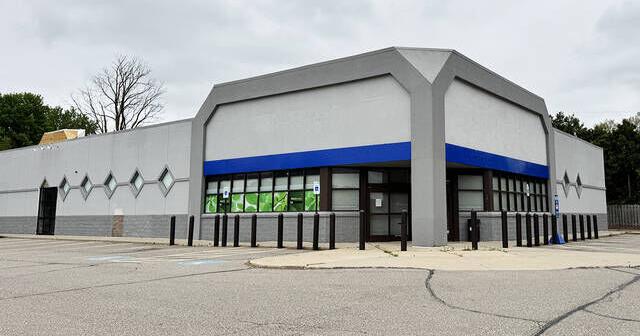
PERRY — Local Roots Cannabis is expected to open a new location in Perry.

John Liskey and his son, Roy Liskey — who co-owns Local Roots Cannabis in Laingsburg with his mother, Ronda — are working to convert the former Rite Aid building at 681 N. Main St. into a cannabis store.


Source link

LEADING RETIREMENT SOLUTIONS CELEBRATES 9 YEARS AS THE FIRST AND FOREMOST CANNABIS 401(K) PROVIDER

LEADING RETIREMENT SOLUTIONS CELEBRATES 9 YEARS AS THE FIRST AND FOREMOST CANNABIS 401(K) PROVIDER


For longer than any other company, Leading Retirement Solutions has enabled cannabis businesses to better attract, retain, and support employees with their compliant cannabis 401K services.

SEATTLE, May 20, 2025 /PRNewswire/ — Leading Retirement Solutions (LRS), a comprehensive retirement plan services company that assists companies in all 50 states, has been passionately committed to one key idea since its founding: Every employee deserves retirement benefits. Guided by that belief, LRS embraced the cannabis industry in 2017, becoming the very first retirement plan services provider to support cannabis offer 401(k)s and an array of other cannabis-friendly banking services, to this booming, yet financially underserved, industry. 

Despite widespread legalization at the state level, cannabis is still federally illegal, which prevents cannabis companies from accessing federally-controlled banking and financial services. As a result, cannabis companies and their employees often lack access to basic financial services like 401(k)s or retirement savings plans. This gap in retirement benefit access is unprecedented for a booming industry that employs more than 440,445 full-time equivalent employees, according to the 2024 Vangst Jobs Report.

In response, Leading Retirement Solutions developed the first and most compliant cannabis retirement plan, The Leading Cannabis 401(k), tailored to meet the unique needs of companies in this heavily-regulated space. They also led the way in developing other innovative financial solutions for cannabis companies, including Defined Benefit plans, Cash Balance programs, seamless payroll integration, 3(16) fiduciary services, e-delivery platforms, and more.

LRS has consistently supported this nearly $40 billion industry with these robust and compliant financial services for 9 years—longer than any other provider in the industry. In that time, they’ve provided essential support to countless cannabis companies looking to attract and retain talent with traditional employee benefits and provided thousands of cannabis employees with access to vital retirement benefits.

“It is deeply unjust that employees of the cannabis industry have experienced retirement savings disruption due to service provider ejections,” said Kirsten Curry, CEO of Leading Retirement Solutions. “Our team of experts has worked with numerous cannabis companies, including some of the largest in the country, after being ejected from other 401k providers. In every instance, LRS took these ejected retirement plans on and maintained retirement savings continuity for the cannabis companies and their employees. We work tirelessly to help the hundreds of thousands of employees in the cannabis industry access retirement savings benefits through their employer.”

Through their superior services, LRS provides cannabis leadership across the country with access to diverse funds approved specifically for cannabis-related plans; a coalition of trusted service providers dedicated to servicing the cannabis industry; comprehensive compliance, risk assessment, and risk mitigation support; a skilled, responsive team of professionals on-hand to reduce administrative burden; competitive services and pricing; and more.

“LRS is much more responsive and easier to communicate with than our last plan administrator, and they check in with me often to make sure t’s are crossed and i’s are dotted,” said Hannah Conlisk, Human Resources Analyst for the cannabis company Native Roots. “They also offer great resource materials, including the eligibility documents I send out to our new participants. Working with LRS has cut down my administrative time quite a bit, which has allowed me time to focus on other internal projects.”

With deep cannabis industry experience and the most compliant cannabis industry financial services on the market, Leading Retirement Solutions has blazed an essential trail in cannabis, supplying vital financial benefits to this rapidly expanding industry.

More about Leading Retirement Solutions: Leading Retirement Solutions is an industry leader in innovative retirement plan solutions for businesses. LRS focuses on improving retirement strategies by offering custom-fit solutions and nontraditional investment opportunities. Their services include plan design, plan administration, recordkeeping, consulting, and more. Leading Retirement Solutions prides itself on helping fellow women-owned businesses, not-for-profit organizations, cannabis, and small businesses, through tax sheltering and employee benefits.

For more tips and information regarding retirement plans, contact [email protected].

Connect with us on Facebook, LinkedIn, and X!

SOURCE Leading Retirement Solutions


Source link