Stein launches cannabis task force, seeking to regulate THC in NC

Stein launches cannabis task force, seeking to regulate THC in NC


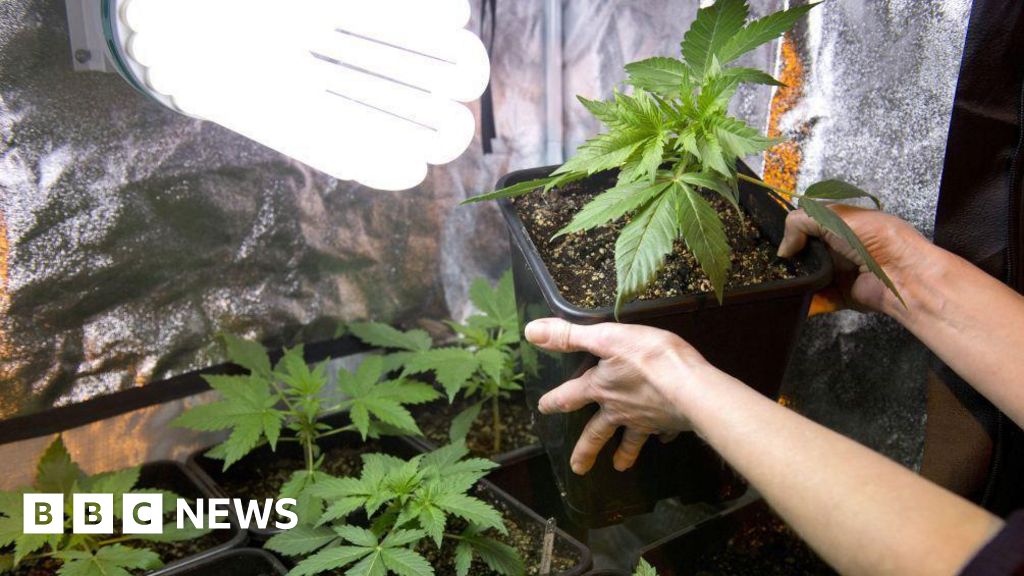
RALEIGH, N.C. — North Carolina needs to place stricter regulations on intoxicating cannabis to protect adult consumers while making it harder for minors to buy, Gov. Josh Stein said Tuesday in an exclusive interview with WCNC Charlotte’s content partner WRAL. He’s also considering steps to erase some people’s criminal records for minor marijuana offenses, calling them a “barrier for people’s successful participation in life.”

Stein said he plans to tackle those issues and more by launching a new advisory council made up of law enforcement officials, bipartisan lawmakers, health experts, farming interests and others. Together, he said, they’ll explore what the state’s policy should be on products that contain cannabis. Stein said he’s personally in favor of marijuana legalization, but that he wants to hear more from the people on that new council on what direction they think the state should go in.


Source link

Barberio Administration Approves Retail Cannabis Sales in Parsippany

Barberio Administration Approves Retail Cannabis Sales in Parsippany


PARSIPPANY—The Parsippany-Troy Hills Township Council has officially approved an ordinance allowing retail cannabis operations within designated zones throughout the township, marking a significant milestone in the local implementation of New Jersey’s adult-use cannabis legislation.

Ordinance 2025:08, adopted by the Township Council, amends Chapter 430 of the municipal zoning code and permits various cannabis-related businesses—including Class 5 retail dispensaries—to operate under strict regulations. The move aligns Parsippany with municipalities across the state embracing the legal cannabis industry following New Jersey voters’ 2020 approval of recreational marijuana for adults 21 and older.

Retail cannabis establishments (Class 5 licenses) will be permitted in select commercial corridors along arterial roadways such as Route 10 and Route 46. These dispensaries must comply with detailed conditions, including minimum lot size, signage restrictions, and aesthetic guidelines prohibiting cannabis imagery from being visible.

In addition to retail dispensaries, the ordinance permits cannabis cultivators (Class 1), manufacturers (Class 2), wholesalers (Class 3), testing laboratories, and distributors in designated industrial zones. Cannabis establishments must be licensed both by the state’s Cannabis Regulatory Commission and the Township of Parsippany.

To protect nearby residential communities, the ordinance includes setbacks prohibiting retail cannabis operations within 100 feet of residential zoning districts or adjacent municipalities’ residential areas. Drive-throughs are also banned.

The ordinance results from an extensive study and reflects what township officials describe as a “mature and regulated” cannabis marketplace in New Jersey. By embracing retail cannabis under controlled conditions, Parsippany aims to balance economic opportunity with community safety.

The ordinance will take effect upon publication and filing with the Morris County Planning Board.


Source link

One Year On, German Cannabis Legalization Has Uncertain Future

One Year On, German Cannabis Legalization Has Uncertain Future


Berlin’s “premier smoking lounge” shares a street with high-end wine bars and designer clothing stores. The faceless entrance of Tribe gives nothing away about the stylish interior upstairs, where guests sink into emerald velvet couches, deep in conversation.

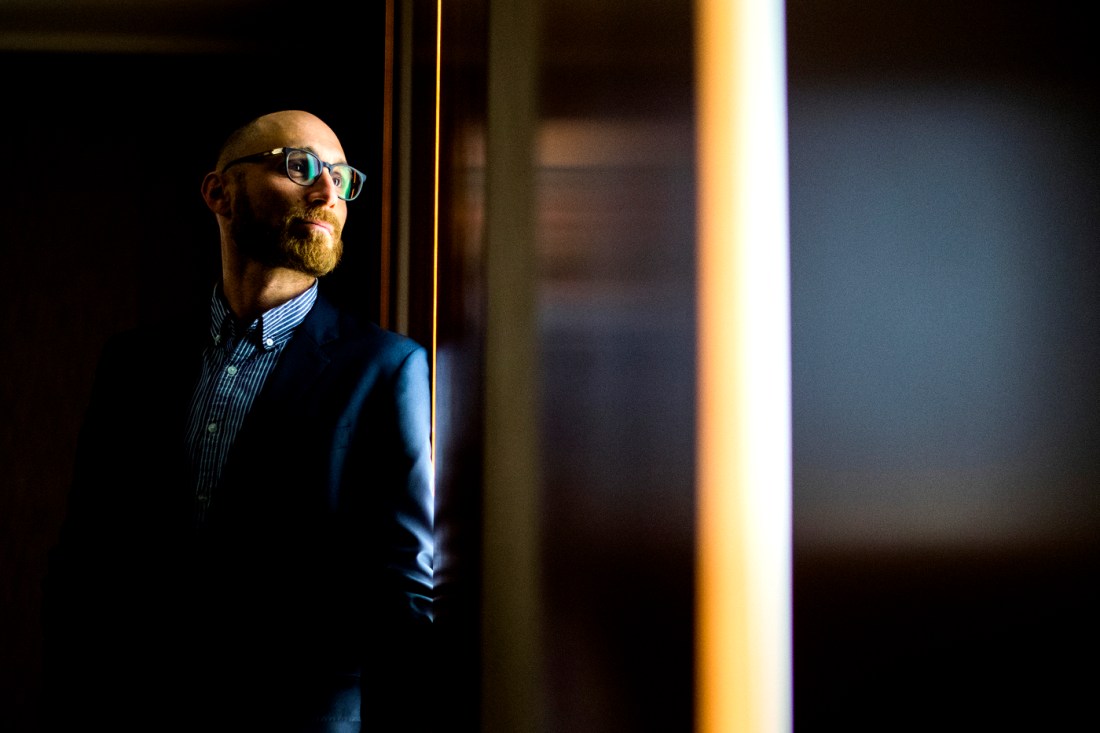
“Our vision from the beginning was to create something unique, that was not the typical stoner cliche,” Tribe founder Stefan Röhrl, who ran clubs in Barcelona and Ibiza before returning to Germany, told Filter. “I wanted to create somewhere that my wife and I can go and feel comfortable. Where you can go after dinner for drinks, but still enjoy cannabis.”

On April 1 2024, after the government passed the Cannabisgesetz (Cannabis Act), Germany became one of the first European countries to introduce a form of legalization for adult use.

The law decriminalized possession of up to 25 grams of cannabis in public and 50g at home for over-18s, as well as permitting home cultivation of up to three plants and the establishment of nonprofit cannabis associations, for up to 500 members to grow it collectively.

Phase 2 of the bill, providing for a pilot program of limited commercial sales, hit a stumbling block when the former coalition government collapsed in November.

Tribe is not one of these associations. Instead, it operates under what Röhrl describes as “workarounds”—tapping into existing regulations such as medical cannabis laws and state smoking permits to allow people to bring their own cannabis to consume on site, until a framework for full legalization is introduced.

However, Phase 2 of the bill, providing for a pilot program of limited commercial sales under scientific monitoring—seen by many as a test case for wider reform across Europe—hit a stumbling block when the former coalition government collapsed in November, plunging the country into political uncertainty.

National elections in February resulted in a new government, led by the Christian Democratic Union (CDU) and its Bavarian counterpart, the Christian Social Union (CSU), in coalition with the center-left Social Democratic Party (SDP). Representatives of the center-right CDU/CSU, appointed as drug commissioner, minister of health and minister of food and agriculture, are now primarily responsible for implementing Phase 2.

Approvals of cannabis association licenses slowed significantly following the change in government, with just over 200 permits issued out of over 600 applications. Strict regulations on how associations can operate, such as limits on numbers of members and paid employees, also create financial and logistical challenges. It can cost anything from €100,000 to €1 million to launch an association, with many reliant on external investment and two already declaring bankruptcy.

“Most like to consume with other people, and if you don’t create a space for the people to do that, then they still have to do it in hiding.”

“The lawmakers have set up a system in which they don’t want cannabis clubs to behave economically,” Frederik Blockslaff, a lawyer who has helped 26 associations obtain licences, told Filter. “But you have to—if you want production for 500 people, plus all of the lighting and technology, it’s an investment of around €300,000. You have to rely on investors, and they are always going to want to see a return on their investment.”

Associations must be located at least 100 meters from any public place frequented by under-18s, and consumption is strictly prohibited on site. According to Blockslaff, this limits the effectiveness of strategies to reduce problematic use.

“The government wants you to get your stuff and go away; there is basically no interaction,” he said. “You can have flyers and remind members of the rules, but you can’t address it properly because they aren’t allowed to smoke inside.”

For many consumers, cannabis represents community, so this “anti-social” club model has led them to find workarounds to preserve that.

“Cannabis is a social thing,” Röhrl said. “Most like to consume with other people, and if you don’t create a space for the people to do that, then they still have to do it in hiding.”

“Places like [Tribe] are necessary to create a safe space for consumption, for social interactivity,” he added. In Spain, which has its own cannabis social club model, “the social part of it was very important, so it’s a shame that the German model has excluded that.”

Stefan Röhrl 


Blum Cannabis Association in Berlin is yet to produce its first harvest, but is already building a thriving community by hosting events at other venues across the city, with a waiting list of 2,600.

“It’s more than a [cannabis] club, it’s creating a certain type of lifestyle,” co-founder Zoe Killing told Filter. “What we are aiming to create is a place for everyone, where everyone feels represented. Even people who wouldn’t necessarily think that it would be a place for them, we want them to feel welcome.”

One year on, legal sales are still only estimated to account for around 6 percent of the total cannabis market.

Tia, a member, said she has made more meaningful connections and felt more comfortable at Blum’s events than she would on a typical night out in Berlin.

“It’s bigger than just meeting up and getting high, it’s the whole culture around it,” she told Filter. “As cliche as it sounds, you do tend to get deeper   the relationships feel a lot more genuine.”

“The feedback I get from women [at Blum events] is that they feel safe in these spaces, too,” Tia added.

One year on, with associations slow to get started, legal sales are still only estimated to account for around 6 percent of the total German cannabis market, according to analysis by Whitney Economics. But prescriptions are plugging some of the gap. In August 2024, new regulations made it easier to access medical cannabis; 21 medical specialisms are now eligible to issue prescriptions, without the need for prior approval from insurance providers.

Telemedicine clinics have made it possible to order a prescription online in less than 30 seconds, without the need for a consultation, and will deliver it within an hour via Uber Eats. As a result, the number of people obtaining prescriptions has risen dramatically. It’s expected to reach 4 million over the next four years, representing around €2 billion in annual sales.

The government has said it will carry out a re-evaluation of the legalization law later in 2025, prompting speculation that it could try to backtrack.

Tribe caters to people who obtain their cannabis either way.

“Clients bring their own cannabis to consume, either from their medical prescription or their club-grown product,” Röhrl explained. “We additionally have developed a telemedicine platform that allows people to receive their prescription directly at the lounge.”

Right-leaning politicians have been vocal about their opposition to the current state of play. Christin Christ, the CDU health representative in Hamburg, recently called it a “cardinal mistake,” while Nina Warken, the new federal health minister, says she wants to “restrict the easily accessible online prescriptions.”

The government has said it will carry out a re-evaluation of the legalization law later in 2025, prompting speculation that it could try to backtrack on the removal of cannabis from Germany’s list of “narcotics.”

Peter Homberg, a regulatory expert at the law firm Gunnercooke, has predicted that a “complete reversal” of the law is “unlikely,” but that the review could see amendments such as a reduction in the cannabis possession threshold, and/or adjustments to tighten medical regulations. 

“Decriminalization is working. Enforcement resources have shifted, arrest rates are down and the sky hasn’t fallen.” 

“What we’re seeing right now is a political recalibration, not a rollback,” Jamie Pearson, founder of New Holland Group, a consultancy with clients in the cannabis space, told Filter. “The CDU has always voiced caution on cannabis, but a full reversal is politically and socially improbable. The data coming in from Phase 1 is clear: Decriminalization is working. Enforcement resources have shifted, arrest rates are down and the sky hasn’t fallen.” 

According to an editorial published by Der Spiegel, ​​”approximately 100,000 criminal proceedings have been avoided” since the law change. Following the publication of the latest crime statistics earlier in 2025, media have reported that cannabis-related arrests fell by 56 percent in Bavaria. Reports from North Rhine-Westphalia, a region that has issued a high number of association licenses, say legalization has “significantly” reduced pressures on police.

Many police officers have welcomed legalization, according to Tobias Peach, a cannabis activist from Freiburg. Meanwhile, decriminalization and home cultivation are changing public perceptions.

“The stigma is still there, but it is reducing,” Peach told Filter. “People who wouldn’t have done it before have started growing as a hobby. They share their plants with their family and put them on social media. They talk about it more, so it becomes more normalized and not such a taboo.”

Tobias Peach


However, with the Interior Ministry claiming that there is “no evidence that partial legalization has curbed the illegal market or reduced demand in any way,” pilot commercial sales could be crucial to building an evidence base to support wider regulation across Europe.

Pilots with scientific evaluation, like those being conducted in Switzerland and the Netherlands, also offer a potential way around international laws, such as the UN single convention, which prohibit commercial cannabis sales.

“Germany has the chance to lead—but only if legislators follow the facts, not the fear.”

“Pilot programs should answer the critical questions that politicians ask,” Daniel S. Hübner, senior science manager for the Cannabis Research Lab at the Humboldt University of Berlin, said at a cannabis industry conference in Berlin. “Now we have a new CDU Ministry of Health, we need really good data for continuing this direction of travel … We want to show how having open sales can help harm reduction and help people use cannabis with fewer problems.”

Some have suggested the government could approve Phase 2 in exchange for a ban on home growing; others expect that without the political impetus to see it through, it will simply fall by the wayside.

One thing most agree on, though, is that whatever amendments the autumn evaluation brings, the cannabis-reform genie is out of the bottle.

“What Germany needs now is political will and evidence-based policy to move forward with the pilot programs,” Pearson said. “If we let short-term political turbulence derail long-term structural reform, we’ll miss the chance to create a new regulatory model for Europe. The truth is, the illicit market isn’t waiting, and neither are consumers. Germany has the chance to lead—but only if legislators follow the facts, not the fear.”


Photographs of Tribe interior and Stefan Röhrl by Sarah Sinclair. Photograph of Tobias Peach courtesy of Peach.



Source link

How a Canny Bank Is Making Its Mark In Cannabis Payments – Digital Transactions

How a Canny Bank Is Making Its Mark In Cannabis Payments – Digital Transactions


Cannabis remains a federally illegal drug in the United States, but various states have acted over the past decade to legalize it and sales continue to grow fast enough that the market remains potentially lucrative for processors and banks.

An example of how a major financial institution has entered this market is Raleigh, N.C.-based First Citizens Bank, which began serving the transaction needs of growers and retail sellers following its 2023 acquisition of the assets of Silicon Valley Bank. SVB had provided services to businesses that supported the cannabis industry but collapsed as a result of its heavy exposure to cryptocurrency.

“We inherited some businesses through acquisition that put us in the high-risk space,” said Jason Mills, executive director of merchant services at Citizens. “SVB was a big one for us. It got us into the cannabis space through [its] agricultural roots.” Mills, along with two colleagues, spoke Tuesday at the Southeast Acquirers Association conference in Orlando, Fla.

Another opening for the bank occurred with passage of the Agriculture Improvement Act of 2018, also known as the Farm Bill. The act legalized the production of hemp, or cannabis sativa, at a THC concentration of no more than 0.3%. Citizens “made significant investments to be compliant” with both the Farm Bill and rules from the card networks, noted Ben Kornegay, enterprise merchant risk manager for Citizens.

Much depends on execution and adherence to relevant law, the bank’s executives stressed. “We can be a leader in this space. If we do it the right way, there’s significant upside,” said Mills. U.S. cannabis sales reached $38.5 billion last year and will double by 2030, according to Grand View Research.

But that growth entails strict scrutiny at the bank, the officials said. “We are quick to act if we see something nefarious. We want to stay on the up-and-up with the card brands,” said Kornegay. Vigilance is key, the executives said. Added Dana Lomas, director of merchant sales, “We know our clients inside and out. Especially with our cannabis clients, we can see across the board.”

For underwriting merchants and growers, the more information the better, they said. “Data is key on the front end,” said Mills. “It makes for an easier conversation.” Here, the bank keeps a watchful eye on the business, the executives stressed. “We have a dedicated team that does nothing but cannabis deals,” said Kornegay. “We’re only doing 0.3% growers and lower.”

Even rolling paper, said Mills, is subject to the same “compliance monitoring” used with cannabis. And payments generated by so-called Tier One dispensaries aren’t accepted, he said, as they are considered a higher risk due to their involvement in cannabis cultivation. “I never thought I’d be involved in cannabis,” he joked. “I wish I’d studied chemistry.”


Source link

Banks and businesses deserve clarity on the legal treatment of cannabis

Banks and businesses deserve clarity on the legal treatment of cannabis


Flowering cannabis plants
The STATES 2.0 Act, currently pending in Congress, would go a long way toward giving banks confidence that they can provide services to legal cannabis businesses without putting themselves in jeopardy, write Terry Mendez, of Safe Harbor Financial, and Michael Bronstein, of the American Trade Association for Cannabis and Hemp.

Bloomberg Creative Photos/Bloomberg Creative

A bipartisan bill recently reintroduced in Congress could mark a turning point for the cannabis industry’s long-standing challenges with federal tax policy and access to banking. The Strengthening the Tenth Amendment Through Entrusting States 2.0 Act — commonly referred to as the STATES 2.0 Act — seeks to reconcile federal law with the growing number of states that have legalized marijuana in some form.

Backed by Reps. Dave Joyce, R-Ohio, Max Miller, R-Ohio, and Dina Titus, D-NV, the bill proposes a federal framework that respects state and tribal authority to regulate cannabis, while establishing clear boundaries between legal and illicit activity. With 38 states and Washington, D.C., already embracing some form of legalization, the STATES 2.0 Act could help bring policy into alignment with economic reality.

At the heart of the legislation is the de-scheduling of marijuana under federal law — but only for cannabis activity that complies with state or tribal regulations. Businesses operating legally under these frameworks would no longer be subject to the Controlled Substances Act, while unlicensed operations would remain prohibited and subject to federal enforcement. This approach preserves state sovereignty while offering federal clarity for enforcement and regulation.

The bill also allows for regulated interstate commerce between consenting states — an important step for operators in states with supply gluts or constrained retail access. With cannabis increasingly treated as an interstate business — both in terms of supply chains and consumer behavior — this provision acknowledges the evolution of the market.

Perhaps most notably for financial services, the STATES 2.0 Act addresses the ongoing dilemma banks and credit unions face when considering whether to serve cannabis-related businesses, or CRBs. Currently, marijuana’s federal Schedule I status exposes institutions to potential violations of anti-money-laundering statutes and the Bank Secrecy Act, or BSA, even when servicing businesses fully compliant under state law.

The legislation does not overhaul banking statutes, but it does offer much-needed clarity. By exempting compliant cannabis activity from federal prohibition, the bill establishes that proceeds from such operations are not subject to federal forfeiture and do not constitute criminal activity under federal law. This distinction, while subtle, would significantly reduce legal uncertainty for financial institutions — potentially encouraging broader participation in the cannabis sector and reducing the industry’s reliance on cash transactions.

Financial institutions would still need to maintain robust compliance systems to ensure clients remain in good standing under local laws. The responsibility to report suspicious or illicit activity under BSA obligations would remain in place. But with the STATES 2.0 Act, banks and credit unions would gain a more defined framework within which to operate — a development many in the financial community have been calling for.

The bill also proposes a long-awaited fix to another major financial obstacle: IRS Section 280E. Currently, this section prevents cannabis businesses from deducting ordinary business expenses, such as wages, rent, insurance and loan interest, because the federal government still classifies marijuana as an illegal substance. The result has been outsized tax burdens for state-compliant businesses, with effective rates sometimes exceeding 60%.

Repealing the application of 280E to legal cannabis operators would align the industry with standard tax treatment applied across other sectors. The ability to deduct routine expenses would lower the cost of doing business, improve access to capital, and free up funds for expansion, hiring and innovation.

Importantly, such reform could also reduce the need for the complex legal and tax structures cannabis companies have developed to manage 280E exposure. Simplifying these corporate structures could help operators — especially smaller and minority-owned businesses — reclaim both time and capital.

Beyond banking and taxation, the STATES 2.0 Act includes measures aimed at creating national standards for consumer safety. It establishes a regulatory role for the Food and Drug Administration, requiring labeling, testing and manufacturing oversight for cannabis products — though it stops short of mandating premarket approval. This approach aims to balance public health concerns with business continuity.

The bill also creates a federal excise tax framework to fund youth prevention, public safety initiatives and substance abuse education, while avoiding heavy-handed duplication of state-level taxes. In acknowledgment of ongoing concerns around impaired driving, it directs the Government Accountability Office to conduct traffic safety studies related to cannabis legalization.

The STATES 2.0 Act does not eliminate the need for diligence. Cannabis operators would still need to maintain full compliance with state and tribal regulations, and financial institutions would continue to bear responsibility for detecting and reporting illegal activity. But what the bill does do is remove two of the most prohibitive barriers to a fully functioning cannabis economy.

The industry’s next chapter — if shaped by legislation like the STATES 2.0 Act — could be one marked by transparency, responsible growth and increased access to financial tools that every other legal industry takes for granted. The STATES 2.0 Act meets Congress, states, and the public where it is right now — allowing states to make their own choices on legalization and allowing for a national framework and federal support for those that have legalized. Whether it’s a small cultivator seeking a loan or a regional bank seeking federal regulatory support, the STATES 2.0 Act signals that Congress is proposing a commonsense solution for a national market that will aid businesses and grow an industry.


Source link

Sadiq Khan walking through rows of cannabis plants.

How Might Legalizing Cannabis Possession Impact the UK?


Two Northeastern University academics argue that current U.K. criminal penalties for cannabis outweigh its harms. But that does not mean legalization solves all its issues.

Sadiq Khan walking through rows of cannabis plants.
London mayor Sadiq Khan says a new review of cannabis drug policy offers a ‘compelling, evidence-based case’ for decriminalizing possession (Stefan Rousseau/PA Wire)

LONDON — The United Kingdom and the state of Massachusetts have very different stances when it comes to cannabis possession.

Massachusetts law allows a person to carry up to 1 ounce of marijuana on them. In Britain, the same act could land someone in prison for up to five years, present them with an unlimited fine — or even both.

A report by the London Drugs Commission wants to soften that approach, calling for personal use of cannabis to be decriminalized. Sadiq Khan, the mayor of London, says the commission’s study makes for a “compelling, evidence-based case” for decriminalizing possession.

Leo Beletsky, professor of law and health sciences at Northeastern University, says regulating cannabis use in a similar way to how alcohol is treated in society would allow it to be more effectively managed.

“There is definitely reason to be cautious about cannabis, especially when it comes to people who consume compulsively and are not able to moderate their use,” he says.

“And there are a range of health concerns related to that — it’s not a risk-free substance, just like any other psychoactive substance, including alcohol and nicotine. There’s lots of things that are already on the market that are psychoactive and that we tolerate having a certain level of risk.

“With alcohol, it is deeply ingrained in British culture and British life. Do its harms mean that alcohol should be prohibited? No. Does it mean that we can find ways to reduce the harms while maximizing its benefits? Yes — and I think they should apply to cannabis.”

Portrait of Leo Beletsky.
Leo Beletsky, professor of law and health sciences at Northeastern, says UK criminal penalties for cannabis possession ‘don’t make sense’. Photo by Matthew Modoono/Northeastern University

Decriminalizing personal possession would allow health practitioners to speak more openly about managing its effects, Beletsky argues.

“When you bring a substance out of the shadows,” he says, “it creates all kinds of opportunities for risk reduction, whether it is with education, managing dosage and doing more research. When something is prohibited and illegal, it really limits the public health work that you can do.”

Beletsky says the regulation of cannabis in the U.K. compared to alcohol, particularly when it comes to criminal penalties, “doesn’t make sense.”

One of the five main recommendations by the London Drugs Commission is that cannabis should no longer be considered under the Misuse of Drugs Act, where it is listed as a Class B drug — the same category as the likes of ketamine — and instead moved to be regulated under the Psychoactive Substances Act. Doing so would allow it to be possessed in small quantities for personal use, but it ensures it remains a criminal act to import, manufacture and distribute cannabis.

Charlie Falconer, a member of the House of Lords who chaired the independent commission, said: “The criminal justice system response needs to focus only on the dealers and not the users.”

Portrait of Hossein Dabbagh.
Hossein Dabbagh, a philosophy academic at Northeastern University in London, argues that decriminalization can be seen as the more ethical choice. Courtesy photo

Hossein Dabbagh, Northeastern assistant professor of philosophy, says it is possible for decriminalization to be the “more ethical choice when we look closely at the wider picture.”

The London-based academic says the evidence is increasingly pointing to the harms of criminalization outweighing the harms caused by cannabis use.

“Criminal penalties for possession don’t just fail to deter use — they actively cause additional harm,” he says.

“Criminalization comes with criminal records, reduced life chances, racial disparities in policing, and the stigmatization of people who often pose no real threat to others. These are serious consequences for something that, while not risk-free, is relatively moderate in its harms compared to legal substances like alcohol or tobacco.

“If we shift our goal from punishment to harm reduction — focusing on education, treatment and regulated access — we stand a much better chance of addressing real risks without producing new ones through the criminal justice system.”

The harm caused by cannabis was reflected in the London Drugs Commission’s final report. It stopped short of calling for the sale of cannabis to become legal due to around 10% of users developing difficulties as a result.

It is a different picture in most of the U.S., where the legalization of cannabis is becoming normalized. Almost half of the 50 states have legalized cannabis use recreationally, with even more permitting it for medical reasons. 

Beletsky says the U.S. represents a “cautionary tale” for the U.K., where he says the reforms have failed to deliver on the original social justice aims and instead produced a lucrative commercial market for marijuana sales.

In London, the drugs commission found that police were regularly using cannabis possession as a pretext for exercising their stop-and-search powers. Falconer’s review claims this practice is “damaging” relations between police and communities.

Beletsky points out that, while states like Massachusetts have legalized the sale and possession of cannabis, it is not permitted to be used in public. This has caused its own inequalities.

In some states where cannabis sale is permitted, Beletsky says arrests of people from ethnic minorities for cannabis possession are no longer an issue. But police intervention for other alleged misdemeanours — including public consumption of cannabis — has gone up, he says.

“One way to say it is that the diagnosis was correct, in the sense of identifying that this was a problem that needed to be fixed, but simply changing the status of cannabis didn’t address this social injustice issue,” he adds.

“More needs to be done to actually address it, whether it is police training or creating social consumption venues where people of lower socioeconomic status can consume in a safe environment.

“I don’t know what the rules would be in lower-income social housing in the U.K., but I can’t imagine that cannabis consumption is going to be OK there. People who live in those properties will need a place to safely consume cannabis [if it is decriminalized]. Otherwise, they are going to be forced outside and exposed to police surveillance and some of the prohibitions around public consumption, which in the U.S. has proven to be an issue.”


Source link

Khan challenges Starmer on cannabis

Khan challenges Starmer on cannabis


A commission established by Mayor of London Sadiq Khan in 2021 has published its report, concluding that the possession of small amounts of cannabis should be decriminalised. The government should rethink classification and explore other more extensive options of decriminalisation, and a non-medical legal market.

Khan has endorsed the report. The authors are right that the penalties for possession of cannabis and the use of stop-and-search under the suspicion of possession of cannabis disproportionately target young black men.

In 2001, Lambeth’s pilot approach to cannabis possession, resulting in a caution rather than arrest, was a success. For a brief period, the Blair government appeared to soften its stance on cannabis, reclassifying it to Class C. But with tabloid scare stories about increasingly strong “skunk”, it was reclassified as Class B. Now the Starmer government say that drug policy on cannabis is essentially “settled”.

Such philistine attitudes mean that proper investigation into how even more formal, if limited legal tolerance of cannabis, may affect rates of cannabis-induced psychosis remains unlikely

As the report notes, purchase of cannabis in London and the UK is very easy, although dropping. Many respondents to the survey believe that police de facto tolerate it, and that consumption in the home may well be legal.

Few sentences of five years are handed out for possession of small amounts of cannabis. But that does not make the current government drug policy less ridiculous. While proper legalisation and regulation of the drug market is the only way that harm reduction can be truly prioritised, steps towards decriminalisation would surely help.

The report’s authors are persuaded by the time and money saved for the police, but that should not stop us from recognising the ongoing futility of the war on drugs. Some so-called “County Lines” operations make more money in one day than the entire budget of the Metropolitan Police has for tackling the issue.

In a recent survey by the Centre for Social Justice, a majority of police officers said the current ambiguity of widespread tolerance or acceptance of cannabis use, resources and, since 2018, the legal medical cannabis market means they feel consumption cannot be adequately policed.

The control of the medical cannabis market by private providers, with only a handful of NHS-prescribed patients among 30,000 legal medical UK users, also means that the legal sector and the black market are feeding off each other. Legal providers regularly warn people against what they claim to be adulterated products, in favour of their services.

As the report notes, legalisation as practised in many countries across the world will not of itself destroy the role of the black market and organised crime in cannabis cultivation and distribution. It would at least stop individual consumers from being put in legal jeopardy for smoking a joint.


Source link

Massachusetts lawmakers poised to approve major cannabis bill on Wednesday – Boston 25 News

Massachusetts lawmakers poised to approve major cannabis bill on Wednesday – Boston 25 News


An expansive bill to restructure the embattled Cannabis Control Commission, regulate and tax hemp-based drinks and gummies that have proliferated in convenience stores, and open the door to retail-only medical marijuana businesses will go before the House of Representatives on Wednesday, having now cleared two committees without opposition.

Frustration with the CCC’s slow pace of regulatory changes, headline-grabbing internal conflicts and a plea from the inspector general for the Legislature to intervene at the “rudderless agency” and revisit its “unclear and self-contradictory” 2017 enabling statute combined last summer to get lawmakers thinking more seriously about a response. The House Ways and Means Committee on Tuesday reported out the bill (H 4160) that last week unanimously cleared the Cannabis Policy Committee, and officials said Ways and Means made no substantive changes.

“This legislation not only makes needed changes to the structure of the Cannabis Control Commission, it’s also representative of the House’s commitment to ensuring that the cannabis industry in Massachusetts is regulated in a manner that bolsters economic opportunity, especially for communities that were disproportionately impacted by the criminalization of marijuana,” House Speaker Ronald Mariano said. “I look forward to hearing more from my colleagues in the House about this issue, and to ultimately voting to pass these critical reforms tomorrow.”

Created by the Legislature in 2017 after voters legalized non-medical marijuana in 2016, the CCC is a five-commissioner independent body, with appointments made singularly and jointly by the governor, attorney general and treasurer, with the treasurer selecting the chair. Under the bill the House will debate Wednesday, the CCC would be consolidated entirely under the governor. The state’s executive would appoint all three commissioners and select one of them to serve as chair (who would be the only full-time commissioner). The CCC would be “subject to the laws applicable to agencies under the control of the governor.”

The chair would serve conterminously with the governor, according to the bill, and the other two commissioners would each serve terms of four years, or until a successor is appointed.

The bill extends beyond cannabis products that are already under the CCC’s purview to address intoxicating hemp-based products that largely fall into a gray area of the law and between the regulatory cracks. Since hemp-based gummies, energy shot-like drink bottles and seltzers became ubiquitous across Massachusetts convenience store checkout counters and social media feeds in recent years, lawmakers and regulators have flagged the need to straighten out what is and is not cannabis, and how it should all be regulated.

The committee bill would ban the sale of hemp-based beverages and consumable CBD products unless the product is registered with the CCC and complies with regulations that the CCC would be required to promulgate to deal with things like product testing, labeling requirements and more. Those products would also be subject to a new tax (5.35% for CBD consumables and $4.05 per gallon for hemp-based drinks).

The bill adjusts the existing cap on retail licenses any one operator can hold. The current limit is three, but some business owners have said the cap prevents them from selling their businesses. Under the bill advancing towards the House, the cap on retail licenses would be raised to six over a three-year period (increasing first to four, a year later to five and finally to six), and the existing three-license caps would remain in place for cultivation and manufacturing.

Opponents, including Equitable Opportunities Now and the Massachusetts Cannabis Equity Council, have warned that multistate operators are able to spend heavily to increase their market share and that allowing them to grow even more will hurt small and equity-owned businesses.

“This bill is a gift to corporate cannabis and a death sentence for local and social equity businesses. How is someone with one, two, or three stores supposed to compete with someone buying for six or more stores?” EON co-founder Shanel Lindsay said. “It will undermine everything Massachusetts has worked so hard to achieve in building the most equitable cannabis industry in the country.”

The bill also contemplates the possibility that Massachusetts might want to cap the total number of licenses granted by the CCC. It would require the CCC to conduct an economic analysis of the entire cannabis industry and gives the CCC the power to limit the total number of licenses issued based on that study.

EON pointed to a number of the bill’s provisions that it views as positive steps for the industry, including medical vertical deintegration and increasing the daily purchase limit to two ounces, but the group said it would prefer no legislative action to “a flawed bill that gives control of the market and policymaking to the largest, most profitable businesses.”

“We appreciate action on medical deintegration, enforcing ownership limits, and other overdue reforms — but handing more power to big cannabis and gutting the CCC’s independence are poison pills,” EON Deputy Director Kevin Gilnack said. “Most cannabis businesses would be better off if the Legislature did nothing.”

On the medical side of the legal marijuana world, the bill eliminates the requirement that medical marijuana businesses be “vertically integrated,” meaning they must grow and process all the marijuana they sell. Patients and advocates have been calling for that change for years, saying the medical-only options have become scarce across Massachusetts since cannabis was legalized for non-medical use.

It includes language that would let the CCC “establish and provide for issuance of additional types or classes of licenses to operate medical use of marijuana-related businesses” and would change the standard terminology in state law from “medical marijuana treatment center” to “medical marijuana establishment.” Medical marijuana retail licenses would be available exclusively to social equity applicants for at least the first three years they are available.

The House Ways and Means Committee advanced the bill with 23 Democrats in support, no committee members opposed, eight Republicans electing to essentially abstain from the committee vote, and five Boston Democrats taking no action on the committee poll.

Asked about the Cannabis Policy Committee’s bill last week, House Ways and Means Committee Chair Aaron Michlewitz said he was “hopeful to do it soon” and that the House would “make it a priority to kind of get through it as quickly as we can.”

Top Senate Democrats haven’t expressed the same sense of urgency on the CCC.

“I will talk to senators and the chair of the Cannabis Committee, and we’ll see. We’ll take a look at whatever the House sends over, of course,” Senate President Karen Spilka said Thursday.

Download the FREE Boston 25 News app for breaking news alerts.

Follow Boston 25 News on Facebook and Twitter. | Watch Boston 25 News NOW


Source link

Cannabis worth millions disguised as Yankee Candles

Cannabis worth millions disguised as Yankee Candles


Getty Images Cannabis plants in pots under a lamp. A person's arms are visible lifting one plant up.Getty Images

The prosecution said the men were dealing drugs “on an industrial scale”

Millions of pounds worth of drugs labelled as “Yankee Candles” were posted from America to bogus addresses in south Wales, a court heard.

Four men have gone on trial charged with smuggling more than 300kg (661lb) of cannabis from the US into the UK using the postal service.

Mohammed Hussain, 28, Abu Hussain 28, Sean Montgomery, 24, and Steven Munroe, 44, all from Cardiff, deny conspiracy to import class B drugs.

An operation by police started after a postal worker reported suspicious activity and more than 20 uncollected parcels were seized at a sorting office.

Jurors at Newport Crown Court on Wednesday were told the packages that arrived in Barry, Vale of Glamorgan, were posted from California and New York.

Prosecutor Roger Griffiths previously told the court this was “drug dealing on an industrial scale”.

On Wednesday the court heard from Royal Mail employee Robert Sennett, who said defendant Sean Montgomery arrived at the Barry depot to pick up three parcels, saying they were “presents, gifts from family”.

But Mr Sennett said the parcels were earmarked for an address that “didn’t exist”, and did not hand over the parcels.

Mr Griffiths said the police were called because, “similar packages had arrived from the United States” that were believed to be “suspicious”.

Jurors were told CCTV showed Mr Montgomery at the Barry depot.

Det Con Sean Meyrick, the main investigator in the case, told the court he believed Mr Montgomery went there because he was “directed to collect parcels from America”.

The court was told police officer Patrick Levy went to the Royal Mail depot in Barry to view the suspicious packages.

He said there were 14 packages “with Yankee Candles inside”, but he was told “they were too light to be candles” and the addresses did not match the postcodes.

He said “they were from California and New York” and that one package contained a long white box, and another a brown box.

The officer said when he looked inside one box there was a “vacuum sealed package” that people used to “transport cannabis”.

Jaggery/Geograph Newport Crown Court with car park visible and steps up to court behind and concrete facade of court building with clock towerJaggery/Geograph

Jurors at Newport Crown Court were told the parcels were earmarked for an address that “didn’t exist”

Jurors were told Mr Montgomery was arrested and police recovered his Snapchat conversations.

Det Con Meyrick said a video was recovered showing a large quantity of cannabis on the lap of someone with tattoos matching Mr Montgomery’s description.

He said: “I’ve been a police officer for 20 years and in my experience the amount of cannabis on his lap is consistent with a kilo of cannabis.”

However, under cross examination he said he could not be sure the cannabis in the picture was linked to the conspiracy Mr Montgomery was charged with.

Det Con Meyrick said there were messages from an unidentified person suggesting they should pay a postal worker £5,000 to recover the cannabis from the Barry depot.

The message referred to “60 bags L”, which Det Con Meyrick said meant the organised crime group stood to lose £60,000 of cannabis.

Mohammed Hussain was arrested at his home in Ninian Park Road in Cardiff where police found a packet of cannabis, money and a phone, and empty cannabis packages in a car, which had previously been identified by a postal worker.

Mr Hussain and Abu Hussain pleaded guilty to supplying a controlled class B drug but deny conspiracy to import class B drugs.

Mr Montgomery and Steven Munroe denied both charges.

The case continues.


Source link

Abstrax and Josh D Settle the Debate: LED vs. HPS in

Abstrax and Josh D Settle the Debate: LED vs. HPS in


IRVINE, CA, June 04, 2025 (GLOBE NEWSWIRE) — Abstrax, an industry leader in cannabis research and terpene innovation, has released a first-of-its-kind white paper analyzing how HPS and LED lighting affect a wide range of secondary metabolites in cannabis, including compounds like cannasulfurs that have never been studied in this context. The study was conducted in partnership with Josh Del Rosso, also known as Josh D – the legendary grower who introduced OG Kush to California and helped make it a staple of West Coast cannabis. A pioneer of hydroponic cultivation in Los Angeles, Josh D helped usher in a new era of urban cannabis growing just as indoor lights, Rockwool, and liquid nutrients began to shape the game. The research, titled Which Light is Right: The HPS vs. LED Debate in Cannabis Cultivation, compared how his iconic OG Kush performed under both High Pressure Sodium (HPS) and Light Emitting Diode (LED) systems. The results challenge common assumptions and may surprise even the most seasoned cultivators.

The debate between HPS and LED lighting has divided the cultivation community for years, with questions around their impact on cannabinoid potency, morphology (bud shape and structure), and terpene expression still unresolved. In this study, Abstrax and Josh D put those questions to the test using a side-by-side grow of his award winning OG Kush, cultivated under tightly controlled conditions. The plants all shared the same genetics, nutrients, and environment, with lighting as the only variable.

What they found pushes the conversation forward:

  • LED lighting produced denser, more exotic-style buds while HPS grew OG in its classic loose structure.
  • Total cannabinoid and terpene content were nearly identical between both systems.
  • Gassiness, driven by volatile sulfur compounds, was slightly more pronounced under HPS, but still present in LED-grown flower.
  • LEDs achieved desirable results at lower flux levels, suggesting new efficiency advantages with proper calibration.
  • No significant sensory difference was found by a trained panel in blind testing.

“This wasn’t theoretical,” said Kevin Koby, Chief Executive Officer at Abstrax. “This was one of the most iconic cultivars in cannabis history, grown by the breeder who made it famous, under two modern lighting systems. The results show that you can maintain quality while gaining flexibility and that you can carefully tune bag appeal to match your market.”

The authors note that while striking morphological differences were observed in the OG variety grown, other varieties would likewise be of interest to study how light may affect this critical product characteristic. For instance, varieties that tend to have a looser bud structure naturally may benefit from different light spectrum exposure if a tighter morphology is desired.

As energy costs rise and cultivators look for every edge available, understanding how lighting affects not just plant growth but bag appeal, flavor intensity, and consumer perception has never been more critical. This study offers actionable insights for growers looking to transition to LED, improve efficiency, or fine-tune morphology for product differentiation without sacrificing the chemical fingerprint that defines high-quality flower.

The paper is now available at https://abstraxtech.com/pages/terpene-research and includes full experimental methods, chemical analysis, and side-by-side flower comparisons.

###

About Abstrax: Where Innovation and Science Meets Flavor Mastery

As the pioneering leader in the world of botanical flavor technology, Abstrax excels in crafting innovative terpene-driven, functional flavor solutions. Serving the cannabis, hops, flavor and fragrance industries, Abstrax is the trusted product development partner that forward-thinking CPG brands turn to when looking for a competitive edge. Founded in California by a team of award-winning PhD scientists, flavor chemists, and visionary product developers, Abstrax harnesses its divisions to craft transformative CPG applications via innovative technology and more sustainable, all natural, and cost effective ingredients. Abstrax Tech produces groundbreaking peer reviewed research publications, discovers new flavor compounds, and produces terpene blends and flavors for tobacco, cannabis, and food applications – including botanically derived cannabis flavor experiences, live all-natural hemp derived terpenes, and mood-enhancing terpene-flavor systems. Abstrax Hops provides the most advanced research, products, and services that push the limits of brewing innovation. Its wide range of solutions encapsulates the authentic varietal specific Hop Flavors, Dank Flavors, and next generation of advanced hop products including natural hop aroma extracts. Abstrax offers the utmost in safety, quality and regulatory adherence, ensuring seamless integration into product lines. Delve deeper with Abstrax at AbstraxTech.com and AbstraxHops.com.


Source link