
Checking in on Mississippi Cannabis

Mississippi Cannabis Updates and 2025 Legislative Changes


Another legislative session has come and gone in Mississippi (a limited, short special session is all but a certainty, as the Legislature passed no state budget), resulting in tweaks to the Mississippi Medical Cannabis Act (MMCA) and a failed consumable hemp regulatory bill. Those happenings, along with others we discuss below, prove that efforts remain underway to improve a medical cannabis program that, while still relatively young, finds itself in its third-year post legalization. And, while no watershed changes were made in 2024 or 2025 to the program, positive developments did occur. That’s something, which reminds me of wise words from native Mississippian William Faulkner: “Given a choice between grief and nothing, I’d choose grief.”

The first four years have likely caused many in the medical cannabis industry to suffer some grief, but isn’t that better than nothing at all? I would think so, especially when you look to Mississippi’s neighbors to the east (hello, Alabama) and north (howdy, Tennessee) – where nothingness plagues the medical cannabis world at the moment.

MMCA Tweaks

Via Sen. Kevin Blackwell’s Bill SB 2748, the MMCA changed in two notable ways. First, the method of calculating a Mississippi Medical Cannabis Equivalency Unit (MMCEU) for concentrates and infused products changed as follows:

  • As of July 1, 2025, one unit of MMCEU for concentrates will be equal to one gram of total THC in a medical cannabis concentrate. The previous language stated a unit of MMCEU for concentrates was based on one gram of the concentrate itself.
  • As of July 1, 2025, one unit of MMCEU for infused products is now equal to one gram of total THC in an infused product. The previous language stated a unit of MMCEU for concentrates was based on 100 milligrams of THC.

A unit of MMCEU for flower remains as 3.5 grams of the flower itself. Patients are allowed to purchase up to 24 MMCEUs of medical cannabis in a 30-day span and can possess up to 28 MMCEUs at one time.

Second, SB2748 eliminated a requirement for in-person, initial practitioner assessments of patients who are “homebound or bedbound as certified by a practitioner other than the practitioner making the written certification.”

Consumable Hemp Products Bill Fails by One Vote

Rep. Lee Yancey’s HB 1502 aimed to significantly restrict the types of hemp-derived products that could lawfully be sold in Mississippi by authorizing only “consumable hemp products” and hemp beverages. The bill defined “consumable hemp products” in a way to basically only authorize cosmetic-type products and CBD-laden products that are not capable of producing an intoxicating effect. The hemp beverages would have been regulated within the purview of Mississippi’s existing light beer and wine statutory and regulatory regimes and be limited to 12-ounce containers containing no more than 5 milligrams of THC per container. But, as stated, HB1502, while passing the House, failed to move through the Senate by one single vote. Mississippi, once again, finds itself with no mechanism in place to regulate (i.e., testing, age-gate, or otherwise control) the consumable hemp products being sold across the state.

Mississippi Remains at the Forefront of Cannabis Research

If you’re still reading this, you are most certainly familiar with the fact that Mississippi, at its flagship university, housed the only federally sanctioned marijuana growing facility for decades. While the quality of the marijuana being grown there received its fair share of criticism, Mississippi still can claim being home to the lion’s share of government-funded cannabis research for as long as government-funded cannabis research has existed. Thankfully, research is ongoing outside of Mississippi now, but Mississippi isn’t ready to relinquish that research crown just yet. Not only has the Mississippi Legislature appropriated funding for research, Ole Miss recently announced that it will house an expanded cannabis research center at its Oxford, Mississippi campus. Specifically, the Resource Center for Cannabis and Cannabinoid Research (R3CR) will research cannabis in the existing National Center for Natural Products Research at Ole Miss, supported in part by a grant partnership led by the National Center for Complementary and Integrative Health. Several other organizations will provide collaborative assistance, including the National Institutes of Health, Washington State University, and the United States Pharmacopoeia.

Conclusion

As of this writing, the state’s medical cannabis program resource reports 56,231 active medical cannabis cards. And the Department of Revenue recently released its 3rd Quarterly Retail Sales Report for Fiscal Year 2025, showing that sales of medical cannabis are up 61% from this time in Fiscal Year 2024 (up $32,347,752). With medical cannabis only having been sold for less than two and half years in Mississippi, those numbers, while businesses wish they were higher, are at least trending in a positive direction. Circling back to the Faulkner quote from above, another legendary Mississippi author, Eudora Welty, left us with words that seem just as appropriate: “it doesn’t matter if it takes a long time getting there; the point is to have a destination.”
Listen to this post 


Source link

Atlantic City cracking down on smoking on boardwalk – NBC10 Philadelphia

Atlantic City cracking down on smoking on boardwalk – NBC10 Philadelphia


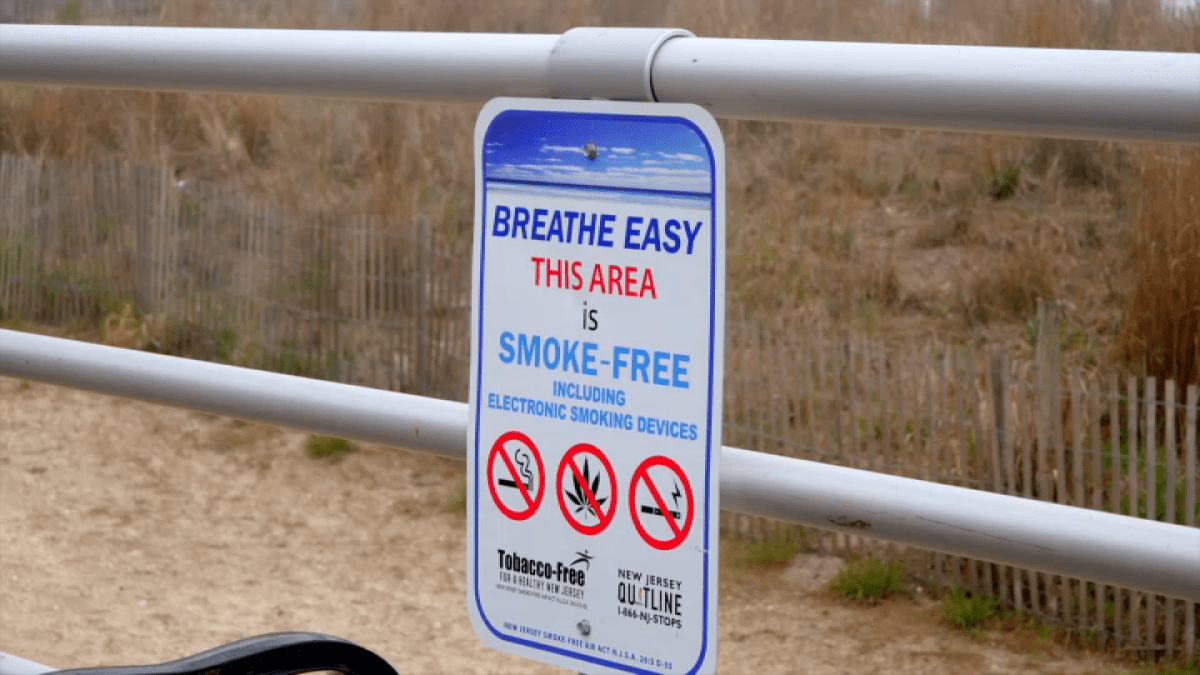
The opening of more cannabis dispensaries in Atlantic City has come with growing complaints about the smell of smoke, especially on the boardwalk.

If you have strolled on the iconic boardwalk in the past couple of years, there’s a good chance you have caught a whiff.

“Drastically increase on marijuana smell and cigarette smoking. Seems to be more open as time goes on,” said Xavier Colon of Marshfield, Massachusetts.

Atlantic City has the most cannabis dispensaries in New Jersey, but smoking on the famous Wooden Way is illegal.

Amer Kashmiri, president of the Atlantic City Merchants Association, has heard the complaints.

“They say like, everybody smoking on the boardwalk, and like, you know, nobody stopped them,” said Kashmiri.

“We are listening to and hearing the concerns of the residents and the visitors in terms of the smoking, they don’t want to see it, they don’t want to smell it. So we’re going to address it,” said Captain Kevin Fair of the Atlantic City Police Department.

This year, Atlantic City police are stepping up their enforcement of local no-smoking laws. A $3,000,000 grant from the New Jersey Casino Reinvestment Development Authority will put more cops on the boards to help combat the issue.

“This is the warning right now,” Fair said.

Authorities say officers patrolling the boards and those in the city’s surveillance center will be looking for smokers. Violators could face fines.

You’ll find signs along the boardwalk, but apparently there are not enough of them, and so the city is making a lot more signs to put up in many more places.

“We mean business. We’ll crack down on it and we’ll get it right,” said Atlantic City Mayor Marty Small.


Source link

Public Hearing to Be Held on Front Street Cannabis Factory

Public Hearing to Be Held on Front Street Cannabis Factory


A Michigan company is seeking a zoning change to open Broome County’s first marijuana packaging facility.

An affiliate of Dragonfly Brands plans to set up the cannabis product operation in a building at 1245 Front Street in the town of Chenango. The site previously was occupied by Tokyo Sushi Buffet.

The town planning board will hold a public hearing next week on a proposal to approve a special use permit for the former restaurant site.

The old Tokyo Sushi Buffet sign remained in place on Upper Front Street on November 5, 2024. Photo: Bob Joseph/WNBF News

The old Tokyo Sushi Buffet sign remained in place on Upper Front Street on November 5, 2024. (Photo: Bob Joseph/WNBF News)

Chenango officials have determined the Dragonfly packaging factory could not operate at the location as it is currently zoned.

Dragonfly CEO Ching Ho, who was raised in the town of Chenango, has said his company’s project would reactivate the property which “has been in a state of disrepair for years.” He said the packaging operation would create local jobs.

The local unit – Dragonfly Kitchen IV – has been granted a license by the New York state Office of Cannabis Management to operate a processing and manufacturing facility at the site.

A sign posted at the entrance of a former town of Chenango restaurant. Photo: Bob Joseph/WNBF News

A sign posted at the entrance of a former town of Chenango restaurant. Photo: Bob Joseph/WNBF News

Ching Ho has not been available to discuss the project with WNBF News. In an email Tuesday afternoon, he wrote he was “out of state preparing our Michigan planting season, a very busy time for us.”

He noted he was a member of the Chenango Valley High School class of 1999 and “yes, CV Class of ‘99 – we wanted to build here, as this is where I grew up – no better way to contribute back to the community.”

The planning board public hearing is to be held next Tuesday at 7 p.m. at the Chenango town hall.

A man working at the future Dragonfly Kitchen facility on November 5, 2024. (Photo: Bob Joseph/WNBF News)

A man working at the future Dragonfly Kitchen facility on November 5, 2024. (Photo: Bob Joseph/WNBF News)
WNBF News Radio 1290 AM & 92.1 FM logo

Contact WNBF News reporter Bob Joseph: bob@wnbf.com or call (607) 545-2250. For breaking news and updates on developing stories, follow @BinghamtonNow on Twitter.

Counties with the most homes selling under list price in New York

Stacker compiled a list of counties in New York where homes typically sell below list price using data from Redfin.

Gallery Credit: Stacker

LOOK: Counties with the highest cancer rates in New York

Stacker ranked the counties with the highest cancer rates in New York using data from the CDC.

Gallery Credit: Stacker

LOOK: Movies and TV shows casting in New York

Backstage compiled a list of movies and TV shows casting in New York.

Gallery Credit: Stacker


Source link

How is the Las Vegas Paiute Tribe keeping its spot as a cannabis leader?

How is the Las Vegas Paiute Tribe keeping its spot as a cannabis leader?


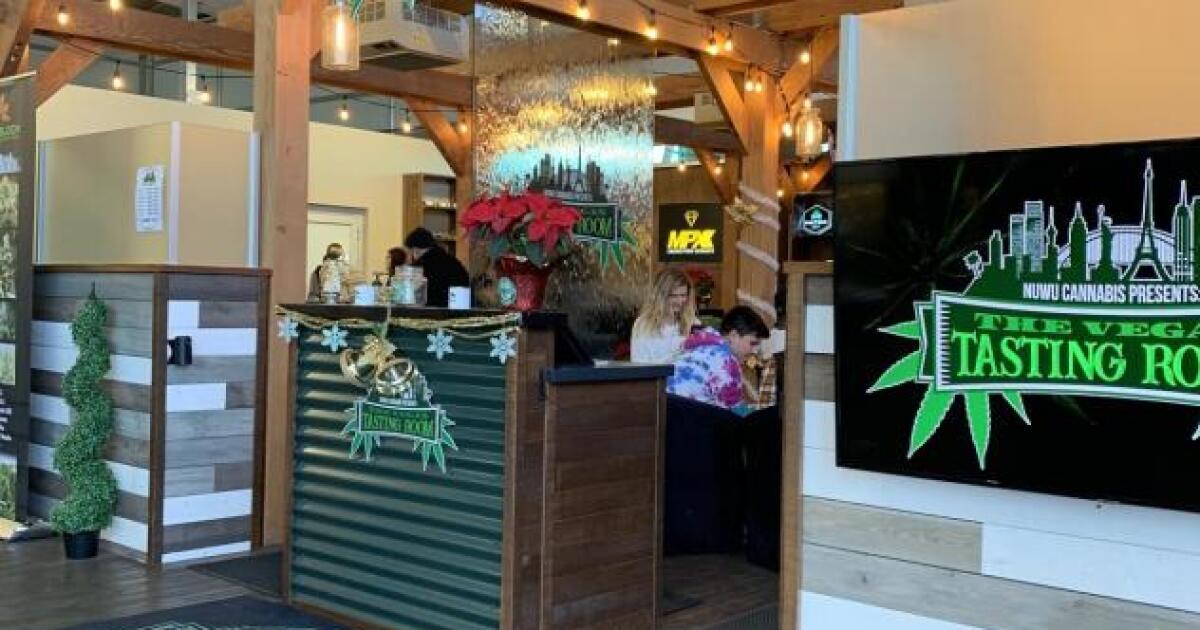
After the legalization of cannabis in the state, Nevada has generated over a billion dollars in taxes for the state. While the marijuana industry has its ups and downs, the Las Vegas Paiute Tribe saw its opportunity to grow cannabis.

The tribe was the first in the state to open its doors to a dispensary and cannabis lounge located near downtown Las Vegas. On tribal land, tribes are not required to follow the same state mandates, like many taxes, thanks to their sovereignty. But rather than work against their competitors, the tribe chose to play on the same playing field.

“For people to say that we have an advantage and able to do things that state can’t do, that’s not true, not true at all,” said Benny Tso, the Chairman of the Las Vegas Paiute Tribe.

The tribe is currently invested in the tobacco and cannabis space to create a stream of revenue to fund social services on the land. This includes healthcare for the youth and elders, infrastructure and education. To ensure the tribes’ investment continues to grow the tribe set higher cannabis regulations than the state.

With roughly 70 active cultivation facilities within Clark County, to Dave Colvin, the Las Vegas Paiute tribal attorney, the vertical integration just makes sense for the tribe.

“We can now provide ourselves with product,” Colvin said. “And you save money that way.”

Riana Durrett, the executive director of UNLV Cannabis Policy Institute and the vice chair of the Nevada Cannabis Compliance Board, shares her insight on State of Nevada of the cannabis industry that is down in retail sales for the second year in a row.

Durrett also looks at the potential future of the wholesale cannabis industry and where the tribe will likely fall under.

“I imagine they will be one of the big players,” she said, and she also believes other large cultivation facilities will be huge suppliers for the state.

Durrett can see a day when there is a lot of consolidation between growing facilities until there are only a handful of major growers. But she does not believe there is a concern for the tribe to become the only grower in the state.

“I think the Paiute tribe has been great for Nevada overall in making cannabis fun for Nevada,” Durrett said. “We have so many tourist opportunities, and we have kind of a limited approach to how it’s sold in Nevada, with this dispensary system.”

Durrett sees that the there is a portion of the population that is not buying cannabis from the dispensary and are buying it from the illegal market.

Thrive’s Smoke and Mirrors, a cannabis lounge located off the strip, closed on April 4 after being open for just over a year. This leaves the tribes SkyHigh Lounge and the Planet 13 Dazed Lounge. Durrett puts cannabis consumption in real life.

“People don’t just go to a consumption lounge to consume,” she said. “It has to be an entertainment, a destination. Nuwu is a destination regardless of the lounge, I would imagine a lounge is beneficial, but people wouldn’t just come to a lounge.”

Guest: Benny Tso, chairman, Las Vegas Paiute Tribe; Dave Colvin, tribal attorney, Las Vegas Paiute Tribe; Riana Durrett, executive director of UNLV Cannabis Policy Institute and the vice chair of the Nevada Cannabis Compliance Board


Source link

Michigan Cannabis Sales End 3-Month Decline in November

Michigan Cannabis Sales End 3-Month Decline in November


LANSING – Michigan Cannabis Sales Rebound After 3-Month Decline.

The Cannabis Regulatory Agency (CRA) has released November 2024 cannabis sales figures, which exceeded expert predictions. The state reported total sales of $276.4 million, marking a 6.1% year-over-year increase and a 2.9% rise from October. This marks the first increase in sales since August, when the total reached $295.41 million.

Medical marijuana sales were notably low, generating less than $900,000 for the month.

1. Michigan’s Total Cannabis Revenue Nears $10 Billion

Since Michigan legalized adult-use cannabis, total sales have reached an impressive $9,952,493,286 as of November 30, 2024. The state’s cannabis industry continues to grow, with average daily sales reaching $9,182,620 in November.

2. Cannabis Flower Pricing Sees Significant Decline

As supply continues to increase, cannabis flower prices have dropped significantly. In November, the average price per pound was $1,150, representing:

  • A 2.9% decrease from October
  • A 26.3% decline year-over-year

This decline reflects a highly competitive and expanding market in Michigan.

3. Top-Selling Cannabis Products in Michigan (November 2024)

The best-selling cannabis products for the month were:

  • Flower – $118.4 million
  • Vape Cartridges – $51.9 million
  • Inhalable Compounds – $41.5 million
  • Infused Edibles – $25 million
  • Shake/Trim – $21.6 million

4. Expert Predictions vs. Actual Sales Figures

Industry analysts had anticipated a modest increase in sales for November:

  • Headset predicted sales would rise to $266.8 million (up from $262.9 million in October).
  • New Cannabis Ventures estimated a slightly higher $270.1 million.
  • However, the CRA’s final report confirmed total sales of $276.4 million, surpassing expectations.

5. Competitive Pricing Drives Market Growth

According to Headset, the growth in sales is largely driven by lower product prices. The average item price fell from $10.38 in October to $10.05 in November, making cannabis products more accessible to a broader consumer base.

Conclusion:

Despite months of decline, Michigan’s cannabis market rebounded in November, surpassing industry expectations. With lower prices, increasing supply, and strong consumer demand, the market is positioned for continued growth heading into 2025.

For more updates on Michigan dispensaries or cannabis sales trends, stay tuned at mitechnews.com.

FAQs:

Can you go into a dispensary without a card in Michigan?

Yes, you can enter a recreational cannabis dispensary in Michigan without a medical card as long as you are 21 or older and have a valid ID. However, a medical card is required for purchasing medical marijuana products.

What is Live Resin?

Live resin is a highly potent cannabis concentrate made from freshly harvested cannabis that is flash-frozen to preserve its terpenes and flavors. This process results in a more aromatic and flavorful experience compared to other concentrates.

How to smoke live resin?

Live resin can be dabbed using a dab rig for the most potent experience, or it can be added to a bowl, joint, or vape pen to enhance the effects of traditional cannabis flower. Always start with a small amount due to its high potency.

How to smoke weed?

Smoking weed can be done in various ways, including rolling a joint, using a bong, pipe, or vaporizer. Each method offers a different experience, with vaporizers providing a smoother hit and joints delivering a classic cannabis session


Source link

New York Starts Getting Their Cannabis Act Together

New York Starts Getting Their Cannabis Act Together


After a fiasco of a rollout, New York is finally getting its act together around legal cannabis

When New York legalized marijuana, it was seen as a boon to the industry.  The state had a well thought out conversion from medical to recreational was well done and people sent big money to be ready.  Then weeks before it was to change, the state scrapped the whole plan and entered into probably the most chaotic rollout ever. Within months, the state was flooded with illegal dispensaries and they had not placed resources to stop it.  It was a hot mess, but now it seems, New York states getting their cannabis act together.  In New York City alone, there were 8.4 million residents and another 64+ million visitors in 2023. The market is huge and the industry was banking on success.   New York State’s  with legal sales surpassing $1 billion in 2024 and projected to reach $1.5 billion in 2025.

RELATED: Mixed Messages From The Feds About Cannabis

The states legal sales surpassing $1 billion in 2024 and projected to reach $1.5 billion in 2025.This growth is driven by the expansion of licensed retail stores, which nearly tripled in 2024 to around 260 locations statewide, offering over 500 brands of cannabis products.  

The legal market’s expansion has been accompanied by a notable drop in product prices, reflecting increased competition among dispensaries. For example, prices for concentrates and vapes fell by about 15%, edibles by 14%, and flower cannabis by 5% over the past year. This price decline is linked to more brands entering the market and retailers adjusting pricing strategies to attract customers in an increasingly crowded marketplace.

Photo by Cappi Thompson/Getty Images

Despite these positive trends, New York continues to face challenges from a persistent illicit cannabis market. The state’s Office of Cannabis Management (OCM) has ramped up enforcement efforts, conducting over 1,300 inspections in 2024 and seizing nearly 17,000 pounds of illegal cannabis products valued at $68.5 million. New regulations have empowered local authorities, including New York City, to swiftly shut down unlicensed cannabis businesses, with fines for illegal sales reaching up to $10,000 per day or more.

The illegal market remains a significant barrier to the legal industry’s growth, as illicit sellers often undercut prices and operate without regulatory compliance. However, the legal market’s share is increasing as more consumers opt for regulated products, and social equity programs are helping diversify ownership-over half of issued licenses have gone to social equity applicants under the Conditional Adult Use Retail Dispensary (CAURD) program.

RELATED: Economics Puts Pressure On The Feds To Move on Marijuana

Looking ahead, industry experts forecast New York’s cannabis market could exceed $4 billion in annual sales by the end of the decade, fueled by continued store openings, product innovation, and potential federal legalization. The state’s robust tourism sector and evolving local regulations also contribute to market growth prospects. This is great news for the mom and pop legal dispensaries around the city.

While New York’s legal marijuana market is thriving with strong sales growth, expanding retail presence, and falling prices, it still contends with a sizable illegal market enforcement efforts are actively targeting. The legal sector’s income is rising steadily, while illicit sales remain a challenge to fully capturing the state’s cannabis consumer base.


Source link

MPR News

Date set for lottery to determine Minnesota cannabis business licenses


The Minnesota Office of Cannabis Management has announced the date for the first lottery to decide who will get cannabis business licenses from the state.

The license lottery will be June 5 for cannabis cultivators, manufacturers and “mezzobusinesses” — those are essentially all-in-one operations that can grow and buy cannabis, and make and sell cannabis products.

There’ll also be a June 5 lottery for cannabis retailer licenses for social equity applicants, including veterans, people who live in high-poverty areas and people historically harmed by the war on drugs.

A second lottery of cannabis retailer licenses — for general applicants as well as social equity applicants not selected in the June 5 lottery — will be held in July.

The announcement and sequence of lottery dates “reflects the office’s goal to license the supply chain from the starting points in order to foster an equitable cannabis market that prioritizes public health and safety, consumer confidence, and market integrity,” Eric Taubel, interim director for the state’s Office of Cannabis Management, said in a news release. He said the office “has prioritized the review of applications for the license types necessary to successfully stage the market.”

The state said hundreds of applicants have qualified for the lottery for a set number of licenses for various categories. More applications remain under review.

As of May 1, state records showed there were:

  • 95 applicants for 50 available cannabis cultivator licenses

  • 80 applicants for 24 available cannabis manufacturer licenses

  • 267 applicants for 100 available cannabis mezzobusiness licenses

  • 724 applicants for 150 available cannabis retailer licenses

Those numbers do not include applications that were withdrawn or denied. There are other categories of cannabis business licenses that do not have caps on numbers and are not part of the planned lotteries.

The Office of Cannabis Management said the June 5 license lottery will be livestreamed, and available for the public to watch.


Source link