Curaleaf Holdings Inc., a Stamford-based cannabis company, has bought an institutional investor’s equity stake in Curaleaf International Holdings Ltd., giving it 100% ownership of the European holding company. The deal was carried out through a put/call option, which gives both the buyer the option to purchase and the seller the option to sell the stake […]
Curaleaf Holdings Inc., a Stamford-based cannabis company, has bought an institutional investor’s equity stake in Curaleaf International Holdings Ltd., giving it 100% ownership of the European holding company.
The deal was carried out through a put/call option, which gives both the buyer the option to purchase and the seller the option to sell the stake at a specific price.
The undisclosed investor, which acquired the position in 2021, elected to receive subordinate voting shares – which are restricted shares that still provide voting rights – in exchange for the equity in Curaleaf International.
Curaleaf said the acquisition strengthens its control over its European operations, enabling enhanced strategic alignment across international markets.
Curaleaf International consists of a clinic, pharmacy, and laboratory in the UK; cultivation and processing facilities in Portugal; a processing, quality assurance and research site in Spain; a Four20 Pharma wholesaler and distributor in Germany; a Polish wholesaler and clinic; and cannabis producer Northern Green Canada.
Curaleaf International’s issuance of the subordinate voting shares was conditionally approved by the Toronto Stock Exchange on June 25, 2025, subject to fulfilling customary listing conditions. The transaction was completed on July 2.
Curaleaf Holdings, which lists its principal business address as 290 Harbor Drive, in Stamford, trades on the Toronto Stock Exchange under the ticker symbol CURLF.
“This consolidation of ownership of our European holding company enables us to streamline decision-making, strengthen alignment across regions, and accelerate our strategic initiatives in Europe with greater autonomy,” Curaleaf Holdings Executive Chairman Boris Jordan said. “This development marks another important milestone in Curaleaf’s continued commitment to international expansion and long-term value creation for shareholders. We thank our partners for their long-standing support and belief in Curaleaf’s future.”
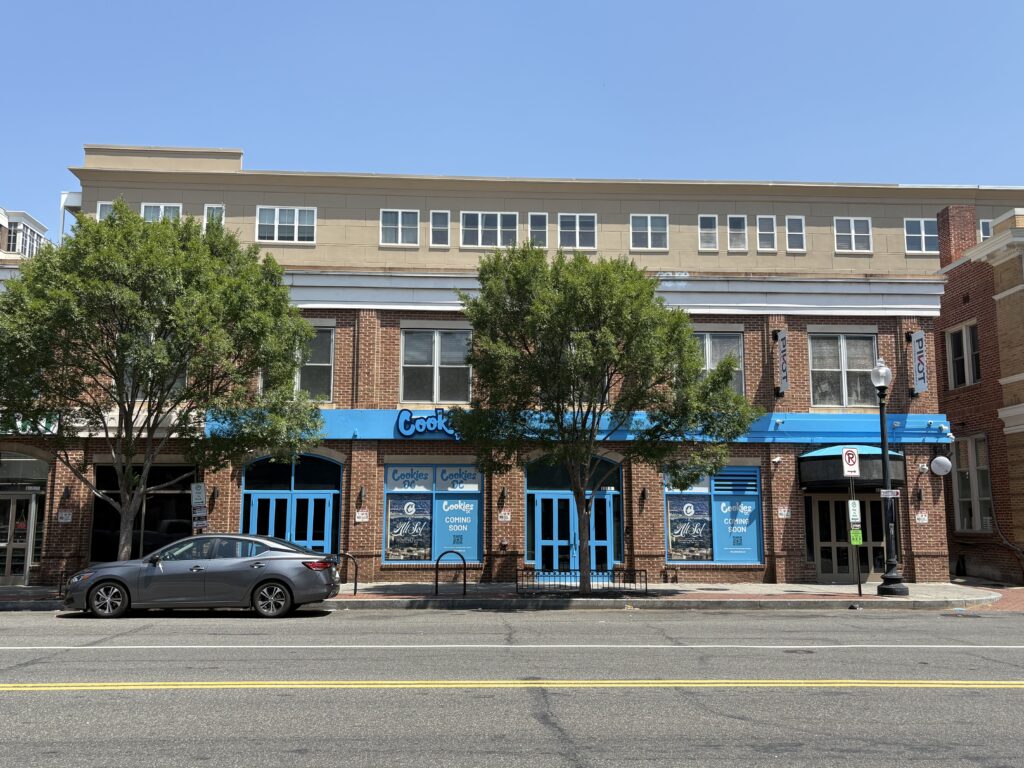
“Global cannabis and lifestyle brand Cookies is bringing its signature strains and style to the nation’s capital with the grand opening of Cookies DC on Friday, July 11, 2025 at 4 PM at 1115 U Street NW. The highly anticipated celebration will include live performances, food trucks, exclusive swag, and a headline set by the DMV’s own Noochie, performing Live from Cookies on U.
The opening of Cookies DC marks a pivotal moment in the District’s cannabis journey. Cookies DC owner and CEO James Kahn—one of the founders of the family-run Takoma Wellness Center, D.C.’s longest-running medical cannabis dispensary— partnered with Alternative Solutions (AtlSol) to bring Cookies to the District. AltSol is widely regarded as one of the premier craft cannabis cultivators on the East Coast. The arrival of the brand provides a much-needed boost to DC’s maturing cannabis economy.
“D.C.’s cannabis industry is in an exciting period of transition,” says Kahn. “The legacy and regulated markets have merged and the City has never been more supportive. Having a nationally recognized brand like Cookies grown by local talent confirms D.C. as a major destination for cannabis culture, business, and tourism.”
As the second-highest consumer of cannabis per capita in the country, D.C. cannabis enthusiasts are eager to see more variety in the market. Cookies DC will be the first on the East Coast to debut the brand’s ‘Cookies 2.0’ Flower Tub packaging—a sleek, elevated update to its signature product line. Designed to maintain freshness while offering a premium, collectible look, the packaging reflects Cookies’ continued innovation at the intersection of cannabis, culture, and design.
“Opening our first Cookies store in our nation’s capital is a dream come true and hopefully, one more step towards legalizing cannabis nationwide. Our D.C.-based partners are dialed-in to the community and incredibly well respected. Cookies products have already hit the D.C. market and the feedback has been super positive. I can’t wait to open the doors to Cookies D.C. on July 11th,” says Berner, co-founder and CEO of Cookies.
In the lead-up to the opening, Cookies is tapping into D.C.’s creative heartbeat by launching a citywide talent contest to select three local performers who will have the opportunity to share their music before the headline performance: Noochie Live from Cookies on U. Judging the contest are some of the region’s most recognizable cultural influencers, including: Noochie, Weensy (Backyard Band), Poet Taylor (WPGC 95.5), DJ Farrah Flosscett, Beau Young Prince, and Kelsye Adams (Free DC Project, DC Vote). They, along with Cookies Founder and CEO, Berner, will make the final selection. Submissions will be accepted from June 18 – June 26. The official Cookies DC grand opening line-up will be announced a week ahead of the big event, with the top three emerging artists securing performance slots on the Cookies DC stage.
“When I think of the Cookies brand, I think of the face of cannabis culture,” says Noochie. “It’s the one name everybody knows from the streets to the storefronts. The Cookies brand is music, fashion, art, and the kind of quality that’s built a whole lifestyle around the product. It just makes sense on U Street.”
In addition to music and limited edition product drops, guests attending Cookies DC’s grand opening will enjoy Dolcezza Gelato, swag from Weedmaps, and opportunities to learn more about D.C.’s regulated cannabis program. Participants must be 21 years or older and present a valid ID to register. No doctor’s visit is required. For more information, visit ABCA.DC.GOV.
Cookies DC is located at 1115 U Street NW. For general information and to register for the Cookies DC talent contest, visit dc.cookies.co”
Fed judge upholds marijuana user gun ban; SEAL who killed bin Laden talks psychedelics; Study: What gives cannabis strains their smell and flavor?
Subscribe to receive Marijuana Moment’s newsletter in your inbox every weekday morning. It’s the best way to make sure you know which cannabis stories are shaping the day.
“The alcohol doesn’t help but the psychedelics do. And that’s why they’re not legal here: because it works… It gets in your brain. It shows you stuff. And it kind of cleans out the closet.”
“The aroma and flavor of C. sativa L. are defining features that contribute to its identity, appeal, and potential therapeutic effects.”
A new study shows that more than a third of California adults are current marijuana consumers—and that “most users obtained cannabis from licensed dispensaries…and reported mental, emotional, and physical health benefits.” Maryland Gov. Wes Moore (D) announced a search for a new site for what is planned to be the nation’s first state-owned cannabis incubator following community pushback against the initial location selection. / FEDERAL The Drug Enforcement Administration Museum posted a video about a copy of a 1977 New York Times Magazine issue with an article about a drug kingpin known as “Mr. Untouchable” that’s in its collection. Former Sen. Kyrsten Sinema (I-AZ) spoke about her advocacy for psychedelics policy reform. / STATES Virginia Gov. Glenn Youngkin (R) touted seizures of marijuana and other drugs under the Operation Bold Blue Line initiative. Kentucky regulators are being sued over the medical cannabis business licensing process. Massachusetts regulators are facing a forthcoming lawsuit from a marijuana testing facility whose license was suspended. Utah regulators filed changes to hemp product processing rules. Colorado Legislative Council Staff published an overview of marijuana legislation considered this session. Oregon regulators published guidance on medical cannabis cultivation reporting and tracking requirements. The New York Office of Cannabis Management has a new chief medical officer and a new chief equity officer. New Jersey regulators published tips on understanding cannabis product certificates of analysis. California regulators highlighted what they say is “good news” from the state budget amidst a marijuana tax increase. The Michigan Cannabis Regulatory Agency touted the election of its executive director to the board of the Cannabis Regulators Association. — Marijuana Moment is tracking hundreds of cannabis, psychedelics and drug policy bills in state legislatures and Congress this year. Patreon supporters pledging at least $25/month get access to our interactive maps, charts and hearing calendar so they don’t miss any developments. Learn more about our marijuana bill tracker and become a supporter on Patreon to get access. —
/ LOCAL The Phoenix, Arizona City Council is recommending that a cannabis company’s application for a liquor license be denied. / INTERNATIONAL A member of a London, England drugs commission that recommended decriminalizing cannabis said that cocaine should also be decriminalized. / SCIENCE & HEALTH A study indicated “possible anxiolytic effects of CBD on feline fear responses to a fear response test.” A review concluded that “given the staggering economic toll of the opioid epidemic and the limitations of existing treatments, psilocybin represents a high-impact, cost-effective alternative worthy of rigorous investment and policy support.” / BUSINESS Filament Health Corp. announced that the Food and Drug Administration authorized a phase 2 clinical trial studying its psilocybin drug candidate for the treatment of alcohol use disorder and post-traumatic stress disorder in military veterans and first responders. / CULTURE Football player KaVonte Turpin was arrested in Allen, Texas on marijuana and gun charges.
Make sure to subscribe to get Marijuana Moment’s daily dispatch in your inbox.
Marijuana Moment is made possible with support from readers. If you rely on our cannabis advocacy journalism to stay informed, please consider a monthly Patreon pledge.
Human health is complex and diagnostic tools and their limitations, so missing a diagnosis is sometimes unavoidable. But every missed diagnosis has the potential to cause harm to a patient, as is demonstrated by a dangerous trend I’ve noticed within emergency departments: a tendency to attribute symptoms too readily to cannabis hyperemesis syndrome (CHS) without adequate diagnostic work-up.
Cannabis and various cannabinoid-based products have become increasingly accessible across the United States and internationally, both for medical and recreational use. This growing availability and social acceptance have led to some combination of increased use in the community and/or increased willingness on the part of patients to admit such use to health professionals.
To the extent that there may be increased actual use, it is likely that we are/will see an increase in cannabis-related health complications. Among these, CHS — a condition characterized by cyclical vomiting in long-term, heavy users of cannabis — is being recognized more frequently.
CHS, while real and certainly debilitating for those who suffer from it, is still relatively uncommon, though the actual national prevalence is unknown, and requires a careful diagnosis. The hallmark symptoms include recurrent nausea, intractable vomiting, and abdominal pain, often temporarily relieved by hot showers or baths. The only known long-term treatment is complete cessation of cannabis use.
My work as a practicing cannabinoid specialist hinges on not only providing guidance and access to cannabis-based medicines, but on mitigating and responding to the risks. After nearly 15 years of practicing this type of medicine exclusively, I have seen both the reward of patients’ quality of life improved, and the risks of incautious use. Like all medications, cannabinoids have risk, and the clinicians’ job is to use these medications carefully to maximized benefit and minimize risk.
As CHS has become more widely acknowledged, this broader awareness has led to a new risk: overdiagnosis. Clinicians, particularly in fast-paced environments like EDs, may find themselves attributing any vomiting in a cannabis user to CHS. This sort of knee-jerk thinking is emblematic of the cognitive bias known as “anchoring” — wherein a clinician fixates on an initial piece of information (in this case, cannabis use) and fails to consider alternative or concurrent diagnoses.
Over the past several years, an alarming number of anecdotal reports and my personal informal polling of colleagues suggest that ED physicians have developed a certain antipathy toward patients they perceive as “drug users,” including those who use cannabis and have been diagnosed with CHS. Some ED providers have openly expressed frustration with these patients, viewing their illness as self-inflicted or non-urgent, clogging up the already overburdened emergency care system.
A recent case report demonstrates this failure in clinical judgment. In the case presented, a 17-year-old patient with a history of cannabis use exhibited persistent vomiting, which was immediately attributed to CHS.
However, further investigation revealed a diagnosis of superior mesenteric artery (SMA) syndrome — a rare and potentially life-threatening condition wherein the duodenum is compressed between the aorta and the superior mesenteric artery, causing severe gastrointestinal symptoms. The premature conclusion of the diagnosis of CHS led to a significant delay in proper diagnosis and treatment (though the paper is unclear about the exact duration), illustrating how harmful anchoring bias can be.
This case also shines a light on a broader cultural issue within medicine. There remains a pervasive stigma around cannabis use, even in states where it is fully legal and socially normalized. Many physicians receive little to no formal education on cannabis and its pharmacology during medical school, and what little information was provided is often colored by decades of prohibitionist rhetoric. As a result, many clinicians feel ill-equipped or even resistant to engaging with cannabis-related cases. This knowledge gap fosters discomfort, which may manifest as avoidance, judgment, or misdiagnosis.
We must also consider how this affects patients. Being labeled with CHS may not only delay diagnosis of more serious conditions but can also result in significant psychological harm. Patients may feel dismissed or judged rather than supported and understood. They may also become less likely to seek future medical care, fearing ridicule or disbelief. This undermines the therapeutic relationship and compromises public trust in medical professionals.
Renowned Harvard Medical School educator Marshall A. Wolf once said to me, “You can’t find what you aren’t looking for.” This simple yet profound statement should be a guiding principle for all clinicians. It’s a reminder that diagnostic success is predicated on open-mindedness, curiosity, and humility. If we approach each patient encounter with these values, we are more likely to arrive at the correct diagnosis and provide the care our patients truly need.
In the age of expanding cannabis legalization and use, clinicians must catch up with the science and nuance of cannabinoid medicine. Education must be improved — in medical school curricula as well as in continuing education for practicing physicians. Institutions should offer clear guidelines on how to accurately diagnose CHS, with an emphasis on ruling out other causes of vomiting first. We must also train physicians to recognize and counteract their own implicit biases, especially in relation to substance use.
While CHS is a valid and important diagnosis, its overuse — especially in ED settings — reflects a dangerous oversimplification of patient care. By reflexively attributing vomiting to cannabis use, physicians may miss serious, even life-threatening conditions like SMA syndrome. We must confront our biases, invest in better education, and most importantly, uphold our duty to deliver compassionate, evidence-based care. Only then can we ensure that our patients — regardless of their cannabis use — are treated with the respect and thoroughness they deserve.
Jordan Tishler, M.D., is an instructor of medicine at Harvard Medical School and president of the Association of Cannabinoid Specialists.
Within months of Pennsylvania’s medical cannabis program adding anxiety as a qualifying condition, that diagnosis quickly rose to become the most common for cannabis certifications, according to a study by researchers at the University of Pittsburgh and Johns Hopkins University. The study was published today in Annals of Internal Medicine.
To date, 39 states have medical cannabis programs, with chronic pain and post-traumatic stress disorder (PTSD) historically being the most common and second-most common qualifying diagnoses, respectively, among participants. In recent years, several states, including Pennsylvania, have incorporated anxiety into their programs.
We found that adding anxiety as a qualifying condition fundamentally changed the makeup of Pennsylvania’s medical cannabis program.”
Coleman Drake, Ph.D., corresponding author, associate professor in the Department of Health Policy and Management at Pitt’s School of Public Health
The researchers analyzed Pennsylvania Department of Health data on 1,730,600 medical cannabis certifications issued from November 2017, when anxiety disorders were added, to December 2023. These certifications require a physician visit and annual renewal.
The team found that the number of certifications issued each month nearly tripled during that time. Before the list of qualifying conditions was expanded, chronic pain comprised the lion’s share of diagnoses, at 67%, followed by 16% for PTSD. After anxiety was added, these numbers dropped to 41% and 11%, respectively, and anxiety quickly became the most common diagnosis, at 60%. Some certifications listed multiple conditions. The team was not able to determine how the overall size of the program was affected, nor how many participants had added or switched to anxiety from another diagnosis or were enrolling in the program for the first time.
Evidence supporting cannabis as an effective treatment for anxiety disorders is scant in comparison to other qualifying conditions, notably chronic pain, notes Drake.
“Adding anxiety to the program may inadvertently signal to patients that cannabis is effective for treating it, despite the lack of evidence, which is concerning,” he said. “At the same time, cannabis may improve some health outcomes, relative to alternative treatments, depending on the individual and their circumstances.” But, due to the red tape and funding scarcity that has historically restricted research on cannabis-as well as the lack of more granular data available from medical and adult-use cannabis programs-these unknowns persist, he said.
“The urgency in filling these knowledge gaps is pretty clear, given increases in cannabis use over the past decade, and the large changes in cannabis markets, like those we observed in this study,” said Drake.
Other authors on the study were Linh Tran and Matthew Eisenberg, Ph.D., of Johns Hopkins University Bloomberg School of Public Health.
Source:
Journal reference:
Drake, C., et al. (2025). Medical Cannabis Certifications After Pennsylvania Added Anxiety Disorders as a Qualifying Condition. Annals of Internal Medicine. doi.org/10.7326/annals-25-01037.
QUINCY — A Quincy man was sentenced to six years in the Illinois Department of Corrections on firearms and drug trafficking charges Monday.
Circuit Judge Holly Henze sentenced Jeffrey T. Bennett, 47, to six years for possession of a firearm by a felon and manufacturing and possession with intent to deliver cannabis of more than 500 grams but less than 2,000 grams.
The gun charge is a Class 3 Felony and the drug charge is a Class 2 Felony. The sentences will run concurrently and Bennett will receive credit for 328 days of time served.
Bennett was arrested in August on an Adams County warrant for aggravated battery of a pregnant person and domestic battery when officers with the Quincy Police Department. Those charges were dismissed.
Deputies with the Adams County Sheriff’s Department and members of the West Central Illinois Task Force executed a search warrant in the 3400 block of State.
During the execution of the search warrant, officers found additional illegal items. QPD officers applied for and obtained an additional search warrant for the residence. During a search of the residence, officers discovered a large amount of cannabis, a large amount of U.S. currency, several items of drug paraphernalia and a firearm.
California’s legal marijuana industry is facing a new challenge as the state excise tax on cannabis increased from 15% to 19% on July 1, potentially driving customers away from licensed dispensaries.
Ronald Allen, co-owner of a licensed dispensary in Bakersfield, worries the tax hike could put small businesses like his at risk.
“It’s affecting everybody across the board, everybody from the buyers to the growers,” Allen said.
Individuals purchasing cannabis at legal dispensaries will now pay more for their products due to the 4% tax increase.
“We operate small, so it’s not like we have 5-6 stores like in some areas where they would depend on one store to carry the other one. We don’t have that benefit here, so yes, we can see that affecting that,” Allen said.
While marijuana sales remain illegal in most areas of Kern County, cities like Arvin, California City, and McFarland have legalized cannabis businesses.
The tax increase stems from Assembly Bill 195, enacted in 2022. The legislation eliminated the cultivation tax for cannabis growers but raised the excise tax to compensate for revenue losses from legal sales.
The additional tax revenue is intended to fund youth programs, including substance use prevention initiatives.
Diana Ross, Executive Director of Mid-City CAN and spokesperson for the Coalition to Protect Youth Programs, supports maintaining the funding.
“The data is clear positive youth development are good for kids, they help them develop, they help them stay on track at school and this money needs to continue to be dedicated as promised,” Ross said.
While the increase is already in effect, Assembly Bill 564, which aims to mitigate the tax spike, is currently under review by the California Revenue and Taxation Committee.
This story was reported on-air by a journalist and has been converted to this platform with the assistance of AI. Our editorial team verifies all reporting on all platforms for fairness and accuracy.
A Santa Barbara Superior Court Judge has ruled that a lawsuit filed by a Buellton-area vintner against a neighboring outdoor marijuana grower cannot be expanded into a class action suit.
Blair Pence, the owner of Pence Vineyards and its accompanying wine tasting room, Quantum Wines, alleges that “noxious odors” of cannabis from nearby Santa Barbara Westcoast Farms and “harmful chemical compounds” from a misting system installed to mask the smell of pot have harmed his business and lowered his property values.
Pence asked Judge Patricia Kelly to allow homeowners and business owners with similar claims in a 2-mile radius of Westcoast to join his lawsuit and seek collective damages.
But last week, Kelly denied the motion for class certification, saying Pence had failed to provide sufficient evidence showing how those in that radius were affected by any smell from Westcoast.
“Plaintiff has failed to demonstrate an ascertainable class, a well-defined community of interest, or that a class action would be superior to other methods of litigation,” the July 2 ruling states.
In a statement by email this week, Pence said: “Obviously, we are disappointed and disagree with the ruling, in that it completely ignores the inconvenience, pain and suffering of our friends and neighbors. So many people have lodged complaints, yet our county has done absolutely nothing to alleviate the impacts of the disgusting stench and release of unhealthful elements into the air.”
To support his motion, Pence submitted more than 40 anonymous odor complaints filed in recent years with the county against Westcoast. The 50-acre operation at 1800 W. Highway 246 is one of the largest under cannabis cultivation in the county by acreage; the center of Buellton is 2 miles east and downwind from the growing site.
One resident said, “My home smells like I am growing cannabis in the living room.” Another noted, “The wind blow(s) the stench through our city every day and night. It never stops.”
Pence’s vineyard and tasting room are located across the road from Westcoast, at 1909 W. Highway 246.
Cannabis is grown seasonally in the fields shown as light brown at Westcoast Farms. The dark green northwestern corner of the property is undeveloped. (Photo by Google Earth)
But Kelly was not convinced.
“The court is not persuaded that plaintiff has identified any logical reason for drawing the 2-mile radius as the boundary for this lawsuit based on one report of odor blowing through Buellton,” she wrote.
Moreover, the judge said, the plaintiffs “did not explain how they plan to show” that strong odors in the 2-mile radius had “interfered” with residents’ use of their properties. The evidence presented did not establish how the gaseous organic compounds that make up the pungent smell of marijuana “traveled to any given property, the strength, or any form of measure,” she said.
In this case, Kelly concluded, “A class action is not a superior method of resolving inherently individualized claims.”
Pence said he was seriously considering an appeal.
“Frankly, we were surprised by this decision,” he said, adding that the case, which was filed in 2022, will proceed – regardless of the ruling.
“We will continue to stand up for the community and defend it from the scourge of open marijuana grows,” Pence said. “We will still have our day in court.”
Scott Rudolph of La Jolla, a Westcoast co-manager, is a co-defendant in the case. State records show that he is the co-owner of Westcoast, along with Carol Carpenter of La Jolla, who is listed as the company’s managing member.
Different outcomes
Kelly’s ruling could have broad implications for outdoor cannabis growers and their neighbors elsewhere in the county, if not the state. Since 2018, when the county passed its industry-friendly cannabis ordinance, 35 outdoor “grows” have been approved for permits in the North County, totaling 1,100 acres.
Westcoast is one of several grows operating near Buellton. To date, the county has issued business permits for about 770 acres, but it is not known how many are under cultivation. Outdoor cannabis operations are seasonal, with typically two harvests per year – one in the spring and one in the fall.
Records show residents have filed more than 125 complaints with the county about the smell of commercial cannabis in the area, which they say has penetrated their homes, parks and schools and is noticeable on the Avenue of the Flags, a main city thoroughfare.
In addition to Westmont, some of the complaints have named Busy Bee’s Organics, a cannabis operation west of the city that is presently fallow; and Sierra Botanicals, an operation along Highway 101 south of the city.
As a result of Kelly’s ruling, homeowners or business owners wishing to file nuisance odor claims against Westcoast will now have to confront the cost and challenge of suing as individuals.
“By way of the class action, we are trying to achieve justice on our neighbors’ behalf and at no cost to them,” Pence said. “Tragically, these people have been ignored, and our efforts to help them have been delivered a setback.”
The ruling comes on the heels of a nuisance odor case against a Carpinteria Valley cannabis grower in which a different Santa Barbara County Superior Court judge ruled in favor of class certification. That ruling came on March 5 in a lawsuit filed against Valley Crest, a greenhouse cannabis operation on Casitas Pass Road, by several neighbors and the Santa Barbara Coalition for Responsible Cannabis, a countywide advocacy group. The coalition, of which Pence is president, has sought stricter regulations for the marijuana industry since the county opened the gates to a “Green Rush” in 2018.
In the Valley Crest case, Judge Thomas Anderle ruled that neighbors owning homes or property in a 1-mile radius of the greenhouse operation could collectively seek damages for the pervasive smell of pot that had “invaded” their properties. Notices are being mailed to about 260 addresses in the area.
Anderle noted that Valley Crest had failed to install clean-air carbon filters called “scrubbers,” a technology that will be mandated throughout the valley’s massive greenhouse grows beginning next spring. A model of scrubbers from the Netherlands has been shown to eliminate 84% of the smell of pot before it can escape through the vents on greenhouse roofs.
Robert Curtis, a Santa Barbara attorney who represents both Pence and the coalition, argued in both the Westcoast and Valley Crest cases that, during trial proceedings, the plaintiffs would provide expert testimony from other residents establishing how their property values have been lowered because of the smell of cannabis. Anderle accepted that plan, but Kelly did not.
“Without the benefit of testimony that describes that methodology, the court is not convinced that common proof will prevail,” she stated.
Both cases are awaiting trial. The Valley Crest trial will begin March 4, if it is not settled before then.
Melinda Burns, a former senior writer for the legacy Santa Barbara News-Press, is an investigative reporter with 40 years of experience covering immigration, water, science and the environment.
“Thanks to a differentiated strategy and disciplined execution, Blue Sky has delivered two consecutive years of positive EBITDA and net earnings—an uncommon achievement in this sector,” said CEO Andrew Potter in the press release (1). “After strong growth in both our food and cannabis divisions, we reached a strategic crossroads. With limited physical space and capital, we concluded that monetizing our successful hemp food business would allow us to better scale our cannabis operations and drive long-term shareholder value.”
Blue Sky will be expanding their contract manufacturing services with the undisclosed amount received from the sale. These services will include pre-rolls, softgels, and vape pens. The Canadian company will also be working on acquiring a EU-GMP certification which will help them globally for finished products and bulk extracts (1).
“Although we had limited resources, our team successfully built a high-growth, EBITDA positive food business over the last few years. I’m incredibly proud of our product innovation, particularly our refined hemp seed oil—an excellent example of our ability to cost-effectively develop new products,” added Potter (1). “This spirit of innovation will continue to drive our cannabis operations. We’re confident the purchaser of our food operation will take this food business to the next level, and we look forward to supporting them.”
“We welcome Blue Sky’s customers and suppliers to Fresh Hemp Foods. Blue Sky has championed whole plant utilization, and we intend to carry that forward alongside our own industry leading sustainability efforts. Fresh Hemp Foods remains focused on bringing nutritious, sustainable hemp foods to more and more customers and consumers,” said Jared Simon, President, Manitoba Harvest and Tilray Wellness (1).
CLEVELAND – Ohioans had great expectations for recreational marijuana after voting to legalize personal use of the plant in Nov. 2023. According to data from the Ohio Division of Cannabis Control, total marijuana sales have reached over $2.7 billion as of mid-June. Non-medical cannabis comprises about $587 million of that figure, with Ohio expected to bring on over 114 new dispensaries during 2025.
Meanwhile, a March report from cannabis wholesale platform LeafLink named Ohio as a market poised to contribute more than 75% of cannabis sales growth over the next three years. But observers of Ohio’s fledgling marketplace believe it has a ways to go, especially with Michigan’s well-established scene offering cheaper products and more extensive inventory.
Tim Johnson, a cannabis advocate who advised state legislature on the 2023 marijuana initiative, said Ohio has yet to reach its potential in the adult-use community. Excessive pricing and ineffective marketing have driven customers to buy illegally, cultivate home grows, or head to Michigan, where 45 dispensaries sit right on the border.
“It’s not all the fault of the license holders – it’s got to do with the restrictive rules and regulations of the program,” said Johnson.
One hurdle to Ohio’s expansion appears to have been cleared for the time being. Senate Bill 56, a proposal to significantly alter the Issue 2 adult-use cannabis law, was pulled from the schedule on June 18, just hours before it was set for a vote. House and Senate legislators had been crafting separate versions of the bill before the eleventh-hour decision. A June 24 House judiciary committee hearing concerning an amended version of SB 56 was cancelled as well.
There’s not enough votes to pass the bill,” said Johnson. “The will of the people win this one.”
For now, Ohio must find smarter strategies to keep buyers from leaving the state or turning to the black market, Johnson added. Ohio marijuana prices are currently 204% higher than Michigan, which boasts an oversupplied market and no limits on dispensary licenses.
Johnson said that Ohio cannabis companies leveraged the excitement of a brand-new industry to get customers to pay higher prices.
“They had the opportunity to escalate prices on all products, and people would pay regardless,” said Johnson. “They didn’t realize that Ohio had cannabis before they came, so people went back to personal cultivation, or went to Michigan or the illegal market.”
Challenges of a new industry
Ohio’s recreational space has leveled off since those early days. As of June, the price of cannabis flower in Ohio averaged $18.97 for a tenth of an ounce, a 26% drop since adult-use sales kicked off, according to the state’s cannabis control division.
High upfront costs for compliance, security and dispensary construction led to steeper prices during the outset of Ohio’s adult-use market, said Lisa Zwirner, director of education at Cleveland School of Cannabis , an accredited career institution for marijuana employees.