
— Minnesota’s legal cannabis law on Tuesday had Becker County commissioners trying to find the sweet spot between residents who don’t like the new law at all, and locals who don’t see why cannabis production and sales should be treated any differently than liquor production and sales.
The catalyst for the discussion was a zoning request for a cannabis “micro-growing” facility in Hamden Township from Bryan and Marie Millms. The fenced, indoor-growing facility would be located on a five-acre lot with a house.
After much discussion, commissioners agreed to adjust setbacks from 500 feet to 100 feet from the property line for cultivation, manufacturing and wholesale facilities that grow and produce cannabis.
But there was no such easing of setbacks for retail cannabis sales — setbacks for those stores remain at 1,000 feet from a school, and 500 feet from a church, daycare, library, residential treatment facility, park, playground, or athletic field or a residence on an adjacent property.
“I do believe we need setbacks on retail,” said Commissioner Erica Jepson. “As this becomes more accepted, it can change,” she said. But at this point people in her large district feel quite strongly about it, and she said she will oppose any loosening of setback requirements for retail cannabis shops.
Commissioner Richard Vareberg said when it comes to cannabis opportunities, he wants to create a level playing field with White Earth, and for the county to require such large setbacks for retail makes it almost unworkable. He argued that the best approach should be to treat cannabis establishments in the same way as liquor establishments, with similar setbacks and licensing requirements.
Law enforcement officers have told him that drunk and belligerent people can be a lot more difficult to deal with than people who are high on marijuana — yet beer can be made, sold and consumed right in town, while cannabis facilities are treated much differently, Vareberg said.
“I would just like to see a common sense approach to this,” he said. “I’m just trying to figure out why these people are so against it.”
Roger Winter, president of the Becker County Township Association, said many of his members don’t like the whole legal cannabis situation and don’t want grow facilities or retail shops in their townships. He said he got calls from people wanting him to call an emergency meeting of the association, a request that he has so far declined.
“Townships are not liking this 100-foot setback,” he told commissioners. “I’m just bringing back what I heard from township people. They’re against it.”
County zoning administrator Kyle Vareberg said he has been getting angry phone calls about it and would be happy to hand over cannabis zoning to the townships, adding that townships have the authority, if they choose to exercise it.
He even suggested setting up a joint powers-type arrangement whereby the county would handle the paperwork for cannabis applications and the townships would have final approval. The county board would need to approve such an agreement as well.
“Townships aren’t willing to come in and take control of this — it would be very simple,” he said. “Why are these townships delegating this authority to the county when they are so opposed to it? Some of the calls I’m getting are far from friendly.” The county would help townships through the process if they needed it, he said.
The issue is divisive even within county government, with the county planning commission and the county ordinance review committee basically holding opposite viewpoints on cannabis policy, Kyle Vareberg said, suggesting that — for that reason — cannabis policy might best be set directly by the county board.
As for the “micro-growing” facility requested by Bryan and Marie Millms, at the April 30 Becker County Planning Commission, one man spoke in support and a half dozen or so people who live in the area opposed the micro-grow application for various reasons, from concerns about lower property values to increased traffic.
One man shared his concerns of pressure on townships to allow these operations, and a woman said she doesn’t feel like the county needs to be promoting cannabis. The planning commission recommended approval.
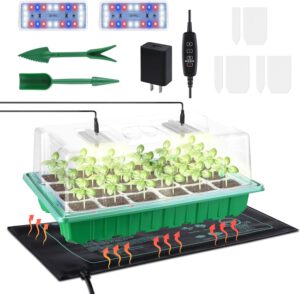
The half-acre micro-grow site will include an enclosed and fenced 30-foot by 40-foot greenhouse, an office trailer, and a small warehouse area, all of it designed to be moved easily if needed. It will be screened with plants and trees as much as possible from the road and from neighbors. Bryan Millms said they hope to locate it closer to unoccupied federal land on the north side of the lot, which would better screen the facility from the road and neighbors.
Commissioner Barry Nelson said the five-acre lot is not really big enough for the operation, which would have no room for expansion. “It’s a different type of use in an agricultural area,” he said. “I worry about negative effects on neighbors in that area.”
“It’s licensed, legitimate, secure,” Bryan Millms responded. “This is a plant — it’s not going to hop out of its pot and attack some kid — it is literally a garden.” The micro-grow facility will produce such a small amount of cannabis that a dozen individuals in Minnesota could legally grow “exactly what we’re trying to do,” he said. “It’s a micro-business.”
In the end, the county board voted 3-2 to approve the micro-grow facility, with 100-foot setbacks from the property line. Commissioners Nelson and Phil Hansen voted in dissent.

Bowe covers the Becker County Board and the court system for the Tribune, and handles the opinion pages for the Tribune and Focus. As news editor of both papers, he is the go-to contact person for readers and the general public: breaking or hard news tips, story ideas, questions and general feedback should be directed to him.