
A Rare South American Cannabis Power Move Is Taking Shape In Argentina

A Rare South American Cannabis Power Move Is Taking Shape In Argentina


A Rare South American Cannabis Power Move Is Taking Shape In Argentina

Flowers & Terps and Universal Growing are joining forces in a move that blends flower credibility, cultivation culture, infrastructure and global ambition, an uncommon kind of partnership in South America’s cannabis industry.

Something unusual is happening in South American cannabis, and it starts in Argentina.

Flowers & Terps, a flower-driven brand with unmatched credibility in the local scene, has entered a new partnership with Universal Growing, a cannabis platform whose reach extends well beyond cultivation infrastructure. In a region where this kind of strategic alignment remains rare, the move feels like more than a business headline. It feels like a sign that parts of the industry are beginning to think bigger, sharper and with a longer view.

That matters.

South American cannabis has no shortage of talent, flavor, genetics, hustle or cultural depth. What it has often lacked is structure: the kind that helps turn a respected name into something scalable without sanding off the edges that made it matter in the first place. That is what makes this partnership stand out. At least on paper, it is not about replacing authenticity with polish. It is about seeing whether authenticity and scale can finally pull in the same direction.

To understand why this lands the way it does in Argentina, it helps to know who is involved.

Flowers & Terps is not some startup assembled in a boardroom. It is the project of Juan Mauro La Monica, better known in the scene as Mau or “Maula,” a cultivator and selector whose name carries real weight among people who care about flower. In Argentina’s cannabis world, he is known less as a businessman chasing a trend than as someone who built his reputation the slower way: through taste, genetics, consistency and a recognizable point of view. In other words, the hard way.

Within the local scene, Maula has become a kind of reference point for top-shelf flower. Around Buenos Aires and beyond, his name has come to signal a certain standard. According to people in that orbit, when major international music artists come through Argentina, most of the biggest names in the world often end up looking for Maula’s flower. Whether or not that lore ever gets fully documented (although it is, but we don’t wanna out anyone in particular), it tells you something important about his place in the culture: he is not just known. He is sought out.

Universal Growing, meanwhile, is much more than a grow-tech company.

Yes, infrastructure is a major part of the story. Universal works with globally recognized cultivation brands and has built serious credibility around systems, scale and high-level operational capacity. But reducing the company to equipment would miss the point almost entirely. Universal has also built a broader cannabis ecosystem in Argentina, one that includes events, premium retail, a social club called Güid, a high-end glass space known as Glass Gallery and the kind of curation that usually comes from years of travel, deep exposure and a genuine relationship to the plant.

That last part matters more than it might sound.

One of the easiest mistakes outsiders can make when looking at a move like this is to imagine a simple split: the grower with soul on one side, the technical company on the other. That is not really what is happening here. Universal does bring infrastructure, technology and scale, but it also brings culture, taste and a team with serious lived knowledge of cannabis. People inside that orbit have spent years smoking, cultivating, traveling, sourcing, meeting growers and paying attention to what top quality actually looks like around the world. This is not a case of suits discovering flower. It is a case of one serious cannabis world recognizing another.

That is one reason this move feels different.

In more mature markets, brand-and-infrastructure partnerships are not exactly shocking. In South America, they still are. Much of the region’s cannabis sector has spent years operating somewhere between regulatory drag and survival mode, caught in a frustrating middle ground where cultural legitimacy often outpaces institutional development. You get great flower, real knowledge and strong local identities, but not always the systems needed to take those things further. Or you get structure without soul. What you rarely get is a serious attempt to combine both.

This partnership looks like an attempt to do exactly that.

The framing from Maula himself has been telling. In a teaser video announcing the new chapter, he pushes back against the idea that he is switching sides or abandoning something. “I’m not changing sides,” he says. “We’re joining forces.” It is a smart line, and not only because it cuts through rumor. It gets at the deeper tension behind moves like this in any cannabis culture that still prides itself on intimacy, trust and anti-corporate instincts. At what point does growth become compromise? At what point does professionalization become dilution?

Those are fair questions. They are also probably unavoidable.

But they are not always answered the same way.

Sometimes a respected brand loses itself the moment scale enters the room. Sometimes scale simply exposes that the brand was thinner than people thought. And sometimes, less often, a brand finds the support system it actually needed all along. The real test is not whether a partnership looks bold in a headline. The test is whether it preserves standards, protects identity and produces better flower, better access and better outcomes over time.

That is where this gets interesting.

Because Flowers & Terps did not need credibility. It already had that. And Universal Growing did not need relevance. It already had that, too. What each side seems to be reaching for here is something else: leverage. Not in the cold financial sense, but in the more useful cannabis sense. The chance to take something already meaningful and give it more room, more infrastructure and more staying power.

There is also a symbolic layer that should not be ignored. Both Maula’s flower and Universal Growing’s flower were featured in High Times’ 50th anniversary print issue. That does not prove anything on its own, and it should not be overstated. Still, it is a useful detail. It suggests that this is not just a local tie-up between random players trying to look bigger than they are. Both names had already entered a broader quality conversation before this announcement ever happened.

Seen that way, this is not simply about one Argentine partnership. It is about what happens when a regional cannabis scene starts taking itself seriously on its own terms.

For years, cannabis in places like Argentina has had to spend enormous energy fighting for room to exist. Fighting stigma. Fighting bureaucracy. Fighting small-minded politics. Fighting delay. Fighting fragmentation. That leaves less energy for another part of the conversation, the one that comes later: What does excellence look like here? What does consistency look like? What does a globally relevant South American cannabis identity actually require?

Those are harder questions than people think. They are not answered by branding alone, and they are definitely not answered by borrowing someone else’s playbook.

Which is why this partnership may be worth watching even for readers far from Buenos Aires. It hints at a broader possibility for South American cannabis: not just surviving, not just producing good flower in pockets, but building structures that can support long-term quality without flattening the local character that made the scene worth paying attention to in the first place.

That is a delicate balance. Maybe the hardest one.

And yes, the Messi comparison that has floated around this story is not the worst way to think about it. Messi was already Messi. The talent was there, the magic was there, the greatness was obvious. But even he needed a team, a structure and the right support system to win the biggest thing. In that loose sense, the analogy fits. Flowers & Terps already had the flower credibility, the cultural cachet and the identity. Universal Growing brings a wider platform, operational muscle and a bigger frame for all of that to play in.

No one serious should confuse that with a sellout.

If anything, it reads more like a scale-up.

The next chapter will determine whether the promise holds. Expansion plans are in the air. More announcements are expected. The scope of the partnership will become clearer over time. But even before those details arrive, the basic story is already compelling enough: one of Argentina’s most respected flower names has joined forces with one of the country’s most sophisticated cannabis platforms, and the result could say a lot about where South American cannabis goes next.

At the very least, it says this much: parts of the region are done thinking small.

And if the people behind this move are right, the rest of the world may soon have a clearer reason to pay attention.

As Maula put it in the launch video, “The world will know that flowers don’t lie.”

<p>The post A Rare South American Cannabis Power Move Is Taking Shape In Argentina first appeared on High Times.</p>
Source link

The Long Game: Inside Rare Cannabinoid Company’s Bet on the Future of Cannabinoids

The Long Game: Inside Rare Cannabinoid Company’s Bet on the Future of Cannabinoids

The Long Game: Inside Rare Cannabinoid Company’s Bet on the Future of Cannabinoids

The hemp boom moved fast.

In the years following the 2018 Farm Bill, thousands of companies rushed into the market chasing the same wave. CBD was everywhere. Oils, gummies, topicals, drinks—if it could hold a label, someone was selling CBD in it.

Most brands were focused on scale. Few were thinking about what came next.

In Hawaii, Jennifer Carlile and Jared Dalgamouni began asking a different question: what happens when CBD stops being the whole story?

That curiosity would eventually lead them to build Rare Cannabinoid Company, a brand centered not only on CBD, but also on lesser-known cannabinoids that have attracted growing consumer and industry interest.

Before the Hemp Industry Exploded

The story doesn’t start with Rare Cannabinoid Company.

It starts with Hawaiian Choice, the founders’ original brand, launched in 2017. At the time, the focus was broad-spectrum CBD products made with Hawaiian-grown hemp and local botanical ingredients.

Even then, Carlile says they were trying to approach cannabinoids differently.

“From the beginning, we never wanted to be just another generic CBD brand,” she said. “We were already experimenting with terpene blends designed around different consumer preferences.”

Then something interesting started happening.

Customers began asking questions.

“Some of our Hawaiian Choice customers began asking about cannabinoids like CBN and CBG,” Carlile said. “They had heard about them but didn’t really understand what they were.”

Those questions opened a door.

Jennifer and Jared, brainstorming the business that would become Rare Cannabinoid Company.

Seeing the Plant Differently

For decades, cannabis conversations revolved around two compounds: THC and CBD.

But the plant contains more than a hundred cannabinoids, many of which remain less familiar to mainstream consumers. Researchers have studied a number of these compounds, even as public awareness has developed more slowly.

Carlile and Dalgamouni said that as they looked more closely at these compounds, they became interested in how different cannabinoids might be used in different formulations and product categories.

“As we began studying rare cannabinoids, it became clear to us that they could play different roles in formulations for different consumer interests,” Carlile said.

That perspective shifted how they thought about product development.

Rather than treating CBD as the only focal point, the founders said they saw an opportunity to build products around a broader range of cannabinoids and consumer preferences.

That idea became the foundation for Rare Cannabinoid Company.

The brand officially launched in 2020—right as the world was shutting down during the early COVID lockdowns.

The timing wasn’t exactly planned.

“Unintentionally,” Carlile joked.

But the moment was right for a brand built around consumer education and formulation variety.

Moving Beyond “CBD for Everything”

One of the earliest lessons the founders say they noticed was that consumers look for different kinds of products at different times of day and in different contexts.

A customer might be interested in daytime products, post-activity products, or nighttime products, depending on personal preference and intended use.

“No one feels the same all day, every day,” Carlile said.

That observation pushed the company, she said, to develop formulations built around different consumer preferences rather than around a single cannabinoid.

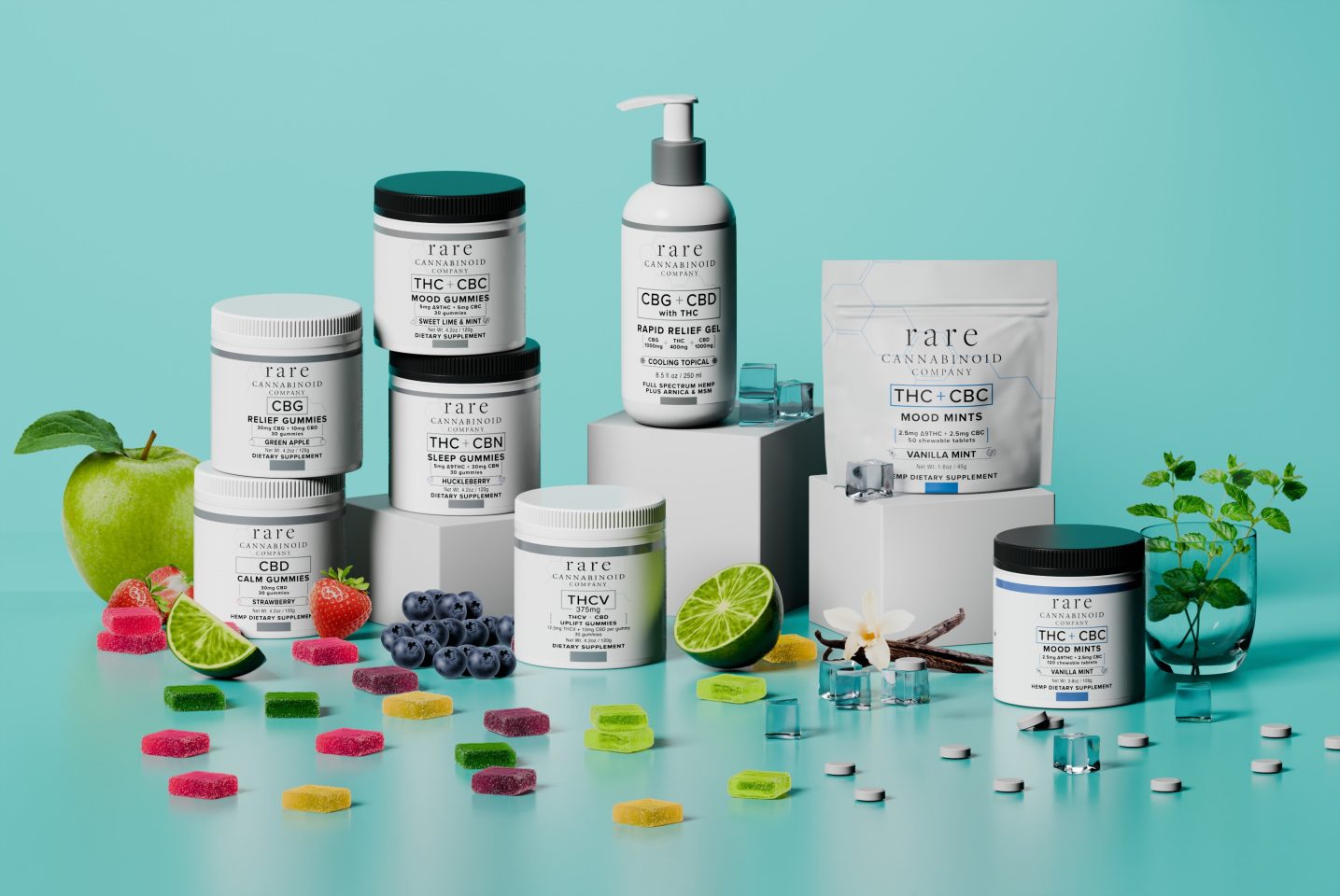
Compounds like CBN, CBG, THCV, and CBDV became central to those formulations. According to the company, each is used differently within its product lineup and contributes to a more segmented approach to formulation.

Around the same time, Rare Cannabinoid Company began building tools to help customers navigate this complexity. Their Cannabinoid Finder Quiz guides users through a few simple questions—what they want to support, whether they’re comfortable with THC, and what type of product they prefer.

From there, it suggests cannabinoids and formulations the company says may align with those preferences.

Education became a major part of the brand’s identity.

“We’ve published hundreds of educational blog articles and worked with clinicians and retailers to help people understand cannabinoids,” Carlile said. “The science has been there for quite some time. Public awareness has just been slower to catch up.”

When the Market Started Catching Up

Today, rare cannabinoids are no longer obscure industry terms.

Consumers are increasingly familiar with compounds like CBN and CBG, and interest in those ingredients has continued to expand as more products enter the market.

For Rare Cannabinoid Company, that shift has been both validating and surreal.

“When we started working with cannabinoids like CBN, CBG, and THCV about six years ago, most consumers had never even heard of them,” Carlile said.

Now they’re showing up across the market.

Seeing larger companies enter the space isn’t something the founders view as a negative. If anything, they say it reflects broader awareness of cannabinoid product categories.

“The bigger picture is that more people are discovering cannabinoids,” Carlile said. “That’s something we’re genuinely happy about.”

At the same time, the rapid expansion of the hemp-derived market has created new complications.

The rise of chemically converted cannabinoids—products developed primarily to navigate legal loopholes—has blurred the lines between naturally occurring hemp compounds and heavily modified alternatives.

For companies focused on plant-derived cannabinoids and rigorous testing, that environment can make things messy.

“Our hope is that the industry moves toward clearer standards that reward transparency and high-quality formulations,” Carlile said.

Building a Cannabinoid Company From Hawaii

Location matters more than people realize.

For Carlile and Dalgamouni, building a cannabinoid brand in Hawaii shapes everything from sourcing decisions to company philosophy.

“We’re extremely fortunate to have been born and raised in Hawaii,” Carlile said. “The culture emphasizes balance, respect for nature, and community.”

Those values influence how they think about the products they create.

Carlile compares Hawaiian hemp to Kona coffee. Coffee can grow in many places, but Kona coffee has a reputation built around its environment—the volcanic soil, tropical rain, and elevation where it’s cultivated.

Hawaiian hemp, she says, carries a similar sense of place.

“Our CBD comes from hemp grown on the slopes of Haleakalā, nourished by volcanic soil, rain, and sunshine,” Carlile said. “That environment produces exceptional plants.”

At the same time, the company says it combines that agricultural foundation with modern manufacturing standards. According to Rare Cannabinoid Company, its products are produced in cGMP-certified facilities, undergo third-party lab testing, and incorporate cannabinoids sourced from farms across the United States.

It’s a hybrid model: island-grown ingredients, paired with modern cannabinoid science.

The Next Phase of the Hemp Industry

Few sectors of cannabis have evolved as quickly—or as unpredictably—as hemp-derived cannabinoids.

Federal regulations continue shifting, and companies across the industry are watching closely to see how the next chapter unfolds.

Rare Cannabinoid Company says it has taken a measured approach.

Many of its products contain no THC at all, relying instead on cannabinoids like CBN, CBDV, CBG, and THCV as part of their formulations.

Others include low-dose THC formulations that the company positions as lower-intensity options.

“Our hope is that low-to-moderate dose THC products—around 2.5 to 5 milligrams per serving—will continue to be allowed,” Carlile said.

But regardless of how regulations evolve, the founders believe rare cannabinoids will remain part of the conversation.

“The cannabis plant contains more than a hundred different cannabinoids,” Carlile said. “We’ve really only begun to understand how they work and how they can be combined thoughtfully.”

In other words, the cannabinoid story is still in its early chapters.

The Long View

The cannabis industry moves quickly. Trends come and go. New compounds appear almost overnight.

But the companies that last usually take a longer view.

Rare Cannabinoid Company was built around a simple idea: cannabinoids are more complex—and more interesting—than a single compound could ever explain.

That belief has guided the brand from its early days with Hawaiian Choice through the rise of rare cannabinoids and the rapidly shifting hemp market that followed.

Regulations may change. Consumer awareness will keep evolving. But the plant itself still holds plenty of surprises. And for the people paying attention, the next discovery might already be growing.

All photos courtesy of Rare Cannabinoid Company.

Sponsored Content Disclosure: This article was published as part of a paid commercial arrangement with Rare Cannabinoid Company. It is not independent editorial content. References to cannabinoids, formulations, and consumer use cases reflect the company’s perspective unless otherwise noted, and have not been independently verified by High Times.

<p>The post The Long Game: Inside Rare Cannabinoid Company’s Bet on the Future of Cannabinoids first appeared on High Times.</p>
Source link

How Does Marijuana Legalization Affect Car Accident Liability

How Does Marijuana Legalization Affect Car Accident Liability


More than half of U.S. states have now legalized marijuana in some form, and that shift is quietly reshaping how car accident liability gets determined in courtrooms and insurance offices. What looks like a simple impairment question can quickly become a complicated legal situation. Research indicates that marijuana use can impair driving ability. Science has […]

The post How Does Marijuana Legalization Affect Car Accident Liability appeared first on Stoner | Pictures | Stoners Clothing | Blog | StonerDays.


Source link

Oklahoma Lawmakers Reject Bill To Let Employers Fire More Workers For Using Medical Marijuana

Oklahoma Lawmakers Reject Bill To Let Employers Fire More Workers For Using Medical Marijuana

Oklahoma Lawmakers Reject Bill To Let Employers Fire More Workers For Using Medical Marijuana

The sponsor filed a motion to potentially revive the legislation for future reconsideration.

By Barbara Hoberock, Oklahoma Voice

Oklahoma House lawmakers on Thursday defeated a measure that would give employers more leeway to fire individuals for using medical marijuana.

Rep. Kevin West, R-Moore, the author, said House Bill 3127 would not force employers to do anything, but would give them discretion to classify additional jobs as “safety-sensitive” beyond what is in law. State law allows businesses to prohibit employees from using marijuana who work in “safety-sensitive” jobs based on drug testing.

Existing law classifies “safety-sensitive jobs” as those that require operating vehicles, machines and power tools, carrying a firearm and providing direct care to patients or children, among other duties.

West said nothing in the bill says that if a person tests positive, they are out of a job.

He said he would be shocked if employers began listing all jobs as “safety-sensitive.”

If every business implemented classified every job as “safety-sensitive,” they would not be able to find individuals to hire, West said.

Over 315,000 Oklahomans hold medical marijuana licenses, state records show.

Critics cited concerns about the legality and the potential impact on employees who have a doctor’s prescription to legally use the drug. They argued existing law already has broad categories for “safety-sensitive” jobs and questioned the necessity of expanding it.

Rep. Chris Kannady, R-Oklahoma City, said marijuana can stay in a person’s system for weeks.

Rep. Erick Harris, R-Edmond, said that under the measure, he could fire his assistant for using medical marijuana.

West said the assistant could not be fired for just having a medical marijuana card, but could  be terminated if the employer classified the position as “safety-sensitive” and the employee in that job tested positive for marijuana

Although the measure failed, West served notice that on some future legislative day he may bring the measure back up for another vote.

This story was first published by Oklahoma Voice.

Photo courtesy of Brian Shamblen.

The post Oklahoma Lawmakers Reject Bill To Let Employers Fire More Workers For Using Medical Marijuana appeared first on Marijuana Moment.

Source link

Chicago Cubs Announce First CBD Partnership

Chicago Cubs Announce First CBD Partnership

Chicago Cubs Announce First CBD Partnership

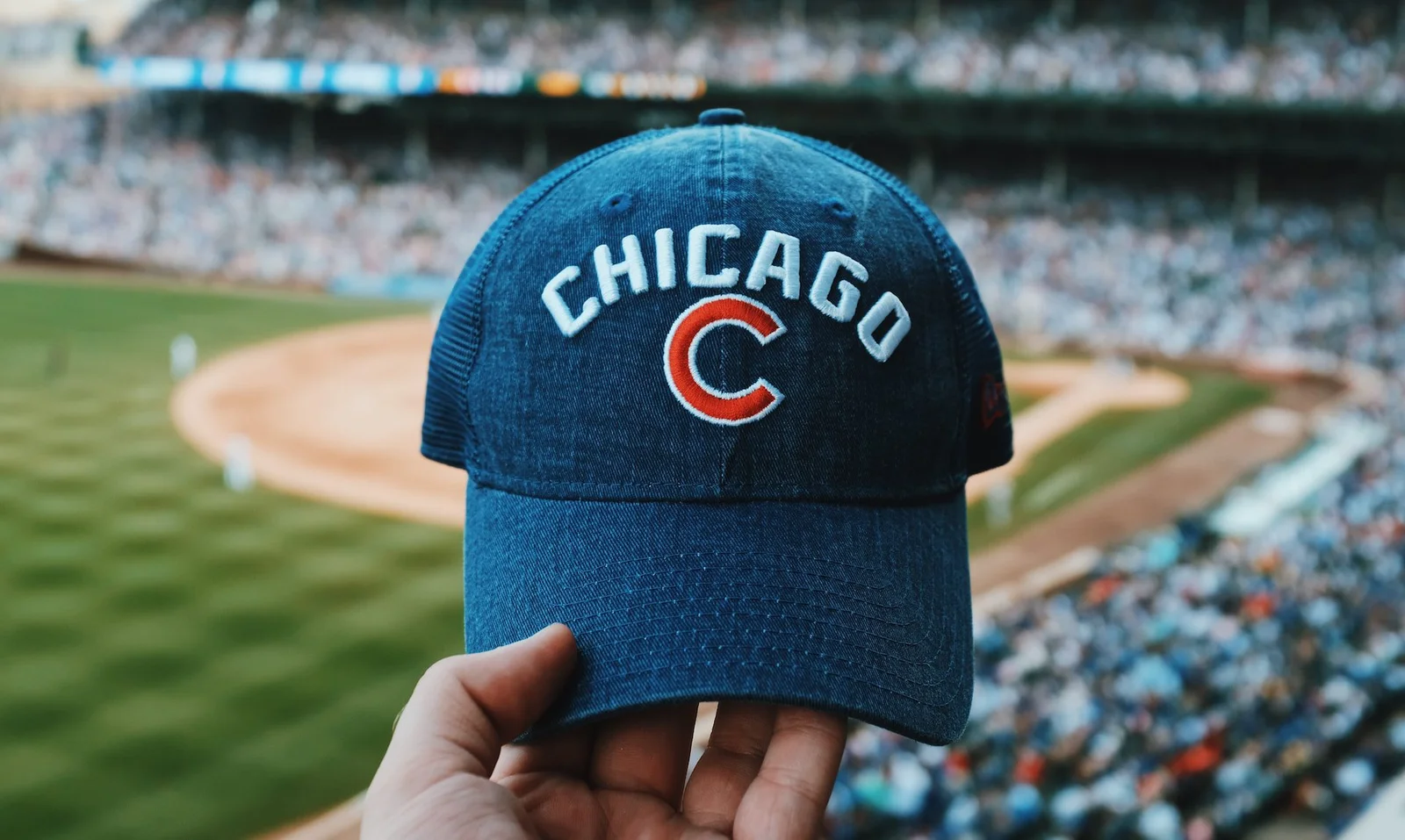
The Chicago Cubs have joined hands with wellness and recovery brand Mynd Drinks to introduce CBD drinks during home games at Wrigley Field in the upcoming 2023 Major League Baseball season. With this agreement, fellow Chicago-based company Mynd Drinks will become the first official CBD partner of the Cubs and the first CBD brand to […]

The post Chicago Cubs Announce First CBD Partnership appeared first on The Cannabis Business Directory.

Source link

Thailand: Russians caught selling magic mushrooms for ‘stress relief’

Harris Sliwoski: Oregon’s New Cannabis Laws: 2026 Edition – March 12, 2026

Harris Sliwoski: Oregon’s New Cannabis Laws: 2026 Edition – March 12, 2026

Table of Contents HB 4139 (FAILED) HB 4142 (PASSED) HB 4162 (PASSED) SB 1548A (FAILED) Conclusion Sine die came for Oregon’s 2026 legislative session last Friday, March 6th. I previewed the roster of cannabis bills in play back on February 12th. Two of them passed; two of them failed. Below is a recap of the action, with links […]

Source link

The Caribbean’s Cannabis Domino Effect Has a British Tripwire

The Caribbean’s Cannabis Domino Effect Has a British Tripwire

The Caribbean’s Cannabis Domino Effect Has a British Tripwire

Grenada’s reform is building regional momentum, but Bermuda’s path runs straight into a UK veto, and the clash reveals where Caribbean legalization spreads, and where it stalls.

Grenada decriminalized cannabis in January and set the legal age for consumption to 21 years old nationwide. Drug policy reform advocates are now setting their sights on Bermuda to see if it will be the next Caribbean country to fully legalize. As Bermuda is a British Overseas Territory, this might be too complex a legal revision to accomplish at the local level. 

Medical cannabis was introduced in 2016 in Bermuda, with possession of up to seven grams (¼ oz) being decriminalized in 2017, according to the Decriminalization of Cannabis Amendment Act. The Medical Cannabis Act of 2019 proposed the creation of the Medicinal Cannabis Authority. However, today, its mandate has not come to fruition. 

Britain v. Bermuda, A Battle Royale

Next, the 2020 proposed Cannabis Licensing Act, which sought full adult-use legalization, was coupled with a bid for Bermudian independence, which may have contributed to its failure to pass. Cannabis is not legal for adult use in the United Kingdom, and UK officials signaled little appetite for a Bermuda move that could create political and legal friction.

However, the premier denied this bid for independence while sticking to his guns about legalization. 

“If Her Majesty’s representative in Bermuda does not give assent to something that has been passed lawfully and legally under this local government, this will destroy the relationship we had with the United Kingdom,” he said. 

This disagreement put Bermuda on the brink of a constitutional crisis and a potential break with Britain in 2022, after Britain blocked the Government’s flagship legislation to legalize the use and sale of cannabis, according to The Royal Gazette

In an unprecedented move, Rena Lalgie, the Governor at the time, said she had been “instructed” by the UK’s foreign secretary to deny royal assent to the Progressive Labour Party’s (PLP) Cannabis Licensing Bill. Lalgie withheld affirmation of the controversial Cannabis Licensing Act 2022, saying it was “inconsistent” with obligations held by the UK and Bermuda under United Nations (UN) Conventions.

“The Secretary of State for Foreign, Commonwealth and Development Affairs concluded that the Bill, as currently drafted, is not consistent with obligations held by the UK and Bermuda under the 1961 Single Convention on Narcotic Drugs and the 1971 Convention on Psychotropic Substances.”

Mrs. Lalgie added: “I have informed the Premier and relayed the UK’s continued desire to work with Bermuda on reforms within the scope of our existing international obligations.”

Ministers admitted that the PLP’s cannabis plans went beyond the scope of international conventions on drugs, and that the legislation was not aligned with Britain’s obligations under the UN’s 1961 Single Convention on Narcotic Drugs.

Premier Burt felt strongly that Bermudians wanted cannabis legalization, regardless of what the UK wanted for Bermuda, considering fellow Commonwealth country Canada has been in violation of the archaic, 65-year-old treaty since 2018.  

While Parliament in Grenada approved changes to the nation’s cannabis laws, allowing adults 21 and over to possess defined amounts, expunging past minor offences, and opening the door to a regulated medicinal and therapeutic industry, representatives of Bermuda hope to follow suit. Most recently, plans to advance legislation were included in the 2025 PLP party platform.

To further push legalization, the newly formed Green Framework Foundation (GFF) has begun selecting an advisory team of international experts, which the foundation believes will be critical as it builds Bermuda’s first comprehensive cannabis and cannabinoid governance framework, alongside the country’s medical and industry programs. 

More Research is Imperative

“We are working with CariGenetics to help people understand how individuals metabolize cannabis,” said Kim Nicole Casey, CEO and Founder of Green Framework Foundation and Co-founder of the Bermuda Cannabis Association. “0.3% doesn’t work for everyone, especially for alleviating chronic pain. Research shows that people of Caribbean descent, specifically, metabolize cannabis a lot faster, and therefore may need higher dosages. Our doctors in Bermuda need to be educated about this.” 

The GFF hopes the medical cannabis industry will eventually be in a position to take a patient’s unique genetic makeup into account for precision dosing. 

Dr. Carika Weldon, MRSB, FIBMS, CEO and Founder of biotech startup CariGenetics, is pioneering research in this regard by mapping the human genome. A significant portion of medical research, including clinical trials, does not take Black people and their physiology into account.  

Lack of Research is Limiting Medical Access

“85% of the diverse global population is not included in efficacy and safety testing of drugs,” said Dr. Weldon. “Most is based on data from European men. Women have only been included in clinical trials since 1993. The African genome is the most diverse in the world.” 

CariGenetics also examines cannabis dependence risk. In one dataset Weldon cited, the African-descent subgroup showed a 16% higher risk, while the European-descent subgroup showed no increased risk in that sample.

“So that screams to me that there is a higher risk, and we need to be testing,” said Dr. Weldon. 

Bermudian recording artist Collie Buddz concurs. As the lyrics to his track Come Around question, “When dem a go legalize?” 

Photo by Vivian Luciano on Unsplash

<p>The post The Caribbean’s Cannabis Domino Effect Has a British Tripwire first appeared on High Times.</p>
Source link