

Pillen accepts resignation from Oldenburg on Medical Cannabis Commission; Takes applications for vacancy | News
February 3, 2026
Published by toker
Cannabis info and related links and post from around the web


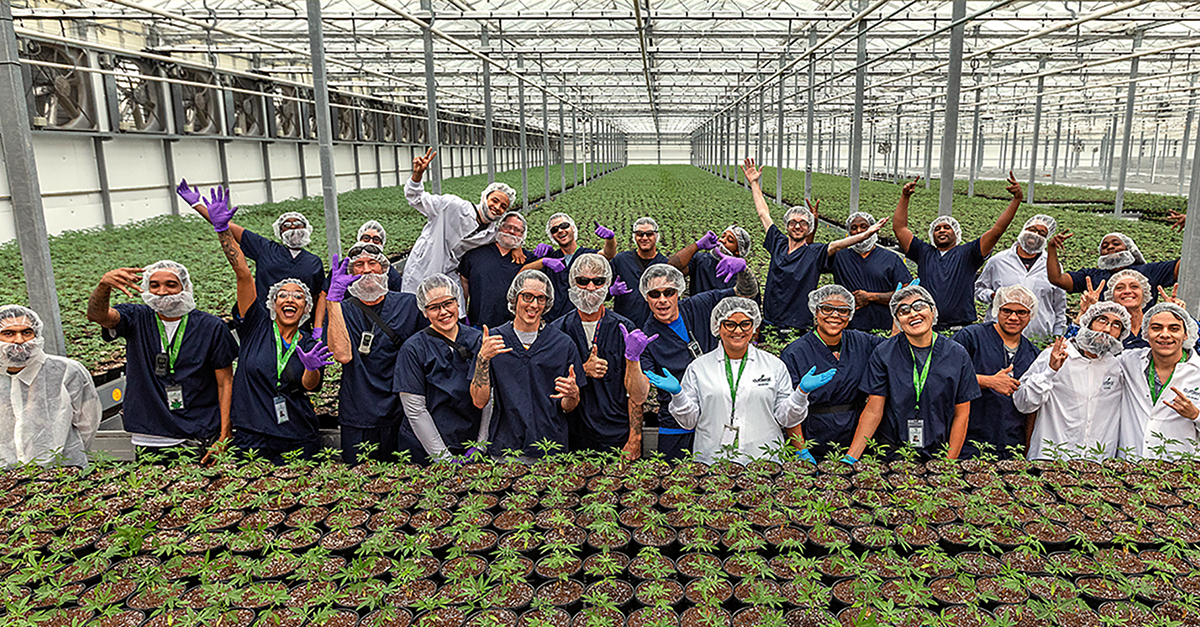
Curaleaf is a vertically integrated, multi-state cannabis company operating cultivation, manufacturing, and retail assets across 18 regulated U.S. markets, supporting medical and adult-use consumers through a broad branded product portfolio.

Partner Content
Curaleaf Holdings, Inc. is a vertically integrated cannabis company headquartered in Stamford, Connecticut, and publicly traded on the Canadian Securities Exchange. Founded in 2010 as PalliaTech, the company rebranded to Curaleaf in 2018 and has since expanded to operate dispensaries across 18 U.S. states, serving both medical patients and adult-use consumers.
Led by CEO Boris Jordan, Curaleaf operates cultivation facilities, processing sites, and retail locations throughout the country, enabling the company to control quality from seed to sale. The company’s brand portfolio includes Select, known for premium cannabis oil vapes and cartridges; Grassroots, which offers flower and concentrates; Anthem, a classic pre-roll brand celebrating American-grown cannabis; Find, an affordable flower line; JAMS, a flavor-forward edibles brand; Reef, featuring flower products; and B Noble, a social equity-focused brand founded by Hip-Hop pioneer Fab 5 Freddy.
Through strategic acquisitions—including Select in 2019 and Grassroots Cannabis in 2020—Curaleaf has built a comprehensive product lineup spanning flower, vapes, pre-rolls, edibles, and concentrates. The company continues expanding its retail footprint and brand offerings, positioning itself as a major player in the evolving U.S. cannabis market.
/* Hide default post title */
h1.entry-title {
display: none !important;
}
/* Full-bleed hero image section */
.cover-feature .hero-image-container {
width: 100vw;
position: relative;
left: 50%;
transform: translateX(-50%);
margin: 0;
overflow: hidden;
}
.td-post-content .cover-feature .hero-image-container,
.container .cover-feature .hero-image-container {
max-width: 100vw !important;
width: 100vw !important;
margin: 0 auto !important;
}
/* Hide author, date, and meta */
.byline,
.byline-block,
.byline-author,
.byline-detail,
.td-post-author-name,
.td-post-date,
.td-post-meta,
.entry-meta {
display: none !important;
margin: 0 !important;
padding: 0 !important;
height: 0 !important;
overflow: hidden !important;
}
/* Hide category label */
.td-post-category,
.td-category,
.td-post-header .td-post-category,
.td-post-header .td-category {
display: none !important;
margin: 0 !important;
padding: 0 !important;
height: 0 !important;
overflow: hidden !important;
}
/* Hide theme featured image */
.td-post-featured-image,
.wp-post-image,
.post-thumbnail,
.td-post-header .entry-thumb,
.td-post-header img.wp-post-image,
.td-post-header .td-post-featured-image img,
.entry-featured-image,
.featured-media {
display: none !important;
height: 0 !important;
margin: 0 !important;
padding: 0 !important;
overflow: hidden !important;
}
/* Hide inline ads and related content */
.td-a-rec,
.td-post-content .td-a-rec,
.td-a-rec-id-content_inline,
.td-a-rec-id-content_bottom,
.td-a-rec-id-content_after,
.td_block_related_posts,
.td-post-content .td-a-rec-container,
.td-a-rec-container,
.advertisement,
.td_block_ad_box,
.td-related-title,
.td-post-related,
.td-post-next-prev,
.td-related-bottom {
display: none !important;
height: 0 !important;
margin: 0 !important;
padding: 0 !important;
overflow: hidden !important;
}
/* ✅ FIX: Remove rogue white spacer ABOVE footer only */
.td-main-content-wrap + div:not([class]) {
display: none !important;
height: 0 !important;
margin: 0 !important;
padding: 0 !important;
overflow: hidden !important;
}
/* Prevent horizontal scroll */
html,
body {
overflow-x: hidden;
}
.tdc-row[style*=”height:50px”],
.tdc-row > .vc_column[style*=”height:50px”] {
height: 0 !important;
margin: 0 !important;
padding: 0 !important;
overflow: hidden !important;
display: none !important;
}
.vc_column.tdi_27.wpb_column.vc_column_container.tdc-column.td-pb-span12 {
display: none !important;
height: 0 !important;
margin: 0 !important;
padding: 0 !important;
overflow: hidden !important;
}

Welcome to Business of Cannabis’ new research digest, unpacking the latest clinical evidence shaping cannabis therapeutics.
While headlines often focus on regulatory shifts and market access, the scientific foundation underpinning medical cannabis continues to evolve at a pace, yet rigorous clinical trial data rarely receive the attention it deserves outside academic circles.
With optimism that the US could reschedule cannabis in the coming months, cannabis research could see a wave of investment flood through the research sector, having major implications for its integration into mainstream healthcare.
Beyond the Abstract aims to cut through PR-hype and methodological complexity to deliver a clear-eyed analysis of emerging research, from pain management and neurological conditions to rare disease applications. We’ll examine what the data actually shows, where evidence gaps remain, and how new findings might influence clinical practice and regulatory frameworks across Europe and beyond.
This edition launches with three landmark studies published in recent months: a major systematic review on cannabis for chronic pain, the first randomised controlled trial of vaporised cannabis for acute migraine, and new data on CBD-rich formulations for ADHD symptoms in children with autism spectrum disorder.
For comprehensive access to the latest cannabis clinical trials across chronic pain, epilepsy, oncology, and other therapeutic areas, explore Business of Cannabis’ Cannabis Research Repository, a continuously updated database of human studies, systematic reviews, and real-world evidence.


A comprehensive systematic review from Oregon Health & Science University has quantified cannabis efficacy for chronic pain, revealing stark differences between THC and CBD-dominant products.
The study, ‘Living Systematic Review on Cannabis and Other Plant-Based Treatments for Chronic Pain: 2025 Update’, marked the fourth and final annual update of the ‘living review’, which continually adapted to ‘identify and synthesise’ new literature as it was published.
It analysed 25 randomised controlled trials (RCTs) involving 2,303 patients, predominantly those with neuropathic pain, finding that high-THC products reduced pain severity by 0.78 points on a 10-point scale compared to placebo. Products with comparable THC-to-CBD ratios performed slightly worse, showing reductions of 0.54 points.
Despite both being THC-based pharmaceuticals, Nabilone demonstrated moderate pain reduction of 1.59 points on a 0-10 scale, while Dronabinol showed minimal effect at just 0.23 points, a statistically significant difference.
Across four RCTs involving 334 patients, synthetic or purified CBD alone was ‘not associated with decreased pain intensity’ versus placebo, with the pooled mean difference actually favouring placebo by 0.40 points (95% CI −0.14 to 1.00). CBD also showed no benefit in terms of function or pain response rates.
Nabiximols (Sativex), and oromucosal spray containing 2.7mg THC and 2.5mg CBD per spray, showed pain reduction of 0.54 points and functional improvement of 0.42 points, both ‘just below the threshold for a small effect’ according to the review’s criteria.
High-THC products carried substantial risks, as evidenced by dizziness in 33% of cases versus 15% with the placebo (relative risk [RR] 2.20), sedation in 24% vs. 16% (RR 1.50), and withdrawal due to adverse events in 14% vs. 7% (RR 1.92).
All 25 trials were short-term only (1-6 months), predominantly enrolled neuropathic pain patients (64%), with mean age 53 years. The review found ‘insufficient evidence’ on cannabis use disorder development, long-term outcomes, or effects beyond neuropathic pain.
The review notes that cannabis products’ pain reduction appears ‘comparable to those observed with prescription opioids, several nonopioid medications, and nonpharmacological interventions,’ though the authors emphasise this cross-trial comparison ‘must be done with extreme caution’ and head-to-head trials are needed.

The first randomised, double-blind, placebo-controlled trial of cannabis for acute migraine has demonstrated that vaporised THC combined with CBD outperforms placebo, but in similar findings to the systematic review above, CBD alone shows little benefit.
University of California San Diego researchers enrolled 92 participants who treated 247 migraine attacks with four different vaporised cannabis treatments in randomised order: 6% THC, 11% CBD, 6% THC plus 11% CBD, or placebo.
The THC+CBD combination achieved the primary outcome of 2-hour pain relief in 67% versus 47% with placebo (OR 2.85, p=0.016). Critically, it also met secondary endpoints of pain freedom (35% vs 16%, p=0.017) and most bothersome symptom freedom (60% vs 35%, p=0.005), benefits that persisted at 24 and 48 hours.
THC alone achieved pain relief (69% vs 47%, p=0.008) but failed to reach statistical significance for pain freedom or symptom relief at two hours and showed no sustained benefits. CBD alone demonstrated no superiority to placebo on any measure.
The combination reduced photophobia and phonophobia but not nausea, confirming ‘antimigraine effects rather than THC’s established antiemetic effects.’ Mean subjective highness was lower with THC+CBD (2.4/10) than THC alone (3.5/10), consistent with CBD’s role as a negative allosteric modulator of CB1 receptors.
Researchers noted critical limitations, including single-dose testing (no data on medication overuse headache or cannabis use disorder with repeated use), NIDA cannabis devoid of terpenes and minor cannabinoids, and pain relief rather than pain freedom as the primary endpoint, contrary to current International Headache Society guidelines.

An open-label study from Tel Aviv University has reported behavioural improvements in children with autism and ADHD following CBD-rich cannabis treatment, though the lack of placebo control limits conclusions about causation.
Researchers evaluated 53 children and young adults using the Conners’ Teacher Rating Scale before and after 3-6 months of CBD-rich cannabis oil. Teachers reported statistically significant improvements in anxious-shyness, perfectionism, ADHD index scores, emotional lability, and hyperactive-impulsivity.
Blood analysis revealed no consistent relationship between CBD concentrations and most behavioural changes, except for emotional regulation. Higher CBD levels correlated with greater improvements in emotional lability, suggesting a possible dose-response effect.
The study represents ‘the first prospective study to evaluate the effects of CBD-rich cannabis on ADHD symptoms in children with ASD using standardised teacher-based assessments,’ addressing concerns that parent-reported outcomes may be influenced by expectation bias.
However, the open-label design, where all participants knew they were receiving active treatment, substantially limits interpretation. Authors acknowledge this ‘limits the ability to draw firm conclusions about causation’ and emphasise ‘the need for randomised, controlled trials to confirm efficacy.’
A separate 2025 UC San Diego placebo-controlled trial testing purified CBD (Epidiolex) up to 20mg/kg/day in autistic boys found no significant difference between CBD and placebo groups on behavioural measures, with both groups improving equally, suggesting open-label improvements may reflect placebo effects, natural symptom variation, or regression to the mean rather than pharmacological action
The post Latest Studies Map Cannabis Efficacy Across Pain, Migraine, and Autism Applications appeared first on Business of Cannabis.
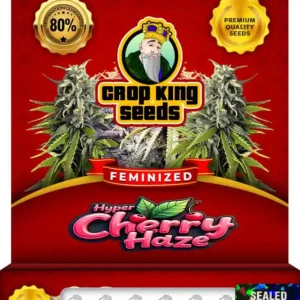
When you first see Hyper Cherry Haze, the Gelato influence is hard to miss. These buds are thick and often show off their deep purple colors hidden under a heavy layer of frosty trichomes. The smell is just as impressive as the look. It hits you with a sharp mix of zesty citrus and earthy tones, followed by a sweet, creamy finish that lingers on your tongue. Some smokers also pick up a bit of diesel and chemical notes, which adds a nice edge to the fruity profile.
The experience starts almost instantly with a bright, cerebral buzz. You will likely feel a surge of creative energy and focus, making it a great companion for artistic projects or morning routines. While your mind is racing with happy thoughts, a soothing physical wave from the Gelato side keeps you grounded. It never feels too heavy or sleepy, so you can stay productive while enjoying a deep sense of euphoria. It is truly an all-day smoke for those who want to stay active and stress-free.
The post Hyper Cherry Haze Feminized Seeds appeared first on Crop King Seeds.




The cannabis industry in Los Angeles has grown exponentially over the past decade, offering residents and visitors an incredible variety of dispensaries to choose from. Whether you’re seeking relief from chronic pain, managing stress, or simply exploring recreational options, finding the right cannabis dispensary is essential. But with so many locations scattered across the city, […]
The post What to Consider When Looking for a Cannabis Dispensary in Los Angeles appeared first on Stoner | Pictures | Stoners Clothing | Blog | StonerDays.

Join Relm and Prohibition Partners on Wednesday, February 04, at 3pm, for a live webinar unpacking the key findings from the Risk Briefing: Cannabis 2026 report.
The session will explore where risk concentrations are highest across the cannabis supply chain, why contamination continues to drive recalls, and what leading operators are doing to strengthen governance and reduce exposure.

The post Insurance Has Become a Critical Benchmark for Cannabis Industry Maturity appeared first on Business of Cannabis.


