
A budtender and customer smiling during a transaction using Cova’s dispensary POS system

Why Most Cannabis Tech Sucks (and What Retailers Should Demand Instead)


Why Most Cannabis Tech Sucks (and What Retailers Should Demand Instead)

/* Hide the theme’s automatic footer and author boxes */
.td-post-author-name,
.td-post-next-prev-wrap,
.author-box-wrap,
.td-post-sharing-bottom,
.td-related-title,
.td_block_related_posts {
display: none !important;
}

/* 1. HIDE DEFAULT THEME ELEMENTS */
/* Targets the default Newspaper theme header, byline, and featured image */
.td-post-header .entry-title,
.td-post-header .td-module-meta-info,
.td-post-featured-image,
.td-category {
display: none !important;
}

/* 2. CUSTOM TITLE STYLING */
.custom-post-title-container {
max-width: 1068px;
margin: 2em auto 1.5em;
padding: 0 15px;
}

/* 6. PROMOTED CONTENT BADGE (Dark Gray Version) */
.promoted-badge {
display: inline-block;
background-color: #333333; /* Deep charcoal gray */
color: #ffffff;
text-transform: uppercase;
font-size: 11px;
letter-spacing: 1.2px;
padding: 5px 12px;
margin-bottom: 18px;
font-family: ‘Open Sans’, Arial, sans-serif;
font-weight: 700;
line-height: 1;
border-radius: 2px; /* Optional: adds a very slight roundness for a modern look */
}
.custom-post-title {
font-family: ‘Playfair Display’, Georgia, serif;
font-size: 42px;
line-height: 1.2;
font-weight: 700;
color: #000;
margin: 0;
}

/* 3. REVISED FOOTER & IMAGE STYLING */
.footer-section {
display: flex;
align-items: center; /* Vertically centers logo and text */
gap: 30px; /* Proper spacing between logo and info */
max-width: 900px;
margin: 4em auto;
padding: 2em 15px;
border-top: 1px solid #eee;
}

/* Controls the logo size to prevent awkward floating */
.footer-logo-column {
flex: 0 0 150px; /* Keeps the logo column a fixed width */
}

.footer-logo-column img {
width: 150px !important;
height: auto !important;
display: block;
}

.footer-info-column h3 {
font-family: ‘Playfair Display’, Georgia, serif;
margin: 0 0 5px 0;
font-size: 1.4em;
}

.footer-info-column a {
font-size: 1em;
color: #5b75c0;
text-decoration: none;
}

/* 4. MOBILE RESPONSIVENESS */
@media (max-width: 768px) {
.custom-post-title-container {
margin-top: 1.2em !important;
padding: 0 20px !important;
}

.custom-post-title {
font-size: 28px !important;
}

.footer-section {
flex-direction: column; /* Stacks logo on top of text */
text-align: center;
gap: 15px;
}

.footer-logo-column {
flex: 0 0 auto;
margin: 0 auto;
}

/* 5. FIX FOOTER POSITIONING */
/* This container wraps everything between the title and the footer */
.article-body-wrapper {
min-height: 300px; /* Ensures there is space for content */
margin-bottom: 50px;
}

.footer-section {
clear: both; /* Prevents any floating images from pulling the footer up */
display: flex;
align-items: center;
gap: 30px;
max-width: 1068px; /* Matches the article width */
margin: 4em auto 2em; /* Added margin-top to create separation */
padding: 3em 15px 0;
border-top: 1px solid #eee;
}
}

A budtender and customer smiling during a transaction using Cova’s dispensary POS system

Why Most Cannabis Tech Sucks (and What Retailers Should Demand Instead)

Let’s be honest: Most cannabis technology promises the world only to fall apart when you need it most. Point-of-sale (POS) outages on peak days, support tickets that disappear into chatbots, surprise fees . . . and systems that buckle the moment regulations change or a second location opens. That’s why industry recognition matters — not as a trophy, but as a signal of trust and reliability.

In 2025, the Emjays Awards named Cova Cannabis Retail Software of the Year for the second year in a row. This isn’t a popularity contest or a vendor-sponsored badge. Winners are selected by customer voting and a panel of industry judges, making the Emjays one of the most meaningful recognitions in cannabis retail technology. In a market with more than forty cannabis POS providers, that distinction sends a clear message to retailers evaluating risk.

The standard for cannabis POS reliability

  • 100% uptime on 4/20 for eight consecutive years.
  • Real human support in under thirty seconds — no chatbots.
  • Built to scale across regulated, multi-store operations.

For retailers, this recognition represents risk reduction: technology that’s been pressure-tested in real stores, real markets, and real regulatory environments.

Is Cova Software really the best cannabis tech?

The Cova Software team accepting the 2025 Emjays Software/Tech Company of the Year award.
Photo: Cova Software

Cova has earned multiple industry awards over the years, but recognition from the Emjays stands out because of how winners are chosen — and why that matters to operators.

Being voted Cannabis Retail Software of the Year by the Emjays reflects innovation, consistency, reliability, and — most importantly — customer trust earned over time.

For cannabis retailers evaluating their technology needs, that kind of recognition lowers the odds of costly mistakes. It means the Cova platform is trusted by peers, validated by experts, and proven in the field. It signals a platform that works not just in demos, but also on the floor through busy weekends, the biggest holidays, regulatory changes, and at scale.

Reliability when it matters most

POS reliability isn’t a “nice to have” in cannabis. It’s mission critical.

🟢 100% uptime on 4/20 for eight years running — that’s a benchmark no other POS platform can claim.

While outages on the industry’s biggest sales day have become almost expected, Cova has delivered uninterrupted performance year after year. It’s built for high-volume environments, multi-location operators, and heavily regulated markets where failure isn’t an option.

Built to handle regulatory chaos with zero disruptions

Cannabis retailers don’t control when regulations change, but they live with the consequences.

When New York unexpectedly transitioned its track-and-trace system from BioTrack to Metrc, many retailers faced uncertainty, downtime risk, and compliance anxiety — all in the middle of the holiday season.

Cova didn’t wait. The team worked tirelessly through that period to ensure customers migrated smoothly, remained compliant, and kept stores running without interruption.

The bottom line is that Cova doesn’t avoid complexity. Rather, the company leans into it to solve the problems directly affecting retailers’ livelihoods. That’s just one of the reasons Cova continues to be trusted as a top dispensary software for New York and Minnesota, two of the most tightly regulated cannabis markets in the U.S.

Learn how Cova supports fast regulatory changes and keeps retailers compliant.

Real human support in under 30 seconds

A close-up of a retail transaction being processed quickly on a Cova POS tablet in a dispensary.
Photo: Cova Software

Technology is only as good as the support behind it. Cova’s support team is fully in-house, not outsourced, and composed of product experts who work closely with the development team. When retailers call for help, they’re speaking with someone who understands both the software and the realities of cannabis retail.

🟢 Average phone support wait time: under 30 seconds. 

In an era where some POS providers are charging for phone support and forcing customers to interact with chatbots, Cova continues to invest in real human help.
Want human support that actually picks up? Let’s talk.

Technology retailers actually enjoy using

Reliability is indispensable, but usability is what staff members experience every day. Cova designs products that remove friction from cannabis retail workflows. That means minimizing manual work, automating where possible, and simplifying complex processes without sacrificing compliance. 

Recent customer favorites include: 

  • The new reporting and backend hub, which centralizes key commands into a fast, intuitive interface.
  • Thoughtful, role-based workflows that help staff move quickly without errors.
  • Cova Pay, which delivers a payments experience that goes beyond industry standards and reduces friction at checkout.

The result is a system teams actually enjoy using — one that helps stores move faster, train more easily, and focus on customers instead of troubleshooting software.

See how real retailers use Cova to streamline operations and scale confidently.

Promotional banner for Cova Software featuring the 'Least Sucky POS' headline and retail tablets.

Cost-effective without cutting corners

Cova offers a top-tier cannabis retail system that doesn’t break the bank. Transparent pricing and flexible plans deliver industry-leading value compared to other POS platforms. As you scale to additional locations, the cost efficiency pays off even more. There are no surprise fees, no unnecessary add-ons, and no pressure to sacrifice functionality to keep costs under control.

Cova doesn’t hide costs. View pricing here

Recognition that reflects real-world performance

Being voted Cannabis Retail Software of the Year two years in a row signals that Cova is delivering where it counts the most: uptime, compliance, usability, support, and long-term partnership. For cannabis retailers operating in an increasingly complex market, it means even more: trust and reliability.

If you’re finished dealing with system outages, slow and robotic support, and surprise fees, connect with Cova and see why cannabis retailers trust the platform with their business year after year.


Source link

Indiana Lawmakers Say Marijuana Legalization Won’t Happen This Year Despite Trump’s Federal Rescheduling Move

Indiana Lawmakers Say Marijuana Legalization Won’t Happen This Year Despite Trump’s Federal Rescheduling Move

Indiana Lawmakers Say Marijuana Legalization Won’t Happen This Year Despite Trump’s Federal Rescheduling Move

“It’s not going to happen this year. I wasn’t going to waste a bill slot for a bill that I knew wasn’t going to move.”

By Tom Davies, Indiana Capital Chronicle

Advocates for marijuana legalization in Indiana already know 2026 won’t be the year they see it happen.

Despite President Donald Trump signing an executive order in December for reclassifying marijuana as a less-dangerous drug, the Republican-dominated state Legislature isn’t acting on any bills that would allow medical or recreational use.

Instead, legislators are advancing proposals that would tighten state laws on delta-8 products with THC—the active ingredient in marijuana—and crack down on advertisements for marijuana dispensaries in neighboring states.

The stance has one marijuana legalization advocate arguing that Indiana officials are “sticking their head in the sand.”

Trump stance hasn’t shifted Indiana status

Indiana is among only 10 states that don’t allow either medicinal and recreational marijuana sales.

Legalization supporters made a prominent push going into the 2025 legislative session but were unable to persuade lawmakers to take any action on the issue.

Trump’s executive order in December to shift cannabis from its current Schedule I status, alongside drugs such as heroin and LSD, to the less-regulated Schedule III level would seem to weaken a long-standing argument from top state Republicans against legalization.

But that did not result in removing any Statehouse hurdles to marijuana bills or a renewed visible campaign from advocates.

Joe Elsener, a former Marion County Republican chair and an organizer of the lobbying group Safe and Regulated Indiana, said part of that was strategic rather than trying to push major changes during the Legislature’s two-month short session this year.

“I think President Trump’s announcement before the holidays is just another big sign that the way people are thinking about this,” Elsener said. “Just in general, the country is moving in a different direction.”

The expected federal change hasn’t altered the anti-legalization stance of top Republican legislative leaders, who’ve long cited the Schedule I classification and concerns about societal impacts in states that allow marijuana sales.

Senate President Pro Tem Rodric Bray told reporters this past week that Trump’s reclassification order was “to try to move that along.”

“It didn’t actually affect the change or make the change. We’re continuing those conversations,” Bray said of possible legalization. “I don’t have much new.”

That continued opposition led legalization advocate Heath VanNatter, R-Kokomo, to decide against filing marijuana legislation this year since House rules allowed him to submit only five bills for the short session.

“It’s not going to happen this year,” VanNatter told the Indiana Capital Chronicle. “I wasn’t going to waste a bill slot for a bill that I knew wasn’t going to move.”

VanNatter said he believed the federal reclassification could lead to Indiana removing criminal penalties over marijuana possession even if resistance remains to legalization.

“If that ends up going through, then it will certainly make it better, easier for us to do it here,” he said.

Since a February 2023 hearing on a VanNatter-sponsored decriminalization bill, no state legislative committees have taken up proposals pulling back on Indiana’s marijuana laws.

House Courts and Criminal Code Committee Chair Rep. Wendy McNamara, R-Evansville, didn’t take a vote on that 2023 bill and hasn’t considered the issue since then.

“As long as it’s illegal on the federal level, there’s really no reason for us to act on the state level,” McNamara said in an interview last week.

Advocates looking for Braun action

Some legalization supporters are still trying to encourage some steps, looking to seize upon Gov. Mike Braun’s (R) statements that he’s willing to consider allowing medical-use sales.

Jeff Staker, the leader of Hoosier Veterans for Medical Cannabis, met in January with state Business Affairs Secretary Mike Speedy to encourage the establishment of a state cannabis commission.

“If we can get that, I think we’ll have a groundwork for developing policies on medical cannabis here in Indiana,” Staker said in an interview.

Staker, 60, is a former Marine Corps drill instructor and a retired Grissom Air Reserve Base firefighter. He said he organized the cannabis group in 2016 after exploring medical options other than taking the painkiller oxycontin for a back injury.

He said many military veterans want to have the legal option of using marijuana to relieve injuries or the impact of post-traumatic stress disorder, and expressed frustration with the lack of Statehouse action.

“They’re sticking their head in the sand, again,” he said. “But, obviously, with Trump’s executive order for the rescheduling, the state’s going to have to do something.”

Braun has not taken any such action and the governor’s office did not make any administration officials available to the Capital Chronicle for an interview about marijuana policy.

The federal reclassification would further isolate Indiana’s anti-marijuana laws, especially with Illinois, Michigan and Ohio allowing sales to all adults and Kentucky having a medical-use program, Staker said.

“There’s a lot of our state legislators that are very supportive of this,” he said. “They’ve been waiting for the feds to do exactly what they did. It’s just that the governor has to take a stronger approach.”

Legislators pushing tighter laws

The action during this year’s legislative session, however, has been for clamping down on marijuana-related matters.

The Senate last week endorsed a ban on intoxicating and synthetic hemp-derived products—echoing a recent federal law designed to close a “loophole” that has allowed potent products with delta-8, THC and other cannabinoids to proliferate.

Senate Bill 250 now moves on to the House for further action.

The bill sponsored by Sen. Aaron Freeman, R-Indianapolis would ban THC-product sales along with banning sales or advertising within 1,000 feet of schools or playgrounds.

Another provision would prevent state law from immediately reflecting federal reclassification of marijuana, if that goes through.

“This bill simply says that we would not automatically follow what the federal government does, that we would decide, 150 of us—that we would make that decision, not the federal government for us,” Freeman said of Indiana Senate and House members.

Yet another bill aims to remove billboards promoting marijuana shops that line many roadways near Indiana’s borders.

Legislation advanced last year by Rep. Jim Pressel, R-Rolling Prairie, banned the advertising of illegal products, including billboards and mailed fliers for Michigan marijuana dispensaries that he said were inundating his northern Indiana district.

Pressel said some marijuana businesses took advantage of that law’s July 1, 2025, effective date to sign long-term contracts on billboards to avoid the ban.

Language in House Bill 1200 that he’s sponsoring this year would force removal of all such marijuana advertising by July 1, 2026. The House is expected this week to advance the bill to the Senate for consideration.

Pressel said allowing marijuana advertising sends a mixed message to the public.

“If you see the billboard out there and they’re advertising for marijuana, they are under the impression that maybe the General Assembly passed this, maybe it’s legal now, and it’s not,” Pressel said. “This is not a conversation, again, about whether marijuana should be legal or not. This is a conversation about, ‘Should we allow a company to advertise a criminal activity in the state of Indiana?’”

This story was first published by Indiana Capital Chronicle.

Photo courtesy of Chris Wallis // Side Pocket Images.

The post Indiana Lawmakers Say Marijuana Legalization Won’t Happen This Year Despite Trump’s Federal Rescheduling Move appeared first on Marijuana Moment.

Source link

Cannacurio #110: Manufacturing 2024 Year-End Leaderboard

Cannacurio #110: Manufacturing 2024 Year-End Leaderboard | Cannabiz Media

Cannacurio #110: Manufacturing 2024 Year-End Leaderboard | Cannabiz Media

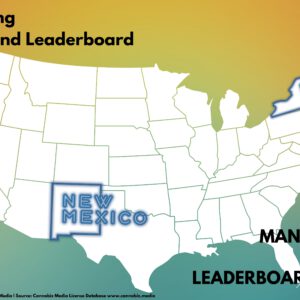
Cannabis manufacturing licenses grew 27% in 2024 with 945 new licenses, led by New York and New Mexico. The total number of manufacturers held steady at 5,940, highlighting the sector’s stability. Manufacturing licenses are valuable for brand development and white-label production, making them crucial assets in the evolving cannabis market. © CNB Media LLC dba Cannabiz Media

Source link

Thailand: Russians caught selling magic mushrooms for ‘stress relief’

Press Release: MAPS and Columbia University Partner on First-of-its-Kind Study of MDMA-Assisted Couples Therapy

Press Release: MAPS and Columbia University Partner on First-of-its-Kind Study of MDMA-Assisted Couples Therapy

he Multidisciplinary Association for Psychedelic Studies (MAPS) is a 501(c)(3) non-profit research and educational organization that develops medical, legal, and cultural contexts for people to benefit from the careful uses of psychedelics and marijuana. Anonymous survey with optional confidential interviews will document how practitioners facilitate MDMA-assisted couples therapy Findings to inform ethical guidelines, future clinical […]

Source link