
Golf is hot with “Stick” at Apple TV+ and “Happy Gilmore 2” in theaters. Forty-five years ago, it was the backdrop for Harold Ramis’ stoner comedy “Caddyshack” that starred “SNL” stalwarts Chevy Chase and Bill Murray.
Source link
Cannabis info and related links and post from around the web

Golf is hot with “Stick” at Apple TV+ and “Happy Gilmore 2” in theaters. Forty-five years ago, it was the backdrop for Harold Ramis’ stoner comedy “Caddyshack” that starred “SNL” stalwarts Chevy Chase and Bill Murray.
Source link


New Canadian research shows medical cannabis can help with pain, mood and quality of life, but outcomes vary widely by product, dose and patient.
As cannabis policy debates intensify across North America, a newly published Canadian study offers something that has become rare in the medical marijuana conversation: perspective.
The study, published online January 29 in the Canadian Journal of Pain, followed adult patients authorized to use medical cannabis across Canada for 24 weeks, tracking outcomes related to chronic pain, sleep, anxiety, depression and overall quality of life. The results show consistent, measurable improvements across multiple categories. They also show something that often gets lost in cannabis coverage. On average, the improvements were real but modest, the kind of signal clinicians take seriously while still pushing for clearer guidance on products and dosing.
That distinction matters, and it does not undermine cannabis. It grounds it.
Titled Canadian real-world evidence: observational 24-week outcomes for health care practitioner authorized cannabis, the paper draws on data from the ongoing Medical Cannabis Real-World Evidence study. Participants were adult patients authorized by health care practitioners to use medical cannabis and were able to select from Health Canada-verified products. Outcomes were measured using widely accepted clinical tools, including PROMIS Pain Interference, the Numeric Pain Rating Scale, GAD-7 for anxiety, PHQ-9 for depression and EQ-5D for quality of life.
Across nearly every measure, patients reported improvement. Pain interference scores declined. Anxiety and depression scores dropped. Sleep duration shifted modestly toward healthier ranges. Quality of life improved.
These changes were statistically significant, meaning they were unlikely to be due to chance. They were also real to the patients reporting them. But by week 24, the average changes did not reach the thresholds often used to define a clearly noticeable clinical improvement. That does not mean medical cannabis did not work. It means the average effect was not large and outcomes varied widely from patient to patient.
Most participants in the study were using medical cannabis primarily for chronic pain, with sleep issues, anxiety and depression also common indications. Improvements tended to appear early, often within the first six weeks, and then stabilized over time. Pain severity scores fell by a little over one point on a ten-point scale. Anxiety and depression scores declined by roughly two to three points. Quality-of-life scores improved modestly.
In medicine, averages matter, but they can also hide important differences. Some patients likely experienced meaningful relief. Others less so. The study’s authors repeatedly emphasize variability, noting that outcomes likely depend on factors such as product type, cannabinoid composition, dose, route of administration and individual patient context.
That variability is not a weakness of the data. It reflects the reality of cannabis.
Unlike a single standardized pharmaceutical, medical cannabis encompasses hundreds of products, wide ranges of THC and CBD concentrations and multiple methods of consumption. Expecting uniform outcomes from such a diverse therapeutic category has never been realistic. This study helps explain why.
The authors are careful not to overstate their findings. Rather than presenting cannabis as a cure, they describe it as a therapy that may offer incremental benefit for some patients, particularly in the early stages of treatment, while underscoring the need for better guidance around dosing, product selection and long-term use.
The study also acknowledges clear limitations. It was observational, not randomized and did not include a placebo group. Attrition was high, with roughly half of participants no longer reporting outcomes by week 24. Some patients cited cost, side effects or lack of perceived benefit as reasons for dropping out. Others stopped responding without explanation.
These challenges are common in long-term real-world cannabis research and are openly discussed by the authors. Rather than weakening the findings, that transparency strengthens them.
The study’s funding is also worth noting. It was partially backed by Medical Cannabis by Shoppers, Avicanna and the mymedi.ca platform, cannabis companies with little incentive to downplay results. Yet the paper resists hype, carefully outlining its limitations and avoiding sweeping claims. In a space often driven by promotion, that kind of restraint adds weight to the data.
In a cannabis landscape often dominated by extremes, this study occupies a more useful middle ground. It does not support fear-based narratives suggesting cannabis is ineffective or dangerous. It also does not reinforce cultural or commercial claims that cannabis is a universal solution for chronic pain, anxiety or sleep disorders.
Instead, it suggests something more grounded. Medical cannabis can help some patients in measurable ways, but outcomes are modest on average and highly individualized. That reality points not toward prohibition or hype, but toward better research, clearer labeling, improved patient education and more personalized approaches to treatment.
As cannabis continues its slow shift from counterculture symbol to regulated medical option, this kind of evidence is exactly what the field needs. Not sweeping claims, but careful data. Not miracles, but tools.
The takeaway is not that medical cannabis falls short. It is that cannabis science is growing up. And for patients, clinicians and advocates who care about long-term credibility, that is progress.
Photo by Sander Sammy on Unsplash
<p>The post Cannabis Can Be Medicine Without Being a Cure-All, New Research Shows first appeared on High Times.</p>

The House of Representatives passed a bill Thursday requiring certain people to report parents whose children smell like marijuana smoke. House Bill 72 by Rep. Patrick Sellers, D-Pleasant Grove, would require mandatory reporters to inform the Department of Human Resources when children smell of marijuana. The bill requires DHR to investigate these instances like suspected child […]
Source link

For decades, cannabis breeders grew the plant that everyone profits from. They selected, stabilized and preserved genetics under prohibition, often at real personal risk. Then legalization arrived, and much of that work was absorbed into the commercial market with little credit, less consent and almost no compensation.
Strains were renamed. Lineage was blurred. Provenance became a marketing suggestion rather than a fact.
Now, a new initiative is trying to formalize something the culture has long argued for but rarely enforced: if you use a breeder’s genetics, you ask permission, you give credit and you pay them.
That idea sits at the heart of a new program launched by Arcana Collective, which recently introduced what it calls the PAC framework. PAC stands for Permission, Acknowledgement and Compensation, and while it arrives via a company announcement, the idea itself cuts much deeper than any single brand.
At stake is a question that growers, breeders and even consumers increasingly care about. Who owns cannabis genetics, and who gets to benefit from them?
Cannabis genetics sit in a strange legal gray zone. Because the plant remained federally illegal for so long, traditional intellectual property protections were either unavailable or meaningless. Breeders relied on reputation, trust and community norms rather than contracts or courts.
When legal markets emerged, those informal protections collapsed. Genetics moved faster than the people who created them. Cuts changed hands. Seeds circulated. Commercial operators often treated elite genetics as raw material rather than authored work.
For growers, this created a familiar frustration. You could buy a cut called one thing in one state and another thing somewhere else. Claims of authenticity were hard to verify. And the people who actually created those plants were often invisible.
The PAC framework is simple by design. Before a breeder’s genetics enter Arcana’s library or are used commercially, there must be explicit permission. The breeder must be publicly acknowledged. And compensation must be built into the relationship.
That might sound obvious, but in cannabis, it is not standard practice.
Arcana’s first PAC partners include breeder Marty Calabrese, known for Triangle Kush, and Shannon Risden and Nick Risden, associated with Bickett OG. Rather than stripping those genetics of their history, the framework is designed to preserve lineage and formally connect plants back to the people who developed them.
Whether PAC becomes a meaningful industry standard or just one company’s policy remains to be seen. But the fact that it exists at all signals a shift.
For growers, this is not an abstract ethics debate. It is about access, trust and long-term value.
As genetics become more centralized through tissue culture, licensing and verified libraries, the question of legitimacy will matter more. Growers will increasingly need to know not just what a strain is called, but where it came from and under what terms it is being used.
A framework like PAC offers a way to evaluate genetics providers beyond hype. Did the breeder consent? Are they named? Are they still involved? Is compensation ongoing or symbolic?
Those questions help growers avoid investing time and money into genetics that may later become legally or culturally contested.
One detail worth noting is how restrained the rollout is. There are no claims that PAC will solve genetic theft overnight. No declarations that this is the future of cannabis. Just a framework and two initial partnerships.
That restraint matters, especially in an industry where grand claims are common.
It also matters that this effort centers breeder relationships rather than strain branding. The focus is not on launching new products, but on how collaboration happens upstream.
Cannabis is entering a phase where culture and commerce are finally colliding at the genetic level. As companies race to secure exclusive cultivars and defend intellectual property, the industry is being forced to answer uncomfortable questions about ownership, credit and extraction.
Breeders have been warning about this for years. PAC is not the only response, but it is one of the clearest attempts to put shared values into a formal structure.
For High Times readers, especially growers and longtime heads, the takeaway is not that Arcana necessarily has the answer. It is that the conversation is finally moving in the right direction.
Cannabis was built on collaboration, not erasure. If the legal industry wants legitimacy, it will need to respect the people who built the plant before it was profitable.
Whether PAC becomes a model or a footnote will depend on whether others follow it, improve it or challenge it. Either way, breeders are no longer invisible, and that alone marks a shift worth paying attention to.
Photo: Shutterstock
<p>The post Cannabis Was Built by Breeders. The Legal Market Is Being Forced to Acknowledge That first appeared on High Times.</p>
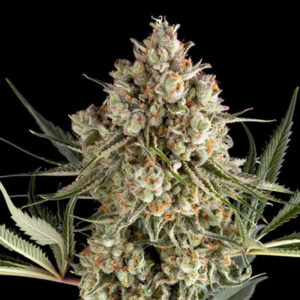
In this report, we’ll go over our time with Big Berry Boom Boom Feminized, a 65% sativa hybrid known for its explosive high. These plants are quite lanky and can grow rather tall if not flowered early. Beyond their height, Big Berry Boom Boom requires a decent footprint, but we found the quality and quantity of the buds to be worth the extra hassle.
The post Big Berry Boom Boom Feminized Grow Report appeared first on Sensi Seeds.



Turning Point Brands is a U.S.-based consumer products company focused on branded tobacco, nicotine, and smoking-accessory categories, with diversified distribution across mass retail, specialty, and alternative channels.

Partner Content
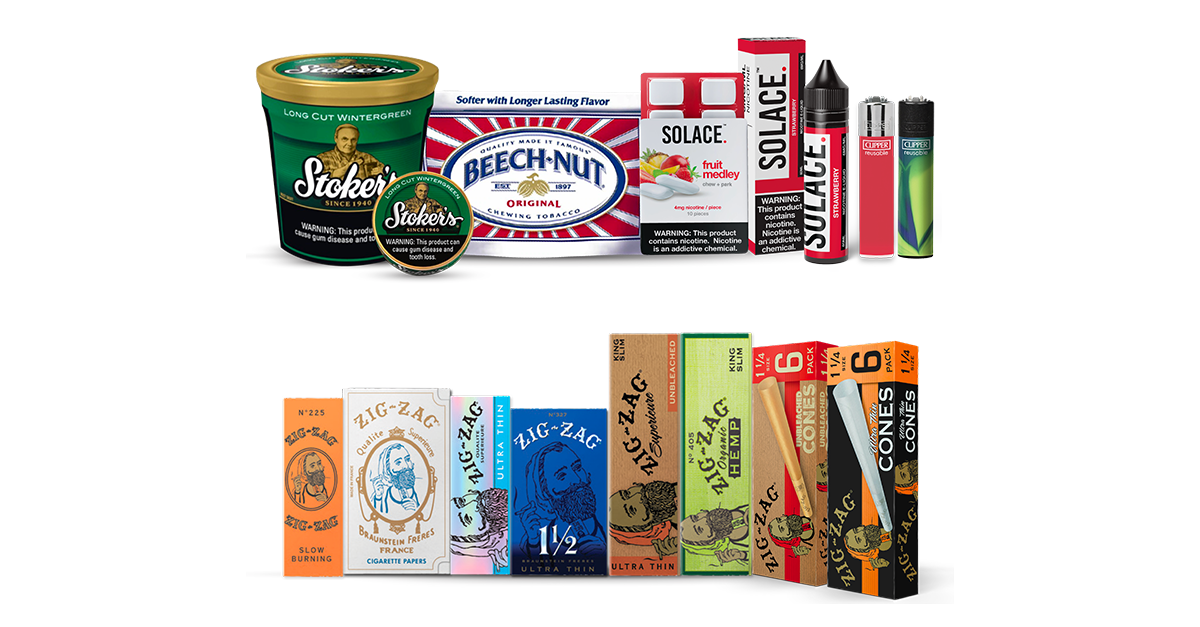
Turning Point Brands, Inc. is a publicly traded consumer products company headquartered in Louisville, Kentucky, and listed on the New York Stock Exchange. Founded in 2004, the company manufactures, markets, and distributes branded consumer products with active ingredients through two primary segments: Zig-Zag Products and Stoker’s Products.
The Zig-Zag Products segment features the world-famous Zig-Zag brand, established in 1879 and recognized as the leading premium rolling paper in the United States and Canada. The brand’s portfolio includes rolling papers, cigar wraps, pre-rolled cones, tubes, finished cigars, and cannabis accessories such as grinders and rolling tips. In 2022, the company secured exclusive U.S. and Canadian distribution rights for CLIPPER lighters, the world’s leading reusable lighter brand.
The Stoker’s Products segment encompasses moist snuff and loose-leaf chewing tobacco products under brands including Stoker’s, Beech-Nut, Durango, Trophy, and Wind River. Stoker’s, with heritage dating to 1940, competes strongly in the chewing tobacco segment.
Turning Point Brands distributes its products through over 215,000 retail outlets across North America, including convenience stores, tobacco outlets, and mass merchandisers. The company has also made strategic investments in cannabis-adjacent businesses, including dosist, Old Pal, and Docklight Brands (Bob Marley cannabis products), positioning itself for growth in the evolving cannabis market.

/* Hide default post title */
h1.entry-title {
display: none !important;
}
/* Full-bleed hero image section */
.cover-feature .hero-image-container {
width: 100vw;
position: relative;
left: 50%;
transform: translateX(-50%);
margin: 0;
overflow: hidden;
}
.td-post-content .cover-feature .hero-image-container,
.container .cover-feature .hero-image-container {
max-width: 100vw !important;
width: 100vw !important;
margin: 0 auto !important;
}
/* Hide author, date, and meta */
.byline,
.byline-block,
.byline-author,
.byline-detail,
.td-post-author-name,
.td-post-date,
.td-post-meta,
.entry-meta {
display: none !important;
margin: 0 !important;
padding: 0 !important;
height: 0 !important;
overflow: hidden !important;
}
/* Hide category label */
.td-post-category,
.td-category,
.td-post-header .td-post-category,
.td-post-header .td-category {
display: none !important;
margin: 0 !important;
padding: 0 !important;
height: 0 !important;
overflow: hidden !important;
}
/* Hide theme featured image */
.td-post-featured-image,
.wp-post-image,
.post-thumbnail,
.td-post-header .entry-thumb,
.td-post-header img.wp-post-image,
.td-post-header .td-post-featured-image img,
.entry-featured-image,
.featured-media {
display: none !important;
height: 0 !important;
margin: 0 !important;
padding: 0 !important;
overflow: hidden !important;
}
/* Hide inline ads and related content */
.td-a-rec,
.td-post-content .td-a-rec,
.td-a-rec-id-content_inline,
.td-a-rec-id-content_bottom,
.td-a-rec-id-content_after,
.td_block_related_posts,
.td-post-content .td-a-rec-container,
.td-a-rec-container,
.advertisement,
.td_block_ad_box,
.td-related-title,
.td-post-related,
.td-post-next-prev,
.td-related-bottom {
display: none !important;
height: 0 !important;
margin: 0 !important;
padding: 0 !important;
overflow: hidden !important;
}
/* ✅ FIX: Remove rogue white spacer ABOVE footer only */
.td-main-content-wrap + div:not([class]) {
display: none !important;
height: 0 !important;
margin: 0 !important;
padding: 0 !important;
overflow: hidden !important;
}
/* Prevent horizontal scroll */
html,
body {
overflow-x: hidden;
}
.tdc-row[style*=”height:50px”],
.tdc-row > .vc_column[style*=”height:50px”] {
height: 0 !important;
margin: 0 !important;
padding: 0 !important;
overflow: hidden !important;
display: none !important;
}
.vc_column.tdi_27.wpb_column.vc_column_container.tdc-column.td-pb-span12 {
display: none !important;
height: 0 !important;
margin: 0 !important;
padding: 0 !important;
overflow: hidden !important;
}

Two summers ago, Jimmy Buffett, Paul McCartney and their wives Jane and Nancy and friends had dinner at McCartney’s house. At one point, Nancy stumbled and then blurted out, “The gummies just kicked in.” Buffett decided to write a song about it, featuring Macca on bass.
Source link

One of the most common arguments in favor of legalizing cannabis is that it takes the industry out of the hands of the black market.
Since this (generally) means safer products, tax revenue and less youth access, cannabis advocates often put this forwards as one of the key cornerstones of their position. But since about half of the country has already legalized cannabis, we should ask: is this really true?
Continuing our series of the Best Arguments for and Against Cannabis, we’re looking in depth at black markets and the legality of cannabis.
No…
Yes…
It is an undeniable fact that black markets still exist in states with legal cannabis. In fact, legalizing cannabis may even strengthen the black market in several ways, depending on how governments handle legalization.
New York is one of the most obvious examples of this problem. The state legalized cannabis in 2021, but the first legal dispensary didn’t open until the end of 2022. This resulted in a thriving “gray market.” Sellers attempted to stay on the right side of the law by offering cannabis in exchange for “donations.” They thought this would technically render their sales legal “gifting” of cannabis.
However, and quite obviously, this was not really what politicians intended by allowing the gifting of cannabis. Lawmakers quickly clarified that this still counts as an illegal sale. This didn’t stop the illegal sales, though.
This isn’t the only reason a legalized system can have problems with black markets. Leafly’s Opt Out Report from 2022 laid out a very clear argument – with supporting evidence – that states with fewer dispensaries per capita generally capture less of the market with legal sales. The most extreme example in the report was New Jersey. They had only 0.3 dispensaries per 100k residents, and consequently 80% of sales were on the black market.
California is a more informative case, though. Despite having legalized in 2016, six years before Leafly’s report, the state only had 3 stores per 100k residents at the time of the report. 55% of sales were still taking place through the black market. This was driven by the ability of local areas to “opt out” of legal cannabis sales in their community. This left large parts of the state with no legal cannabis dispensaries.
Leafly estimates that people are willing to travel just under 15 minutes to buy cannabis. If the nearest dispensary is farther away than that, then the black market immediately gets a potential customer.
Before we go further into the reasons, it’s important to note that it is unambiguously true that black markets still exist in legal states – even those with great dispensary coverage.
Legalization also sets up a situation that is beneficial to the black market in some ways. Firstly, the fact possession of cannabis is legal means that there is less risk for the sellers and basically no risk to the buyers. Once you have the weed, there’s no risk as a buyer. If you’re dealing, all you have to do is make sure you only hold up to the allowance at any one time – even if you have more at home.
Secondly, as it’s generally legal to grow at least a little, there are many problems with illegal crops hidden amongst legal ones or just straight out illegal growing operations. This plus occasional oversupply issues in the legal market (and easy diversion across state lines) makes it easier for the cannabis to get into the hands of illegal sellers and plays into the next issue: prices.
Since the legal cannabis industry comes with fees, taxes, property costs and more, the cost tends to be a little higher, especially early on. This gives the black market a distinct advantage right out of the gate. They have customers already – since weed was illegal before it was legal. Moreover, they can keep costs down thanks to a ready supply of cannabis and very few overheads.
And finally, as discussed above, your local dealer is local, but your closest dispensary might not be.
Overall, there are many factors that give black markets an extra boost when a state legalizes cannabis.
While it’s true that all legal states have some black market sellers, it can be effectively minimized with good management. In Colorado, for example, based on Leafly’s 2022 report, the illicit market only accounts for 1% of total sales, meaning the legal market controls basically everything.
The simplest reason for this is the double-digit number of stores per 100k residents (18, for Colorado) and generally good prices, with a 15% tax in most cases.
While the quote is from a different industry, Gabe Newell, CEO of Valve (who run Steam), pointed out with regards to media piracy “The easiest way to stop piracy is not by putting antipiracy technology to work. It’s by giving those people a service that’s better than what they’re receiving from the pirates.”
And this is an equally valid point here: you stop black markets by giving a better service than the black market dealers. In Colorado, you’ll probably have a dispensary reasonably close to your home and the price is not going to much higher than it would be on the black market. Generally, if you give people the service they want, they will not be interested in going to an illegal seller. Who would buy untested weed for the same price as carefully-grown, fully-tested and reliable cannabis?
In other cases, the problems are so obvious it is almost not worth mentioning. If you do something like New York – legalize possession over a year before you allow people to buy it legally – you don’t have to be an economist or psychologist to work out the consequences. This is just a terrible idea, and blaming cannabis legalization for the consequences rather than awful planning is simply not an honest assessment.
With black markets being the “standard” way to buy cannabis for many, many years, it’s easy to forget or brush over the consequences. So let’s lay them out clearly:
It’s hard to argue with the overall point that legalization doesn’t entirely stop black markets. In some cases, the consequences of this could be serious. However, this doesn’t rise to the level of a reason not to legalize. It’s more of a reason to handle legalization sensibly and to guard against unintended consequences.
Allowing localities to “opt out” of cannabis businesses might seem like a good idea, but the reality is that it actually means opting out of legal businesses, not cannabis trade altogether. This should be clearly conveyed, and the ability to opt out should be limited, so consumers all across the state have a convenient location to make purchases from. Similarly, taxes should be imposed but lawmakers should be mindful of the end-price for the consumer, so it doesn’t end up much more expensive than black market sellers.
Unfortunately, even taking all of these steps probably won’t completely kill the black market. With cannabis being easy to grow and there always being some potential for profit, it’s likely that there will always be some small black market. It’s akin to how even though the US has strong control over the alcohol market, there is still some “fake alcohol” sold on the black market. No matter what you do, there will always be some moonshiners.
Barcott, B., & Whitney, B. (2022). ‘Opt-out’ towns are encouraging illegal marijuana sales. Leafly. https://leafly-cms-production.imgix.net/wp-content/uploads/2022/09/21143531/OptOutReport2022.pdf
About the source:
Herrington, A. J. (2022, July 11). New York cracking down on unlicensed weed dealers. High Times. https://hightimes.com/news/new-york-cracking-down-on-unlicensed-weed-dealers/
About the source:
Kaste, M. (2018, May 16). Despite legalization, marijuana black market hides in plain sight. NPR. https://www.npr.org/2018/05/16/610579599/despite-legalization-marijuana-black-market-hides-in-plain-sight
About the source:
Kuznia, R., Glover, S., Abou-Ghazala, Y., Lah, K., & Xiong, Y. (2024, August 31). The pot farm next door: Black market weed operations inundate California suburb, cops say. CNN. https://edition.cnn.com/2024/08/31/us/california-black-market-marijuana-grow-houses-invs/index.html
About the source:
Ramanathan, L. (2024, November 4). How marijuana legalization played itself. Vox. https://www.vox.com/the-highlight/379796/marijuana-legalization-black-market-drug-war-raids
About the source:
Tobiassen, R. (2014). The “fake alcohol” situation in the United States: The impact of culture, economics and the current regulatory system. Center for Alcohol Policy. https://www.centerforalcoholpolicy.org/wp-content/uploads/2015/04/The_Fake_Alcohol_Situation_in_the_United-States_compressed.pdf
About the source:
The post If Black Markets Still Exist in a Legal System, Why Legalize at All? appeared first on CBD Oracle.