
Cannabis Isn’t the Most Harmful Substance. Alcohol and Tobacco Are. Duh. Science Says So, Again.

Cannabis Isn’t the Most Harmful Substance. Alcohol and Tobacco Are. Duh. Science Says So, Again.


Cannabis Isn’t the Most Harmful Substance. Alcohol and Tobacco Are. Duh. Science Says So, Again.

For decades, cannabis has been treated as a public menace while alcohol and tobacco were folded into daily life, policy frameworks and corporate profit models. A newly published scientific analysis out of Canada once again flips that logic on its head.

A peer-reviewed study published January 27 in the Journal of Psychopharmacology finds that alcohol and tobacco cause far greater overall harm to both individuals and society than cannabis. The research evaluates not just health risks, but the broader social damage associated with drug use, including injury, economic cost and harm to others.

The paper, titled Drug harms in Canada: A multi-criteria decision analysis, was authored by an international group of researchers and can be accessed here.

The findings are striking but consistent with prior global research. When all factors are weighed together, alcohol ranks as the most harmful drug overall, followed by tobacco. Cannabis sits far lower on the scale.

How the study measured harm

The researchers used a method known as multi-criteria decision analysis, a framework previously applied in the United Kingdom, the European Union, Australia and New Zealand.

A panel of 20 experts from six Canadian provinces evaluated 16 psychoactive substances, including alcohol, tobacco, cannabis, cocaine, methamphetamine, opioids and benzodiazepines. Each substance was scored across 16 categories of harm.

Ten categories measured harm to the user, including mortality risk, physical health damage, mental health impact and dependence. Six additional categories measured harm to others, including motor vehicle injuries, violence, environmental damage and economic cost.

After scoring each substance and weighting the relative importance of each category, alcohol emerged as the most damaging overall, with a cumulative harm score of 79. Tobacco followed at 45. Cannabis scored 15.

In other words, cannabis ranked far below alcohol and tobacco in terms of total population-level harm.

This isn’t new. That’s the point.

The Canadian findings align closely with earlier studies led by British neuropsychopharmacologist David Nutt, including a landmark 2010 Lancet paper that first drew international attention to alcohol’s outsized harm.

More recently, a 2024 U.S. study published in the Journal of Studies on Alcohol and Drugs found that secondhand harms from alcohol use were substantially more prevalent than harms caused by other drugs.

The consistency across countries and methodologies matters. These findings are not an outlier, and they are not driven by cannabis advocacy. They are driven by data.

What the study does and doesn’t say

The authors are careful to clarify that these harm scores reflect population-level impact, not the inherent danger of a substance in isolation.

Alcohol’s high ranking is not only about toxicity. It reflects how widely alcohol is used, how socially normalized it is and how weakly it is regulated relative to its risks.

Cannabis, by contrast, scores lower in part because it causes fewer harms to others. It is far less associated with violence, fatal accidents and long-term disease burden at the population level.

At the same time, the study does not claim cannabis is harmless. It acknowledges health risks, particularly for certain populations and patterns of use. The takeaway is not that cannabis should be ignored by regulators, but that drug policy should be proportional to actual harm.

As the authors note, the findings also reflect the current policy environment. Alcohol’s high harm score underscores what they describe as a failure to adopt proven policies to reduce alcohol-related damage, despite decades of evidence.

Why this matters now

As cannabis legalization continues to evolve across North America, the disconnect between scientific evidence and public policy remains stark.

Cannabis businesses face advertising bans, banking restrictions and criminal penalties that alcohol and tobacco companies do not. Meanwhile, alcohol remains deeply embedded in social life despite its well-documented risks.

This study does not argue for replacing one substance with another. It argues for honesty.

If governments claim to base drug policy on public health, then the relative harms of substances must be acknowledged. Otherwise, enforcement becomes less about safety and more about tradition, stigma and political convenience.

For readers who have long questioned why cannabis is treated differently, this research provides something valuable: confirmation grounded in evidence, not rhetoric.

The data is not radical. The implications are.

Photo: Shutterstock

<p>The post Cannabis Isn’t the Most Harmful Substance. Alcohol and Tobacco Are. Duh. Science Says So, Again. first appeared on High Times.</p>


Source link

California Cops Have To Treat Marijuana In Cars Differently After New Supreme Court Ruling

California Cops Have To Treat Marijuana In Cars Differently After New Supreme Court Ruling

California Cops Have To Treat Marijuana In Cars Differently After New Supreme Court Ruling

“To constitute a violation…marijuana in a vehicle must be of a usable quantity, in imminently usable condition, and readily accessible to an occupant.”

By Nigel Duara, CalMatters

This story was originally published by CalMatters. Sign up for their newsletters.

When it comes to impaired driving and the state’s open container law, a rolled and ready joint is more like a can of beer in giving police cause to search a car than a few crumbs of marijuana, according to the California Supreme Court.

The court’s reasoning: You can smoke a joint and drink a beer, but loose marijuana isn’t readily consumable.

In a ruling handed down on Thursday, the high court ruled that police must find marijuana in a condition that’s ready to be smoked if they are going to charge a driver with an open container violation.

“We hold that at a minimum, to constitute a violation of [the open container law], marijuana in a vehicle must be of a usable quantity, in imminently usable condition, and readily accessible to an occupant,” wrote Associate Justice Goodwin Liu in a unanimous opinion.

Loose marijuana found on a car’s floorboards is like spilled beer, the court ruled.

“In assessing whether the marijuana is imminently usable or readily accessible, courts should consider whether the marijuana could be consumed with minimal effort by an occupant of the vehicle,” the court found.

The ruling reversed a magistrate judge, trial court and the California Court of Appeal, which had all agreed that the loose marijuana constituted an open container violation and gave police cause to search a vehicle.

Recreational marijuana has been legal in California since 2016 when voters passed an initiative allowing it. It remains illegal under federal law.

The case at issue was out of Sacramento, where police officers stopped a car and searched it, finding 0.36 grams of marijuana crumbs on the floorboards of the backseat, along with a tray on which to roll joints. The driver hadn’t been driving erratically, her registration and license were unblemished and she had no warrants out.

“No officer suggested he was concerned that [the driver and passenger] could have somehow, while riding in the front of the car, collected the scattered bits of marijuana from the rear floor behind [the passenger] for imminent consumption,” the court ruled. “Nor was there evidence of paraphernalia, such as matches, lighters, rolling papers, blunts, or vaporizers, that could facilitate the marijuana’s consumption.”

The Supreme Court also found that the officers did not have probable cause to search the car in the first place. The police had argued that the driver’s nervousness and possession of a rolling tray was sufficient to search the car, an argument the court rejected.

This article was originally published on CalMatters and was republished under the Creative Commons Attribution-NonCommercial-NoDerivatives license.

The post California Cops Have To Treat Marijuana In Cars Differently After New Supreme Court Ruling appeared first on Marijuana Moment.

Source link

Woodstock to Screen Documentary Exploring Cannabis and Creativity

Woodstock to Screen Documentary Exploring Cannabis and Creativity

Woodstock to Screen Documentary Exploring Cannabis and Creativity

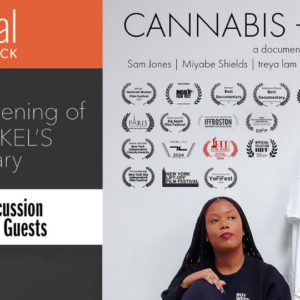
On February 12, HERbal Woodstock will host a free public screening of Cannabis + Creativity at the historic Bearsville Theater, bringing together cannabis culture, artistic expression and local community under one roof.

Directed and produced by Elana Frankel, the award-winning documentary explores how cannabis intersects with creative practice across disciplines. The film follows six artists, including a chef, musician, poet, jazz singer, creative director and scientist, offering an intimate look at how the plant shapes imagination, process and perspective.

Following the screening, attendees are invited to stay for a live panel discussion moderated by HERbal Woodstock co-owner Melissa Gibson, featuring Frankel and special guests. The conversation is designed to dig deeper into cannabis as a cultural tool rather than a commodity, especially in a town long associated with counterculture, music and art.

The event is free and open to the public for guests 21 and over, with advance RSVPs encouraged. Sponsored by several New York cannabis cultivators and producers, the night reflects a broader trend in legal cannabis toward education, dialogue and community-rooted programming rather than traditional retail marketing.

For Woodstock, where cannabis and creativity have long been intertwined, the screening feels less like a special event and more like a continuation of a story still being written.

<p>The post Woodstock to Screen Documentary Exploring Cannabis and Creativity first appeared on High Times.</p>

Source link

Alabama Lawmakers Pass Bill To Increase Penalties For Smoking Marijuana In A Car Where A Child Is Present

Alabama Lawmakers Pass Bill To Increase Penalties For Smoking Marijuana In A Car Where A Child Is Present

Alabama Lawmakers Pass Bill To Increase Penalties For Smoking Marijuana In A Car Where A Child Is Present

“It goes back to the heart of criminalization of marijuana in certain communities. And those are communities that are communities typical of people of color.”

By Andrea Tinker, Alabama Reflector

The Alabama House of Representatives Thursday passed a bill that prohibits smoking or vaping marijuana in a car with children.

HB 72, sponsored by Rep. Patrick Sellers, D-Pleasant Grove, would make it a Class A misdemeanor, punishable by up to a year in jail,  for those who smoke marijuana in a car with a child under 19.

The bill passed 77-2 after an unusual debate largely limited to the 29 Democrats in the 105-member chamber over potential unintended consequences. Most Democrats abstained from the vote. Four voted in favor; Reps. Mary Moore, D-Birmingham and TaShina Morris, D-Montgomery, voted against the bill.

“It’s about protecting the children, protecting every single child in the state of Alabama,” Sellers said after the meeting. “And that’s the motivation behind making sure that every child has the 100 percent ability to learn in the best environment that they can and keep them safe.”

Under the bill, individuals who are found to have smoked marijuana in the car with a child would be required to go through an educational program conducted by the Department of Public Health and would be reported by law enforcement to local county human resources departments.

Several Democrats who spoke on the measure cited the toll that harsh drug laws had taken on minority communities.

“It goes back to the heart of criminalization of marijuana in certain communities,” Rep. Juandalynn Givan, D-Birmingham, said after the meeting. “And those are communities that are communities typical of people of color.”

Givan also said House Democrats had wanted to work with Sellers on the bill.

“The Democratic Party, on several attempts, said that this is a bill that we might need to sit down and curate,” she said. “I’m not sure why the sponsor of the bill did not do that.”

Morris raised concerns about the bill’s definition of a child during debate.

“So we’re making a parent responsible for an 18-year-old who has a marijuana smell on them,” she said. “We know at the ages of 16 and 17, especially with the influence of walking outside and going different places, that they are smoking, maybe without the parent even knowing.”

Rep. Rolanda Hollis, D-Birmingham, said during debate that parents don’t know everything that their child does.

“As a parent you may not know, and here I don’t know if the counselor or the principal can call you in to say ‘Hey this is what we smelled on your kid’s jacket, how are we gonna handle this?’ But instead you got me going to a class for something I don’t even know about,” she said.

When asked after the meeting about Morris’ concerns about the bill’s language regarding age, Sellers said parents should “stop making excuses” for their children.

“You know whether or not your child is smoking marijuana. If someone lives in your house, you know they’re smoking marijuana because you can smell it. It’s a distinct smell,” he said.

Sellers was also asked how the bill would be implemented if all of the individuals in the car are high school students who have been smoking marijuana. He said the high schools are already mandatory reporters who have a process in place.

Messages seeking comment were left with the Alabama State Department of Education and the Department of Human Resources Thursday.

When asked about the bill Thursday evening, House Minority Leader Anthony Daniels, D-Huntsville, said “some people don’t know fat meat is greasy,” a saying used to describe someone who must learn a lesson a hard way.

The bill moves to the Senate.

This story was first published by Alabama Reflector.

The post Alabama Lawmakers Pass Bill To Increase Penalties For Smoking Marijuana In A Car Where A Child Is Present appeared first on Marijuana Moment.

Source link

Ayurcann Obtains Creditor Protection to Pursue Restructuring, Sale

Ayurcann Obtains Creditor Protection to Pursue Restructuring, Sale

Ayurcann Obtains Creditor Protection to Pursue Restructuring, Sale

TORONTO – Ontario Superior Court of Justice (Commercial List) granted Ayurcann Holdings Corp. and its subsidiary Ayurcann Inc. creditor protection under the Companies’ Creditors Arrangement Act (CCAA). The Court appointed Alvarez & Marsal Canada Inc. to oversee the proceedings.

The initial court order provides for, among other things, a stay of creditor claims and proceedings for an initial period of 10 days, subject to extension thereafter as the court deems appropriate. The CCAA proceedings and the stay will provide Ayurcann with the time and stability required to continue operating in the ordinary course while considering potential restructuring alternatives.

Ayurcann intends to seek court approval to launch a sale of the business and assets as well as approval of debtor-in-possession financing.

Trading of Ayurcann’s common shares on the Canadian Securities Exchange (CSE) may be halted for a period of time and, as a result of having filed for protection under the CCAA, Ayurcann may be suspended or delisted by the CSE.

Source link