
Cannacurio 118: Licensing Recap Q3 2025 | Cannabiz Media
1,256 new licenses were issued for all activities in Q3 2025, down (11%) from 1,417 in Q2 2025. © CNB Media LLC dba Cannabiz Media
Source link
Cannabis info and related links and post from around the web
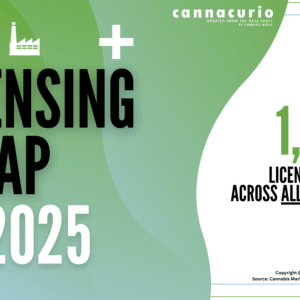
1,256 new licenses were issued for all activities in Q3 2025, down (11%) from 1,417 in Q2 2025. © CNB Media LLC dba Cannabiz Media
Source link



Emerald Intel has acquired Cannabiz Media, uniting two of the cannabis industry’s leading data and intelligence providers. This acquisition brings together Emerald Intel’s global license, compliance, and sales data with Cannabiz Media’s robust database of licensed businesses and key decision-makers. The result is the most comprehensive, reliable, and actionable view of the licensed cannabis market—empowering sales, marketing, finance, and compliance teams to make smarter, data-driven decisions. © CNB Media LLC dba Cannabiz Media
Source link


Dogs living with chronic health issues deserve comfort, relief, and a better quality of life. Medical marijuana, particularly hemp-derived options, has drawn attention as an alternative way to support their well-being. As research expands, veterinarians …
Continue reading “The Role of Medical Marijuana in Managing Chronic Conditions”

Stephen Colbert coyly confided he tried psilocybin mushrooms at least once, in college, during a “Late Show” interview with psychedelics expert Michael Pollan on July 20. “It was horrible,” the host recalled.
Source link

As incoming European markets look towards alternative delivery mechanisms like oils and vaporisers, more mature markets like the UK remain dominated by traditional dried cannabis flower, representing around 80% of all prescriptions.
Despite conistent double digit growth, rising 262% since 2022 and seeing 10 tonnes of flowers prescribed in 2024, the UK still lacks a centralised tracking system, mandatory product registry, or official source for patient feedback other than individual private clinics.
This not only means that analysts and industry stakeholders are left to trudge through messy Freedom of Information (FOI) data to gauge the size of the market and the shifting trends within it, but it also creates space for private companies in a position to amass this data to dominate.
Now, a new platform aiming to be the ‘Trustpilot of medical cannabis’ is hoping to help democratise this data and put it in the hands of patients.
Arron Dando, the creator of CannaBias, told Business of Cannabis: “I found that I seemingly go to multiple different sites to understand what it is that I’m purchasing. Sometimes I don’t know if it’s a sativa or an indica. It’s really quite tricky for me as a patient to actually understand what it is that I’m getting.”
CannaBias, now in early access, positions itself as a ‘moderated, safe and independent review platform’ for UK medical cannabis patients, providing verified, batch-by-batch feedback on their prescribed products.
Its creator, Dando, says that his background developing ‘safety-critical’ software for the UK’s national infrastructure has shaped his approach to medical cannabis and his new platform.
“If you drive a car, you’ve probably driven past an AI system that I put on the highways,” he explained. “It applies quite neatly to medicinal cannabis because, again, it’s a heavily regulated safety-critical industry.”

Its inception, he explains, stems from his own frustrations as a patient: “I may go online, I see something working well that could be worth trying, but then I get it, and it doesn’t match the review. That could be because that person’s biased, or it could be because the batch quality is not consistent.”
With this issue front of mind, CannaBias is engineered to track reviews at the batch level, rather than simply by the product name, and well beyond the point of delivery to a patient’s door.
“At the moment, the traceability stops at the door. The prescription is handed over, and that seems to be the end of it.
“We can tell on average, across the whole data landscape, whether the consistency is varying a lot, or maybe there’s quality control issues that we’re able to pick up quicker.”
While feedback is shared with individual clinics, it’s often sporadic and rarely neutral.
“If you have five or 10 people saying there’s an issue with this product, that’s much more reputable than one person contacting their clinic and then that clinic contacting the pharmacy or the cultivator.”
Many of the issues CannaBias is targeting mirror those highlighted in an October 2025 themed review of 25 pharmacies regularly supplying CBPM prescriptions.
In the review, conducted by the General Pharmaceutical Council 68 discrete concerns were identified across the various pharmacies. While 17 pharmacies met all standards, eight failed to comply fully. The GPhC report noted that CBPM dispensing has ‘devolved into putting it in a box and shipping it,’ with little or no pharmacist-patient contact.
“What industry do we have where a product is manufactured, and they don’t actually get user feedback? There’s all this data out there at the moment, but it’s just not meaningful. It can’t be used in a way that actually benefits anybody.
“Medbud Wiki has lots of information there, and that’s valuable, most definitely, but I find it quite hard to use, quite complicated and not really patient-friendly. I don’t trust that the information is accurate all the time. If you have one person’s review, it’s biased, but if you have 100 people’s reviews, suddenly you’re removing the bias.”
The post New Platform Aims to Become ‘Trustpilot for Medical Cannabis’ with Verified Patient Reviews appeared first on Business of Cannabis.

Struggling to fall asleep, many young adults are reaching for marijuana or alcohol at bedtime, a University of Michigan study found.
U-M’s annual Monitoring the Future Panel study found that 22% of adults between the ages of 19 and 30 used either cannabis, alcohol or both to sleep.
Of the two, marijuana was more common, with 18% using the drug to fall asleep, compared to 7% of participants who used alcohol.
While advocates say cannabis can be a low-risk alternative to sleep medications, using drugs or alcohol for sleep could “backfire because they can interfere with the ability to stay asleep and with the quality of sleep,” said Megan Patrick, research professor at the Institute for Social Research at U-M.
“They appear to actually disrupt sleep in the long term. The fact that so many young adults reported that they use cannabis to sleep is alarming.”
Sleep deprivation, or the lack of sleep, is a common condition that many Americans experience, according to a study published in the National Library of Medicine. It is generally recommended that adults get between 7-9 hours of sleep per night. If not, it can lead to excessive daytime sleepiness.
Factors like excessive screen time before bed can prevent the brain from releasing melatonin, the “sleep hormone.”
People who work early morning or late night shifts tend to have a harder time falling asleep and generally get fewer hours of sleep, according to the study.
“Unfortunately, there is a misconception that substance use can be helpful for sleep problems, but it can make things worse,” Patrick said. “High-quality sleep is critical for mental health and regulating mood. Young adults told us that they are using cannabis to try to get to sleep, but doing so may make their sleep problems even worse. They need to know the potential risks.”
While medical experts warn that relying on substances to sleep can increase the risk of dependency or substance abuse, cannabis advocates argue that, when used responsibly and in the right doses, the drug can offer real benefits for those struggling to fall asleep naturally.
Cannabis has become more widely accepted in recent years, particularly for its medicinal benefits. Michigan voters approved a measure to legalize medical marijuana use in 2008 and later approved recreational use in 2018.
A 2023 study published by the National Library of Medicine found that participants who used cannabis were able to reduce or completely stop prescription medication to help aid them with sleep.
“We sell thousands of packs of sleep gummies every week. I didn’t realize how many people had sleep problems,” said Jerry Millen, owner of Greenhouse dispensary in Walled Lake. “A lot of seniors can’t sleep, and a lot of young people now are stressed out and they can’t sleep either.”
The study found that cannabis that contains low levels of THC, a psychoactive cannabinoid that can produce relieving, sedative or euphoric effects, can help ease falling asleep and increase lower sleep time.
Cannabis that contains a high concentration of CBD, a nonpsychoactive cannabinoid, can have a sedating effect, while a lower dosage can actually have a stimulating effect.
“People are getting off opioids with cannabis. People are replacing alcohol with cannabis,” Millen said. “If you have a vice and you want to ‘abuse’ something, I suggest you use cannabis.”
The Centers for Disease Control and Prevention recommends that adults get at least seven hours of sleep each night.
Getting good quality sleep can decrease the number of times you get sick, maintain a healthy weight, reduce stress and improve your heart health and metabolism.
The CDC offers several recommendations for getting better, more restful sleep:
Article originally written by Janelle D. James with Bridge Michigan
This article first appeared on Bridge Michigan and is republished here under a Creative Commons Attribution-NoDerivatives 4.0 International License.
The post U-M Study: 1 in 5 Young Adults Using Marijuana, Alcohol to Fall Asleep appeared first on Weedmaps News.