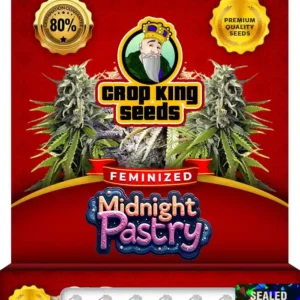
Midnight Pastry produces thick, beautiful buds that highlight the top-tier genetics of its famous family tree. The aroma is incredibly sweet, offering an immediate fruity and candy-like scent. As you exhale, you will notice a smooth blend of sour citrus and ripe berries with a hint of earthy spice. The effects begin with a gentle, happy buzz in the head that immediately lifts your mood. Before long, that feeling spreads into a deep physical relaxation that makes your body feel light and calm. This strain is excellent for easing stress or if you just intend to prepare for a peaceful night.
Karma Koala Podcast 287: Pamela Epstein Chief Legal & Regulatory Officer Nexus Agriscience. Re Hemp, “We are Children of Metamorphosis”
https://open.spotify.com/episode/6wTpFB7ok4qeS1pS98le5F?si=8be4ba3acff54e84 DOWNLOAD THE PODCAST HERE https://www.podomatic.com/podcasts/karmakoalapodcast/episodes/2026-01-31T02_20_11-08_00 Great chat with Pamela holed up in DC in the middle last week’s east coast snowstorm about all things hemp. Nexus create products from industrial hemp and that lands them in the middle of every sort of storm imaginable. Snowstorms, perfect storms and yes, shitstorms too. With years of […]
In one of the latest amici briefs to be filed ahead of oral arguments in a case before the court, U.S. vs. Hemani, NRA called on justices to uphold a lower court ruling that found the federal statute known as 18 U.S.C. § 922(g)(3) violates the Second Amendment.
The filing came amid other new filings from leading reform groups NORML and the Drug Policy Alliance (DPA).
Central to the arguments from NRA and the drug policy organizations is that, based on separate Supreme Court precedent on gun restrictions, barring marijuana users from buying or possessing firearms lacks historical analogues consistent with the nation’s founding and is inconsistent with the increasing social acceptance of marijuana as states continue to legalize if for medical or recreational purposes.
“To justify firearms prohibition for marijuana users when they are not intoxicated, the government must prove that the ban is consistent with our nation’s historical tradition of firearm regulation,” NRA said. “That tradition
People Drink 'Significantly Less Alcohol' After Smoking Marijuana, Federally Funded Study Shows
Smoking marijuana is associated with “significantly” reduced rates of alcohol consumption, according to a new federally funded study that involved adults smoking joints in a makeshift bar.
Researchers at Brown University investigated the science behind the trend that’s come to be known as “California sober,” referring to people who abstain from or limit the use of alcohol and most other drugs while still consuming cannabis.
According to the study, published on Wednesday in the American Journal of Psychiatry, smoking marijuana could actually be helping people moderate their drinking. That’s based on the findings of the researchers’ experiment, which involved 157 adults who reported heavy alcohol and cannabis use at least twice weekly and who were tasked with smoking joints in a fabricated bar setting.
“What we found was consistent with this idea of the substitution effect popularized by the California sober trend,” Jane Metrik, a human behavior and psychiatry professor at Brown University, said in a press release. “Instead of seeing cannabis increase craving and drinking, we saw the opposite. Cannabis reduced the urge for alcohol in the moment, lowered how much alcohol people consumed over a two-hour period, and even delayed when they started drinking once the alcohol was available.”
The participants were given marijuana joints containing either 7.2 percent THC, 3.1 percent THC, or 0.03 percent THC (the placebo). After smoking the cannabis, they were then exposed to “neutral and personalized alcohol cues and an alcohol choice task for alcohol self-administration.”
An alcohol cue assessment that the participants completed showed that those who smoked the two higher THC concentration joints “consumed significantly less alcohol,” with an average 27 percent reduction in drinking for those who received the 7.2 percent THC joint and 19 percent for the 3.1 percent THC cohort.
Researchers said that, for participants who smoked joints with 7.2 percent THC, that also “reduced alcohol urge immediately.”
“Following overnight cannabis abstinence, smoking cannabis acutely decreased alcohol consumption compared to placebo,” it found. “Further controlled research on a variety of cannabinoids is needed to inform clinical alcohol treatment guidelines.”
"California sober"—ditching alcohol in favor of #cannabis—is gaining popularity. Follow the link for the findings of the first ever, randomized, placebo-controlled trial to test whether smoking cannabis directly changes alcohol consumptionhttps://t.co/NnIB5Qwvxqpic.twitter.com/8FEvN8Nxcn
— Brown University School of Public Health (@Brown_SPH) November 19, 2025
The study authors said this represents the first placebo-controlled randomized trial that specifically looks at the acute effects of marijuana use on alcohol cravings and consumption for heavy users.
“Extending the latest scientific evidence, we found that smoked cannabis with 3.1 percent and 7.2 percent THC doses acutely decreased alcohol consumption and increased latency to drink under controlled laboratory conditions, relative to placebo,” the study authors said, adding that the effects of the non-placebo joints “were not statistically different from each other.”
“The findings suggest that smoked cannabis reduces alcohol consumption and, conversely, acute cannabis deprivation (i.e., in the placebo condition) may lead to compensatory increases in alcohol intake,” the study says.
In concert with experimental investigations and studies demonstrating substitution effects, our findings support the substitution model of cannabis and alcohol co-use. In the absence of consistent effects of cannabis on alcohol craving, a possible mechanism whereby cannabis reduces alcohol consumption may be through satiation, such that participants may have reached their preferred experiential intoxication on one drug, which may have lowered desire for the other substance. The findings also suggest that individuals titrate their alcohol consumption based on their current state of intoxication to reach a desired level of overall intoxication.
One theory the researchers put forward as to why cannabis use seems to inhibit alcohol consumption and cravings is that most participants were daily marijuana users. Because cannabinoids downregulate certain receptors in the endocannabinoid system, they may “functionally impair alcohol reward processing and alcohol motivation.”
The researchers also noted that, while their study involved cannabis flower with relatively lower concentrations of THC compared to what’s available in state medical and adult-use markets, the findings are still relevant, indicating that alcohol consumption and cravings could also be reduced for someone taking relatively fewer hits of high-THC varieties.
Further, the study notes that the cannabinoid concentration of marijuana flower and its formulation “could influence the direction of effect on alcohol-related outcomes.”
While this experiment focused on THC, prior research on animal models has indicated that non-intoxicating CBD is also associated with reduced alcohol use, and observational studies suggest that the use of CBD is associated with lower alcohol consumption compared to THC. Therefore, “smoking cannabis flower containing CBD could lead to even greater reductions in alcohol use.”
“The study findings demonstrate that smoked cannabis induced acute increases in subjective intoxication, affect, arousal, cardiovascular effects, blood THC concentrations, and acutely reduced alcohol consumption without a consistent effect on alcohol craving,” it says. “Notably, participants still consumed alcohol after smoking cannabis with THC, although they drank less than when they were not acutely intoxicated with THC. These data provide preliminary evidence that cannabis may reduce alcohol consumption under some conditions, but whether this would result in reductions in harms associated with simultaneous use is unknown.”
“Controlled human studies like this one can help address the dearth of empirical data on alcohol consumption in relation to cannabinoid use and shed light on the inconsistent findings from epidemiological studies. Clinical research is needed on the effects of a variety of cannabinoids and endocannabinoid targets used simultaneously with alcohol versus sequentially to evaluate clinically relevant alcohol outcomes. While there is growing recognition of the therapeutic potential of cannabinoids, it would be premature and potentially risky at this time to recommend cannabis as a therapeutic substitute for alcohol or as a harm-reduction strategy for AUD. For patients who are already substituting cannabis for alcohol, clinicians should provide guidance on the risks of cannabis use disorder, help monitor cannabis use, and continue recommending evidence-based alcohol treatments.”
Metrik said that what the research team found is that “cannabis reduces the urge in the moment,” but the long-term effect warrants further investigation.
“Our job as researchers is to continue to answer these questions,” she said. “We can’t tell anyone yet, ‘you should use cannabis as a substitute for problematic or heavy drinking.’”
The study received funding from the National Institute on Alcohol Abuse and Alcoholism (NIAAA) under the National Institutes of Health (NIH). Cannabis plant material used in the study was provided by the National Institute on Drug Abuse (NIDA) through its drug supply program.
While the researchers say they’re not willing to say the study definitively proves marijuana should be considered as an alcohol alternative or treatment for alcoholism, the findings are consistent with a growing body of research indicating that cannabis does have that potential — and more people are opting for the plant over alcohol.
In 2018, Canadian cannabis was supposed to be the surest bet in the market.
Billions of dollars were raised.
Valuations went parabolic.
Everyone promised global domination.
By 2025, a lot of those stories had ended the same way, with shuttered facilities, broken balance sheets, and disappointed consumers.
My path in cannabis took a different route.
What began as a personal relationship with the plant, followed by some painful lessons as an investor, eventually turned into helping build a business in Quebec that crossed C$100M in revenue while many better-funded competitors disappeared.
We did it by obsessing over the plant, the product, and the math, in that order, and by being comfortable growing slower than the hype cycle.
This is how it happened.
From Audit Files to Grow Rooms
On paper, my path to cannabis is straightforward. I am a CPA, CA, and started my career in audit, working at firms like KPMG and Ernst & Young. I spent my days buried in financial statements from industries like real estate, energy, and manufacturing.
I later joined Dundee 360 Real Estate Corporation as VP of Finance, helping manage large-scale resort developments in places like Cuba, China, France, and across Canada. It was complex, capital-intensive work that taught me how to think about risk, cash flow, and long-term asset value.
In my early twenties, cannabis became more than something I used personally. I developed a genuine respect for the plant and watched legalization approach in Canada. Like many others, I poured my life savings into some of the first licensed producers.
Let’s just say emotional investing is a fast way to learn very expensive lessons.
Over time, it became clear that many companies were chasing the wrong things: vanity acreage, rushed M&A, and glossy marketing that was not backed by consistent product or sound unit economics. That realization arrived just as my investment portfolio was circling the drain.
I could have taken the loss and walked away. Instead, the failure turned into motivation. I decided the only way to own the kind of cannabis company I wished I had invested in was to help build one from the ground up.
Why Quebec, Why Vertical Integration
Around 2018, we secured a 625,000 square foot warehouse in Farnham, Quebec, converting about 170,000 square feet into premium indoor cultivation with post-harvest capabilities, while leasing the remaining space to long-term tenants.
The thesis was simple. Quebec offers some of the lowest electricity costs in the world for indoor cultivation, along with competitive labor costs. In cannabis, those inputs drive cost per gram.
If we could pair that structural advantage with real craft quality and disciplined capital allocation, we believed we could offer consumers something the market was missing: flower and derivative products that felt premium without being priced out of reach.
I joined the company as VP of Finance in April 2019 with a deliberately boring mandate: build a finance function that ran cleanly, fix public reporting, and make sure we always knew our numbers.
Once that foundation was in place, I left my desk.
I knew the spreadsheets cold, but I also knew that if I stayed in Excel, other people would define what this company became. I spent time in the grow rooms, trimming and curing, learning post-harvest, packaging, and sitting with cultivation, sales, and marketing teams to understand how decisions showed up in the real world.
We pushed for hand trimming. We committed to a fourteen-day hang dry followed by a fourteen-day cure. We put harvest dates on packaging because freshness should be a fact, not a slogan.
When I disagreed with the direction marketing was taking, I stayed up late sketching what became the NUGZ logo, making sure the brand actually reflected what was inside the bag.
I never wanted to be a finance guy who only understood cannabis through spreadsheets. I wanted fingerprints on the flower, the brand, and the experience, along with the financial statements.
Craft at Scale
From the beginning, our founder and CEO, Zohar Krivorot, took a deeply hands-on approach to cultivation. When it became clear that scaling would require true mastery, he stepped into the master grower role and brought in experienced large-scale talent from the Netherlands.
For a full year, he took daily notes, refining everything from irrigation strategy to plant density to how a room should smell on the perfect day of flower. At roughly one harvest per week, the learning curve compressed decades of experience into a single year.
We made a decision that still defines us: all flower is hand-trimmed. We hang-dry for around two weeks and cure for another two. Quality without scale is an expensive hobby, but scale without quality is pointless.
In 2021, we acquired a one million square foot hybrid greenhouse in Valleyfield, Quebec, a purpose-built cannabis facility that cost more than $250 million to construct and had never seen a plant. We acquired it for $27 million.
Rather than using it as a traditional greenhouse, we combined natural sunlight with supplemental lighting to mimic indoor conditions while benefiting from the full spectrum of the sun.
Across Farnham and Valleyfield, we now operate approximately 1.6 million square feet of cultivation and processing space, with capacity to produce up to 100,000 kilograms annually at full build-out, without abandoning the craft standards that matter to consumers.
Three Brands, One Promise
Our brand architecture followed the same philosophy.
Orchid CBD focuses on wellness-forward consumers seeking CBD-rich formats.
Tribal is built for terpene-driven consumers who care about genetics and experience.
NUGZ is a nod to the legacy market, offering larger formats and value without compromise.
We invested heavily in genetics, becoming the exclusive Canadian partner of Exotic Genetix and building a library of nearly 2,000 strains. I spend a meaningful amount of time pheno-hunting, deciding which genetics deserve to move from test rooms into commercial production.
My title may be Chief Financial Officer, but in practice, I am equally involved in genetics, product development, and brand execution. You cannot separate the numbers from the plant. Every decision shows up in both the grinder and the financials.
Price Compression and Discipline
The last five years of Canadian cannabis have been shaped by relentless price compression and disappearing institutional capital.
Early on, we accepted two realities. First, outsourcing cultivation means surrendering control when margins collapse. Vertical integration is harder, but it preserves quality and accountability. Second, in a capital-starved environment, operating cash flow is the only oxygen that matters.
We priced aggressively in Quebec, pairing disruptive pricing with quality that could compete with any premium offering. It forced movement across the shelf, but it built loyalty and volume without sacrificing standards.
What the Numbers Reflect
By fiscal 2025, the business generated C$107.3M in net revenue, with adjusted EBITDA of C$28.1M and net income of C$13.1M. Operating cash flow reached C$20M, and we ended the year with positive retained earnings, still a rarity in Canadian cannabis.
We grew from no sales license in early 2020 to a meaningful national market presence, ranking among the top producers in Quebec and expanding across Ontario, Alberta, British Columbia, and beyond.
In late 2025, the launch of our first vape products in Quebec helped propel us to the top spot in provincial sales, underscoring what disciplined execution can unlock.
These results are not the outcome of a single decision. They are the accumulation of hundreds of unglamorous choices around genetics, harvest timing, trim standards, pricing, and capital discipline.
Love the Plant, Respect the P&L
If there is one lesson worth sharing, it is this: you can love the plant and respect the P&L at the same time.
Some companies fall in love with the story and ignore the numbers. Others obsess over spreadsheets and forget that consumers buy what is inside the jar, not earnings per share.
My role lives at the intersection of those worlds. I am as comfortable running financial models as I am walking grow rooms, and I believe the people signing the financial statements should understand the product at a sensory level.
There is still work ahead. Facilities are not fully built out. Genetics libraries remain underexplored. Markets and regulations will continue to evolve.
But this journey has shown that a disciplined, product-first, vertically integrated approach can work at scale.
In an industry known for broken promises, that might be the most meaningful outcome of all.
This article is from an external, unpaid contributor. It does not represent High Times’ reporting, but has not been edited for content and accuracy.
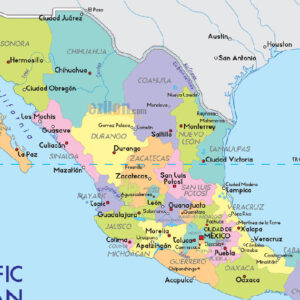
Due to violent crime and kidnappings, the U.S. State Department warns Americans from going to six Mexican states and suggests to reconsider visiting seven others. The good news is the country’s homicide rate has declined 33% since 2019.