Cheech & Chong Official Trailer (2025) Last Movie
The post Cheech & Chong Official Trailer (2025) Last Movie appeared first on AZ Marijuana.
Cannabis info and related links and post from around the web

The post Cheech & Chong Official Trailer (2025) Last Movie appeared first on AZ Marijuana.


But sarcasm aside, this matters. Because now we have scientific confirmation—published in a peer-reviewed journal—of what rational people have been screaming into the void for 54 years: the Controlled Substances Act is not based on science. It’s based on politics, racism, corporate protection, and authoritarian control.

EDMONTON, Alberta — The European Union’s Community Plant Variety Office granted community plant variety rights for two proprietary cannabis varieties to Aurora Cannabis Inc.
Similar to plant patents in the United States, Community Plant Variety Rights give organizations and individuals exclusive control over the commercial production and sale of unique varieties throughout the EU’s 27 member states for the duration of the protection period.
Aurora’s new plant variety rights are for Cannabis sativa L cultivars named SOT20R07-007 (known as Farm Gas™) and ACB21T044 (known as Sourdough™). Both cultivars are recognized for high potency, pleasant aromas, and bud structure, according to the company, and both are core products available to medical patients in Germany, Poland, the UK, Canada, and Australia.
The company believes protection of these varieties enhances its competitive position in Europe, a fast-moving and highly valuable region.

Last week, France’s now five-year old medical cannabis pilot programme was extended once again, providing a bridge beyond March 2026 for patients to continue secure access to their medication.
While designed as a stopgap until the country’s long-awaited generalised framework is implemented, it could be 2027 before the first patients receive their prescriptions, according to French medical cannabis player Overseed’s CEO, Hugues Péribère.
Speaking to Business of Cannabis ahead of Cannabis Europa Paris, where industry leaders will gather to examine France’s unique approach on February 19, he estimated that even after France publishes its regulatory framework, businesses face a minimum eight-month journey before products can reach pharmacy shelves.
“We are speaking about certainly something which is about eight months (from publication to market access). I would say it’s fairly unlikely this year.”
According to reporting from our partners at Newsweed.fr, citing commentary from Dr Nicolas Authier, a key part in the creation of the pilot programme, just 700 patients are left in the pilot programme from an estimated 3000 at its peak.
This dramatic 75% attrition rate raises further questions about the incoming framework. Have these hundreds of missing patients simply grown tired of waiting? Or are there bigger issues with the incoming scheme which have turned them onto other prescription pathways?

France has chosen a unique pathway for medical cannabis integration, learning from the issues experienced in neighbouring markets and avoiding many of the pitfalls Germany, the UK and Australia are tackling today, but bringing with it a new set of challenges.
Its proposed framework will integrate cannabis medicines directly into the country’s existing pharmaceutical framework, as opposed to pigeon-holing it into its own unique category, as seen in almost every other market.
While this should significantly streamline the process, providing well-understood and established rules for patients, doctors, and businesses, it also means that cannabis medicine will be subject to the same rigorous standards, approval processes, and oversight as any other controlled drug.
“The med agency over here, the team and the authorities, they don’t want to hear about buds to be distributed anywhere for patients,” Péribère explains. “They look at it with a pharmaceutical eye, not as it is done in many countries.”
This, according to Péribère, is also precisely why it could take until 2027 for the first prescriptions to be received, with the dual phases of evaluation and commercial preparation both taking months to complete.
“When we speak with [ANSM], they will go very deeply into the evaluation,” Péribère explains, stating that the regulator has indicated that reviewing medicinal cannabis product applications will take ‘six months minimum,’ with the standard timeline reaching up to nine months.
These applications must also be completed to exacting standards, requiring complete pharmaceutical files that demonstrate EU GMP compliance, including comprehensive drug substance and drug product documentation, stability data, and rigorous safety assessments.
Every aspect will be scrutinised to pharmaceutical standards before the ANSM will grant a product the five-year temporary use authorisation (ATU), which is set to govern market access.
“After that, you need to have the results to be able to begin the production and the fabrication of the packaging that has to be approved as a medicine. That will take a minimum of two months to be organised and be able to come to the supply chain.”
With this in mind, the whole process should take eight to 11 months from the day the framework is published. Despite the bill being ‘complete’, there is little indication from the government on when publication will take place, further extending the potential timeline.
The post France’s First Prescriptions ‘Unlikely This Year’ Despite ‘Complete’ Framework appeared first on Business of Cannabis.
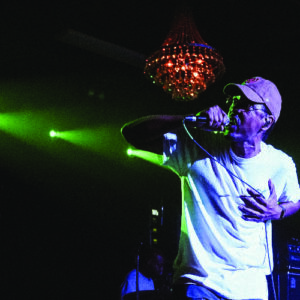
Oddisee is a different type. He’s an artist’s artist, but he’s also got a cult following of loyal fans, and his independent career has been going strong for well over a decade. The DC emcee/producer stopped by one of our favorite venues, Cervantes (The Other Side), with a full band for a the 10 Year

After the 2016 election, Nevada legalized recreational cannabis, in addition to the states medical-marijuana program. As a result, possession and consumption of cannabis by adults became legal in January of 2017.
Currently, the Cannabis Compliance Board, known as the CCB, serves as Nevada’s cannabis regulatory agency. The CCB oversees and regulates Nevada’s legal medical and adult-use cannabis programs. The CCB’s focus is on ensuring the protection of public health and safety and it has created and implemented a strict and rigorous regulatory system.
If you are operating a legal cannabis business in Nevada, your company must follow the state regulations, enforced by the CCB as well as any applicable local jurisdiction ordinances. In terms of licensing, the licensing process typically includes a background check, fingerprinting, proof of financial responsibility, and facility and security plans. Only businesses licensed by the State for cannabis operations can legally grow, manufacture, test, distribute, or sell cannabis in Nevada. The CCB has to open up an application window to issue cannabis establishment licenses. If an application window is not currently open, people interested in entering Nevada’s cannabis market can purchase an existing license, subject to obtaining approval from the CCB.
In addition to issuing and renewing cannabis licenses, the CCB enforces a regulatory scheme for cannabis programs in Nevada. The regulations cover many aspects of the cannabis businesses including, but not limited to, inventory control, security, training, packaging, and advertising. With regards to cannabis packaging regulations require certain items aimed at protecting minors. For instance, the packaging must be child-resistant and include statements like “Keep out of reach of children” or “For use only be adults 21 years of age or older”.
The CCB also enforces marketing restrictions including restrictions aimed at protecting children. For instance, there are regulations regarding use of cartoons or mascots that may be popular with minors, advertising near youth-centered facilities, and making false health or medical claims. These restrictions typically apply to advertising in any medium, including online. Hence, online marketing campaigns, social media ads, and other digital advertising efforts are subject to these cannabis regulations in addition to other advertising restrictions.
The cannabis laws and regulations are constantly in flux, at both the federal and state levels. Hence, businesses must adapt their operations, update compliance programs, and manage the increased risk that comes with the market. For businesses who are multi-state operators, these changes often lead to complex and overwhelming operations that usually require a team of state-specific legal and compliance experts. If you are operating a cannabis business in Nevada, contact Connor and Connor for a consultation today regarding operating your business compliantly.
Sources:
https://www.flowhub.com/learn/how-to-open-a-dispensary-in-nevada
https://www.flowhub.com/nevada-cannabis-laws
https://www.leg.state.nv.us/NRS/NRS-678A.html
https://www.leg.state.nv.us/Session/82nd2023/Budgets/4207.pdf
https://www.velosio.com/blog/cannabis-compliance-challenges-and-how-to-overcome-them/
The post How to Stay Compliant with Cannabis Licensing Regulations in Nevada appeared first on Connor & Connor PLLC.

Nobody grows up thinking, “One day I’ll win a million dollars on TV… and then get really into cannabis.”
But life has a funny way of rerouting even the cleanest, most straight-edge trajectories. Just ask Ethan Zohn and Tyson Apostol, two Survivor champions whose journeys into cannabis didn’t start in college dorm rooms or at music festivals, but much later.
They weren’t even casual adult users.
But somewhere between Survivor, real life, and a few thousand curveballs, both men ended up discovering that cannabis can be a companion in times of hardship.

This is the story of how two reality-TV icons became unexpected cannabis advocates, and why they’re far from alone.
Ethan Zohn didn’t smoke pot in high school, college, or his early professional years. As a serious athlete, he had a prejudice against the plant (and we now know there are cases where cannabis can actually improve performance).
“I never touched the stuff,” he says. “I was a pro athlete. I went to Vassar. All my friends smoked, just not me.”
Then life detonated.
At 35, the Survivor: Africa winner was diagnosed with a rare form of blood cancer. The symptoms were full-body itching, night sweats, a swollen lymph node in his neck the size of a jawbreaker. A real nightmare.
When treatment began, the pharmaceutical list got large: Ativan for anxiety, Zofran for nausea, Percocet for pain, Ambien for sleep, “every pill imaginable,” he says.


“And it just wasn’t good for me,” Ethan explains. “None of it made me feel human.”
That’s when someone said the obvious: you should try weed. It wasn’t a doctor or a nurse.
But this was 2009 in New York, and there were no legal dispensaries, almost no physician guidance, and no dosing charts.
“So there I was,” he says, “bald, on chemo, wearing gloves and a mask, talking to a drug dealer who sold coke and ecstasy. I was buying weed just to feel better.”
That’s the moment a future cannabis advocate is born, standing on a sidewalk, planning chemotherapy.
“There wasn’t one oncologist, nurse, or doctor who could tell me how to use cannabis while going through cancer,” he says.
“So it was a guessing game.”
He hired a cannabis educator he found online, and learned tinctures, oils, dosages, safety, vaporizing. “Don’t smoke it” was the only official guidance he got. He figured out how to incorporate cannabis into the daily storm of cancer treatment, and he noticed something:
Cannabis didn’t cure anything.
But it made everything else survivable.
“I couldn’t control the disease,” Ethan says. “But I could control my food, my exercise, my sleep, my cannabis. It tricked my brain into thinking I had a little bit of control.”
And sometimes a little control is the difference between surviving and giving up.
In his cancer support group, nine people, all in their late 20s and 30s, were being treated the exact same way.
“Out of the nine of us,” Ethan says quietly, “there’s only two left. Me and another girl. And she uses cannabis too. I’m not saying it’s science. But it makes you think.”
Ethan used cannabis as a gateway to a better life, and that helped him in his treatment and during the recurrence.
The Ethan of today isn’t an underground patient sneaking product through TSA.
He’s a public advocate. He works with Trulieve. He’s involved with EO Care, which provides physician-guided cannabis plans for patients who don’t want to play the guessing game he did. He uses tinctures, live rosin products (“least processed, that’s important to me”), and occasionally a vape when anxiety spikes.
“I became the first publicly medicated person to run the Boston Marathon,” he says, grinning.
That was 2022, ten years into remission, with a few carefully timed 5 mg gummies powering the final miles.
He laughs. “I’m not a ‘stoner culture’ guy. I’m a health-nerd-with-weed guy.”

“I grew up Mormon in Utah,” he says. “So yeah, weed wasn’t exactly part of the program.”
Tyson didn’t touch cannabis until he was well into adulthood, after appearing on Survivor four times, after winning Blood vs. Water, finishing his pro-cycling years, and learning firsthand that fatherhood is basically a full-contact sport.
“The worst thing for a man’s back is pulling babies out of cribs,” he laughs. “After two kids, my back gave out.”
What started as occasional pain became constant.
“I was taking 800 milligrams of Tylenol a day,” he says.
Then he tried a cannabis gummy and everything clicked.
“A gummy did the same thing and didn’t wreck my liver.”
That’s how the second Survivor winner began his cannabis chapter.
These days, Tyson uses cannabis “a couple times a week,” mostly for sleep, stiffness, and something he calls “functional flow.”
“If I’m up at five to play pickleball, a couple milligrams helps me loosen up. It’s not about getting high. It’s about getting moving,” he says.
He’s honest about how it affects his game.
“If you use the right amount,” he says, “it helps you not be so much in your head. You stop overthinking. You just play.”
Tyson also works with Trulieve, where Ethan helped bring him in. “He’s late to the weed game,” Ethan jokes. “But he’s learning.”
Both men agree that cannabis would have changed Survivor in hilarious ways.
When Ethan returned for Survivor: Winners at War, he asked production if he could bring his medical cannabis.

“They ran it up the ladder,” he says.
“They told me, ‘It’s not legal in Fiji, so you can’t take it. But you’re the first person to ask.’”
And Ethan and Tyson? They’re part of that wave of real people with real bodies who have nothing to prove anymore.
Elite athletes across sports now publicly embrace cannabis: Ricky Williams (NFL), founded Highsman, a cannabis brand; Megan Rapinoe (USWNT), partner in CBD brand Mendi; Conor McGregor, partnered with TIDL, a THC-free cannabis recovery product; Calvin Johnson (NFL), co-founder of cannabis company Primitiv. Ultramarathoners and endurance athletes increasingly use cannabis for recovery, sleep, and anxiety management.
A Men’s Health article notes that many athletes who use cannabis “notice improvements in recovery and enjoyment.” A Frontiers in Public Health study found that 80% of cannabis users who exercise say it enhances recovery. A University of Colorado study found that cannabis makes workouts more enjoyable, even if it doesn’t enhance performance.
Tyson offers his own take on what a weed-friendly season might look like:
“I’d use it to sleep,” he says. “You never sleep out there. Maybe there’d be fewer arguments about how to build the shelter. The blindsides would still happen, they’d just be friendlier.”


Ethan hints at something bigger: “Within the Survivor community, a lot of people smoke weed,” he says. “Most are very open about it.”
There are players who are cannabis farmers, trainers who use cannabis with their clients, musicians, artists.
“It’s not even a big deal anymore,” Ethan says.
<p>The post ‘Survivor’ Didn’t Break Them. Real Life Did. Then They Found Weed. first appeared on High Times.</p>


