Why Girl Scout Cookies Remains the Most Influential Strain of the Decade
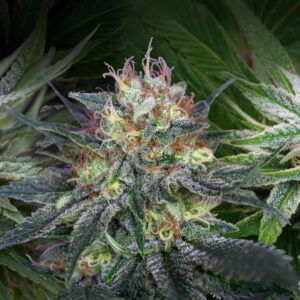
Few strains have shaped modern cannabis like Girl Scout Cookies. When it hit the scene in the early 2010s, everything changed – flavor, potency, and even marketing. The sugary aroma and perfect balance between relaxation and euphoria made it a blueprint for hundreds of new hybrids. Today, its influence still runs through dispensary menus and
Feds Propose Amending 2nd Amendment Ban for Cannabis Consumers, Others
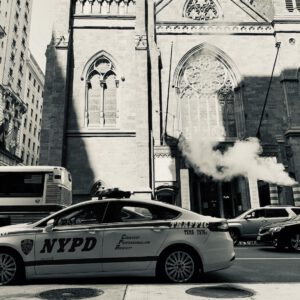
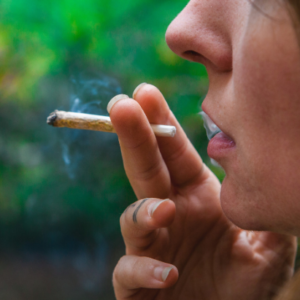
The ATF acknowledges that a change in the federal ban is necessary because there exists a “disconnect” between how federal agencies and the appellate courts are currently interpreting the law.
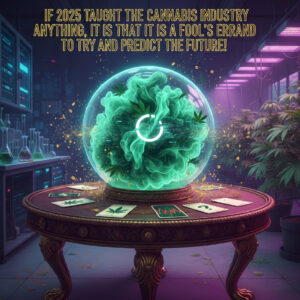
If 2025 Taught the Cannabis Industry Anything, It is That It is a Fool's Errand to Try and Predict the Future!
And let’s not forget the irony of the Chevron Doctrine dying, throwing the entire legal framework into disarray. It was the year that federal policy reached peak confusion—a contradictory mess where even the lawyers couldn’t figure out if we were winning or losing. And if you think 2026 is going to be any different, I’ve got a bridge to sell you. The chaos isn’t slowing down; it’s just shifting gears. We’re entering a new phase where the only constant is unpredictability.
White Weed Strains: White Widow and Beyond; The Famous White Family
White Widow, White Runtz, or a stunning cut of albino weed, white cannabis can mean different things to different people. Learn all there is to know about white weed strains below and find the best white varieties to add to your next grow!
Trump’s Marijuana Rescheduling: Big News, Bigger Questions
President Trump’s executive order to reschedule marijuana from Schedule I to Schedule III marks a monumental shift in U.S. drug policy, acknowledging its medical utility and potentially eliminating the crippling 280E tax for cannabis businesses. While not full legalization, this move promises to boost research, economic growth, and industry legitimacy, though challenges like interstate commerce and state-federal discrepancies remain.
Trump’s Marijuana Rescheduling: A Shift in the Cannabis Cosmos?
Okay, friends, let’s grab that coffee because we’ve got some genuinely fascinating, potentially game-changing news bubbling up in the world of cannabis policy. President Donald Trump has issued an executive order directing the reclassification of marijuana. Yes, you read that right. The very same Trump who, during his previous term, often seemed ambivalent or even hostile to federal cannabis reform, is now at the helm of a move that could fundamentally reshape the industry.
This isn’t just a ripple; it’s more like a seismic tremor in U.S. drug policy. But what exactly does rescheduling mean, and is it truly the watershed moment many are hoping for? Let’s unpack it.
From Schedule I to… Schedule III?
Currently, cannabis sits squarely in Schedule I of the Controlled Substances Act. This classification, reserved for drugs with “no currently accepted medical use and a high potential for abuse,” puts marijuana alongside substances like heroin and LSD. For decades, this has stifled research, made banking a nightmare for cannabis businesses, and generally painted the plant as a societal menace.
The big move now is to reclassify cannabis to Schedule III. What’s the difference? Schedule III drugs, like Tylenol with codeine or anabolic steroids, are recognized as having a legitimate medical use and a moderate to low potential for physical and psychological dependence. This shift is enormous for several reasons:
Medical Recognition: It officially acknowledges cannabis’s medicinal value at a federal level, opening doors for more robust research and development.
Research Boom: Scientists have long been hamstrung by Schedule I restrictions. Moving to Schedule III should significantly ease the regulatory burden, allowing for more comprehensive studies into cannabis’s therapeutic potential.
Goodbye 280E? Hello Profits!: For many in the cannabis industry, this is the Holy Grail. Section 280E of the IRS tax code prevents businesses dealing in Schedule I or II substances from deducting ordinary business expenses. Moving to Schedule III would likely nullify 280E for state-legal cannabis companies, freeing up massive amounts of capital and potentially making many businesses profitable overnight. Imagine the reinvestment potential!
Why Now? The Political Potency of Cannabis
It’s hard to ignore the timing, isn’t it? With a presidential election looming, cannabis reform has become a surprisingly bipartisan issue, with overwhelming public support. Trump’s move could be seen as a strategic play to appeal to a broad base of voters, including young people and those in swing states where cannabis is a significant economic driver. Whether it’s genuine policy evolution or election-year pragmatism, the impact is undeniable.
Cautious Optimism: What This Means for You
For consumers, this move probably won’t mean immediate access to federal weed stores next week. State-level cannabis laws still govern recreational and medical sales. However, the long-term implications are exciting. Expect more diverse, high-quality products as research expands, and potentially lower prices if businesses can thrive without the crushing 280E tax burden.
For the industry, it’s a huge sigh of relief and a massive boost to legitimacy. Investors are already buzzing. We could see a significant influx of institutional money into the sector, accelerating growth and innovation.
The Road Ahead: Still Some Bumps in the Bud
Let’s not get carried away just yet. While rescheduling to Schedule III is monumental, it’s not full federal legalization. Interstate commerce remains largely off-limits, and banking, though eased by 280E relief, still faces hurdles. Plus, states will retain their authority to regulate cannabis within their borders. It’s a significant step, perhaps the biggest federal step yet, but the journey to a fully integrated and federally legal cannabis market is still ongoing.
So, is this a game-changer? Absolutely. It’s a powerful acknowledgment of cannabis’s medical legitimacy and a potential economic lifeline for the industry. But like any good plot twist, it leaves us with bigger questions and an exciting, if still uncertain, future.
On pleasure, respectability, and the parts of cannabis culture worth protecting.
The other night I got high with a few friends. Not to unlock my third eye, crush a deadline, or biohack my nervous system into a state of tantric productivity. We weren’t chasing enlightenment or insight or growth.
We just wanted to laugh. To unwind. To play DnD and stop carrying the day around like a sack of wet concrete.
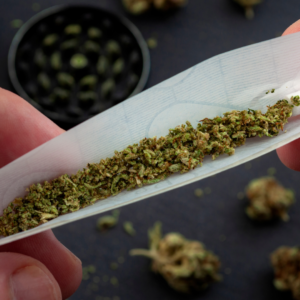
We sat around my living room passing a joint built like a power forward and talking about absolutely nothing of consequence—the kind of conversation that floats, drifts, wanders, and somehow becomes the best part of your week.
And in the middle of that dumb buzz, I had this tiny intrusive thought:
Is this still allowed?
Not legally, per se, but culturally. I started to wonder whether joy alone was still a valid reason to light up. Because within modern cannabis culture, you can feel a growing pressure to justify your high. To prove you’re doing something responsible with it.
Smarter. Healthier. More productive.
More adult.
The carefree, fun-time vibe is quietly shifting toward the idea that cannabis must be functional to be legitimate. That you need a reason more noble than “I enjoy feeling alive for a minute.”
You can hear it in dispensaries now. Ask what’s good, and you get outcomes. Disclaimers.
Focus. Sleep. Recovery. Regulation.
Meanwhile, no one looks down on the sun for giving us vitamin D and energy. No one shames rosemary for its calming effects. But light up a joint because you want to smile? To loosen the death grip your shoulders have on your neck?
Suddenly, you’re kind of childish.
Come on. Community? Laughter? That moment when your jaw finally unclenches? That’s medicine. Those things do real work. Which makes the disconnect strange, because our bodies already understand this.
There’s even a word for it: anandamide—often called the “bliss molecule”, a naturally occurring compound in the human body tied to pleasure, mood, and that quiet sense of well-being. Your brain produces it when you exercise, when you laugh, when you connect. Cannabis just happens to interact with the same system. A reminder that, as humans, joy was always part of our design.
But in the transition from prohibition to legalization, we quietly decided that only the clinical stuff counted. And this isn’t just a weed problem. We track our steps. Food turns into macros. Hobbies become monetized. Play without purpose, fun without payoff. It all starts to feel pointless.
Somewhere along the way, humans lost the thread.
That’s how you end up with the stoner archetype—the original cultural mascot and patron saint of the untroubled—quietly being pushed toward the back exit.
Photo courtesy of Daniel Aberasturi.
When Enjoyment Started Needing an Explanation
Walk into any dispensary today and everything is microdosed, precision-engineered, terpene-tailored, data-backed, sustainably sourced, and paired with a promise to level you up.
In the long arc from Reefer Madness toBong Appétit, weed went from “this might make colors sound different” to “this supports mitochondrial performance.” I don’t want to be Luke Skywalker. I just want to smoke some Skywalker OG and watch Empire for the tenth time.
None of this is an argument against medicinal cannabis or wellness. Those uses are real. They’re vital. They save lives. What worries me is the creeping idea that happiness alone isn’t enough. That cannabis needs to earn its keep through good behavior.
That shift didn’t come out of nowhere. It arrived with legalization, and with the quiet understanding that freedom would come with conditions.
At a certain point, palatability became the entry fee to normalization.
Photo courtesy of Daniel Aberasturi.
What Cannabis Learned to Say in Order to Be Taken Seriously
For decades, cannabis survived on the fringes. It was messy, unserious, and almost exclusively illegal. When the doors finally opened, the plant did more than just step into the light—it stepped into a boardroom.
And unserious isn’t a good business model.
To be accepted, cannabis had to make itself marketable to regulators, investors, landlords, and risk managers. Fun didn’t translate. Play didn’t test well. But wellness did. Metrics and clinical language did. That’s when cannabis learned to speak in outcomes instead of experiences.
This wasn’t a conspiracy. It was adaptation. Respectability became validity. The plant put on a lab coat and shed its laughter because that was the cost of legitimacy.
But something gets lost when legitimacy is built on justification. When pleasure has to restrain itself, it shrinks. And what used to be communal gets stripped down, privatized, and reduced to a single-player game.
Legalization gave us liberation, but it also imposed a new discipline: behave, explain yourself, don’t be weird. The stoner—the unruly, joyful, unoptimized soul of the counterculture—was politely asked to grow up.
But it ain’t a counterculture unless you’re against something. And if we’re choosing targets, I hope bullshit goes first. We’ve got more than enough of that to burn.
Cannabis used to be fun first. Silly in the best ways. A break from the absurdity of being a human strapped into the meat grinder of modern life. Now it’s increasingly framed as a productivity aid with bad branding and too much plastic.
A friend of mine, Nate, put it perfectly the other day:
“Relaxation is a medicinal benefit. Because of that, I’ve always thought it was impossible to disentangle recreational and medicinal use.”
He’s right. The fence between the two is thinner than we pretend.
Another friend once told me about a guy who smoked her weed all day, every day, called it “medicine,” and made her want to throw him through a window. In that context, yeah, calling it medication felt like a dodge. Sometimes you need to treat the root cause, not just the symptom.
But over time, she realized something else: not all medicine has to cure. Some remedies simply restore. Amusement. Connection. Breath. A widening of the ribs. A reminder that at the end of a shitty day, everything will be okay.
Cannabis can do that. And we shouldn’t have to pretend it needs to be more than that.
No one judges the friend who screams into a pillow after a meeting that should’ve been an email. No one blinks when dancing counts as relief and saunas count as reset. Bone broth is somehow a cure-all—which I still think is questionable, but sure. Fine.
As a society, we’re perfectly comfortable calling all of this care. Pleasure, in small, subtle, essential doses.
Hell, half the internet thinks dunking yourself in a freezing lake at 5 a.m. makes you a warrior stoic. But spark a joint after work for no good reason and suddenly you’re “masking your problems.”
Which brings me to the stoner—the folk hero of this whole operation, and the biggest part of the culture we’re in danger of losing if joy stops counting.
Photo courtesy of Daniel Aberasturi.
The Stoner Isn’t Who You Think
I know the stereotype: tie-dye, cheek-shaped couch dents, sticky fingers, bong water darker than midnight.
But the real stoner—the one I know, the one who built this culture and kept it alive when it was illegal, unprofitable, and dangerous—is something else entirely.
The real stoner is curious.
Imaginative. Generous. Playful. Present.
The real stoner feels life as much as they think about it.
They find poetry in a bag of Cheez-Its. They stare at the ocean for hours and call it meditation. They know half the meaning of life is buried in beautiful, stupid 1 a.m. conversations. One of the underrated gifts of being a stoner, in the best sense, is emotional availability. The way it lowers the guard just enough to see the joke in existence.
Laughing when the punchline is simply: life, man.
Cannabis keeps my edges flexible. It keeps me soft where adulthood tries to calcify me. It keeps me from becoming another stiff-backed, stress-locked adult drowning in existential dread and Microsoft Teams notifications. I’m laughing my ass off a hundred times a day and taking life about 30 percent less seriously than I did at twenty-two.
Weed is WD-40 for the human spirit.
Instructions: shake well, apply generously, avoid contact with bosses and buzzkills.
It’s given me patience in my relationships, curiosity about life’s small miracles, and resilience when the world feels too sharp. It doesn’t turn me into someone else. It keeps me from becoming someone I never wanted to be.
If that’s not medicinal in its own strange way, I don’t know what is.
Photo courtesy of Brian Jones.
What Disappears When Fun Isn’t Enough
If joy, laughter, awe, curiosity, and relief stop being valid reasons to smoke, here’s what else goes with it:
The circle. The ritual. The generosity of passing the joint to the person who needs it most.
Community becomes transactional. Creativity turns into content.
In short, a big piece of the culture’s soul goes missing.
And if cannabis’s potential is limited to a wellness supplement—a consumer product with no spiritual footprint, a tool rather than a companion—then legalization didn’t liberate weed. It put it in a gilded cage.
Picture a future where joints are considered primitive, blunts are frowned upon, and flower is “too unpredictable” for an optimized lifestyle. People only smoke if it can be paired with a self-improvement goal. Your friend sparks a bowl and instead of saying, “God, I need this,” they recite, “I’m consuming this to support neuroregulation and emotional resilience.”
This isn’t a fight against wellness, medicine, or legitimacy. It’s a fight against the shrinking of what we call valid. If we lose the stoner—the curious, rebellious, alive part of this counterculture—we lose the permission to feel good for no reason at all.
A smile is enough. Relaxation is enough. Laughter is enough. Feeling human again is enough.
If legalization teaches us anything, it shouldn’t be how to justify cannabis. It should be how to enjoy it without apology.
So let’s not forget, in our noble pursuit of validation, why we fell in love with this plant in the first place.
A rare Bob Marley & the Wailers song has been reissued by reggae label JAD. Written in 1968 by Marley and Mortimer Planno, “Selassie Is My Chapel” hails the Ethiopian emperor Haile Selassie who’s beloved by Rastas.
Do the Costs of Enforcing Laws Against Cannabis Outweigh the Benefits?
Even if you don’t support the use of cannabis use in general, that doesn’t mean the current system of dealing with it is cost-effective or moral.
Many would argue that under a prohibitionist system, the costs of policing cannabis use and the disproportionate impact on communities of color far exceed the meager benefits it offers. By legalizing weed, they say, you’ll save money on enforcing what are ultimately unpopular laws and start addressing the shameful racial bias inherent in drug policing.
But how does this stack up to the reality? What can we learn from states where they’ve already legalized cannabis? Do the costs of enforcing cannabis laws actually hurt more than they help, financially and socially?
Summary: Do the Costs of Enforcing Laws Against Cannabis Outweigh the Benefits?
Yes…
Police are 3.6 times more likely to arrest black people than white people for cannabis possession. It’s likely the case for other minorities like Hispanic people too.
Police arrested over 200,000 people for cannabis possession in 2023. This costs an estimated $1,000 to $2,000 per person. The total cost of these could easily reach $400 million.
All of this expense and racial bias is not worth the questionable “benefit” of punishing people for using cannabis.
No…
While legalization does reduce racial disparities in arrests, it doesn’t completely remove them. For example, police officers in California are still 80% more likely to arrest black people for weed.
Advocates often overstate the financial savings of legalization. The above estimates assume police save money by not making arrests, but staff costs and most other expenses still exist regardless.
With the benefits so clearly overstated, it is not obvious that the cost of trying to keep a drug off the streets will outweigh them.
The First Problem: The Racial Disparities in Cannabis Arrests
It’s well-known that arrests for cannabis disproportionately affect black people and likely ethnic minorities more generally.
The best source for this is the American Civil Liberties Union (ACLU) report “A Tale of Two Countries: Racially Targeted Arrests in the Era of Marijuana Reform.” This 2020 report found that police were 3.64 times more likely to arrest black people than white people for cannabis possession. But use rates are similar between races. Even this glosses over the issue in some ways, because the disparity reaches 9.6 times more likely in Montana, and many states far exceed a 3.64-fold disparity.
This is undeniably linked to the criminalization of cannabis. Studies using Universal Crime Reporting Program data find that states which decriminalize or legalize cannabis see a reduction in these disparities. For example, in this study, legalization led to 562 fewer arrests of black adults and 195 fewer arrests of white adults (per 100k population) and decriminalization with 448.6 and 117.1 fewer, respectively.
The picture here is crystal clear. While arrests reduce for both groups, these changes disproportionately benefit black Americans, because drug laws disproportionately harm them. While the Universal Crime Reporting data is generally not good enough to look at other races in this analysis, other evidence suggests that Hispanic people likely suffer from the same prejudice and it’s unlikely that it stops there.
The Second Problem: The Financial Cost of Enforcing Cannabis Law
The other major aspect of this argument is the unnecessary labor and expense that goes into enforcing laws against cannabis. Actually estimating this isn’t as easy as it might seem. However, it’s hard to argue that those resources couldn’t be better spent elsewhere.
Some of the most widely-cited calculations of the financial cost of cannabis prohibition come from Jeffrey A. Miron, including this paper from Miron and Katherine Waldock. This estimates the cost of the federal prohibition on cannabis at $3.4 billion in 2008, similar to a $3.6 billion estimate from the ACLU for 2010. These are old analyses, but they show the scale of savings possible, and were conducted before states started legalizing cannabis.
Data from the FBI’s Crime Data Explorer from 2023 show that there were over 200,000 arrests for cannabis possession in the year. This is also an undercount, because it only includes data from local agencies representing 91% of the US population. There are also some “unspecified” violations not included here that may be related to cannabis.
While it’s difficult to calculate the precise cost based on this, a Drug Policy Alliance report estimated a cost of $1,000 to $2,000 per arrest in 2010. Even using these decade-old figures, it would suggest a cost of $200 to $400 million for the confirmed 2023 arrests. The current figure is almost certainly higher than this, with inflation alone bringing it to between $280 and $560 million.
In comparison to the overall law enforcement budget, this might not seem like a huge amount, but it’s important to remember that the benefit here is minimal. Bear in mind that the report only calculated this figure for possession. This is legal either medically or recreationally in 38 states, and most people recognize that it is not a major concern. On top of this, almost half of states now have legal adult use cannabis, which already reduces the financial and labor cost of enforcement.
Counterpoint: Is That Money Really Saved?
There is one notable issue with these arguments, raised by James Austin, PhD in a JFA Institute paper. Essentially, these estimates all use a proportionate cost model. This means that if 10% of all arrests were for cannabis, then researchers assume that legalization or decriminalization would lead to a 10% reduction in costs.
This is not really how it works. When they legalize cannabis, politicians don’t reduce police budgets proportionally. Likewise, the department still has the same number of officers to pay afterwards. Overall, it’s better to think of the “benefits” as resources that are freed up. They aren’t “savings” in the typical sense of the word.
This is not to say there is no benefit from doing this. Every police officer not spending his or her time arresting someone for cannabis is a police officer probably doing something more useful. But it’s important to be clear that advocates often overstate these savings.
Counterpoint: Racial Disparities in Arrests Will Still Exist
Secondly, although states with legal or decriminalized cannabis tend to have fewer racial disparities in arrests, the disparities still exist. For example, based on the results of the ACLU report, police are still 2.1 times more likely to arrest black people for cannabis possession than white people in Washington, despite legalization. In Oregon and California they are 1.8 times more likely. In Nevada, black people are 3 times more likely to be arrested.
A single change in the law doesn’t completely solve long-standing prejudices. There are always still offenses in a legal system (possession at over the allowed limit, for instance) and enforcement of these still falls disproportionately on communities of color.
Our Take: Even With Limitations, Legalization is an Improvement
Yes, legalizing cannabis won’t completely resolve the racial disparities in arrests. And yes, the savings won’t be as big as many estimates suggest. However, you’d be hard pressed to argue that a reduction in racial disparities is not a good thing. It would also be very short-sighted to only look at financial savings rather than considering the massive benefit of giving police officers time to tackle more serious crime. Legal weed won’t solve all of our problems. But that is a very poor justification for not doing it, especially considering the alternative.
We shouldn’t let the perfect be the enemy of the good, especially when the status quo is so awful.
Peer reviewed? No, a report for the JFA Institute.
Methodology: A critical review of existing evidence on the impact of decriminalizing cannabis.
Main results: The report finds that most cost estimates use a proportionate cost model. These likely overstate savings by assuming that decriminalization would lead to budgetary savings proportional to the amount of total arrests involving cannabis. In other words, they assume that if 30% of arrests are for cannabis, decriminalizing would reduce expenditure by 30%.
Other notes: This is not a very academic source, but offers a good insight into the issues with other evidence. There are small errors in the manuscript, suggesting lax editing.
Methodology: Used arrest data from the FBI Uniform Crime Reporting (UCR) program, census data for population information, the National Survey on Drug Use and Health for usage rates and Bureau of Justice Statistics data for expenditure data.
Sample size: Data from 2001 to 2010.
Main results: Black people were 3.73 times more likely to be arrested for cannabis than white people, despite similar usage rates. States spent over $3.6 billion enforcing laws against cannabis possession.
Other notes: Latino/Latinas were often classed as “white” in the data, which is a potential source of bias (likely reducing the apparent disparities). In cases where there were multiple offenses, the most serious offense was counted, and so some cannabis offenses were likely missed.
Peer reviewed? No, a non-peer reviewed research report from the ACLU.
Methodology: Used arrest data from the FBI’s UCR Program for most states, with the exception of New York (from NYC OpenData), Illinois (Freedom of Information Act), Washington D.C. and Florida (neither of whom provided data). They used Census data for population estimates.
Sample size: Data from 2010 to 2018.
Main results: On average, black Americans are 3.64 times more likely to be arrested for a cannabis offense than white Americans. This varies by state. While states with legalization or decriminalization tended to have less racial disparity, it was still present.
Other notes: The UCR program is not perfect. Some agencies don’t report each month and researchers had to obtain the data separately in other cases (e.g. New York). Additionally, the UCR only reports the “highest level” (i.e. worst) offense. This means that it misses some cannabis offenses even when the event was logged. Finally, racial breakdown data is limited so the only possible comparison was black vs. white.
Gunadi, C., & Shi, Y. (2022). Cannabis decriminalization and racial disparity in arrests for cannabis possession. Social Science & Medicine, 293, 114672. https://doi.org/10.1016/j.socscimed.2021.114672
About the source:
Peer reviewed? Yes, published in Social Science and Medicine.
Methodology: Used UCR program data to look at cannabis arrests, using census data for population information and noting policy differences between states.
Sample size: Used data from 2000 to 2019, except for in cases where there was no data for the state in specific years.
Main results: Both decriminalization and legalization reduced arrest rates, but the racial disparity only decreased among adults (as opposed to youths) after decriminalization.
Other notes: Much of the reported reduction in disparity came from California. The authors excluded Colorado altogether because the Denver police department misreported data following legalization.
Milner, A. N., George, B. J., & Allison, D. B. (2016). Black and Hispanic Men Perceived to Be Large Are at Increased Risk for Police Frisk, Search, and Force. PLOS ONE, 11(1), Article e0147158. https://doi.org/10.1371/journal.pone.0147158
About the source:
Peer reviewed? Yes, published in PLOS ONE.
Methodology: Used NYPD Stop, Question and Frisk database to obtain details of each stop of adult males, noting the race, height and weight of the individual.
Sample size: Just under 3.2 million stops that took place between 2006 and 2013.
Main results: For most height and weight categories, black and Hispanic individuals were more likely to be frisked or searched, compared to white people. This was true even when researchers controlled for the circumstances of the stop.
Other notes: The study was quite focused, only looking at stops of men in New York, which may mean results are not representative. The authors also note that it is only observational (rather than experimental). This means they can’t conclusively say that race was a relevant factor.
Peer reviewed? No, a report from the CATO Institute written by two academics.
Methodology: Uses UCR data for the proportional number of arrests related to cannabis (and other drugs) in 2007 and the associated budgets to determine the cost savings of legalization.
Main results: Cannabis prohibition costs $5.4 billion dollars (in 2008) at the state-level and $3.35 billion at the federal level.
Other notes: This assumes a proportional relationship between expenditure and the percentage of arrests involving the drug, but in practice it doesn’t really work this way.
Sheehan, B. E., Grucza, R. A., & Plunk, A. D. (2021). Association of Racial Disparity of Cannabis Possession Arrests Among Adults and Youths With Statewide Cannabis Decriminalization and Legalization. JAMA Health Forum, 2(10), Article e213435. https://doi.org/10.1001/jamahealthforum.2021.3435
About the source:
Peer reviewed? Yes, published in JAMA Health Forum.
Methodology: Used arrest data from the UCR and population data from the Surveillance, Epidemiology, and End Results program, covering 43 states. 9 states legalized cannabis, 8 decriminalized and 26 had no policy change.
Sample size: Data from January 2000 to December 2019.
Main results: Per 100k population, legalization decreased arrests by 561 and 195 for black and white adults, respectively, and decriminalization decreased arrests by 448.6 and 117.1. For youths, arrest rates decreased by 131.1 and 131.2 for legalization and 156.1 and 124.7 for decriminalization, for black and white youth, respectively.
Other notes: The study used the UCR data for arrests, and therefore has the same issues with incomplete reporting and the inability to check results for other races.
As the popularity of THC-A flower continues to grow among enthusiasts and retailers alike, many are exploring the benefits of purchasing in larger quantities. Whether you’re a frequent buyer, a small business owner, or simply someone who values convenience and cost-efficiency, buying Bulk THCA Flower this year offers distinct advantages that go beyond just saving […]
Alex Honnold triumphed in his free solo climb of the Taipei 101 skyscraper on Netflix on Saturday night, but the platform had a plan in play during its entire livestream in case the climb turned tragic.



 The ATF acknowledges that a change in the federal ban is necessary because there exists a “disconnect” between how federal agencies and the appellate courts are currently interpreting the law.