Medical Cannabis Businesses In Texas Evolve With Increase In Demand

Medical Cannabis Businesses In Texas Evolve With Increase In Demand


Medical Cannabis Businesses In Texas Evolve With Increase In Demand

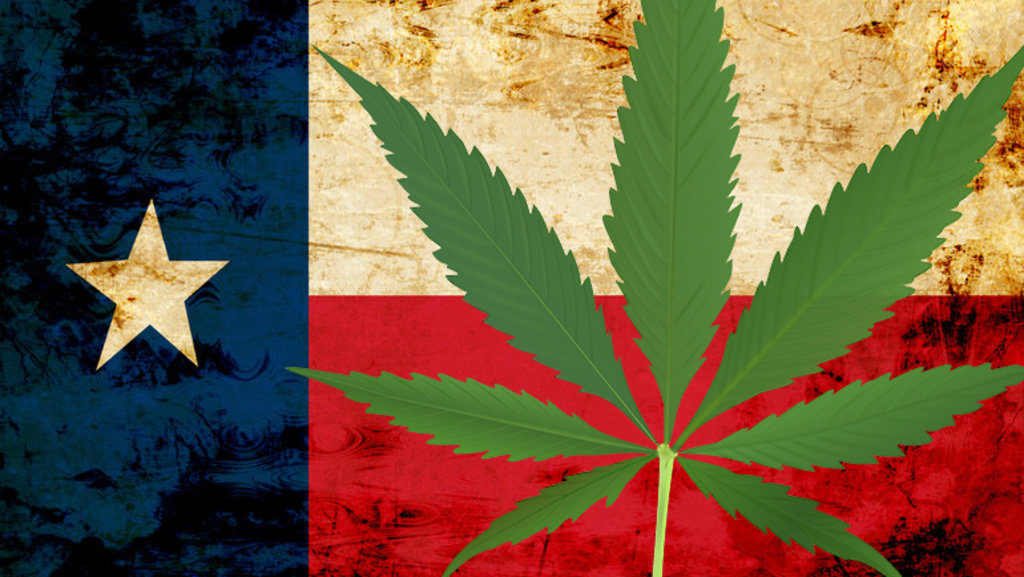
The few companies that have licenses to grow, manufacture, and sell medicinal marijuana in Texas are expanding and changing after legislative actions this year will likely grow the demand in the state’s Compassionate Use Program (TCUP).

Texas lawmakers passed House Bill 46 during the regular session, which increased the number of licenses for dispensing organizations by 12, expanded eligibility for the program to include chronic pain conditions, and allows dispensaries to store their product in satellite locations to cut down wait times for patients.

Texas Department of Public Safety data shows the number of patients on the Compassionate Use Registry has grown by nearly 15,000 people since the legislature passed that bill in June. DPS is also in the process of vetting nine companies for new licenses to grow and sell medicinal marijuana.

Nico Richardson, the CEO of Texas Original, one of the three businesses with a license, said the new law brings Texas more in line with medicinal marijuana programs around the country. His company recently moved its base of operations from south Austin to a 75,000-square-foot facility in Bastrop. Everything from growing the plant, extracting the oils, manufacturing and testing the products, all happens under that one roof.

To Read The Rest Of This Article On KXAN, Click Here

The post Medical Cannabis Businesses In Texas Evolve With Increase In Demand appeared first on Marijuana Retail Report – News and Information for Cannabis Retailers.

Source link

Papaya Sundae Strain Feminized Seeds

Papaya Sundae Strain Feminized Seeds

Papaya Sundae Strain Feminized Seeds

Description

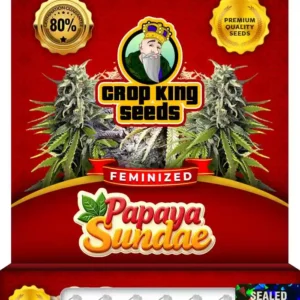
Papaya Sundae is known for producing resin-coated buds that pack an incredible aroma. The scent is a complex mix of ripe tropical fruits and sweet berries, rounded out by a smooth, chocolatey finish. When you break apart the flowers, you will notice a slight hint of earthy diesel that adds depth to the profile. The effects start with a giddy wave of euphoria that lifts your spirits and clears away the mental clutter of a long day. As the high progresses, a warm body sensation settles in, melting away tension and stress. It provides deep relaxation without feeling overly heavy, making it a great choice for a peaceful evening.

The post Papaya Sundae Strain Feminized Seeds appeared first on Crop King Seeds.

Source link

South Dakota Lawmakers Reject Bill To Let Terminally Ill Patients Use Medical Marijuana In Hospitals

South Dakota Lawmakers Reject Bill To Let Terminally Ill Patients Use Medical Marijuana In Hospitals

South Dakota Lawmakers Reject Bill To Let Terminally Ill Patients Use Medical Marijuana In Hospitals

A South Dakota legislative committee has rejected a bill that would have allowed terminally ill patients to use medical cannabis in hospitals and hospices.

The House Health and Human Services Committee voted 12-1 on Thursday to defer the measure to the 41st day of the session, effectively killing it.

Rep. Eric Emery (D), the sponsor of HB 1053, said it is a “narrow and carefully constructed bill that addresses one specific issue: ensuring that terminally ill patients who are already legally authorized to use medical cannabis under South Dakota law may continue the treatment when they enter the hospital or a hospice facility.”

“Under the current law, a patient may legally use medical cannabis at home with their approved practitioner. But once that same patient is admitted into a hospital or hospice facility, that access is abruptly ended—and not because the doctor has changed their mind, but because the facilities’ policies vary widely across the state,” he said. “For terminally ill patients, this disruption can mean unplanned pain, nausea, anxiety or even loss of appetite when care is no longer focused on the cure but comfort and dignity.”

“I’ve seen firsthand the pain and the suffering that often accompany… this final transition… When pain is eased, anxiety is reduced, and a person can be present with the people they truly love. This bill directly addresses that reality. It does not promise miracles. It simply removes the unnecessary barrier to provide comfort for people who are already dying.”

Representatives of the South Dakota Association of Healthcare Organizations and South Dakota Health Care Association testified against the measure, suggesting it would put facilities and staff at risk of violating federal law.

Under the bill, certain healthcare facilities would have been required to permit qualifying terminally ill patients to store and use medical cannabis on the premises.

Smoking and vaping would not be allowed, however, and so patients would have needed to consume marijuana in other forms.

The right to use medical cannabis also would not have applied to patients receiving treatment in emergency departments.

Facilities would be able to avoid having to let patients use medical if a federal agency took enforcement action on the issue or issued a rule or notification that “expressly prohibits the use of medical cannabis in the facility.”


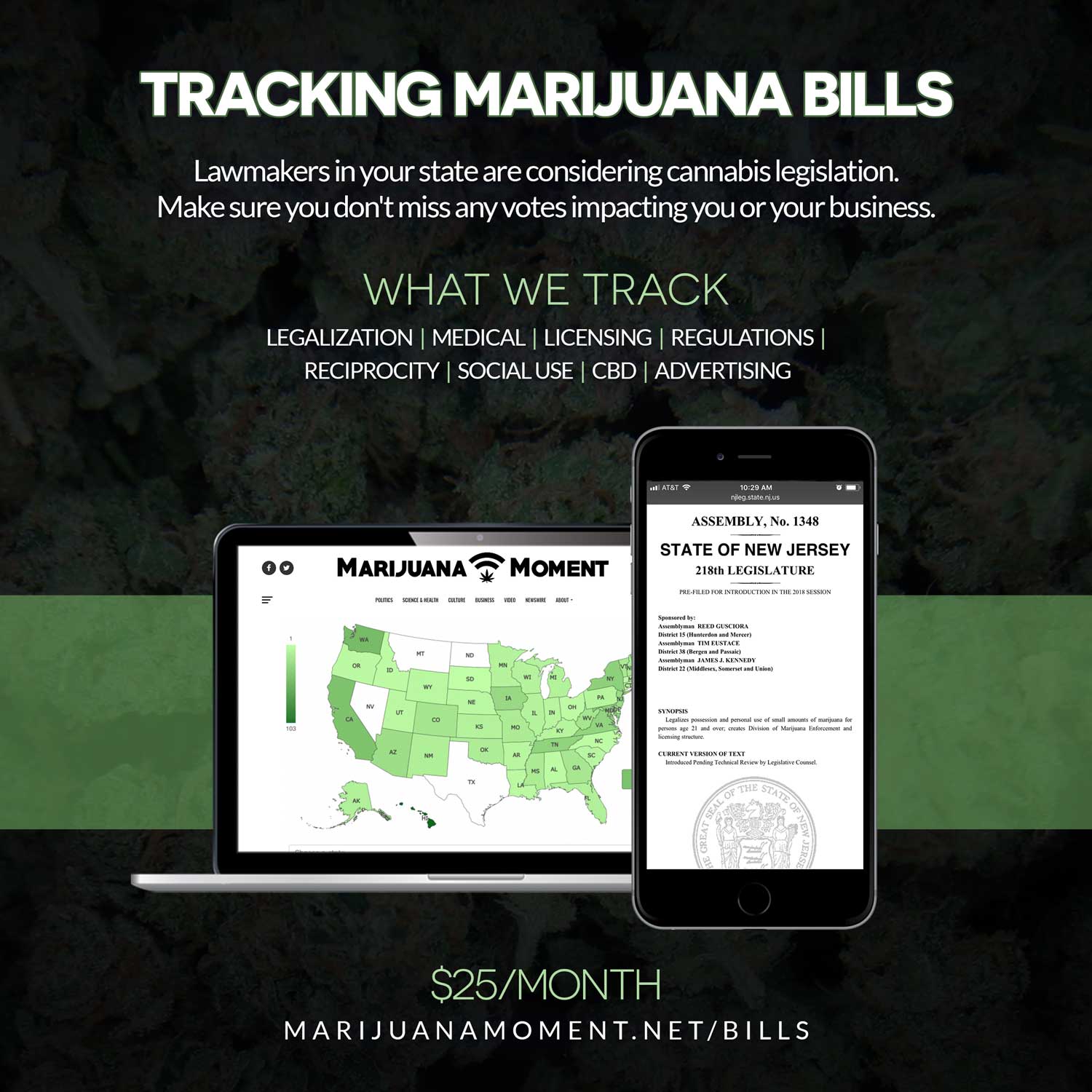
Marijuana Moment is tracking hundreds of cannabis, psychedelics and drug policy bills in state legislatures and Congress this year. Patreon supporters pledging at least $25/month get access to our interactive maps, charts and hearing calendar so they don’t miss any developments.


Learn more about our marijuana bill tracker and become a supporter on Patreon to get access.

Lawmakers in several other states are considering similar legislation this year.

A Washington State House Committee, for example, approved a bill to let terminally ill patients use medical cannabis in hospitals, nursing homes and hospices this week.

A Senate panel in Delaware, meanwhile, took testimony on a bill to enact a similar marijuana reform in that state.

California and a handful of other states already have laws allowing terminally ill patients to use medical cannabis in healthcare facilities. Known as “Ryan’s Law,” the legislation is partly inspired by the experience of Jim Bartell, whose son died from cancer and was initially denied access to cannabis at a California hospital.

The Bartells did eventually find a facility that agreed to allow the treatment, and Jim said Ryan’s quality of life improved dramatically in his final days.

“In the invaluable last days as Ryan fought stage 4 pancreatic cancer, I first-handedly experienced the positive impact medical cannabis had on my son’s well-being, as opposed to the harsh effects of opiates,” Bartell said in 2021 when California’s governor signed Ryan’s Law. “Medical cannabis is an excellent option for relieving pain and suffering in those who are terminally-ill, but most importantly it serves to provide compassion, support, and dignity to patients and their families, during their loved-ones’ final days.”

“Looking at each other, holding Ryan’s hand and telling him how much I loved him during his final moments would not have been possible without the medical cannabis,” he said.

The post South Dakota Lawmakers Reject Bill To Let Terminally Ill Patients Use Medical Marijuana In Hospitals appeared first on Marijuana Moment.

Source link

MLK & Marijuana: How the Civil Rights Leader’s Work Informs the Push for Legal Pot

MLK & Marijuana: How the Civil Rights Leader’s Work Informs the Push for Legal Pot

MLK & Marijuana: How the Civil Rights Leader’s Work Informs the Push for Legal Pot

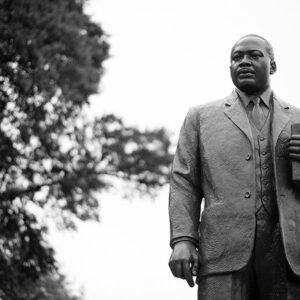
Martin Luther King Jr. might have turned 96 years old this month if he had not been felled by an assassin’s bullet on April 4, 1968. It is, of course, impossible to know what the United States would look like today if he had lived — or what he would think about the political dilemmas of our own time.

Yet there are certain obvious parallels between his time and ours. The country continues to be bitterly divided along political lines. And many activists and scholars argue that the racist power structure that King fought has re-congealed—this time in the guise of the “War on Drugs” and mass incarceration. His legacy, therefore, holds lessons for those now fighting for cannabis legalization.

Cycles of Repression and Revolution  

Foremost among those scholars is Michelle Alexander, author of the 2010 bestseller The New Jim Crow: Mass Incarceration in the Age of Colorblindness. Alexander takes a long view of the struggle for racial justice in the United States and paints a grim picture. She illustrates how many of the gains that King won in his life are being reversed after his death — this time in a new “race-neutral” guise that only serves to mask continued institutionalized racism.  

Alexander notes that in 1972, there were under 350,000 people in prisons and jails nationwide. Today there are 2 million. In fact, the US has the most people behind bars of any nation on Earth, in both per capita and absolute terms. This is certainly an irony for the country that touts itself as the “land of the free.” 

Among those 2 million people in prison are 40,000 who remain incarcerated in state or federal prisons on cannabis-related convictions— about half of them for marijuana offenses alone. When those waiting to see a judge in local jails are added in, the figure may approach 100,000 on any given day. And the racial disparity could not be more obvious. A 2013 American Civil Liberties Union report, Marijuana in Black and White: Billions of Dollars Wasted on Racially Biased Arrests, crunched the national data. It found that black people are more than three times as likely as whites to be arrested for cannabis — despite consuming the plant at essentially similar rates.  

And this is not the first time the country has seen significant and hard-won racial progress being in large part (at least) reversed, with the same power structure re-establishing itself in new guise. Slavery was abolished in the aftermath of the Civil War. But, as Alexander quotes historian and early civil rights activist W. E. B. Du Bois, from his 1935 book Black Reconstruction in America, “The slave went free, stood a brief moment in the sun, then moved back again toward slavery.”

In the South under occupation by Union troops after the Civil War, black people for the first time voted, served on juries and held elected office — until the backlash came. In 1877, the federal troops were withdrawn. In subsequent years, without federal interference, Ku Klux Klan terror enforced legal apartheid in the southern states — the system known as Jim Crow. Blacks were often reduced to a state of near-slavery through share-cropping and were barred from the vote by systematic disenfranchisement.  

It wasn’t until nearly a century after the Civil War that this system would be challenged. In his book Why We Can’t Wait, an account of the 1963 Birmingham Campaign to desegregate Alabama’s biggest city, King wrote of “America’s third revolution — the Negro Revolution.” 

By King’s reckoning, the country’s first revolution had been the one we actually call “the Revolution” — the War of Independence, although it left the slave-owning aristocracy of the South thoroughly in place. The second was arguably far more revolutionary — the Civil War, in which the slave system was broken. King’s Civil Rights Movement was avowedly nonviolent, but it was still a revolution — the overturning of a power structure by physical as well as moral opposition.

Despite the violent backlash, both from the police and Ku Klux Klan terrorists, the campaign ultimately swayed the nation, resulting in the passage of the Civil Rights Act of 1964 and other landmark legislation that finally ended legal apartheid in America.

But the year of King’s assassination saw the country’s national political establishment embracing the backlash — exactly as in 1877. In the 1968 presidential campaign, Republican candidate Richard Nixon first adopted the rhetoric of a “War on Drugs” (although he would actually coin that phrase three years later, when the Controlled Substances Act was passed). And, in just barely coded terms, Nixon was promoting the rhetoric of racism.

In her book, Alexander quotes Nixon’s special counsel John Ehrlichman explicitly summing up the campaign strategy in his 1982 memoir, Witness To Power: The Nixon Years: “We’ll go after the racists.” Ehrlichman unabashedly wrote how throughout the 1968 race, “subliminal appeal to the anti-black voter was always present in Nixon’s statements and speeches.” 

Alexander did not mention, however, another quote attributed to Ehrlichman in which he just as explicitly made the connection between this subliminal racism and the anti-drug drumbeat. Journalist Dan Baum in the April 2016 edition of Harper’s recalls a quote he says he got from a 1994 interview with Ehrlichman: “The Nixon campaign in 1968, and the Nixon White House after that, had two enemies: the antiwar left and black people… by getting the public to associate the hippies with marijuana and blacks with heroin, and then criminalizing both heavily, we could disrupt those communities. We could arrest their leaders, raid their homes, break up their meetings, and vilify them night after night on the evening news. Did we know we were lying about the drugs? Of course we did.”

And the backlash was just beginning.

Birth of the New Jim Crow 

The new order would be consolidated over the next decade. In 1973, the same year the federal Drug Enforcement Administration was created, New York state’s Rockefeller Laws imposed the nation’s first mandatory minimum sentences for drug offenses. In 1977, New York decriminalized cannabis, overturning the harsh Rockefeller Laws where personal quantities of marijuana were concerned — but the draconian provisions for cocaine and heroin remained intact.

With the election of Ronald Reagan in 1980, the “drug war” rhetoric was revived with a vengeance, and the Anti-Drug Abuse Act of 1986 imposed mandatory minimum sentences nationwide. Ten years later, an ACLU report would find that the law “devastated African American and low-income communities.” 

The 1986 law also instated the sentencing disparity for crack and powder cocaine — as crack was flooding black communities and landing people with the far longer sentences. This was also reflected in public perceptions and media portrayals. In the early ’80s, powder cocaine was a status symbol for white yuppies. When crack hit the streets from New York to Los Angeles, it was immediately stigmatized by association with the criminal (read: black) underclass.

This period also saw the rapid militarization of police forces, and the War on Drugs, in Alexander’s words, went “from being a political slogan to an actual war.” The 1981 Military Cooperation with Law Enforcement Act started to erode the firewall that had existed between the armed forces and police since the end of Reconstruction.

The DEA joined with local police forces to instate Operation Pipeline, a program of traffic stops and vehicle searches that was protested by the ACLU as based on systematic “racial profiling.” 

This was enabled by a series of bad Supreme Court decisions — Terry vs Ohio in 1968, Florida vs. Bostick in 1991, Ohio vs. Robinette in 1996 — that dramatically eroded the Fourth Amendment. Alexander writes that these decisions enabled “consent searches” — in which the motorist (or pedestrian, or home resident) verbally consents to the search, but actually does so under police intimidation.

All-white juries were more likely to convict black people, of course — and prosecutors were still able to strike non-whites from serving as jurors despite the 1986 Supreme Court decision Batson v. Kentuckywhich barred discrimination on the basis of race in jury selection. As Alexander writes, “the only thing that has changed is that prosecutors must come up with a race-neutral excuse for the strikes.” 

In a vicious cycle, mass incarceration itself served to entrench the system of mass incarceration. Convicted felons are excluded from juries in many states, and only Maine and Vermont allow prison inmates to vote (as most Western European countries do).

Nor did this system turn around when the Democrats returned to the White House. The Bill Clinton years saw a 60% drop in federal spending on public housing, and a 170% boost in prison spending up to $19 billion. Prison construction would finally begin leveling off in the 2000s, but the actual prison population broke new records in 2008, “with no end in sight.”

Alexander writes: “Ninety percent of those admitted to prison for drug offenses in many states were black or Latino, yet the mass incarceration of communities of color was explained in race-neutral terms, an adaptation to the needs and demands of the current political climate. The New Jim Crow was born.” 

And this was utterly out of proportion to any real threat posed by illegal drugs. In the 1980s, there were some 22,000 drunk driving deaths per year, among 100,000 alcohol-related deaths. In Alexander’s words: “The number of deaths related to all illegal drugs combined was tiny compared to the number of deaths caused by drunk driving.”

Among the numberless stories of police terror in the name of drug enforcement, one recounted by Alexander is that of Alberta Spruill—a 57-year-old Harlem woman who died of a heart attack in May 2003 after police officers broke down her door and threw a concussion grenade into her apartment. No drugs or any contraband were found in the apartment. The cops were acting on a bad tip from snitches snared on a marijuana rap. 

A Fourth Revolution? 

Thanks in large part to growing public consciousness, there certainly appears to have been some progress in the fight against the War on Drugs over the past decade. In 2009, following a hard-fought activist campaign, the Rockefeller Laws were finally overturned in New York. Eleven states have now legalized cannabis, and nearly all have at least some kind of provision for medical use of cannabis — significantly lifting the pressure on one federally controlled substance.

But even amid the progress, there are clear and frustrating signs that a mere change in the law isn’t enough. From New York City (where cannabis arrests have been de-emphasized by policy) to Colorado (where cannabis is now legal), overall arrests for pot are significantly reduced — but the stark racial disparity persists in those arrests that continue under various loopholes.

Michelle Alexander concludes with a litany of necessary legal reforms and then states that, ultimately, they are insufficient: “Mandatory drug sentencing laws must be rescinded. Marijuana ought to be legalized (and perhaps other drugs as well)… The list could go on, of course, but the point has been made. The central question for racial justice advocates is this: are we serious about ending the system of control, or not?” 

She quotes from Martin Luther King’s book of collected speeches, A Testament of Hope“White America must recognize that justice for black people cannot be achieved without radical changes in the structure of our society. The comfortable, the entrenched, the privileged cannot continue to tremble at the prospect of change in the status quo.”

There are many other quotes from the great civil rights leader that shed equal light on the current impasse, in which the limitations of mere legal progress are becoming clear. In his April 1963 Letter from Birmingham Jail, King justified his civil disobedience in these words: “An unjust law is a code that a numerical or power majority group compels a minority group to obey but does not make binding on itself.”

This recalls both the relative impunity for white coke-snorters in the ’80s as black communities were militarized in the name of drug enforcement — and the white entrepreneurs now disproportionately getting rich off legal cannabis, while black users remain disproportionately criminalized.  

In Why We Can’t Wait, King wrote of how the country needed a “Bill of Rights for the Disadvantaged” — anticipating the current demands for drug war reparations, wedding legal cannabis to addressing the harms caused by prohibition and the related matrix of social injustice.

The notion that cannabis legalization is necessary but not sufficient recalls King’s 1967 report to the staff of the Southern Christian Leadership Conference, the main coordinating body of the civil rights campaign. 

In the “Report to SCLC Staff,” he noted how the 1965 Selma to Montgomery March culminated in passage of the Voting Rights Act later that year — a critical victory. Yet, he wrote: “We have moved from the era of civil rights to the era of human rights, an era where we are called upon to raise certain basic questions about the whole society. We have been in a reform movement… But after Selma and the voting rights bill, we moved into a new era, which must be the era of revolution. We must recognize that we can’t solve our problem now until there is a radical redistribution of economic and political power.”

If cannabis legalization is to truly undo the social harms of prohibition, its advocates may be in for a similar reckoning in the coming period.

The post MLK & Marijuana: How the Civil Rights Leader’s Work Informs the Push for Legal Pot appeared first on Cannabis Now.

Source link

Cannabis Consumers, STOP Lying on Your Insurance Applications.

From Advocacy to Action: Ganjactivist.com Launches UpInYears.life for Cannabis Financial Empowerment.

From Advocacy to Action: Ganjactivist.com Launches UpInYears.life for Cannabis Financial Empowerment.

PRESS RELEASE FOR IMMEDIATE RELEASENovember 6, 2025 From Advocacy to Action: Ganjactivist.com Debuts UpInYears.life for Cannabis Financial Empowerment Los Angeles, CA — November 6, 2025 — Ganjactivist.com, widely known for its advocacy, industry education, and cultural leadership in the global cannabis space, today announced the launch of UpInYears.life, a new financial services platform designed to…

The post From Advocacy to Action: Ganjactivist.com Launches UpInYears.life for Cannabis Financial Empowerment. first appeared on .

Source link

Fee-Free Cannabis Prescriptions: Reddit Patients Evaluate Dispensed's Subscription Model

Fee-Free Cannabis Prescriptions: Reddit Patients Evaluate Dispensed's Subscription Model

Fee-Free Cannabis Prescriptions: Reddit Patients Evaluate Dispensed's Subscription Model

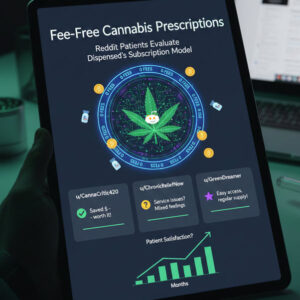
Medical cannabis prescribing in Australia operates through competing business models. Some clinics charge consultation fees for each appointment. Others eliminate these fees entirely through subscription-based delivery systems. Reddit discussions across r/MedicalCannabisOz, r/MedicalCannabisAus, r/MMJ, and regional forums reveal how patients evaluate these different approaches.

Source link

Missouri Marijuana Microbusinesses Begin First Crop Harvests Amid Struggle To Succeed

Missouri Marijuana Businesses Fined For Bringing Clones Across State Lines In Violation Of Rules

Missouri Marijuana Businesses Fined For Bringing Clones Across State Lines In Violation Of Rules

“Some licensees believed they were permitted to bring in clones or tissue cultures as well as seeds on an ongoing basis.”

By Rebecca Rivas, Missouri Independent

At least seven marijuana cultivation facilities in Missouri have been fined over the last year for breaking what’s known in the industry as the “immaculate conception rule.”

Marijuana can’t pass over state lines because it’s still federally illegal, and state law mandates that all marijuana must be grown within the state.

However, there is one year after a licensee passes a commencement inspection when the state essentially closes its eyes and puts its hands over its ears on how a cultivation facility starts its inventory.

It’s called the immaculate conception rule, and six facilities were fined up to $500,000 from breaking it last year.

A spokesperson for the Missouri Division of Cannabis Regulation said regulators “discovered some licensees believed they were permitted to bring in clones or tissue cultures as well as seeds on an ongoing basis. However, this practice is a violation of seed-to-sale tracking regulations.”

To keep up with customers’ preferences and demand, these companies had been bringing in clones, or starter plants, and tissue cultures, which is a form of in-vitro propagation, of popular plant varieties from other states

“In lieu of penalties or other enforcement action, these violations were resolved for amounts ranging from $50,000 to $500,000, depending on the circumstances,” said Lisa Cox, spokeswoman for the Missouri Department of Health and Senior Services, which oversees the cannabis regulation division.

The licensees that saw the biggest fines are major players in other states as well, including the companies behind Good Day Farm and High Profile.

The combined fee for four cultivation licenses representing Good Day Farm and Codes, which share management, was $347,495. The facilities are located in Columbia, Carrollton and Chaffee.

For High Profile, it was $500,000 at its O’Fallon cultivation facility.

Two smaller cultivators also saw fines of $20,000 and $50,000.

None of the licensees who were fined by the state returned The Independent’s request for comment.

The ‘mother plant’

Cultivation facilities in Missouri are approved to grow marijuana plants, and the harvest is sent to a manufacturing facility that then makes pre-rolls, edibles and other products.

Oftentimes, cultivators will develop “a mother plant” to collect clones, or cuttings, from the plant and put those into their own pots. Those are genetically identical to the plant that they’re cut from.

But where does the mother plant come from?

For a facility’s first year, the “rules and law are silent on how that occurs,” Cox said.

After that, the facilities can ask the state for permission to bring in seeds for “ongoing inventory needs,” she said, or get clones from other licensed cultivators located in Missouri.

But the state fined several licensees last year for not sticking to those rules, sending a clear message to all Missouri companies that they have to grow plants from seed or get starter plants from their competitors.

Ryan Schepers, instructor for St. Louis Community College’s cannabis program, said as a “plant nerd,” he doesn’t believe starting from seed is a necessarily difficult thing—or a bad thing for the industry’s innovation.

“I think a lot of the cultivation centers are set up to care for already established plants, and that would be a little bit of a challenge,” he said.

But it’s nothing the “well versed” plant growers working in the cultivation centers can’t handle, he said. The main challenge is the delay in production, he said. It will take about a month to six weeks for a cannabis plant to start to be well established, he said, but they’ll be “pretty hardy plants.”

“Clones are obviously much easier to deal with,” he said.

But tissue cultures involve a small amount of cells to get started, he said, and that process can take about as long as seed sprouting.

He understands that it’s difficult for companies to align the plant growth time with the need to keep up with trends in other states. If a product is selling really well in California, he said, “of course we’re going to try to get that same thing in Missouri.”

However, he said it can disincentivize cultivation centers from trying new things. For the sake of his students, he hopes the emphasis will shift to breeding and innovation.

“We, at St Louis Community College, really emphasize that our students be plant scientists who focus on cannabis,” he said.

Innovation can be difficult when the federal and state laws are rapidly changing, he added.

The Independent asked if the state would consider a variance for licensees to get clones in the future to keep up with popular varieties.

“The department was considering guidance from the DEA that indicated clones may no longer be considered marijuana under federal law due to low Delta 9 [THC] concentrations,” Cox said.

However, she said recent changes to federal law “may change the status of seeds and clones.” She was referring to restrictions on hemp that were passed as part of the federal spending package last year and will be effective in November.

“So the department will need to follow how federal guidance,” Cox said, “and interpretation develops over the next year before it makes any changes to rules or processes.”

This story was first published by Missouri Independent.

Photo courtesy of Chris Wallis // Side Pocket Images.

The post Missouri Marijuana Businesses Fined For Bringing Clones Across State Lines In Violation Of Rules appeared first on Marijuana Moment.

Source link