
What Albertans need to know about cannabis
Discover what every age group needs to know about the cannabis world, courtesy of AGLC!
The post What Albertans need to know about cannabis appeared first on Leafly.
Cannabis info and related links and post from around the web

Discover what every age group needs to know about the cannabis world, courtesy of AGLC!
The post What Albertans need to know about cannabis appeared first on Leafly.

Ganjactivist.com, publishers of the Ganjactivist.com Magazine have launched a fundraising campaign for small farmers who have been devastated by hurricane Melissa in Westmoreland Jamaica. Jamaica was integral to our foundation and the least we can do is use our platform to raise awareness and resources for our friends in Negril and Western, Jamaica. The campaign,…
The post Ganjactivist.com launches Build Back Jamaica campaign. first appeared on .
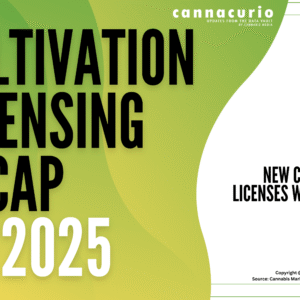
518 cultivation licenses were issued in Q3, down sharply from 729 in Q2. © CNB Media LLC dba Cannabiz Media
Source link

Over the course of the 2025 Nevada Legislative Session, the legislature passed 7 bills impacting cannabis establishments in the State. A multitude of modifications have occurred, some regarding the Cannabis Compliance Board’s oversight, as well as the establishment of many definitions which could impact cannabis companies’ operations. This is not a complete overview of the legislative changes and the below does not contain all items related to cannabis establishments in the State of Nevada. If you would like to review a bill in its entirety, please follow the links in the Sources listed below.
Effective: May 28, 2025 -Senate Bill 25:
Senate Bill 25 allows the State Fire Marshall to inspect and regulate cannabis production facilities relating to safety, access, means and exits in case of fire.
Effective: May 30, 2025- Senate Bill 41:
Senate Bill 41 requires that a cannabis license must obtain a cannabis tax permit. The bill details the requirements for an application for a cannabis tax permit.
In the scenario cannabis license holder fails to comply with the requirements for a cannabis tax permit, the Department of Taxation, after providing a hearing to show cause as to why his or her cannabis tax permit should not be revoked or suspended, may revoke or suspend any one or more of the permits held by the person. Additionally, the Department shall not issue a new cannabis tax permit to any person who has previously had a permit revoked, unless the provisions relating to the excise taxes. If a cannabis tax permit is suspended or revoked (final decision of taxation), the operations must cease.
Effective: June 6, 2025- Senate Bill 168:
Senate Bill 168 relates to administrative hold of products and requires the Cannabis Compliance Board to adopt a process for issuing administrative holds and lifting of the same. Also, the requires the CCB to develop and maintain standardized checklists for any item which the CCB requires a licensee to obtain the approval of the Board before it is used by the licensee. Moreover, the bill requires the Board to post on its Internet website a list of frequently asked questions pertaining to the operations of licensees.
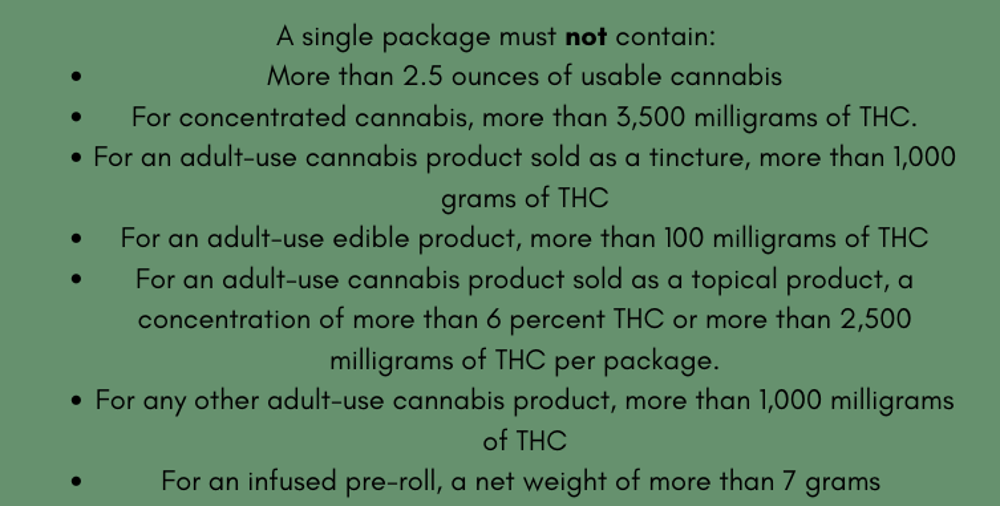
SB168 also made changes to packaging and labeling requirements including the packaging limitations for single packages:
Effective June 10, 2025- Assembly Bill 76:
Assembly Bill 76 was the Cannabis Compliance Board’s bill and made several changes regarding the oversight and regulation of cannabis license holders.
First, the following information is not confidential:
Furthermore, AB76 sets packaging limitations, specifically regarding packaging that appeals to children. For instance, they forbade anthropomorphic images, which are defined as: any image, including, without limitation, a caricature, cartoon or artistic rendering, in which human characteristics are attributed to an animal, plant or other object or which uses similar anthropomorphic techniques.
Lastly, the bill requires the Cannabis Advisory Commission to create a subcommittee to conduct a study concerning matters relating to sales of consumable hemp products in this State. Likewise, the bill instructs the Commission to create a subcommittee to conduct a study concerning the way cannabis and cannabis products are taxed in this State.
Effective October 1, 2025- AB365:
Assembly Bill 365 states that the University of Nevada Reno is no longer legally obligated to continue their established program for the evaluation and research of the medical use of cannabis in the care and treatment of persons who have been diagnosed with a chronic or debilitating medical condition.
Effective October 1, 2025- AB504:
Assembly Bill 504 places certain restrictions on hemp product sales including businesses that sell hemp products intended for human consumption shall prominently display at all times in a conspicuous place at the location at which the sale or offer is made, a sign at each:
Effective October 1, 2025- SB157:
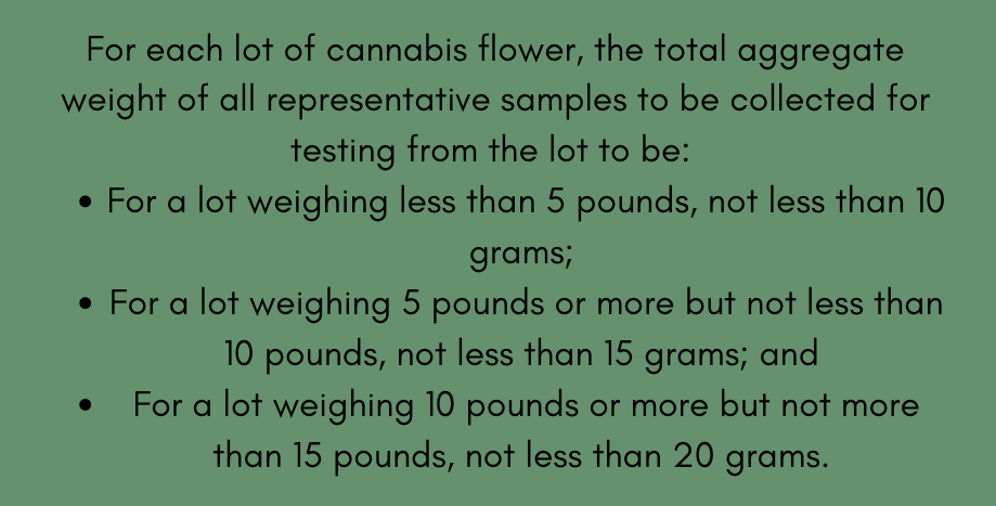
Senate Bill 157 increases the lot sizes for testing.
“Lot” is defined as:
To ensure your cannabis establishment stays in compliance, it is of the upmost importance to stay on top of all legislative changes. Once again, this is not a complete overview of the legislative changes, and the blog does not contain all items relating to cannabis establishments in Nevada so if you have questions, please review the bills and ask an attorney.
Sources:
https://www.leg.state.nv.us/App/NELIS/REL/83rd2025/Bill/11896/Overview
https://www.leg.state.nv.us/App/NELIS/REL/83rd2025/Bill/12475/Overview
https://www.leg.state.nv.us/App/NELIS/REL/83rd2025/Bill/12787/Overview
https://www.disability.state.mn.us/about-our-public-policy/bill-tracker/
https://www.leg.state.nv.us/App/NELIS/REL/83rd2025/Bill/11786/Overview
https://www.leg.state.nv.us/App/NELIS/REL/83rd2025/Bill/11817/Overview
https://www.leg.state.nv.us/App/NELIS/REL/83rd2025/Bill/12186/Overview
https://www.leg.state.nv.us/App/NELIS/REL/83rd2025/Bill/12138/Overview
The post 2025 Cannabis Legislation: Key Updates & Industry Impact appeared first on Connor & Connor PLLC.
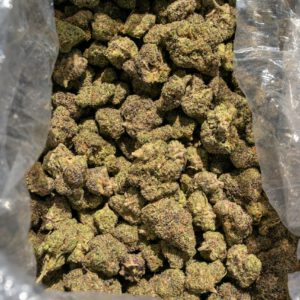
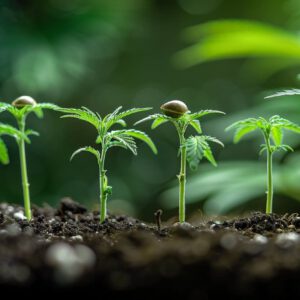
Germinating cannabis seeds is the first real step in growing a healthy plant. It’s the process of waking up the life inside the seed so it can sprout and grow. If this stage goes wrong,…
The post How to Germinate Cannabis Seeds the Right Way appeared first on Greencamp.

There is something happening in the United States that goes way beyond legalization. Cannabis is becoming personal again. Instead of choosing from a shelf stocked with shiny labels, more people are digging into soil, turning on grow lights, and discovering the excitement of raising a plant from the very start. The movement is growing fast, […]
Source link
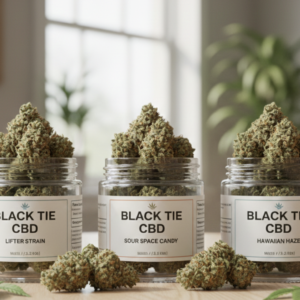
The CBD flower market has exploded in recent years, giving consumers more options than ever before. But with so many brands claiming to offer premium hemp flower, how do you separate genuinely quality products from…
The post Best CBD Flower Brands for Smoking appeared first on Greencamp.

In the cannabis industry, “big night” typically refers to a large-scale event featuring a prominent DJ, a crowded club, a recognizable sponsor wall, and a room filled with operators networking between bottle-service trips. It works, but it’s also predictable.
Jeeter’s Las Vegas event at MJBizCon 2025 didn’t resemble a typical industry party. It was staged like a live show, built around chapters, original music, choreography, and a narrative that treated cannabis as culture, not a commodity. The aim wasn’t just spectacle. It was to give the industry a night that felt authored, intentional, and bigger than nightlife.
Cannabis brands are still navigating the fractured rules market to market, venue to venue. You can throw a perfect party and still run into the same wall: many of the most iconic spaces do not allow cannabis on site. Jeeter’s answer is not to shrink the concept, but rather, build an experience strong enough to carry the brand, whether the plant is present or not.
“We can still get people high on life,” Co-Founder and Co-CEO Sebastian Solano said, describing a philosophy that puts experience, music, and emotion at the center, with product as the foundation rather than the only delivery system.
This is the logic behind Jeeter Live, the company’s growing live-events arm. Suppose the Vegas show is the blueprint; Jeeter is not simply trying to throw the best cannabis party. It is trying to build the kind of touring-scale cultural moment that can live inside the broader entertainment world.

What set the Vegas event apart from typical “industry night” activations was its structure as narrative entertainment. They designed the concept around “the evolution of the cannabis plant,” told through music and visual storytelling in three chapters.
The first act begins at the source. Cannabis as seed, as plant, as medicine, as spiritual tool. It is intimate by design, and it sets the tone that Jeeter is not treating cannabis as a trend. The plant existed long before modern branding, long before legalization, and long before the industry could monetize it. This chapter is about reminding the room that cannabis has always been larger than the market built around it.
The second act moves into modern history. Cannabis becomes mainstream and controversial at the same time. The visuals referenced cultural flashpoints like Woodstock and protest-era imagery, reflecting decades of public embrace set against institutional resistance. The point was not nostalgia. The point was context. Cannabis did not become “an industry” without a long and contested cultural fight.
The third act goes forward. It leans into a sci-fi lens, with technology, AI, and automation dominating the stage environment. But the message stays grounded. In Jeeter’s framing, no matter how advanced the world gets, people still return to what grows from the earth. The future can be high-tech, but the human need for connection, nature, and ritual does not disappear.
The finale was intentionally emotional, designed to land in the chest, not just on camera. The show closed with a message of gratitude to the wider industry, a nod to the people who took hits, built anyway, and kept moving despite uncertainty, regulation, and constant friction.

One of the strongest statements Jeeter made with this event is that they built the creative foundation internally. They did not outsource the story to an agency. They did not outsource the music to a third-party production house. The team framed the show as something created by Jeeter people, directed by Jeeter people, and executed by a circle that treats the brand like a creative studio.
A key figure in the production was David Solano, Jeeter’s Chief Sales Officer, who served as the featured artist and DJ. Three of the show’s six songs were produced from scratch by Solano, giving the event an original sound rather than a playlist. You can feel the difference between a brand that books talent and a brand that is the talent.
Solano’s music also ties into a deeper thread in the Jeeter universe. His album project Bedtime Story is described as being inspired by plant medicine experiences, the kind of personal, visionary influence that shapes sound, pacing, and emotional tone. In a space where “authenticity” is often used as a marketing shortcut, Jeeter leaned into something closer to authorship.
This also extended into the details. The team described directing the show hands-on, selecting costumes, coordinating lighting cues, and building specific moments around timing and emotion. The goal was not “a cool party.” It was a controlled experience with a beginning, a build, and a release.
If you want to understand the intensity behind the Vegas event, start with the timeline.
The team described the production as something that should have taken six months. They built it in five weeks.
That kind of pace forces decisions. It forces improvisation. It also creates the kind of energy you can feel in a room, because the show is not only designed to be big, it is built under pressure, with a sense of urgency and risk.
Two weeks before the show, the team attempted to book a choir and got hit with a quote near $30,000 for a handful of songs. Instead of dropping the choir concept, they pivoted and started calling churches across Las Vegas until they found an eight-person choir that fit the budget.
Then, on the day of the show, Solano woke up sick enough that the team sent a doctor to his room. He performed anyway, with a bucket next to him the entire time.
What a hell of a reminder that when a brand is building experiences at this scale, it is not “set it and forget it.” It is production, logistics, and commitment, executed in real time.

Jeeter announced the Vegas event with a short runway, roughly 10 days ahead of time. Despite that, the show sold out in under 48 hours. Sign-ups surged to around 1,800 in that initial window, and the ticketing site crashed under the strain of traffic on the day of the event.
That is not normal for a cannabis industry party, especially with a tight announcement timeline. It suggests that Jeeter has become a destination brand in a way that goes beyond product, and that the live experience is starting to function like a property of its own.
The team described the crowd like a global reunion of major players, from top retailers to Canadian operators. In other words, the room was not just fans. It was decision makers, tastemakers, and people who usually have too many invites to care.
When a brand can pull that crowd that quickly, it means it has begun to represent something larger than the immediate event. It becomes a signal. If you are there, you are part of the moment.
Here’s the twist that makes the whole strategy even more interesting. The Vegas event took place in a venue where cannabis could not be present.
In many brands’ hands, that would be a limitation. For Jeeter, it became proof of concept.
The team described the show itself as high. The experience, the music, and the emotional build did the work. People in the room were not thinking about what they could not do. They were reacting to what they were getting.
This is the part of Jeeter Live that feels genuinely scalable. If your experience only works when the product is present, you are constrained. If your experience works as entertainment first, you can operate in larger venues, more cities, and more mainstream spaces without sacrificing your identity.
It also pushes cannabis culture forward in a subtle way. It says the plant is powerful, but the culture around it is equally powerful. The identity can travel, even when the rules do not.
All photos courtesy of Jeeter Live.
<p>The post Inside Jeeter Live, the Cannabis Event Betting on Culture first appeared on High Times.</p>

Edibles, grinders, vapes, lighters, books, hats, shirts and more all for giving during the holiday season.
Source link