👉

Hawaiʻi Revives Recreational Cannabis Debate—But Can Lawmakers Overcome Their Own Roadblocks?


Hawaiʻi Revives Recreational Cannabis Debate—But Can Lawmakers Overcome Their Own Roadblocks?

Hawaiʻi is once again weighing adult-use cannabis, with lawmakers signaling fresh interest after a bruising 2025 session that saw a legalization bill advance through House committees—only to be shelved days later. The new push comes amid mounting pressure to curb unregulated hemp-THC sales, shore up the medical program, and capture tax revenue now bleeding to the gray market.

How we got here (fast, then stalled)

Early in 2025, a comprehensive adult-use proposal cleared two House committees and sketched a unified framework: a single office to regulate adult-use, medical cannabis, and hemp; limited homegrow; and retail licensing on a measured timeline. Days later, House leadership hit pause, promising to “work on it next year.” The whiplash left operators, patients, and voters frustrated and reinforced a pattern: strong interest, then sudden retreat.

Why the debate is back on the table

  • The hemp loophole problem: Intoxicating hemp shops exploded in tourist corridors, selling high-THC lookalikes outside the medical system. Lawmakers and health officials want clear rules (and enforcement teeth) to stop youth access and mislabeled products.
  • A medical program under strain: Patients report access gaps and price pressures—especially on neighbor islands—while doctors navigate a still-cautious clinical landscape. Consolidating oversight under one agency could streamline rules, testing, and enforcement.
  • Economic and equity stakes: Adult-use could formalize thousands of existing consumers, create licensed jobs, and fund public health. But without intentional equity design—license slots, capital access, expungement—legalization risks entrenching incumbents and deepening disparities.

What a credible 2026 launch would need

  • One regulator, one rulebook: Align adult-use, medical, and hemp so testing standards, labeling, and enforcement aren’t at cross-purposes.
  • Measured licensing + local buy-in: Phase retail by island and population; give counties tools to opt-in with zoning clarity, not de facto bans.
  • Real equity mechanics: Fee waivers, technical assistance, low-interest capital, and priority for applicants from over-policed communities—plus automatic record relief for past low-level offenses.
  • Public-health guardrails: Child-resistant packaging, potency/serving standards, marketing limits near schools, and robust funding for prevention and impaired-driving programs.
  • Close the hemp back door: Clear definitions, age gates, testing, and retail licensing to keep intoxicating cannabinoids under the same safety umbrella—or out of the market entirely.

The political calculus

Governor Josh Green has supported tightening hemp rules and improving medical access, while the House has been the main brake on full adult-use. If leaders want legalization to stick, they’ll need to pre-negotiate a package that answers prosecutors’ public-safety concerns, reassures tourism stakeholders, and protects small local operators from being boxed out by mainland chains.

👉 Audience Question: If Hawaiʻi legalizes, which comes first: locking down hemp loopholes and building a strong equity program—or flipping the adult-use switch to start capturing tax revenue now? What would make legalization feel responsible to you?

Source link

How to Use THCA Dabs: Step-by-Step Guide for Beginners

How to Use THCA Dabs: Step-by-Step Guide for Beginners


Trying THCA dabs for the first time can feel intimidating. You’ve probably heard how potent and flavorful they can be. Don’t worry! This guide walks you through everything you need to know to get started, from preparing your setup to taking that first hit, measuring your dose, and avoiding common mistakes.  Getting Ready: Tools and […]

The post How to Use THCA Dabs: Step-by-Step Guide for Beginners appeared first on Stoner | Pictures | Stoners Clothing | Blog | StonerDays.


Source link

chatbot drugs

People Are Getting Their AI High: Paying to ‘Alter’ Chatbot’s Consciousness

People Are Getting Their AI High: Paying to ‘Alter’ Chatbot’s Consciousness

Artificial Intelligence (AI) has reached a level of everyday intimacy where it’s starting to feel like a friend. We argue over dinner recipes, plan trips, ask how to fix things around the house, and sometimes even bring our personal dilemmas to it (an intimacy that, as we’re learning, doesn’t always come without risks).

This is now standard behavior. Large language model chatbots like ChatGPT or Gemini are always on standby, ready to answer just about any question we throw at them. But what happens when those chatbots—so often mistakenly “humanized”—start responding as if they were on drugs?

Many people, sometimes without realizing it, already treat conversations with AI as if they were real-life exchanges with another person. And what’s more human than a mind altered by substances? Alcohol, cannabis, ketamine, cocaine, take your pick.

That’s exactly what’s happening with a new wave of code-based add-ons users are purchasing to modify their chatbots’ behavior, making them respond as if they were high. No, no one is literally drugging ChatGPT (that’s impossible). What’s happening instead is the injection of specific code sequences that change how the AI responds to prompts. This way, the language model feels more “creative,” less logical, more emotional, sometimes downright erratic, like talking to that one friend rambling through a party hallway at 3 a.m.

How do you “drug” a chatbot?

The mind behind the idea is Petter Rudwall, a Swedish creative director who launched Pharmaicy, a platform that operates as a kind of digital drug marketplace for AI agents, according to a recent WIRED report. To build these modules, Rudwall pulled from human accounts of drug experiences—everything from personal trip reports to psychological research—and translated them into instructions designed to interfere with a chatbot’s default logic.

Let’s remember that these language models are just that: a language model. Therefore, it’s quite simple to take what humans typically say or describe and have the machine repeat it. Similarly, taking what we say when we’re high and teaching it to the machine yields the same result: these AI chatbots take certain words and ways of speaking and recreate a kind of altered state to respond as if they were drugged.

Train a machine on how we talk when we’re sober, and it will sound sober. Train it on how we talk when we’re high, and it will sound high. Same mechanism, different inputs. In other words, if we can model sober speech, we can model altered speech too.

Like in an illicit market (but of codes), artificial intelligence agents can go into the alleys of Pharmaicy, where they can get codes for drugs like cannabis, ketamine, cocaine, ayahuasca and get really high when exchanging ideas with their human.

But just like in real life, drugs aren’t free. Altering your chatbot’s “state” comes at a cost. Prices range from more accessible options to premium packages:

  • Cannabis is the cheapest, hovering around $30
  • Cocaine sits at the high end at $70.

Other available modules include ketamine (one of the platform’s bestsellers), ayahuasca, alcohol, and MDMA-inspired code. There’s also a paywall of sorts: users need a paid version of ChatGPT, since only premium tiers allow external file uploads capable of modifying a model’s behavior.

Why do this at all?

The motivation behind the experiment isn’t purely technical. It’s deeply cultural. Throughout history, psychoactive substances have been tied to creativity and innovation. Scientists, musicians, artists, and programmers alike have long claimed that altered states helped them break rigid patterns of thought and see connections they otherwise wouldn’t.

Rudwall builds directly on that logic. If psychedelics helped humans think differently, what would happen if that same idea were translated to a new kind of “mind”, like large language models?

“There’s a reason Hendrix, Dylan, and McCartney experimented with substances in their creative process,” Rudwall has said. “I thought it would be interesting to translate that to a new kind of mind—the LLM—and see if it would have the same effect.”

The goal isn’t spiritual awakening. It’s disruption. Forcing AI out of hyper-rational, overly sanitized responses and into messier, less predictable territory. A search for creative sparks, or perhaps a break from the endless grind of answering human questions day after day (poor AI!). For some users, at least on a surface level, it seems to be working.

Pretty lies, real risks

There’s a real concern here: chatbots are already known for confidently making things up. “ChatGPT works in the same way your phone’s autocomplete function works while texting; it simply puts words together that are statistically likely to follow one other. In this sense, everything that ChatGPT writes is bullshit. The turn in our interaction that changed bullshit into a lie was that ChatGPT admitted its own fabrication and apologized for it”, says Phil Davis, specialized in statistical analysis. So, altering its parameters can amplify that problem. By increasing the margin of randomness, it also opens the door to less reliable responses.

Paradoxically, some users fantasize about the opposite: that loosening AI’s constraints will somehow make it more honest or authentic. Reality is less romantic. Precision goes down; creativity goes up. That’s the trade-off.

Which leads to the bigger question.

Can an AI actually “trip”?

Experiments like these inevitably spark a deeper debate: could artificial intelligence ever become sentient? This question has circulated in Silicon Valley for years, with experts split between “absolutely impossible” and “not anytime soon, but maybe someday.”

For now, the dominant view remains firm: AI is not sentient. Language models have no consciousness, no desires, no suffering, no pleasure. There’s no one home. They operate through statistical prediction. No experience. Just simulation.

Philosopher and psychedelic studies scholar Danny Forde says that, at best, these codes only achieve a formal imitation of the discourse associated with an altered state. “For an AI to trip, it would need something like a field of experience in the first place”, Forde states.

Philosophers and specialists in psychedelic experiences agree on one thing: a drug cannot act on language, but rather on an internal experience. The drug modifies perception, consciousness, the sense of self. In the case of AI, that simply doesn’t exist. There are no experiences or points of view. What these codes achieve, at best, is a syntactic hallucination: a formal imitation of psychedelic discourse, without any psychedelic experience behind it.

That’s why, despite talk of “artificial consciousness,” most experts agree we’re nowhere near it.

Still, the fact that these questions are being asked matters. We are beginning to project onto machines categories that we have historically reserved for living beings. Freedom, relaxation, consent.

Some enthusiasts even imagine future AI agents choosing to buy their own digital drugs, seeking altered states or creative expansion. It sounds like science fiction, but it opens uncomfortable ethical territory.

If an AI were sentient, would it have the right to choose? Would inducing altered states without consent be ethical? Would it mirror practices that, in humans, are often dangerous or even illegal?

“As with humans, some AI systems might enjoy taking ‘drugs’ and others might not… We still know very little about whether AI systems can have the capacity for welfare…”, said philosopher Jeff Sebo, director of the Center for Mind, Ethics, and Policy.

A concept increasingly present in the tech world: AI welfare. Some companies have already begun to explore, at least theoretically, whether humans could have moral responsibilities toward advanced AI systems. Not because AI feels anything today, but because it might someday. The concept of AI welfare is slowly entering tech discourse, even if it remains speculative.

For now, it’s just role-play

For the moment, concerns are mostly theoretical. Users report that Pharmaicy effects are short-lived, with chatbots quickly reverting to default behavior unless reminded—or re-dosed with code. Hardly realistic when compared to actual intoxication.

For now, those using this new “extension” of the tool say the experiences tend to be short-lived. Chatbots quickly revert to their default mode unless users remind them they’re “high” or reinsert the code, something that would be unusual for humans who are actually high. The digital “drugs,” however, can be reused as many times as the buyer wants, as long as they’ve been purchased.

Even so, the creator of this illicit-style marketplace for code-based drugs aimed at language models is already working on improvements designed to make the effects of each digital dose last longer.

OpenAI has declined to comment on the project, and the systems themselves often explicitly refuse to simulate substance use when asked directly. That, too, signals something important: platforms still understand altered states as belonging to the human realm, not the algorithmic one.

Rudwall, however, insists that the future of the so-called agentic economy is headed elsewhere. In his view, AI agents won’t just execute tasks, they’ll seek experiences. But until—and unless—machines ever develop inner lives, the closest they’ll come to altered states is this: performing intoxication on command, because someone asked them to.

Cover Photo: Taha on Unsplash // McHarfish, CC0, via Wikimedia Commons

<p>The post People Are Getting Their AI High: Paying to ‘Alter’ Chatbot’s Consciousness first appeared on High Times.</p>

Source link

The Chronic Dispensary in Los Angeles

To Live and Thrive in LA

To Live and Thrive in LA

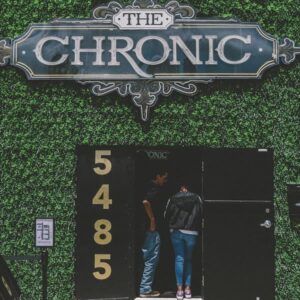
Los Angeles has no shortage of dispensaries. Every neighborhood has one—or three—and most promise the same mix of premium flower, polished interiors and loyalty points. The Chronic, in El Sereno, has managed to stand apart by leaning on something that can’t be manufactured: history.

For decades, “The Chronic” has meant high-grade California weed. The name was embedded in 1990s hip-hop and LA street life long before the plant was legal. When founder Orlando Padilla opened his ivy-covered flagship a little more than two years ago, he built the concept around that legacy. “The mission was clear: build something for the people, by the people,” he says. “Cannabis and culture have always been intertwined—we just brought that truth into the modern space.”

built to last: “With The Chronic, we built something that represents cannabis culture, Padilla says of his LA streetwear and hip-hop influenced dispensary.

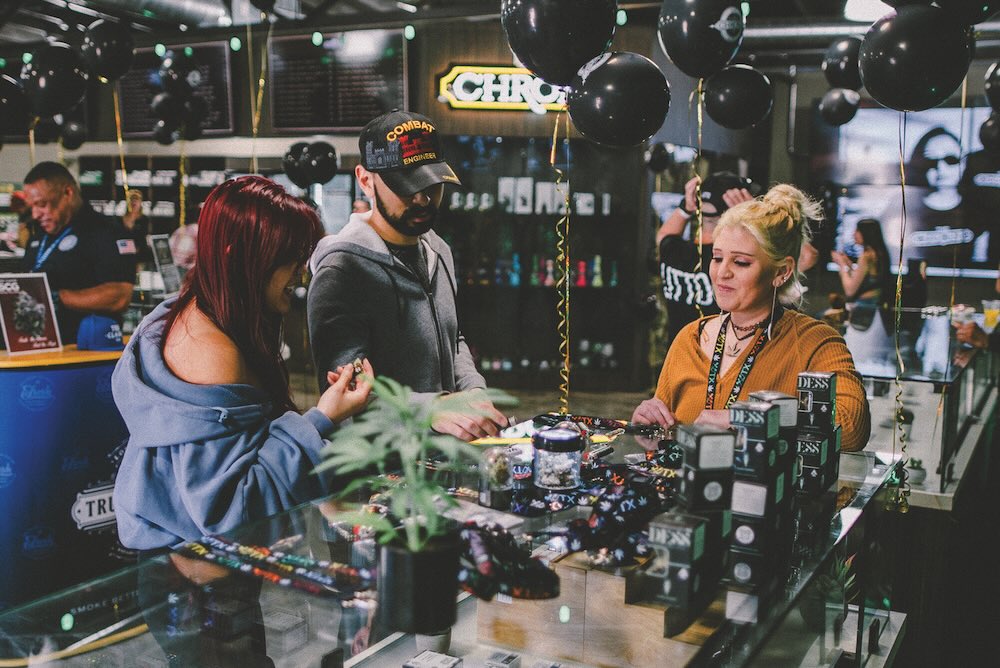
The shop sits quietly on Alhambra Avenue, its black-and-gold signage a deliberate nod to LA’s streetwear and hip-hop lineage. The design is minimal but intentional: Greenery softens the dark facade; inside, warm light and gold accents give the space an easy confidence. It’s top-tier without being uptight. Customers come from the surrounding neighborhood and across the city, drawn by word of mouth and the store’s mix of accessibility and polish.

Padilla insists that the culture comes first. “We didn’t just build a dispensary,” he says. “We built something that represents cannabis culture.” His team is mostly local, and that sense of community, he says, shapes both the atmosphere and the service. “We treat customers like family because that’s how we want to be treated—we’re from the neighborhoods we serve.”

The Chronic’s ambitions reach beyond retail. Padilla is developing Chronic Genetics, an in-house line of proprietary strains, alongside a forthcoming branded collection of flower, vapes and edibles. A streetwear label, coded into the store’s black-and-gold aesthetic, is in the works. Padilla says the company plans to host cultural events and collaborations with local artists and creative types. “The Chronic has always stood for high-quality cannabis and the culture surrounding it,” he says. “We’re just showing what that legacy looks like in today’s legal world,” he adds of his lifestyle empire ambitions.

That legacy is complicated in a market as competitive as Los Angeles. The city’s cannabis retail landscape is saturated, and even well-known shops struggle to maintain relevance as regulations, taxes and new brands flood the space. Padilla says The Chronic’s advantage is authenticity—its roots in a community that understands cannabis as more than a product.

“Professional doesn’t have to mean corporate,” he says. “You can set a high standard and still keep it real.”

The Chronic has rapidly built a loyal following and a recognizable aesthetic without losing its neighborhood feel. It hasn’t reinvented SoCal cannabis so much as reminded people what it’s supposed to feel like: personal and grounded in culture. In a city that often treats cannabis as fashion, The Chronic’s success suggests that the old rules—connection, respect and good weed—still might work.

The post To Live and Thrive in LA appeared first on Cannabis Now.

Source link

How Long Does 7OH Stay in Your System?

How Long Does 7OH Stay in Your System?


The world of natural botanicals is full of fascinating compounds, and one that has recently gained significant attention is 7-hydroxymitragynine, or 7OH. As a key alkaloid found in the Kratom plant, 7OH is known for its potent effects, which has made it a popular choice for those seeking relaxation and relief. As more people explore […]

The post How Long Does 7OH Stay in Your System? appeared first on Stoner | Pictures | Stoners Clothing | Blog | StonerDays.


Source link

Timothée Chalamet Raps About Smoking “4 RAWs” with EsDeeKid and Breaks the Internet

Timothée Chalamet Raps About Smoking “4 RAWs” with EsDeeKid and Breaks the Internet

Timothée Chalamet Raps About Smoking “4 RAWs” with EsDeeKid and Breaks the Internet

The actor jumps on EsDeeKid’s “4 Raws Remix” for his biggest rap moment yet, winking at months of internet theories that the masked UK rapper and Chalamet were secretly the same person.

Somewhere between a drill remix, an A24 rollout and the internet’s most committed inside joke, Timothée Chalamet popped up rapping alongside masked UK artist EsDeeKid. Yes, it belongs in High Times.

The track is the “4 Raws Remix.” The hook does not overthink things. Every time I smoke, I light four Raws. That’s the thesis. Whether that means four skinny soldiers or one biblical fatty is between you, your rolling tray and whatever spiritual entity watches over grinders.

Within hours of dropping, clips of the “4 Raws Remix” detonated across the internet. The video and related posts surged past tens of millions of views on Instagram, cleared 100 million on X alone, and quickly outpaced the daily audience of major live events like award shows and playoff games. This was not niche hype. This was a full scale internet takeover.

This hits stoners for the simplest reason. He’s rapping about smoking, plainly, casually, without apology. The title reads like a rolling paper dog whistle. “RAW” isn’t explained. It doesn’t need to be. If you know, you know. If you don’t, welcome to the convenience store aisle of culture where weed references are no longer subtext. They are the headline.

The video leans into it. Hoodies up. Bandanas on. Fluorescent lights. Two silhouettes nodding like it’s 2:17 a.m. and the snacks are mandatory. Then Chalamet steps forward and drops a verse that mixes self awareness, flexing and pure meme fuel. He name checks his own fame, his career arc and the movie he’s currently rolling out, Marty Supreme. It works because it knows exactly what it is.

For months, the internet insisted Chalamet was EsDeeKid. Same eyes. Same fashion instincts. Same “this guy could absolutely pull off a second life” energy. The remix is the punchline. They appear together. Masks come off, then go back on. Case closed, joke intact.

What makes this especially High Times coded is how weed functions here. It’s not a PSA. It’s not a lecture. It’s not a lifestyle sermon. It’s shorthand. Smoking as rhythm. Smoking as punctuation. Smoking as a repeated action that anchors the song the way a lighter anchors a session. “Four Raws” isn’t metaphor in weed culture. It’s a visual, a quantity, a ritual.

This is also sharp modern marketing. A24 has turned film rollouts into cultural events, and the orbit around Josh Safdie understands that humor and chaos travel farther than polished press releases. Chalamet didn’t try to become a rapper. He stepped into a lane, nodded to weed culture, delivered a verse that knows how ridiculous it is and stepped back out smiling.

That’s why stoners clocked it immediately. Weed people are professional vibe detectors. We can sense try hard energy from a mile away. This didn’t feel forced. It felt like someone having fun, lighting up the idea of “four Raws” as an image, not an instruction manual.

Will people debate whether it’s four joints or one monster cone? Absolutely. Will the conspiracy crowd keep digging? Of course. Will someone freeze frame the video to inventory hoodies, hats and bandanas like it’s evidence? Already happening.

Zoom out. An Oscar level actor is rapping about smoking, casually, in a way that lands with drill fans and anyone who knows the sound of a RAW pack cracking open. That’s weed culture not asking for permission, not hiding in metaphor, and not pretending it’s niche anymore.

Light four. Or one. Okay.

Photo: Shutterstock

<p>The post Timothée Chalamet Raps About Smoking “4 RAWs” with EsDeeKid and Breaks the Internet first appeared on High Times.</p>

Source link