Massachusetts Attorney General’s Office Is Receiving Complaints About Anti-Marijuana Initiative Petitioners’ Tactics

Massachusetts Attorney General’s Office Is Receiving Complaints About Anti-Marijuana Initiative Petitioners’ Tactics


Massachusetts Attorney General’s Office Is Receiving Complaints About Anti-Marijuana Initiative Petitioners’ Tactics

The Massachusetts attorney general’s office has confirmed it has been receiving complaints from the public about petitioners for a 2026 ballot initiative aimed at rolling back the state’s marijuana legalization law–with a growing number of people alleging that signature collectors are peddling misleading information about the proposal.

A staffer in Massachusetts Attorney General Andrea Campbell’s (D) office told Marijuana Moment on Friday that while they could confirm receipt of such complaints, they aren’t at liberty to discuss whether the issue is actively being investigated.

The office “has received complaints regarding this issue, but we cannot confirm, deny, or comment upon any investigations,” they said.

“All petitions have the Attorney General’s summary of the proposed law printed at the top,” the staffer said. “We strongly encourage voters to carefully read the summary of any proposed law before deciding whether to sign.”

Massachusetts Cannabis Business Association (MCBA) CEO David O’Brien on Friday openly accused the campaign behind the repeal initiative, Coalition for a Healthy Massachusetts, of hiring paid petitioners to use “deceptive tactics to trick people” into adding their signatures.

“These out of state crews go from state to state collecting signatures and clearly they’re having trouble here in Massachusetts finding people who want to repeal our highly effective cannabis laws and kill our successful cannabis industry,” O’Brien said. “This is voter fraud that people should report to their local town hall.”

Marijuana Moment reached out to the campaign for comment, but a representative was not immediately available.

According to MCBA, reports of deceptive signature gathering tactics run the gamut, with claims that the paid petitioners have used fake cover letters for other ballot measures on issues like affordable housing and same-day voter registration.

A Reddit post from earlier this week appears to show such tactics at work, with two petitioners sitting at a table with signage about housing and voter registration but who the poster claimed were really collecting signatures for the marijuana repeal initiative.

Bait and switch signature beggers
byu/yanki2del inmassachusetts

MCBA said in a press release that “other fraudulent messaging reported by the voters has included claims that the ballot question will strengthen fentanyl testing requirements for marijuana and expand buffer zones between dispensaries and schools.”

Massachusetts voters have sounded the alarm about the situation on social media, sharing their own experiences with petitioners who seems to be misrepresenting the marijuana initiatives—in some cases spinning it as a way to protect youth from being criminalized over cannabis possession.

“Just wanted to give a heads up to *anyone* with any interest in the legal status of cannabis in Massachusetts. Earlier today while shopping I was presented with a signature form for ‘legislation to protect minors from being arrested while in position of 2 oz of cannabis or less,’” one Reddit post from last week says. “I declined to sign after reading the first line stating that the current laws concerning cannabis would be repealed.”

To that point, the attorney general office’s has stressed the importance of reading their summary, which is required to go at the top of the signature form, before signing any petitions. The attorney general cleared the campaign for signature gathering, with her summary on the petition, last month.

Another Reddit post shared on Wednesday came from a user who said they “had a run in with a couple fellows at the grocery store who were collecting signatures for the ballot initiative to end recreational marijuana sales,” and they were “grossly misrepresenting what the ballot question actually is when soliciting people for signatures.”

Yet another post describes the user’s experience being approached by a petition who said the initiative was meant to “make sure kids didn’t go to jail for minor marijuana offenses.”

“Big sign behind him that read D.A.R.E. to keep kids off drugs. When I read it, it was clearly the petition to criminalize marijuana again. Stay sharp and know what you’re signing!” they said.

There are numerous replies to the posts with others recounting similar stories and sharing advise on how to report the seemingly illegal election activity.

“Voters going to the polls on Election Day next Tuesday, Nov. 4, should expect signature gatherers to be at polling places throughout the state,” Meg Sanders, CEO of Canna Provisions, said. “Know what you are signing! Take your time and read the petition language. If it doesn’t say what the collector claims, don’t sign it.”

The marijuana repeal campaign, for its part, said this month that they’re “on track” to securing enough signatures to place the initiative on the ballot. They’re working to submit 100,000 signatures by a December 3 deadline.

When the attorney general’s office completed its review of about 50 proposed 2026 ballot measures, it certified two versions the recriminalization campaign submitted.

Both would eliminate the state’s commercial adult-use market while maintaining patient access under the medical cannabis program and continuing to allow lawful possession of up to an ounce of recreational marijuana. “Version A” contains language that would also cap THC content for medical marijuana, while “Version B” omits that policy.

The campaign is pursuing the latter initiative without the cap.

Under initiative—titled “An Act to Restore A Sensible Marijuana Policy”—adults 21 and older could still possess up to an ounce of cannabis, only five grams of which could be a marijuana concentrate product.

Possession of more than one ounce but less than two ounces would be effectively decriminalized, with violators subject to a $100 fine. Adults could also continue to gift cannabis between each other without remuneration.

But provisions in the state’s voter-approved marijuana law that allow for commercial cannabis retailers and access to regulated products by adults would be repealed under the proposal.

Adults’ right to cultivate cannabis at home would also be repealed.

Meanwhile, the head of Massachusetts’s marijuana regulatory agency recently suggested that the measure to effectively recriminalize recreational cannabis sales could imperil tax revenue that’s being used to support substance misuse treatment efforts and other public programs.

If enough of the initial signature submissions are validated, the proposal will then go before the legislature, with lawmakers having until May 6 to enact it into law or propose a substitute. If they do not, organizers will then need to collect 12,429 additional valid voter signatures to put the measure on the ballot.

Whether the cannabis measures make the cut is yet to be seen. Voters approved legalization at the ballot in 2016, with sales launching two years later. And the past decade has seen the market evolve and expand. As of August, Massachusetts officials reported more than $8 billion in adult-use marijuana sales.


Marijuana Moment is tracking hundreds of cannabis, psychedelics and drug policy bills in state legislatures and Congress this year. Patreon supporters pledging at least $25/month get access to our interactive maps, charts and hearing calendar so they don’t miss any developments.
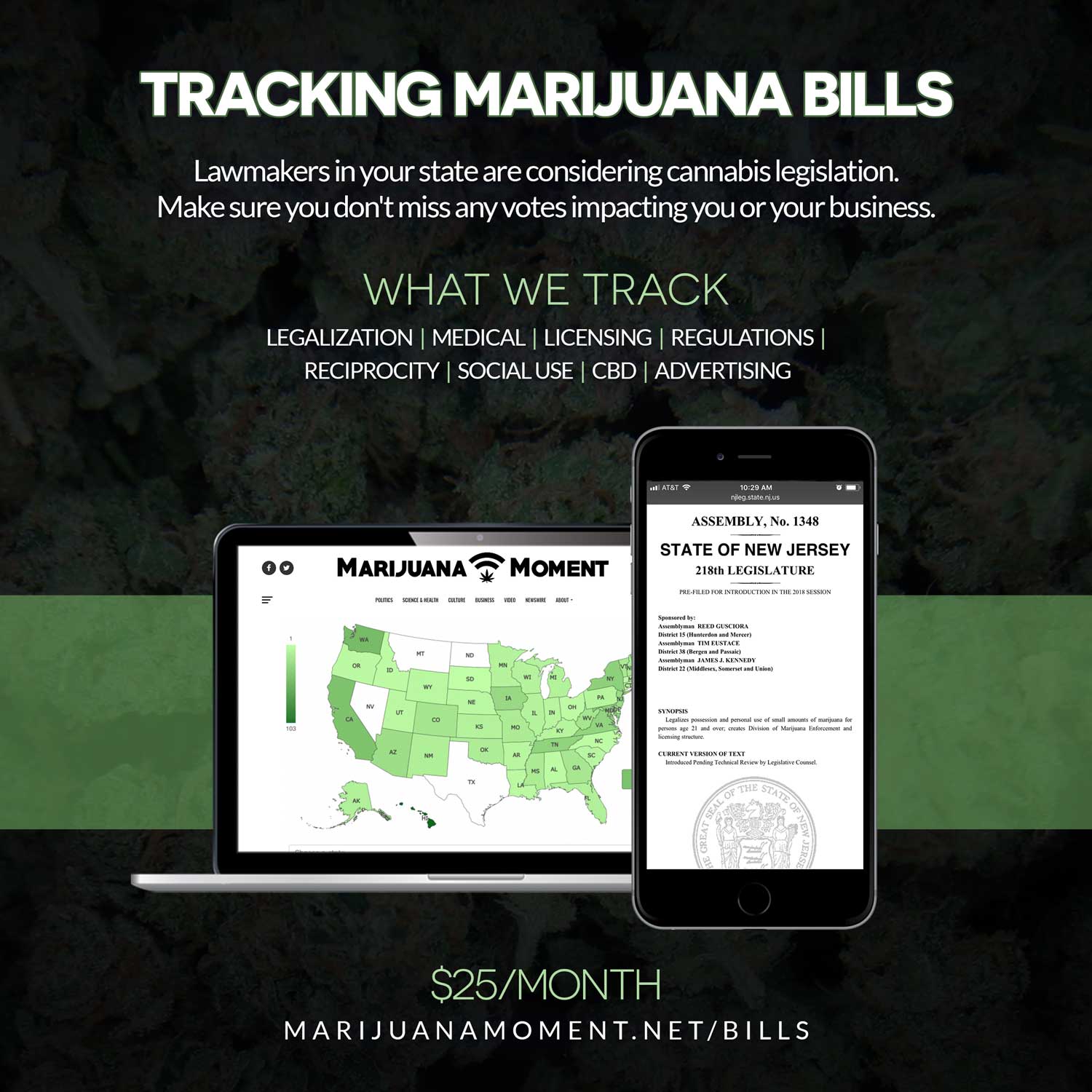

Learn more about our marijuana bill tracker and become a supporter on Patreon to get access.

Regulators are also working to finalize rules to allow for a new cannabis consumption lounge license type, which they hope to complete by October.

Separately, in May CCC launched an online platform aimed at helping people find jobs, workplace training and networking opportunities in the state’s legal cannabis industry.

The legislature’s Joint Committee on Cannabis Policy in August approved bills to provide employment protections for marijuana consumers and expand the state’s medical cannabis program, in part by adding post-traumatic stress disorder (PTSD) and opioid use disorder to the list of qualifying conditions.

State lawmakers have also been considering setting tighter restrictions on intoxicating hemp-derived products and a plan to allow individual entities to control a larger number of cannabis establishments.

Also in Massachusetts, legislators who were working on a state budget butted heads with CCC officials, who’ve said they can’t make critical technology improvements without more money from the legislature.

Meanwhile, Massachusetts lawmakers recently approved a bill to establish a pilot program for the regulated therapeutic use of psychedelics. And two committees have separately held hearings to discuss additional psilocybin-related measures.

The post Massachusetts Attorney General’s Office Is Receiving Complaints About Anti-Marijuana Initiative Petitioners’ Tactics appeared first on Marijuana Moment.
Source link

Michigan House Speaker Threatens To Shut Down Government If Marijuana Taxes Aren’t Increased

Michigan Marijuana Industry Files Lawsuit Against Newly Enacted Tax Increase

Michigan Marijuana Industry Files Lawsuit Against Newly Enacted Tax Increase

The Michigan Cannabis Industry Association argues the tax hike would either need to be approved by voters or achieve a three-fourths vote in the Legislature.

By Kyle Davidson, Michigan Advance

A cannabis industry trade association is challenging the state’s newly approved tax on the sale or transfer of wholesale marijuana, filing the complaint shortly after the policy was signed into law.

The suit, filed with the Michigan Court of Claims Tuesday, argues that the new law, and the steps leading up to its enactment, violate several sections of the Michigan Constitution, including requirements for amending the law that legalized marijuana in the state.

Voters in 2018 approved Proposal 1, creating the Michigan Regulation and Taxation of Marihuana Act, which legalized marijuana for recreational use by individuals 21 and older. The law also levies a 10 percent excise tax on the commercial sale of marijuana.

In its complaint, the Michigan Cannabis Industry Association argues this law is the exclusive means for imposing an excise tax on the sale of marijuana, and that in order to modify the voter-initiated statute, the matter would either need to be approved by voters or achieve a three-fourths vote in the Legislature.

The 24 percent tax was approved by the Michigan House in a 78-21 vote, with 11 members not voting, while the matter passed the Senate in a tight 19-17 vote with one member not voting and one seat vacant.

Because the 24 percent was enacted through a separate law, and did not achieve three-fourths support from the 138 member Legislature, the association argues the attempt to levy a new tax is invalid.

The association also argued the original title of the bill was misleading and that the policy underwent an unlawful change of purpose leading up to the final version approved by the Legislature, shifting from a policy creating a fund for road funding and revenue replacement without establishing any tax, to one imposing a 24 percent excise tax on marijuana wholesale prices.

The new law also violates the state Constitution’s contracts clause, the group alleges.

The Michigan Cannabis Industry Association has requested a declaratory judgment deeming the new tax law invalid and unenforceable, alongside injunctive relief preventing the state government from enforcing the act.

In an email Wednesday morning, Department of Treasury spokesperson Ron Leix said the department had not been served the lawsuit and does not have any comment.

This story was first published by Michigan Advance.

The post Michigan Marijuana Industry Files Lawsuit Against Newly Enacted Tax Increase appeared first on Marijuana Moment.

Source link

Terminally Ill Patients Would Be Able To Use Medical Marijuana In Pennsylvania Hospitals Under New Bipartisan Bill

Legal battle brews over Michigan’s new marijuana tax

Legal battle brews over Michigan’s new marijuana tax

Michigan’s leading cannabis trade group on Tuesday filed a lawsuit challenging the new 24% wholesale tax Gov. Gretchen Whitmer recently signed into law.

The lawsuit, filed in the state Court of Claims by the Michigan Cannabis Industry, seeks to block the tax, scheduled to take effect on Jan. 1, and asks the court to declare it unlawful, according to MLive.com.

ADVERTISEMENT

The tax emerged from bipartisan budget negotiations between the Republican-controlled House, the Democrat-majority Senate and the governor, who earlier this year proposed a 32% wholesale marijuana tax aimed at raising $470 million for road repairs.

The reduced tax is expected to generate $420 million for road work.

“The 24% wholesale tax on cannabis passed by the Michigan Legislature and signed into law by

The post Legal battle brews over Michigan’s new marijuana tax appeared first on GrowCola.com.

Source link

Texas Governor Orders Increased Enforcement Against Hemp Product Violations

Texas Governor Orders Increased Enforcement Against Hemp Product Violations

The governor of Texas is calling on the state Department of Public Safety (DPS) to escalate enforcement against smoke shops that are violating laws related to the sale of intoxicating hemp products, including a recently enacted emergency rule barring people under 21 from purchasing cannabis.

In a directive issued on Tuesday, Gov. Greg Abbott (R) ordered the Criminal Investigations Division (CID) of DPS to take a series of steps to ensure industry compliance with state hemp laws, including “targeted operations” to identify and inspect smoke and vape shops suspected of running afoul of the rules.

DPS CID agents would then be required to use information from those inspections to conduct “undercover operations to identify unlawful activity” and, when warranted, initiate criminal proceedings.

The public safety department’s crime lab will test products from shops under investigation to determine whether they meet the legal definition of hemp, which is cannabis containing no more than 0.3 percent THC by dry weight.

“DPS will leverage all federal and local law enforcement partnerships to further these investigations,” the governor’s office said in a press release.

“Texas will protect children from dangerous hemp products,” Abbott said. “Today, I directed the Texas Department of Public Safety to increase surveillance and enforcement of any vape and smoke shop violating Texas law. Texas will prioritize protecting our children.”

This comes days after Texas officials adopted a set of emergency rules meant to prevent the sale of intoxicating hemp products to people under 21.

After similar restrictions were implemented by the Texas Alcoholic Beverage Commission (TABC) late last month, the state Department of State Health Services (DSHS) announced last week that they’ve moved forward with policies changes that comply with the governor’s recent executive order on hemp.


Marijuana Moment is tracking hundreds of cannabis, psychedelics and drug policy bills in state legislatures and Congress this year. Patreon supporters pledging at least $25/month get access to our interactive maps, charts and hearing calendar so they don’t miss any developments.


Learn more about our marijuana bill tracker and become a supporter on Patreon to get access.

The executive order was issued following unsuccessful efforts in the legislature to impose an outright ban on hemp products with any quantifiable amount of THC.

Meanwhile this month, the head of the Texas Department of Agriculture (TDA) pushed back against a GOP senator’s “incorrect assertions” about the state’s regulatory compliance with federal hemp laws. But he also signaled that changes may be coming to measure “total THC” to determine the legality of hemp products in a way that some stakeholders worry could negatively impact the industry.

Separately, a recent survey from a GOP pollster affiliated with President Donald Trump found that Texas Democratic and Republican voters are unified in their opposition to the hemp ban proposal.

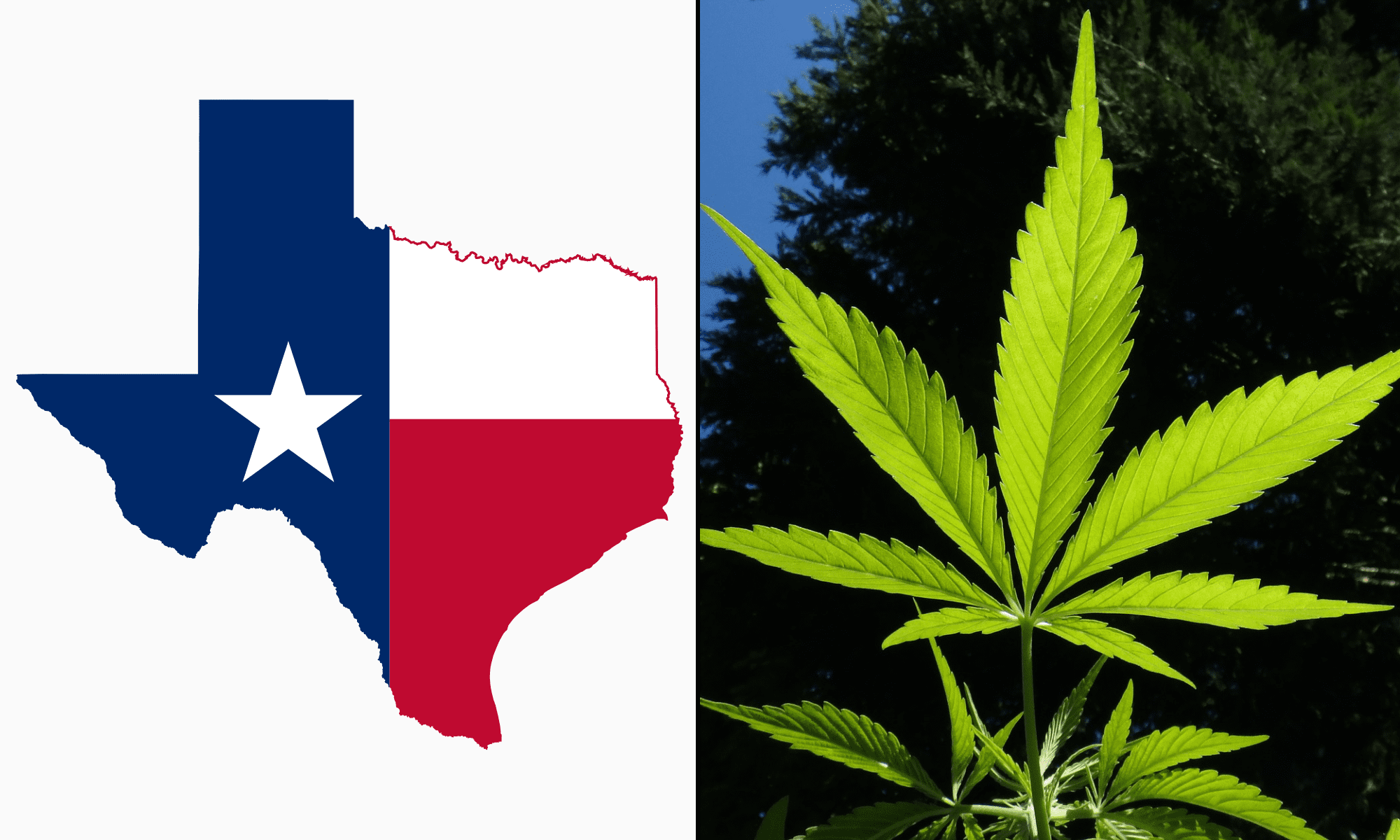
Image element courtesy of AnonMoos.

The post Texas Governor Orders Increased Enforcement Against Hemp Product Violations appeared first on Marijuana Moment.


Source link

Hemp Industry Urges Trump To Stop Congress From ‘Reversing’ The Crop’s Legalization That He Signed Into Law

Hemp Industry Urges Trump To Stop Congress From ‘Reversing’ The Crop’s Legalization That He Signed Into Law

Hemp Industry Urges Trump To Stop Congress From ‘Reversing’ The Crop’s Legalization That He Signed Into Law

A leading hemp industry organization has sent a letter to President Donald Trump, applauding him for his role in legalizing the crop during his first term and imploring him to prevent Congress from “reversing” the reform by banning hemp products containing any amount of THC.

In the letter—which is being accompanied by an online petition to Trump that supporters can sign—the U.S. Hemp Roundtable said that when the president signed the 2018 Farm Bill that federally legalized hemp, he “ushered in a new era for the American hemp industry.”

“As hemp producers, farmers, consumers, and advocates, we are grateful and remain hopeful that your influence can save the $28.4 billion hemp industry that you helped make possible,” it says. “The recent video you shared about the extraordinary value of hemp products was important, raising awareness on the positive impact our American-grown and manufactured products have.”

That’s referring to the president’s social media share of a video from The Commonwealth Project that touted the health benefits of hemp-derived CBD, particularly for senior citizens.

“Here at the U.S. Hemp Roundtable, our members are focused on giving Americans choices in improving their overall health and wellness,” the letter says. “Unfortunately, the federal government

The post Hemp Industry Urges Trump To Stop Congress From ‘Reversing’ The Crop’s Legalization That He Signed Into Law appeared first on GrowCola.com.

Source link

Nebraska Officials Award State’s First Medical Marijuana Business Licenses

Nebraska Officials Award State’s First Medical Marijuana Business Licenses

Nebraska Officials Award State’s First Medical Marijuana Business Licenses

“I hope that the individuals that receive these licenses are good people that have every intention of providing good medicine to the people of the state that so desperately need it.”

By Zach Wendling, Nebraska Examiner

The Nebraska Medical Cannabis Commission offered the state’s first medical cannabis cultivator licenses Tuesday, nearly a week after the voter-set deadline of October 1.

Commissioners unanimously offered the first two of up to four cultivator licenses, a move challenging the Nebraska Attorney General’s Office, which had threatened to sue the commission if it did so. The first license offerings went to Nancy Laughlin-Wagner of Omaha, on behalf of the Midwest Cultivators Group LLC, and to Patrick Thomas of Raymond.

Applicants have five business days to accept the license.

‘Do right by the people’

Someone who answered the number listed on the application for Laughlin-Wagner said the group would not immediately comment. Perry Pirsch, a lawyer working with Thomas, told the Nebraska Examiner that Thomas is “grateful for the opportunity that’s been granted to him.”

“I know that he will make the best out of it, responsibly, ethically, within the confines of the law, while trying to do right by the people of the State of Nebraska,” Pirsch said.

Thomas said in his application that he is a lifelong Nebraskan with more than 20 years of experience in agriculture, farming and land management. He is the owner and operator of Thomas Construction, a contracting business specializing in large-scale municipal water main projects. Thomas’s application listed Sarpy County Attorney Lee Polikov as a reference.

Thomas has a hemp cultivation license from the U.S. Department of Agriculture, which he wrote that he would relinquish if he got a state license to grow medical cannabis.

The application for Laughlin-Wagner indicates she will serve as chief executive officer of Midwest Cultivators Group alongside Frank Hayes of Omaha as chief financial officer and Dave Kanne of Carroll, Iowa as chief operating officer.

Laughlin-Wagner is a registered nurse with more than two decades of executive leadership experience in hospital operations and managed care, according to the application. Hayes is the founder and president of Hayes & Associates LLC, a certified public accounting and consulting firm. Kanne has 30 years of agricultural and business management experience as co-owner of a family farming operation since 1993, which has 1,200 acres of corn and soybeans.

“We are committed to ensuring that our operations align with the commission’s standards, Nebraska law and the highest levels of compliance, safety and patient care,” the Midwest Cultivators Group leaders said in their application.

Any licensed cultivator can grow no more than 1,250 flowering plants at one time under commission regulations. The Medical Cannabis Commission plans to license transporters, product manufacturers and dispensaries at a future date.

Unclear rubric scoring

The commission also voted 3-0 to deny two other applications: Crista Eggers, for a facility in Yutan, and Casey Sledge, for a facility in Wayne. Eggers is executive director of Nebraskans for Medical Marijuana, the group that led the 2024 ballot measures that received approval from 71 percent of voters for legalizing medical cannabis and 67 percent of voters for a regulatory system.

Applicants needed an average score of more than 70 on a 100-point scale. Commissioners devised the business metrics but have not publicly released how it set them. The commission received 39 cultivator applications between September 4 and September 23, which were advanced for evaluation based on a random lottery system.

The average scores were 73.33 for Patrick Thomas, 72 for Nancy Laughlin-Wagner, 63.67 for Casey Sledge and 42.33 for Crista Eggers. The commission decided that an average of more than 70 made an application eligible for licensure.

Eggers’s application had the widest range, with evaluators scoring it at 11, 44 and 72 points.

Commissioner Lorelle Mueting of Gretna, a prevention specialist with Heartland Family Service, told reporters after the meeting that the scores closely followed commission regulations, which included requirements for a business and financial plan, growing location, security and more.

“The rubric went right through the regulations,” Mueting said, pulling out her annotated copy of the regulations. “Everything is in here that people needed to submit.”

Commissioners did not explain how Eggers’s scores ranged so widely, and they told reporters they were unwilling to say which commissioners gave what scores.

Public weighs in

The first licenses were set to be awarded September 30 until the September 29 resignations of Commissioners Bruce Bailey of Lincoln and Kim Lowe of Kearney, both of whom were part of an internal three-member evaluation team. Bailey had been the most supportive of a regulated but more permissive medical cannabis system, including for smoking marijuana.

Under the commission’s emergency regulations, set for a public hearing next week, future dispensaries could not sell raw cannabis flower, vapes, smokeables or edibles.

Nearly all members of the public testifying before the commission have opposed the proposed regulations, with some arguing that the voter-approved medical cannabis laws legalized all forms of cannabis for patient use and that smoking, for instance, might provide faster relief than tinctures or pills.

Maggie Ballard, also a prevention specialist at Heartland Family Service with Mueting, thanked the commission Tuesday for its work on a task she said is “as challenging as giving a cat a bath.” She said she particularly appreciated restrictions on smoking. Ballard testified in support of Gov. Jim Pillen’s (R) appointment of Mueting to the commission in May.

“I just want to echo my appreciation and the appreciation of many, many Nebraskans that are either unaware of these meetings or have been way too afraid to speak up at these meetings, because they understand how polarized this topic has become,” Ballard said.

Lanette Richards of Scottsbluff, executive director of Monument Prevention, another drug prevention organization, also thanked the commission for regulations she said protect children.

“Even though this commission is setting guidelines for medical marijuana, we all know there is no difference between marijuana and medical marijuana,” Richards said.

Christy Knorr of Omaha, a hospice nurse, said a physician’s oath to do no harm includes medicine. She spoke of her wife’s fight with multiple myeloma, for which Knorr said marijuana helped provide some relief. Her wife died almost five years ago, and cannabis was the only medication to help take the edge off so she could sleep.

“People deserve choices in what medications they take,” Knorr said.

Lia Post of Springfield, a longtime medical cannabis advocate who said the medication helps her avoid opiates or other addictive substances, spoke in defense of Eggers as a mom who is trying to help her son. Post said whichever commissioner scored Eggers an “11” shouldn’t be on the commission.

“I would trade everyone in this room for one Crista Eggers, including myself,” Post said.

Next steps and legal threats

The commission’s regulations are in temporary “emergency” status, lasting up to 180 days max. The rules will go up for a public hearing at 1 p.m. October 15 at the Nebraska State Office Building for up to three hours. No commissioner will be in attendance.

Commissioners will decide after that hearing whether to finalize the regulations, which would require approval from Attorney General Mike Hilgers (R) and Pillen.

Zachary Pohlman, a deputy solicitor general for Nebraska, in March told state lawmakers during a legislative hearing on a separate legislative bill that federal law continues to criminalize marijuana. Pohlman said that if the Medical Cannabis Commission “tries” to issue licenses, “the Attorney General’s Office will challenge that action as preempted and unenforceable.”

A spokesperson for the AG’s Office declined Tuesday to comment on that previous position, which Hilgers has shared in court filings and public events.

Former State Sen. John Kuehn (R) of Heartwell, a longtime marijuana opponent, continues to try to fight the laws in court, including through a similar preemption lawsuit. A Lancaster County District Court judge dismissed Kuehn’s latest lawsuit in June, which he is appealing to the Nebraska Supreme Court.

In a brief Monday to the Nebraska Supreme Court on that Kuehn case, the AG’s Office, as well as an outside attorney for the Medical Cannabis Commission, did not repeat the licensing argument but suggested another legal path to the courthouse door.

“The State itself could even challenge the Medical Cannabis Laws if, for example, it charges a defendant with illegal possession of cannabis, and the defendant raises the [Nebraska Medical Cannabis] Patient Protection Act as a defense,” the brief states.

Since the voter-approved law took effect in December, patients have legally been able to possess up to 5 ounces of medical cannabis in Nebraska with a health care practitioner’s recommendation.

The AG’s spokesperson declined to say Tuesday whether the state plans to challenge patient possession or whether any related guidance has been issued to local law enforcement.

Medical Cannabis Commission members have entered closed sessions at nearly every meeting to discuss “imminent” or “pending” litigation, which included Tuesday. Commissioners declined to comment on possible legal threats.

‘Good medicine’

Eggers, while not addressing her license application, asked commissioners to release the business grading rubric while expressing her gratitude for moving forward with licensing.

Said Eggers: “I hope that the individuals that receive these licenses are good people that have every intention of providing good medicine to the people of the state that so desperately need it.”

The next scheduled regular meeting of the commission is 1 p.m. November 3 in the Nebraska State Office Building.

Evaluator scores of initial applications

Medical Cannabis Commission members, following two resignations last week, anonymously evaluated four cultivator applications over the past week.

While the name of each evaluator was redacted on meeting materials, one commissioner’s evaluations ranged from 72 to 88, all passing. Scores from the other two evaluators ranged from 11 to 80. One appears to have given no passing scores, those higher than 70.

Patrick Thomas (Raymond)

    • Evaluator 1 score: 84.
    • Evaluator 2 score: 62.
    • Evaluator 3 score: 74.
    • Average score: 73.33.

Nancy Laughlin-Wagner (Omaha), on behalf of Midwest Cultivators Group LLC:

    • Evaluator 1 score: 80.
    • Evaluator 2 score: 62.
    • Evaluator 3 score: 74.
    • Average score: 72.

Casey Sledge (Wayne), on behalf of Stonepine Works LLC:

    • Evaluator 1 score: 56.
    • Evaluator 2 score: 47.
    • Evaluator 3 score: 88.
    • Average score: 63.67.

Crista Eggers (Yutan):

    • Evaluator 1 score: 44.
    • Evaluator 2 score: 11.
    • Evaluator 3 score: 72.
    • Average score: 42.33.

Because commissioners denied two applications, Eggers and Sledge, they will evaluate the next two randomly selected cultivator applications. Those applications could be approved in November. Eggers and Sledge can also appeal their evaluations until Oct. 23.

Bo Botelho, general counsel for the Nebraska Department of Health and Human Services, which is assisting the Medical Cannabis Commission, said the rubric won’t be made public until after licenses are awarded. He said state agencies don’t typically disclose how evaluators score applications or contracts, partly so applicants answer equally.

“Like taking a test, if you know this question is worth a lot more, you may put a lot more information in there and not so much in the other ones, but those other ones are just as valuable,” Botelho said. “That’s why we generally don’t tell them how the scores are being divvied. We want the best response across the board.”

Botelho said “there’s no public purpose” to releasing who gave what score to which applicant.

“If there is a public purpose, I guess that argument can be made,” he continued. “But I would be afraid of that being used to maybe intimidate or harass an evaluator.”

This story was first published by Nebraska Examiner.

Photo courtesy of Chris Wallis // Side Pocket Images.

The post Nebraska Officials Award State’s First Medical Marijuana Business Licenses appeared first on Marijuana Moment.

Source link

MJBizCon highlights women driving diversity in cannabis

MJBizCon highlights women driving diversity in cannabis

MJBizCon highlights women driving diversity in cannabis

From building successful brands and advocating for social equity to shaping policy and advancing cultivation science, women are breaking barriers, driving innovation and championing equity in the cannabis industry.

The stories of Tiana Woodruff, Eden Williams, Aysa Hill and Angelica Sanchez highlight resilience, creativity and a commitment to creating opportunities in an industry that continues to grow and diversify.

ADVERTISEMENT

As speakers at MJBizCon, they represent the power of inclusion and the importance of diverse voices shaping the future of cannabis.

Tiana Woodruff: Empowering wellness through Queen Mary

As a cannabis delivery driver in Los Angeles in 2016, Tiana Woodruff was laying the foundation for what would become her life’s work.

Photo courtesy of Tiana Woodruff

Back then, she was fascinated by the industry’s

The post MJBizCon highlights women driving diversity in cannabis appeared first on GrowCola.com.

Source link

Hemp Industry Urges Trump To Stop Congress From ‘Reversing’ The Crop’s Legalization That He Signed Into Law

Hemp Industry Urges Trump To Stop Congress From ‘Reversing’ The Crop’s Legalization That He Signed Into Law

Hemp Industry Urges Trump To Stop Congress From ‘Reversing’ The Crop’s Legalization That He Signed Into Law

A leading hemp industry organization has sent a letter to President Donald Trump, applauding him for his role in legalizing the crop during his first term and imploring him to prevent Congress from “reversing” the reform by banning hemp products containing any amount of THC.

In the letter—which is being accompanied by an online petition to Trump that supporters can sign—the U.S. Hemp Roundtable said that when the president signed the 2018 Farm Bill that federally legalized hemp, he “ushered in a new era for the American hemp industry.”

“As hemp producers, farmers, consumers, and advocates, we are grateful and remain hopeful that your influence can save the $28.4 billion hemp industry that you helped make possible,” it says. “The recent video you shared about the extraordinary value of hemp products was important, raising awareness on the positive impact our American-grown and manufactured products have.”

That’s referring to the president’s social media share of a video from The Commonwealth Project that touted the health benefits of hemp-derived CBD, particularly for senior citizens.

“Here at the U.S. Hemp Roundtable, our members are focused on giving Americans choices in improving their overall health and wellness,” the letter says. “Unfortunately, the federal government hasn’t kept up. Despite a lack of federal regulation and clear guidelines, we’ve done the right thing with self-regulation and job creation, but now we need your help!”

“Congress is close to passing a hemp ban, reversing the work you led in 2018 to make hemp blossom,” it continues. “A proposed definition change to hemp, being touted as protecting Americans, would wipe out 95 percent of this uniquely American industry that you are so proud of.”

Bipartisan congressional lawmakers have raised similar concerns, with a recent letter to House Speaker Mike Johnson (R-LA) pushing back against attempts to ban hemp THC products. The members argued that such a policy reversal would “deal a fatal blow” to the industry and, as currently included in a spending bill, violates congressional rules. To that end, the members say there are plans in the works to introduce an alternative measure to regulate the market.

“A more effective way to protect American consumers and jobs would be to support and demand robust hemp regulation—age restrictions along with uniform testing, labeling, and packaging requirements,” the hemp association’s letter states. “Outright prohibition is not the answer, nor would it make anyone safer. Banning legal hemp products that are already regulated at the state level will not protect consumers; it would only shift hemp to the black market and destroy a rising American industry in the process.”

“Please help us save and properly regulate the powerful, impactful hemp industry. A ban would put American farmers, American businesses, American consumers, our veterans, seniors, and more than 328,000 American workers at risk,” it says, adding that in the red state of Texas, recent polling shows majority support for regulated hemp sales and increased likelihood of voting for candidates who back regulation over prohibition.

The related online petition from the U.S. Hemp Roundtable says the following:

“We, the undersigned, express our gratitude to President Donald J. Trump for showing his support for protecting the $28.4 billion American hemp industry. We ask that he work with Congress to ensure America’s robust hemp industry is not destroyed or banned. We support regulation to keep consumers safe and look forward to working with our elected officials to continue building this growing American industry.”

At the federal level, while the Senate ultimately stripped hemp THC ban language from its version of the agriculture spending measure following a procedural protest from Sen. Rand Paul (R-KY), there’s still concern among stakeholders that it could wind up in the final package delivered to the president following bicameral negotiations.

Meanwhile, Democratic senators also sent a letter to leadership last month that warned of the major upheaval that would happen in the hemp market if products containing any amount of THC were banned.

“Consumer safety and protecting kids while promoting opportunities for national economic growth in the hemp industry can and must go hand-in-hand,” Sen. Ron Wyden (D-OR), who led that letter with Sen. Jeff Merkley (D-OR), said. “Congress needs to get serious about pursuing common-sense safeguards to protect kids and consumers and encourage innovation instead of a one-size-fits-all approach that hinders economic development and doesn’t keep kids safe.”

Dozens of hemp farmers from Kentucky also recently urged their state’s senior U.S. senator, McConnell, to back off from his push to recriminalize some products that are derived from their crops.

Paul, for his part, recently cautioned that the cannabis policy movement has “swung hard on the prohibitionist side” amid the ongoing debate over intoxicating hemp products. And he worries that, if things go awry, the hemp market could be decimated “within the next two weeks.”

Asked about recent conversations with McConnell and Rep. Andy Harris (R-MD), Paul said “we’ve been working diligently” with the staff “trying to reach a compromise.”

“A lot of the conversations have been constructive. They say, at least on the surface, they’re not trying to eliminate it—but I think we are, in some ways, talking past each other,” he said.


Marijuana Moment is tracking hundreds of cannabis, psychedelics and drug policy bills in state legislatures and Congress this year. Patreon supporters pledging at least $25/month get access to our interactive maps, charts and hearing calendar so they don’t miss any developments.


Learn more about our marijuana bill tracker and become a supporter on Patreon to get access.

Meanwhile, Paul recently filed a standalone bill that would go in the opposite direction of the hemp ban, proposing to triple the concentration of THC that the crop could legally contain, while addressing multiple other concerns the industry has expressed about federal regulations.

The senator introduced the legislation, titled the Hemp Economic Mobilization Plan (HEMP) Act, in June. It mirrors versions he’s sponsored over the last several sessions.

Harris, who championed the hemp THC ban in his chamber version of the agriculture spending legislation, told Marijuana Moment that he wasn’t concerned about any potential opposition to the hemp ban in the Senate—and he also disputed reports about the scope of what his legislation would do to the industry.

The Congressional Research Service (CRS) released a report in June stating that the legislation would “effectively” prohibit hemp-derived cannabinoid products. Initially it said that such a ban would prevent the sale of CBD as well, but the CRS report was updated to exclude that language for reasons that are unclear.

The hemp language is largely consistent with appropriations and agriculture legislation that was introduced, but not ultimately enacted, under the last Congress.

Hemp industry stakeholders rallied against that proposal, an earlier version of which was also included in the base bill from the subcommittee last year. It’s virtually identical to a provision of the 2024 Farm Bill that was attached by a separate committee last May via an amendment from Rep. Mary Miller (R-IL), which was also not enacted into law.

The post Hemp Industry Urges Trump To Stop Congress From ‘Reversing’ The Crop’s Legalization That He Signed Into Law appeared first on Marijuana Moment.
Source link

Smoke DZA on Weed, Anxiety, and Why Curren$y Doesn’t Share His Stash

Smoke DZA on Weed, Anxiety, and Why Curren$y Doesn’t Share His Stash

Smoke DZA on Weed, Anxiety, and Why Curren$y Doesn’t Share His Stash

Smoke DZA

In the ever-expanding world of Hip-Hop, few names resonate as strongly with both lyricism and lifestyle as Smoke DZA. Known to fans as The Kushed God, the Harlem native has built a career on sharp wordplay, timeless collaborations, and a devotion to the culture that raised him. 

But beyond his catalog, DZA stands tall as one of rap’s most unapologetic cannabis connoisseurs. Weed isn’t just a pastime for him: it’s woven into his art, his brand, and his very identity. Whether trading bars with Curren$y, sparking up with Snoop Dogg, or championing legalization after once being criminalized for the plant, Smoke DZA has cemented his place as both a hip-hop heavyweight and a cannabis ambassador, carrying the torch for a lifestyle he lives and breathes daily.

High Times caught up with Smoke DZA at Ted’s Fest in Los Angeles, California. DZA performed on stage and even brought his wrestling group 4th Rope, sharing the bill with G Perico, Cornfed Ted, and the legendary B-Legit.

How much do you smoke in a day? We got the blunt rolled up right now.

I smoke a lot. I wake up, I might run through three or four to get me started. And then gradually through the day, I’m rolling. And if I’m out, I’m rolling even more because I got social anxiety nowadays. I’m just smoking to be doing something, I guess. But I smoke a lot.

Do you smoke first thing in the morning before you brush your teeth, or after? 

Before and after.

Favorite munchies?

Trail mix.  

What kind of trail mix? 

Cranberries, cashews, pistachios, peanuts, almonds. That little mix-up right there.

You got raisins in your shit? 

I like raisins. 

You like chocolate? 

Nah.

Sativa or Indica? 

Indica.

Favorite strain? 

Luigi OG. 

I love OGs! Do you remember the first time you got high? 

Yeah. I was in Grand Projects with some of my friends, that’s still my friends today. Shout out, Fat Troy. Shout out, B Dot. Shout out, James. We got high. I was high for a couple of hours, and I thought it was never gonna go away. I swore I was never gonna get high again… and then I turned into the Kushed God.

How does cannabis improve your life? 

I’ve supported my family off cannabis. I’ve made a lot of money off cannabis. Cannabis isn’t a drug; it’s a plant, and I lean on it, and I utilize it the way it should be used. 

What’s the threshold for running out of weed?

Oh, I gotta smoke every drop of everything I got in my facility. But once I start getting to my last little seven (rams), I’m like, “Alright, it’s time.” 

Who in Hip-Hop has the best weed? 

That’s a tough question. It’s not just one person, it’s a couple. Wiz Khalifa, Berner, Snoop Dogg, Smoke DZA. And Curren$y. But Curren$y don’t share; he keeps his weed to himself. 

He don’t be sharing his Jet Llife?!

Spitta don’t share.

Most legendary session you’ve had?

I’ve had a couple. Me and Steven Adler of Guns N’ Roses. That was cool. Me, Berner, and Spitta when we did “Life Instructions.” The first time I smoked Cherry Pie, I fell asleep in the session after I did my verse. That was a good one. Then I was with Snoop and him asking me to rap, and I was coughing. [laughs]

I saw you brought your wrestling squad, 4th Rope! Top three wrestlers of all time?

Hulk Hogan. The other two are Ric Flair and The Rock. 

What is the most pressing issue in cannabis? 

The most pressing issue. Nowadays, we don’t have too many pressing issues. Where I’m at, it’s decriminalized. Like, you guys don’t know what that feels like to not be able to smoke weed outside. You’ve been able to smoke weed outside since you came outside off the porch. We got arrested when we were smoking weed outside. Being able to have weed decriminalized and being able to smoke weed in front of the cops and not go to jail, that’s the only thing I’ve been criminally in trouble for, is marijuana. The fact that we don’t have those issues no more, that was my number one issue. So I don’t really have no problems, nothing makes me upset about the weed game. I’m really excited about what’s happening. 

How long were you locked up for? 

I only went to jail for a weekend or two. But that was when I was getting in trouble for smoking weed back then. Nothing current.

Anything you wanna plug that you’re working on? 

4th Rope. Follow @4thRope. Check us out. Shout out to my brother, Westside Gunn. HEELS HAVE EYES 2 is out right now. Download it. Stream it. Buy the vinyl, buy the CD. On My Way To Berlin by Smoke DZA, that’s also in the hemisphere. And get ready for A Road Trip To Amsterdam. Shout out to Shirley, I love her.

Photo courtesy of GrapeProductions

<p>The post Smoke DZA on Weed, Anxiety, and Why Curren$y Doesn’t Share His Stash first appeared on High Times.</p>


Source link