Kentucky Cultivator Harvests State’s First Medical Marijuana Crop As Governor Predicts Farmers Will ‘Grow A Whole Lot More’
A Kentucky medical marijuana cultivation facility has harvested its first yield of cannabis, and patients could gain access to it by next month, a top regulator says. Meanwhile, the governor says licensed businesses are about to “grow a whole lot more” as the program gets underway.
Cannon Armstrong, executive director of the Office of Medical Cannabis (OMC), said one of the state’s cultivators “produced their first harvest, and it’s up to the cultivator and the licensee on where they move and when they move on that.”
“I suspect that if we’re going to try and say timeframes—that it’ll definitely be before the end of the year, we’re hopeful that it may be November,” he told WAVE 3.
“Since taking office, my administration has been committed to providing access to health care and safe communities for all Kentuckians,” the governor said. “One of our priorities is ensuring that Kentuckians that are suffering from serious medical issues like cancer, PTSD or multiple sclerosis
Paper – Jnl of Analytical Toxicology: “Conventional drug testing cannot reliably distinguish between illicit cannabis and legal hemp-derived product use, and a positive urine Δ9-THC test may result from low doses that do not produce intoxication or impairment.”
As always a big thanks to Lex Pelger for the heads up on this one Conventional drug testing cannot reliably distinguish between illicit cannabis and legal hemp-derived product use, and a positive urine Δ9-THC test may result from low doses that do not produce intoxication or impairment. The acute and chronic pharmacokinetics and pharmacodynamics of oral […]
The Hidden Crisis in Cannabis: Lab Shopping, Unreported Pesticides, and Consumer Risk
Key Takeaways:
COAs aren’t always trustworthy: Lab reports, once seen as a reliable guarantee of product quality, are increasingly undermined by issues like THC inflation, unreported byproducts, co-elution errors, contaminated products passing safety checks, fake lab reports, and lab shopping practices.
Consumers can’t rely on COAs alone: Even a legitimate-looking COA can be misleading, especially without deeper research into the testing lab’s reputation, lawsuits, sampling practices, and regulatory oversight.
The industry urgently needs stronger regulation: True consumer protection requires tougher oversight, standardized testing protocols, mandatory full-panel safety screening, independent sampling, and more severe penalties for labs and brands that manipulate or falsify results.
“Today, many COAs are not worth the paper they are printed on, or the pixels that make up their digital image.” – Dr. Chris Hudalla, President and Chief Scientific Officer at ProVerde Labs
In the early days of the hemp and cannabis industries, lab reports – called Certificates of Analysis, or COAs – were seen as a gold standard for product quality.
Consumers quickly learned that the only real way to know what they were buying was to demand third-party testing, and COAs became the de facto assurance of safety and potency. For many products, the COA remains the only piece of information standing between consumers and blind trust.
But somewhere along the way, that assurance started to erode.
With problems like THC inflation, unreported byproducts, and a host of other hidden issues becoming harder to ignore, it raises an uncomfortable question: Can consumers really trust the COAs attached to hemp and cannabis products?
We spoke with lab testing insiders to uncover the deeper issues – and what consumers need to know.
The Role of COAs in Consumer Decision-Making
“COA” is the adopted term for a certificate of lab analysis, colloquially just called a “lab report.”
This is basically exactly what it sounds like: a company sends a product they made to a lab for testing, and the lab does the science and produces a report which basically tells you what’s in there.
These “what’s in there?” tests almost always include the potency of different cannabinoids (i.e., how much CBD or THC it contains), and generally include safety tests for pesticides, residual solvents, microbial contamination, heavy metals, and mold. Other tests, like terpene profiles, are not as commonly performed but are still widely offered by testing labs.
In ideal situations, this gives consumers a guarantee that the product offers what it claims to and that it doesn’t contain anything dangerous. It ensures that consumers can avoid unsafe products and offers an avenue for regulators to keep tabs on what’s being sold and ensure products follow applicable rules.
But standardization is lacking, with labs using varying methods and different states setting different rules for what a COA has to contain. Already, the issues with the system are showing: do you know if a HPLC-UV or GC-MS-MS test is more reliable for testing a delta-8 product? Do you think politicians know this?
And this is just the tip of the iceberg.
Key Problems Undermining the Reliability of COAs
Problem 1: Unreported Byproducts in Delta-8 THC and Other “Converted” Products
As we’ve discussed previously, one major problem with COAs is that they don’t always tell you everything they found.
Most labs test for what is required or what is requested, and do not look further into the potential problems. Certain chemical reactions, such as the chemical conversion of CBD into delta-8 THC, can produce several byproducts and use of different processing chemicals that are left in the final product. While the intended compounds are generally part of targeted screenings for determination of content, the byproducts and residual processing chemicals are not usually screened for.
A lot of the time, the byproduct compounds have not even been formally identified or studied, making it even harder to inform consumers.
Dr. Chris Hudalla, Chief Scientific Officer and President at ProVerde Labs, has been a prominent voice in this discussion for years now, and stressed the issues labs face in these situations:
So, if I, as a lab, document a signal from a contaminant that we never see in true cannabis products, but that contaminant does not even have a name yet, how do I call that out on my COA? Worse, if that contaminant does not have a name, then we certainly do not understand the toxicity of that contaminant.
And this last point is arguably the most crucial.
In terms of trust in the COA, the fact that these compounds are generally not listed despite being detected is a huge red flag. But it’s not just an unknown chemical; it’s an unknown chemical that could make the whole product much more dangerous than it seems.
ProVerde tackles this by adding a disclaimer to any COAs where byproducts were detected, but we’re unaware of any other lab that does this.
Problem 2: THC Inflation – How High Can You Really Go?
“THC inflation” refers to the practice of reporting higher THC potencies than the actual product contains, and it is a big problem in cannabis testing.
One 2023 study sampled products sold in Colorado, and found that around 70% of samples were over 15% lower in THC than reported, and three products were less than 50% of reported values.
A study from 2021 looked at about 200,000 products and the THC levels they reported, finding an unusual spike in frequency as you cross the 20% potency threshold – a sure sign of a manipulated distribution.
Dr. Paulson explained to us:
Sadly, THC inflation is still a very large issue across the US. Some product types are worse than others with regards to the inflation of THC. For example, flower will routinely be labeled and sold with THC values listed 20-40% higher than their actual result (i.e. 25% THC flower being labeled at 37.5%).
Problem 3: Bait and Switch Sample Practices
“Bait and switch” sample practices are when a company sends off a sample to a lab for testing, but where the sample is not representative of the product on the shelves. The test can be totally accurate, but the product tested isn’t the same as the one sold to consumers.
Dr. Paulson pointed out that many state-regulated cannabis programs protect against this by requiring the lab or an independent sampler to sample the product for testing, but he notes that hemp does not have the same protections:
In the hemp product industry, testing is almost exclusively performed from samples that are sent in or dropped off to the labs, so a producer can certainly send in any sample for testing, receive a COA with data that represents the sample they sent in, then use that COA to represent a completely unrelated product.
Problem 4: Co-Elution Issues
“Co-elution” is a term in chromatography for when two or more compounds can’t be differentiated with the method being used.
The signal peaks in the chromatograph overlap, and it’s possible for one signal to completely “hide” behind the other. Worse, this means that they’re both counted towards the total for whichever compound the lab is expecting.
CBD Oracle had this issue recently, when we tested a full-spectrum CBD oil product for our Best CBD Oils for Sleep list. The original COA listed delta-9 THC, but our independent test identified that at least some of the peak was HU-331, basically the result of oxidizing CBD. The signal from HU-331 co-eluted with that from THC, leading to an overestimation of the THC on the original lab report.
This is interesting from a scientific perspective, but absolutely devastating from a consumer perspective. Think about it: if you had just read the original COA, there is no way at all you could have known this.
Dr. Hudalla commented that labs need to be part of the process, and that misidentification is “entirely possible” if a producer adds something like HU-331 but doesn’t disclose it. He notes that “most labs are under pressure to get results out as fast and cheap as possible.”
Dr. Hudalla told us that HPLC methods have been optimized well enough that this isn’t an issue with natural phytocannabinoids, but that things change when you add synthetic cannabinoids and the byproducts that generally come along with them. He showed us how common byproducts in delta-8 THC products can easily co-elute with THC under HPLC testing, but that gas chromatography (GC) testing resolves the signals more accurately:
Problem 5: Contaminated Products Getting a “Pass” on Safety
Safety testing for pesticides, mold, residual solvents, microbial contamination, and heavy metals is a crucial part of lab testing for both cannabis and hemp, but it isn’t always what it seems.
The cannabis industry has a big issue with contaminated products getting a “pass” on safety.
Dr. Chris Hudalla explained to us:
The biggest contaminant issue in many states is microbial contaminants. It is far easier to find a lab that will ‘PASS’ moldy product, than it is to resolve microbial contaminants in cultivation.
Pesticides are also a substantial issue, with an LA Times report finding widespread pesticide contamination in California cannabis. In particular, chlorfenapyr – a category 1 pesticide not allowed in cannabis cultivation – was the most commonly-detected pesticide, along with others like pymetrozine which is not even screened for in California cannabis.
Dr. Paulson commented, “The fact that contaminated weed is hitting the shelves is a travesty. While honest mistakes can happen, the intentional certification of clearly moldy or pesticide-laden material by certain labs is wholly not acceptable.”
Problem 6: Fake Lab Reports
This is an obvious one: you can’t always assume that a lab report shared alongside a product is genuine. All it takes is a small change or two to turn a non-compliant product into a compliant one, or to make your product look more potent than it really is.
We’ve investigated this issue as part of other work in the past. Notably, we found many fake COAs when investigating the hemp THCA flower market. One example we identified was doctored numbers on a COA to slightly boost the quantity of THCA, but did not make updates consistently across the document.
Ryan Bellone, commercial director at KCA Labs, told us they’d seen faked lab reports with KCA’s name on them:
Yes, we see plenty, but they’re never perfectly similar to what we report out. QR codes are first to be removed, then client information. We have an effective watermark and an uncommon font on our reports to help protect this.
Ryan added that checking QR codes and emailing the lab involved are the “best defenses,” but also suggested some other checks, “Also using common sense. Does the font look like it differs throughout the report? Is the report really old, such as a year or more? Does the company/brand name match the material?”
Problem 7: Lab Shopping
All of the above is made worse by the practice of lab shopping.
This is the practice of sending samples to multiple labs and simply going with the one that offers the most favorable results. If one lab flags your product for pesticides but another doesn’t detect them, which report do you publish?
Even if you are honest, it’s very easy to see how people opt to publish the clean report and quietly shelf the other one.
This is also easy to justify and difficult to argue against, because who’s to say which report is accurate? As a consumer, even if you had access to both, it’s essentially impossible to tell. The labs would likely both tell you their test is correct.
What Consumers Can Do
The challenge for consumers is that most of these problems are not something you can notice by looking at COAs – it takes some more in-depth research into the labs themselves and careful web searches to find the problems.
It didn’t always used to be this way, as Dr. Chris Hudalla pointed out:
When cannabis was becoming increasingly accepted and legalized, state by state, I was a staunch advocate for testing, to ensure consumer safety. Back then, a Certificate of Analysis (COA) could be viewed as document with meaning, intended to help ensure consumer safety. But today, many COAs are not worth the paper they are printed on, or the pixels that make up their digital image.
Adding that, “Without a consumer digging into the history, performance and capability of an individual lab, how would they know how reliable a lab or their COA is? And most consumers don’t have the expertise to evaluate those labs. Regulators, for the most part, are certainly not doing it.”
As Dr. Hudalla argues, there isn’t too much you can do as a regular consumer. But that doesn’t mean there’s nothing you can do.
If you’re trying to evaluate a lab test, here are some things you should check:
Scan the QR code (and don’t trust a report without one): Scanning the QR code on a COA should take you to the same COA on the lab’s website. This is a good way to spot obvious fakes and manipulation. You should also look out for changes in font and similar inconsistencies.
Google the lab: While you likely won’t turn up much from a web search, you can check Glassdoor and other sources of reviews from insiders for some idea of how the lab is operated and whether there are problems. You should also check the “news” tab to see if anything relevant comes up.
Check lawsuits and complaints: There have been some high-profile lawsuits and complaints involving cannabis testing labs that are worth checking. For instance, a lawsuit filed by InfiniteCAL and Anresco names several labs allegedly involved in deceptive practices, and another in Massachusetts from MCR Labs names eight. Likewise, there are other complaints that can be easily turned up via web search.
Cross-check where you can: Searching some of the information from the lab report itself (such as sample IDs) and other information about the product including the lot/batch number can sometimes turn up alternative reports on the same product.
Industry Solutions and What’s Next
The responsibility for this continuing travesty ultimately falls on the regulators. We can point fingers at dishonest actors all we like, but there will always be dishonest actors in any industry. That is why we regulate industries, and all of these problems can ultimately be solved with more robust regulation.
Dr. Hudalla told us, “On the regulatory side, there has to be more consideration of consumer safety. But any changes can only come from better regulation, which can only happen when regulators hire appropriately trained staff.”
He pointed out that in Massachusetts – which is over a decade into a regulatory program – he is unaware of a single microbiologist on staff at the Cannabis Control Commission, despite microbial contamination being an ongoing issue in the industry.
He asked, “How do we express concerns to our regulators when they do not even understand the words coming out of my mouth? They are easily swayed by misinformation, and viewpoints that are presented which are skewed based on financial conflicts of interest.”
Dr. Paulson pointed out that, for hemp in particular, there is a lack of oversight and limited motivation to establish oversight:
What this lack of oversight also leads to is the absence of a requirement to test for certain things that can be harmful. While it is commonplace for producers to test and provide a COA for a standard cannabinoid panel to consumers, very often contaminants are not being screened for because the tests cost extra and neither the retailers nor regulators are telling them they need to perform the testing.
So how can these problems be solved? Based on comments received for this article and our own takes, there are some key steps that could help:
Require reporting of common byproducts and unknown compounds: Unreported byproducts are pretty much guaranteed in delta-8 THC and other “converted” hemp products, but at the very least, regulators can require labs to look for common ones and report anything they find. A mandated disclaimer like ProVerde’s wouldn’t make the market safer, but it would keep consumers informed.
GC testing for converted cannabinoid products: Byproducts are less likely to co-elute with gas chromatography (GC) testing, and this should be required for delta-8 THC and other hemp products made by converting from one cannabinoid to another.
Contaminant screening should be required: Many hemp products in particular only include potency tests, without safety testing. It should be obvious to everybody that this is not acceptable, it should be “full panel” tested or not on the shelves at all.
Increase enforcement overall: This is simple. All of the problems identified in this post would be improved with more enforcement from regulators. You need to take an active approach to finding and correcting errors, not wait for other labs to blow the whistle.
Hire (or work with) knowledgeable people: Analytical chemistry is complicated, but you can’t regulate labs if you don’t understand the issues. Regulators without expertise are easier to mislead, so hiring or consulting with knowledgeable people is essential.
Test “off-the-shelf” samples: Companies sending in their own samples for testing enable bait-and-switch testing. Simply testing products actually being sold to consumers would fix this.
Escalate penalties for repeat offenders: If being dishonest makes you more money than any fines you receive, there is no financial incentive for labs to fix the issues. Penalties should increase for each subsequent offense to create this incentive.
Regulators need to vet testing labs and re-test samples to identify offenders: It’s better to have fewer testing labs doing a good job than more labs with some bad actors in the mix. Labs should be vetted by regulators. Take an off-the-shelf product and send it to multiple labs, then investigate any anomalies.
It should go without saying that this is not an exhaustive list: there is much more that needs to be done to ensure the safety of consumers, and ultimately the reputation of the industry.
Bottom Line
It’s important to note that we are not saying that lab testing is worthless – while flawed, it remains the best assurance consumers get that what they’re buying is safe. We need to improve COAs, not throw up our arms and give up on quality assurance altogether.
But as things stand, you cannot trust a COA if you haven’t done more research on the lab and the brand than simply reading the report. Consumer pressure helped to make COAs and industry norms, and consumer pressure can also encourage reliable COAs going forward.
Trust, but verify. Paranoia about fake reports or misleading numbers isn’t really useful – because you can easily distrust every report on these grounds – but skepticism is absolutely required. Consumers, responsible companies and reputable labs all need to stand together on this and demand more from regulators.
Schwabe, A. L., Johnson, V., Harrelson, J., & McGlaughlin, M. E. (2023). Uncomfortably high: Testing reveals inflated THC potency on retail Cannabis labels. PLOS ONE, 18(4), Article e0282396. https://doi.org/10.1371/journal.pone.0282396
Zoorob, M. J. (2021). The frequency distribution of reported THC concentrations of legal cannabis flower products increases discontinuously around the 20% THC threshold in Nevada and Washington state. Journal of Cannabis Research, 3(1). https://doi.org/10.1186/s42238-021-00064-2
With so many Americans struggling with sleep issues, it’s not surprising that improving sleep is one of the most common reasons for using CBD. CBD gummies are convenient and easier to consistently dose than oils, but what are the best products on the market?
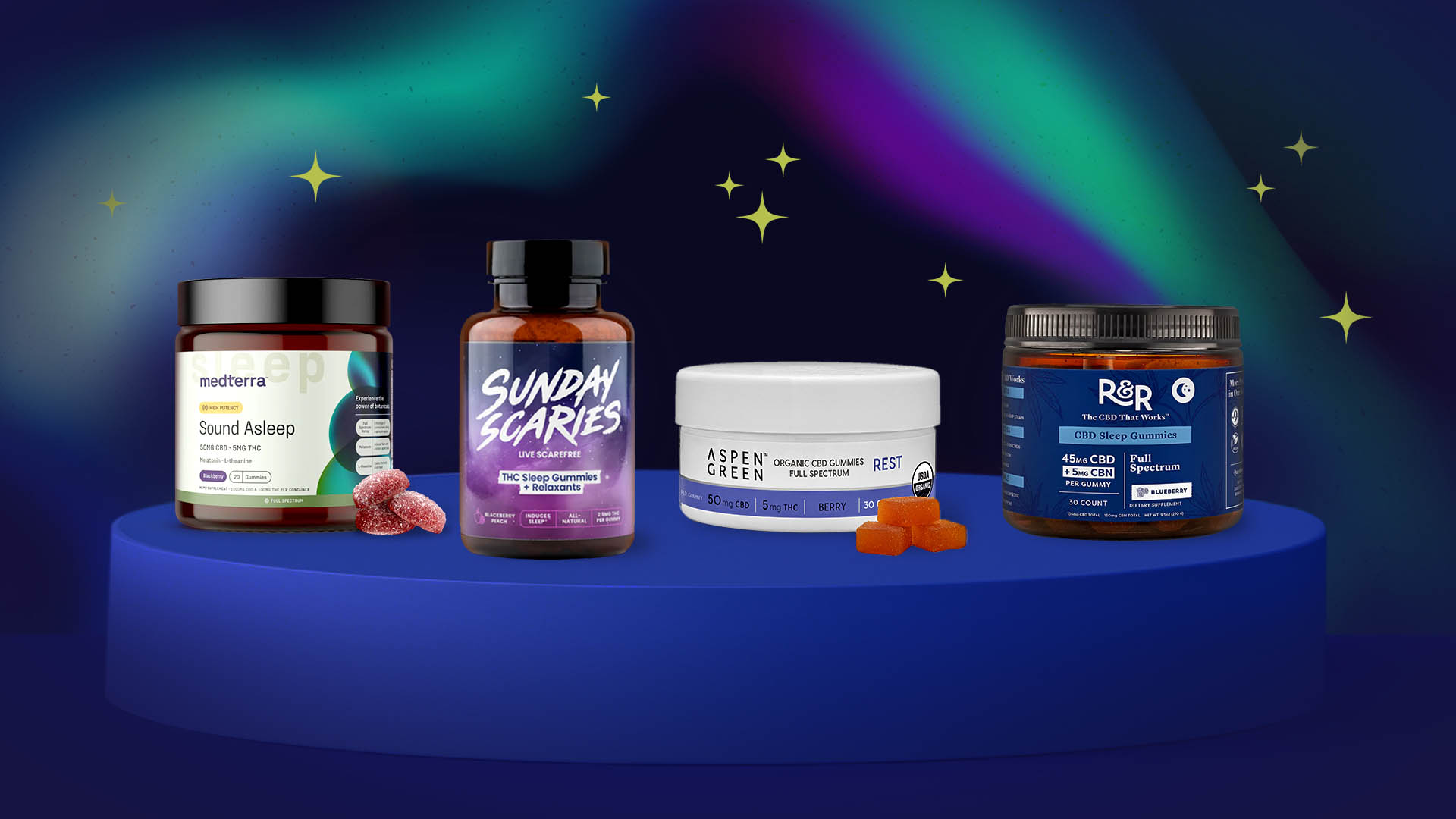
CBD Oracle evaluated 101 CBD gummies marketed for sleep, and after third-party lab testing, expert input, and hands-on consumer testing, only four made our final list:
These top picks stood out for their quality, safety, and ability to actually help with sleep. Below, you’ll find more about the CBD gummies we recommend, plus how we tested and what to look for if you’re shopping on your own.
How we picked
Effective dose
Low-dose products, especially of CBD isolate, are not likely to be as effective. 25mg CBD is a good starting point.
Full-spectrum
The evidence suggests that THC is more effective for sleep issues than CBD alone, so full spectrum CBD gummies are best (unless you can’t have THC).
Small melatonin dose
Lower doses of melatonin (3 mg or below) are OK, but anything beyond that is unnecessary and possibly detrimental to your sleep cycle.
Score-based evaluation
Products were scored using our framework across safety, efficacy, and trust. Only gummies that scored 80%+ were considered top picks.
R&R CBD is one of the best companies in the industry right now, and their CBD Sleep Gummies are the perfect example of why. First off, the hemp is USDA organic and grown under natural sunlight, and the supercritical CO2 extraction ensures that the extract maintains all of the beneficial compounds in the plant.
The gummies combine full spectrum CBD – also containing CBN, CBG, CBC, CBDV and THC – with additional sleep-promoting ingredients L-theanine and ashwagandha to produce a hard-hitting gummy for sleep problems. The 45 mg CBD is the main component, but the combination with CBN and THC in particular has been shown to be effective in studies.
Our independent lab test of R&R’s CBD Sleep Gummies showed some important differences from the COA available on the brand’s website.
First off, the independent report shows much less CBD, with our InfiniteCAL report showing 12.9 mg of CBD per serving, compared to 48.6 mg per serving in the SC Labs report shared by R&R.
Secondly, while the brand’s lab report shows 0.32 mg of THC per serving, our independent report did not detect any THC. Likewise, many minor cannabinoids (CBC, CBDV and CBG) were not detected in our testing.
Our reviewer commented, “The gummies taste great, true to the flavors and no hemp aftertaste. The texture is soft and chewy, like so good I’d want to eat them as a snack. The effects kicked in about 60 minutes for me, I felt a noticeable tiredness – gentle enough to nudge me to sleep but not too strong that it would keep me from finishing up chores around the house late at night.”
Exceptional manufacturing quality
Well-chosen complementary ingredients
Effective for promoting sleep in first-hand testing
Melatonin-free
Good price
USDA organic hemp
Conflicting lab reports, especially for THC and minor cannabinoids
No terpenes confirmed in testing
A little more THC would have helped more with sleep (taking 2 or 3 is more effective)
Best Melatonin-Free
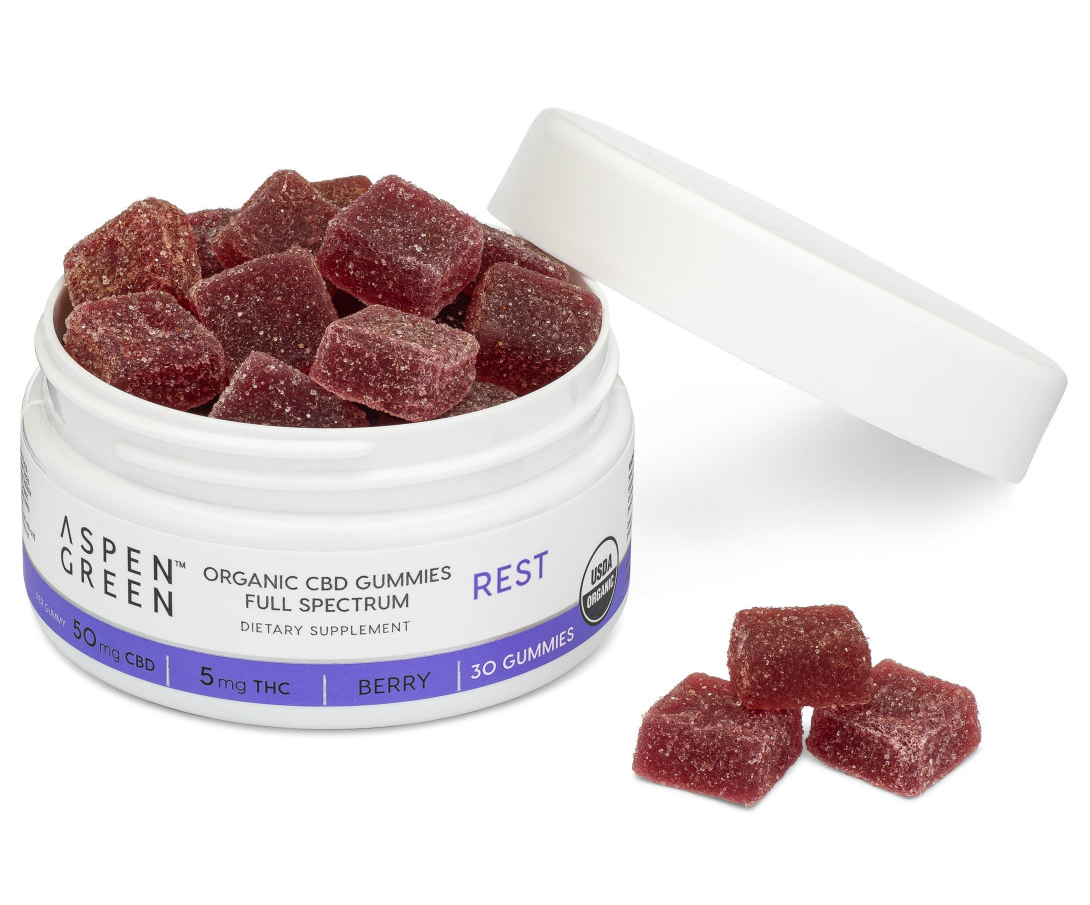
Aspen Green Rest Organic Full Spectrum CBD Gummies
Aspen Green’s Rest Organic CBD Gummies hit on a lot of the key attributes we’re looking for: they’re full spectrum, USDA certified organic, formulated with the help of a doctor and grown in Colorado, one of the best states to grow hemp in the US. The gummies are also made in an FDA-registered facility and using only vegan and non-GMO ingredients.
The extract is made using supercritical CO2 extraction, which maintains beneficial compounds from the plant and leads to gummies containing CBC, CBG and CBN in addition to the expected CBD and THC. Although the COA shows a little more CBD than advertised, the gummies hit hard and are a great choice if you have issues getting to sleep.
The lab report commissioned by CBD Oracle showed broad agreement with the manufacturer’s report. The THC (5.45 mg in Oracle’s report vs. 4.85 mg) and CBD content (58.8 mg in Oracle’s report vs. 60.89 mg) was consistent between reports.
In line with this, the amounts of minor cannabinoids CBN, CBC and CBG showed a very close agreement between Oracle’s report and the manufacturer’s. There were a few additional cannabinoids (CBDV, CBL and CBT) detected in trace amounts in our report which were not detected in the original.
Despite a little hempy aftertaste, our reviewer found these very effective: “These ones are strong! With one gummy, I knock out in about 30-45 minutes. They hit me hard enough that I would have to really resist falling asleep if I’m in the middle of something like finishing up an email. They pretty much feel like a high, very effective for sleep but I don’t like getting that high these days so I avoid them. But if I absolutely need to sleep, I know these are the ones to take.”
Excellent manufacturing quality
Higher THC content makes them very effective
Melatonin-free
True full spectrum
USDA organic certified hemp
Price could be better
Some morning grogginess
Terpenes too low-level to be detected
CBD is higher than labeled value – this is good in a way, but bad for transparency
Sunday Scaries’ THC Gummies for Sleep contain just about everything you could take to improve your sleep. First off, it has USDA organic full spectrum hemp, with a 4:1 CBD:THC ratio, CBN and CBC, but it also boasts L-theanine, magnesium and GABA – all sleep-promoting supplements. It also has melatonin, but at 1 mg per gummy it avoids setting the dose level too high, maximizing its effectiveness and minimizing downsides.
Sunday Scaries also knocks it out of the park when it comes to quality. Their products are made in an FDA-registered, GMP-certified facility and are totally free from the “big 8” allergens. The price may be a little high, but considering all cannabinoids, 0.071 per mg isn’t so bad.
Our test of Sunday Scaries’ THC Gummies for Sleep had a few minor differences from the COA shared by the brand.
The amount of THC per serving was slightly lower in our report (1.95 mg vs. 3.09 mg), and the same was true for CBD (7.72 mg vs. 11.4 mg). These results broadly cluster around the advertised amounts (2.5 mg THC and 10 mg CBD), so this is likely batch-to-batch variation.
There were also very small differences in minor cannabinoids, with CBC and CBN slightly higher in the manufacturer’s report.
Our reviewer noted that “the bottle/label has a cheap feel to it,” but also noted, “the THC level in these strikes the perfect balance. It doesn’t have the big, punchy high like Aspen Green or Medterra, but it’s enough to put me to sleep and keep me asleep all night. I’m not too big on the included melatonin, but combined with the cannabinoids it was definitely effective.”
Excellent mix of cannabinoids – true full spectrum
Good THC dose – effective for sleep promotion
Good sleep with minimal morning grogginess
Top-quality manufacturing
USDA organic certified hemp
Expensive, even if you count all cannabinoids
Contains melatonin, but at appropriately low levels
Slightly lower cannabinoid levels in our independent test
Medterra is one of the most well-known companies in the industry, and their Sound Asleep gummies are a fantastic full spectrum option, with the Sleep Tight gummiesalso scoring highly for anyone who can’t have THC. Along with CBD and THC, Sound Asleep gummies also contain CBDV, CBG, CBN, CBC and CBT, offering the benefits of the entourage effect. The gummies also contain sleep-promoting L-theanine, chamomile, passionflower extract, 5-HTP and 3 mg of melatonin.
While the hemp isn’t USDA certified organic, Medterra uses organic farming methods and batch-by-batch lab reports show no pesticides, solvents or other risky ingredients. Their products are also US Hemp Authority certified, which guarantees that they meet stringent quality standards, every time.
Our independent lab test of Medterra’s Sound Asleep gummies was a close match to the test commissioned by the manufacturer.
The CBD and THC levels were basically the same in both tests (5.64 vs. 5.86 mg/serving and 57.3 vs. 61.7 mg/serving, respectively), with slightly lower results in our test. There were some very small differences for minor cannabinoids, but with the exception of CBG, they were all higher in our test than the manufacturer’s.
Overall, Medterra’s COA is a good representation of the product on the shelves.
Our expert reviewer commented that, “These also hit really hard! They’re very good at putting me to sleep but a little heavy on the THC to do anything useful before bed. I also woke up with a bit of a groggy feeling, but it passed quickly. Flavor-wise, the blackberry was subtle but just about enough to mask the hempy taste.”
True full spectrum, with confirmed terpenes
US Hemp Authority Certified, high-quality manufacturing
Independent lab test confirms manufacturer's COA
Good price
Lots of additional sleep-promoting ingredients
Effective for getting to sleep and staying asleep
Contains 3 mg melatonin – not too high, but close
Groggy morning feeling after full gummy
Can have an unpleasant aftertaste
CBD level over 10% higher than advertised
Slow response time from customer service
Other Gummies We Considered
We identified 101 CBD gummies marketed specifically for sleep, including both full and broad-spectrum options, as well as a handful of isolates. However, the vast majority of these didn’t make it to the final shortlist for various reasons.
We chose some key metrics to trim down the initial product list, focusing on important factors that would seriously undermine the product’s quality or reliability. These were:
No lab report: Without a COA, customers simply cannot be sure what’s in the product.
Unaccredited lab: All lab reports should be from ISO 17025:2017 accredited lab.
Lab report over a year old: Each batch of gummies should be lab tested, so old results are a red flag. If the same batch is still being sold, the potency may have degraded.
No working QR code on lab report (and unverified): Lab reports should contain a working QR code so the report can be verified. In cases where this was the only issue, we approached labs to verify manually.
No full panel test, or failed safety tests: Products should have passed full panel testing for safety.
True full/broad spectrum: Genuinely full or broad spectrum gummies should have detectable amounts of at least four cannabinoids.
Products that passed this process were shortlisted and then scored on the full set of 55 criteria from our Product Quality Evaluation Framework. Finally, the highest-scoring products were sent for independent lab testing and to our expert product tester for final ranking.
Only two brands – Joy Organics and Neurogan – scored over 80% but were not able to be included in the final list. However, both of these met our threshold to be considered “Recommended.”
Ranking Methodology
Expert insights: Building on our interviews for our Best CBD Oils for Sleep list, we interviewed more cannabis researchers and medical professionals about gummies specifically. We used these insights when choosing a specific product from a brand’s catalog and kept them in mind throughout the process.
Market analysis: We identified 101 products from the first 15 pages of two Google searches, and trimmed down the list using key criteria (e.g. having a recent COA publicly available). We then scored all qualifying products based on our product quality evaluation framework, which gives a percentage score based on 55 expert-backed metrics.
Independent lab testing: We then commissioned InfiniteCAL to conduct independent lab testing on the highest-scoring products. This adds another layer of certainty for you and allows us to compare the company-provided COAs with our independent ones so we can identify any problems.
First-hand user testing: The highest-scoring products were also tested first-hand by members of the CBD Oracle team for at least two nights. This is a key step: our framework and independent testing tell us if it’s good in theory, hands-on testing tells us how it is in practice.
Our Tester’s Experience
Our tester found the CBD sleep gummies to be broadly effective, with the THC content being the most important factor in terms of effectiveness and overall experience.
Our tester found the higher-THC options very effective for getting to sleep, but with the risk of being too high for any night-time chores and a little groggy in the morning.
I found taking two or three of the R&R gummies or one from Sunday Scaries was the right level for me, but Medterra and Aspen Green were perfect if I really needed knocking out. Flavor and general experience was good for any brand, but R&R’s were tasty enough that I just wanted to snack on them for fun.
Expert Advice: How to Choose the Best CBD Gummies for Sleep
The recommendations above give you options for CBD gummies for sleep that are safe, reliable, and as effective as possible, but how can you choose the right product for yourself? We’ve spoken to experts in cannabinoid medicine, pharmacokinetics, and sleep to find out.
Full spectrum is best: CBD alone isn’t that effective for sleep issues unless there are other factors like anxiety. THC does work, though, so full-spectrum gummies are best.
Terpenes matter: Dr. Benavides recommended linalool, myrcene, beta-caryophyllene, and limonene as the best terpenes to help with sleep. However, most tests aren’t sensitive enough to confirm terpenes in gummy products, so this wasn’t treated as a strict requirement.
Are Edibles an Effective Format? The Benefits of Gummies vs. Tinctures
You may have noticed that many brands have essentially the same product available as CBD oil and in gummy form. Naturally, you might wonder: are gummies just as effective as oils or tinctures?
Dr. Erin Walsh, clinical pharmacist and founder/CEO at the Cannabis Compass, explained some of the benefits of gummies in comparison to oils:
I do recommend CBD gummies to certain patients struggling with sleep, particularly those who are new to cannabis or prefer not to use tinctures or flower. Gummies offer discreet, consistent dosing. However, because they must be digested, the onset is slower (usually 45–90 minutes) and some patients may find they need to take them earlier in the evening for best results.
Dr. Ryan Vandrey, a prolific researcher from the Behavioral Pharmacology Research Unit at Johns Hopkins University, pointed out some key factors that affect how CBD gummies are absorbed:
Because CBD is lipophilic, there is better absorption when it is formulated in an oil or an ethanol-based tincture compared with a gummy matrix if all other things are the same. That said, there are some gummies that are manufactured with CBD that has been emulsified, which makes it water soluble and enhances absorption. That allows the CBD to be absorbed faster and more completely. Consuming CBD with a high fat meal also facilitates absorption.
These factors are the most important things to keep in mind when it comes to effectiveness. It’s also worth noting that there is some dispute about how much CBD is absorbed under the tongue when you take an oil and how much it is washed into the stomach by saliva.
Should You Combine CBD with Supplements like Melatonin or Valerian Root?
Another common theme when you look through CBD gummies marketed for sleep is that tons of products don’t just stick to cannabinoids. You’ll find melatonin, valerian root, L-theanine, magnesium, and other supplements mixed into the gummies (and oils, too). But is this even a good idea?
Firstly, Dr. Benavides and Eloise Theisen both previously recommended trying different treatments separately. Dr. Benavides explained:
If you keep the products separate, you can try one thing at a time to see if it works for you and at what doses.
That said, CBD is generally not hugely effective for sleep issues on its own, unless anxiety is a big factor, you combine it with THC, or you take a very large dose. So thinking about what you could add to it is not as unreasonable as it might seem.
Dr. Walsh gave us a run-down of the most common options:
Valerian root: “It may enhance calming effects of CBD, but not all patients tolerate it well. Some report vivid dreams or next-day grogginess. Doses range from 300-600mg of valerian root extract, though it may take a few days to weeks of consistent dosing before a patient can see benefits.”
L-theanine: Dr. Walsh told us that l-theanine “smooths the transition to sleep by reducing anxiety without sedation via GABA, serotonin, and dopamine modulation. It’s a great pairing with CBD for patients dealing with racing thoughts. I typically start at doses around 100-200 mg.”
Magnesium: “Often overlooked, but critical for relaxation and nervous system health. I recommend magnesium often and it pairs well with CBD at minimal risk.” She explains that of the various forms of magnesium available, magnesium glycinate and magnesium threonate can be effective for sleep.
Melatonin is a little more complicated, and there’s a lot of disagreement on its benefits in general. Dr. Walsh points out that this is a common pairing, since melatonin helps to regulate your body’s circadian rhythm, but warns:
I do not recommend nightly melatonin, especially at high doses or over extended periods. Many products contain more than necessary (e.g., 5 mg+), while research shows 0.3-1 mg is actually closer to our physiological levels. Patients may develop tolerance or shift their natural rhythms if used improperly.
Can Supplements and CBD Interfere with Each Other?
Dr. Vandrey addressed the issue of possible interactions between CBD and other ingredients:
Most of those kinds of ingredients would not affect CBD absorption, but CBD may slow the metabolism (and thus increase the effect) of the other substances. Oral CBD has been shown to inhibit the metabolism of drugs broken down by 4 different liver enzymes: 2C9, 2C19, 3A, and 1A2.
We also spoke to Dr. Linda Klumpers, professor at the University of Vermont and director with Verdent Science and Tomori Pharmacology/Cannify, who further explained that:
When botanicals get broken down at the same location (enzyme), these could compete with each other, or the activity of the enzymes can be sped up or slowed down. As a result, the botanicals can for example give stronger effects with the same dose, due to the concentrations being higher. The higher the dose, the more risk that these interactions can happen.
Dr. Klumpers also made an important point: “Prior to choosing a product, it is important to discuss with your healthcare provider what you would like to use it for, and with what dose regimen.”
Meet Our Experts
For this article, we consulted the following experts to gain their professional insights on CBD, cannabinoids, and sleep:
Dr. Erin J. Walsh, PharmD, RPh, MS MCST, is a clinical pharmacist with Tufts Medicine and an independent medical cannabis consultant, combining over 8 years of pharmacy experience with a master’s in cannabis science to guide patients and policymakers with evidence-based insights.
Ryan G. Vandrey, PhD, is a Professor at Johns Hopkins University whose research at the Behavioral Pharmacology Research Unit focuses on the effects of cannabis on sleep, pharmacokinetics, and therapeutic outcomes.
Linda Klumpers, PhD, is a Professor at the University of Vermont, a cannabinoid pharmacologist, and founder of Cannify, with over a decade of experience researching cannabis effects in humans and advising clinicians through science-based cannabis education tools.
Eloise Theisen, AGPCNP-BC, is a board-certified adult geriatric nurse practitioner and cannabis therapy specialist who has treated over 7,500 patients. She is the former president of the American Cannabis Nurses Association and CEO of Radicle Health.
Dr. Jen Walsh, director of the Centre for Sleep Science at the University of Western Australia, who led a clinical trial studying the effects of THC, CBD, and CBN on sleep quality.
Dr. Abraham Benavidesis an international cannabis consultant and physician with expertise in cannabinoid science and its interaction with nutraceuticals and medications.
Dr. Ethan Russo, neurologist and founder/CEO of CReDO Science, widely regarded as one of the foremost researchers in cannabis medicine and author of several foundational studies on cannabinoids and terpenes.
Dr. Eric Zhou — Sleep medicine specialist at Harvard Medical School and Boston Children’s Hospital, with a focus on behavioral sleep strategies and evidence-based interventions.
Karl Andersson — Founder of Nordic Perspective and wellness researcher with a focus on product testing, consumer education, and transparency in the hemp and CBD space.
Dr. Chris Winter — Neurologist, sleep specialist, and author of The Sleep Solution and The Rested Child. Known for translating sleep science into practical tools for better rest.
Dr. Bonni Goldstein — Physician and medical director of Canna-Centers Wellness & Education. A leading clinician in cannabis-based medicine and author of Cannabis Is Medicine.
Sherri Mack, BSN-RN — Chief Nursing Officer at Holistic Caring with extensive experience educating patients and healthcare professionals on cannabinoid therapies.
References
Adjaye-Gbewonyo D, Ng AE, Black LI. (2022) Sleep difficulties in adults: United States, 2020. NCHS Data Brief, no 436. Hyattsville, MD: National Center for Health Statistics. DOI: https://dx.doi.org/10.15620/cdc:117490
Hossain, K. R., Alghalayini, A., & Valenzuela, S. M. (2023). Current challenges and opportunities for improved cannabidiol solubility. International Journal of Molecular Sciences, 24(19), 14514. https://doi.org/10.3390/ijms241914514
Walsh, J. H., Maddison, K. J., Rankin, T., Murray, K., McArdle, N., Ree, M. J., Hillman, D. R., & Eastwood, P. R. (2021). Treating insomnia symptoms with medicinal cannabis: A randomized, crossover trial of the efficacy of a cannabinoid medicine compared with placebo. Sleep. https://doi.org/10.1093/sleep/zsab149
Wheeler, M., Merten, J. W., Gordon, B. T., & Hamadi, H. (2020). CBD (cannabidiol) product attitudes, knowledge, and use among young adults. Substance Use & Misuse, 55(7), 1138–1145. https://doi.org/10.1080/10826084.2020.1729201
Yau, G. T. Y., Tai, W., Arnold, J. C., Chan, H.-K., & Kwok, P. C. L. (2023). Cannabidiol for the treatment of brain disorders: Therapeutic potential and routes of administration. Pharmaceutical Research. https://doi.org/10.1007/s11095-023-03469-1
Expert interviews with Dr. Abraham Benavides, Eloise Theisen AGPCNP-BC, Dr. Ryan Vandrey, Dr. Linda Klumpers and Dr. Erin Walsh: Full Interviews (Google Doc)
New Hampshire Lawmakers Approve Bill To Let Medical Marijuana Dispensaries Convert To For-Profit Businesses
New Hampshire lawmakers have advanced a bill to allow medical marijuana dispensaries in the state to convert from from non-profit organizations to for-profit businesses.
After clearing an initial committee and then passing the full House of Representatives in March, the legislation from Rep. Wendy Thomas (D) returned to the House Finance Committee under rules for measures with fiscal implications. A subcommittee of that panel unanimously approved the proposal in a 9-0 vote on Thursday.
Rep. Carol McGuire (R) noted the near unanimity of support in the chamber as the legislation has moved through the process—with a fiscal note that showed a $13,000 cost estimate to implement the law that narrowly rose to the occasion of triggering a Finance Committee review.
“This is something that will let the alternative treatment centers operate more efficiently and, with any luck, will lower the cost to our medical cannabis users. So I’m in strong support,” she said.
Part of the motivation behind the legislation is the fact that medical marijuana dispensaries, called alternative treatment centers (ATCs) under New Hampshire law, don’t qualify for federal non-profit status. But in the state, they’re considered non-profit organizations, which has resulted in disproportionately increased operating costs.
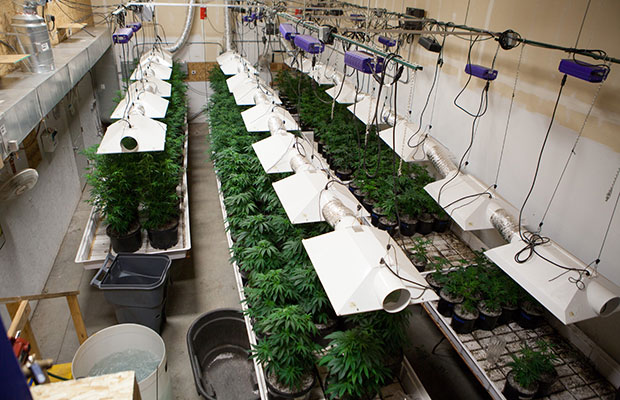
What’s pH? Understanding and Measuring pH in Your Grow Room
What’s pH? This is a question that usually makes new growers scratch their heads and reach for the pipe. The term pH refers to the level of alkalinity or acidity of a liquid substance. The pH scale starts at 0 and rises to 14. A value of 7.0 is considered neutral, with values over 7.0 being alkaline and values below 7.0 being acidic. The liquid is the nutrient solution being used to grow a healthy cannabis plant.
The nutrient solution is basically a cocktail of various chemicals. These chemicals can react to each other in a process called covalent bonding and form new chemicals that the plant can’t effectively use. This process of covalent bonding is largely dependent on the pH of the solution the chemicals are suspended in, in this case water. With the chemicals being used in the average hydroponic solution, a chemist would say that the optimum pH would be 7.0, which is neutral. In keeping the solution neutral, covalent bonding of the constituent parts of the solution will be kept to a minimum.
However, since cannabis plants like a different pH level for optimum growth, it’s okay to lower the pH and take the slight loss of nutrient value. Fast growing, leafy plants generally like a lower pH in the range of 5.2 to 5.9. Fortunately, a lower pH will bond fewer nutrients than a higher pH will. If the pH value goes beyond the optimum range of 5.2 to 5.9, undesirable levels of nutritional deficiency and toxicity will occur, both of which can seriously impede plant growth. Be vigilant.
In researching the various hydroponic methods in use, most of the growing media like rockwool, pea gravel and sand is relatively inert. That means the growing medium won’t react with the nutrients in the solution. For those methods that use inert media, a pH of 5.2 is recommended for optimal elemental uptake. It is at this pH level that the roots will assimilate the nutrients in the solution most efficiently. If the root has to work less to assimilate the required nutrients, the rest of the plant will benefit.
Measuring and Adjusting pH
Measuring pH is relatively easy and there are quite a few choices in terms of methods. The most inexpensive and low-tech method for measuring just requires purchasing a pH kit and taking a sample from the nutrient solution. After following the directions, use the color chart to determine the pH of the solution.
This low-tech solution poses some obvious limitations, not the least of which is the difficulty in deciding which color is closest if you’ve been into the fruits of your previous harvest. The kits typically sell for $5 to $10.
If the pH isn’t the appropriate level for your plant, knowing what chemical to add to the nutrient solution and when is paramount to success as a grower. When the pH level is alkaline, meaning the pH level is above seven, it can be lowered with saltpeter, sulfuric acid or phosphorous. When the pH value is too low, it can be raised with calcium carbonate, lime or potash. Most fertilizers cause a pH change in the nutrient solution. Adding fertilizer to the nutrient solution almost always results in a more acidic pH, so adjust accordingly.
Proper Handling
Handling all of these chemicals safely is important. As a general rule, never use metal. Instead opt for glass or plastic or the nutrients will react with the elements in the metal and mess up the nutrient ratios. Never add the acid to the vat of nutrient. Fill a small glass container with the nutrient to be balanced and add a few drops of the necessary chemical. Stir it in well and add small amounts at a time to the large vat of nutrient until the proper pH balance is achieved.
As time goes on, the amount of salts produced by the breakdown of fertilizers in the medium causes it to become increasingly acidic. Eventually, the concentration of these salts in the medium will stunt the plant and cause browning out of the foliage. As the plant gets older, its roots become less effective in bringing food to the leaves. To avoid the accumulation of these salts in the medium and to ensure that the plant is getting all of the food it needs, be sure to flush the system with clean, pH-balanced water every couple of weeks. Do this in lieu of that cycle’s feeding.
There’s always been a big debate over when to adjust your pH – before and after you add nutrients to the water, or just after. The truth is, growers can do both. The reasoning for doing both is that water is rarely dead on neutral. It’s either acidic or alkaline, depending on the region. Render the water neutral first by bringing it to a pH of 7.0. Then add the nutrients to that chemically-neutral solution and adjust to the desired range within 5.2 to 5.9 pH.
Because there are so many factors that go into the delicate art of cultivating cannabis, learning how to properly measure and adjust the pH balance on nutrient solutions will have a clear effect on the appearance, potency and health of cannabis plants. Practicing and perfecting this step will be what makes a grower’s crop stand out from the crowd.
TELL US, have you taken pH into consideration when growing cannabis plants?
Smoking A Bowl of High-THC Flower Might Be Best For Combatting Pain
The average cannabis user living in states where marijuana is legal has the luxury of stepping inside his or her friendly neighborhood dispensary for access to a variety of pot products, like edible candies, pills, topicals, concentrates and even beverages. These processed variations of the cannabis plant are designed for those consumers who don’t necessarily want to smoke to achieve the desired effect. But when it comes to which method of consumption is best for patients suffering from chronic pain, a new study suggests that loading a bowl full of flower is still the most effective path to getting back to good.
Researchers at the University of New Mexico determined that people trying to manage pain through the use of cannabis are simply better off smoking bud than relying on other forms of the herb. The findings, which were published in the journal Complementary Therapies in Medicine, indicate that “whole cannabis flower was associated with greater pain relief than were other types of products.” The researchers go on to say that “higher tetrahydrocannabinol (THC) levels were the strongest predictors of analgesia and side effects prevalence across the five pain categories.”
These results are especially interesting considering that cannabidiol (CBD), the non-intoxicating compound of the cannabis plant, is now being praised as a rockstar at taming pain. Even the folks pushing the hemp-derived version of this medicine, which is much weaker than the oils made from marijuana, swear that this sometimes truck stop novelty is the key to living pain-free. However, researchers beg to differ. They have concluded that the presence of THC, which produces the stoned effects we all know and love, is also essential if the user expects any discernible pain-relief results.
“Cannabis flower with moderate to high levels of (THC) is an effective mid-level analgesic,” the study reads.
But it just isn’t the existence of THC that makes smoking marijuana the best approach to pain management.
We have swelled into a society convinced that dissecting cannabis and separating its components into good and evil is the right approach to the plant. This is perhaps the reason that CBD has risen to such stardom in the past five years. The problem with this attitude is that it completely disregards the 100 or so other cannabinoids that the cannabis plant has to offer. It also discounts essential terpenes and flavonoids and thereby eliminates any possibility that the patient will benefit from the plant’s synergistic properties. Science established long ago that the entourage effect associated with whole-plant cannabis is what truly provides the therapeutic effects. So, all of you military service members prohibited from using CBD products, don’t worry, you’re definitely not missing much.
But what about kids suffering from epilepsy? Dr. Sanjay Gupta told us years ago that they needed the CBD compound to stop seizures. Sure, while some sick children might have had some luck controlling this affliction through the use of CBD alone, a study published found the compound was more effective at helping them stay seizure-free if it was complemented with just a hint of THC. Researchers found that the closer they got to allowing the two cannabinoids to work together, the better the results. “We saw a statistically significant reduction in motor seizures, and an increase in seizure-free days,” the study authors said.
Although the U.S. Food and Drug Administration (FDA) approved a CBD-based drug called Epidiolex to be prescribed to young patients suffering from two rare forms of epilepsy, not even it is expected to be a miracle cure. The drug, which contains absolutely no THC, is only effective in around 32% of patients, according to the FDA. Parents with epileptic kids have long complained that CBD alone just doesn’t do the trick and that the efficacy of this compound has been hyped beyond belief.
The study out of New Mexico, however, provides some guidance for an America looking for answers as to whether marijuana can relieve pain or not.
A separate study published from the American Society of Anesthesiologists (ASA) shows that 75% of the U.S. population, most of them millennials, has a genuine interest in learning more about how pot can combat pain conditions. These folks, presumably those fed up with all of the anecdotal reports and the conflicting studies that emerge every other week, want to see the federal government finally roll up their sleeves on the cannabis issue and deliver real results.
Unfortunately, it seems that medical marijuana users are going to have to get high before they experience any noticeable pain relief. And that complicates things for a vast majority of the U.S. population — especially those in the workforce. Unlike over-the-counter pain remedies like acetaminophen and ibuprofen, which eliminate some of the hurt without a buzz, smoking marijuana to combat minor aches could lead to impairment issues on the job. Just like most companies don’t allow workers to drink booze on the clock, medical marijuana is not likely to be any different, even after federal legalization finally takes hold. So, don’t sell your stock in Tylenol just yet.
American Basketball Player Faces Potential Death Penalty Over Medical Marijuana After Arrest In Indonesia
An American basketball player is potentially facing the death penalty or a lengthy prison sentence after being arrested in Indonesia over possession of marijuana gummies he said he uses for medical purposes to treat Crohn’s disease.
Jarred Shaw—a 35-year-old Texan who’s played internationally for the team Prawira Bandung and helped secure a victory in the 2023 Indonesian Basketball League (IBL)—was arrested in May by Indonesian law enforcement after receiving a package of over 100 cannabis gummies.
Indonesia has extremely punitive drug laws, including for marijuana, and the crime carries the possibility of capital punishment. Shaw conceded in an interview with The Guardian that was published on Friday that he made a “stupid mistake,” but he explained that he uses cannabis to treat symptoms of his gastrointestinal issues.
“I use cannabis as a medicine,” he said in the interview during pre-trial detention in Jakarta. “I have an inflammatory condition called Crohn’s disease that’s incurable. There’s no medicine apart from cannabis that stops my stomach from aching.”
“I made a stupid mistake,” he said. “There’s people telling me I’m about to spend the rest of my life in prison over some edibles.”
“I’ve never been through anything like this,” he said, adding that during his first two months after being arrested, he was at “the lowest point in [my] life” and in a “really dark mental place.”
“I felt helpless and alone. I didn’t want to wake up again,” he said. “I just turned 35 but I still feel young. I would love to continue my basketball career.”
The cannabis gummies he purchased and that were delivered to him before being swarmed and arrested by police weighed 869 grams, resulting in a charge that accused him of possessing essentially a kilo of marijuana even though most of the weight was from the non-cannabis components of the edible.
“They’re making it seem like I’m this big drug dealer,” Shaw said. “Why would I bring the candy here to sell? It was for personal use.”
A State Department spokesperson told Marijuana Moment that “we are aware of reports of a U.S. citizen detained in Indonesia,” but that “due to privacy considerations, we have no further comment.”
Marijuana Moment also reached out to the White House for comment, but representatives were not immediately available, with an automated message citing the government shutdown as the reason for unresponsiveness.
So it remains to be seen whether the Trump administration will designate this as a wrongful detained individual by a foreign government, which could help secure Shaw’s release as has been the case in past marijuana-related international cases.
For example, the State Department under former President Joe Biden eventually designated Marc Fogel as a wrongfully detained individual toward the end of his term, after previously resisting the move. The American teacher was serving a 14-year sentence after being convicted of “drug smuggling” over possession of a half-ounce of cannabis.
Fogel was a registered medical marijuana patient in Pennsylvania prior to the imprisonment, and after his release under the Trump administration, he’s now scheduled to advocate for cannabis reform at an event in the state on Saturday.
Ahead of his designation as wrongfully detained, there were repeated calls for the diplomatic status change, including a letter sent to the Biden administration by over a dozen members of Congress that emphasized that Fogel’s access to marijuana was “necessary to subdue his pain.”
Brittney Griner—a U.S. professional basketball player who was previously incarcerated in Russia over possession of marijuana—was also set to attend a cannabis advocacy event earlier this year. But she ultimately pulled out after discovering what she felt was a threatening message in her hotel room.
The lack of clarity on next steps in Shaw’s case, meanwhile, is heightened by the recent upsurge in anti-drug activity from the Trump administration, which has included declaring a “non-international armed conflict” with cartels that officials have used to justify attacks on ships suspected of trafficking illicit drugs.
But as President Donald Trump continues to weigh a pending marijuana rescheduling proposal he said would be decided on imminently, he also shared a video last week that touted the health benefits of hemp-derived CBD.
Photo courtesy of Chris Wallis // Side Pocket Images.