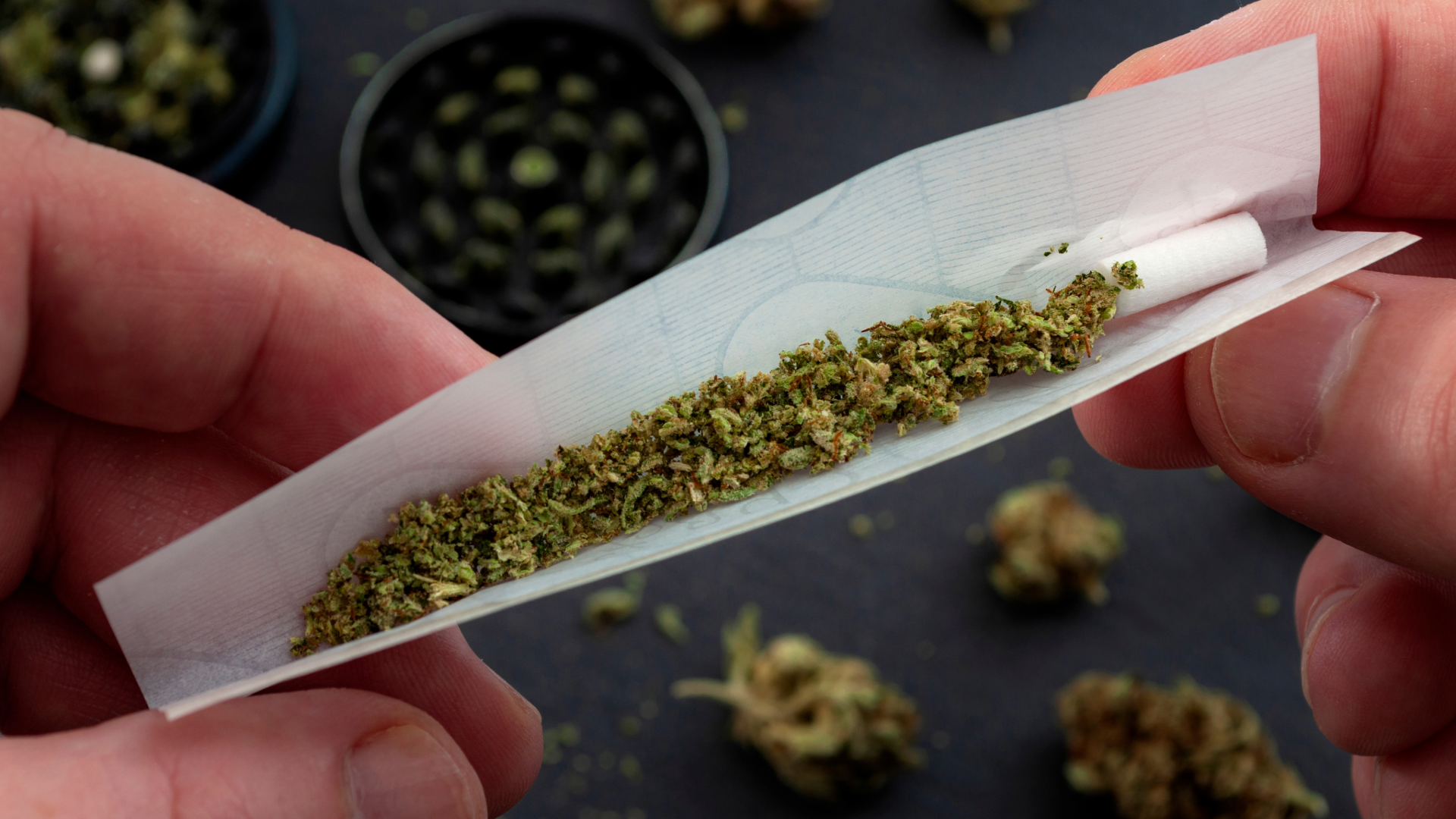
La Chocolat Strain is unique with its dense, fluffy buds that are soft but solid to the touch. Medium-sized nugs feature golden colors with chunky orange hairs and a layer of milky trichomes that provide a frosty appearance. The scent is earthy and musky with pine undertones and slight floral notes and is a delight to the senses. This strain is pest-resistant and produces dense, resinous buds that are ideal for growers seeking solid plants. La Chocolat Feminized Seeds can be accessed at Crop King Seeds, ensuring that you have access to this reliable, tasting strain.
Benefits and Effects
Provides a heavy body high that relaxes you into sleep.
Relaxes the mind and calms after a tense long day.
Grows well for evening use when requiring restful sleep.
German Government Report Shows Marijuana Legalization Hasn’t Increased Youth Use Or Traffic Accidents
German officials have released a report on the impact of the nation’s marijuana legalization law, finding that fears from opponents about youth use, traffic safety and more have so far proved largely unfounded. However, the illicit market has not meaningfully diminished under the limited legal regulatory model that has been rolled out in the country to date.
The interim report, which was required under the cannabis law enacted last year, assessed a series of health, public safety and economic factors associated with the end of prohibition.
Among the most notable findings in the document published on Monday is the fact that youth marijuana use has continued to decline, even after possession and home cultivation were legalized for adults and social clubs offering access to members opened.
Further, “no clear changes in the previous trend in cannabis consumption among adults could be observed,” the report, conducted on behalf of the federal Ministry of Health, says, according to a translation.
“The percentage increase in adults who have consumed cannabis in the last 12 months, which has been observed since approximately 2011, is likely to continue…without any drastic changes,” it says.
A separate recent study conducted by German federal health officials also found
Cathedral City California Tightens Cannabis Rules Over Odor Complaints
Cathedral City is implementing stricter regulations for cannabis businesses in response to the abundance of odor complaints from residents.
The city had a spike in complaints starting in April 2024, which continued into 2025. Residents from an RV park in Cathedral City called Outdoor Resort Palm Springs have been the most outspoken about the smell of cannabis coming from neighboring Cat City Cannabis Co., which is also known as C4.
A large number of Outdoor Resort Palm Springs residents attended city council meetings to demand Cathedral City do something about the smell. In January 2025, the council approved a 45-day moratorium on new cannabis licenses and conditional use permits. It later extended the moratorium into January 2026.
In search of a permanent solution, the council unanimously approved an ordinance last week that amended regulations on the city’s 59 licensed cannabis businesses, 14 of which are reported to be not operating. It will go into effect in late November if the council approves the ordinance’s second reading on Oct. 22.
To Read The Rest Of This Article On Desert Sun, Click Here
Mass. Ballot Question Proposals Could End Recreational Marijuana Sales
Massachusetts residents may soon face the prospect of ending legal recreational marijuana sales, per two new ballot initiatives.
On Aug. 6, the Attorney General’s office announced that 19 groups had submitted 47 ballot initiative petitions proposing new laws or constitutional changes for the 2026 statewide election.
Among them, two petitions aim to repeal or modify parts of the state’s laws on recreational marijuana.
What do the ballot initiatives propose?
Currently, Massachusetts General Law Chapter 94G, Section 7 permits adults 21 years or older to purchase or grow their own marijuana. Adults 21 and over can carry up to one ounce of marijuana and possess up to 10 ounces in their home.
The ballot initiatives, filed by Caroline Cunningham and signed by about 14 other people, propose modifying the criteria for the legal possession, distribution, and use of marijuana.
To Read The Rest Of This On Boston.com, Click Here
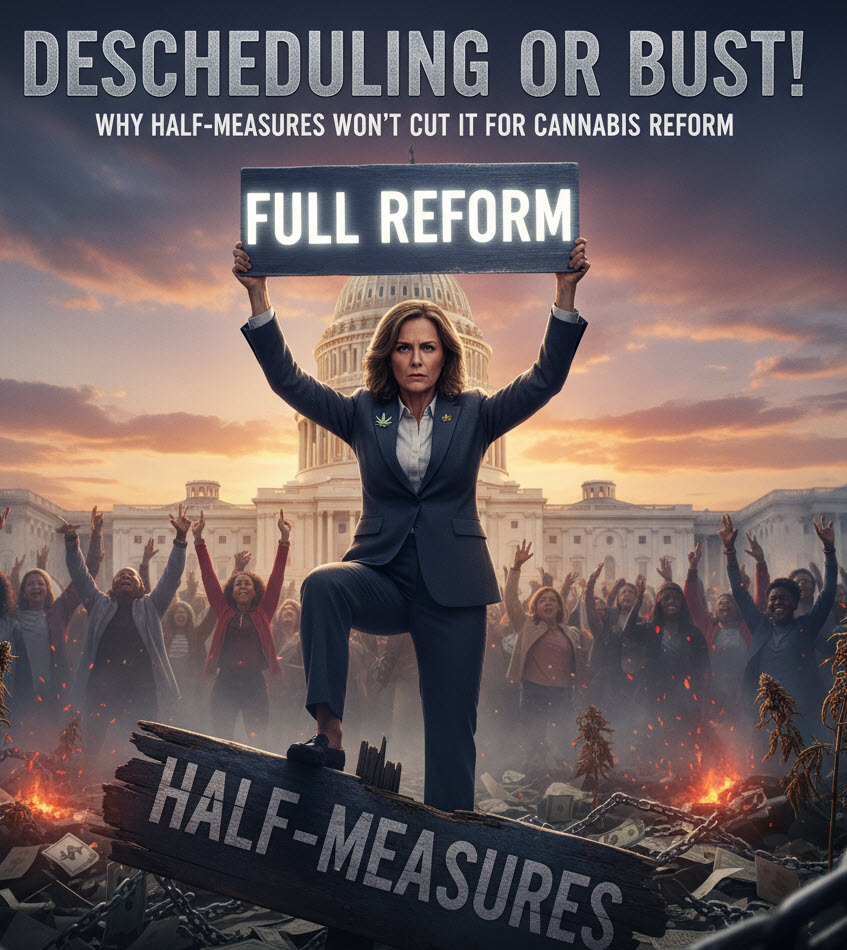
Buyer Beware on Schedule 3 – Descheduling or Bust: Why Half-Measures Won't Cut It for Cannabis Reform
Case in point: Donald Trump recently posted a video discussing the endocannabinoid system while weighing cannabis policy options. Let that sink in for a moment. The guy who built his brand on “law and order” rhetoric is now talking about CB1 and CB2 receptors, even suggesting that covering CBD under Medicare could be “the most important senior health initiative of the century.” If you’d told me this five years ago, I’d have assumed you were sampling too many of Colorado’s finest concentrates.
Trump Can Outdo Democrats By Rescheduling Marijuana When They Failed To Do So, Roger Stone Says
One of President Donald Trump’s longtime advisors, Roger Stone, says his administration has an opportunity to move forward with marijuana rescheduling—or, even broader legalization—in a way that Democrats who regularly tout the reform failed to achieve when they controlled the White House and Congress.
“The video posted by President Trump talked about the use of CBD oil to alleviate pain, lower stress and result in better sleep. CBD is the non-psychoactive compound found in cannabis,” Stone said. “It does not get you high, and it is a source of most of the medicinal benefits from the cannabis plant.”
He added that it’s well-understood that the president has been a “supporter of states’ rights on the question of the legalization of cannabis for medicinal purposes.”
“That has always been his position. Go all the way back to the 2016 campaign,” he said. “I myself have been a major advocate for President Trump reclassifying or declassifying cannabis. Right now, cannabis is considered
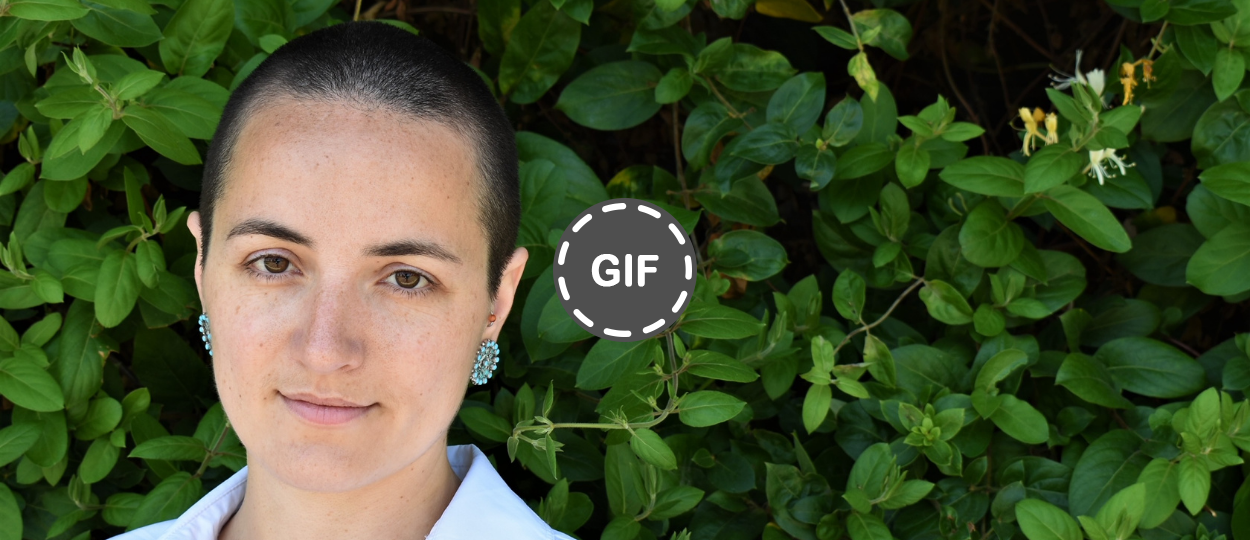
Freedom Fighter of the Month: Joelle Puccio’s Crusade to Protect Pregnant Women
Editors’ Note: “Freedom Fighter of the Month” has long been a popular feature in High Times magazine, dating back to the 1990’s. Today, we’re bringing it back as a monthly column! Send nominations to hightimesfreedomfighters@gmail.com with the subject line “Freedom Fighter of the Month.” Tell us who you think should be recognized and how to best contact that person, so we can add them to our growing list of unsung heroes to highlight in communities like yours.
“Drug overdose is the #1 cause of death in the 12 months following birth. Our mamas are dying.”
Joelle Puccio is a Registered Nurse and co-founder of the Academy of Perinatal Harm Reduction (APHR). In a nutshell, they advocate for one of the most highly-scrutinized groups in existence: pregnant and nursing mothers with a history of substance use.
“When you look at a certain group of people more, you’re going to find things more, just because you’re looking,” explains Puccio.
A Harm Reduction Toolkit for Pregnant & Nursing Mothers
Research is one of the most frequently used tools in Puccio’s role as Director of Education at APHR, which recently published a Harm Reduction Toolkit for pregnancy and substance use. The easily digestible 8-page handbook, available in English and Spanish, offers guidance on everything from tobacco, nicotine and alcohol use during pregnancy to opioids, stimulants and benzodiazepines.
The manual definitively states, “there is no evidence to suggest that cannabis is related to stillbirth, preterm labor, significantly low birth weight, birth defects, or feeding problems.” Unfortunately, as Puccio notes, prohibition is rarely about the science, and for pregnant and nursing mothers, the equation is complex.
“It has to be mostly a question of where do you live, how likely are you to get caught, if you do get caught, how likely are they to come down hard on you? Meaning, are you white, middle-class, able-bodied, neurotypical? Because if the answer to any of those things is ‘no,’ then it’s a lot more likely that you will be heavily criminalized if caught.”
Using Cannabis During Pregnancy or Breastfeeding
Puccio has a footnote or citation for nearly every statement they make. But when it comes to substance use during pregnancy and breastfeeding, there are limitations to the science. “We can’t do research in the context of criminalization. You cannot say, ‘take this drug and see if it hurts your baby and I’m gonna watch.’ That’s an unethical research study, right? So, what we are left with is observation of people that we know of that are using this drug, meaning people who have been unable to avoid getting caught.”
Puccio leaves no room for misconceptions. As a healthcare provider, they are clear that the rewards of breastfeeding far outweigh the majority of risks, especially related to cannabis use.
“When we look at the mountain of benefits and then contrast it with what we know about exposure to THC and other compounds through human milk, it’s just like a little piddling pile of sand compared to that big huge mountain,” says Puccio, who then rattles off a slew of health benefits for babies from fewer ear infections, less asthma, and higher performance in school, and adds that mamas also have better health outcomes, such as better weight management, lower risk of depression, and lower risk of hemorrhage in the postpartum period. “It’s just a transformational and magical and priceless experience. There is nothing like it and it cannot be replicated.”
Challenging Extreme Binaries in Substance Use Activism
Puccio’s work in the Harm Reduction sphere first began in nursing school. As part of a class project, they volunteered at the People’s Harm Reduction Alliance in Seattle, and what they found was astonishing.
“I was really struck when I was there that they were really honest and practical about drug use, which is unlike any place I had ever really been,” recalls Puccio. “This was a place where we acknowledge the risks and were just really matter-of-fact about what drugs are, what they do, how people use them, and focus on outcomes rather than morals.”
Puccio now brings a healthy dose of honesty and dignity to every conversation, and argues that substance use is rarely black and white.
“You tend to see extreme binaries in substance use activism,” states Puccio. “Either ‘it’s the worst thing that’s ever happened to anybody and we should prevent it at all costs’ or ‘it’s the greatest thing ever and free drugs for everybody’ and neither one of those is really very accurate and matches reality.”
Similarities and Differences Between Cannabis and Other Drugs
Puccio is quick to point out that whether it’s cannabis, crack cocaine or fentanyl, the tactics used to oppress users are largely the same. “Of course, each drug is different. It has different mechanisms and acts on different receptors in our brains and the rest of our bodies, but the way they come after us is the same, regardless of what drug you use. And the technique of splitting into splinters a group that you want to oppress is as old as the hills, and I’m sad that we’re falling for it.
In addition to research and scientific studies, Puccio often utilizes history to get their point across. “Criminalization has never been about the drugs; it’s never been about the weed. In the 1920s and 1930s, it was about Mexicans and other people of color and finding a way to criminalize and oppress them.”
The Truth About America’s War on Fentanyl
Puccio strongly believes that fentanyl is the newest battlefront in the everlasting War on Drugs. “It really mirrors what we saw for crack cocaine vs. powder cocaine a few decades ago.”
While Puccio admits fentanyl is “quite potent,” they also acknowledge that “people are not getting 100% fentanyl when they’re buying it on the street.” Once again, Puccio rattles off the science like it’s common sense.
“What people are actually getting in the drug supply these days is partly fentanyl, partly filler, partly xylazine. Now, we’re getting medetomidine, all kinds of other contaminants. We’ve had nitazenes in the U.S. now, which had been more popular in Europe.”
Puccio adds that fentanyl itself is seldom the sole factor to blame in an accidental poisoning. “It’s so important to recognize that almost all overdose deaths are [due to] polysubstance use. It’s very rare to find only one substance.”
Dispelling Myths About Fentanyl-Laced Cannabis
When it comes to rumors about cannabis products tainted with fentanyl, Puccio is similarly unequivocal. “It’s just not true,” they say. “If you did put fentanyl on flower and then lit it on fire and smoked it, the fentanyl would be destroyed. You wouldn’t be able to absorb any of it because it cannot withstand those kinds of temperatures.
When Puccio looked into where false claims about fentanyl-laced weed might be coming from, they found two case reports with a total of three young men who had experienced an overdose. All tested positive for contaminants besides fentanyl.
Puccio also provides an example involving a person who had been ordered to treatment and was supposed to stay off opioids. Every time he tested positive for fentanyl, he would tell the doctors that it was because of tainted cannabis. “This went on for months and they never tested his weed or visited his home; they just kept believing him,” chuckles Puccio.
Puccio is quick to distinguish between raw cannabis flower and vapes, however. “Vaping occurs at lower temperatures, so it is possible – not super probable, but possible – that someone could modify their device in such a way that weed oils could have fentanyl added to them.”
Even then, Puccio says, the few reliable reports of people overdosing in this manner are happening in the context of intentional use. “This idea that there’s some boogeyman out there that’s wasting good, expensive fentanyl by putting it in other people’s vapes is just a fabrication.”
Unfortunately, the consequences of misinformation can cause real-world impacts. “We’ve got police officers thinking that they’re having an overdose, so much so that they faint and have panic attacks,” reports Puccio.
Overcoming Cultural Obstacles to Research
With such high stakes, it’s critical that scientists, activists, and policymakers alike continue to challenge the status quo. “Researchers are under a tremendous amount of pressure to produce the kind of results that people want to publish and are respectable. It’s really not respectable to do what I do,” Puccio points out.
Being popular isn’t what matters to them. Being educated on the most recent science available, while still flexible enough to adapt your thinking as new research comes in, is among the things that make Puccio stand out in their field.
“It’s really important to be able to collectively change our minds when presented with new information.”
Editor’s note: While credible public health sources, including the CDC, report that confirmed cases of fentanyl-laced cannabis flower are exceedingly rare, some clinicians and harm reduction experts caution that intentional ingestion — particularly through vape oils — has been documented. High Times encourages readers to exercise caution, use test kits when available, and rely on trusted sources when obtaining cannabis products.