It’s difficult to admit this—especially to the readers of High Times—but for most of my life, I flat-out hated the hippies. That’s curious, considering I grew up in the San Francisco Bay Area and, for a quarter of a century, have lived just three blocks from Golden Gate Park—ground zero for the very counterculture I went out of my way to avoid.
But my aversion to dancing bears and patchouli oil didn’t come out of nowhere. It was forged last century in a scene I can only imagine has played out in households across America over the past sixty years—when one member of the family starts wearing tie-dye, smoking weed, dropping acid, and then takes off to follow the Grateful Dead.
My Hippie Brother
As a teenager in the 1980s, I remember how painfully embarrassed I felt by my brother, who wore Birkenstocks and wooden beads, and looked like a mashup of Charles Manson, Jesus Christ, and a street poet carrying a tambourine. He danced around our high school with abandon, sharing messages of peace and love with everyone he met. I was mortified. But my brother was just being himself.
At the time, I was too young to grasp what I was witnessing. All that I could see was that my brother worshipped a band named after dead people—who seemingly all used drugs—and had images of skeletons wearing top hats plastered everywhere. None of it seemed the least bit fun or whimsical then. In fact, it scared the living daylights out of me.
That fear became real when my brother disappeared one day and couldn’t be found. Eventually, word arrived that he’d overdosed at a Dead show after ingesting an entire sheet of LSD, resulting in a full-blown medical emergency and a stint in rehab—which created a staggering amount of chaos in an already fractured family.
With all eyes on my brother, everyone forgot about parenting me. It went unnoticed that I was dyslexic and failing all of my classes, or that I, too, had been using drugs but simply hadn’t been caught. At just sixteen years old, I dropped out of high school and beauty college—both at the same time—and none of it was pretty.
Then, as often happens to people who live in a black and white world without a touch of grey, I buttoned up, flung myself in the opposite direction, and never looked back. After enrolling in community college at seventeen, I figured out some learning hacks, earned a master’s degree, and accomplished things I didn’t know were possible, which made me feel responsible.
But somewhere along the way, I let judgment take the wheel and distanced myself from anything counterculture. Burning Man, psychedelics, or even a whiff of kombucha was a hard pass for me, and I doubled down on my boycott of the Grateful Dead. It felt like self-protection rather than what it really was: a hardened heart. 2009 was the last time I’d seen or spoken to my brother.
How I Changed My Mind
Eventually, all of that unprocessed trauma caught up with me; it always does. For twenty years, I did all the “right things,” dragging myself to doctors’ appointments and therapy sessions all over town, spending incalculable amounts of time and money in the process. None of it moved the needle.
Having exhausted all available options and ready to give up, I reluctantly agreed to try therapist-assisted psychedelic therapy—a process where a trained facilitator administers psychedelics and guides patients to release deep-rooted trauma. Because these treatments are still largely illegal, I wasn’t a good sport about it at first and backed out several times before my first session. But much to my astonishment, it worked, and each session unlocked something new.
It wasn’t inexpensive, but I learned the hard way that chipping away at those layers cannot be done alone and requires a professional who can help navigate the process. I would never recommend this work without a qualified facilitator.
Eventually, I became curious to try psychedelics out in the wild. My friend Lisa came over with a boombox and a bag of mushrooms, and we walked to Golden Gate Park. I quickly realized I didn’t like it, as the medicine had become too sacred for casual use.
Then, as a group of people passed by, a humbling truth finally landed: I’d become the person I’d once criticized—fuzzy vest and all—doing psychedelics in the park. I snapped a photo so I couldn’t unsee the cold, hard truth: I owed my brother an apology.
I reached out shortly thereafter, sharing my journey and apologizing for being such a profound asshole. He received it with immense grace, and we began repairing our relationship one text at a time. Then, something truly unbelievable happened.
Facing the Music
The universe has a way of rewarding a humble heart with a bit of magic. I’d just taped a quote to my computer monitor that I’d heard for the first time in a meeting moments before. It arrived with a sense of urgency that compelled me to write it down: “The fortune is in the follow-up.”
Staring at the directive, I immediately thought of a business advisor I hadn’t spoken to in a while and picked up the phone. He mentioned he’d just been given an extra ticket to an upcoming benefit concert at the Oakland Zoo for a charter school he supports, and he invited me along.
I had only recognized the name as being connected to the Grateful Dead, but I didn’t fully grasp the profound significance of what I was about to encounter—even as I drove from San Francisco to Oakland, crossed the bridge, and rode a gondola to the top of the zoo, a place I’d visited often as a kid. Once there, I spotted my advisor among the small group of guests, and we discreetly stepped outside to smoke a joint before finding our seats. It was only then that I was struck by the irony that I wouldn’t be leaving this earth without seeing a Dead show after all.
As the performance got underway, I finally understood exactly who I was looking at, despite having never laid eyes on him before. Standing just ten feet away from me, in all of his glory, was a man who had started an actual revolution—right down the street from where I live—whose influence extended far beyond music. He was also the same person that I’d unfairly held responsible for the pain in my family I’d experienced growing up.
While I may have refused to hear his message before, I had somehow found myself face-to-face with Bobby Weir in a moment of reckoning. As he stared directly into my eyes with a haunting, soulful intensity, it became clear to me that I was meant to hear his message now—so I listened.
It was a formal, seated event, but after a few songs, I got up and danced anyway. I danced for my brother. I danced for the good fortune that I had ended up in that room. I danced because the things that had felt stuck inside me wanted to move. I danced with abandon.
Bobby sang the Bob Dylan cover “When I Paint My Masterpiece” right to my face. I’d never heard it before, but it struck a chord, and the lyrics mirrored the places I’d been—and what I’m quietly building. I decided to make it my song and use the title’s words as my new mantra.
I took very few photos that evening, remaining fully present as I opened my heart as wide as possible and took everything in. Then, with tears in my eyes, I chose to close a very difficult chapter of my life once and for all, silently apologizing to the beautiful spirit that had been serenading me, until I felt something inside me shift.
Arriving Full Circle
Following the incredible evening, I went online to learn more about Bobby Weir and was surprised to find out that like me, he had undiagnosed dyslexia and had dropped out of school. I’ve since done a deep dive on all things Bobby Weir & The Grateful Dead, but on that occasion, as I made my way to his personal website, I discovered that tickets for Dead & Company’s sold-out residency at The Sphere had just been released for its opening weekend—which also happened to be my birthday.
Knowing that a private concert with a few dozen people was hardly the same as attending a true “show,” and without any hesitation, dropped a small fortune for two VIP tickets and a suite at the Venetian and invited my boyfriend to join me. It was, hands down, the best concert I’d ever seen.
The same magic happened when Dead & Company played their final three shows in Golden Gate Park in August 2025. When I noticed that tickets had become available for the sold-out performances, I bought super VIP “Golden Road” passes for the first and last shows. I invited my brother to join me, but he told me his concert-going days were already behind him. With my fella out of town, I walked the last few blocks of my long spiritual crossing alone, and made up for lost time.
But the most important full-circle moment took place in Oregon, after I boarded a plane to visit my brother and his family for the first time in fifteen years. We stayed up until the wee hours sharing stories of our parents—who had both since passed away—and compared notes about our childhood. It was a revelation for him to learn how much I had struggled growing up, and his sadness for my younger self felt like a final layer of ice melting away.
In a special moment I’ll never forget, he gave me an olive green medicine pouch that had been a sacred part of his own healing journey. He wanted me to have it for mine. As we bonded over the music that I had now come to also love, we watched videos of old concerts while he told me what it was really like to leave home and follow the Dead. I looked at the gentle, kind person I’d distanced myself from for decades—and realized with a shock of joy that we had actually become a lot alike.
The Final Revolution
When the sad news broke that Bobby Weir had passed away, I felt a quiet, profound sense of awe—not just for the music I came to love, but for the miracle of giving me my brother back.
In the days that followed, I watched two outstanding documentaries—The Other One: The Long Strange Trip of Bob Weir and the six-part Long Strange Trip—to catch up on everything I’d missed, and finally understood the full message of the Grateful Dead. It turns out that I was wrong about the hippies.
Bobby Weir presented a masterclass in life and demonstrated for everyone—especially those of us who see the world differently—how to create a blueprint that hadn’t existed before but will echo for generations.
“The fortune is in the follow-up” wasn’t a business quote or a concert ticket after all. It was the immense value of making things right. I saw the masterpiece he created by staying true to himself—even when the world wasn’t wired for him. I chose to follow his lead—and now I’m part of the song.
All images courtesy of LL St. John.
This article is from an external, unpaid contributor. It does not represent High Times’ reporting and has not been edited for content or accuracy.
South Dakota Lawmakers Vote To Eliminate Medical Marijuana Oversight Committee
The sponsor of the bill to eliminate the cannabis panel said it has become an unnecessary layer of bureaucracy.
By Joshua Haiar, South Dakota Searchlight
The controversial committee that oversees South Dakota’s medical marijuana program could come to an end.
A bill sponsored by Rep. Tim Goodwin, R-Rapid City, that passed the House 41-26 on Monday would repeal the sections of state law that established the Medical Marijuana Oversight Committee. The bill goes to a Senate panel next.
The medical marijuana program itself would continue, under the regulation of the state Department of Health.
Current law requires the Legislature’s Executive Board to appoint an 11-member committee made up of two senators, two representatives,and seven non-legislative stakeholders from an array of backgrounds, including medicine, law enforcement, counseling and at least one patient.
The panel must meet at least twice a year and make recommendations to the Legislature and the Department of Health.
Goodwin said the committee made sense when the state was setting up the program after voters approved it in 2020, but he said the committee has since become an unnecessary layer of bureaucracy.
He said the Department of Health and the Legislature are equipped to manage the program going forward.
The legislation comes amid friction between the oversight committee and the medical marijuana industry.
In November, the committee approved 11 motions, primarily calling for tighter regulations, without publishing them in advance or taking public comment on each motion.
The state has 18,168 medical marijuana patient cardholders.
Innovia Consulting Acquires 365Vertical and 365 Cannabis
ONALASKA, Wis. — Innovia Consulting, a Microsoft Dynamics 365 Business Central consultancy, acquired 365Vertical and 365 Cannabis, two specialized Microsoft partners that deliver tailored enterprise resource management (ERP) solutions. Terms of the deal were not disclosed.
365Vertical and 365 Cannabis deliver Microsoft‑based ERP and business management solutions tailored to industries including cannabis, agriculture, manufacturing, and other regulated sectors. Their teams will join Innovia Consulting, expanding the company’s national footprint and strengthening Innovia’s ability to support customers navigating complex operational and compliance requirements.
The combined organization will continue to invest in vertical-specific product development, customer success, and strategic growth initiatives. The companies expect the transition to be seamless.
Support Healthy Dog Coats Through Gentle Plant- Based Remedies That Target Persistent Dryness
Many dogs struggle with dull fur and flaky skin that disrupts comfort and daily routines. But what can help bring back softness without harsh ingredients? Plant-based remedies offer gentle support that addresses dryness through natural …
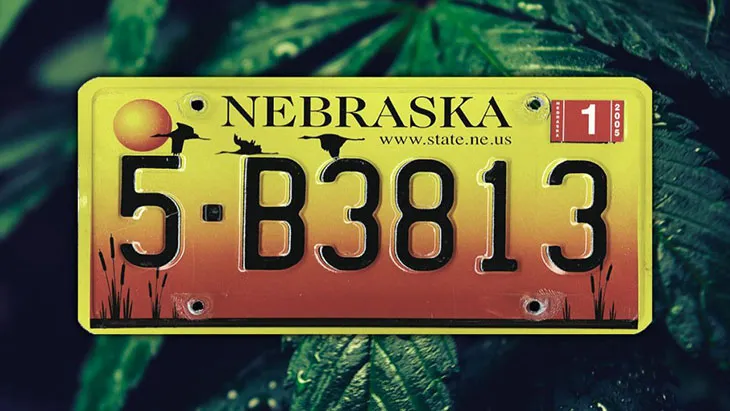

 “Voters made their mandate clear in 2024, and now Nebraskans have been left vulnerable because their leaders refuse to respect it.”