station icon

Can cannabis impact aging? Study shows marijuana could alter ‘genetic code’


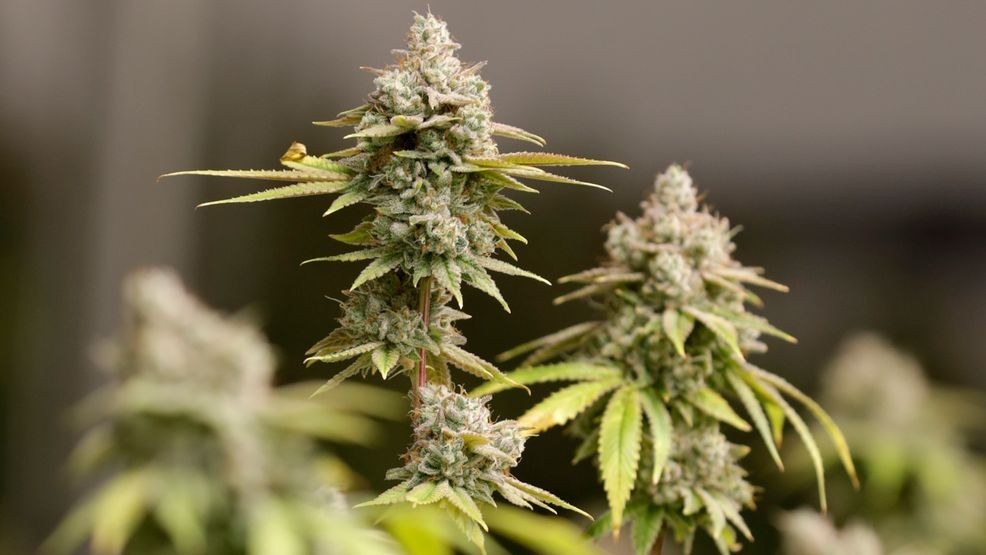
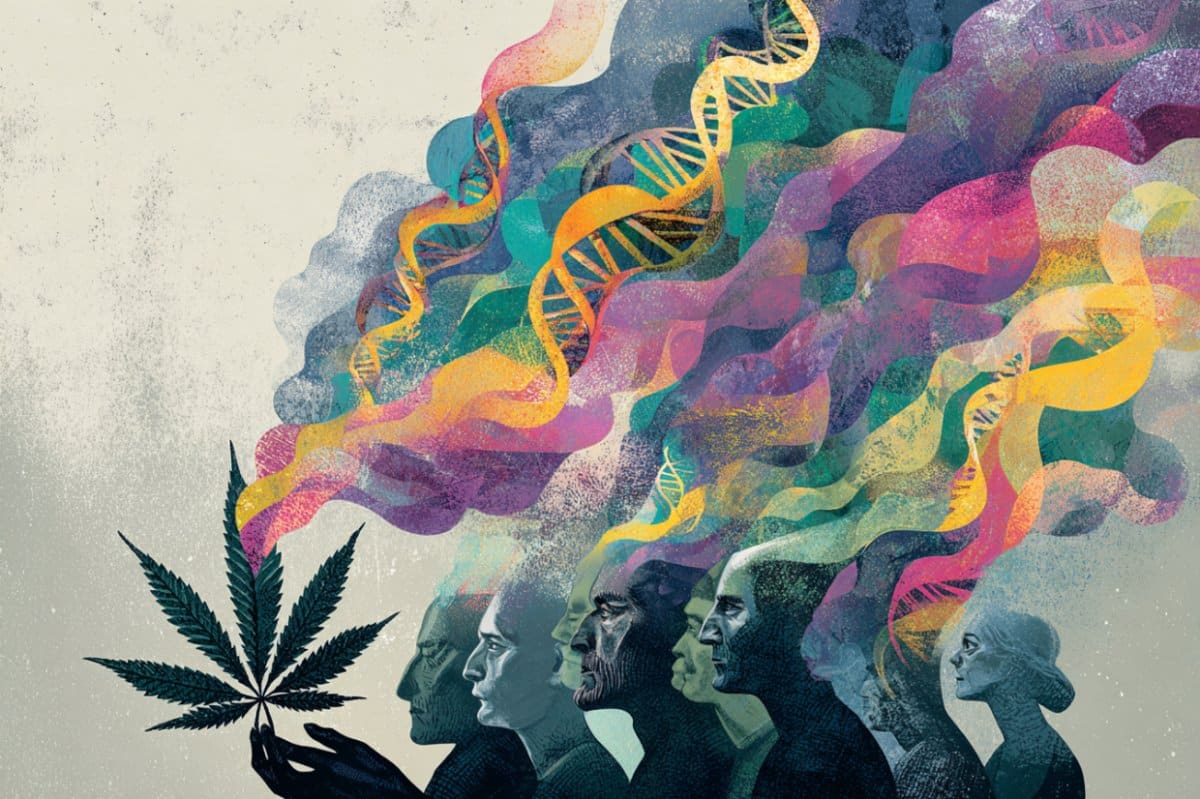
CINCINNATI (WKRC) – Research suggests that using cannabis may alter a person’s epigenetic code.

The research suggested that marijuana use can impact the genetic code responsible for activating and deactivating various genes.

The study highlighted the importance of understanding marijuana’s effects on the body, as it remains one of the most widely used drugs globally. While some effects are well-known, the research indicated a broader impact than previously anticipated.

Most notably, one marker identified in the study is similar to those found in tobacco use, suggesting a closer link between the two substances than previously thought.

Researchers originally aimed to find out how cannabis use affects the epigenetic code, which in turn could reveal potential positive or negative health effects for humans who use the substance. They focused on genes related to aging, typically regulated by the body’s epigenetic code. Understanding these changes could provide insights into aging processes and the body’s “epigenetic age.”

“In our study, we observed associations between cumulative marijuana use and multiple epigenetic markers across time,” said Lifang Hou, who was the senior author of the study. “Interestingly, we consistently identified one marker that has previously been associated with tobacco use, suggesting a potential shared epigenetic regulation between tobacco and marijuana use. The observed marijuana markers were also associated with cell proliferation, infection and psychiatric disorders, however, additional studies are needed to replicate and verify these findings.”

The study involved data from participants who reported their cannabis use over several years. Researchers analyzed blood samples taken five years apart, comparing them based on factors such as continuous and recent cannabis use. The findings revealed several markers associated with both types of use.

Despite these insights, researchers emphasized the need for further studies to fully comprehend the connections and their extent within the epigenetic code.

“This research has provided novel insights into the association between marijuana use and epigenetic factors,” Dr. Drew Nannini said. “Additional studies are needed to determine whether these associations are consistently observed in different populations. Moreover, studies examining the effect of marijuana on age-related health outcomes may provide further insight into the long-term effect of marijuana on health.”

Nonetheless, the research offers new perspectives on the relationship between marijuana use and epigenetic factors.


Source link

Mike Tyson takes another jab at marijuana reform

Mike Tyson takes another jab at marijuana reform


NEWYou can now listen to Fox News articles!

Boxing legend Mike Tyson has been at the forefront of cannabis reform in the United States and this weekend he posted about the issue on social media.

Tyson, 59, was open earlier this month in an interview with Fox News Digital about how he believed marijuana use kept him out of jail.

CLICK HERE FOR MORE SPORTS COVERAGE ON FOXNEWS.COM

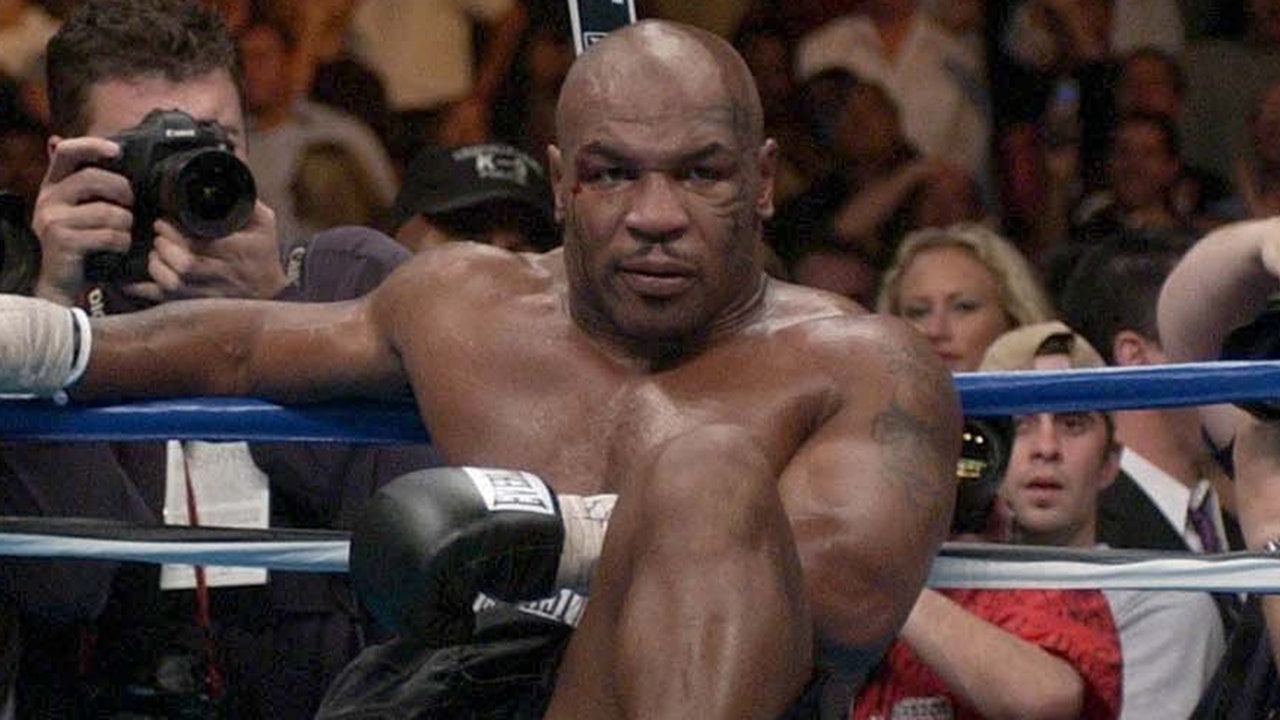
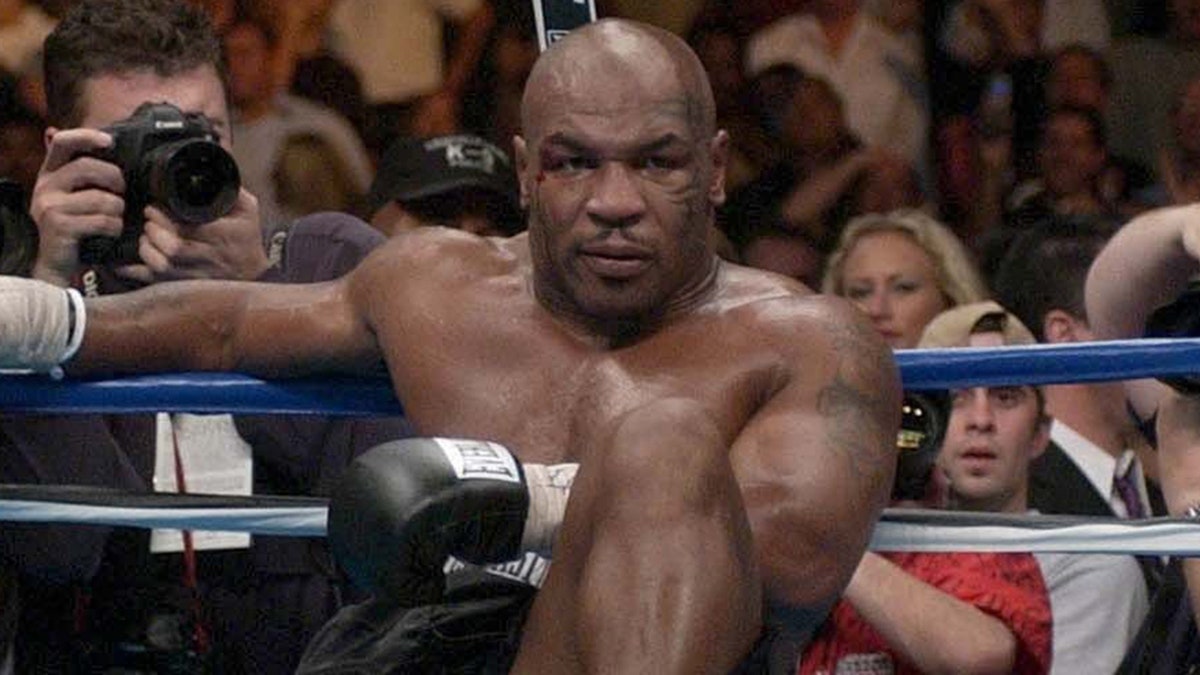
Mike Tyson on the mat

Former champ Mike Tyson lay sprawled in the ropes in the fourth round of his fight with British heavyweight Danny Williams before more than 17,000 fans at Freedom Hall. (Pat McDonogh/Courier Journal/USA Today Network via Imagn Images)

On Saturday, he posted that drug traffickers and human traffickers will keep winning until marijuana is legalized federally.

“Tired of hearing that legal cannabis will cause mass chaos or have people stinking up the streets,” he wrote on X. “That’s just ridiculous. We’ve got rules for cigarettes and alcohol, therefore, cannabis would be no different. It’s about freedom. Adults should have the choice.

“Until it’s legal federally, cartels and human traffickers keep winning.”

Tyson would hope to see the plant reclassified by the government from a category that is defined by high potential for abuse with no accepted medical use to a category of moderate to low potential for physical and psychological dependence.

UFC’S DANA WHITE HINTS THAT RECENTLY RETIRED JON JONES, CONOR MCGREGOR COULD RETURN FOR WHITE HOUSE FIGHTS

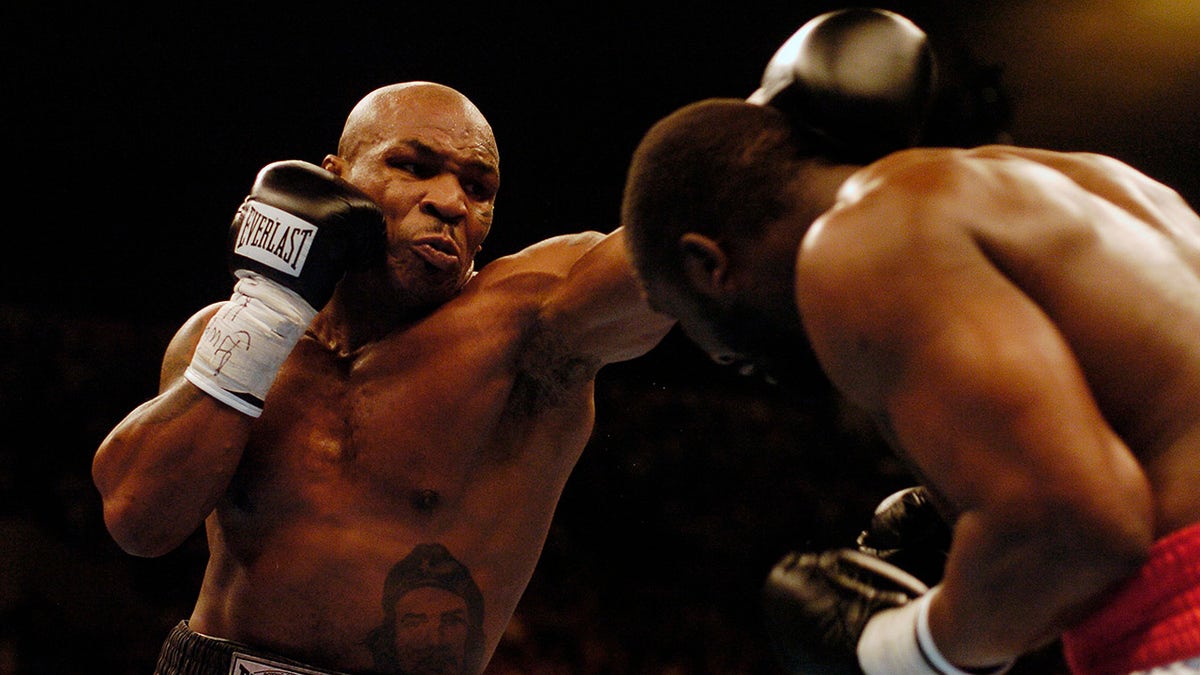
Mike Tyson misses

Danny Williams and Mike Tyson during their heavyweight match on July 30, 2004, at Freedom Hall in Louisville, Kentucky. Tyson was knocked out in the fourth round. (Focus on Sport/Getty Images)

It is one of the three points Tyson advocated in a recent letter to President Donald Trump’s White House that he wrote in conjunction with other superstar athletes and entertainers, like Kevin Durant and Allen Iverson.

Tyson added he believes the rescheduling of marijuana is the top priority in his federal reform goals. He and his supporters also want to see mass clemency for nonviolent marijuana offenders. Tyson said seeing people going to jail for these offenses was an unfortunate memory of his childhood.

“I always knew that. I always knew that I am friends with those people, people come from my community,” Tyson told Fox News Digital. 

He recalled one member of his community he watched go to jail when he was a kid and who wasn’t released until Tyson became an established fighter. 

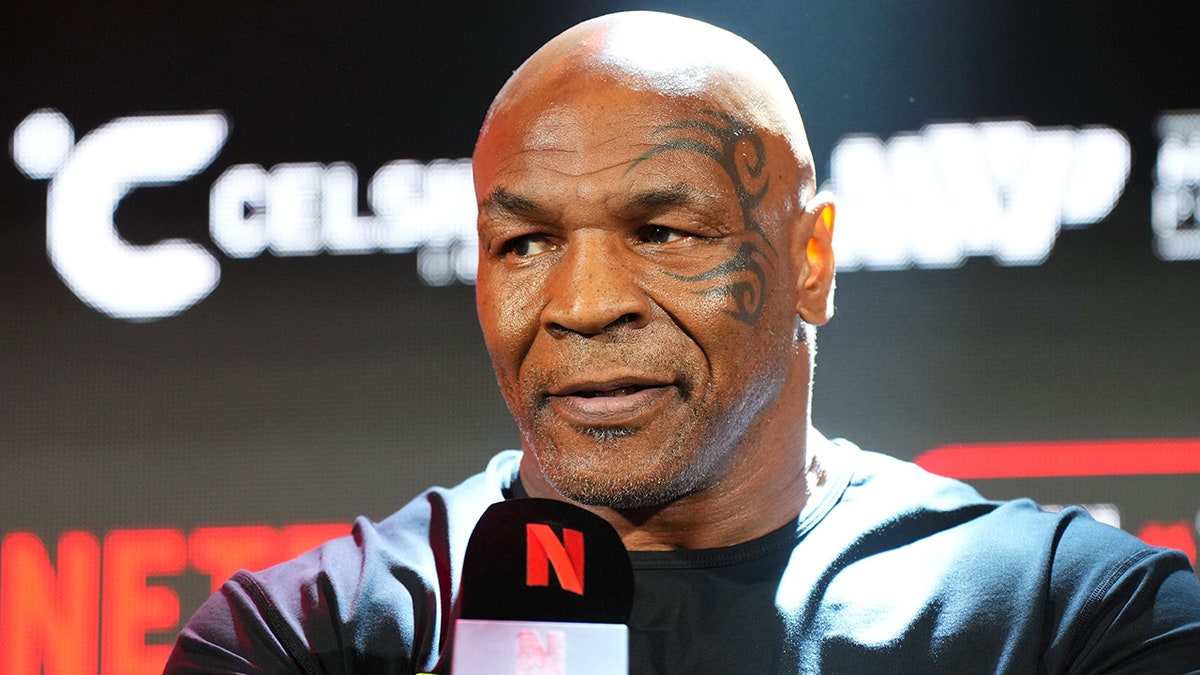
Mike Tyson at the press conference

Mike Tyson speaks onstage during the Jake Paul vs. Mike Tyson match press conference on May 16, 2024, in Arlington, Texas. (Cooper Neill/Getty Images for Netflix)

CLICK HERE TO GET THE FOX NEWS APP

A recent study by researchers at UC San Francisco determined that eating edible cannabis, such as gummies, has the same cardiovascular risk as smoking marijuana for long-term users. The risk stems from reduced blood vessel function, according to the study, published in JAMA Cardiology May 28.

Fox News’ Jackson Thompson contributed to this report.

Follow Fox News Digital’s sports coverage on X and subscribe to the Fox News Sports Huddle newsletter.


Source link

Regulating Intoxicating Hemp Products Is A 'Priority,' Illinois Lawmaker Says

Regulating Intoxicating Hemp Products Is A ‘Priority,’ Illinois Lawmaker Says


“We want regulations to protect consumers and weed out bad actors, but we don’t want to see this thing regulated to death.”

Justin and Anna Ward of Stoney Branch Farms were anxiously awaiting action on legislation to regulate intoxicating hemp products this spring in Illinois, which would have determined the future of their family-run hemp business in Rushville. But it never came.

Hemp farming has been legal and regulated in Illinois since 2018, when lawmakers passed the Industrial Hemp Act following federal action that legalized hemp production. The legislation anticipated it would again be used to make industrial products, but also for the production of CBD oils that can be extracted from the plant and are marketed as having therapeutic, but not intoxicating, properties.

But hemp has since become the subject of heated debate in Illinois and other states as the plant has been increasingly used to create synthetic products with intoxicating compounds that are not regulated by the federal government. Those products, known as delta-8 THC, are permissible due to what some describe as a “loophole” in the 2018 Farm Bill that legalized hemp production.

Gov. JB Pritzker (D) has been a vocal opponent of intoxicating hemp, saying it undercuts the state’s legal cannabis industry and puts children and teens in harm’s way. He’s advocated—thus far to no avail—for regulating intoxicating hemp products similarly to the state’s legalized cannabis industry.

“This regulatory gray area has created a loophole that put Illinois consumers of all ages, but particularly children, in danger while an underground market flourished—the exact opposite of what Illinois has done by regulating our cannabis industry,” Pritzker said in a December 2024 news release.

But lawmakers failed again to pass legislation regulating intoxicating hemp this year, leaving the industry in limbo until either the state acts or the federal government intervenes first. It marked the third consecutive year that a regulatory bill failed, the latest front in a legislative fight that largely pits the state’s legalized cannabis industry against its industrial hemp growers.

Hemp vs. cannabis: What’s the difference?

Both hemp and cannabis come from the same plant and contain a level of THC that can cause a high if ingested. The most important difference, however, is in the concentration of THC. Compared to cannabis, hemp has a much lower amount of naturally occurring THC.

By federal law, if a plant has a concentration of 0.3 percent THC or less by dry weight, it is legally considered hemp. If it has any more than 0.3 percent THC, it is considered cannabis.

Both substances were strictly regulated as Schedule I drugs under the federal Controlled Substances Act of 1970 until the passage of the 2018 Farm Bill, which removed hemp from the legal definition of cannabis, thus creating a fully legal hemp market.

But the Farm Bill only established a threshold for delta-9 THC, the primary cannabinoid found in cannabis. There is no explicit threshold for hemp-derived delta-8, which is created through additional chemical processing after hemp is harvested.

Unlike cannabis products containing THC, which must meet strict regulatory requirements in Illinois and other states that have legalized recreational and medical cannabis, the intoxicating hemp market is currently unregulated and lacks oversight at both the state and federal level to ensure products are responsibly produced, marketed and sold to consumers.

For example, there is no minimum age required to purchase hemp products, making it relatively easy for young consumers to access intoxicating hemp compared to cannabis.

A recent study from the University of Illinois System Institute of Government and Public Affairs released in May found credible evidence that hemp-derived THC products are intentionally marketed and readily available to teens and young adults through online sales and convenience stores.

At least 32 states have responded by passing legislation to increase regulations, or in California’s case, ban intoxicating hemp altogether.

Should it be regulated or banned?

The Wards have grown hemp on their sixth-generation farm since it was legalized in 2018. They’re in the camp that would like to see the intoxicating hemp industry more strictly regulated but not outright banned.

As president of the Illinois Healthy Alternatives Association, a trade association and lobbying group for hemp farmers, Justin Ward has made regular trips to Springfield to advocate for increased hemp regulation.

According to Ward, new regulations should include state-mandated testing to ensure hemp products are compliant with federal regulations and free of toxic contaminants, sold in child-safe packaging and labeling and have a minimum age requirement at point-of-sale.

“Everything we grow meets that standard,” Ward said. At Stoney Branch Farms, the Wards sell both non-intoxicating and intoxicating forms of hemp, including delta-8. They said the cultivation, processing, packaging and marketing of their products is all done in-house.

Every crop at Stoney Branch goes through a pre-harvest THC potency test by a federal sampling agent, in addition to a post-processing test by a third party to ensure the final products are free of contaminants. The products are then sold online in child-safe packaging to consumers 21 years old or above.

A bill to make these standards law in Illinois, House Bill 1, was proposed this year with the support of hemp lobbyists, but continued disagreement among stakeholders over the details of licensing, taxation and the legal potency threshold of delta-8 THC caused the bill to stall without being called for a vote, according to the bill’s sponsor Rep. La Shawn Ford (D-Chicago).

Municipalities are free to ban the sale of hemp-derived products as they see fit, and many have; in Chicago, the City Council has approved bans specific to some wards.

The state’s legalized cannabis industry, which saw its first sales in January 2020, has at times called for an outright ban on delta-8. The industry maintains it’s willing to work toward a solution.

Tiffany Chappell Ingram, executive director of the Cannabis Business Association of Illinois, said in a recent statement that regulations are needed to “rein in” intoxicating hemp. She argues that the hemp industry unfairly undercuts licensed cannabis operators, evades health and safety regulations and generates little revenue for state programs due to its low tax rate.

“We’ve been at this for years at this point, but we’ve got a lot of great allies in the legislature.” Ward said. “This hasn’t been banned yet because they’ve listened to us.”

Opposition from cannabis crowd

The state’s cannabis industry argues intoxicating hemp is not distinct enough from cannabis to have its own license category and far fewer barriers to entry and operation.

For example, while a three-year license for hemp only costs $1,100, including initial licensing fees, a license for cannabis costs $100,000 just to apply for a large adult-use cultivation license, then another $100,000 when the license is granted and each time it’s renewed. The state caps large-scale adult-use cultivation centers to 21 licenses, and has issued fewer than 100 smaller-scale “craft grow” licenses at a cost of $40,000.

When hemp was legalized, many who couldn’t gain entry to the cannabis industry took it as an opportunity to produce a similar product without all the red tape.

“Part of the reason we were drawn to hemp is the lower barriers of entry to get into this in comparison to the cannabis industry,” Ward said.

Hemp is also taxed at a much lower rate than cannabis, allowing the industry to price its products more competitively. Cannabis revenues, by comparison, are hurt by stricter taxation and regulatory compliance, according to the University of Illinois report.

Social equity cannabis licenses are available at lower costs to those who have been impacted by the state’s prior criminalization of cannabis, including those previously convicted of cannabis related offenses, but the industry is still far from accessible.

Ford, who spearheads the issue of hemp and cannabis regulation each year, said it’s important to balance promises made to current social equity cannabis license holders with any concessions made for hemp.

Ward said he supports easing regulations on cannabis to make the industry more accessible in Illinois, while also keeping hemp accessible through “sensible” regulations.

“We want regulations to protect consumers and weed out bad actors, but we don’t want to see this thing regulated to death,” Ward said.

Legislature divided on regulation

The state legislature hasn’t been able to settle the question of whether to regulate hemp-derived products containing delta-8 THC as distinct from medicinal and recreational cannabis, or to treat them as virtually the same substance.

The issue caused a rift among House Democrats earlier this year, and despite continued discussions during the spring legislative session, lawmakers have still not come to a consensus.

A proposal backed by Pritzker in the 2024 session, House Bill 4293, to legally define hemp as cannabis, would have made it illegal to sell hemp without a cannabis license. Hemp lobbyists strongly opposed that measure, fearing it would shut them out and give cannabis license holders a monopoly over the cannabinoid market.

Pritzker ultimately blamed House Speaker Chris Welch (D) for killing that bill in January. Despite bipartisan support, Welch said at the time the measure didn’t have enough votes within his Democratic ranks to pass. A spokesperson for Welch promised at the time that he would continue to work toward hemp regulation throughout the legislative session.

A spokesperson for the speaker declined to comment on why hemp regulations still didn’t advance. Both hemp and cannabis lobbies have donated tens of thousands of dollars to Welch’s campaign, Ford’s and others over the last several years in the legislative blitz surrounding the various regulatory bills.

Ward said Ford has been one of the hemp lobby’s biggest allies. Ford conducted meetings all session among lawmakers, the governor’s office and industry stakeholders in an effort to find common ground.

“We have two competing industries, and we already have existing businesses, and existing businesses are not interested in just losing their operations,” Ford said.

While closed-door conversations surrounding hemp regulations have continued, there has yet to be a public hearing on hemp. Rep. Sonya Harper (D-Chicago), who chairs the House agriculture committee, said the speaker had not responded to her requests for such a hearing.

“I just want to actually make sure that the voices of those most impacted are heard,” Harper said.

Likelihood of future hemp regulation

Though there’s been significant pressure from Pritzker and some advocacy groups to regulate hemp in Illinois, Ford said he’s not inclined to rush the process, arguing it needs broader bipartisan support.

“We had a problem when we regulated cannabis: We sort of rushed it, and we didn’t have stakeholders all at the table,” Ford said. “Some Republicans would say that they were not a part of it.”

A number of Republicans have recently joined negotiations over hemp legislation. But a compromise still seems far off.  Rep. C.D. Davidsmeyer (R-Murrayville), who’s been leading that effort, said Republicans are unlikely to support anything but closing the intoxicating hemp loophole.

Davidsmeyer said he opposes the double standard for cannabis license holders versus hemp.

“If you’re going to have a standard, you have everybody in the same industry going by the same rules,” he said.

A spokesperson from the governor’s office said his position has not changed since he called for greater regulation.

“I think that it’s agreed that, from the speaker of the House, the governor and the Republicans and myself, and the industry, everyone agrees that we should regulate this,” Ford said. “Over the months, we should be able to get something. It’s a priority.”

Federal changes coming? 

A bill that would end this hemp loophole at the federal level passed through the U.S. Senate Appropriations Committee on Thursday, July 10. If that bill becomes law, the cultivation and sale of hemp products containing “quantifiable amounts” of THC would once again be prohibited under federal law, rolling back the previous allowance of 0.3 percent.

This would deal a devastating blow to the more than $400 million U.S. hemp industry.

One of the most common forms of hemp sold in the U.S. is cannabidiol, or CBD, a non-intoxicating cannabinoid which is marketed as a therapeutic alternative for the treatment of conditions like insomnia, inflammation and seizure disorders.

“That’s a big focus of our business still, is people who are looking for some of the therapeutic benefits that cannabis can provide without a high,” Ward said.

Because CBD almost always still has trace amounts of THC, proposals to ban any “quantifiable amount” of THC could result in the prohibition of CBD products. “I think we really do a disservice to a great number of consumers in Illinois by doing that,” Ward said.

Simon Carr is a student in journalism with Northwestern University’s Medill School of Journalism, Media, Integrated Marketing Communications, and a fellow in its Medill Illinois News Bureau working in partnership with Capitol News Illinois.

Isabella Schoonover is a graduate student in journalism with Northwestern University’s Medill School of Journalism, Media, Integrated Marketing Communications, and a fellow in its Medill Illinois News Bureau working in partnership with Capitol News Illinois.

Capitol News Illinois is a nonprofit, nonpartisan news service that distributes state government coverage to hundreds of news outlets statewide. It is funded primarily by the Illinois Press Foundation and the Robert R. McCormick Foundation.

This article first appeared on Capitol News Illinois and is republished here under a Creative Commons Attribution-NoDerivatives 4.0 International License.


Marijuana Moment is made possible with support from readers. If you rely on our cannabis advocacy journalism to stay informed, please consider a monthly Patreon pledge.

Become a patron at Patreon!


Source link

City of DeKalb gives final OK to cannabis dispensary tasting rooms – Shaw Local

City of DeKalb gives final OK to cannabis dispensary tasting rooms – Shaw Local


The DeKalb City Council gave a final OK to allow cannabis dispensary tasting rooms, where potential customers can sample edible-only products.

The city code amendment was approved this week in a pair of 7-0 votes. DeKalb Mayor Cohen Barnes was absent.

NaKia McAdoo, one of the owners of Excelleaf Dispensary, approached the DeKalb City Council this week seeking approval to amend city code to allow cannabis consumption on the property at 305 E. Locust St. Excelleaf Dispensary owners previously have said they want the space to help with marketing and educational purposes.

City Manager Bill Nicklas said the city is supportive of cannabis dispensaries in establishing tasting rooms for edibles.

“There was not, as you know, in our unified development ordinance a provision allowing for such a service or convenience,” Nicklas said.

The amendments as unanimously approved apply to both dispensaries in town. However, city officials said owners for NuEra Cannabis have not indicated interest in establishing a tasting room at 818 W. Lincoln Highway, Suite No. 7.

First Ward Alderwoman Carolyn Zasada said she stands behind the dispensary and its commitment to serving DeKalb.

“I’m excited to see such a contemporary project come to DeKalb,” Zasada said. “I think that this is so unique and just a brilliant business model that I’m excited to be leading the way with this by supporting your project.”


Source link

station icon

Vigil held in Las Vegas for man who died after ICE raid at cannabis farm


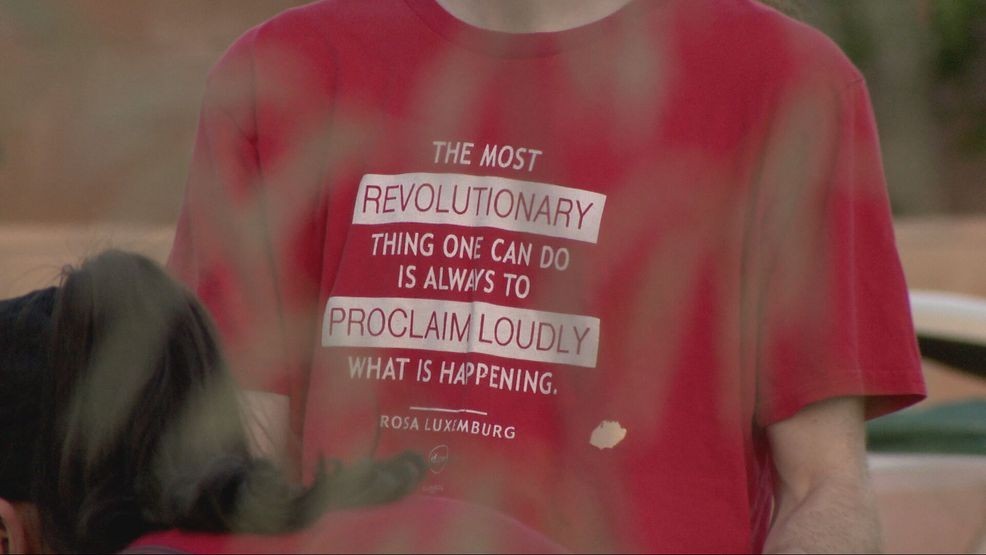
LAS VEGAS — A vigil was held in Las Vegas for Jaime Alanis, a 57-year-old man who died following an ICE raid at a Southern California cannabis farm.

Alanis fell 30 feet from a greenhouse roof during the raid and died the next day. The Department of Homeland Security stated that it was executing criminal search warrants and that Alanis was never in ICE custody.

The Las Vegas Party for Socialism and Liberation argued that ICE’s presence on the farm directly caused Alanis’s death. Matthew Becerra, whose grandparents are Mexican immigrants, expressed mixed emotions upon hearing the news.

“Almost feeling like a little too familiar right now,” he said.

During the raid, agents arrested around 200 people suspected of being in the country illegally, though the Department of Homeland Security confirmed Alanis was not among them.

Becerra criticized the raids, saying, “If they’re basically picking up American citizens without really checking where they’re from or their documentation status, it doesn’t matter if one person isn’t safe; nobody is safe.”

DHS Secretary Kristi Noem has previously stated that ICE investigates its targets before deportation.

Becerra says ICE raids are becoming too aggressive.

“It’s frankly disgusting and abhorrently racist,” he said.

In a post on X, Secretary Noem noted an 830 percent increase in assaults against ICE agents.

The Trump administration is currently averaging more than 14,000 deportations per month.

The Las Vegas PSL announced plans to host a protest next week in front of the Henderson Detention Center.

“We are coming at this from a place of love,” Becerra said. “We love our community, we love our family members, and we want to make sure that we all want to stay safe in these turbulent times.”


Source link

Why the smell of cannabis is everywhere and no one does anything

Why the smell of cannabis is everywhere and no one does anything


A businessman named Patrick Hannaford is standing on a bridge in the Derbyshire village of Cressbrook, peering down into the River Wye. He’s escaped London for a weekend of fly-fishing and is scanning the water for trout, enjoying the pristine air.

Then a young hoodied couple arrive, wreathed in plumes of cannabis smoke. The idyll is broken.

“It was the boldness of them that got me,” says Hannaford*, 64. “The lad even came up and started chatting to me, spliff in his hand, about whether the fish were biting. I could have been a policeman or anyone — they just couldn’t care.”

From genteel parts of the Peak District to the dingiest squares in central Manchester, the acrid smell of cannabis smoke is increasingly hard to avoid.

In an alarming admission to The Sunday Times last month, Sir Andy Marsh, a chief constable and head of the College of Policing, said: “I smell it in communities I would never have smelt it in before, from little villages to towns. We should be prepared to do something about it.”

Yet most of the time, overstretched police do nothing about it. In their absence, some councils, receiving increasing numbers of complaints from residents, are trialling their own interventions to tackle nuisance cannabis smoke.

Experts say that smoking of the drug in public has increased notably since the Covid lockdowns.

Angela Rayner: I’ve taken all sorts — but we won’t legalise cannabis

“There’s definitely more [cannabis] smoking in public and it’s for two reasons,” says Simon Harding, professor of criminology and sociology at St Mary’s University in Twickenham. “First, it’s a provocation: ‘what are you gonna do about it?’

“The other part is just a nonchalance. It’s so much part of everyday life at home that they no longer have the boundaries between their private social space and their public space. You see it on the bus, where people think it’s fine to have loud music or videos on their phones.”

Non-smokers are becoming increasingly frustrated. An Ipsos poll of 1,081 adults conducted for The Sunday Times found 64 per cent bothered by the smell of cannabis smoke in their area. Forty-three per cent said it had become more prevalent in the past year.

Nor is this just an urban issue. Nearly a third (31 per cent) of people living in rural areas had smelt cannabis smoke near their homes in the previous month, compared with 45 per cent of city dwellers. In fact, cannabis smoke was in the top five gripes about modern British life, beaten only by littering/fly-tipping, phone theft, shoplifting and badly parked e-bikes.

‘You’d think it was legal’

To get a better sense of how and why cannabis has become so prevalent, we visited and conducted interviews in West Yorkshire, Berkshire, London and East Anglia, regularly encountering its distinctive waft, and finding a nation caught between tolerance and mounting frustration.

According to the Office for National Statistics, 6.8 per cent of people in England and Wales reported using cannabis in 2023-24, which is about 2.3 million people. Surprisingly, given the apparent increase in public smoking, that marked a 200,000 decline in overall use.

The picture is mixed. In Hebden Bridge, the artsy Pennines town, cannabis use is remarkably public and commonplace. In a late afternoon audit of the town centre on a Thursday last month, we came across eight groups of people or individuals who appeared to be smoking it, and one apparent cannabis deal taking place in broad daylight in the town square. We saw no police.

Canal boats under a bridge in Hebden Bridge, UK.

In Hebden Bridge, cannabis use is remarkably public

ANDREW MCCAREN FOR THE SUNDAY TIMES

People smoking cannabis in a park.

Apparent cannabis smokers in a park in Hebden Bridge

ANDREW MCCAREN FOR THE SUNDAY TIMES

On a bench in Calder Holmes Park, we met Jahan, 27-years-old, with a long, black ponytail, who was smoking a joint with his mother. “There are loads of pubs here who allow people to smoke cannabis in their beer gardens,” said Jahan. “Locals round here don’t care.”

Not everyone in the town is so relaxed. Michael Hylands, 75, retired and with neatly cropped white hair, angrily described it as an “epidemic”, pointing out that this is not just a crime and disorder issue. The strength of high-grade skunk being smoked today doesn’t just smell more pungent, but is having a major psychological impact on users.

Legalisation of cannabis in US driving soaring rates at UK border

“Everywhere you go, it’s really bad,” he said. “The young ones here are really struggling with it psychologically. The weed’s so strong today, and it’s everywhere. You’d think it was legal.”

When asked about our findings, Hebden Bridge’s local police inspector, Craig Collins, said his officers were carrying out “proactive policing operations” and had made six stop-and-searches in the past month, resulting in one arrest and some “community resolutions”.

Aerial view of Hebden Bridge, UK, showing the canal and surrounding buildings.

Hebden Bridge

ANDREW MCCAREN FOR THE SUNDAY TIMES

Impractical to do more

The authorities are certainly supposed to police cannabis use; the drug retains a class B classification, with those caught in possession facing up to five years in prison, a fine or both. But in reality, many cannabis smokers operate with something close to impunity.

Police resources are mostly devoted elsewhere. In December, a survey of 253 police officers conducted by Opinium for the Centre for Social Justice think tank found that 66 per cent believed the drug has, in practice, been fully, partially or mostly decriminalised. An even greater number said the state’s approach doesn’t work:

One experienced policeman based in Camden, north London, told us it was impractical to expect them to do any more, particularly with the paperwork involved in arresting and processing offenders. “When an average officer might have 15 or 20 cases on their hands for assaults and other more serious stuff, they’re just not going to go around arresting people for smoking a joint,” they said.

Gen Z drink far less than their parents but want drugs decriminalised

More effort goes into pursuing the cultivation of the drug, but police are overwhelmed with the number of new “grows” — cannabis farms — setting up across the country. From vacant rooms above shops to flats, houses and industrial estates, gangs have been setting up grows to supply their local markets, says Harding.

In recent years cannabis farming has been dominated by Albanians who have aggressively expanded their operations across the country. The drug is now also widely available online, with advertisements stuck to lampposts and advertising posted on social media.

A nuisance, not a crime?

Is there more that can be done? Councils across the UK have been receiving increasing numbers of complaints from residents about public cannabis smoking. In Ipswich, councillor John Cook’s environmental health team saw a particular spike in concern from residents whose neighbour’s smoke was persistently wafting into their property.

His team launched a pilot programme where, rather than treating public cannabis smoking as a crime for the police to handle, they treated it as a nuisance, like loud music or regular bonfire smoke, meaning council officers could intervene more easily.

A hotline was set up last year for residents. Council officials would start off by monitoring the property, then knock on the door to tell the offending smoker of the complaint. If that did not work, they would follow up with formal warning letters and, finally, sterner mediation.

This had a significant impact. Some 80 per cent of the cases were resolved with the initial “words of advice”, with three quarters of the remainder ceasing after receiving the letter. Only a minority required further mediation.

“I was sceptical at first, but it’s been a great success,” says Cook. The nine-month pilot has been made permanent, and complaints have slowed down to a dozen or so a month. Other councils are now looking at launching similar “cannabis odour” projects.

Two-tier Britain

Simon Harding’s fear is that antisocial behaviour such as public cannabis smoking is sending wealthier people to live, work and play in privately managed and well-policed housing, office and retail developments, leaving everyone else stuck in crime-infested high streets and housing estates.

But even in glossy, privately owned public spaces, the authorities’ attitudes to cannabis smoking seem relaxed. Canada Water is a 53-acre expanse of shiny new shops, bars, offices and apartments being developed in what was once a tough area of southeast London.

A handful of uniformed security staff employed by British Land, which owns and manages the development, keep watch over the shiny new development.

As we began interviewing British Land’s operations director Mark Evans about his cannabis policy, we were engulfed in a cloud of smoke. A twentysomething man in sunglasses and a bandana had lit himself a long, pungent joint. On the bench next to him, a father and his young son gazed out over the lake eating ice creams. Nobody said a word.

“I don’t see any harm,” Evans explained as we watched the scene. “Nobody seems bothered and if no one’s being affected, and no one’s complained, we’d probably let it ride. We don’t want to go looking for trouble unnecessarily.”

It was similar near the neatly clipped playing fields of Eton College in Berkshire, where we met Dave*, a 50-year-old music teacher and father of two.

An advocate of legalisation, he said he usually smokes cannabis twice a week. But he also believes it should be done away from other members of the public.

Sadiq Khan calls for cannabis to be decriminalised

As we walked on a footpath through the grounds, by a cricket match being played by boys from the famous school, a man cycled past smoking a joint. Dave tutted in irritation. We had already seen three people smoking cannabis in busy areas on the 20-minute walk from the train station.

“It’s just inconsiderate,” he said. “Most people don’t want to smell it or see it, particularly when there’s children around. I don’t see why they can’t just smoke somewhere more private.”

He headed into wild grassland lining a lazy River Thames where he found an isolated bench in view of Windsor Castle. “Beautiful,” he said, producing a neatly rolled joint, which he lit, inhaling deeply. “And I’m not bothering anyone.”

*Some names have been changed


Source link

This Veteran’s Why: Cannabis Gave Me My Life Back

Silly Nice: The Veteran-Owned Weed Brand Making Waves Across New York | stupidDOPE


In a rapidly evolving legal cannabis market, standing out isn’t easy. But Silly Nice—a small-batch, Veteran-Owned, and Black-Owned cannabis brand based in New York—is doing just that. After just one year in the regulated New York cannabis scene, Silly Nice is quickly emerging as a standout among over 500 brands statewide. And they’re not just generating hype—they’re producing results backed by hard data, dedication, and purpose.

A Veteran’s Journey from the U.S. Army to New York’s Top Weed Shelves

The roots of Silly Nice are as authentic as they come. The founder, a former 31F in the U.S. Army, was medically boarded in 2001 after sustaining serious neck and back injuries. Like many veterans, the road to healing was long, painful, and full of trial and error. But cannabis—especially clean, small-batch flower and concentrates—became a crucial part of that journey toward wellness. That personal transformation inspired the mission behind Silly Nice: to create purpose-driven, high-quality weed products that actually serve the people who use them.

And that mission is clearly resonating. Within 12 months of launching, Silly Nice has landed in over 135 dispensaries across New York State and earned recognition as one of the Top 150 Cannabis Brands by the New York State Office of Cannabis Management. Even more impressive? Their Diamond Powder concentrate is now ranked among the Top 5 selling concentrates in New York, according to industry-leading sales tracker HeadSet.

Craft Weed, Made Fresh—Not Mass-Produced

What sets Silly Nice apart in a sea of flashy packaging and overhyped labels is simple: quality and freshness. Unlike many larger operations that churn out product in bulk, Silly Nice makes everything fresh to order for dispensaries. That means no months-old, terpene-degraded weed sitting on shelves. Every jar of flower and every vape cart reflects small-batch craftsmanship with flavor, potency, and consistency at the core.

Their line-up is tight, deliberate, and designed for people who take their weed seriously:

  • Diamond Powder: A high-THC crystalline concentrate that’s become a New York favorite for dabs and bowl toppers alike.

  • Bubble Hash: Traditional, solventless, and handmade with care—perfect for true hash lovers.

  • Frosted Hash Balls: Uniquely crafted balls of hash rolled in THCa Diamond Powder for enhanced potency and easy handling.

  • Live Resin & Diamond Infused Flower: Premium buds that are infused post-harvest with live resin and coated in diamonds, delivering flavor and strength in every hit.

  • Strain-Specific Vapes: These carts feature 100% cannabis-derived terpenes—no synthetics, fillers, or additives—delivering a clean, flavorful, and strain-authentic vape experience.

It’s clear that Silly Nice isn’t trying to be everything to everyone. Instead, they focus on doing a few things extremely well. That approach is paying off—not only in customer loyalty, but also in statewide data.

A Brand Built on Community, Purpose, and Inclusion

Silly Nice isn’t just another cannabis brand riding the legalization wave. It’s a mission-driven operation that believes in reinvesting into the communities that cannabis has historically harmed or ignored. The brand is proudly Black-Owned and Veteran-Owned, and every decision reflects that ethos—from sourcing and packaging to how they engage with dispensaries and customers.

They also walk the walk when it comes to transparency and access. The brand maintains a live menu on their website that updates with current inventory and links directly to Weedmaps for up-to-date pricing and locations.

And because this is New York, where access to dispensaries varies from borough to borough, the ability to locate a trusted product quickly is a huge plus. Whether you’re shopping in Manhattan, Syracuse, Buffalo, White Plains, Brooklyn, or anywhere in between, chances are a licensed dispensary near you carries Silly Nice.

What the Community Is Saying

Word of mouth around Silly Nice is growing louder by the day. Reddit forums, Discord chats, and IG comments are buzzing with positive reviews of the Diamond Powder’s clean burn and euphoric high, the Bubble Hash’s smooth melt, and the vapes’ true-to-strain flavor. Even budtenders are recommending Silly Nice as a go-to for concentrate connoisseurs and high-potency flower fans.

This kind of grassroots support matters—especially for small craft brands that don’t have the corporate marketing budgets of multistate operators. Silly Nice is thriving thanks to real customer feedback, solid relationships with dispensaries, and a consistent product lineup that delivers.

Why Supporting Veteran-Owned Brands Matters

New York’s cannabis market is crowded. But supporting brands like Silly Nice means something more. It means supporting a veteran who used weed to get off opioids and rebuild his health. It means supporting a brand that hires intentionally and operates with values that extend beyond profit. And it means putting dollars into a company that reflects the diversity, resilience, and creativity of New York itself.

So the next time you walk into a dispensary, don’t just ask what’s testing the highest—ask what was made with purpose. Ask what was crafted in small batches. And ask if they carry Silly Nice.

You can learn more or track down a store near you here: sillynice.com/menu

Final Thoughts

Silly Nice isn’t just another weed brand—it’s a movement. It’s a reflection of what’s possible when craft meets purpose, when healing becomes a mission, and when veterans lead with innovation in a booming new space. With fresh drops, fan-favorite concentrates, and terp-rich flower made for true heads, Silly Nice is cementing its place as one of the top names in New York cannabis.

Support Veteran-Owned. Support Black-Owned. Support Silly Nice.


Source link

Longitudinal study of risk factors predicting cannabis use disorder in UK young adults and adolescents

Longitudinal study of risk factors predicting cannabis use disorder in UK young adults and adolescents


  • United Nations Office on Drugs and Crime. World Drug Report 2024. (2024).

  • Connor, J. P. et al. Cannabis use and cannabis use disorder. Nat. Rev. Dis. Prim. 7, 16 (2021).

    PubMed 

    Google Scholar
     

  • Lopez-Quintero, C. et al. Probability and predictors of transition from first use to dependence on nicotine, alcohol, cannabis, and cocaine: results of the National Epidemiologic Survey on Alcohol and Related Conditions (NESARC). Drug Alcohol Depend. 115, 120–130 (2011).

    PubMed 

    Google Scholar
     

  • Leung, J., Chan, G. C. K., Hides, L. & Hall, W. D. What is the prevalence and risk of cannabis use disorders among people who use cannabis? a systematic review and meta-analysis. Addict. Behav. 109, 106479 (2020).

    PubMed 

    Google Scholar
     

  • European Monitoring Centre for Drugs and Drug Addiction. European Drug Report 2024: Trends and Developments. (Lisbon, Portugal, 2024).

  • Manthey, J., Freeman, T. P., Kilian, C., López-Pelayo, H. & Rehm, J. Public health monitoring of cannabis use in Europe: prevalence of use, cannabis potency, and treatment rates. Lancet Reg. Health Eur. 10, 100227 (2021).

    PubMed 
    PubMed Central 

    Google Scholar
     

  • Lees, R. et al. Psychosocial and pharmacological treatments for cannabis use disorder and mental health comorbidities: a narrative review. Psychol. Med. 51, 353–364 (2021).

    PubMed 

    Google Scholar
     

  • Hasin, D. S. et al. Prevalence and Correlates of DSM-5 Cannabis Use Disorder, 2012-2013: Findings from the National Epidemiologic Survey on Alcohol and Related Conditions-III. Am. J. Psychiatry 173, 588–599 (2016).

    PubMed 
    PubMed Central 

    Google Scholar
     

  • Mongan, D. et al. Comparing cannabis use disorder in the general population with cannabis treatment seekers using multi-source national datasets: who receives treatment?. Eur. Addict. Res. 28, 103–112 (2022).

    PubMed 

    Google Scholar
     

  • Courtney, K. E., Mejia, M. H. & Jacobus, J. Longitudinal studies on the etiology of cannabis use disorder: a review. Curr. Addict. Rep. 4, 43–52 (2017).

    PubMed 
    PubMed Central 

    Google Scholar
     

  • Hayatbakhsh, M. R., Najman, J. M., Bor, W., O’Callaghan, M. J. & Williams, G. M. Multiple risk factor model predicting cannabis use and use disorders: a longitudinal study. Am. J. Drug Alcohol Abus. 35, 399–407 (2009).


    Google Scholar
     

  • Butterworth, P., Slade, T. & Degenhardt, L. Factors associated with the timing and onset of cannabis use and cannabis use disorder: results from the 2007 Australian National Survey of Mental Health and Well-Being. Drug Alcohol Rev. 33, 555–564 (2014).

    PubMed 

    Google Scholar
     

  • Marmet, S., Studer, J., Wicki, M. & Gmel, G. Cannabis use disorder trajectories and their prospective predictors in a large population-based sample of young Swiss men. Addiction 116, 560–570 (2021).

    PubMed 

    Google Scholar
     

  • Hines, L. A. et al. Adverse childhood experiences and adolescent cannabis use trajectories: findings from a longitudinal UK birth cohort. Lancet Public Health 8, e442–e452 (2023).

    PubMed 
    PubMed Central 

    Google Scholar
     

  • Kosty, D. B., Seeley, J. R., Farmer, R. F., Stevens, J. J. & Lewinsohn, P. M. Trajectories of cannabis use disorder: risk factors, clinical characteristics and outcomes. Addiction 112, 279–287 (2017).

    PubMed 

    Google Scholar
     

  • Myers, B., McLaughlin, K. A., Wang, S., Blanco, C. & Stein, D. J. Associations between childhood adversity, adult stressful life events, and past-year drug use disorders in the National Epidemiological Study of Alcohol and Related Conditions (NESARC). Psychol. Addict. Behav. 28, 1117–1126 (2014).

    PubMed 
    PubMed Central 

    Google Scholar
     

  • Vatansever, D., Wang, S. & Sahakian, B. J. Covid-19 and promising solutions to combat symptoms of stress, anxiety and depression. Neuropsychopharmacology 46, 217–218 (2021).

    CAS 
    PubMed 

    Google Scholar
     

  • Li, L. Z. & Wang, S. Prevalence and predictors of general psychiatric disorders and loneliness during COVID-19 in the United Kingdom. Psychiatry Res. 291, 113267 (2020).

    CAS 
    PubMed 
    PubMed Central 

    Google Scholar
     

  • Luo, M., Guo, L., Yu, M., Jiang, W. & Wang, H. The psychological and mental impact of coronavirus disease 2019 (COVID-19) on medical staff and general public – A systematic review and meta-analysis. Psychiatry Res. 291, 113190 (2020).

    CAS 
    PubMed 
    PubMed Central 

    Google Scholar
     

  • Xiong, J. et al. Impact of COVID-19 pandemic on mental health in the general population: A systematic review. J. Affect. Disord. 277, 55–64 (2020).

    CAS 
    PubMed 
    PubMed Central 

    Google Scholar
     

  • Pierce, M. et al. Mental health before and during the COVID-19 pandemic: a longitudinal probability sample survey of the UK population. Lancet Psychiatry 7, 883–892 (2020).

    PubMed 
    PubMed Central 

    Google Scholar
     

  • Robinson, E., Sutin, A. R., Daly, M. & Jones, A. A systematic review and meta-analysis of longitudinal cohort studies comparing mental health before versus during the COVID-19 pandemic in 2020. J. Affect Disord. 296, 567–576 (2022).

    CAS 
    PubMed 

    Google Scholar
     

  • Jones, D., Freeman, T. P., Skumlien, M. & Lawn, W. Which factors are associated with Cannabis Use Disorder?: A One-Year Follow-Up Study, https://osf.io/eg2wq/ (2024).

  • Cousijn, J., Kuhns, L., Filbey, F., Freeman, T. P. & Kroon, E. Cannabis research in context: The case for measuring and embracing regional similarities and differences. Addiction 119, 1502–1504 (2024).

    PubMed 

    Google Scholar
     

  • Cozier, G. E. et al. Synthetic cannabinoids consumed via e-cigarettes in English schools. medRxiv, 2024.2008. 2012.24311617 (2024).

  • Fataar, F. & Hammond, D. The Prevalence of Vaping and Smoking as Modes of Delivery for Nicotine and Cannabis among Youth in Canada, England and the United States. Int. J. Environ. Res. Public Health 16 https://doi.org/10.3390/ijerph16214111 (2019).

  • Hindocha, C., Freeman, T. P., Ferris, J. A., Lynskey, M. T. & Winstock, A. R. No smoke without tobacco: a global overview of cannabis and tobacco routes of administration and their association with intention to quit. Front Psychiatry 7, 104 (2016).

    PubMed 
    PubMed Central 

    Google Scholar
     

  • Chandra, S. et al. New trends in cannabis potency in USA and Europe during the last decade (2008-2017). Eur. Arch. Psychiatry Clin. Neurosci. 269, 5–15 (2019).

    PubMed 

    Google Scholar
     

  • Potter, D. J., Hammond, K., Tuffnell, S., Walker, C. & Di Forti, M. Potency of Δ(9) -tetrahydrocannabinol and other cannabinoids in cannabis in England in 2016: Implications for public health and pharmacology. Drug Test. Anal. 10, 628–635 (2018).

    CAS 
    PubMed 

    Google Scholar
     

  • Office for National Statistics (ONS). Drug misuse in England and Wales: year ending March 2024. (2024).

  • Office for Health Improvement & Disparities (OHID). Adult substance misuse treatment statistics 2022 to 2023: report. (2023).

  • Lawn, W. et al. cannTEEN: How does long-term cannabis use affect teenagers’ and adults’ cognition, mental health and brains? https://osf.io/jg9qp (2020).

  • Sheehan, D. V. et al. The Mini-International Neuropsychiatric Interview (M.I.N.I.): the development and validation of a structured diagnostic psychiatric interview for DSM-IV and ICD-10. J. Clin. Psychiatry 59, 22–33 (1998).

    PubMed 

    Google Scholar
     

  • Lecrubier, Y. et al. The Mini International Neuropsychiatric Interview (MINI). A short diagnostic structured interview: reliability and validity according to the CIDI. Eur. Psychiatry 12, 224–231 (1997).


    Google Scholar
     

  • Robinson, S. M., Sobell, L. C., Sobell, M. B. & Leo, G. I. Reliability of the Timeline Followback for cocaine, cannabis, and cigarette use. Psychol. Addict. Behav. 28, 154–162 (2014).

    PubMed 

    Google Scholar
     

  • Petrilli, K. et al. Enhanced cannabis timeline followback (EC-TLFB): Comprehensive assessment of cannabis use including standard THC units and validation through biological measures. Addiction 119, 772–783 (2024).

    PubMed 

    Google Scholar
     

  • Bohn, M. J., Babor, T. F. & Kranzler, H. R. The Alcohol Use Disorders Identification Test (AUDIT): validation of a screening instrument for use in medical settings. J. Stud. Alcohol 56, 423–432 (1995).

    CAS 
    PubMed 

    Google Scholar
     

  • Heatherton, T. F., Kozlowski, L. T., Frecker, R. C., Rickert, W. & Robinson, J. Measuring the heaviness of smoking: using self-reported time to the first cigarette of the day and number of cigarettes smoked per day. Br. J. Addict. 84, 791–799 (1989).

    CAS 
    PubMed 

    Google Scholar
     

  • Borland, R., Yong, H. H., O’Connor, R. J., Hyland, A. & Thompson, M. E. The reliability and predictive validity of the Heaviness of Smoking Index and its two components: findings from the International Tobacco Control Four Country study. Nicotine Tob. Res. 12, S45–S50 (2010).

    PubMed 
    PubMed Central 

    Google Scholar
     

  • Brugha, T., Bebbington, P., Tennant, C. & Hurry, J. The List of Threatening Experiences: a subset of 12 life event categories with considerable long-term contextual threat. Psychol. Med. 15, 189–194 (1985).

    CAS 
    PubMed 

    Google Scholar
     

  • van der Pol, P. et al. Predicting the transition from frequent cannabis use to cannabis dependence: a three-year prospective study. Drug Alcohol Depend. 133, 352–359 (2013).

    PubMed 

    Google Scholar
     

  • Chen, H., Cohen, P. & Chen, S. How big is a big odds ratio? Interpreting the magnitudes of odds ratios in epidemiological studies. Commun. Stat.—Simul. Comput.® 39, 860–864 (2010).


    Google Scholar
     

  • Hmisc: Harrell Miscellaneous v. 5.1-3 (2024).

  • Chen, C.-Y., O’Brien, M. S. & Anthony, J. C. Who becomes cannabis dependent soon after onset of use? Epidemiological evidence from the United States: 2000–2001. Drug Alcohol Depend. 79, 11–22 (2005).

    PubMed 

    Google Scholar
     

  • Chen, C.-Y., Storr, C. L. & Anthony, J. C. Early-onset drug use and risk for drug dependence problems. Addict. Behav. 34, 319–322 (2009).

    CAS 
    PubMed 

    Google Scholar
     

  • Ehlers, C. L. et al. Cannabis dependence in the San Francisco Family Study: age of onset of use, DSM-IV symptoms, withdrawal, and heritability. Addict. Behav. 35, 102–110 (2010).

    PubMed 

    Google Scholar
     

  • Le Strat, Y., Dubertret, C. & Le Foll, B. Impact of age at onset of cannabis use on cannabis dependence and driving under the influence in the United States. Accid. Anal. Prev. 76, 1–5 (2015).

    PubMed 

    Google Scholar
     

  • Lawn, W. et al. The CannTeen Study: Cannabis use disorder, depression, anxiety, and psychotic-like symptoms in adolescent and adult cannabis users and age-matched controls. J. Psychopharmacol. 36, 1350–1361 (2022).

    CAS 
    PubMed 
    PubMed Central 

    Google Scholar
     

  • Lees, R. et al. Persistent increased severity of cannabis use disorder symptoms in adolescents compared to adults: a one-year longitudinal study. Eur. Arch. Psychiatry Clin Neurosci. https://doi.org/10.1007/s00406-024-01806-y (2024).

  • Lubman, D. I., Cheetham, A. & Yucel, M. Cannabis and adolescent brain development. Pharm. Ther. 148, 1–16 (2015).

    CAS 

    Google Scholar
     

  • Steinberg, L. Risk taking in adolescence: what changes, and why?. Ann. N. Y Acad. Sci. 1021, 51–58 (2004).

    PubMed 

    Google Scholar
     

  • Maxwell, K. A. Friends: The Role of Peer Influence Across Adolescent Risk Behaviors. J. Youth Adolesc.31, 267–277 (2002).


    Google Scholar
     

  • DeWit, D. J., Adlaf, E. M., Offord, D. R. & Ogborne, A. C. Age at first alcohol use: a risk factor for the development of alcohol disorders. Am. J. Psychiatry 157, 745–750 (2000).

    CAS 
    PubMed 

    Google Scholar
     

  • Chassin, L., Fora, D. B. & King, K. M. Trajectories of alcohol and drug use and dependence from adolescence to adulthood: the effects of familial alcoholism and personality. J. Abnorm. Psychol. 113, 483–498 (2004).

    PubMed 

    Google Scholar
     

  • Curran, H. V. et al. Which biological and self-report measures of cannabis use predict cannabis dependency and acute psychotic-like effects?. Psychol. Med. 49, 1574–1580 (2019).

    PubMed 

    Google Scholar
     

  • Swift, W., Coffey, C., Carlin, J. B., Degenhardt, L. & Patton, G. C. Adolescent cannabis users at 24 years: trajectories to regular weekly use and dependence in young adulthood. Addiction 103, 1361–1370 (2008).

    PubMed 

    Google Scholar
     

  • von Sydow, K., Lieb, R., Pfister, H., Höfler, M. & Wittchen, H. U. What predicts incident use of cannabis and progression to abuse and dependence? A 4-year prospective examination of risk factors in a community sample of adolescents and young adults. Drug Alcohol Depend. 68, 49–64 (2002).


    Google Scholar
     

  • Becker, J. B., McClellan, M. L. & Reed, B. G. Sex differences, gender and addiction. J. Neurosci. Res. 95, 136–147 (2017).

    CAS 
    PubMed 
    PubMed Central 

    Google Scholar
     

  • Zakiniaeiz, Y. & Potenza, M. N. Gender-related differences in addiction: a review of human studies. Curr. Opin. Behav. Sci. 23, 171–175 (2018).

    PubMed 
    PubMed Central 

    Google Scholar
     

  • Duncan, S. C. et al. Comorbidity and temporal relations of alcohol and cannabis use disorders from youth through adulthood. Drug Alcohol Depend. 149, 80–86 (2015).

    PubMed 
    PubMed Central 

    Google Scholar
     

  • Hindocha, C. et al. Associations between cigarette smoking and cannabis dependence: a longitudinal study of young cannabis users in the United Kingdom. Drug Alcohol Depend. 148, 165–171 (2015).

    PubMed 
    PubMed Central 

    Google Scholar
     

  • Cavalli, J. M. & Cservenka, A. Emotion dysregulation moderates the association between stress and problematic cannabis use. Front Psychiatry 11, 597789 (2020).

    PubMed 

    Google Scholar
     

  • Cousijn, J., Kuhns, L., Larsen, H. & Kroon, E. For better or for worse? A pre-post exploration of the impact of the COVID-19 lockdown on cannabis users. Addiction 116, 2104–2115 (2021).

    PubMed 
    PubMed Central 

    Google Scholar
     

  • Cerdá, M. et al. Association between recreational Marijuana legalization in the United States and changes in Marijuana use and cannabis use disorder from 2008 to 2016. JAMA Psychiatry 77, 165–171 (2020).

    PubMed 

    Google Scholar
     

  • Leung, J., Chiu, C. Y. V., Stjepanović, D. & Hall, W. Has the Legalisation of Medical and Recreational Cannabis Use in the USA Affected the Prevalence of Cannabis Use and Cannabis Use Disorders?. Curr. Addiction Rep. 5, 403–417 (2018).


    Google Scholar
     

  • O’Grady, M. A., Iverson, M. G., Suleiman, A. O. & Rhee, T. G. Is legalization of recreational cannabis associated with levels of use and cannabis use disorder among youth in the United States? A rapid systematic review. Eur. Child Adolesc. Psychiatry 33, 701–723 (2024).

    PubMed 

    Google Scholar


  • Source link

    Neuroscience News logo for mobile.

    Genetic Link Between Cannabis Use Disorder and Mental Health


    Summary: A large genetic study reveals that cannabis use disorder (CanUD) is strongly linked to increased risk for multiple psychiatric disorders, including depression, PTSD, ADHD, and schizophrenia. By analyzing global and local genetic correlations, colocalization, Mendelian randomization, and structural equation modeling, researchers showed CanUD has distinct genetic signatures compared to casual cannabis use.

    The findings suggest bidirectional causal relationships between CanUD and many psychiatric conditions, raising concerns about the mental health risks of heavy and prolonged cannabis use. These results highlight the need for caution as cannabis becomes more widely used and legalized, particularly for individuals vulnerable to mental health disorders.

    Key Facts

    • CanUD Genetics: Cannabis use disorder (CanUD) shows strong genetic overlap with multiple psychiatric disorders, much more than occasional cannabis use.
    • Bidirectional Risk: CanUD and many psychiatric disorders increase each other’s risk, creating a feedback loop of vulnerability.
    • Shared Variants: Specific genetic regions, such as those near CHRNA2, are implicated in both CanUD and schizophrenia.

    Source: Neuroscience News

    As cannabis becomes more widely legalized and socially accepted, its use has skyrocketed — both recreationally and medically. Yet evidence is mounting that this seemingly benign plant may carry risks for mental health, particularly when use escalates into cannabis use disorder (CanUD).

    A groundbreaking new genetic study now sheds light on how cannabis use, CanUD, and psychiatric disorders are intertwined — and the results may surprise both advocates and skeptics alike.

    Researchers analyzed the genetic underpinnings of two distinct cannabis-related behaviors: occasional use and clinically diagnosed CanUD. They then compared these patterns to a range of psychiatric and personality traits, including schizophrenia, bipolar disorder, depression, anxiety, ADHD, and PTSD.

    Their findings revealed striking differences between mere use and full-blown CanUD — differences that could help explain why some cannabis users develop serious mental health issues while others do not.

    Cannabis Use vs. Cannabis Use Disorder

    It’s well known that cannabis can have calming or even therapeutic effects for some people. But heavy, prolonged use can lead to CanUD, characterized by compulsive use despite harm. In the United States alone, over 16 million people meet criteria for CanUD each year — a staggering figure given the increasing perception of cannabis as harmless.

    The researchers found that cannabis use and CanUD are genetically distinct, despite being moderately correlated. While both were associated with psychiatric risk to some degree, CanUD showed much stronger and broader genetic overlap with nearly every psychiatric disorder tested.

    Specifically, CanUD had strong genetic correlations with ADHD, major depressive disorder (MDD), schizophrenia (SCZ), bipolar disorder (BPD), PTSD, and anxiety. Even personality traits such as neuroticism and low agreeableness were tied more to CanUD than to mere use. In contrast, cannabis use itself showed weaker associations, and in some cases none at all, with the same psychiatric traits.

    One of the most notable findings was that while cannabis use was modestly correlated with anorexia nervosa (AN), CanUD was not — suggesting that the relationship between cannabis and body weight may involve different biological mechanisms than those driving CanUD.

    The Case for Causality

    Correlations alone can’t tell us which comes first — cannabis problems or psychiatric illness. To tackle this, the team used a technique called Mendelian randomization, which leverages genetic variants as natural experiments to infer causal relationships.

    The results showed that CanUD has a bidirectional causal relationship with many psychiatric disorders. In other words, having CanUD increases the risk of developing disorders like schizophrenia, depression, ADHD, and PTSD — and having these disorders in turn raises the risk of developing CanUD. This two-way street underscores how vulnerable populations may spiral into cycles of worsening cannabis use and psychiatric symptoms.

    Cannabis use itself, by contrast, showed almost no causal effects on psychiatric disorders, except for ADHD. Conversely, psychiatric disorders like schizophrenia and bipolar disorder increased the risk of cannabis use — suggesting that people with these conditions may be self-medicating with cannabis, even though it might worsen their underlying illness over time.

    The Genetic Fingerprints

    The study didn’t stop at correlations and causality. By zooming in on specific regions of the genome, the researchers identified shared genetic variants that may drive both CanUD and psychiatric disorders.

    One such variant was strongly associated with both CanUD and schizophrenia, located near a gene that affects nicotinic receptors in the brain — which are also implicated in smoking and addiction.

    This overlap highlights the biological commonalities between different forms of substance use and mental illness — and why treating one may require addressing the other.

    Why This Matters

    These findings carry significant public health implications. Cannabis is often promoted as a treatment for conditions like PTSD or depression — and in some U.S. states it’s even approved for such use despite limited evidence.

    But if CanUD can actually worsen these very conditions in vulnerable individuals, as this genetic evidence suggests, then blanket claims of cannabis as harmless or therapeutic are misleading.

    The authors caution that while cannabis use alone isn’t strongly linked to most psychiatric disorders, progression to CanUD appears to unleash a cascade of genetic risk factors that amplify mental illness. This dose–response relationship should inform both policy and clinical practice — encouraging prevention of heavy, compulsive use rather than demonizing casual users.

    What’s Next?

    The genetic insights from this study open avenues for more personalized approaches to cannabis regulation and treatment. Individuals at high genetic risk for CanUD and psychiatric disorders could be counseled about their susceptibility, just as we screen for genetic risk factors for heart disease or cancer.

    Furthermore, understanding the shared genetic architecture could lead to therapies that target the common biological pathways underlying both CanUD and mental illness.

    The Bottom Line

    This study delivers a nuanced, data-driven message: Cannabis is not inherently dangerous for everyone, but the risk of harm rises sharply for those who develop CanUD — and this risk is deeply embedded in our biology.

    As cannabis legalization spreads, public education campaigns should reflect these complexities, highlighting the risks of heavy, compulsive use while avoiding unnecessary stigma against responsible adult users.

    Clinicians, too, should be aware of the bidirectional relationships uncovered here — screening for CanUD in patients with psychiatric disorders, and vice versa.

    About this genetics, CUD, and mental health research news

    Author: Neuroscience News Communications
    Source: Neuroscience News
    Contact: Neuroscience News Communications – Neuroscience News
    Image: The image is credited to Neuroscience News

    Source: Open access.
    The genetic relationship between cannabis use disorder, cannabis use and psychiatric disorders” by Marco Galimberti et al. Nature Mental Health


    Abstract

    The genetic relationship between cannabis use disorder, cannabis use and psychiatric disorders

    Increasing prevalence of cannabis use and cannabis use disorder (CanUD) may increase risk for psychiatric disorders.

    We evaluated the relationships between these cannabis traits and a range of psychiatric traits, running global and local genetic correlations, genomic structural equation modeling, colocalization analyses and Mendelian randomization analyses for causality.

    Global genetic analyses identified significantly different correlations between CanUD and cannabis use.

    A variant in strong linkage disequilibrium to one regulating CHRNA2 was significantly shared by CanUD and schizophrenia in colocalization analysis and included in a significant region in local genetic correlations between these traits.

    A three-factor model from genomic structural equation modeling showed that CanUD and cannabis use partially map together onto a factor with major depressive disorder and ADHD.

    In terms of causality, CanUD showed bidirectional causal relationships with most tested psychiatric disorders, differently from cannabis use.

    Increasing use of cannabis can increase rates of psychiatric disorders over time, especially in individuals who progress from cannabis use to CanUD.


    Source link

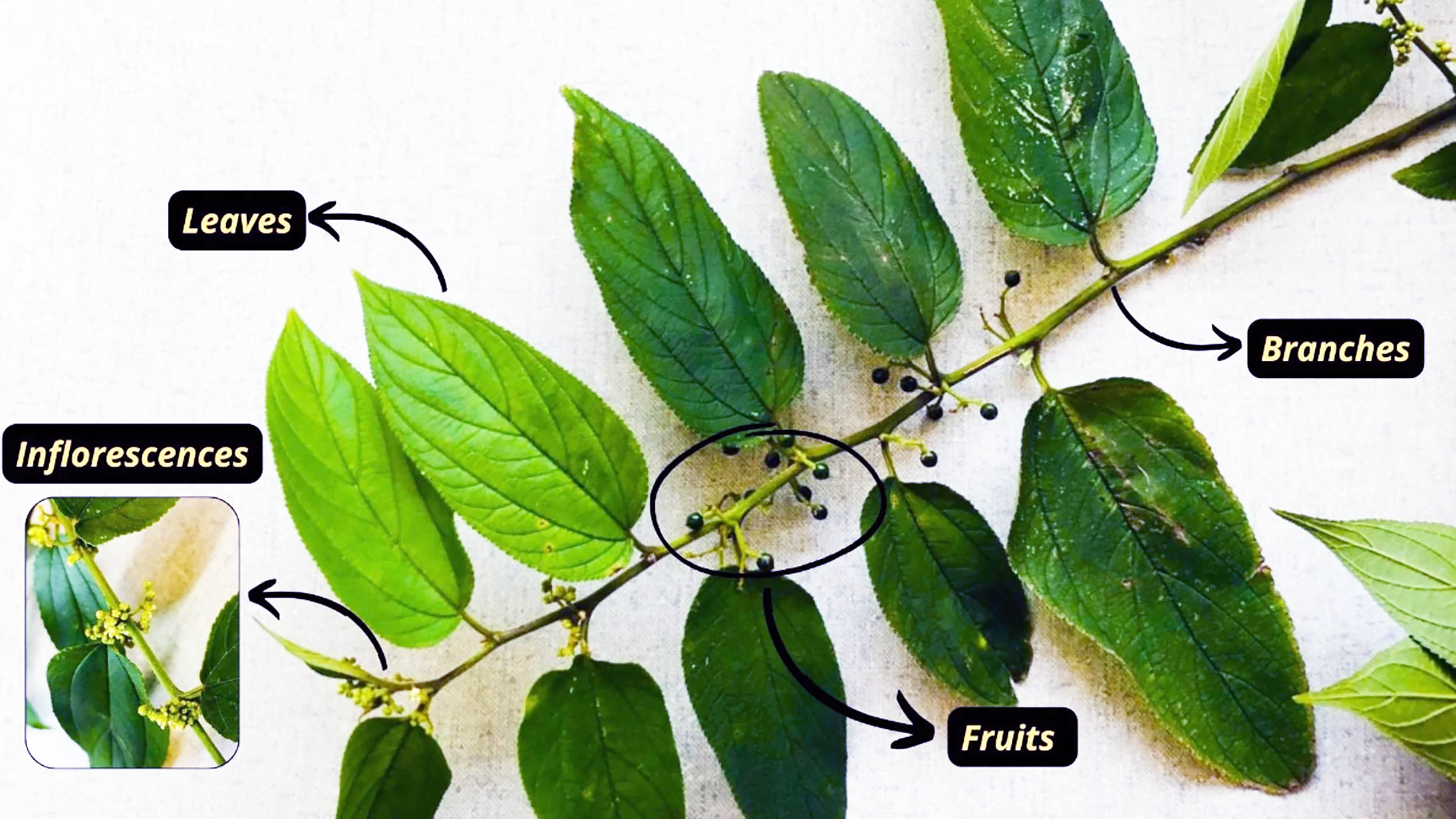
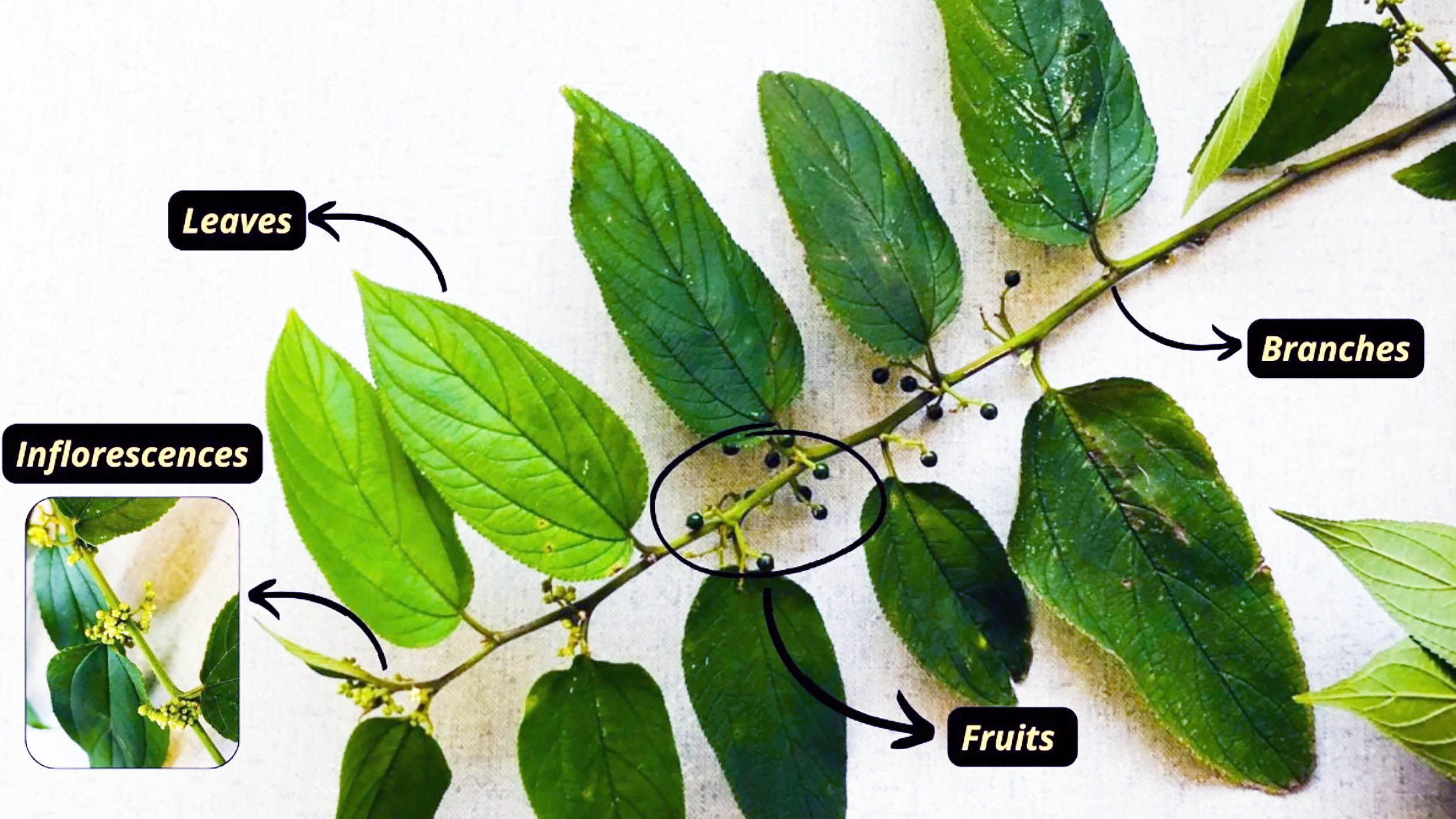
    Parts of the plant Trema micranthum (L.) Blume: leaves, inflorescences, fruits, and branches. Credit: Scientific Reports

    Tropical weed discovered that contains the same CBD as cannabis


    In the dense greenery of Brazil’s Atlantic coast, botanists have long walked past a drab shrub called Trema micrantha Blume. Until recently, no one suspected its berries and blossoms contained an active ingredient already worth billions of dollars worldwide.

    That compound is cannabidiol (CBD), widely studied for easing seizures, anxiety, and chronic pain without the mind-altering high of marijuana.

    The possibility of harvesting CBD from a fast-growing plant that governments do not regulate as tightly as cannabis could reshape both agriculture and medicine.

    Hemp farms in the United States, for example, need extensive licensing, testing, and security. Trema micrantha, by contrast, spreads like a roadside weed and grows from seed to flowering in a single tropical season.

    Trema micrantha – New CBD source

    Brazilian molecular biologist Dr. Rodrigo Moura Neto, working at the Federal University of Rio de Janeiro, confirmed that Trema fruits and flowers carry measurable CBD while lacking tetrahydrocannabinol (THC), the chemical that produces a marijuana high.

    “It was wonderful to find a plant with CBD but without THC, because you avoid all the mess around psychotropic substances,” he says. “That means the potential is enormous.”

    Using ultra-high-performance liquid chromatography and high-resolution mass spectrometry, his team pinpointed the cannabinoid profile with far more sensitivity than older methods could offer.

    The work builds on research that once found similar molecules in a related Thai shrub but never led to commercial production.

    Why Trema micrantha stands out

    Early tests show the plant’s berries hold far more CBD than its leaves or stems.

    Importantly, THC remains below detection limits across samples, meeting strict rules in places where any psychoactive trace would block retail sales. That feature alone could save processors the costly step of purifying extracts to strip out THC.

    Parts of the plant Trema micranthum (L.) Blume: leaves, inflorescences, fruits, and branches. Credit: Scientific Reports
    Parts of the plant Trema micranthum (L.) Blume: leaves, inflorescences, fruits, and branches. Click image to enlarge. Credit: Scientific Reports

    Size also helps. A mature shrub can top 66 feet, offering biomass well beyond what a typical hemp plant yields in regions where heat, pests, or legal hurdles keep hemp acreage low.

    “Lots of companies have been calling, looking to collaborate,” says laboratory director Rosane Silva, who refers to their new subject as the “magical plant.”

    From weed to wellness

    CBD already supports one U.S. Food and Drug Administration–approved drug, Epidiolex, prescribed for rare childhood epilepsies.

    Dozens of trials are probing benefits for autism spectrum disorders, post-traumatic stress, and inflammatory diseases.

    Yet patients in many countries still import CBD oils at steep prices because medical marijuana remains illegal to cultivate.

    Brazil reflects that tension. Judges there often grant individual patients permission to receive cannabis-derived CBD, but growers must keep operations abroad.

    If Trema proves a viable domestic source of CBD without THC, supply chains could shorten, prices could fall, and courts might see fewer emergency petitions.

    Funding and next steps

    A public grant worth 500,000 BRL (104,000 USD) now fuels the next phase: perfecting extraction methods and running preclinical tests.

    Dr. Moura Neto is also navigating patents for the techniques – though not for the plant itself. “If I dreamed of being a billionaire, I wouldn’t have become a professor,” he says.

    Patenting a process rather than the species allows researchers worldwide to study Trema micrantha genetics, cultivation, and pharmacology.

    Open science may accelerate breeding programs to boost cannabinoid content, just as decades of selective crossing transformed hemp into today’s high-CBD, low-THC cultivars.

    More questions about Trema micrantha

    Even with strong CBD levels in fruit, overall yield per acre currently trails specialized hemp varieties by orders of magnitude.

    Agronomists must learn whether fertilizer regimens, pruning schedules, or controlled stress can nudge Trema’s metabolic pathways toward richer resin production.

    Meanwhile, pharmacologists will compare therapeutic potency head-to-head against cannabis-derived CBD. As Dr. Moura Neto cautions, CBD from Trema micrantha “might not work as well, or at all.”

    Clinical trials will span five to ten years if early toxicology proves safe. Extraction facilities must also demonstrate that oil from Trema meets pharmacopeia purity standards and remains stable on shelves.

    The business landscape

    Market analysts valued global CBD sales at nearly $5 billion last year and project more than $47 billion by 2028. Those figures catch the eye of pharmaceutical firms, cosmetics brands, and food-and-beverage startups alike.

    THC-free sourcing could let companies bypass patchwork legislation that still treats cannabis as a controlled drug.

    Brazil’s vast territory offers another advantage: the climate supports year-round growth near the equator, reducing greenhouse heating costs common in northern latitudes. Fast turnover from seed to fruit may allow three harvests per year, lowering production costs further.

    Trema micrantha and CBD’s future

    A shrub once written off as a nuisance now invites plant scientists, chemists, and economists to rethink how CBD reaches medicine cabinets.

    If ongoing studies confirm effectiveness and scalable yield, hemp might share the cannabinoid spotlight with its newly famous cousin.

    For now, anyone tempted to roll the leaves should heed Dr. Moura Neto’s warning: “That definitely won’t do anything for you.”

    The journey from laboratory bench to pharmacy shelf is never short, yet Trema micrantha shows that valuable molecules sometimes hide in the least glamorous corners of a forest.

    With steady research funding and open collaboration, a weed could join the wellness industry – without the legal smoke clouds that follow its more notorious relative.

    The full study was published in the journal Scientific Reports.

    —–

    Like what you read? Subscribe to our newsletter for engaging articles, exclusive content, and the latest updates.

    Check us out on EarthSnap, a free app brought to you by Eric Ralls and Earth.com.

    —–


    Source link