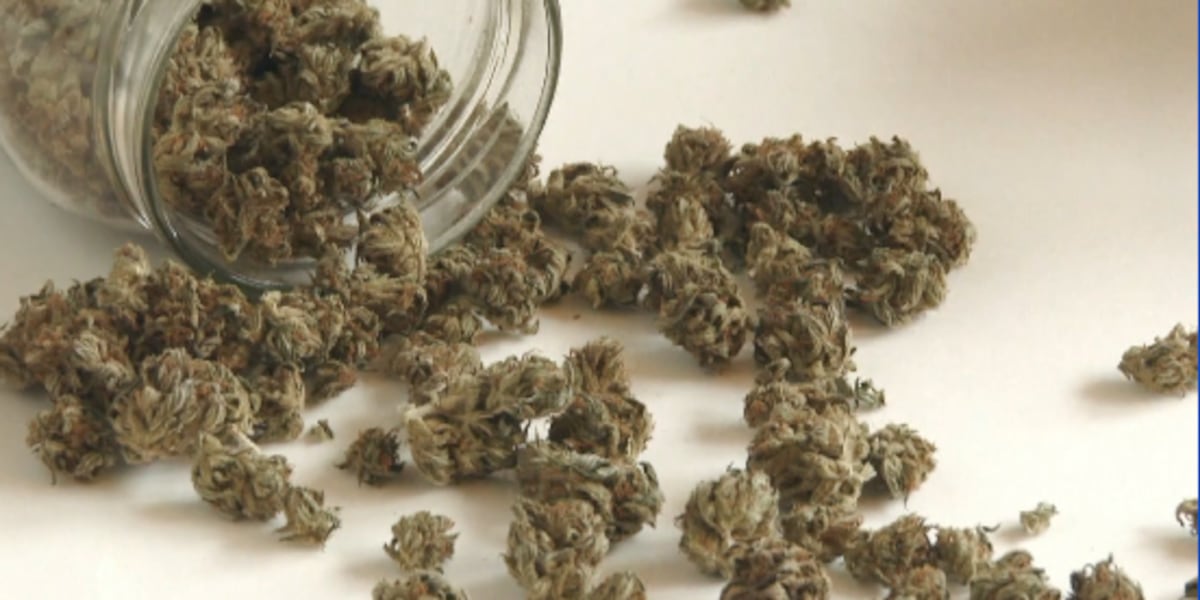
JEFFERSON CITY, Mo. (KFVS) – Missouri Division of Cannabis Regulation(DRC) officials revoked the manufacturing license of C&C Manufacturing, LLC.
The revocation comes after an investigation into a 2024 recall of marijuana products involving C&C.
The DRC cited several violations leading up to taking away C&C’s license, including:
Failing to comply with state and federal requirements by transporting Missouri marijuana outside of Missouri
Selling marijuana product in Missouri that did not originate from Missouri marijuana
Failing to appropriately track and trace marijuana products
Manufacturing marijuana product containing intoxicating cannabinoids produced through chemical modification
Improper destruction of marijuana products, including a failure to reflect destruction in applicable records
Failing to preserve records and marijuana products as directed by DCR’s prior directives
DCR director Amy Moore said the revocation is about more than just the health of Missourians, “C&C’s use of unregulated THC to create marijuana products, numerous violations of rule, and destruction of product and records in direct violation of DCR orders demonstrates clear disregard for law at the expense of health and safety and has no place in Missouri’s regulated market.”
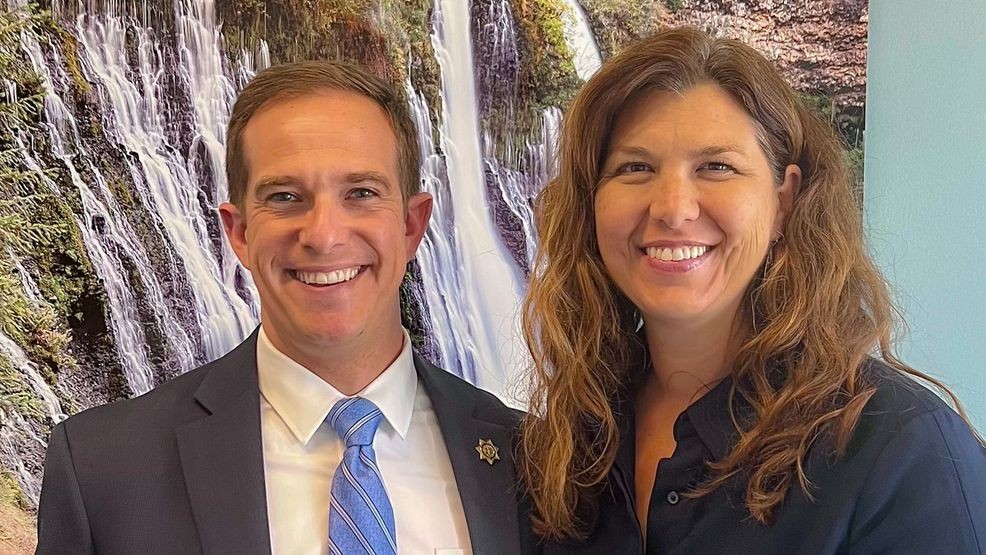
NORTHSTATE, Calif. — Siskiyou County Sheriff Jeremiah LaRue visited the Capitol this week to address the topic of the rise of unlicensed pesticides on cannabis farms. There, he met with Senator Megan Dahle to seek help from state and federal agencies, just days after the county declared a local emergency due to the issue.
Senator Dahle says that although cannabis cultivation is generally illegal in the county, it has persisted for years. She added that the legalization of marijuana, intended to create a taxed and regulated system, inadvertently removed enforcement tools, allowing illegal activities to flourish.
The use of illegal pesticides is said to be a particularly dangerous development. These pesticides, often banned in California or the United States, are smuggled into the country with labels in Chinese or Thai. They are frequently burned to fumigate greenhouses, releasing toxic fumes and residues that pose hazards to growers, authorities and the environment.
In response, the Siskiyou County Board of Supervisors declared a state of emergency on July 14, seeking assistance from state and federal agencies to combat the influx of these hazardous substances. Rural counties across the state face similar challenges, but Siskiyou County is leading the state in the number, variety and frequency of occurrences.
EPA Pacific Southwest Region Administrator Josh F.W. Cook acknowledged the crisis, stating, “I have received correspondence from the Siskiyou County Board of Supervisors. They have declared a State of Emergency related to illegal importation, distribution and burning of foreign-manufactured pesticides and chemicals as part of an international criminal enterprise.”
Cook added, “I take this very seriously; I have directed Region 9 EPA law enforcement to investigate these issues immediately. We will be working with other County, State and Federal agencies to ensure Californians are protected and our environmental laws are upheld.”
Cannabis remains the most used illicit drug on the planet, with an estimated 219 million adults consuming it in 2023.
A fresh report from Switzerland now suggests that giving existing users a safe, legal supply may trim the edge off risky habits rather than encourage them. The findings come from the six‑month Weed Care randomized trial run in Basel.
Switzerland still bans recreational sales of cannabis nationwide.
Basel, however, received a federal waiver on January 30, 2023, allowing 189 adult volunteers to buy measured, contaminant‑free flower or hash in nine pharmacies, while a matched control group kept using street sources.
The design mirrors real‑world retail but strips out slick marketing, price wars, and high‑potency gimmicks that dominate some commercial markets.
Investigators registered every legal purchase and offered brief counseling at the counter. Keeping over‑the‑counter talk focused on lower‑risk use also echoes Canada’s public‑health model.
What makes use “problematic”
Researchers tracked changes with the Cannabis Use Disorders Identification Test–Revised, a short checklist of behaviors that signal harm, even when full cannabis use disorder is absent.
Heavy users face up to a one‑in‑three lifetime risk of that disorder, according to a meta‑analysis of 21 cohort studies.
Scores above 13 suggest dependency, but smaller shifts still matter. Cutting just two points on the scale is considered clinically meaningful and can translate into fewer missed obligations, less time chasing the drug, and lower tolerance.
Early numbers favor legal cannabis
“There has never been a controlled, randomized study like this before,” said Baltes‑Flückiger, the study’s lead author.
After half a year, the legal group’s average misuse score slipped by 0.8 points, while the illegal group barely budged.
Among participants who also used other illicit drugs, the legal pathway slashed scores nearly two points, marking the threshold for a “reliable change.”
“Legal access eases the burden on consumers,” added Professor Marc Walter of the University of Basel, underscoring that the regulated approach did not boost depression, anxiety, or psychotic symptoms at interim check‑ins.
Mental health concerns remain steady
Worries that legal access might worsen mood or trigger psychosis often dominate public hearings.
A 2024 scoping review covering 28 North American studies found mixed and mostly null links between recreational laws and psychiatric outcomes.
The Swiss data echo that broader picture: neither group showed significant shifts in depression or anxiety scales, and psychotic‑like experiences stayed flat.
Critics may note the short follow‑up, yet the absence of early harm offers some reassurance.
Polydrug users benefit from legal cannabis
Why did people juggling multiple substances respond best?
Easy pharmacy access saved them the effort of hunting down street dealers, trimming time spent “getting, using, or recovering,” one of the test’s key items.
Reduced hustle can free attention for work, study, or family, all protective factors against escalating misuse. Counseling handed out at each sale likely helped too.
Staff trained on Canada’s Lower‑Risk Cannabis Use Guidelines reminded buyers to favor products under 20 percent tetrahydrocannabinol and balance them with cannabidiol‑rich strains, choices linked to milder cognitive effects.
Quiet rebuttal to gateway fears
The trial saw no uptick in alcohol days or other drug use inside the legal arm, challenging the long‑held idea that a sanctioned market pulls people toward wider intoxication.
Twenty‑four U.S. states now allow adult possession, yet nationwide surveys show flat or only modest rises in heavy use since the first state referendum in 2012.
Policy researchers often point out that the devil lies in the details. Switzerland capped monthly sales at about 0.35 ounces of pure THC, required organic cultivation, and banned all advertising.
Those guardrails differ sharply from the profit‑driven dispensary scene common in parts of the United States and may explain the modest but positive shift.
The future of legal cannabis access
All volunteers now have legal access through July 2025, giving the team a two‑year window to track long‑term patterns.
Parallel studies in Canada report slight bumps in overall consumption but, interestingly, equal or lower misuse scores after five years of legalization.
Future analyses will need to weigh market structure, potency limits, pricing models, and education campaigns.
If results stay consistent, lawmakers elsewhere could consider legal cannabis sales through pharmacies or non‑profit social clubs as middle‑ground options between prohibition and full commercialization.
For regular consumers worried about slipping into harmful patterns, the Swiss experience offers a practical lesson.
Access to tested products, honest labeling, and low‑key advice can chip away at risky behavior without demanding total abstinence.
Public‑health‑oriented legalization is not a silver bullet, but it may give heavy users a safer runway to moderation.
In our Higher Education: Research Initiatives That Deepen Our Understanding of Cannabis supplement, Cannabis Science and Technology interviewed Carrie Cuttler, PhD, Co-Director of the Center for Cannabis Policy Research and Outreach (CCPRO) at Washington State University.
In this video clip, Dr. Cuttler explains the recent trends she has seen in cannabis research, and which cannabinoid she is currently focusing on.
Check out our interactive supplement to read the full expert interviews, including an interview with Reginald Gaudino, PhD, Director of the Cannabis Research Institute, Discovery Partners Institute.
Transcription
Erin McEvoy: So how has research on cannabis changed over the past few years, and where does it seem to be heading in the future?
Carrie Cuttler: Yeah, one of the biggest shifts I guess I’ve noticed recently is a lot of labs that were traditionally studying cannabis and THC, I’m seeing people shifting their focus onto minor cannabinoids and terpenes in addition to THC. So for many, many years, THC was the main focus of almost all research on cannabis. It was the phytocannabinoid that everyone was after and interested in, and believed to be responsible for the intoxicating effects, the detrimental effects, the therapeutic effects, just was believed to be responsible for everything. And the interesting thing is that THC is one of over 100 cannabinoids in the plant, so there’s a lot more to cannabis than just THC. And so now people, it does seem, are starting to wonder, what do these other over 100 phytocannabinoids? What do all these many different terpenes do, either alone or in combination with THC? So I myself have been really getting into investigating CBG, cannabigerol, which is probably going to be the new CBD. It’s not intoxicating, it’s not impairing, but it does seem to have some therapeutic effects. So we’re trying to move towards harnessing some of the therapeutic effects of cannabis without the intoxication and the impairing effects of THC.
We’re also seeing a bit more of an uptick on research on effects of legalization on cannabis use patterns, the different populations using cannabis is obviously very low hanging fruit to understand the impacts of legalization on people’s use patterns.
The Southampton Town Board recently unanimously approved a sweeping rezoning of a swath of Montauk Highway on the edge of downtown Hampton Bays. The move came barely a month after the legislation proposing the change was first introduced, and over the vociferous objections of a businessman who had planned to open a cannabis dispensary that will now be forestalled by the new zoning rules. Reporter Michael Wright joins the editors to discuss the rezoning and the lawsuit that is likely to come as a result.
A House subcommittee has approved a spending bill that includes measures to block the Department of Justice from moving forward with cannabis rescheduling.
The Republican-led House Appropriations Subcommittee on Commerce, Justice, Science (CJS) and Related Agencies on July 15 approved a spending bill in a 9-6 vote that includes a provision that would prevent the Department of Justice (DOJ) from using funds to reschedule cannabis.
The move would further stall the process of reviewing cannabis initiated by former U.S. President Joe Biden, which current President Donald Trump appeared to support.
Section 607 of the spending bill stipulates that none of the funds available by this bill may be used by the DOJ to reschedule cannabis or to remove it from the schedules established under the Controlled Substances Act (CSA).
Cannabis is currently listed in Schedule I of the CSA, along with other substances like heroin, ecstasy, and LSD. Rescheduling it to Schedule III, as has been proposed, would mean fewer restrictions on research, greater access to medical cannabis, and a reduced tax burden for cannabis businesses.
Today, despite being still federally illegal, 39 states have legalized cannabis for medical use, and 24 also for recreational purposes.
Stalled Cannabis Rescheduling
The review of cannabis rescheduling started in 2022, when then-President Biden instructed the Department of Health and Human Services (HHS) and the DOJ to review the status of cannabis under the CSA.
In 2023, HHS recommended moving the substance from Schedule I to Schedule III. The Drug Enforcement Administration (DEA) then opened a public comment window, receiving over 40,000 comments.
The U.S. attorney general, who is currently Pam Bondi, has the authority to schedule, reschedule, or deschedule drugs under the CSA. However, the attorney general usually delegates this authority to the DEA. But the agency’s hearings related to the rescheduling of cannabis are currently stalled. Initially set to begin on January 21, DEA Administrative Law Judge (ALJ) John Mulrooney postponed them. Since then, no dates for cannabis hearings have been set.
During his election campaign, Trump supported cannabis reform, but since he took office in January, little has been heard from him about it.
On Monday, The Marijuana Heraldreported that Trump told two House lawmakers in a private meeting, “We’ll be moving forward soon,” referring to cannabis rescheduling. The quote originated from a staffer who was present, but the news site was unable to confirm it independently.
Last week, former football player and cannabis advocate Ricky Williams met with senior Trump officials at the White House to talk about the federal cannabis rescheduling process.
Meanwhile, yesterday, Trump signed a bill into law that will ban illicit fentanyl. The law also contains measures that ease restrictions on conducting research into Schedule I drugs, in which cannabis is included.
Separately, Congress is also moving to close a loophole opened by the 2018 Farm Bill that legalized hemp. Last week, the Senate Appropriations Committee approved a spending bill, which includes a provision banning intoxicating hemp products that mimic cannabis effects, like delta-8 THC. However, the implementation of this measure would be delayed for one year.
Nebraskans 21 and older will soon have in-state access to regulated cannabis.
The Omaha Tribe of Nebraska, one of four federally recognized tribes in the state, unanimously adopted a cannabis regulatory code, Title 51, through its tribal council on July 15 to legalize both medical and adult-use cannabis on its native reservation in the northeastern part of the state.
The tribe plans to use its sovereignty to sell cannabis in a regulated retail setting, allowing both tribal and non-tribal visitors to purchase products subject to a strict licensing, testing and enforcement system that prioritizes product safety and community health.
“The Omaha Tribe is not waiting on broken systems to deliver,” Omaha Tribal Attorney General John Cartier said in a press release. “We are asserting our sovereign right to govern, protect our community, and build a sustainable economy that reflects our values. Title 51 is the most comprehensive and forward-looking cannabis code in the region, that is rooted in our traditions and designed for our future.”
The Omaha Tribe’s reservation is located mostly in Thurston County, with the tribal seat of government headquartered in Macy, Neb. The reservation’s population is roughly 4,500, according to the 2020 U.S. Census.
The Omaha’s adoption of Title 51 comes as Nebraska state cannabis regulators continue to work toward implementing a medical cannabis program approved by voters in the November 2024 election. Nebraska Gov. Jim Pillen signed emergency regulations on June 29 to regulate a commercial medical cannabis marketplace. The state’s Nebraska Medical Cannabis Commission (NMCC) is tasked with awarding business licenses by October 2025.
However, the Omaha people believe the state’s rollout of a medical cannabis program remains uncertain amid the NMCC being “mired in litigation threats, regulatory confusion and bureaucratic delay.”
Specifically, the NMCC adopted the emergency rules two days after Lancaster County District Judge Susan Strong dismissed a lawsuit filed by former Republican state Sen. John Kuehn, who sought to block the state’s implementation of the voter-approved measure. Also, Nebraska Attorney General Mike Hilgers threatened to sue the regulatory body if it begins issuing licenses.
Hilgers’ threat comes despite 67% of Nebraska voters specifically supporting a measure that calls for awarding the licenses for a commercial marketplace by Oct. 1, 2025.
As that process plays out at the state level, the Omaha people plan to flex their sovereignty by establishing clear rules for a licensed, tested and well-regulated cannabis marketplace that provides full oversight authority to a tribal Cannabis Regulatory Commission.
Allow medical cannabis access for qualifying patients under tribal law;
Open pathways for tribal member ownership and business partnerships;
Reinvest in health care, education and infrastructure; and
Provide expungement of prior tribal cannabis offenses and a robust social equity framework to repair the harms of past criminalization.
“This is not just about cannabis,” Omaha Tribal Chairman Jason Sheridan said. “It’s about creating real opportunity for our people, asserting our sovereignty, and showing the region what tribal leadership looks like.”
While tribal communities nationwide began tapping the gaming industry as an economic driver, starting with high-stakes bingo in the early 1980s and then casinos following the Indian Gaming Regulatory Act of 1988, cannabis has more recently become another avenue for financial sovereignty within the past decade.
The Omaha Tribe plans to implement its Nebraska cannabis program with a focus on a “responsible” timeline. The tribe’s phased rollout will begin this year, starting with licensing, compliance and public education.
“We are open to working with Nebraska’s health care providers, patients and business leaders as long as our law and sovereignty are respected,” Cartier said. “The tribe is ready to lead. The time to act is now.”
While the Omaha people plan to allow non-tribal visitors to purchase cannabis on their reservation, those who possess 1 ounce or less of cannabis off native land in Nebraska face a $300 fine on the first offense and a misdemeanor penalty with the possibility of jail time on subsequent offenses. However, one of the two measures voters passed in 2024 provides that qualified medical cannabis patients and caregivers can legally possess up to 5 ounces.
Meanwhile, selling or manufacturing any amount of nonmedical cannabis in Nebraska is a felony punishable by up to 20 years in prison with a $25,000 maximum fine.
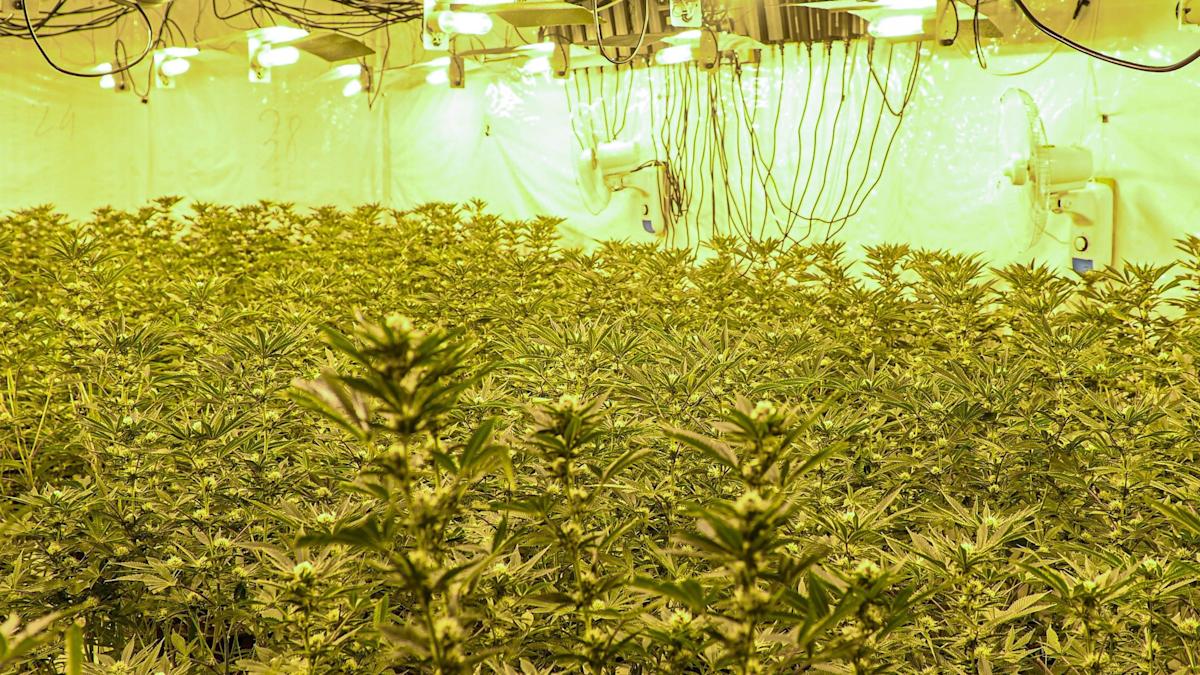
Two men have been charged after police discovered more than 3,000 cannabis plants during a raid in Bradford.
The plants were found after officers executed a warrant at a business premises in Station Road, Wyke, on Wednesday, West Yorkshire Police said.
The force said two men, aged 27 and 40, have been charged with being concerned in the production of a Class B Drug and are due to appear at Bradford Magistrates’ Court later.
Three other men were also arrested on suspicion of producing Class B drugs, two of them have been released under investigation while a third remains in custody.
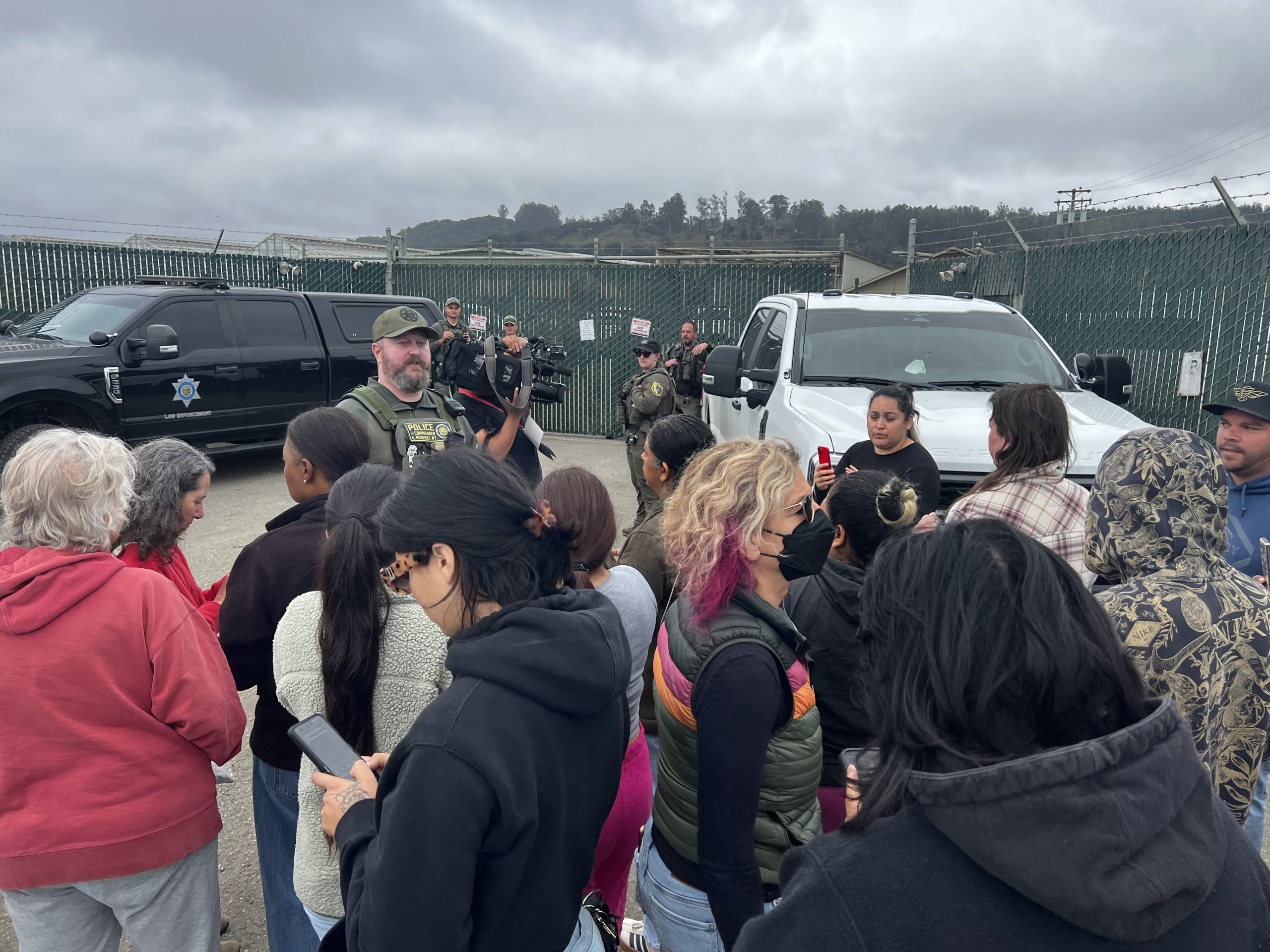
On Wednesday, community members and Your Allied Rapid Response volunteers responded to reports of an alleged immigration raid at a cannabis warehouse in Royal Oaks, just outside of Watsonville, that turned out to be a search warrant operation related to illegal cannabis activity.
Grassroots organization Your Allied Rapid Response (YARR) began to receive calls to its hotline around 7:40 a.m. Wednesday about a potential immigration raid happening just outside of Watsonville. Three minutes later, YARR sent a text message to its network of volunteers across Santa Cruz County, reading: “ICE raid in progress. Responders needed immediately.”
By 8:30 a.m., a crowd of at least 15 community members, many of whom were YARR volunteers, had gathered around the entrance of a cannabis warehouse located in Royal Oak, just outside of Watsonville, with the belief that U.S. Immigration and Customs Enforcement (ICE) agents were conducting arrests. Other community members stood across the street observing from afar.
In fact, San Bernardino County Sheriff’s Department deputies were carrying out a search warrant related to illegal cannabis activity at the warehouse located at the intersection of San Juan and San Miguel Canyon roads. There were no arrests made on Wednesday, but law enforcement agencies seized illegal cannabis plants from the site. All 21 of theemployees at the site were released, said Kevin McInerney, commander for the Law Enforcement Division of the California Department of Cannabis Control.
The incident, and the crowd that showed up to bear witness, highlights the increased anxieties over immigration enforcement in the community, but also offers a window into how residents have come together in response — and how organized local resistance networks have become.
Wednesday’s false alarm was “looking like a test run” of how YARR’s network of volunteers responds to reports of ICE activity, said volunteer Pam Sexton. “And what a beautiful test run.”
The first instinct for Sexton after receiving the alert was to get to the warehouse on San Juan Road in Royal Oaks as quickly as possible, she said. “I didn’t comb my hair,” Sexton said. “[I] just need to get out there.”
When community members arrived at the site, they began to look in between the green fence surrounding the warehouse, trying to get a glimpse at the numerous law enforcement agencies on the other side.
An onlooker peers through the gate at 1400 San Juan Rd. in Royal Oaks on Wednesday. Credit: Kevin Painchaud / Lookout Santa Cruz
Pajaro resident Manuel Abrego, who lives near the site, said he walked over because he saw a heavy law enforcement presence and wanted to know what was happening.
“Everyone is really scared, especially with what happened in Camarillo,” Abrego said, referencing immigration raids in Ventura County last weekend that targeted cannabis farms.
By 9:30 a.m., people had crossed San Juan Road and created a human barricade in front of the property entrance to monitor who was entering and exiting the warehouse.
As the number of onlookers and observers grew, McInerney, the state law enforcement official, started to approach the crowd, explaining the situation at hand and answering questions from concerned community members.
The investigation was not related to immigration, he said, adding that FBI and Drug Enforcement Administration agents were on site assisting with the search warrant. McInerney told Lookout that he wanted to prevent and minimize any fear community members might be feeling.
Some in the gathering crowd were skeptical that McInerney was telling the truth. Abrego, the Pajaro resident, told Lookout that someone connected to the property owners had told the crowd that there were law enforcement agents with U.S. Immigration and Customs Enforcement personnel inside, which led Abrego and other community members to stay and question the credibility of McInerney statements.
To keep the community alert and notified, other observers began to livestream on social media to friends and family, turning their phone cameras onMcInerney and YARR volunteers and asking them to clarify to their online followersthat the law enforcement operations were not related toICE.
Officers from the California Department of Cannabis Control outside the gate at 1400 San Juan Rd. along with concerned citizens. Credit: Kevin Painchaud / Lookout Santa Cruz
Traffic on San Juan Road slowed down as drivers took videos as they passed by the scene, honking their horns in support of the community members or yelling obscenities such as “F–k ICE,” believing that immigration agents were inside the property.
Each time a car would exit the property, YARR volunteers such as Olivia Winter would document on their phones or in notebooks if the vehicle belonged to law enforcement or employees. “I’m trying to [keep] count,” she said.
Abrego and Watsonville resident Jesus Alvarado briefly stopped employees on their way out, quizzingthem on what law enforcement had asked them, and if they saw any immigration agents lingering inside. Alvarado also took videos of all the interactions he had with employees.
“I’m trying to figure out if [law enforcement] is treating them fairly and what they see,” Alvarado said in Spanish. “I’m going to ask each person that leaves to figure out what’s happening.”
Abrego told Lookout that despite what McInerney told him and other community members, he wanted to make sure that employees not directly involved with the illegal cannabis operation at the center of the investigation weren’t arrested.
“They have to tell us what’s going on because the officer in charge is telling us one thing and someone else who’s been inside is telling us a different story,” Abrego said. “Someone is lying to us and we have the right to know what’s occurring in our community.”
Manuel Abrego speaks with an employee exiting the cannabis warehouse Wednesday. Credit: Tania Ortiz / Lookout Santa Cruz
Sexton noted how quickly community members reacted when a bus full of workers almost entered the property while law enforcement was conducting its search, and had signaled to the driver to leave the site.
“That was beautiful to see how quickly the group reacted, and that caused the bus to continue on,” she said.
By the time McInerney confirmed to Lookout that all employees had been released, community members had accounted for only about 11 of the 21 employees. The rest had exited through a rear entrance, according to McInerney.
Winter told Lookout on Wednesday morning that the situation became confusing because there was a lot of hearsay. “People are rightfully afraid, and so they spread information on social media,” she said. “It’s really difficult to confirm what’s actually happening.”
Even if this situation didn’t turn out to be an immigration raid, that shouldn’t mean people can let their guard down about potential immigration raids in the future, said Winter. People are going to continue to be really scared after Wednesday’s incident, she said.
By 12:30 p.m., all of the employees had been released and allowed to go home, and community members began to trickle out as the situation began to calm down. About five community members stayed to see law enforcement wrap up to ensure that nothing out of the ordinary happened.
Sexton told Lookout that seeing the number of people who showed up to the site on Wednesday demonstrated that YARR’s network of volunteers is working.
There were so many people who came, she said. And even after they learned that the law enforcement activity wasn’t ICE, people stayed. “People said, ‘Well, OK. We want to stay, though,’” she said. The actions from community members might have also pressured officers to speed up whatever they were doing inside and release employees faster, Sexton said.
The biggest lesson learned from Wednesday’s event is that the community will respond in times of need, said YARR volunteer Emiko Stewart: “That’s why I love our community. When we need it, we will come, we will show up, we will show out.”
Have something to say? Lookout welcomes letters to the editor, within our policies, from readers. Guidelines here.
VA head talks psychedelics; MDMA amendment to NDAA; Another PA legalization bill; Health groups push Congress on medical marijuana
Subscribe to receive Marijuana Moment’s newsletter in your inbox every weekday morning. It’s the best way to make sure you know which cannabis stories are shaping the day.
/ LOCAL New York City officials will host a cannabis festival and resource fair on Saturday. / INTERNATIONAL Slovenian lawmakers approved medical cannabis legislation. / SCIENCE & HEALTH A study of caregivers of children who use medical cannabis to treat neurological disabilities found that they “reported symptom improvement in their children and improved quality of life for their child and family.” A study suggested that “adolescent cannabidiol treatment produces dose-dependent antidepressant-like effects of moderate magnitude without compromising long-term cognition in rats.” / BUSINESS Flowhub launched a new ecommerce solution for cannabis businesses. / CULTURE Theo Von hosted a podcast about ibogaine.
Make sure to subscribe to get Marijuana Moment’s daily dispatch in your inbox.
Marijuana Moment is made possible with support from readers. If you rely on our cannabis advocacy journalism to stay informed, please consider a monthly Patreon pledge.