The Trump administration is using legal settlements with allies in state governments to enact new immigration restrictions.
Source link
Cannabis info and related links and post from around the web

The Trump administration is using legal settlements with allies in state governments to enact new immigration restrictions.
Source link

Many dogs struggle with dull fur and flaky skin that disrupts comfort and daily routines. But what can help bring back softness without harsh ingredients? Plant-based remedies offer gentle support that addresses dryness through natural …

Phil Lesh, Kris Kristofferson, Quincy Jones, Sergio Mendes, Dickey Betts, John Mayall, David Sanborn, Melanie, Wayne Kramer, Toby Keith, Eric Carmen, Frankie Beverly, Greg Kihn, Angela Bofill, Steve Lawrence, Jack Jones, Cissy Houston, Mike Brewer and Dave Loggins are among the popular musicians who passed away in 2024.
Source link

US cannabis rescheduling, much like President Donald Trump who is rightly credited for finally pushing it forward, has sucked all the oxygen out of the room for the last two years.
The project dominates headlines, largely dictates stock prices, and is a central part of any forward facing cannabis debate. This is understandable. The cannabis industry rarely gets the chance to celebrate regulatory progress on such a scale.
However, it has also learned the hard way what happens when optimism and hype outpaces financial and political reality.
In a new multi-part series from regular contributor and our resident reality-checker, Deb Tharp, a cannabis policy analyst and journalist whose work has appeared in Yahoo, STAT, POLITICO Pro, and Marijuana Moment, we are looking at cannabis rescheduling through another, more sinister lense.
This series examines the enforcement, regulatory, and political realities that legacy operators are overlooking, and makes the argument that the cannabis industry is not crossing a finish line with rescheduling, but becoming collateral damage in a state-federal war.
Liberal states that depend on cannabis revenue to fill budget gaps now face unprecedented federal pressure on immigration enforcement, regulatory compliance, and funding. Cannabis sits at the intersection of these conflicts, remaining federally illegal, documentation-heavy, labor-exposed, politically stigmatised, and revenue-critical to the very states under siege.
In the first installment, she begins with her thesis: the cannabis industry isn’t celebrating a victory. It’s being conscripted into a battle it doesn’t yet understand.

The cannabis industry believes it is about to cross a finish line. In reality, it has just crossed a line.
State cannabis markets are no longer experiments. They’re mature revenue streams that prop up flagging state budgets in a declining economy. Many of the states that depend on cannabis revenue are the very same liberal states locked in heated battles with the Trump administration over other salient ideals.
Amid euphoria over potential rescheduling and long-awaited tax relief, cannabis operators are missing the elephant in the room. The states most willing to protect cannabis markets are the same states under federal budgetary and enforcement pressure, particularly around immigration and regulatory compliance.
Cannabis is not insulated from that conflict. It’s exposed by it.
The Trump administration is now openly accused of selective targeting and enforcement along ideological lines. It is becoming increasingly obvious that political opposition makes states and individuals an enforcement target. This is a frightening precedent for vulnerable populations.
And nothing makes selective enforcement easier or more appealing than legal grey areas.
Cannabis operators are about to learn what it feels like to become unwitting participants in a soft civil war between state and federal governments. This is not a war fought with tanks or barricades. It’s fought through funding freezes, administrative choke points, and unprecedented jurisdictional erosion.
An example of this jurisdictional erosion is the ever-increasing 287g program that’s encouraging state and federal enforcement cooperation on a massive scale. The recent immigration raid against Glass House is just one example of this federal and local cooperation.
For those who don’t know what the 287g program is, it’s an incentive for local governments to cooperate with ICE, via equitable sharing of seized assets, in the increasingly hostile battle over immigration enforcement.
We’ll discuss this more in later sections of this series, but for now, suffice it to say that local governments are being incentivised to allow the feds into areas of enforcement where they were previously barred by policies of non-interference or outright funding denial.
In this environment, cannabis is not merely an ideological target…it’s a nearly irresistible one.
Against that backdrop, President Trump’s executive order directing the DEA to expedite cannabis rescheduling has been widely misread as a victory lap. Stocks surged. Headlines focused on historic progress and the promise of Section 280E relief. But the real question is not whether rescheduling will happen. It’s where the industry will stand once the high wears off.
First things first: cannabis has not been rescheduled yet. The rulemaking process remains vulnerable to defunding, delay, and legal challenge. In fact, the legal challenges are virtually guaranteed. The proposal itself acknowledges Congress’s ability to stall or derail implementation, and it preserves significant discretion for a resistant DEA. These caveats are not nefarious; they’re procedural. But they underscore a crucial point, that nothing about this process is settled, safe, or insulated from inevitable political interference.
Legal challenges are not hypothetical. They’ve been anticipated since Nebraska Attorney General Mike Hilgers organized a multistate opposition campaign against rescheduling. That pushback is unlikely to kill the process outright. However, it will shape it. Cannabis opponents have no incentive to block rescheduling entirely if they can instead control the regulatory terrain that follows.
And that’s where the real danger lies.

Rescheduling doesn’t liberalise cannabis. It federalises it. It opens the door to regulatory capture by actors who already know how to navigate FDA approval pathways, federal supply chains, and national distribution. This consolidation path did not begin with this administration. It has been developing for years. The executive order merely accelerates it.
Strip away the rhetoric, and the EO has two practical objectives:
The intent was spelt out clearly in the HHS rescheduling analysis:
“Based on these diverse sources of marijuana, there is a lack of unified controls on cultivation and manufacturing, which raises concerns related to the safety, quality, and consistency of botanical substances…” (See page 22)
Once cannabis products are positioned as drugs, make health claims, and enter interstate commerce, FDA authority attaches. What’s changing? FDA’s enforcement authority is far less defined under Schedule 1.
These are conditions that rescheduling actively encourages. Enforcement doesn’t have to be universal to change the playing field. Compliance gravity alone creates the black hole that reshapes access to capital, insurance, banking, and distribution.
Yes, this really is a Big Pharma and Big Alcohol moment, and the inflection point that activists have warned about for decades.

Pharmaceutical companies will finally receive a clear pathway to patented, clinical-trial-backed formulations. These will be isolates or synthetics that patients already reject, but Big Pharma believes that regulatory capture will tip the scales in their favor anyway. They wrongly believe prohibition is an actual deterrent to manufacture of a medication that literally grows on trees.
Big Alcohol is aiming for a compliant runway for low-dose cannabinoid beverages through existing retail and distribution infrastructure–although the FDA has already missed the congressional deadline to name specific cannabinoids in the plant and legally define what constitutes “a container.”
Legacy cannabis operators may believe they can secure footholds at the margins, but most are structurally behind firms that have spent decades mastering FDA processes or already control national shelf space.
Meanwhile, state-based legacy markets grow more vulnerable, not less. Many operators assume that staying intrastate insulates them from federal pressure.
It does not.
States like Missouri that previously outright banned cooperation with federal authorities for cannabis enforcement have seen dozens of local jurisdictions pairing with ICE over immigration enforcement. These partnerships open up avenues of enforcement that were previously closed through DoJ policy or congressional funding bans.
The cannabis market isn’t just a symbol of bodily autonomy and personal freedom. It’s a lucrative market that states depend on to cover budget shortfalls. It’s also a juicy target for incentivised law enforcement that benefits from civil asset forfeiture.
Through 287g and other programs, local governments are now overriding decades-long state and federal non-interference policies that cannabis operators previously relied on. Meanwhile, income from cannabis taxes become a tempting federal choke point to further financially punish “sanctuary states” that resist this administration’s agenda.
We’re witnessing the beginning of a perfect storm, and the cannabis industry is one of several targets that lie at the center, and clearly the lowest hanging fruit. Why? Cannabis is:
And again, to drive the point home, it’s a juicy target for incentivised law enforcement that benefits from civil asset forfeiture.
I’ve watched opponents chip away at progressive cannabis policy for three decades. This phase will be faster and more surgical than previous ones. We will see the obvious changes play out before election day.
Why? Largely because cannabis is an easy target in the ideological battle now playing out between states and the Fed. Also because there’s a flood of dark money from ideologues and opportunists alike funding this battle. So, in this series, I’ll lay out the existing hurdles rescheduling faces, the new enforcement tools that come into play when it finally passes, the changing enforcement landscape that is eroding the previous demilitarised zone between state and federal cannabis policy, and how, ultimately, 280E tax relief becomes completely irrelevant in our new normal.
Business of Cannabis will publish the next part of this series in the coming days…
The post US Cannabis Rescheduling: A Victory or a Federal Trap? appeared first on Business of Cannabis.



The post Stock up at Curaleaf before the Madness! appeared first on AZ Marijuana.

Pre-rolls have become one of the most important battlegrounds in cannabis — not because they’re new, but because they’re repeatable. They’re easy for consumers to buy, easy for retailers to move, and often the first product someone tries from a brand.
That combination of positives has made pre-rolls a core revenue driver across legal markets. According to Forbes, the U.S. pre-roll market reached approximately $3.1 billion in 2024. A June 2025 report compiled by Headset and Custom Cones USA revealed Americans purchased more than 316 million pre-rolls in 2024, and pre-rolls accounted for more than 15 percent of total cannabis sales in thirteen states that year.
The category remained strong in 2025, according to BDSA, with pre-rolls capturing $4 billion in sales to rank as the fourth-most-popular product type (after flower, vapes, and edibles). BDSA projects U.S. regulated cannabis sales overall will reach $39.1 billion by 2029, and pre-rolls are positioned to keep taking share as the category matures.
On paper, all of that looks like a straightforward success story. In practice, pre-rolls are one of the most operationally demanding — and margin-sensitive — products in cannabis.
The demand drivers are simple and durable: Pre-rolls require no accessories, no prep, and no learning curve. They also represent a lower-commitment purchase than bulk flower, so they become an easy add-on or impulse buy. For newer consumers, they’re one of the most accessible ways to try legal cannabis without overthinking the purchase.
A significant portion of pre-roll revenue growth is coming from infused products.
Infused pre-rolls are joints that combine cannabis flower with added concentrates like oil, hash, live resin, rosin, or kief to increase potency without increasing size. For consumers, infused pre-rolls offer stronger, more predictable effects in a familiar format.
Headset data indicates infused pre-rolls were a dominant subcategory in mature markets during 2024, capturing more than 44 percent of total pre-roll sales.
Infused pre-rolls offer a clear upside for operators:
But infused pre-rolls also raise the operational stakes. Additional inputs, tighter potency controls, and the need for consistent burn performance increase the likelihood that small production variations become costly issues at scale. Manufacturers working with high-volume pre-roll lines often see the same pattern: Relatively minor shifts in moisture, packing pressure, or post-production exposure can materially affect how a product performs once it reaches retail.
Teams operating automated pre-roll environments consistently observe that post-production handling and packaging play a larger role in final consistency than many operators initially expect.
Pre-rolls sit at the intersection of agricultural variability and manufacturing precision.
Differences in flower quality, moisture content, grind size, and packing density all directly affect performance. Even small inconsistencies can result in uneven burns, poor airflow, or customer complaints — issues that show up immediately at retail.
This is one reason pre-rolls often become labor-intensive as brands grow. Hand-rolling and lower-tech processes may work for small batches or limited SKUs, but variability increases quickly with volume unless systems, advanced automation, and quality controls evolve alongside production.
When pre-roll quality slips, the impact extends far beyond the production floor.
Retailers feel it through increased returns, more customer complaints, and budtenders who stop recommending certain SKUs. Over time, inconsistent products often require deeper discounting to move, which erodes margin and weakens brand perception.
In a category that now represents a significant and growing slice of the market, execution failures are amplified simply because of volume and visibility.
Despite strong demand, pre-roll margins are under constant pressure. Labor costs, packaging expenses, compliance requirements, and promotional activity all eat into profitability.
Operators that are protecting margin in 2026 will focus on intentional structuring, such as:
As markets mature, retailers and consumers gravitate toward fewer, more reliable products rather than endless SKU expansion.
Pre-rolls already face heightened scrutiny because they are high-volume, consumer-facing products. In 2026, that scrutiny will increase further in states like Ohio.
Ohio finalized Good Manufacturing Practice (GMP) requirements under OAC 1301:18-4-01, making GMP compliance an expectation for cannabis operators beginning in 2026. The rule aligns cannabis production more closely with federally recognized manufacturing standards and applies directly to processors producing finished goods, including pre-rolls.
For pre-roll operations, GMP shifts production from “assembly” to true manufacturing by requiring:
Operators who approach GMP as a system upgrade rather than a compliance burden often see fewer rejects, more consistent output, and smoother inspections.
GMP also matters beyond Ohio. For companies with longer-term growth ambitions, EU-GMP frequently is referenced in medical and international market discussions. The European Commission’s EudraLex Volume 4 outlines EU-GMP standards and is widely treated as a benchmark for pharmaceutical-grade manufacturing controls.
As regulatory expectations rise, automation is no longer about just increasing speed. Pre-roll automation partners need to understand GMP environments and how equipment fits within a regulated quality system. Providers trained in GMP can support documentation, validation readiness, cleaning protocols, and controlled change management so that automation improves repeatability, inspection readiness, and defensibility, rather than introducing new compliance risk.
As pre-rolls become a core revenue category, the path forward is beginning to look more disciplined and less experimental. Growth remains present, but expectations about quality, consistency, and compliance are higher than they were even a couple years ago. For many operators, success in 2026 is tied to how well pre-roll production fits into a stable manufacturing framework.
Pre-rolls have become one of the clearest tests of operational maturity in cannabis. Their volume and visibility place steady pressure on manufacturing systems, making control and consistency difficult to sustain without disciplined processes. Performance is shaped not only by how pre-rolls are produced, but by how quality is maintained through packaging, storage, and distribution. In that environment, pre-roll performance makes clear whether an operation can hold control consistently as expectations continue to rise.
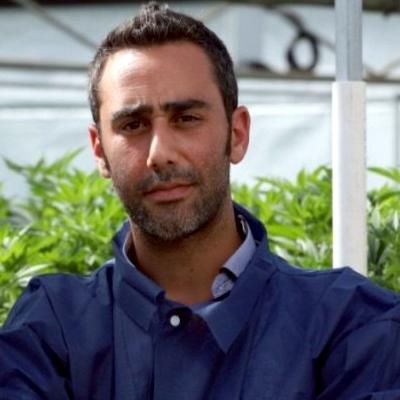
Tomer Oliel is an entrepreneur, investor, and advisor in the technology, agricultural, hospitality, and cannabis sectors. After helping to introduce agricultural technology and hydroponic retail stores in Israel, he relocated to the United States, where he co-founded and -owns farm-to-table restaurants in Nashville. He also leads business development for precision automation company Hefestus, where he builds strategic partnerships and works with operators and manufacturers to bring advanced automation into cannabis production.