Legalise Cannabis makes push for marijuana use in three Australian states
Members of Parliament (MPs) are launching a coordinated effort to legalize cannabis for personal use and reform outdated legislation that needlessly criminalizes individuals. The political party, Legalise Cannabis, plans to introduce a drug reform bill simultaneously in the state parliaments of Victoria, New South Wales, and Western Australia, where the party has representation in the […]
Among the key areas of dispute were the start date for adult-use sales, the proposed tax rate on marijuana and what agency would be responsible for regulating the market.
Following bicameral negotiations in a conference committee, lawmakers arrived at a consensus and released the final bill on Friday. Shortly thereafter, the Senate voted 21-18 to approve the deal. The House of Delegates is expected to vote to send it to Gov. Abigail Spanberger (D) by the scheduled end of the session on Saturday.
“This conference report reflects months of collaboration and negotiation among legislators, regulators, industry representatives, advocates and public safety stakeholders,” Sen. Lashrecse Aird (D), the bill’s Senate sponsor, said on the floor. “Many parties did not get everything they asked for, but everyone got what they needed to legally and safely operate a marketplace. This is the hallmark of a good compromise, and this legislation represents a balanced path forward to responsibly regulate Virginia’s cannabis market.”
Under the new agreement, members landed on January 1, 2027 for the launch date of adult-use marijuana sales, as included in the Senate bill. The House had previously proposed starting sales on November 1, 2026.
Cannabis would be subject to an excise tax of 6 percent as well as a 5.3 percent retail sales and use tax, while allowing municipalities to set a local tax of up to 3.5 percent, which is what the House had passed as compared to a higher overall rate proposed by the Senate.
With respect to regulatory control, the existing Cannabis Control Authority (CCA) would be tasked with overseeing the program, facilitating licensing and more. The Senate had suggested merging CCA with the Alcoholic Beverage Control Authority into a new agency called the Alcoholic Beverage and Cannabis Control Authority (ABC), but the bicameral agreement simply mandates a study into the idea of giving ABC a role in marijuana regulation.
One new item in the final agreement that wasn’t contemplated in either the House or Senate legislation concerns hemp, with lawmakers agreeing to have authority for its regulation transferred to CCA from the Department of Agriculture and Consumer Services.
Both chambers’ original marijuana sales proposals, sponsored by Aird and Del. Paul Krizek (D), aimed to give adults a legal means of buying cannabis, the possession and home cultivation of which was legalized in the state in 2021.
Here are the key details of the Virginia marijuana sales legalization legislation, SB 542 and HB 642:
Adults would be able to purchase up to 2.5 ounces of marijuana in a single transaction, or up to an equivalent amount of other cannabis products as determined by regulators.
Legal sales could begin on January 1, 2027.
There would be an excise tax of 6 percent on cannabis sales as well as a 5.3 percent retail sales and use tax, and municipalities could set an additional local tax of up to 3.5 percent.
The Virginia Cannabis Control Authority would oversee licensing and regulation of the new industry, and would also take on oversight of hemp, which is currently under the Department of Agriculture and Consumer Services.
Revenue would be distributed to the Cannabis Equity Reinvestment Fund (30 percent), early childhood education (40 percent), the Department of Behavioral & Developmental Health Services (25 percent) and public health initiatives (5 percent).
Local governments could not opt out of allowing marijuana businesses to operate in their area.
Delivery services would be allowed.
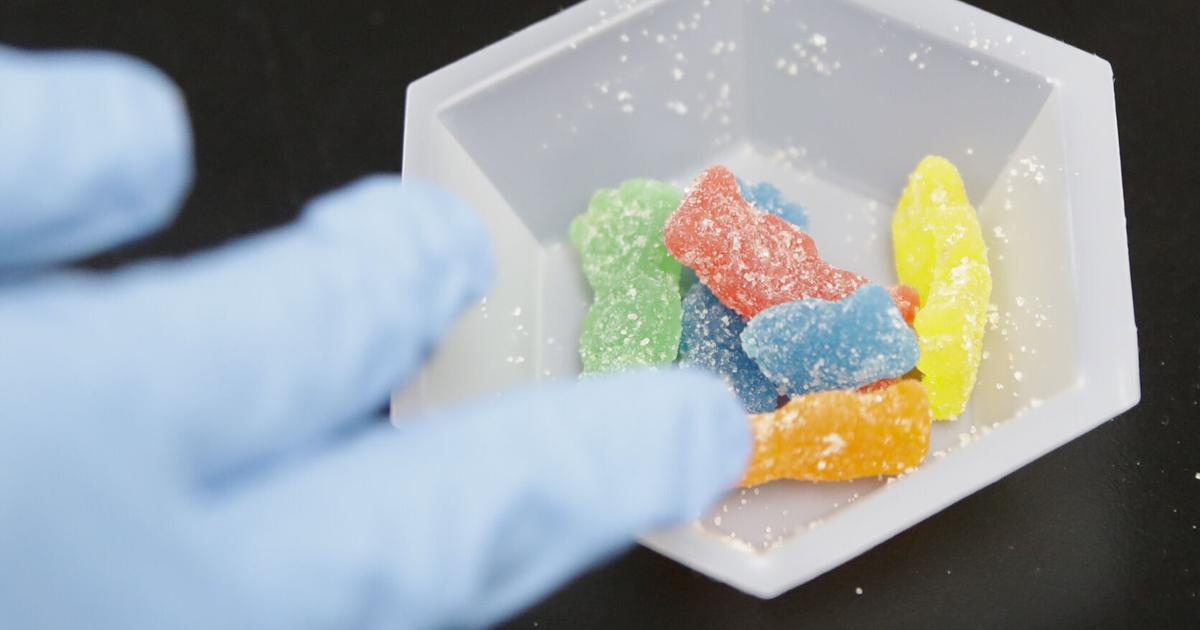
Serving sizes would be capped at 10 milligrams THC, with no more than 100 mg THC per package.
Existing medical cannabis operators could enter the adult-use market if they pay a licensing conversion fee that is set at $10 million.
Cannabis businesses would have to establish labor peace agreements with workers.
A legislative commission would be directed to study adding on-site consumption licenses and microbusiness cannabis event permits that would allow licensees to conduct sales at venues like farmers markets or pop-up locations. It would also investigate the possibility of the Virginia Alcoholic Beverage Control Authority becoming involved in marijuana regulations and enforcement.
Prior to the Senate’s passage of its version of the marijuana sales bill, members clashed in committee about amendments that would have added new penalties for illegal cannabis activity.
The proposed changes at issue from the Courts of Justice Committee included penalties for consumers who buy from unlicensed sources, the recriminalization of cannabis possession by people under 21 and making sales a class 1 misdemeanor for a first offense and a crime punishable by mandatory jail time for a second offense. As revised, the bill would have also raised the penalty for unlicensed cultivation to a felony punishable by up to five years in jail and made it a felony to transport with intent to distribute cannabis across state lines.
But the Finance and Appropriations Committee reversed the amendments last month amid pressure from a coalition of advocacy groups that sent a letter to senators saying they undermined the “intent” of the legislation and the “will of the people” by adding criminal penalties for certain cannabis-related activity.
Since legalizing cannabis possession and home cultivation in 2021, Virginia lawmakers have worked to establish a commercial marijuana market—only to have those efforts consistently stalled under former Gov. Glenn Youngkin (R), who twice vetoed measures to enact it that were sent to his desk by the legislature.
Growing to Wash: Why “Washers” Are Changing Cannabis
When I first started writing this, I thought it would be a quick explainer of what people mean when they say they’re “growing to wash.” The more time I spent talking to hashmakers and growers who live in the ice water world, the more I realized this isn’t just a technique. It’s a different mindset.
Growing to wash isn’t about fat colas, perfect bag appeal, or that one photo that makes a strain go viral. It’s about resin behavior. It’s about how trichome heads detach in cold water, how they hold up during agitation, and where they land when you filter them.
That shift changes everything upstream, including how genetics are selected, how plants are grown, and what people even mean when they say a cultivar is “good.”
What “Growing to Wash” Actually Means
Growing to wash means cultivating cannabis specifically for ice water hash, not for smoking flower. In this lane, growers are looking for what hashmakers often call a “washer,” a plant that reliably releases a higher percentage of intact trichome heads during extraction.
A few hashmakers told me that when they find a true washer, returns can jump dramatically compared to an average plant. You’ll hear numbers like “two to three times” thrown around in conversation. That can be real in the right conditions, but it’s not a promise and it’s not universal. Genetics, cultivation, harvest timing, and handling all matter.
How Hashmakers Judge a Plant
One misconception I heard early on is that great flower automatically makes great hash. The hashmakers I spoke with told me that’s often not true.
A cultivar can smoke beautifully and still wash poorly. The opposite can happen, too. You can have a plant that looks average in flower form, but once it hits the wash, it turns into something special.
In their workflows, the focus is on how resin behaves in water. Things like trichome head size, how easily the heads separate from the stalk, and how clean the resin looks and feels once collected.
Micron preferences vary, but many hashmakers prioritize a middle range for higher-quality product. You’ll often hear people talk about the “sweet spot” being around 45u to 159u, give or take, depending on the producer and the end goal. Some makers keep more. Some keep less. Some blend. Some don’t. That’s part of the craft.
For deeper context on filtration, microns, and the history side of hash, The Hash Museum is a good educational hub.
Returns: Real Talk, Not Promises
Return percentages are one of the most talked-about metrics in hash culture. They are also one of the easiest things to misunderstand.
When someone says a cultivar “returns 4%,” they’re usually talking about how much hash they collected compared to the starting weight of their fresh frozen material, often across multiple washes. But those numbers only mean something inside context.
Different rooms. Different water. Different agitation style. Different harvest window. Different processing skill. Even different batches of the same cultivar can behave differently.
So when you see a number, treat it like a real-world data point from that person’s setup, not a guarantee for everyone.
Why This Is Becoming a Genetics Story
What growing to wash really exposes is how flower-centric breeding has been for a long time. Cannabis genetics were selected for bag appeal, yield, structure, and smokeability. Hash performance was often secondary.
A few breeders and hashmakers told me something that stuck: a lot of modern hash genetics might not have impressed traditional flower buyers ten or fifteen years ago. And plenty of classic flower favorites do not wash well at all.
Growing to wash forces the question: what does “quality” mean, and who gets to define it?
Culture to Craft
None of this is about disrespecting flower culture. Flower built this world.
But hashmaking is its own discipline, with its own standards. Growing to wash pushes that discipline to the front. It rewards certain traits, punishes others, and creates a whole new kind of selection pressure.
As markets mature, I think we’ll see more specialization, not less. Genetics bred for washing. Genetics bred for smoking. Genetics bred for a specific kind of resin expression.
Growing to wash doesn’t replace flower culture. It just reminds us cannabis is more than one thing.
This article is from an external, unpaid contributor. It does not represent High Times’ reporting and has not been edited for content or accuracy.
Alabama: Commissioner Says Patients Can Likely Begin Accessing Medical Cannabis Products Next Month
“For nearly five years, Alabama patients and their providers have lacked the ability to locally access medically necessary state-approved cannabis products from state-licensed dispensaries. Going forward, let’s hope lawmakers and regulators finally begin putting patients’ needs first.”
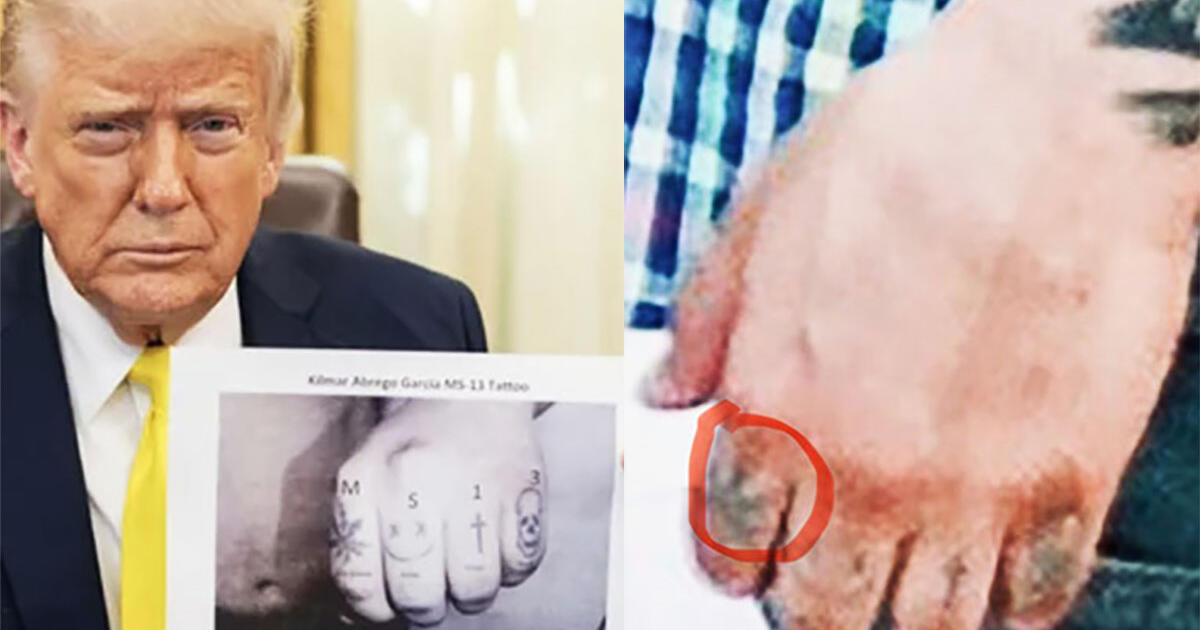
Kilmar Abrego Garcia, currently jailed in El Salvador, allegedly has MS-13 tattooed on the knuckles of his left hand. It starts with a marijuana leaf for M and follows with a smiley face for S, a cross for 1 and a skull for 3. Garcia has been incarcerated since March.
The deal, announced in February, marks the largest bet on Europe’s largest medical cannabis market by a North American operator to date, and signals a bullish outlook on the European opportunity more widely.
While perhaps the most significant, certainly from the European perspective, it is by no means the only major M&A deal to have been announced over the last few months.
Just this week, German pharmaceutical cannabis company Canify AG and African medical cannabis cultivator MG Health Limited announced plans to merge. Canify’s announcement came just days after Tilray announced its $40m acquisition of craft beer giant Brewdog.
These examples are just the tip of the iceberg. Since September 2025, over a dozen further significant M&A deals have been announced across the globe.
September 2025 – High Tide / Remexian Pharma€27.2m for 51% stake (implying ~€53m full equity value) Your own reporting
October 14, 2025 – Vireo / Schwazze convertible notes $62m for notes with ~$91m face value (30% discount to par); Vireo to acquire majority of Schwazze’s 63 dispensaries and 10 manufacturing facilities in Colorado and New Mexico
December 9, 2025 – Cronos / CanAdelaar US$67m upfront plus EBITDA-based earnout
With this in mind, it seems hard to argue that the long-touted ‘tidal wave’ of cannabis M&A deals is not now upon us.
But, as Mitchell Osak, strategist, consultant, and author of the Cannabis Management Review, argues, with thousands of companies operating across a fragmented global cannabis industry, ‘inevitably some M&A is happening’.
In his view, for this to represent a genuine wave, ‘lots of big, strategic deals that meaningfully influence sector revenue, market structures and the participant business performance’, must take place.
Writing in a lengthy analysis circulated privately earlier this year, seen by Business of Cannabis, Osak argues that the industry is not yet financially or structurally healthy enough for that bar to be met. Balance sheets are too stretched, Schedule III too widely misunderstood, and the macro environment too precarious for anything resembling a tidal wave in 2026.
Yet not everyone agrees with that assessment. Veteran cannabis investor Seth Yakatan argues that the industry may already be in the early stages of a consolidation cycle. The mistake, he suggests, is expecting the next wave of cannabis M&A to resemble the headline-driven mergers that have defined other industries.
Click through to page 2 to read Mitchell Osak’s arguments in detail.
What are the New Rules of Minnesota’s Legalization?
Minnesota, known as the Land of 10,000 Lakes, has become the 23rd U.S. state to officially legalize the recreational use of cannabis for adults. As of Tuesday, Aug. 1, residents of Minnesota are now permitted to possess and cultivate marijuana for personal recreational purposes, albeit within certain restrictions to ensure a controlled implementation while the […]





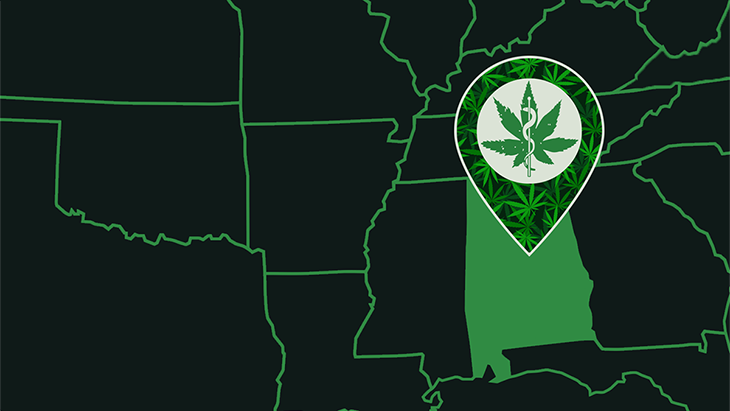

 “For nearly five years, Alabama patients and their providers have lacked the ability to locally access medically necessary state-approved cannabis products from state-licensed dispensaries. Going forward, let’s hope lawmakers and regulators finally begin putting patients’ needs first.”