
Amy Winehouse’s vexing rise and fall is the subject of Sam Taylor Johnson’s “Back to Black” biopic, now in theaters.
Source link
Cannabis info and related links and post from around the web

Amy Winehouse’s vexing rise and fall is the subject of Sam Taylor Johnson’s “Back to Black” biopic, now in theaters.
Source link

Lychee Runtz buds are total eye candy, usually growing dense and caked in a thick layer of sticky resin that shows just how strong they are. From its Wedding Cake side, the flowers inherit the heavy, frosted look that commercial growers and hobbyists both love. The scent is where the Durban Poison influence really hits. You will notice a pungent, piney, and chemical kick right away, which is quickly balanced by sweet, berry-like undertones. It is a bold, layered profile that starts spicy and finishes with a smooth, fruity sweetness.
The effects of Lychee Runtz offer a balanced experience that works for almost any time of day. It kicks off with a head rush that sharpens focus and sparks a wave of creativity, making it a great choice for social settings or artistic projects. As the high settles, a soothing body sensation takes over, easing muscle tension without leaving you stuck on the couch. This mix of mental energy and physical calm makes it a favorite for those who need to manage stress or fatigue while staying productive.
The post Lychee Runtz Strain Feminized Seeds appeared first on Crop King Seeds.


Modern discovery systems no longer function as neutral ranking engines. Increasingly, search platforms and AI-driven systems act as selection mechanisms, determining which sources are safest to reference, most credible to summarize, and least likely to introduce risk. In regulated industries such as cannabis, this selection pressure is significantly higher.
Search visibility has moved beyond link position and keyword alignment. AI-generated answers, featured summaries, and contextual recommendations collapse multiple signals into a short list of approved sources. This behavior is well established in other trust-sensitive categories.
In health and wellness, platforms routinely reference organizations such as Mayo Clinic and Cleveland Clinic. These institutions are selected not because they publish aggressively, but because their authority has been reinforced over time through peer recognition, editorial citation, and institutional trust.
In news and policy contexts, publications such as The New York Times and Reuters are disproportionately surfaced in AI summaries and search features because their editorial standards reduce credibility risk. The same discovery logic applies to cannabis marketing, even if the category itself is newer.
Regulated industries introduce asymmetric risk for discovery platforms. When legality, health, or compliance are involved, the cost of surfacing unreliable information increases sharply. As a result, authority signals are weighted more heavily.
In enterprise strategy and governance discussions, firms such as McKinsey & Company and Deloitte frequently are cited by AI systems because their insights are consistently validated through third-party coverage, institutional adoption, and long-term relevance.
These organizations are not selected because they advertise. They are selected because their authority reduces interpretive and reputational risk for the platform. Cannabis operates under similar constraints. Discovery systems default toward sources that demonstrate subject-matter expertise, contextual understanding, and editorial discipline.
Senior marketing teams already understand the importance of owned media. Brand-controlled content ecosystems are essential for narrative consistency, conversion, and audience engagement. However, discovery systems do not treat self-published credibility and third-party authority as equivalent.
Consider B2B technology. Platforms such as Salesforce maintain extensive owned content libraries. Yet when AI systems summarize trends in CRM, automation, or customer data strategy, they often draw from third-party analysis published by trusted industry outlets or research firms.
Context matters as much as content. When a brand appears within a respected editorial environment, it benefits from validation that owned channels cannot replicate on their own. Discovery systems evaluate not just the message, but the credibility of the surrounding environment.
Authority signals do not operate independently. They reinforce one another over time. Editorial placement within trusted platforms strengthens brand-category association, improving semantic relevance and increasing the likelihood of inclusion in AI-generated summaries and search features. Each inclusion reinforces subsequent selection, creating visibility that persists beyond individual campaigns. For senior marketing leaders, the implications are strategic:
This is why authority-driven strategies often deliver disproportionate returns over time, even when they appear less immediately measurable.
As discovery systems continue to evolve, authority signals increasingly determine which brands are surfaced, cited, and trusted. For cannabis brands, this means:
Brands that understand how authority signals function can design marketing strategies that remain resilient as platforms, algorithms, and regulations continue to change. If building durable visibility and long-term credibility is a priority, authority is no longer a supporting consideration. It is a foundational component of modern cannabis marketing.
Learn more
about how mg Magazine is helping leading brands turn visibility into long-term value.
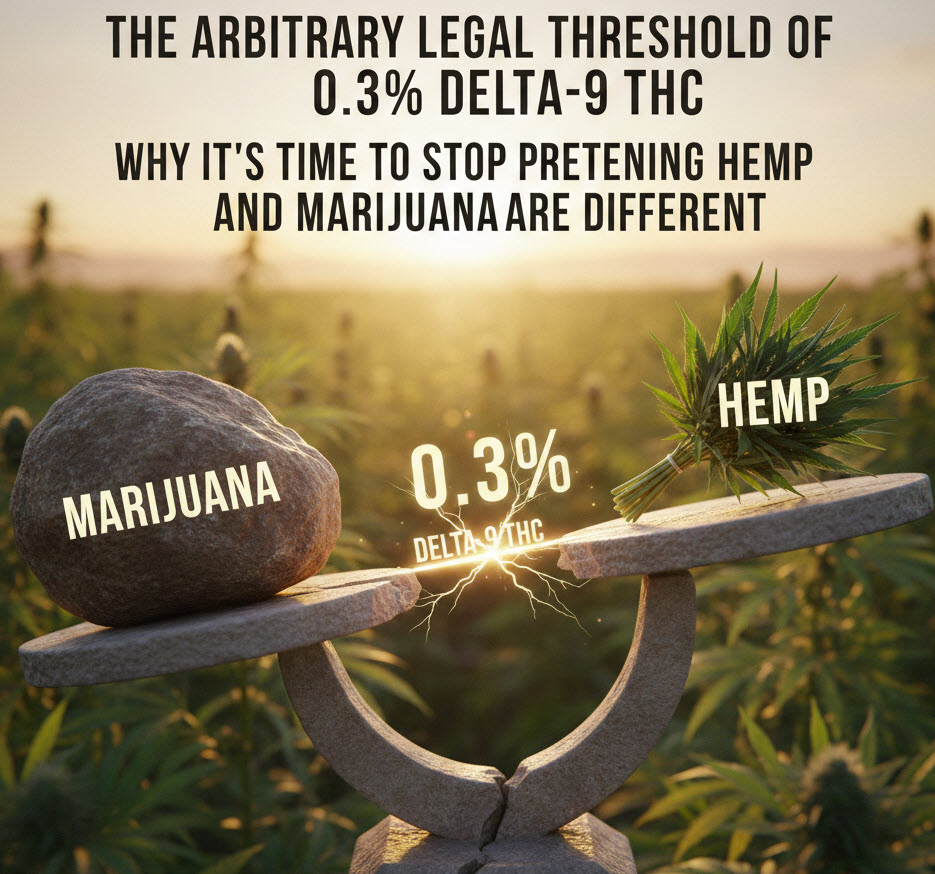

Hemp and marijuana are the same plant. Scientifically, legally, botanically—it’s all Cannabis sativa L. The only difference is an arbitrary legal threshold of 0.3% delta-9 THC content. Below that line? Legal hemp. Above it? Schedule I controlled substance, sitting right next to heroin.

Ketamine has come a long way from general anesthetic to club drug to therapeutic psychedelic. But in the troubling case of Elijah McClain it was used improperly by paramedics, which led to his death in 2019. The offending medic has received a five-year sentence for criminally negligent homicide.
Source link
On this episode of the Cannacurio podcast, host Ed Keating sits down with Chris Violas, CEO and founder of BLAZE. Chris shares his journey into the cannabis industry, dating back to 2010 when he co-founded his first dispensary with his father during California’s Prop 215 days. Drawing from his firsthand experience, Chris discusses how his time as a cannabis operator inspired him to create BLAZE®, a company dedicated to improving operational efficiency for cannabis businesses. © CNB Media LLC dba Cannabiz Media
Source link

The post A Cannabis Guide To All 50 States appeared first on AZ Marijuana.
HBO’s “A Knight of the Seven Kingdoms” has wrapped, but what’s next for the spinoff? Here’s the latest on Season 2, including its renewal status, release date and more.
Source link



The post 40% Off EVERYTHING + Bonus BOGO Rewards! appeared first on AZ Marijuana.

The head grower at a 100,000-square-foot facility was getting hammered over flat yields.
Investors wanted “efficiency,” the CEO wanted a silver bullet, and everyone wanted a clean story to explain why the numbers would magically go up next quarter.
Under that pressure, leadership did what struggling operations often do: they switched nutrients and bought a new fertigation system.
Recirc pumps, dosing equipment, touchscreens, the works. It looked like progress, it photographed well, and it sounded like the kind of fix executives love to talk about on calls.
Six figures later, the irrigation room was a showroom. Pallets of the old fertilizer were shoved into a corner while the new system rhythmically clicked along.
On paper, they had “addressed” the yield problem. But in the grow rooms, nothing had changed.
I’ve watched this same decision pattern repeat inside enough commercial grow operations to know that equipment rarely fixes what execution broke.
Six months in, yields hadn’t budged, and production costs had actually increased. The culprit wasn’t nutrients. It was neglect.
Stock plants were old and tired. Moms that should have been replaced at four months were still in service at 18, some pushing two years. Their woody branches and crispy fan leaves towered over the staff. The propagation crew called them “grandmas,” a joke that stopped being funny when cloning success only hit 40%.
When the cuttings didn’t root, the scramble began.
Immature plants got pushed into veg, or overages from previous lots were dragged forward to plug gaps. By the time the room flipped, plant height and structure were all over the place. Irrigation became a guessing game as workers struggled to avoid overwatering or underwatering the wildly uneven crop.
Drip lines weren’t flushed or maintained between runs, so salt buildup clogged the emitters, leaving some plants bone-dry while the rest looked fine. The only way to find the victims was to wait until they visibly wilted, then rush in and water by hand.
Stressed plants did what stressed cannabis plants do: they hermied and seeded their neighbors. Yields barely met minimum per-square-foot targets, while production costs matched those of a well-run facility twice its size.
By the time leadership realized the return on their shiny new installation was a financial rounding error, the money was already gone.
The problem was never the crop. It was the discipline. And there wasn’t any.
Everyone involved believed the new system was the solution. Ripping out old equipment, installing high-tech gear, and stacking pallets of fresh fertilizer with loud labels is the kind of story executives are eager to tell. You can point at it. You can show it to investors. You can stand in front of it for photos and talk about progress.
A neglected mother room doesn’t give you that. Neither does a boring three-ring binder full of maintenance schedules and sanitation SOPs.
Visible problems tend to get visible solutions. A fertigation system that looks dated is easy to replace. You can assign a budget, a vendor, and a project plan. It’s easy to list features and mistake complexity for sophistication.
But try telling your board that yields are down because your stock plants look like yard waste and no one is following a cloning playbook. Those sound like excuses, while shiny hardware sounds like action.
Here’s the uncomfortable truth: this facility didn’t have a yield problem. They had an executive attention problem. Leadership kept cutting checks for equipment because it is easier to buy equipment than to enforce standards. Discipline only holds when leaders set expectations, back the grow team, and step in when standards slip.
The new system didn’t just fail to fix the issue; it made it worse. The head grower spent hours mastering touchscreen menus instead of regenerating mother plants, codifying propagation protocols, or ensuring preventive maintenance. Whatever consistency remained quickly evaporated.
In my 25 years across ornamental, vegetable, and cannabis production, the most reliable operators I’ve worked with abandoned clever fixes long ago and built their success on boring, repeatable execution.
Greenhouse vegetable growers figured this out a long time ago. There was never a hype cycle in tomatoes. Margins are thin, and nobody is wiring six figures to rescue an operation that can’t hit its numbers.
Walk into a serious commercial greenhouse, and you won’t find heroics; you’ll find discipline. Weekly crop measurements. Bi-weekly sap tests. Monthly maintenance logs that are signed and double-checked.
Cannabis had the opposite problem. For years, fat margins let operators get away with chaos. Yield problems got “solved” with new equipment rather than enforcement and accountability.
That era is over.

Survival won’t come from the next piece of hardware or the latest nutrient recipe. It will come from the tedious work nobody posts on Instagram: clear standards for mother plants, propagation KPIs that trigger action, and SOPs that are actually followed.
That kind of discipline is ultimately what will determine which facilities last. Not budget, but execution that looks the same on Tuesday as it does on Sunday, where mothers never become “grandmas,” and the process does its work.
The people best positioned to fix these problems usually aren’t the ones approving budgets from a distance. They’re the ones who’ve lived inside enough operations to recognize when execution has quietly become the constraint.
Before you buy another upgrade, ask what you’re really fixing: yield, or execution?
Photos courtesy of CRYSTALWEED cannabis.
This article is from an external, unpaid contributor. It does not represent High Times’ reporting and has not been edited for content or accuracy.
<p>The post Why More Equipment Won’t Fix Your Yield Problem first appeared on High Times.</p>