

Beshear Calls For More Cannabis Access
February 5, 2026
Published by toker
Cannabis info and related links and post from around the web

Pro Football Hall of Famer Champ Bailey has quietly been on the payroll of Florida-based cannabis company Trulieve since 2020. The cornerback smoked cannabis during his All-Pro years with Washington and Denver.
Source link
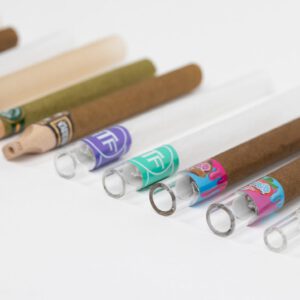
We all love a pre-roll, right? Fast, easy, convenient; what’s not to like? The only thing better than picking up a quality pre-roll at the dispensary is packing up the perfect pre-roll at home. You get the flower you want (give me the indica hybrid, please), the paper type you want (I’ll take the hemp […]
Source link


Disposable vape carts attract steady interest due to simple operation, compact size, and quick setup. Bulk buying can offer clear value for shops or groups that want predictable stock. Careful attention to quality, supplier habits, and safety standards helps buyers move through the process with confidence. Large orders require a thoughtful approach because cart performance […]
The post What Buyers Should Know Before Purchasing Disposable Vape Carts in Bulk appeared first on Stoner | Pictures | Stoners Clothing | Blog | StonerDays.
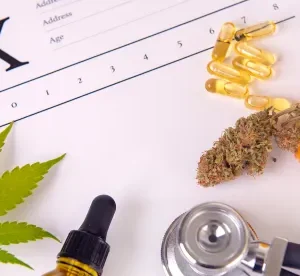


The post NEW Sluggers mini-blunts have landed at Curaleaf appeared first on AZ Marijuana.
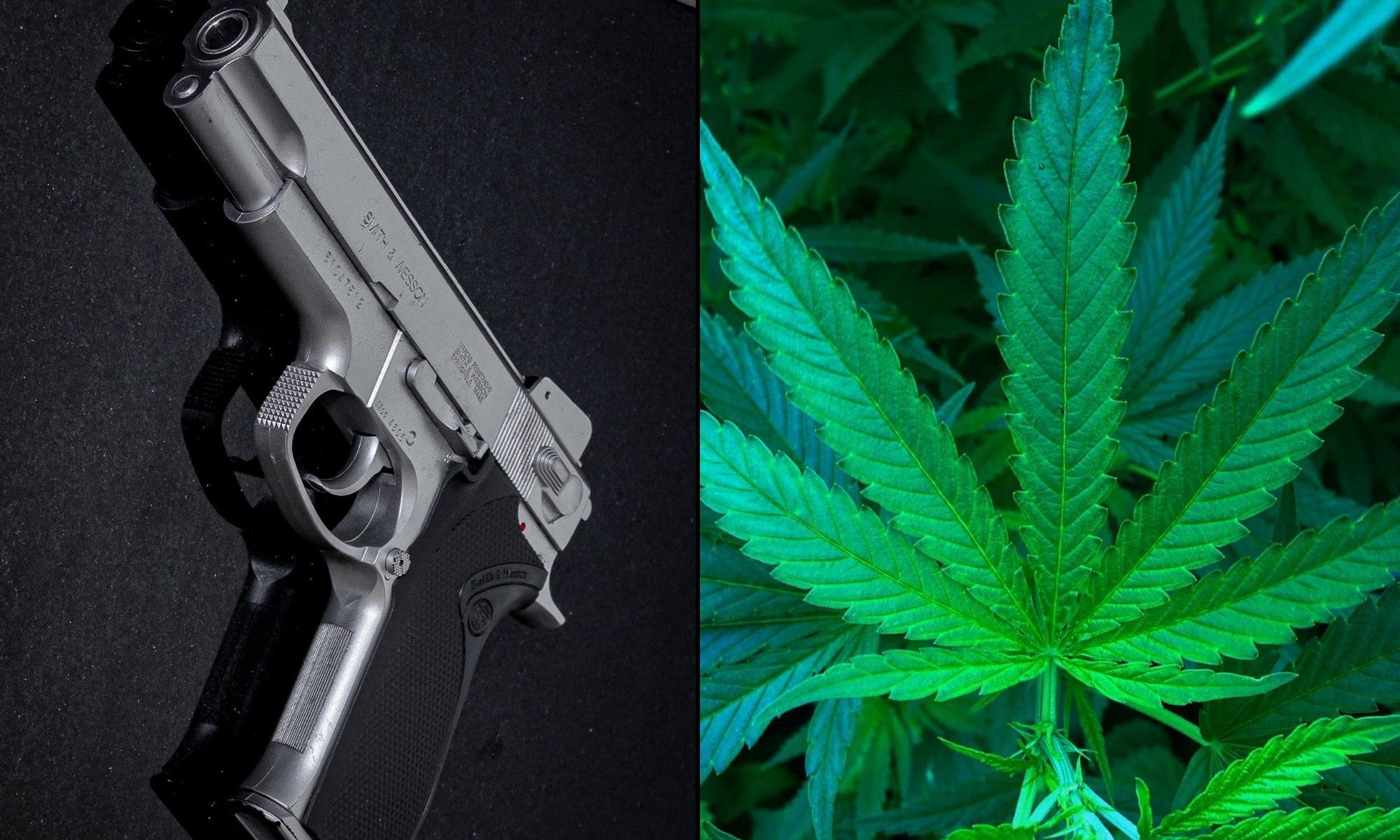
The governor of Colorado says his state should not have joined a lawsuit supporting the federal ban on gun ownership by people who use marijuana that’s now before the U.S. Supreme Court—and he personally opposes the state attorney general’s “legal position on this.”
It took some by surprise when Colorado’s top prosecutor, as well as the attorneys general of other states that have legalized cannabis, signed on to a December filing with the court backing the Trump administration Justice Department’s argument that current federal statute barring cannabis consumers from buying or possessing firearms is constitutional and warranted.
Colorado Gov. Jared Polis (D), a longtime advocate for marijuana reform as well as gun rights, posted on X on Monday that there’s “no reason that someone should be banned from exercising their Second Amendment right simply because they use marijuana, especially when that logic is not being applied in the same way to other substances such as alcohol.”
X added context to the post, pointing out that Polis’s comment contradicted his own state’s official position in the federal case, U.S. vs. Hemani, that could decide the fate of the statute known as 18 U.S.C. § 922(g)(3).
“Colorado has filed in opposition of any reform or relief. It is the official position of the Colorado executive to strip marijuana users of their 2A rights,” the added context states.
The governor on Thursday shared a screenshot of the updated post, expressing thanks for the clarification and adding that “Colorado should not have joined this lawsuit, and that’s why I am pushing back.”
“The reason my position is noteworthy is that I oppose Colorado’s legal position on this and filing,” he said. “I have repeatedly called for the rescheduling of marijuana and continue to urge the federal administration to stop dragging its feet, and I will always fight to ensure that responsible recreational or medicinal use of marijuana does not interfere with our Second Amendment rights.”
It’s unclear how Polis is “pushing back” against his state’s position supporting the constitutionality of the gun ban, beyond sharing his personal opposition to that stance on social media. But at this stage in the legal process, it’s also unclear what more he could do as a practical matter.
Meanwhile, the National Rifle Association (NRA)–arguably the most influential gun rights lobbying group in the U.S.—recently joined top drug policy reform organizations and other interests in urging the Supreme Court to declare the federal ban on gun ownership by marijuana consumers unconstitutional.
Central to the arguments from NRA and the drug policy organizations is that, based on separate Supreme Court precedent on gun restrictions, barring marijuana users from buying or possessing firearms lacks historical analogues consistent with the nation’s founding and is inconsistent with the increasing social acceptance of marijuana as states continue to legalize if for medical or recreational purposes.
Multiple amicus briefs were filed days after ACLU attorneys representing Hemani made the case that the federal ban on gun ownership by marijuana consumers is nonsensical and unconstitutional—and that it’s made all the more confounding by the fact that President Donald Trump directed the expeditious finalization of a rule to move cannabis from Schedule I to Schedule III of the Controlled Substances Act (CSA).
The Supreme Court is scheduled to hear oral arguments in the Hermani proceedings on March 2.
In December, Smart Approaches to Marijuana (SAM) and 21 other prohibitionist groups filed a brief urging justices to uphold the constitutionality of the federal gun ban for people who use cannabis—which they claim is associated with violence and psychosis.
U.S. Solicitor General D. John Sauer, for his part, told the Supreme Court that people who use illegal drugs “pose a greater danger” than those who drink alcohol.
—
Marijuana Moment is tracking hundreds of cannabis, psychedelics and drug policy bills in state legislatures and Congress this year. Patreon supporters pledging at least $25/month get access to our interactive maps, charts and hearing calendar so they don’t miss any developments.
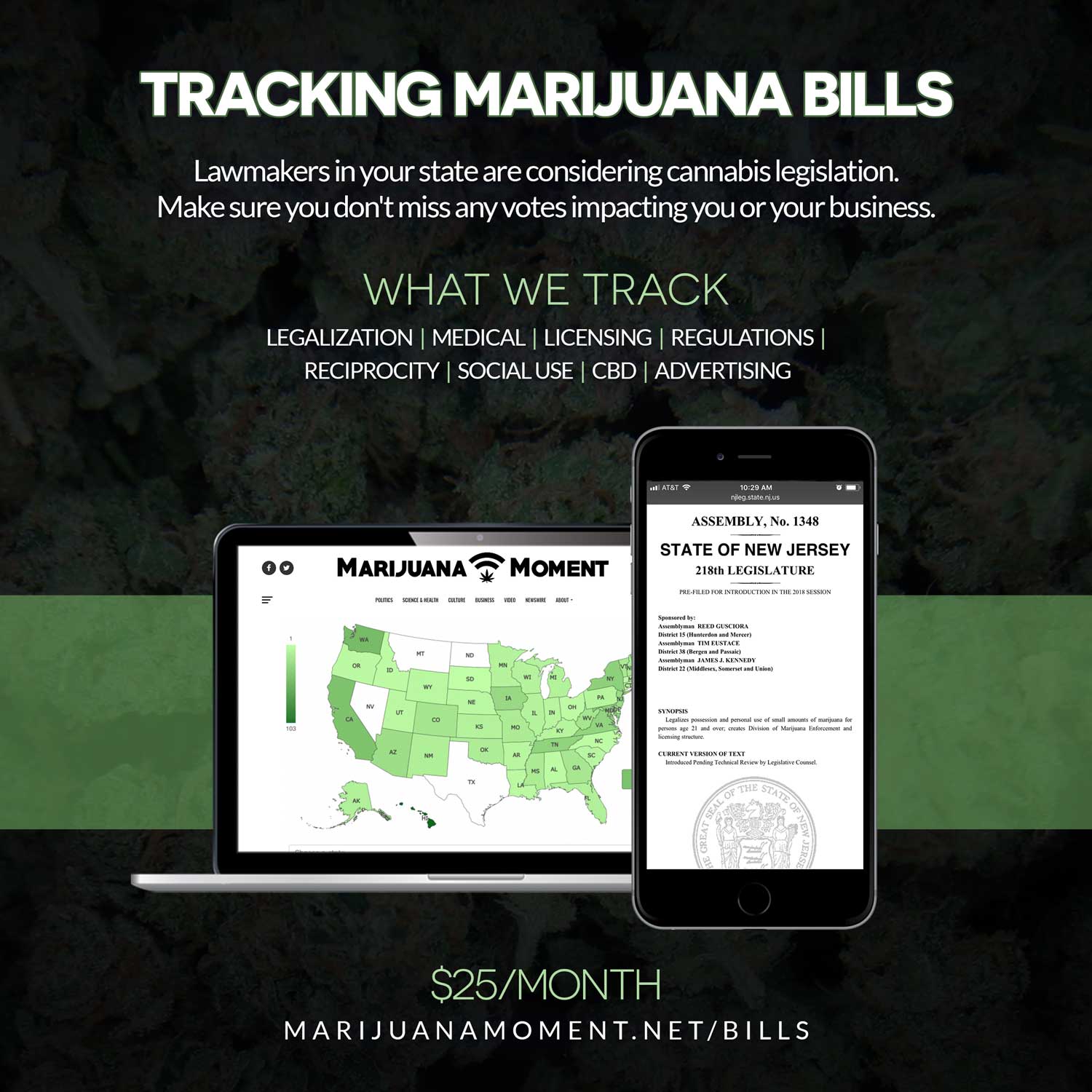
Learn more about our marijuana bill tracker and become a supporter on Patreon to get access.
—
Meanwhile, the Biden administration was evidently concerned about potential legal liability in federal cases for people convicted of violating gun laws simply by being a cannabis consumer who possessed a firearm, documents recently obtained by Marijuana Moment show.
The previously unpublished 2024 guidance from former President Joe Biden’s Justice Department generally cautioned U.S. attorneys to use discretion in prosecuting federal cannabis cases, particularly for offenses that qualified people for pardons during his term. But one section seems especially relevant as the Supreme Court takes on a case challenging the constitutionality of the current federal gun statute.
With respect to Hemani, in a separate August filing for the case, the Justice Department also emphasized that “the question presented is the subject of a multi-sided and growing circuit conflict.” In seeking the court’s grant of cert, the solicitor general also noted that the defendant is a joint American and Pakistani citizen with alleged ties to Iranian entities hostile to the U.S., putting him the FBI’s radar.
If justices declare 922(g)(3) constitutional, such a ruling could could mean government wins in the remaining cases. The high court recently denied a petition for cert in U.S. v. Cooper, while leaving pending decisions on U.S. v. Daniels and U.S. v. Sam.
The court also recently denied a petition for cert in another gun and marijuana case, U.S. v. Baxter, but that wasn’t especially surprising as both DOJ and the defendants advised against further pursing the matter after a lower court reinstated his conviction for being an unlawful user of a controlled substance in possession of a firearm.
Meanwhile, in recent interviews with Marijuana Moment, several Republican senators shared their views on the federal ban on gun possession by people who use marijuana—with one saying that if alcohol drinkers can lawfully buy and use firearms, the same standard should apply to cannabis consumers.
Separately, the U.S. Court of Appeals for the Tenth Circuit last year sided with a federal district court that dismissed an indictment against Jared Michael Harrison, who was charged in Oklahoma in 2022 after police discovered cannabis and a handgun in his vehicle during a traffic stop.
The case has now been remanded to that lower court, which determined that the current statute banning “unlawful” users of marijuana from possessing firearms violates the Second Amendment of the Constitution.
The lower court largely based his initial decision on an interpretation of a Supreme Court ruling in which the justices generally created a higher standard for policies that seek to impose restrictions on gun rights.
In the U.S. Court of Appeals for the Eleventh District, judges recently ruled in favor of medical cannabis patients who want to exercise their Second Amendment rights to possess firearms.
As a recent report from the Congressional Research Service (CRS) explained the current legal landscape, a growing number of federal courts are now “finding constitutional problems in the application of at least some parts” of the firearms prohibition.
In another ruling, a three-judge panel for the U.S. Court of Appeals for the Eighth Circuit vacated a defendant’s conviction and remanded the case back to a district court, noting that a retrial before a jury may be necessary to determine whether cannabis in fact caused the defendant to be dangerous or pose a credible threat to others.
The Third Circuit separately said in a published opinion that district courts must make “individualized judgments” to determine whether 922(g)(3) is constitutional as applied to particular defendants.
A federal court in October agreed to delay proceedings in a years-long Florida-based case challenging the constitutionality of the ban on gun ownership by people who use medical marijuana, with the Justice Department arguing that the Supreme Court’s recent decision to take up Hemani warrants a stay in the lower court.
In the background, the Bureau of Alcohol, Tobacco, Firearms, and Explosives (ATF) recently moved to loosen rules that bar people who consume marijuana and other illegal drugs from being able to lawfully purchase and possess guns by making it so fewer people would be affected.
The interim final rule from ATF seeks to update the definition of “unlawful user of or addicted to any controlled substance” under an existing policy that has been interpreted to deny Second Amendment rights to people who have used illegal substances a single time within the past year.
Back in Colorado, meanwhile, activists also attempted to qualify an initiative for November’s ballot that would have protected the Second Amendment rights of marijuana consumers in that state—but the campaign’s signature-gathering drive ultimately fell short.
The post Colorado Governor Is ‘Pushing Back’ Against His Own State’s Position Supporting Federal Gun Ban For Marijuana Consumers appeared first on Marijuana Moment.

What if the solution to sanitation came not from chemicals or plumbing—but from fungi? Researchers at the University of British Columbia (UBC) have unveiled the MycoToilet, the first waterless, mushroom powered toilet that uses mycelium – the underground network of fungi – to break down human waste, neutralize odors, and produce compost.
In a world where more than half the population lacks safe sanitation, the MycoToilet offers a radical alternative. It’s simple, elegant, and alive. Unlike conventional systems that consume water and energy, this one transforms waste into usable soil nutrients—while leaving behind almost no smell.
Now being piloted at the UBC Botanical Garden, this experimental toilet could signal a new era for eco-sanitation and circular design.
At first glance, the MycoToilet looks like a minimalist wooden outhouse. But beneath its cedar walls lies a living machine.
The system separates liquids and solids. The solids enter a compartment lined with mycelium, a dense web of fungal roots. Mycelium is nature’s decomposer—it digests organic material while filtering harmful microbes and neutralizing odors.
As waste enters the chamber, the fungi’s enzymes begin breaking down cellulose, fats, and proteins. The structure allows airflow, enabling aerobic decomposition (which avoids methane buildup). Sensors track moisture and temperature to maintain the right conditions.
Unlike typical composting toilets, this design is odor-free. Mycelium binds odor compounds like ammonia and hydrogen sulfide, eliminating more than 90% of the smell.
It’s a closed-loop system: solids become compost, liquids are filtered into nutrient-rich water suitable for irrigation or fertilizer.
Each unit can produce roughly 159 gallons of compost and 528 gallons of liquid fertilizer a year.

Mycelium isn’t just a decomposer—it’s a biological engineer. It forms vast underground networks that recycle organic matter and even communicate chemical signals between plants.
Scientists have already used fungi to make building materials, leather substitutes, and biodegradable packaging. The MycoToilet applies that same circular principle to human waste.
“Fungi are masters of transformation,” said Dr. Claire Hughes, a sustainability engineer at UBC. “We realized they could handle the dirtiest job on Earth—with elegance.”
Mycelium’s ability to capture and digest waste without producing toxic residues could make it a cornerstone of next-generation sanitation. It’s alive, regenerative, and endlessly renewable.
Environmental and Social Benefits
Traditional toilets rely on vast infrastructure: pipes, water, treatment plants. In developing regions—or remote areas—that infrastructure simply doesn’t exist.
The MycoToilet needs none of it. It can operate off-grid, with only a small solar-powered fan and periodic maintenance. That makes it ideal for rural communities, parks, refugee camps, and festivals.
It also dramatically reduces water consumption. A typical flush uses six liters of drinking water; the MycoToilet uses zero.
In global terms, if even 1% of the world’s population switched to waterless toilets, billions of liters of clean water could be saved daily.
It’s not just environmental—it’s philosophical. It reframes waste as a resource, not a problem.
Challenges Ahead
While the technology works, the biggest barrier may be psychological. Most people aren’t ready to trust fungi with their bathroom duties. Cultural norms, sanitation laws, and public health codes will need to evolve.
Regulators must ensure that composted waste is pathogen-free and safe for use in agriculture. There’s also the challenge of cost: early prototypes are expensive, though prices should drop with scaling.
But every major innovation in sanitation—from indoor plumbing to dry toilets—started as a radical idea. The MycoToilet may be next in line.
The MycoToilet represents more than a clever invention—it’s a quiet revolution in how we see biology. Instead of fighting nature, it partners with it. Instead of using chemicals to mask waste, it invites fungi to transform it.
At a time when the planet struggles with pollution and resource scarcity, a living, breathing mushroom powered toilet might be one of the most hopeful ideas yet. Because in nature, there is no “waste.” Only transformation.
Source: UBC news
The post The World’s First Mushroom Powered Toilet Turns Waste into Renewal first appeared on Cannadelics.