

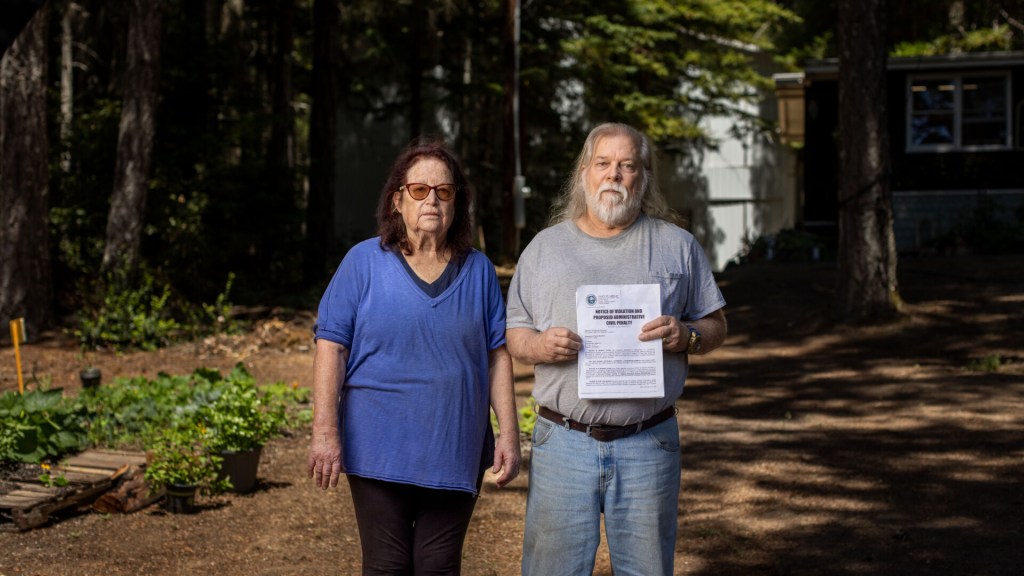
A group of Humboldt County property owners are taking claims against the county to the U.S. Supreme Court, according to a press release issued by the Institute for Justice this week.
The case, should petition be entertained by the Supreme Court, will be argued by the IJ on behalf of Corrine and Doug Thomas, Blu Graham, Rhonda Olson and Cyro Glad — landowners who say the county levied millions of dollars in cannabis abatement fines and fees on them, despite not owning or operating growing operations, in violation of their Constitutional rights.
At the heart of the IJ’s Supreme Court petition is the notion that the Seventh Amendment of the U.S. Constitution — which guarantees the right to a jury trial in common law cases involving in excess of $20 — applies to state and local governments and agencies as well as federal ones.
In the absence of a jury trial, the IJ says, “local officials imposed life-altering penalties on property owners without having to prove the government’s case.”
Jared McClain, IJ’s lead attorney, told the Times-Standard that the five plaintiffs in the case have been in a state of limbo, unable to sell or develop their property as they wait to see what will happen with millions of dollars in fines imposed by the county.
“We are challenging (Humboldt County’s) code enforcement system because they issue millions of dollars in fines to people without any regard for probable cause,” McClain said. “They’re using code enforcement to make sure that people are entering their cannabis permitting regime and using these millions of dollars in fines as a stick to require that, but then, since it’s a dragnet enforcement system, they’re catching up all sorts of people in that.
“And when they don’t have any probable cause to believe that anyone was growing cannabis, they just never provide them a hearing. We have clients who have been waiting five, six years for a hearing, and the whole time they have millions in fines hanging over their heads. They can’t develop their property. They can’t sell their property. And it’s all to create this pressure to settle.”
McClain said that a jury trial to decide the facts of the case should be ensured by the Constitution; instead, he said, Humboldt County’s current system involves adjudicating claims in front of a court-appointed lawyer or a “hearing officer” contracted by the county. He claims that those lawyers are expressly presented as members of the county government who will force complainants to pay the maximum amount of fines in an effort to coax a settlement agreement.
“This case is not just about excessive fines — it’s about government accountability,” said McClain, in the institute’s press release. “Until the Supreme Court decides that the Seventh Amendment applies to the states, local governments will continue to destroy people’s rights outside of a jury’s view.”
“We just want a fair chance to defend ourselves in front of a jury,” petitioner Rhonda Olson said, in IJ’s press release. McClain told this reporter that stress related to the ongoing case had caused Olson to develop shingles in the last year. “The government shouldn’t be able to ruin people’s lives without letting them be heard by their peers.”
The case as it stands
IJ first filed a complaint on behalf of their clients in October 2022 — naming Humboldt County, the Humboldt County Board of Supervisors, the Humboldt County Planning and Building Department and its director, John H. Ford, as defendants.
In May 2023, a federal magistrate, Judge Robert M. Illman with the U.S. District Court for the Northern District of California in McKinleyville, initially dismissed the claimants’ civil rights case, saying that because none of the parties had, to date, paid the fines levied against them by the county, they were without standing.
A Ninth Circuit Court of Appeals decision in December of last year reversed much of that ruling, affirming the standing of four of the five plaintiffs over claims that Humboldt County violated their Eight Amendment rights (which ensure “freedom from excessive bail, fines and cruel punishments”) as well as procedural and substantive due process claims and claims associated with the Unconstitutional Conditions Doctrine.
Those claims will now go back to a district court this year. However, IJ’s Seventh Amendment claim is foreclosed by precedent, McClain told the Times-Standard, because of a 1916 Supreme Court ruling that upheld that Seventh Amendment rights, along with all other rights enshrined in the Bill of Rights, don’t pertain to state and local governments.
In the subsequent decades — known to jurists as the “selective incorporation era” — the Supreme Court has slowly been returning Bill of Rights-enshrined rights to their applicability with regard to state and local law. The IJ’s petition, should it be ruled on by the Supreme Court, could set precedent, affirming that the Seventh Amendment is applicable to local law.
The Times-Standard reached out to Humboldt County, the Humboldt County Board of Supervisors and the county’s Planning and Building Department; none could be reached for comment at the time of publication.
Robert Schaulis can be reached at 707-441-0585.